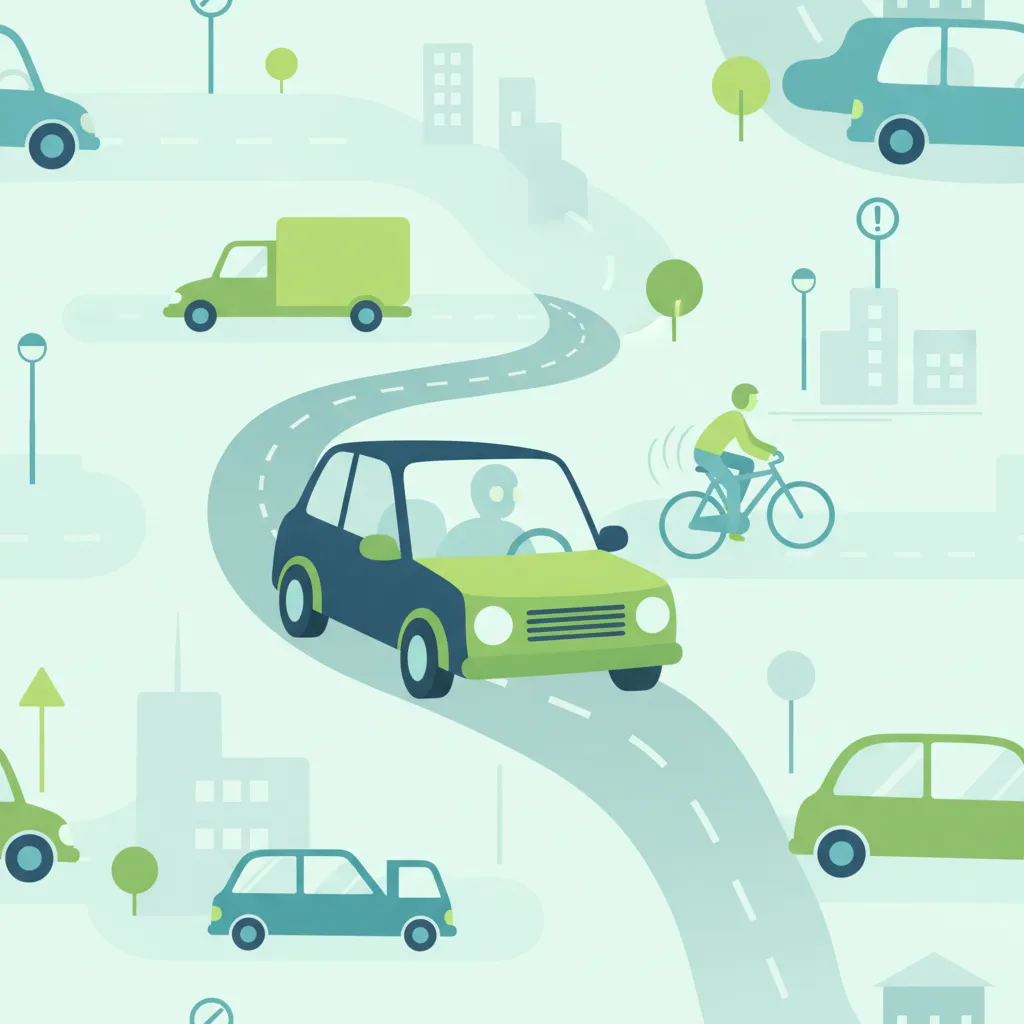
Defensive driving is a proactive approach to road safety, vital for navigating Belgium's diverse traffic environments. It means constantly observing, anticipating potential hazards, and adjusting your driving to avoid dangerous situations, even if caused by others' mistakes. This strategy helps create safer conditions for everyone, from vulnerable road users to heavy traffic.
Theory topic content overview
Read the full theory topic guide for Defensive Driving with structured, easy-to-scan content built for learners in Belgium. This detailed section explains the exact rule, meaning, traffic context, comparison points, and exam logic behind this Belgian driving theory topic so you can study faster, understand the concept more clearly, and avoid common interpretation mistakes on the theory test.
Defensive driving, known in Belgium as defensief rijden (Dutch) or conduite défensive (French), is a proactive approach to road safety. It's not just about following traffic laws; it's about anticipating potential hazards and the possible mistakes of other road users, then adjusting your driving behavior to prevent accidents.
Instead of simply reacting to dangers as they arise, a defensive driver actively scans the environment, predicts what might happen, and takes preventative action to avoid dangerous situations. This mindset is crucial for developing strong verkeersinzicht (traffic insight), allowing you to drive safely even when conditions are challenging or other drivers are unpredictable.
Belgium's diverse road network, from bustling city centers in Brussels and Antwerp to winding rural roads and motorways, presents a wide array of driving challenges. Defensive driving principles are fundamental for:
Mastering defensive driving involves integrating several key habits into your everyday driving:
A defensive driver constantly observes, looking much further down the road than just the vehicle ahead. This kijktechniek (observation technique) involves:
This continuous scanning builds your situational awareness, allowing you to perceive elements in your environment, understand their meaning, and project their state into the near future.
Anticipation is the heart of defensive driving. It means expecting the unexpected and preparing for potential errors by others. Ask yourself: "What if...?"
By mentally preparing for these "what ifs," you create valuable reaction time.
Adjusting your speed and maintaining a safe following distance are critical.
Always aim to maintain a "safety cushion" around your vehicle.
Let other road users know your intentions.
It's important to distinguish between simply following the rules and driving defensively.
Consider these common situations in Belgium where defensive driving is vital:
Many learners make mistakes that defensive driving aims to correct:
To truly master defensive driving for your Belgian driving license, adopt this three-step mindset for every journey:
By consistently applying these defensive driving principles, you'll not only improve your chances of passing the Belgian theory and practical exams, but more importantly, you'll become a safer, more confident driver on Belgian roads.
Start with a short, direct summary of Defensive Driving before reading the full explanation below.
Defensive driving is a mindset where you anticipate potential hazards and other road users' mistakes, taking proactive measures to avoid accidents. This involves maintaining situational awareness, adjusting your speed and distance, and always being prepared to react safely to unexpected events in Belgian traffic.
Review the most important terms, rule signals, and traffic concepts linked to Defensive Driving.
Explore related theory topic pages connected to Defensive Driving and continue with the next useful rule explanation.
See the common search queries learners use when trying to understand Defensive Driving in Belgium.

Start your comprehensive preparation for the Belgian driving licence theory exam. Dive into our expertly curated topics, master the road rules and concepts, and build the confidence you need to pass your test and drive safely on Belgian roads. Begin mastering theory today.
Explore Belgian Theory TopicsTheory topic content overview
Start with a short, direct summary of Defensive Driving before reading the full explanation below.
Defensive driving is a mindset where you anticipate potential hazards and other road users' mistakes, taking proactive measures to avoid accidents. This involves maintaining situational awareness, adjusting your speed and distance, and always being prepared to react safely to unexpected events in Belgian traffic.
Review the most important terms, rule signals, and traffic concepts linked to Defensive Driving.
Explore related theory topic pages connected to Defensive Driving and continue with the next useful rule explanation.
See the common search queries learners use when trying to understand Defensive Driving in Belgium.
Start your comprehensive preparation for the Belgian driving licence theory exam. Dive into our expertly curated topics, master the road rules and concepts, and build the confidence you need to pass your test and drive safely on Belgian roads. Begin mastering theory today.
Explore Belgian Theory TopicsUse this exam-focused revision tip to understand how Defensive Driving is likely to appear in theory questions for learners in Belgium. This section helps you identify the most testable part of the rule, avoid common traps, and remember the concept more effectively during Belgian driving theory exam preparation.
In the Belgian theory exam, questions about defensive driving often test your ability to anticipate dangers. Always choose the answer that prioritizes broad observation, maintaining safe distance, and assuming other drivers might make mistakes. Look out for scenarios involving vulnerable road users or complex intersections where proactive caution is key.
Read direct answers to the most common learner questions about Defensive Driving in Belgium. This FAQ focuses on rule confusion, practical meaning, comparison with similar concepts, and the exact uncertainties that appear most often in Belgian driving theory revision and exam preparation.
Defensive driving is a driving style focused on anticipating potential hazards and proactively adjusting your behavior to prevent accidents, regardless of what other road users do.
Belgium's dense and diverse traffic, including many cyclists and motorways, makes defensive driving essential for safety. It helps drivers react safely to sudden changes and prevent collisions.
Key techniques include maintaining a safe following distance, constantly scanning your surroundings, anticipating actions of others, adjusting speed to conditions, and avoiding distractions.
Anticipation allows you to identify potential dangers before they become immediate threats. By predicting what might happen, you gain extra time to react safely, preventing a sudden brake or swerve.
'Defensief rijden' is the Dutch term for defensive driving, a concept emphasized in Belgian driving theory. It refers to a safe driving attitude that prioritizes preventing accidents through vigilance and proactive adjustments.
Not necessarily. Defensive driving means driving at a speed appropriate for the conditions, traffic, and your ability to react safely. Sometimes this means driving slower, but it always means being in control.
Ready to focus your Belgian driving theory revision? Utilize our powerful search tool to pinpoint exact topics, road signs, or difficulty levels. Engage with practice questions that directly address your learning needs and solidify your understanding of Belgian traffic laws for your upcoming exam.