
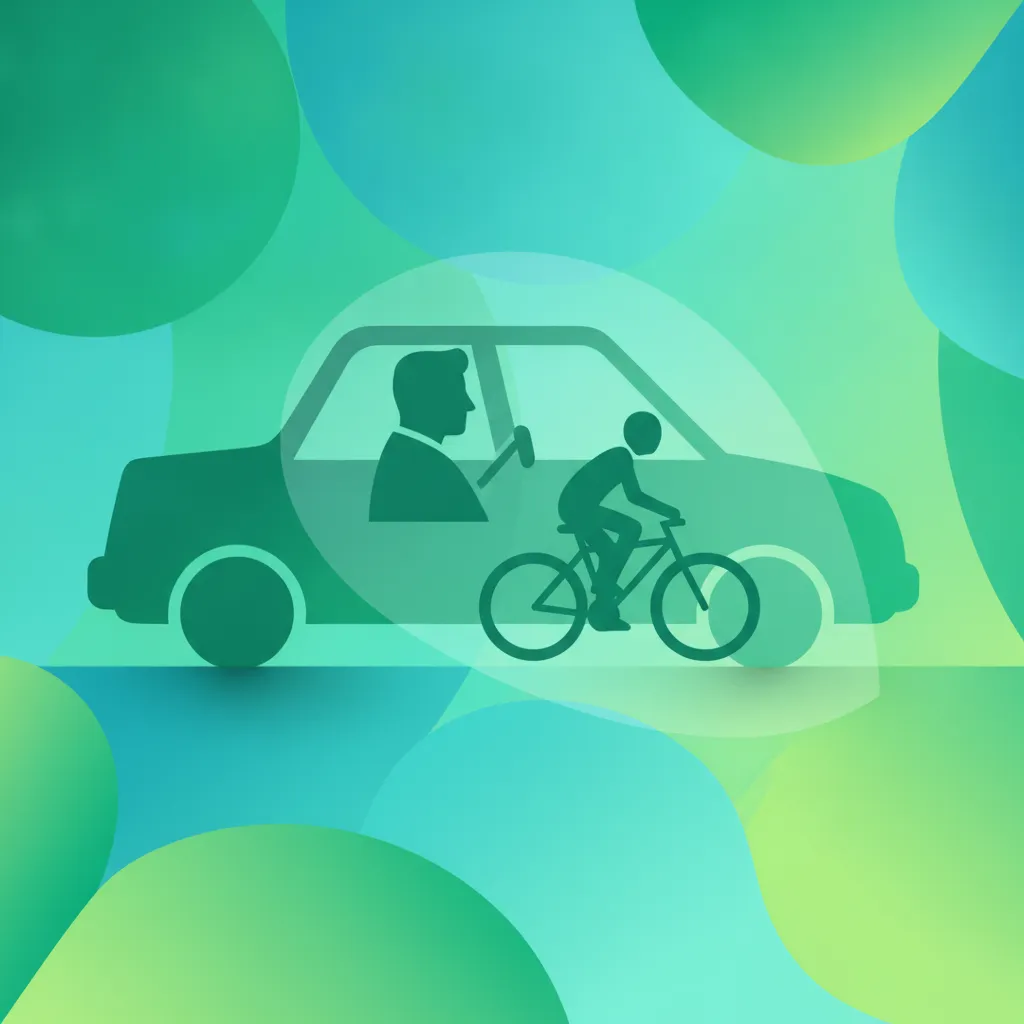
A blind spot is an area around your vehicle that cannot be seen directly through your mirrors or your normal field of vision. These zones exist because of your vehicle's physical structure and the limited coverage provided by mirrors. In busy Belgian traffic, recognizing and actively checking these areas is paramount to preventing dangerous situations, particularly when interacting with cyclists and other smaller vehicles.
Theory topic content overview
Read the full theory topic guide for Blind Spots & Observation with structured, easy-to-scan content built for learners in Belgium. This detailed section explains the exact rule, meaning, traffic context, comparison points, and exam logic behind this Belgian driving theory topic so you can study faster, understand the concept more clearly, and avoid common interpretation mistakes on the theory test.
Angle Mort / Dode Hoek)?A blind spot is any area around your vehicle that cannot be seen directly through your mirrors or through your normal peripheral vision. These invisible zones exist due to the physical structure of your vehicle, such as door pillars, headrests, or the vehicle's body itself, which obstruct your view. Even perfectly adjusted mirrors have limitations and cannot provide a complete 360-degree view around your car.
In Belgium, where road networks are often shared intensely by different types of road users, understanding and compensating for these angles morts (French for blind spots) or dode hoeken (Dutch for blind spots) is critical. They represent a significant gap in your observation and a potential collision risk, especially for smaller, more vulnerable road users.
Blind spots are a major cause of accidents, particularly during maneuvers that involve lateral movement, such as:
The risk is amplified in Belgium due to the high presence of vulnerable road users, namely cyclists and motorcyclists. Their smaller size means they can easily disappear into a vehicle's blind spot, remaining unseen even if they are directly alongside. For the Belgian driving theory exam, demonstrating a thorough understanding of blind spots and correct observation techniques is fundamental to proving your readiness for safe driving.
Since mirrors alone cannot eliminate blind spots, drivers must perform a shoulder check (a quick, direct glance over the shoulder) to confirm that the area is clear before making any lateral movement. This direct visual check complements, rather than replaces, your mirror usage.
Here’s how to perform an effective shoulder check:
The key is to integrate the shoulder check seamlessly into your observation routine, making it a natural part of your "mirror-signal-maneuver" sequence.
Several elements can influence the size and severity of blind spots:
poids lourds / vrachtwagens), and buses have significantly larger and more numerous blind spots than standard passenger cars. Their blind spots can extend for many meters around the vehicle, including directly in front and behind.It's vital for Belgian theory learners to distinguish between what your mirrors show and what a blind spot is.
Relying solely on mirrors is a common and dangerous mistake. The dode hoek or angle mort exists precisely because mirrors cannot cover every angle. Your brain needs that quick, direct visual input to confirm safety.
Consider these common situations where blind spot awareness is paramount:
fietspad / piste cyclable) or on the road itself. Without a proper shoulder check, you risk turning directly into their path.Learners and experienced drivers alike often make these critical errors concerning blind spots:
In Belgium, the terms angle mort (French) and dode hoek (Dutch) are widely used in driving education and daily traffic communication. The emphasis on blind spots is particularly strong in the Belgian driving theory curriculum because of the high number of cyclists and the complex urban traffic environments.
The Belgian driving exam will test your understanding of observation techniques and your ability to apply them. Questions often revolve around identifying situations where a shoulder check is necessary and why it is vital for the safety of other road users, especially fietsers (cyclists) and motorrijders (motorcyclists). Remember that blind spots extend to heavy goods vehicles (poids lourds / vrachtwagens) as well; always maintain extra caution around them, as they have exceptionally large blind spots.
Blind spots are an unavoidable reality of driving. However, the risk they pose is entirely manageable through consistent, active observation. For your safety and the safety of everyone on Belgian roads, particularly vulnerable cyclists and motorcyclists, remember this:
Always perform a rapid, decisive shoulder check before any lateral movement of your vehicle (lane change, merge, turn, park). Your mirrors are important, but only direct vision can confirm the absence of a hidden hazard in your blind spot (angle mort / dode hoek). Make it a habit – your life and others' depend on it.
Blind spots are unavoidable invisible areas around every vehicle that mirrors cannot fully cover, making direct shoulder checks essential before any lateral movement. In Belgium's traffic environment with high numbers of cyclists and motorcyclists, understanding and actively checking blind spots is critical for both exam success and road safety. The proper technique involves checking mirrors first, signaling your intent, then performing a quick decisive shoulder check to confirm the blind spot is clear before executing lane changes, turns, merges, or parking maneuvers. Large vehicles have proportionally larger blind spots, requiring even greater vigilance, and the shoulder check must be integrated as a natural habit into the mirror-signal-maneuver sequence.
A short set of high-value points that capture the most important ideas from this theory explanation.
Blind spots are areas around your vehicle invisible through mirrors or peripheral vision, created by vehicle structure like door pillars and headrests.
Shoulder checks (direct head turns) are essential and mandatory complements to mirror use before any lateral movement.
Larger vehicles like trucks and buses have significantly larger blind spots that can extend many meters around the vehicle.
Cyclists and motorcyclists are particularly vulnerable to blind spot collisions due to their smaller size in Belgian traffic.
Belgian driving exams test your understanding of when and why shoulder checks are required for safe observation.
The sequence: mirrors first, then signal, then shoulder check, then maneuver.
Mirrors minimize blind spots but never eliminate them completely - direct vision is always required.
In Belgium, blind spots are called 'angle mort' (French) or 'dode hoek' (Dutch).
Heavier vehicles require extra caution as their blind spots are considerably larger and more dangerous.
Always check blind spots when turning right in cities with cycle lanes (fietspaden/pistes cyclables).
Relying entirely on mirrors and skipping the shoulder check entirely, which is a dangerous and testable error.
Performing the shoulder check too late - after你已经 started the maneuver leaves no time to react.
A lazy or too-quick glance that doesn't actually register what is in the blind spot zone.
Assuming other road users will see your signal and move out of the way without confirming the blind spot is clear.
Underestimating the likelihood of cyclists or motorcyclists being present in blind spots, especially in urban Belgian traffic.
Start with a short, direct summary of Blind Spots & Observation before reading the full explanation below.
Blind spots are areas around a vehicle that are invisible to the driver through mirrors, creating significant hazards during maneuvers. To safely navigate around them, drivers must perform a rapid "shoulder check" (or direct head turn) before changing lanes, merging, or turning, ensuring no road users, especially cyclists or motorcyclists common in Belgium, are hidden from view. This direct visual check complements mirror use and is a fundamental aspect of safe driving.
Review the most important terms, rule signals, and traffic concepts linked to Blind Spots & Observation.
Explore related theory topic pages connected to Blind Spots & Observation and continue with the next useful rule explanation.
See the common search queries learners use when trying to understand Blind Spots & Observation in Belgium.

Start your comprehensive preparation for the Belgian driving licence theory exam. Dive into our expertly curated topics, master the road rules and concepts, and build the confidence you need to pass your test and drive safely on Belgian roads. Begin mastering theory today.
Explore Belgian Theory TopicsTheory topic content overview
A short set of high-value points that capture the most important ideas from this theory explanation.
Blind spots are areas around your vehicle invisible through mirrors or peripheral vision, created by vehicle structure like door pillars and headrests.
Shoulder checks (direct head turns) are essential and mandatory complements to mirror use before any lateral movement.
Larger vehicles like trucks and buses have significantly larger blind spots that can extend many meters around the vehicle.
Cyclists and motorcyclists are particularly vulnerable to blind spot collisions due to their smaller size in Belgian traffic.
Belgian driving exams test your understanding of when and why shoulder checks are required for safe observation.
The sequence: mirrors first, then signal, then shoulder check, then maneuver.
Mirrors minimize blind spots but never eliminate them completely - direct vision is always required.
In Belgium, blind spots are called 'angle mort' (French) or 'dode hoek' (Dutch).
Heavier vehicles require extra caution as their blind spots are considerably larger and more dangerous.
Always check blind spots when turning right in cities with cycle lanes (fietspaden/pistes cyclables).
Relying entirely on mirrors and skipping the shoulder check entirely, which is a dangerous and testable error.
Performing the shoulder check too late - after你已经 started the maneuver leaves no time to react.
A lazy or too-quick glance that doesn't actually register what is in the blind spot zone.
Assuming other road users will see your signal and move out of the way without confirming the blind spot is clear.
Underestimating the likelihood of cyclists or motorcyclists being present in blind spots, especially in urban Belgian traffic.
Start with a short, direct summary of Blind Spots & Observation before reading the full explanation below.
Blind spots are areas around a vehicle that are invisible to the driver through mirrors, creating significant hazards during maneuvers. To safely navigate around them, drivers must perform a rapid "shoulder check" (or direct head turn) before changing lanes, merging, or turning, ensuring no road users, especially cyclists or motorcyclists common in Belgium, are hidden from view. This direct visual check complements mirror use and is a fundamental aspect of safe driving.
Review the most important terms, rule signals, and traffic concepts linked to Blind Spots & Observation.
Explore related theory topic pages connected to Blind Spots & Observation and continue with the next useful rule explanation.
See the common search queries learners use when trying to understand Blind Spots & Observation in Belgium.
Start your comprehensive preparation for the Belgian driving licence theory exam. Dive into our expertly curated topics, master the road rules and concepts, and build the confidence you need to pass your test and drive safely on Belgian roads. Begin mastering theory today.
Explore Belgian Theory TopicsUse this exam-focused revision tip to understand how Blind Spots & Observation is likely to appear in theory questions for learners in Belgium. This section helps you identify the most testable part of the rule, avoid common traps, and remember the concept more effectively during Belgian driving theory exam preparation.
Many Belgian driving exam questions test your awareness of blind spots and correct observation. Remember: always perform a shoulder check before any lateral movement (lane change, turning, merging, parking) to prove you're actively scanning beyond your mirrors, especially for vulnerable road users.
Read direct answers to the most common learner questions about Blind Spots & Observation in Belgium. This FAQ focuses on rule confusion, practical meaning, comparison with similar concepts, and the exact uncertainties that appear most often in Belgian driving theory revision and exam preparation.
A blind spot is an area surrounding your vehicle that cannot be seen using any of your mirrors, nor is it visible through your normal forward or peripheral vision. It's a physical limitation of your vehicle's design.
Blind spots are dangerous because other road users, especially smaller vehicles like motorcycles or bicycles, can remain completely hidden within them. This invisibility significantly increases the risk of collision when you change lanes, merge, or make turns.
In Belgium, as elsewhere, you must perform a "shoulder check" by quickly turning your head to glance over your shoulder in the direction you intend to move. This direct visual check should be done immediately after checking your mirrors and before initiating any lateral movement.
No, even perfectly adjusted mirrors cannot completely eliminate all blind spots. While they minimize the size of these areas, a small portion will always remain out of mirror view, necessitating a direct head turn.
Yes, larger vehicles like trucks and buses have significantly larger and more numerous blind spots (often called "angles morts" or "dode hoeken") extending to their front, sides, and rear. It's crucial for car drivers to be aware of these zones and avoid driving in them.
"Angle mort" (French) and "dode hoek" (Dutch) are the official Belgian terms for a blind spot. Both terms refer to the areas around a vehicle that are not visible to the driver through mirrors, and understanding them is key for your Belgian theory exam.
It is most important to check your blind spot before performing any lateral movement, such as changing lanes, merging onto a motorway, making a turn, exiting a parking space, or pulling away from the curb. This ensures the path is clear.
Ready to focus your Belgian driving theory revision? Utilize our powerful search tool to pinpoint exact topics, road signs, or difficulty levels. Engage with practice questions that directly address your learning needs and solidify your understanding of Belgian traffic laws for your upcoming exam.