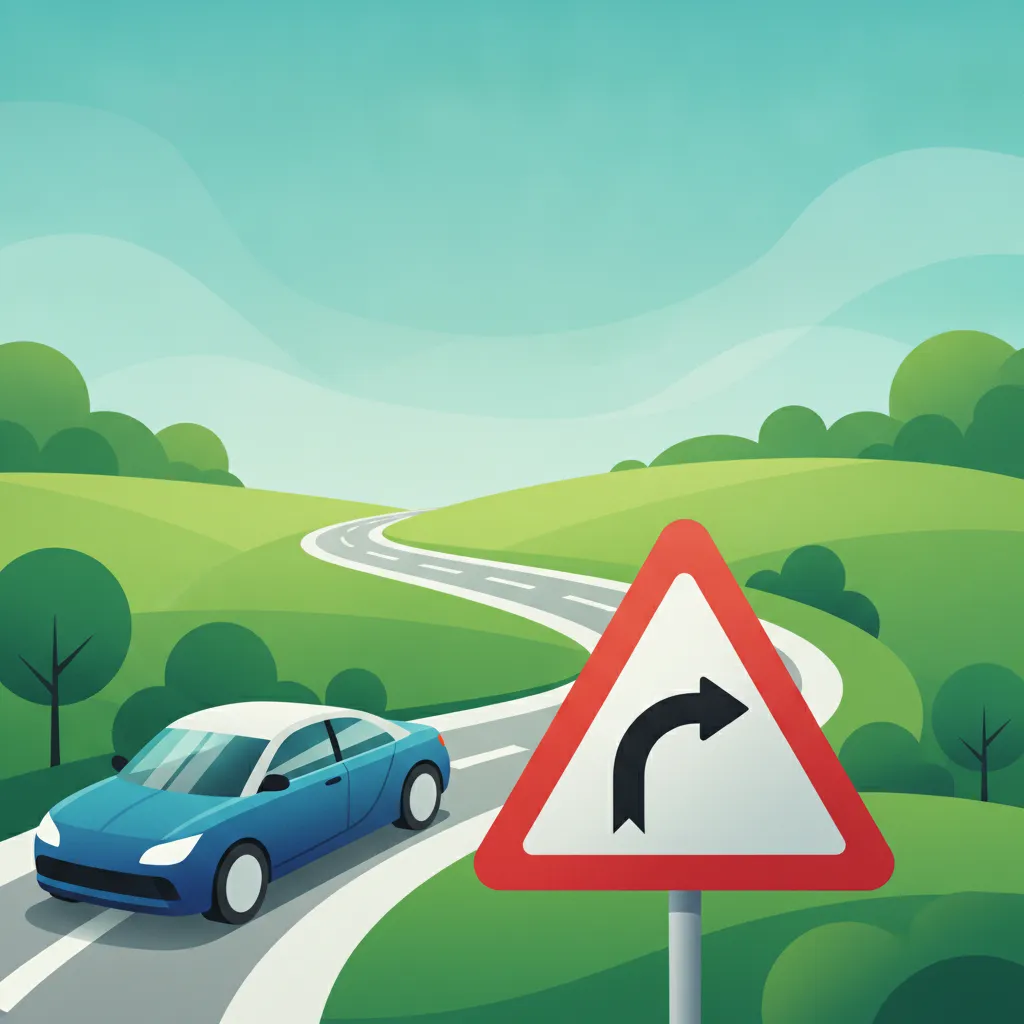
Warning signs, known as 'gevaarsborden' in Dutch, are essential road signs designed to alert drivers to potential hazards or changes in road conditions well in advance. Unlike regulatory signs, their primary purpose is to inform and prepare you, not to impose direct commands. Recognizing these signs helps you anticipate risks and adjust your speed or driving style, which is a core skill tested in the Belgian driving theory exam and crucial for real-world safety.
Theory topic content overview
Read the full theory topic guide for Warning Signs with structured, easy-to-scan content built for learners in Belgium. This detailed section explains the exact rule, meaning, traffic context, comparison points, and exam logic behind this Belgian driving theory topic so you can study faster, understand the concept more clearly, and avoid common interpretation mistakes on the theory test.
Warning signs, known as gevaarsborden in Dutch or signaux de danger in French, are a crucial part of the Belgian traffic code, designed to be your primary alert system on the road. Unlike regulatory signs that issue commands or prohibitions, warning signs serve to inform you about potential hazards or changes in road conditions ahead. Their core purpose is to give you sufficient time to anticipate risks and adapt your driving behavior proactively, a skill highly valued in the Belgian driving theory exam and essential for safe driving in Belgium.
In Belgium, warning signs are instantly recognizable by their distinct appearance:
This standard design ensures that drivers can quickly identify a sign as a warning, even before fully processing the symbol, allowing for immediate increased vigilance.
Understanding and responding correctly to gevaarsborden is fundamental for several reasons:
The effectiveness of warning signs lies in their placement, giving drivers enough time to respond.
According to the Belgian Code de la route (specifically Article 66.2 for Flanders and Brussels-Capital Region, and similar provisions for Wallonia), warning signs are generally placed approximately 150 metres before the actual hazard. This distance allows for an average driver's reaction time and sufficient braking distance to safely adjust.
Panneau Additionnel)While 150 metres is the general rule, there are important exceptions:
agglomérations), the 150-meter distance might not be practical. Signs can be placed closer to the hazard.panneau additionnel (supplementary panel) will be placed below it. This small rectangular panel will explicitly state the approximate distance in metres (e.g., "50 m" or "300 m").Warning signs are usually placed on the right side of the road. However, they may also be placed above the carriageway or repeated if traffic conditions or the road layout necessitate it to ensure maximum visibility for all road users.
Belgian gevaarsborden cover a wide array of potential dangers. Here are some common categories:
dispositifs surélevés). Action: Slow down to avoid damage to your vehicle or loss of control.A common source of confusion for learners in the Belgian theory exam is mixing up warning signs with other categories:
kruispunt), they don't assign priority. Priority signs (e.g., 'give way' or 'stop' signs) explicitly define who has the right-of-way.Always remember that gevaarsborden demand anticipation, while regulatory signs demand immediate compliance.
Think of warning signs as invaluable pieces of intelligence from the road. When you see a gevaarsbord, engage your "Anticipate, Adapt, Act" mindset:
By doing so, you demonstrate true hazard perception and a proactive driving style, making you a safer driver on Belgian roads and well-prepared for your driving theory exam.
Start with a short, direct summary of Warning Signs before reading the full explanation below.
Warning signs in Belgium are typically triangular signs with a red border and a black symbol on a white or yellow background, indicating potential dangers ahead. Their purpose is to give drivers sufficient time to react safely by anticipating hazards such as sharp bends, slippery roads, or pedestrian crossings. Correctly interpreting these signs allows drivers to reduce speed, increase vigilance, and prepare for necessary maneuvers before encountering the actual hazard.
Review the most important terms, rule signals, and traffic concepts linked to Warning Signs.
Explore related theory topic pages connected to Warning Signs and continue with the next useful rule explanation.
See the common search queries learners use when trying to understand Warning Signs in Belgium.

Start your comprehensive preparation for the Belgian driving licence theory exam. Dive into our expertly curated topics, master the road rules and concepts, and build the confidence you need to pass your test and drive safely on Belgian roads. Begin mastering theory today.
Explore Belgian Theory TopicsTheory topic content overview
Start with a short, direct summary of Warning Signs before reading the full explanation below.
Warning signs in Belgium are typically triangular signs with a red border and a black symbol on a white or yellow background, indicating potential dangers ahead. Their purpose is to give drivers sufficient time to react safely by anticipating hazards such as sharp bends, slippery roads, or pedestrian crossings. Correctly interpreting these signs allows drivers to reduce speed, increase vigilance, and prepare for necessary maneuvers before encountering the actual hazard.
Review the most important terms, rule signals, and traffic concepts linked to Warning Signs.
Explore related theory topic pages connected to Warning Signs and continue with the next useful rule explanation.
See the common search queries learners use when trying to understand Warning Signs in Belgium.
Start your comprehensive preparation for the Belgian driving licence theory exam. Dive into our expertly curated topics, master the road rules and concepts, and build the confidence you need to pass your test and drive safely on Belgian roads. Begin mastering theory today.
Explore Belgian Theory TopicsUse this exam-focused revision tip to understand how Warning Signs is likely to appear in theory questions for learners in Belgium. This section helps you identify the most testable part of the rule, avoid common traps, and remember the concept more effectively during Belgian driving theory exam preparation.
When encountering warning signs in the Belgian theory exam, pay close attention to the symbol on the sign and what specific hazard it depicts. Remember that warning signs demand anticipation and a proactive adjustment of your driving, such as reducing speed or increasing vigilance, rather than a direct, immediate action like stopping. Always consider the advised distance for placement (usually 150m) and how it affects your reaction time.
Read direct answers to the most common learner questions about Warning Signs in Belgium. This FAQ focuses on rule confusion, practical meaning, comparison with similar concepts, and the exact uncertainties that appear most often in Belgian driving theory revision and exam preparation.
The main purpose of a warning sign in Belgium is to alert drivers to potential dangers or changes in road conditions ahead, providing enough time to react safely and adjust driving behavior.
Belgian warning signs are typically triangular in shape, feature a red border, and display a black symbol on a white or yellow background, making them highly recognizable.
In Belgium, warning signs are generally placed approximately 150 meters before the hazardous spot on ordinary roads, though this distance can vary depending on specific circumstances and may be indicated on an additional panel.
Upon seeing a warning sign, a driver should anticipate the indicated hazard, assess the situation, and proactively adjust their speed, attention, and position on the road to ensure safety.
While many warning signs are international, the Belgian Code de la route includes specific signs and interpretations, such as those for 'slecht wegdek' (poor road surface) or 'verhoogde inrichting(en)' (raised obstacles like speed bumps), reflecting local road infrastructure.
Warning signs (gevaarsborden) alert you to a danger and advise caution, while prohibitory signs (verbodsborden) are typically circular with a red border, indicating a specific action that is forbidden, such as 'no entry' or 'no overtaking'.
Yes, understanding warning signs is very important for the Belgian driving theory exam. Questions often test your ability to identify specific signs and interpret the hazards they represent, along with the appropriate driver response.
Ready to focus your Belgian driving theory revision? Utilize our powerful search tool to pinpoint exact topics, road signs, or difficulty levels. Engage with practice questions that directly address your learning needs and solidify your understanding of Belgian traffic laws for your upcoming exam.