
This lesson explores the essential use of engine brakes and retarders for heavy goods vehicles, a critical skill for navigating Austria's mountainous terrain. You will learn how these systems work in tandem with service brakes to maintain speed control and vehicle safety, directly supporting your preparation for the C and CE category theory exam.
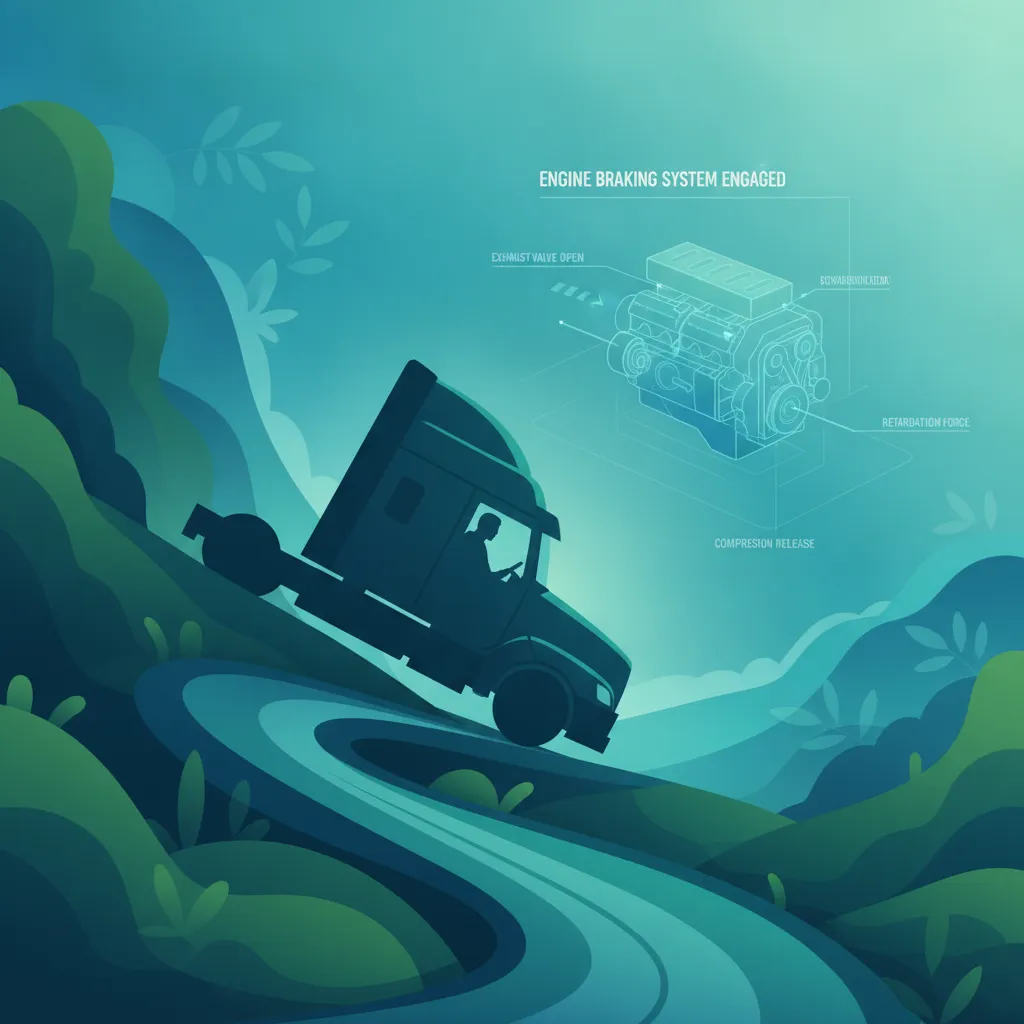
Lesson content overview
For heavy goods vehicles operating within the Austrian Driving License Theory Course for Heavy Goods Vehicles, mastering advanced braking techniques is crucial. Beyond the standard service brakes, auxiliary braking systems like engine brakes and various types of retarders play an indispensable role in maintaining vehicle control, especially on long downhill gradients. These systems are designed to manage speed and preserve the efficiency of your primary service brakes, directly impacting safety and operational longevity.
This lesson explores the principles, functions, and practical applications of these vital components, preparing you for the unique challenges of driving heavy vehicles, particularly in mountainous regions such as Austria's alpine routes. Understanding and correctly utilizing engine braking and retarder systems reduces the risk of brake fade, enhances vehicle stability, and ensures compliance with essential road safety regulations.
Auxiliary braking systems are additional deceleration mechanisms in heavy goods vehicles that work independently of the primary friction brakes (service brakes). Their main purpose is to reduce vehicle speed, particularly during prolonged descents, thereby preventing the service brakes from overheating. This not only extends the lifespan of brake components but, more importantly, maintains the full stopping power of the service brakes for emergency situations.
The fundamental concept behind these systems is to convert the vehicle's kinetic energy into heat through means other than friction at the wheels. This allows for controlled deceleration without generating excessive heat in the wheel-end brake components. For heavy vehicles, which carry immense kinetic energy due to their mass, such systems are not merely an enhancement but a safety necessity.
Brake fade is a dangerous phenomenon where the effectiveness of a vehicle's friction brakes diminishes significantly due to overheating. When service brakes are continuously applied on a long descent, the brake pads and discs (or drums) can reach extremely high temperatures. This heat causes the friction material to lose its gripping ability, leading to a reduction in braking force and an increase in the required stopping distance.
For heavy vehicles, the consequences of brake fade can be catastrophic, potentially leading to a loss of control. Auxiliary braking systems directly address this risk by taking on the primary role of speed control on descents. By dissipating kinetic energy through the engine or a dedicated retarder unit, they keep the service brakes cool and ready for full performance when needed for a complete stop or an emergency. This strategic distribution of braking effort is a cornerstone of heavy vehicle safety.
Engine braking, also known as decompression braking, uses the natural resistance of the engine to slow the vehicle down when the accelerator pedal is released. It's the simplest form of auxiliary braking and is inherent in all internal combustion engines, though its effectiveness varies significantly between vehicle types. For heavy goods vehicles, specialized engine brake designs enhance this effect considerably.
When you lift your foot off the accelerator, the fuel supply to the engine is typically cut off. The engine, still connected to the drive wheels via the transmission, continues to rotate. However, it now has to overcome its own internal friction, the resistance of compressing air in the cylinders, and the exhaust back pressure. This internal resistance works against the vehicle's momentum, effectively slowing it down. The higher the engine RPM, the greater the braking effect.
In many modern heavy goods vehicles, electronic engine management systems can further optimize engine braking. This might involve closing the exhaust valves at the top of the compression stroke, trapping high-pressure gases in the cylinders, and creating a strong resistance to the piston's upward movement. Some systems also employ a "Jake Brake" or compression release brake, which actively opens exhaust valves near the top of the compression stroke, releasing compressed air and converting the engine from a power producer to an air compressor, dramatically increasing resistance.
Engine braking is most effective at higher engine RPMs and is generally used for mild descents or to maintain speed control on moderately graded roads. It's a continuous, smooth deceleration force that doesn't rely on additional hardware beyond the engine itself. Drivers must anticipate the need for deceleration and release the throttle accordingly.
When using engine braking, select a gear that keeps the engine RPM in its effective braking range (often higher than typical cruising RPMs). This maximizes the deceleration force and helps to prevent the vehicle from gaining too much speed.
While beneficial, engine braking alone is often insufficient for steep or very long gradients, especially with a heavy load. It serves as a foundational auxiliary braking method, often complemented by more powerful retarder systems.
Retarder systems are purpose-built auxiliary brakes that provide significant and controllable deceleration independent of the engine's inherent resistance. They are essential for heavy goods vehicles, particularly in demanding conditions like long alpine descents. These systems offer consistent braking force without relying on the service brakes, preserving their integrity and preventing overheating.
There are several main types of retarder systems, each utilizing different principles to achieve deceleration:
A compression retarder, often colloquially referred to as a "Jockey Brake" or simply an engine brake, typically refers to a system integrated directly into the engine's valve train. It works by altering the engine's valve timing to prevent combustion and instead turn the engine into an air compressor.
A type of engine brake that uses engine cylinders to compress air, then releases it, creating significant resistance to engine rotation and slowing the vehicle.
This system usually activates when the driver lifts off the accelerator and/or presses a dedicated switch. It creates a powerful braking effect by either trapping highly compressed air in the cylinders (enhancing the natural engine brake) or by releasing this compressed air to atmosphere, forcing the engine to work against continuous compression cycles without the benefit of power strokes. This process rapidly dissipates kinetic energy as heat within the engine.
Compression retarders are highly effective at higher engine RPMs and are a common feature on many heavy diesel engines. They are typically driver-controlled, often with multiple stages of braking intensity.
The exhaust brake is a simpler, yet effective, auxiliary braking system primarily found on diesel engines. It operates by creating back pressure in the exhaust system to restrict the flow of exhaust gases.
A device that increases exhaust back pressure by partially closing a valve in the exhaust manifold, creating resistance to engine rotation and slowing the vehicle.
When activated, a butterfly valve (or similar mechanism) closes in the exhaust pipe, usually downstream of the turbocharger. This restriction causes exhaust gases to back up, increasing pressure against the engine's pistons during their exhaust stroke. This increased resistance opposes the engine's rotation, thereby providing a braking effect to the vehicle.
Exhaust brakes are most effective at higher engine speeds, as more exhaust gases are being produced, leading to greater back pressure. They are generally less powerful than compression retarders or hydraulic retarders but offer a useful, fuel-efficient way to maintain speed on moderate descents. Regulations in many areas, including Austria, often mandate their use on heavy vehicles, especially on mountain roads.
The hydraulic retarder, also known as a hydrodynamic retarder, is a highly powerful and versatile auxiliary braking system that operates independently of the engine's combustion process. It uses fluid dynamics to dissipate kinetic energy as heat.
An auxiliary braking system that uses fluid within a closed circuit to convert kinetic energy into heat through viscous resistance, providing continuous and variable deceleration.
A hydraulic retarder typically consists of a rotor and a stator, often housed within a sealed casing filled with oil. The rotor is connected to the vehicle's driveline (e.g., gearbox output shaft or propeller shaft). When the retarder is activated, oil is pumped into the casing between the rotor and stator. As the rotor spins, it agitates the oil, and the stator's vanes create turbulence, which generates resistance. This resistance works against the driveline's rotation, slowing the vehicle. The kinetic energy is converted into heat, which is then typically dissipated through the vehicle's cooling system or a dedicated oil cooler.
Hydraulic retarders offer several advantages:
Due to their high capacity and smooth, controllable operation, hydraulic retarders are widely used in heavy goods vehicles, particularly those operating in mountainous regions or carrying very heavy loads.
Austrian traffic law and vehicle technical regulations place specific emphasis on the use and capabilities of auxiliary braking systems for heavy goods vehicles, particularly given the country's extensive alpine road network. Adhering to these regulations is not only a legal requirement but also fundamental for safety.
According to the Austrian Road Traffic Act (StVO) § 38b, heavy goods vehicles are obligated to use engine brakes or retarders on steep grades where there is a clear risk of service brake overheating. This regulation is particularly applicable to vehicles exceeding 12 tonnes on gradients steeper than 6%. The rationale is clear: to prevent brake fade and enhance overall safety on challenging downhill sections.
Correct Behavior: Engaging your retarder system well in advance when approaching a signposted 7% grade. Incorrect Behavior: Relying solely on the service brakes for speed control on such a grade, risking overheating and loss of braking efficiency.
The Austrian Vehicle Technical Regulations (VTR) § 71 stipulates that retarder systems installed in heavy vehicles must meet certain performance criteria. Specifically, they must be capable of providing a continuous retardation power equivalent to at least 5% of the engine’s rated torque. This ensures that the auxiliary braking system has sufficient capacity to effectively control the vehicle's speed, especially under heavy loads. These technical standards are crucial for the type-approval and roadworthiness of heavy vehicles.
For vehicles operating on designated alpine routes, the Alpine Road Safety Directive (EU) 2022/814 may require heavy vehicles to display a "Brake Assistance" badge. This badge, if applicable, visually signals to road authorities and other drivers that the vehicle is equipped with functional and capable auxiliary braking systems. This awareness can be crucial for route planning and emergency response in demanding mountainous terrain. Always check the latest local directives for specific requirements regarding such badges.
Drivers of heavy goods vehicles in Austria must also pay close attention to specific road signs.
When you encounter sign 63, "Retarder mandatory," it is a direct instruction to engage your auxiliary braking system. Ignoring this sign constitutes a violation and significantly increases the risk of an accident due to brake fade. This sign is typically placed before steep downhill sections where continuous speed control is paramount.
The effective use of auxiliary braking systems requires more than just knowing they exist; it demands an understanding of their selection, integration into the vehicle, and skillful application by the driver. Factors such as vehicle weight, typical route grades, and engine type all influence which retarder system is most appropriate and how it should be used.
Modern heavy vehicles integrate retarder controls seamlessly into the driver's cabin, often via a multi-stage lever on the steering column or a button on the dashboard. These controls allow the driver to select the desired level of retardation, from mild to maximum. Some advanced systems can also be integrated with cruise control to automatically maintain a set speed on descents.
Familiarize yourself with the specific retarder system in your vehicle. Understand how to activate it, adjust its intensity, and monitor its performance through the dashboard indicators. Practice engaging and disengaging it smoothly to avoid abrupt deceleration.
The optimal use of auxiliary braking systems is highly dynamic and depends on various contextual factors:
The proper and timely application of auxiliary braking systems has a direct and positive impact on the overall braking distance and safety of heavy goods vehicles.
While auxiliary brakes are not designed to bring the vehicle to a complete stop, they significantly contribute to reducing the effective stopping distance required from the service brakes. By continuously dissipating kinetic energy during a descent, they reduce the vehicle's speed before the service brakes are even applied for a final stop or a more significant deceleration.
This pre-dissipation of energy means that when the driver does need to apply the service brakes, they are starting from a lower speed, are cooler, and can operate at their peak efficiency. This ultimately leads to a shorter overall stopping distance compared to a scenario where service brakes alone are used to manage speed throughout a descent.
Auxiliary brakes contribute to vehicle stability by providing a smooth, continuous deceleration force. Unlike service brakes, which can sometimes be applied abruptly, retarders offer a controlled and gradual reduction in speed. This prevents sudden shifts in load, which can be particularly dangerous for vehicles carrying unstable cargo (e.g., liquids in tanks or loosely packed goods). By maintaining stability, the risk of jackknifing or loss of directional control, especially on curves or in adverse weather, is minimized.
The knowledge that powerful auxiliary braking systems are available and functioning correctly instills confidence in the driver. On long, challenging descents, continuous service brake application can be physically and mentally fatiguing. Retarders allow the driver to focus more on steering, traffic, and road conditions, reducing the stress associated with managing vehicle speed, thus enhancing overall driving safety and reducing fatigue.
Despite their critical importance, auxiliary braking systems are sometimes misunderstood or misused, leading to dangerous situations and potential legal penalties.
Auxiliary braking systems – encompassing engine brakes, compression retarders, exhaust brakes, and hydraulic retarders – are indispensable safety features for heavy goods vehicles, particularly within the challenging terrain of Austria. These systems are not merely additional components but are fundamental for preventing brake fade, maintaining vehicle control, and reducing stopping distances, especially on steep downhill gradients.
Mastering their operation, understanding their limitations, and adhering to Austrian regulations, including mandatory usage signs, are critical responsibilities for every professional heavy vehicle driver. By correctly integrating auxiliary braking into your driving strategy, you contribute significantly to road safety, vehicle longevity, and efficient operations.
This lesson covers essential auxiliary braking systems for heavy goods vehicles, focusing on engine brakes, compression retarders, exhaust brakes, and hydraulic retarders. It explains how these systems prevent brake fade by dissipating kinetic energy through means other than wheel friction, which is critical for safe descent on Austria's alpine routes. Austrian regulations mandate retarder use for vehicles over 12 tonnes on gradients exceeding 6%, and specific road sign 63 enforces this requirement. The content emphasizes selecting appropriate gear to maximize engine brake effectiveness, adjusting retarder intensity based on load and conditions, and reserving service brakes for emergencies. Understanding these principles and avoiding common violations like ignoring mandatory signs or over-relying on engine braking alone is essential for both the theory exam and safe real-world heavy vehicle operation.
A short set of high-value points that capture the most important learning from this lesson.
Auxiliary braking systems convert kinetic energy into heat without using wheel-end friction brakes, preventing dangerous brake fade on long descents
There are three main retarder types: compression retarders (engine-integrated), exhaust brakes (diesel-specific), and hydraulic retarders (fluid-based, RPM-independent)
Austrian law mandates retarder use for vehicles over 12 tonnes on gradients steeper than 6%, with mandatory road sign 63 enforcement
Hydraulic retarders provide variable, continuous braking force ideal for steep alpine routes, independent of engine RPM
Retarders should be engaged early and adjusted based on vehicle load, road gradient, and weather conditions
Explore all units and lessons included in this driving theory course.
Sign 63 'Retarder mandatory' is a legal requirement for heavy goods vehicles before steep descents in Austria
VTR § 71 requires installed retarders to provide continuous retardation power of at least 5% of engine rated torque
Heavier loads and steeper gradients require higher retarder settings; the same setting used when empty is insufficient when loaded
Engine braking alone is often insufficient on grades steeper than 10% or with very heavy loads
Service brakes should be reserved for final stops and emergencies after retarders have controlled descent speed
Ignoring 'Retarder mandatory' signs on alpine routes, significantly increasing brake fade risk
Relying solely on engine braking on very steep grades where retarder power is needed
Switching off the retarder prematurely during a descent, causing sudden speed increase
Using identical retarder settings for loaded and unloaded vehicles, leading to over- or under-braking
Applying retarders too aggressively on wet or icy roads, risking wheel lock-up and loss of stability
Lesson content overview
A short set of high-value points that capture the most important learning from this lesson.
Auxiliary braking systems convert kinetic energy into heat without using wheel-end friction brakes, preventing dangerous brake fade on long descents
There are three main retarder types: compression retarders (engine-integrated), exhaust brakes (diesel-specific), and hydraulic retarders (fluid-based, RPM-independent)
Austrian law mandates retarder use for vehicles over 12 tonnes on gradients steeper than 6%, with mandatory road sign 63 enforcement
Hydraulic retarders provide variable, continuous braking force ideal for steep alpine routes, independent of engine RPM
Retarders should be engaged early and adjusted based on vehicle load, road gradient, and weather conditions
Explore all units and lessons included in this driving theory course.
Sign 63 'Retarder mandatory' is a legal requirement for heavy goods vehicles before steep descents in Austria
VTR § 71 requires installed retarders to provide continuous retardation power of at least 5% of engine rated torque
Heavier loads and steeper gradients require higher retarder settings; the same setting used when empty is insufficient when loaded
Engine braking alone is often insufficient on grades steeper than 10% or with very heavy loads
Service brakes should be reserved for final stops and emergencies after retarders have controlled descent speed
Ignoring 'Retarder mandatory' signs on alpine routes, significantly increasing brake fade risk
Relying solely on engine braking on very steep grades where retarder power is needed
Switching off the retarder prematurely during a descent, causing sudden speed increase
Using identical retarder settings for loaded and unloaded vehicles, leading to over- or under-braking
Applying retarders too aggressively on wet or icy roads, risking wheel lock-up and loss of stability
Explore search topics learners often look for when studying Engine Braking and Retarder Systems. These topics reflect common questions about road rules, driving situations, safety guidance, and lesson level theory preparation for learners in Austria.
Browse additional driving theory lessons that cover connected traffic rules, road signs, and common driving situations related to this topic. Improve your understanding of how different rules interact across everyday traffic scenarios.
Explore the mechanics and operational principles of various retarder systems, including hydraulic, engine, and exhaust brakes. Learn how these auxiliary braking systems are activated and controlled for safe speed management on challenging Austrian gradients.

This lesson covers the fundamental principles of the service brake (Betriebsbremse), which is the main braking system activated by the foot pedal. It explains the operation of air brake systems commonly found in heavy vehicles. Understanding how this system works is essential for smooth and safe braking in all driving situations.

This lesson focuses on the parking brake (Feststellbremse) and its critical role in securing a stationary vehicle. It explains how spring brake systems engage when air pressure is released. The lesson covers the correct procedures for applying and releasing the parking brake to prevent unintentional movement.

This lesson covers the proper techniques for performing an emergency braking manoeuvre in a heavy vehicle. It explains how to apply maximum braking force without losing control, especially in vehicles equipped with an Anti-lock Braking System (ABS). The lesson also discusses how hard braking can affect cargo and the importance of proper load securing.
This lesson explains the system of penalties and enforcement for heavy vehicle operations in Austria. It covers the fines and penalty points associated with common traffic violations, such as overloading or insecure loads. Learners will understand the role of authorities in conducting roadside checks and inspections to ensure regulatory compliance.

This lesson explains the various factors that determine the total stopping distance of a heavy vehicle. It covers the effects of speed, vehicle weight, road conditions, and driver reaction time. Understanding these variables helps drivers to maintain a safe following distance and anticipate how much space is needed to stop.

This lesson explains the specific definitions and limitations of the C1, C1E, C, and CE heavy-goods vehicle licence categories in Austria. It details the permissible vehicle mass, axle configurations, and rules for trailer combinations associated with each category. Understanding these distinctions is fundamental for ensuring legal compliance and selecting the correct licence for specific vehicle configurations.
This lesson provides critical techniques for managing vehicle speed on the steep, long gradients found on Alpine roads. It emphasizes selecting the correct gear before the descent and using auxiliary braking systems to maintain a safe, controlled speed. These practices are essential to prevent service brake overheating and potential failure (brake fade).

This lesson details the general traffic rules applicable to heavy goods vehicles on Austrian roads, highlighting differences from passenger car regulations. It covers key topics such as right-of-way at intersections, specific rules for overtaking, maintaining proper lane discipline, and adhering to designated speed limits. Understanding these rules is critical for safe integration into mixed traffic.
This lesson provides practical strategies for safely reversing in challenging environments like narrow streets or busy loading zones. It emphasizes the 'get out and look' principle, the proper use of mirrors and cameras, and the critical safety role of a reliable spotter. Executing these manoeuvres slowly and cautiously is paramount to avoiding collisions.

This lesson explains the procedures for checking the functionality of a heavy vehicle's braking systems, with a focus on air brakes. It covers how to monitor air pressure gauges and conduct tests to ensure both the service and parking brakes are operating correctly. These daily checks are essential for confirming the vehicle's stopping capability.
Understand Austrian regulations and road signs related to auxiliary braking systems, focusing on safe speed control and preventing brake fade on steep alpine descents. Learn best practices for using retarders and engine brakes in mountainous terrain.
This lesson provides critical techniques for managing vehicle speed on the steep, long gradients found on Alpine roads. It emphasizes selecting the correct gear before the descent and using auxiliary braking systems to maintain a safe, controlled speed. These practices are essential to prevent service brake overheating and potential failure (brake fade).

Driving a heavy vehicle in the Alps requires specific skills to manage its energy and momentum. This lesson focuses on using lower gears and auxiliary braking systems (retarder/engine brake) to control speed on long descents and prevent brake overheating. It also covers the correct line and technique for navigating tight hairpin turns safely and efficiently.

This lesson prepares drivers for the demanding conditions of Alpine driving. It covers techniques for managing speed on steep up-hill and down-hill sections, being prepared for sudden weather changes, and following safety protocols inside mountain tunnels. This specialized knowledge is essential for operating safely in mountainous terrain.

This lesson focuses on the specialized skills required for navigating alpine roads safely. It covers techniques for managing steep gradients, such as using a lower gear for engine braking on descents, and how to safely negotiate hairpin turns. The content stresses the importance of being prepared for rapid weather changes and understanding the effects of altitude on both the driver and the vehicle's performance.
This lesson provides practical strategies for safely reversing in challenging environments like narrow streets or busy loading zones. It emphasizes the 'get out and look' principle, the proper use of mirrors and cameras, and the critical safety role of a reliable spotter. Executing these manoeuvres slowly and cautiously is paramount to avoiding collisions.
This lesson covers the proper techniques for performing an emergency braking manoeuvre in a heavy vehicle. It explains how to apply maximum braking force without losing control, especially in vehicles equipped with an Anti-lock Braking System (ABS). The lesson also discusses how hard braking can affect cargo and the importance of proper load securing.
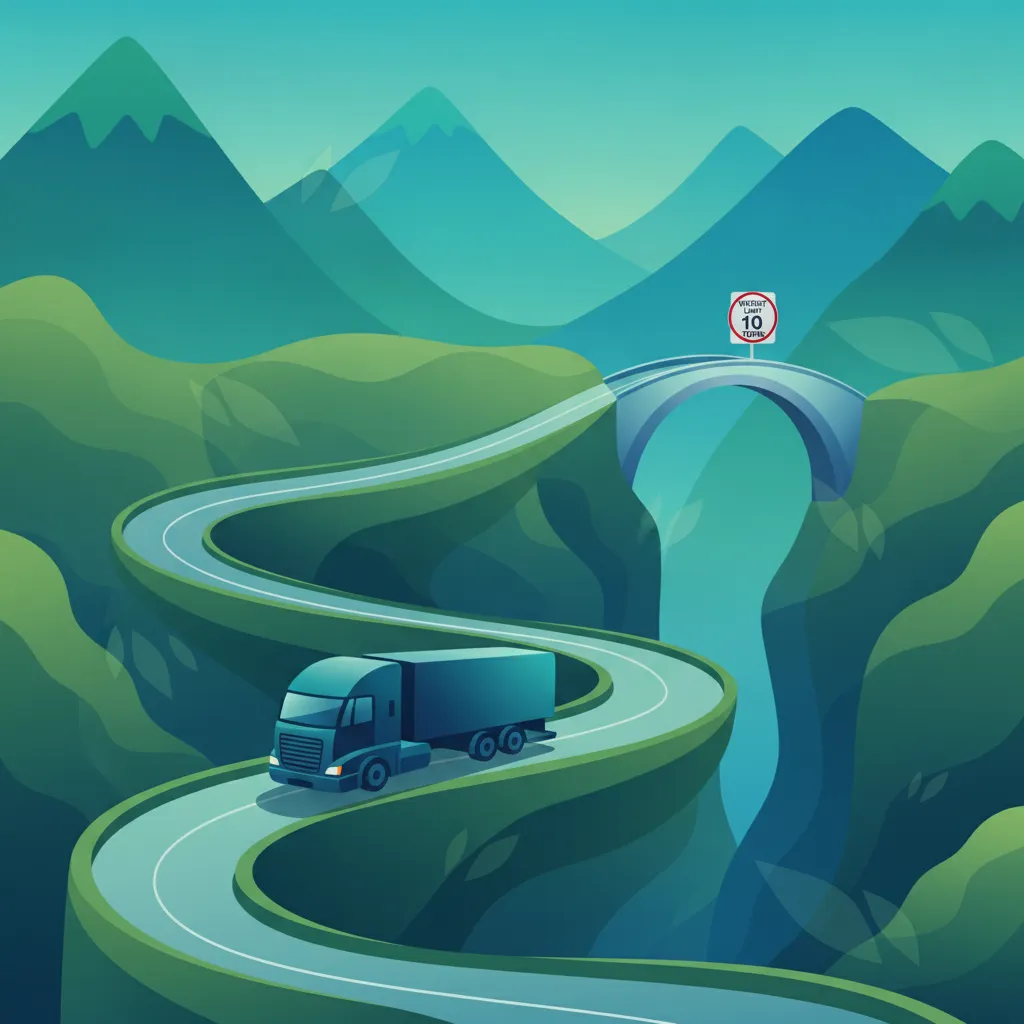
This lesson covers the specific weight restrictions that apply to sensitive infrastructure like Alpine passes and bridges throughout Austria. It explains how to identify these limits through road signage and incorporate them into route planning. Adhering to these restrictions is vital for preventing structural damage and ensuring safety in challenging terrain.
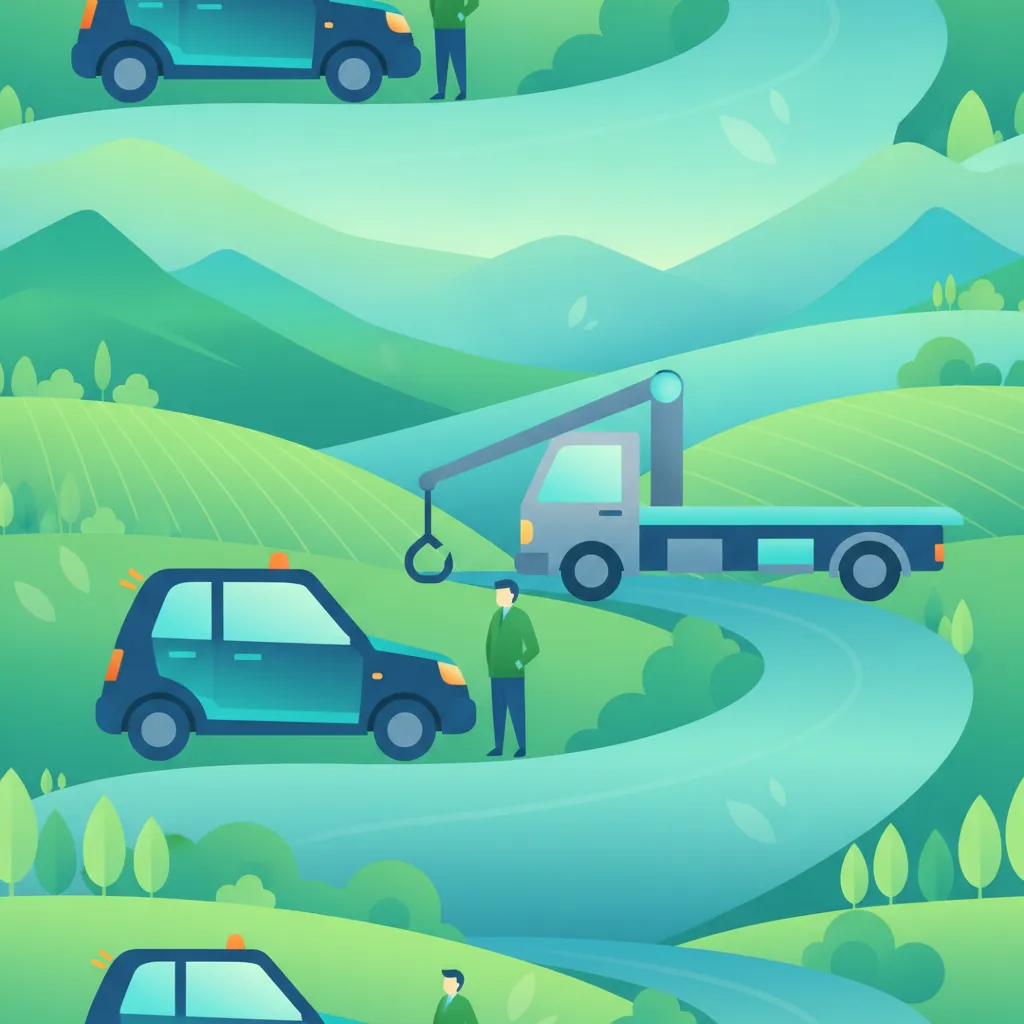
This lesson outlines the standardized procedure for handling a vehicle breakdown safely. It covers pulling over to a safe location, activating hazard lights, deploying the warning triangle, and wearing a high-visibility vest. It also explains when and how to contact roadside assistance or emergency services.

This lesson focuses on adapting driving techniques for hazardous weather conditions. It details the legal requirements for winter tires and the proper use of snow chains in Austria. Additionally, it covers safe driving practices in low visibility conditions like fog, such as reducing speed and using appropriate lights.
This lesson details the general traffic rules applicable to heavy goods vehicles on Austrian roads, highlighting differences from passenger car regulations. It covers key topics such as right-of-way at intersections, specific rules for overtaking, maintaining proper lane discipline, and adhering to designated speed limits. Understanding these rules is critical for safe integration into mixed traffic.
Find clear answers to common questions learners have about Engine Braking and Retarder Systems. Learn how the lesson is structured, which driving theory objectives it supports, and how it fits into the overall learning path of units and curriculum progression in Austria. These explanations help you understand key concepts, lesson flow, and exam focused study goals.
Relying solely on the service brake causes excessive heat buildup, leading to brake fade where the brakes lose effectiveness. Using engine brakes and retarders keeps the service brakes cool for emergency situations.
No. Using a powerful retarder on a slippery surface can cause the drive wheels to lock up, resulting in a loss of stability and potentially causing the vehicle to jackknife.
An engine brake (like an exhaust brake) restricts the engine's exhaust to create backpressure, while a retarder is usually a hydraulic or electromagnetic device in the drivetrain that absorbs kinetic energy to slow the vehicle without friction.
Yes. The exam frequently tests your understanding of vehicle dynamics and safety systems, including the correct operation of auxiliary braking to ensure safe driving on steep gradients.
Refine your study plan by searching for specific Austrian driving theory practice sets. Pinpoint questions related to particular road rules, signs, or challenge levels, and begin practicing immediately to reinforce your knowledge and excel in your official exam with confidence. Get started with focused revision today.