
This lesson guides you through the Mehrphasenausbildung, a crucial multi-phase training program for all new Category B drivers in Austria. You will learn about the structured requirements following your initial practical test, including mandatory perfection drives and safety training. Understanding these legal obligations is vital for maintaining your license during the probationary period.

Lesson content overview
The process of obtaining a driving license in Austria for Category B drivers extends beyond merely passing the theoretical and practical exams. It incorporates a comprehensive, legally mandated Mehrphasenausbildung (multi-phase training) program. This structured approach is designed to enhance the skills and safety awareness of new drivers during their initial, most vulnerable period on the road. Understanding the components, timelines, and legal implications of this program is crucial for every aspiring and newly licensed driver in Austria.
This lesson provides a detailed breakdown of the Mehrphasenausbildung system, its compulsory probationary period, the mandatory "perfection drive" (Vollausbildung), and the Driver Safety Training Course (Führersicherheitstraining). It establishes the legal framework governing novice drivers, helping you understand your obligations, timelines, and the serious consequences of non-compliance, all essential for safe driving practice after passing your initial tests.
The Mehrphasenausbildung is a unique and comprehensive educational pathway for new drivers in Austria. Its primary goal is to significantly reduce the risks associated with novice drivers, who are statistically more prone to accidents in their first few years of independent driving. This is achieved by combining extended supervised practice with targeted safety training modules.
The system is built on principles of continuous learning and gradual responsibility. It leverages insights from behavioral psychology, aiming to reduce risk through incremental exposure to various driving scenarios and reinforcement of safe habits. Legally enforced milestones ensure that new drivers acquire sufficient experience and specific safety skills before being granted full driving privileges. This structured program builds directly upon the foundational knowledge covered in earlier units, such as Austrian traffic culture, road signs, priority rules, and defensive driving techniques.
The Probationary Period, known as the Probezeit, is a mandatory 2-year phase that begins immediately upon the issuance of your provisional Category B driving license. This period serves as a critical observation phase for authorities to monitor the conduct and development of novice drivers. During this time, new drivers are subject to specific regulations and stricter penalties for traffic infractions, emphasizing the importance of responsible driving from day one.
A mandatory 2-year period after obtaining a provisional driving licence in Austria, during which new drivers are subject to additional training requirements and stricter legal conditions.
The Probezeit is designed to provide new drivers with a structured environment to gain experience while being held to higher standards. Should a driver commit serious violations during this initial period, an Extended Probation may be applied, prolonging the monitoring phase and potentially leading to further sanctions.
During your probationary period, several specific rules apply to you as a novice driver:
Common mistakes during the probationary period include forgetting to display the "P" sticker, assuming higher alcohol limits apply, or underestimating the consequences of traffic violations under the stricter points system. Always adhere to these regulations diligently.
A core component of the Mehrphasenausbildung is the Perfection Drive, known as Vollausbildung. This is an intensive, structured module of supervised on-road training that must span a minimum of 12 months within your 2-year probationary period. Its purpose is to reinforce safe driving habits, allow you to gain extensive practical experience, and address common error patterns observed among beginner drivers in various real-world scenarios.
A mandatory practical phase of the Mehrphasenausbildung requiring novice drivers to complete at least 12 months of supervised driving under a qualified instructor, meticulously documented in a logbook.
The Vollausbildung goes beyond the initial driving school lessons. It requires you to continue driving under the supervision of an L17-qualified instructor, systematically logging your experiences. This extended period of guided practice is crucial for developing confidence, refining decision-making skills, and learning to react appropriately to diverse traffic situations and environmental conditions.
Central to the Perfection Drive is the Training Logbook or Fahrtenbuch. This official document is where all your supervised drives are meticulously recorded. It must contain:
Maintain your Fahrtenbuch diligently. Incomplete entries, missing instructor signatures, or inaccurate logs will result in administrative rejection when you attempt to upgrade your license, potentially delaying your full license acquisition.
The Fahrtenbuch serves as proof of your accumulated practical experience and instructor assessments throughout the Vollausbildung. This documentation is mandatory for advancing to a full license.
Another mandatory part of the Mehrphasenausbildung is the Driver Safety Training Course, known as Führersicherheitstraining. This certified course is a crucial educational session of at least 6 hours, designed to equip new drivers with practical skills that are often not covered in the basic license training, specifically focusing on accident avoidance and emergency maneuvers.
A certified minimum 6-hour course, mandatory for all novice drivers in Austria, covering defensive driving, emergency reactions, and hazard perception, to be completed within the probationary period.
This training provides a safe environment to experience and practice critical driving techniques under controlled conditions. It aims to improve your hazard perception, teach you how to react effectively in unexpected situations, and generally enhance your defensive driving capabilities.
The Führersicherheitstraining typically comprises two main components:
Theoretical Component: Classroom instruction covers essential topics such as:
Practical Component: This hands-on section is conducted at an approved training center, often on a closed track. You will practice critical maneuvers, including:
Upon successful completion of the course, you will receive a certificate, which is a mandatory document for your license upgrade. This course must be completed within the first 24 months of your probationary period. Attempting to defer this course beyond the probationary period will prevent you from obtaining a full license until the requirement is met, potentially requiring a new probationary period to start.
The Austrian Points System, or Strafpunkte, is a fundamental framework designed to incentivize compliance with traffic laws and penalize repeated risky behavior. For novice drivers, this system operates with increased severity during the probationary period.
A numeric penalty system in Austria where each traffic violation adds points to a driver's record, with novice drivers facing lower thresholds for sanctions.
This stricter application acknowledges the higher risk profile of inexperienced drivers and aims to encourage more cautious driving habits from the outset.
Under the probationary points system:
Ignoring points accumulation or assuming points are automatically reset after a short period can lead to serious consequences. The points system is a continuous mechanism to monitor driver behavior.
For example, speeding within 20 km/h over the limit might add 1 point for an experienced driver, but for a novice, it could immediately add 2 points, bringing them closer to the suspension threshold. Understanding this accelerated rate is vital for all new drivers.
The culmination of the Mehrphasenausbildung is the successful upgrade from a provisional license to a Full License, or Vollfuehrerschein. This transition signifies that you have satisfied all the legal and training requirements, demonstrating sufficient experience and safety awareness to drive independently without the specific restrictions of the probationary period.
The unrestricted driving licence granted in Austria after successfully completing all mandatory components of the Mehrphasenausbildung.
This is the final step in the licensing process, granting you full driving privileges in Austria.
To obtain your Vollfuehrerschein, you must complete the following administrative steps:
Complete all Mehrphasenausbildung Requirements: Ensure you have successfully finished the 12-month Perfection Drive (Vollausbildung) and the 6-hour Driver Safety Training Course (Führersicherheitstraining) within your 2-year probationary period.
Gather Required Documentation: This includes your fully completed and signed Training Logbook (Fahrtenbuch) and the certificate of completion from your Driver Safety Training Course. Make sure all entries are accurate and all instructor signatures are present.
Submit Documents to the Licensing Authority: Present your documentation to the appropriate licensing office (usually the district administration or city magistrate's office) in Austria.
Administrative Review: The authority will verify your compliance with all regulations. Upon successful review, your full driving license will be issued.
Failure to submit the appropriate documentation or any non-compliance with the Mehrphasenausbildung requirements will result in a refusal to upgrade your license. This could prolong your probationary period, necessitate re-completion of missed training components, and potentially lead to other penalties. It is essential to manage your training schedule and documentation carefully throughout the probationary period.
Adhering to the legal obligations of the Mehrphasenausbildung is not merely a formality; it is a critical aspect of road safety and personal legal responsibility. Non-compliance with any part of the program carries significant legal consequences, which can range from fines to license suspension and mandatory retraining.
Understanding common pitfalls can help you avoid unnecessary penalties:
The Mehrphasenausbildung is designed to prepare you for diverse driving conditions. The skills acquired during the Perfection Drive and Driver Safety Training Course are meant to be applied dynamically:
The Mehrphasenausbildung is more than just a bureaucratic hurdle; it is a meticulously designed program with clear safety objectives backed by research and statistics.
The core rationale behind the Mehrphasenausbildung is effective risk reduction. New drivers, by virtue of their limited experience, are at a significantly higher risk of involvement in traffic accidents. This multi-phase training addresses this vulnerability through several mechanisms:
The program's ultimate goal is to produce competent, confident, and responsible drivers who contribute positively to overall road safety in Austria.
To summarize the key concepts of the Mehrphasenausbildung, here is a list of essential vocabulary:
The Austrian Mehrphasenausbildung is a mandatory post-test training program for all new Category B drivers consisting of a 2-year probationary period with strict regulations, a 12-month supervised Perfection Drive (Vollausbildung) documented in a Fahrtenbuch, and a 6-hour Driver Safety Training Course (Führersicherheitstraining). Probationary drivers must display a 'P' sticker, adhere to a 0.1‰ blood alcohol limit, and operate under an accelerated points system where accumulating 6 points results in immediate license suspension. Successfully completing all components and submitting proper documentation allows drivers to upgrade from their provisional license to a full unrestricted driving license (Vollfuehrerschein).
A short set of high-value points that capture the most important learning from this lesson.
The Mehrphasenausbildung is a legally mandatory multi-phase program for all new Category B drivers in Austria, extending beyond the initial test
The 2-year probationary period (Probezeit) imposes stricter rules including mandatory 'P' sticker display and a near-zero alcohol tolerance of 0.1‰
The Perfection Drive (Vollausbildung) requires at least 12 months of supervised driving, documented in the official Fahrtenbuch logbook
The Driver Safety Training Course (Führersicherheitstraining) is a mandatory 6-hour certified course covering emergency maneuvers and defensive driving
Novice drivers accumulate points at a faster rate and face license suspension upon reaching 6 points during probation, compared to higher thresholds for experienced drivers
Explore all units and lessons included in this driving theory course.
Display the white 'P' sticker on both front and rear of your vehicle at all times during the 2-year probationary period
Blood alcohol limit for probationary drivers is 0.1‰, effectively a zero-tolerance policy stricter than the general limit
All supervised drives must be logged in the Fahrtenbuch with dates, mileage, conditions, and instructor signatures
The Führersicherheitstraining must be completed within the first 24 months of your probationary period
Reaching 6 penalty points during probation triggers mandatory license suspension and compulsory remedial training
Forgetting to display the 'P' sticker and assuming it is optional or merely cosmetic
Believing the standard adult blood alcohol limit applies to novice drivers when it is actually much stricter at 0.1‰
Keeping incomplete or inaccurate Fahrtenbuch records, which leads to administrative rejection during license upgrade
Assuming the Driver Safety Training can be deferred beyond the 24-month probationary deadline
Underestimating how quickly points accumulate for novices, not realizing minor violations count double toward the 6-point suspension threshold
Lesson content overview
A short set of high-value points that capture the most important learning from this lesson.
The Mehrphasenausbildung is a legally mandatory multi-phase program for all new Category B drivers in Austria, extending beyond the initial test
The 2-year probationary period (Probezeit) imposes stricter rules including mandatory 'P' sticker display and a near-zero alcohol tolerance of 0.1‰
The Perfection Drive (Vollausbildung) requires at least 12 months of supervised driving, documented in the official Fahrtenbuch logbook
The Driver Safety Training Course (Führersicherheitstraining) is a mandatory 6-hour certified course covering emergency maneuvers and defensive driving
Novice drivers accumulate points at a faster rate and face license suspension upon reaching 6 points during probation, compared to higher thresholds for experienced drivers
Explore all units and lessons included in this driving theory course.
Display the white 'P' sticker on both front and rear of your vehicle at all times during the 2-year probationary period
Blood alcohol limit for probationary drivers is 0.1‰, effectively a zero-tolerance policy stricter than the general limit
All supervised drives must be logged in the Fahrtenbuch with dates, mileage, conditions, and instructor signatures
The Führersicherheitstraining must be completed within the first 24 months of your probationary period
Reaching 6 penalty points during probation triggers mandatory license suspension and compulsory remedial training
Forgetting to display the 'P' sticker and assuming it is optional or merely cosmetic
Believing the standard adult blood alcohol limit applies to novice drivers when it is actually much stricter at 0.1‰
Keeping incomplete or inaccurate Fahrtenbuch records, which leads to administrative rejection during license upgrade
Assuming the Driver Safety Training can be deferred beyond the 24-month probationary deadline
Underestimating how quickly points accumulate for novices, not realizing minor violations count double toward the 6-point suspension threshold
Explore search topics learners often look for when studying Mehrphasenausbildung Structure and Legal Implications. These topics reflect common questions about road rules, driving situations, safety guidance, and lesson level theory preparation for learners in Austria.
Browse additional driving theory lessons that cover connected traffic rules, road signs, and common driving situations related to this topic. Improve your understanding of how different rules interact across everyday traffic scenarios.
Understand the specific legal requirements for novice drivers in Austria. This lesson covers the 'P' sticker, strict alcohol limits, and the intensified points system applicable during the probationary period.

This lesson explains the critical Mehrphasenausbildung (multi-phase training) process that all new drivers in Austria must complete after obtaining their license. It focuses on the obligations during the probationary period, including the demerit points system and the consequences of traffic violations like a Fahrverbot (driving ban). The content details the mandatory driver improvement courses designed to enhance risk awareness and promote responsible driving habits.
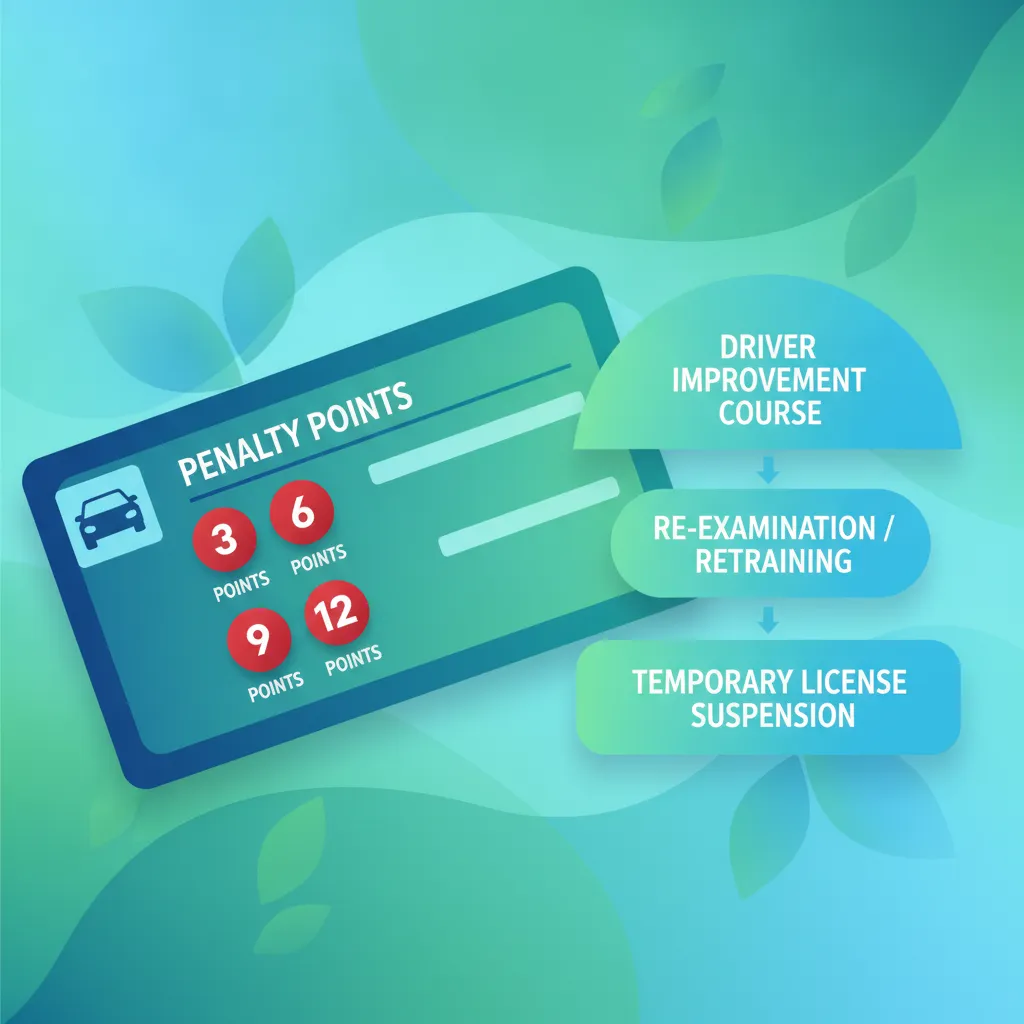
This lesson offers a clear explanation of the Austrian system of penalties for traffic offenses, including the demerit points system (Vormerksystem). It details which violations lead to points, the accumulation process, and the consequences at each stage, such as mandatory driver improvement courses and potential license suspension (Fahrverbot). Understanding this system provides a strong incentive for consistent compliance with all traffic regulations.

This lesson provides a detailed definition of the vehicle classes permitted under the Austrian Category B license. It specifies the regulations concerning maximum permissible mass, the number of passenger seats, and the different trailer combinations allowed. Learners will understand the crucial distinctions between a standard license, the B96 extension, and the full BE category, ensuring they operate vehicles within legal limits and meet all roadworthiness standards.

This lesson provides a comprehensive overview of a driver's legal responsibilities and the potential consequences of failing to adhere to traffic laws. Learners will explore the concept of liability in the event of an accident and the structure of the official penalty catalogue. The material covers the impact of fines, demerit points, and potential driving bans (Fahrverbot) on one's license, as well as the effects on insurance premiums.

This lesson delves into the specific Austrian laws and regulations that professional passenger drivers must adhere to. It provides an overview of rules concerning driving and rest times, the use of the digital tachograph, and the essential documents that must be carried at all times. Understanding these legal obligations is crucial for compliance and avoiding penalties during roadside checks.

This lesson introduces the L17 program for accompanied driving, detailing the legal requirements for both the learner and the supervising driver (Begleitperson). It outlines the structured learning stages, mandatory driving hours, and the importance of gaining practical experience in diverse traffic scenarios. Emphasis is placed on risk management protocols, correct documentation, and the necessary insurance coverage during the supervised practice period.
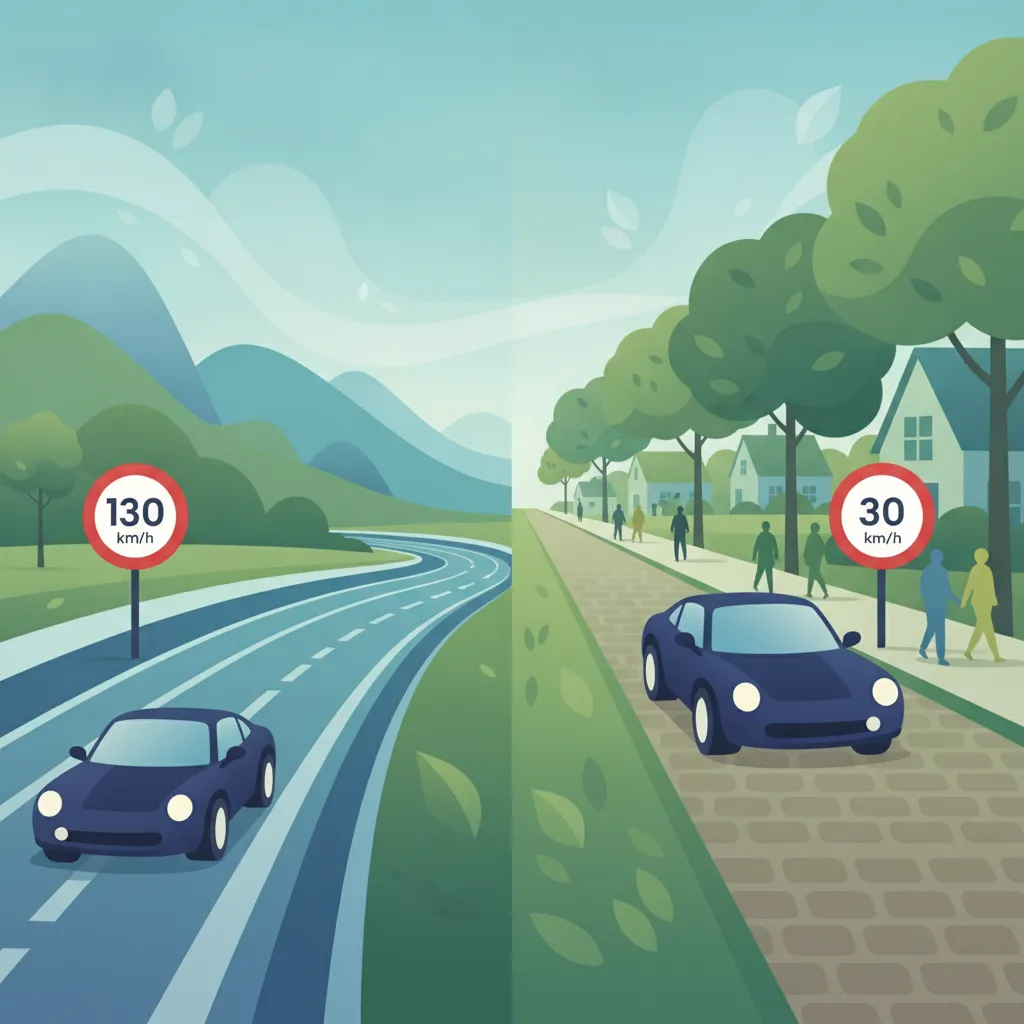
This lesson details the legally prescribed speed limits across Austria's road network, including the specific limits for urban areas (Ortsgebiet), rural roads (Landstraßen), motorways (Autobahnen), and expressways (Schnellstraßen). Learners will understand how to interpret speed limit signs, including those with supplementary conditions. Adherence to these legal requirements is a fundamental aspect of road safety and compliance with the Austrian road traffic act (StVO).
This lesson provides an overview of the legal framework governing heavy vehicle drivers in Austria. It details the potential penalties for violations, including fines, penalty points, and the risk of licence suspension. A clear understanding of these consequences reinforces the importance of compliant and responsible driving.

This lesson provides a clear overview of the legal penalties for traffic violations in Austria. It details the system of fines, demerit points, and the conditions that can lead to license suspension or revocation. Understanding these consequences reinforces the importance of lawful and responsible riding.
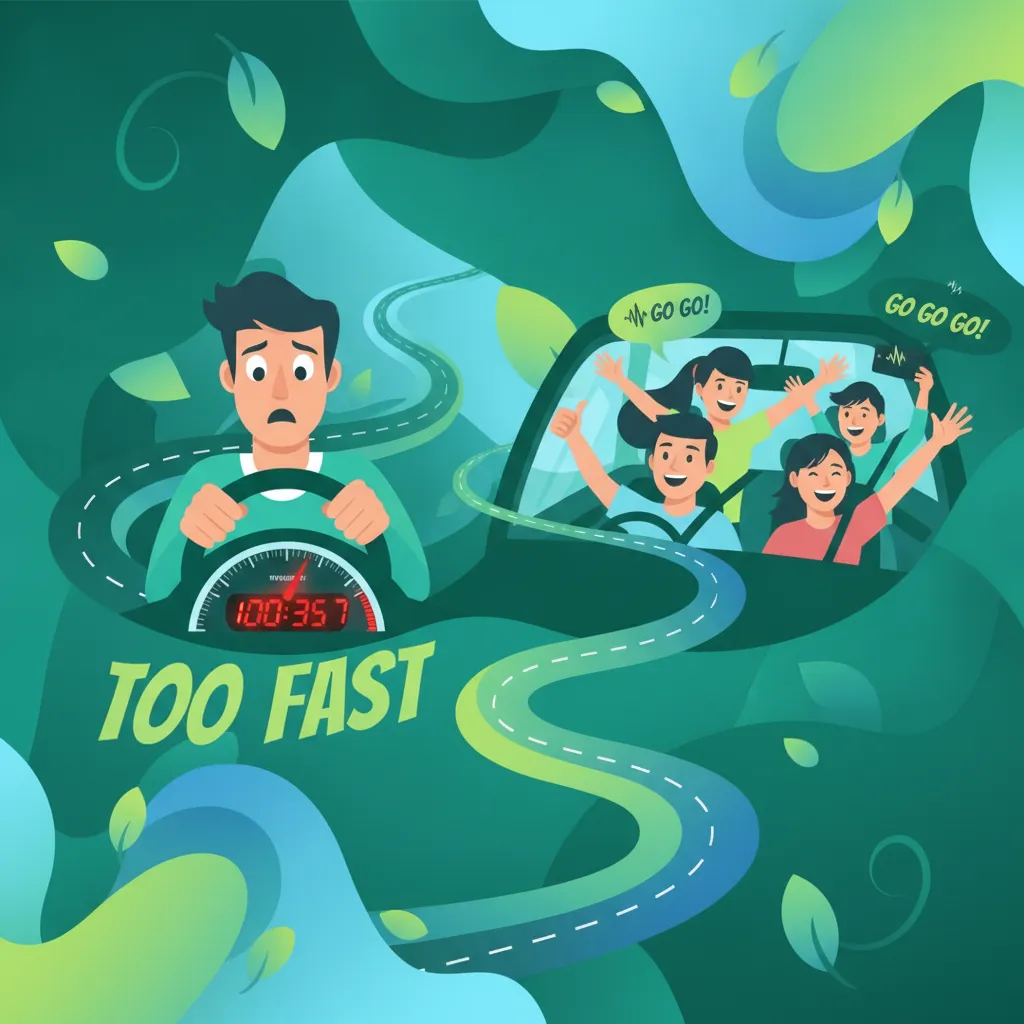
This lesson examines the specific risk factors that are statistically higher for novice drivers, including issues like inaccurate risk perception, overconfidence, and susceptibility to peer pressure and distractions. It aims to build self-awareness about these behavioural tendencies. By understanding these common pitfalls, new drivers can consciously adopt strategies to manage them, leading to safer driving habits from the very beginning of their driving career.
Learn the essential steps and documentation needed to successfully complete Austria's Mehrphasenausbildung. This includes requirements for the perfection drive logbook and driver safety training to obtain your full license.

This lesson explains the mandatory multi-stage training system in Austria, known as Mehrphasenausbildung. It details the required theoretical and practical training modules that riders must complete after obtaining their initial licence. Understanding this structured pathway helps learners plan their skill development and meet all legal requirements for full licensure.
This lesson explains the critical Mehrphasenausbildung (multi-phase training) process that all new drivers in Austria must complete after obtaining their license. It focuses on the obligations during the probationary period, including the demerit points system and the consequences of traffic violations like a Fahrverbot (driving ban). The content details the mandatory driver improvement courses designed to enhance risk awareness and promote responsible driving habits.
This lesson introduces the L17 program for accompanied driving, detailing the legal requirements for both the learner and the supervising driver (Begleitperson). It outlines the structured learning stages, mandatory driving hours, and the importance of gaining practical experience in diverse traffic scenarios. Emphasis is placed on risk management protocols, correct documentation, and the necessary insurance coverage during the supervised practice period.
This lesson guides learners through the essential documentation required for legally operating a vehicle in Austria, including the registration certificate, proof of insurance, and the driver's license (Führerschein). It explains the Austrian Vignette system for using motorways (Autobahnen) and expressways (Schnellstraßen), covering how to purchase, affix, and comply with the regulations. The content also provides awareness of specific toll roads and their payment systems to ensure full legal conformity.

This lesson addresses advanced manoeuvres that require precise timing and judgment, such as merging onto a motorway from an acceleration lane. It explains the importance of matching the speed of the traffic flow and finding a safe gap before moving over. The content also covers procedures for navigating lane drops and the 'zipper merge' (Reißverschlusssystem) principle in congested situations, promoting efficient and cooperative driving.

This lesson provides a comprehensive guide to driving on high-speed motorways (Autobahnen) and expressways (Schnellstraßen). It details the correct procedure for using the acceleration lane to merge safely, the principles of strict lane discipline, and strategies for choosing a safe speed relative to traffic flow and conditions. The lesson also explains the rules for using exit ramps and the purpose of the hard shoulder (Pannenstreifen).

This lesson details the technical specifications for each Austrian motorcycle licence category: A1, A2, and A. It clarifies the legal limits on engine capacity and power output, alongside the minimum age requirements for each stage. By outlining the clear progression path, learners will grasp the necessary steps and training phases to advance their riding qualifications according to Austrian law.
This lesson introduces the fundamentals of regular vehicle inspection and preventive maintenance. Learners will understand how to perform essential pre-drive checks, including verifying fluid levels (oil, coolant, washer fluid), testing brakes, and checking the responsiveness of the steering. Adhering to a basic maintenance schedule is presented as a critical habit for ensuring long-term vehicle safety and roadworthiness, helping to prevent mechanical failures.

This lesson provides essential knowledge for using Austria's high-speed road network. It covers the correct procedure for entering via acceleration lanes, maintaining strict lane discipline (keeping right, passing left), and understanding the digital or physical Vignette (toll sticker) requirement. The formation of the 'Rettungsgasse' (emergency corridor) during traffic jams is also a key topic.
Find clear answers to common questions learners have about Mehrphasenausbildung Structure and Legal Implications. Learn how the lesson is structured, which driving theory objectives it supports, and how it fits into the overall learning path of units and curriculum progression in Austria. These explanations help you understand key concepts, lesson flow, and exam focused study goals.
The goal is to improve the safety and driving skills of novice drivers by providing structured training and reflection opportunities after they have gained some independent driving experience.
Missing mandatory phases can lead to legal complications, including potential fines or the suspension of your driving privileges until the requirements are met.
Yes, in Austria, everyone who receives a Category B license for the first time is subject to a probationary period, which includes specific legal obligations and enhanced penalties for traffic violations.
The safety training (Fahrsicherheitstraining) typically involves practical exercises on a closed track where you learn to manage emergency braking, skidding, and hazard avoidance in a controlled environment.
Refine your study plan by searching for specific Austrian driving theory practice sets. Pinpoint questions related to particular road rules, signs, or challenge levels, and begin practicing immediately to reinforce your knowledge and excel in your official exam with confidence. Get started with focused revision today.