
This lesson introduces the legal and practical requirements for towing a trailer with your Category B license. You will learn to identify when a standard license is sufficient and when specific extensions like B96 or BE are required for heavier combinations. Mastering these rules is essential for safe driving and passing the technical portion of your Austrian theory exam.
Lesson content overview
Navigating the roads of Austria safely and legally often involves more than just driving a car. For many drivers, the need to tow a trailer arises, whether for holidays with a caravan, moving household goods, or transporting equipment. This lesson provides a thorough understanding of the legal requirements, practical considerations, and safety measures involved in towing a trailer with a Category B vehicle in Austria. It covers the essential procedures for coupling and decoupling, the critical importance of proper load distribution, and clarifies the specific weight limits that determine whether a standard Category B driving license is sufficient or if an extension like the B96 permit or BE license is required.
Understanding these concepts is paramount. Incorrect coupling, improper load distribution, or exceeding legal weight limits can lead to severe accidents, significant vehicle damage, and serious legal penalties. This knowledge ensures you can confidently and safely manage a vehicle-trailer combination, adhering to all Austrian traffic regulations.
The type of driving license you hold dictates the maximum weight of the trailer you are legally permitted to tow. In Austria, the standard Category B license has specific limitations, which can be extended through additional permits like B96 or BE, each designed for progressively heavier trailer combinations.
The Category B driving license is the most common license for passenger cars and light vehicles in Austria, allowing you to drive vehicles with a maximum permissible vehicle mass (MPT) up to 3500 kg. When it comes to towing, a standard B license has two main scenarios:
It is a common misunderstanding to assume that a B license automatically allows towing any trailer as long as the total actual weight is below 3500 kg. The regulations are based on the maximum permissible mass (MPT) of both the vehicle and the trailer, not just their actual loaded weight at any given moment. Always check the vehicle and trailer registration documents for their MPT values.
For drivers needing to tow heavier trailers than what a standard Category B license permits, but not requiring the full scope of a BE license, the B96 permit offers a practical extension. This permit is an endorsement to your Category B license.
The B96 permit allows you to tow a trailer where the combined maximum permissible mass of the towing vehicle and the trailer together can be up to 4500 kg. This is a significant increase from the 3500 kg limit of the standard B license. While there isn't a strict upper limit on the trailer's individual MPT as long as the combined MPT is below 4500kg, practically, it often applies to trailers with an MPT up to approximately 2000 kg, depending on the towing vehicle's MPT.
The B96 permit is particularly popular for those towing larger caravans, horse trailers, or medium-sized boat trailers that exceed the 750 kg trailer limit or the 3500 kg combined limit of a standard B license, but do not require the capabilities of a full BE license.
To obtain a B96 permit, you typically need to complete a practical training course, though no separate driving test is usually required. This training focuses on the specific challenges and safety aspects of handling heavier vehicle-trailer combinations.
The BE driving license is for drivers who need the highest level of towing capability with a Category B vehicle. This full trailer permit significantly expands the allowable trailer mass and combined vehicle-trailer mass.
With a BE license, you are permitted to tow a trailer with a maximum permissible mass (MPT) exceeding 750 kg. The combined maximum permissible mass of the towing vehicle and the trailer can be up to 7000 kg. There is also a rule stating that the trailer's permissible mass must not exceed double the permissible mass of the towing vehicle. This ensures that the towing vehicle remains suitably proportioned for the trailer it is pulling.
The BE license is necessary for large caravans, heavy horse trailers, substantial boat trailers, or trailers used for transporting heavy machinery or multiple vehicles, where the trailer's MPT often exceeds 2000 kg and the combined MPT goes beyond 4500 kg.
Obtaining a BE license requires a separate practical driving test, in addition to specific training. This rigorous process ensures that drivers have demonstrated competence in handling and maneuvering large and heavy trailer combinations safely.
Understanding the terminology related to vehicle and trailer weights is crucial for compliance with Austrian towing regulations and for ensuring safety. Confusing these terms can lead to serious legal and safety implications.
It is critical to remember that legal towing limits are primarily determined by the Maximum Permissible Mass (MPT) of both the towing vehicle and the trailer, and their combined MPT, rather than the actual weight at any given time. Even if you are towing a trailer that is currently empty, its MPT is what dictates the license required.
The physical connection between your towing vehicle and the trailer is a critical safety component. Various types of coupling devices exist, each designed for specific weight classes and applications.
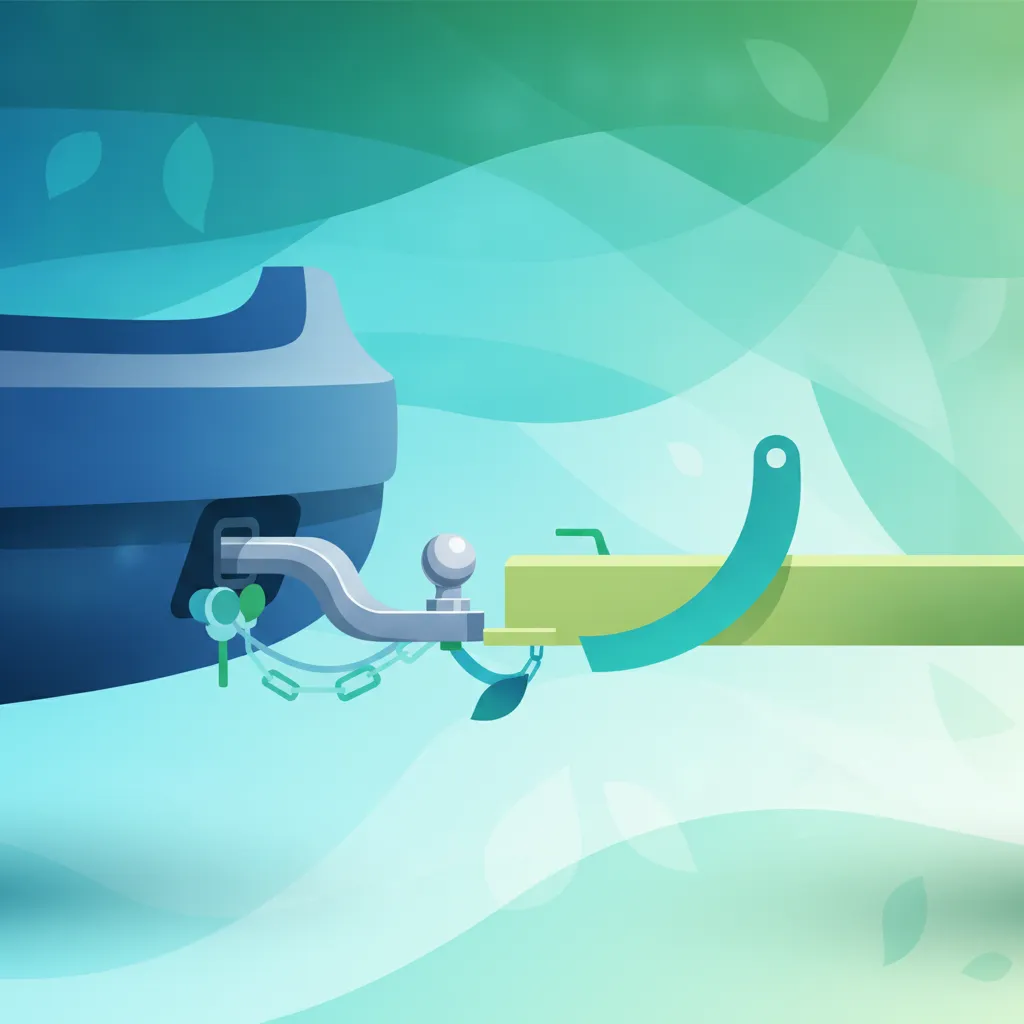
The most common coupling device for Category B vehicle trailers in Austria is the ball coupling. This system uses a towball on the vehicle that fits into a socket on the trailer's drawbar. It is widely used for caravans, small utility trailers, and most recreational trailers.
For heavier or specialized applications, other coupling types exist, though less common for Category B vehicles:
Regardless of the type, the coupling device must be rated for at least the maximum permissible mass (MPT) of the trailer it is designed to tow. Using an underrated hitch can lead to catastrophic failure.
Properly coupling a trailer ensures a secure connection and prevents detachment during travel.
Position the Vehicle: Slowly reverse the towing vehicle towards the trailer, aligning the tow ball with the trailer's coupling head.
Adjust Trailer Height: Use the trailer's jockey wheel to adjust the height of the coupling head so it is slightly above the tow ball.
Lower onto Tow Ball: Slowly lower the coupling head onto the tow ball. Ensure it locks securely in place. Most modern coupling heads have a visual indicator (e.g., a green marker) to confirm a successful connection.
Raise Jockey Wheel: Fully raise the jockey wheel and secure it in its highest position or remove it if designed to do so.
Attach Breakaway Cable: Connect the trailer's breakaway cable (also known as a safety cable or emergency brake cable) to a designated attachment point on the towing vehicle. This cable is a critical safety feature designed to apply the trailer's brakes automatically if the trailer accidentally detaches from the vehicle.
Connect Electrics: Plug the trailer's electrical connector (usually 7-pin or 13-pin) into the corresponding socket on the towing vehicle.
Perform Safety Checks: Before moving, conduct a full safety inspection, including lights, brakes, and tire pressure (detailed below).
One of the most critical factors for safe towing is proper load distribution within the trailer. Incorrectly distributed cargo can severely affect handling, braking, and stability, potentially leading to dangerous trailer sway or loss of control.
Trailer sway is the oscillating, side-to-side movement of a trailer while being towed. It can range from a minor nuisance to a dangerous loss of control. Improper load distribution is a primary cause of sway, particularly too much weight at the rear. Other factors contributing to sway include high speeds, strong crosswinds, sudden steering inputs, or incorrect tire pressure.
To prevent sway:
Before embarking on any journey with a trailer, a thorough safety check is indispensable. This ensures that all components are functioning correctly and that the combination is roadworthy. The braking system of the trailer itself is a critical part of this safety check.
After coupling the trailer, but before driving off, perform the following systematic checks:
For trailers with a maximum permissible mass (MPT) greater than 750 kg, a functional braking system is mandatory in Austria. These systems are crucial for ensuring adequate stopping power for the combined mass of the vehicle and trailer.
There are primarily two types of trailer braking systems:
Regardless of the system, it is vital to ensure it is functional and properly adjusted. An improperly adjusted brake controller, for example, can lead to premature or delayed trailer braking, causing instability or increased stopping distances.
Towing a trailer in Austria is governed by specific rules and regulations designed to ensure the safety of all road users. Adherence to these legal frameworks is mandatory.
A driver with a standard Category B license is subject to specific weight limits. They may tow a trailer with a maximum permissible mass (MPT) up to 750 kg. If the trailer's MPT exceeds 750 kg, the combined MPT of the vehicle and trailer must not exceed the towing vehicle's own MPT, and the total combined MPT must remain below 3500 kg. This rule is in place to ensure the vehicle's braking system can safely manage the combined load.
The B96 permit allows an extension of the Category B license's towing capabilities. With a B96 permit, you can tow a trailer with a permissible mass up to 2000 kg, provided that the combined maximum permissible mass of the vehicle and trailer does not exceed 4500 kg. There is also a requirement that the trailer's permissible mass should not exceed double the permissible mass of the towing vehicle.
The BE permit is for heavier towing requirements. It allows for a trailer with a permissible mass exceeding 750 kg, and the total permissible mass of the vehicle-trailer combination can reach up to 7000 kg. Similar to the B96, the trailer's permissible mass must not exceed double the permissible mass of the towing vehicle. This permit covers substantial trailers and combinations, necessitating specific driver training and a driving test.
As a fundamental safety rule, any trailer with a maximum permissible mass greater than 750 kg must be equipped with a functional braking system. This system can be electric or hydraulic and must be properly maintained and connected to the towing vehicle. Driving a trailer exceeding this weight limit without a functional braking system is illegal and extremely dangerous.
All trailers on public roads in Austria must be equipped with fully functional lighting and signaling systems. This includes rear-facing lights, side-facing markers (if required by length), turn signals, brake lights, and reverse lights. These lights must be clearly visible and fully operational, mirroring the signals of the towing vehicle. Before every journey, a functional check of all lights is mandatory to ensure visibility for other road users and compliance with traffic laws.
All cargo transported on a trailer must be securely fastened to prevent shifting, falling, or becoming a hazard during travel. This is a legal requirement under Austrian traffic law. Furthermore, for both the towing vehicle and the trailer, drivers must carry all necessary documentation, including vehicle registration papers (Zulassungsschein) and proof of liability insurance. The trailer must also display a clearly visible and correctly mounted registration plate.
Towing a trailer introduces additional complexities to driving. Being aware of common mistakes can help you avoid dangerous situations and legal infractions.
Error: Loading a trailer beyond its maximum permissible mass (MPT) or towing a combination that exceeds your driving license category's limits (e.g., using a B license for a combination requiring B96 or BE). Correction: Always check the MPT stated on the trailer's and vehicle's registration documents. Calculate the combined MPT and ensure it aligns with your license category. Weigh your loaded trailer if unsure, ensuring it's within limits. Consequence: Reduced braking efficiency, vehicle instability, excessive wear on components, legal fines, and potential insurance invalidation in case of an accident.
Error: Placing too much weight at the front or rear of the trailer, or failing to secure cargo. Correction: Distribute heavier items low and centrally, slightly forward of the axle(s). Secure all cargo with straps or nets. Consequence: Trailer sway, loss of steering control for the towing vehicle, increased stopping distances, and potential detachment of cargo.
Error: Driving a trailer with an MPT over 750 kg without a functional braking system, or with an improperly adjusted brake controller. Correction: Ensure the trailer's brake system is working correctly. Regularly test and adjust the brake controller in your towing vehicle according to the trailer's weight and braking feel. Consequence: Dangerously extended stopping distances, overheating of the towing vehicle's brakes, and legal penalties.
Error: Not checking trailer lights before departure, leading to non-functional brake lights, turn signals, or tail lights. Correction: Perform a comprehensive functional check of all trailer lights every time you couple the trailer and before every journey. Consequence: Reduced visibility for other road users, increased risk of rear-end collisions, and legal fines.
Error: The trailer's registration plate is missing, obscured, or improperly mounted (e.g., upside down or not securely fastened). Correction: Ensure the trailer's registration plate is clean, clearly visible, securely mounted, and correctly oriented according to Austrian regulations. Consequence: Legal fines and potential stop by law enforcement.
Error: Failing to carry the registration documents and proof of insurance for both the towing vehicle and the trailer. Correction: Always keep original or certified copies of all required documents for both the vehicle and the trailer readily accessible in the towing vehicle. Consequence: Legal fines and delays during roadside checks.
Towing a trailer fundamentally changes the driving dynamics of your vehicle. Adapting your driving style to different conditions is essential for safety.
Due to the increased length and turning radius, a vehicle with a trailer requires more space for turns and maneuvers. Exercise extreme caution around cyclists, pedestrians, and motorcyclists, especially when turning, changing lanes, or reversing. Always double-check blind spots.
Mastering the art of towing a trailer in Austria requires a combination of legal knowledge, practical skills, and a strong commitment to safety.
By diligently following these principles, you can ensure a safe, compliant, and enjoyable towing experience on Austrian roads.
This lesson covers the legal requirements for towing trailers with Category B vehicles in Austria, distinguishing between standard B license limits (3500 kg combined MPT), the B96 permit extension (4500 kg combined MPT), and the BE full trailer license (7000 kg combined MPT). Key safety concepts include proper coupling procedure, understanding MPT versus unladen mass, and the mandatory braking requirement for trailers exceeding 750 kg MPT. Load distribution principles emphasize placing heavier items low and central, slightly forward of the axle to prevent trailer sway. The lesson also details essential pre-trip safety checks including coupling security, lighting verification, tyre pressure, and documentation requirements under Austrian traffic law.
A short set of high-value points that capture the most important learning from this lesson.
A standard Category B license permits trailers up to 750 kg MPT, or heavier trailers only if combined MPT stays under 3500 kg and does not exceed the towing vehicle's own MPT
B96 permit extends combined towing limits to 4500 kg MPT, while BE license allows up to 7000 kg combined MPT for heavier trailers exceeding 750 kg
Austrian towing regulations are based on Maximum Permissible Mass (MPT) values from registration documents, not the actual loaded weight at any given time
Trailer stability depends on load distribution with heavier items positioned low and centrally, slightly forward of the axle(s)
Trailers with MPT exceeding 750 kg must be equipped with a functional braking system (electric or hydraulic), which is legally mandatory in Austria
Explore all units and lessons included in this driving theory course.
For B license with trailer over 750 kg MPT: combined MPT must not exceed 3500 kg and trailer MPT cannot exceed towing vehicle MPT
The breakaway cable must be attached to the towing vehicle before departure; it automatically applies trailer brakes if detachment occurs
Check the coupling visual indicator (usually green) to confirm secure connection before driving
Reduce speed in windy conditions and when overtaking vehicles due to increased risk of dangerous trailer sway
Use engine braking on steep alpine descents to prevent overheating your vehicle's foot brakes when towing
Confusing Maximum Permissible Mass (MPT) with actual loaded weight, leading to unlicensed towing when the combination exceeds license limits based on registration document values
Placing excessive weight at the rear of the trailer, which causes nose lift at the hitch and dangerous swaying instability
Failing to test and adjust the electric brake controller, resulting in trailer brakes that engage too early or too late relative to the towing vehicle
Not checking trailer lights before departure, creating hazards for other road users and risking fines
Driving with extended mirrors incorrectly positioned or missing them entirely when the trailer is wider than the towing vehicle
Lesson content overview
A short set of high-value points that capture the most important learning from this lesson.
A standard Category B license permits trailers up to 750 kg MPT, or heavier trailers only if combined MPT stays under 3500 kg and does not exceed the towing vehicle's own MPT
B96 permit extends combined towing limits to 4500 kg MPT, while BE license allows up to 7000 kg combined MPT for heavier trailers exceeding 750 kg
Austrian towing regulations are based on Maximum Permissible Mass (MPT) values from registration documents, not the actual loaded weight at any given time
Trailer stability depends on load distribution with heavier items positioned low and centrally, slightly forward of the axle(s)
Trailers with MPT exceeding 750 kg must be equipped with a functional braking system (electric or hydraulic), which is legally mandatory in Austria
Explore all units and lessons included in this driving theory course.
For B license with trailer over 750 kg MPT: combined MPT must not exceed 3500 kg and trailer MPT cannot exceed towing vehicle MPT
The breakaway cable must be attached to the towing vehicle before departure; it automatically applies trailer brakes if detachment occurs
Check the coupling visual indicator (usually green) to confirm secure connection before driving
Reduce speed in windy conditions and when overtaking vehicles due to increased risk of dangerous trailer sway
Use engine braking on steep alpine descents to prevent overheating your vehicle's foot brakes when towing
Confusing Maximum Permissible Mass (MPT) with actual loaded weight, leading to unlicensed towing when the combination exceeds license limits based on registration document values
Placing excessive weight at the rear of the trailer, which causes nose lift at the hitch and dangerous swaying instability
Failing to test and adjust the electric brake controller, resulting in trailer brakes that engage too early or too late relative to the towing vehicle
Not checking trailer lights before departure, creating hazards for other road users and risking fines
Driving with extended mirrors incorrectly positioned or missing them entirely when the trailer is wider than the towing vehicle
Explore search topics learners often look for when studying Trailer Coupling, B96, and BE Permits Overview. These topics reflect common questions about road rules, driving situations, safety guidance, and lesson level theory preparation for learners in Austria.
Browse additional driving theory lessons that cover connected traffic rules, road signs, and common driving situations related to this topic. Improve your understanding of how different rules interact across everyday traffic scenarios.
Understand the legal framework for towing trailers in Austria. This lesson details the weight limits and license categories (B, B96, BE) required for different trailer combinations to ensure compliance with traffic law.

This lesson provides a detailed definition of the vehicle classes permitted under the Austrian Category B license. It specifies the regulations concerning maximum permissible mass, the number of passenger seats, and the different trailer combinations allowed. Learners will understand the crucial distinctions between a standard license, the B96 extension, and the full BE category, ensuring they operate vehicles within legal limits and meet all roadworthiness standards.

This lesson explains the specific definitions and limitations of the C1, C1E, C, and CE heavy-goods vehicle licence categories in Austria. It details the permissible vehicle mass, axle configurations, and rules for trailer combinations associated with each category. Understanding these distinctions is fundamental for ensuring legal compliance and selecting the correct licence for specific vehicle configurations.

This lesson introduces the different classifications of trailers used in Austria, including drawbar trailers (Anhänger) and semi-trailers (Sattelanhänger/Auflieger). It explains their key structural differences, typical uses, and the types of coupling systems they employ. Understanding these types is the first step in learning to operate combination vehicles.
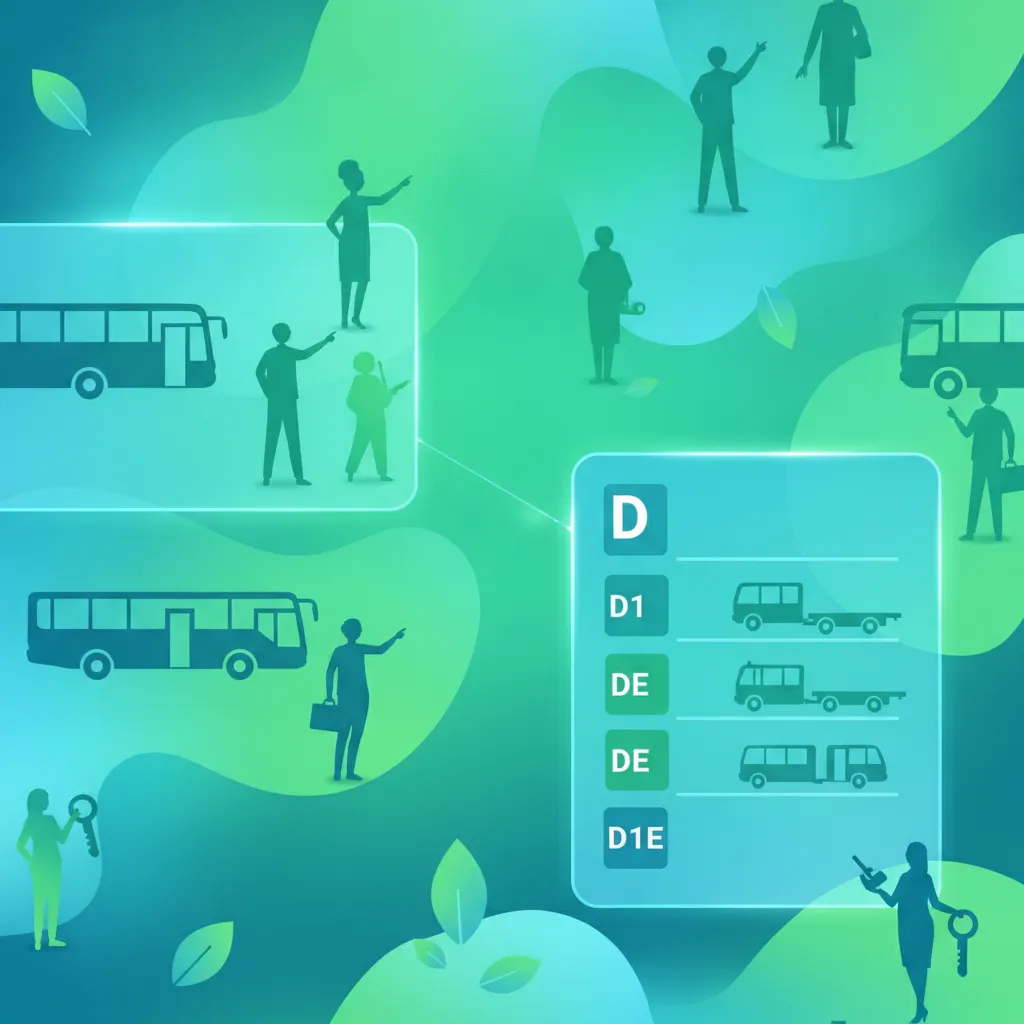
This lesson provides a clear breakdown of the different Category D licences in Austria. It explains the specific rights and limitations associated with each, including the maximum number of passengers for D1 (minibus) and D (bus/coach). Furthermore, it details the rules for combination vehicles, covering trailers (D1E, DE) and their specific operational requirements.

This lesson details the general traffic rules applicable to heavy goods vehicles on Austrian roads, highlighting differences from passenger car regulations. It covers key topics such as right-of-way at intersections, specific rules for overtaking, maintaining proper lane discipline, and adhering to designated speed limits. Understanding these rules is critical for safe integration into mixed traffic.

Adding a trailer (Category DE/D1E) changes a vehicle's handling characteristics significantly. This lesson introduces key concepts, such as the increased turning circle, the effect of trailer swing, and the complexities of braking with the extra weight and length. It provides a theoretical foundation for understanding how to safely manage a combination vehicle, particularly during low-speed manoeuvres.

This lesson explains the critical importance of properly securing any load, whether inside the vehicle, on a roof rack, or in a trailer. It covers the principles of correct weight distribution to maintain the vehicle's center of gravity and stability. Learners will understand the legal requirements and best practices for using tie-downs and other securing methods to prevent items from shifting or falling, which could create a serious hazard on the road.
This lesson focuses on the legal restrictions concerning a heavy vehicle's dimensions, including maximum height, width, and length. It teaches drivers how to interpret road signs and supplemental plates that indicate these limits. This knowledge is crucial for route planning, especially when navigating under bridges, through tunnels, and on restricted roads.
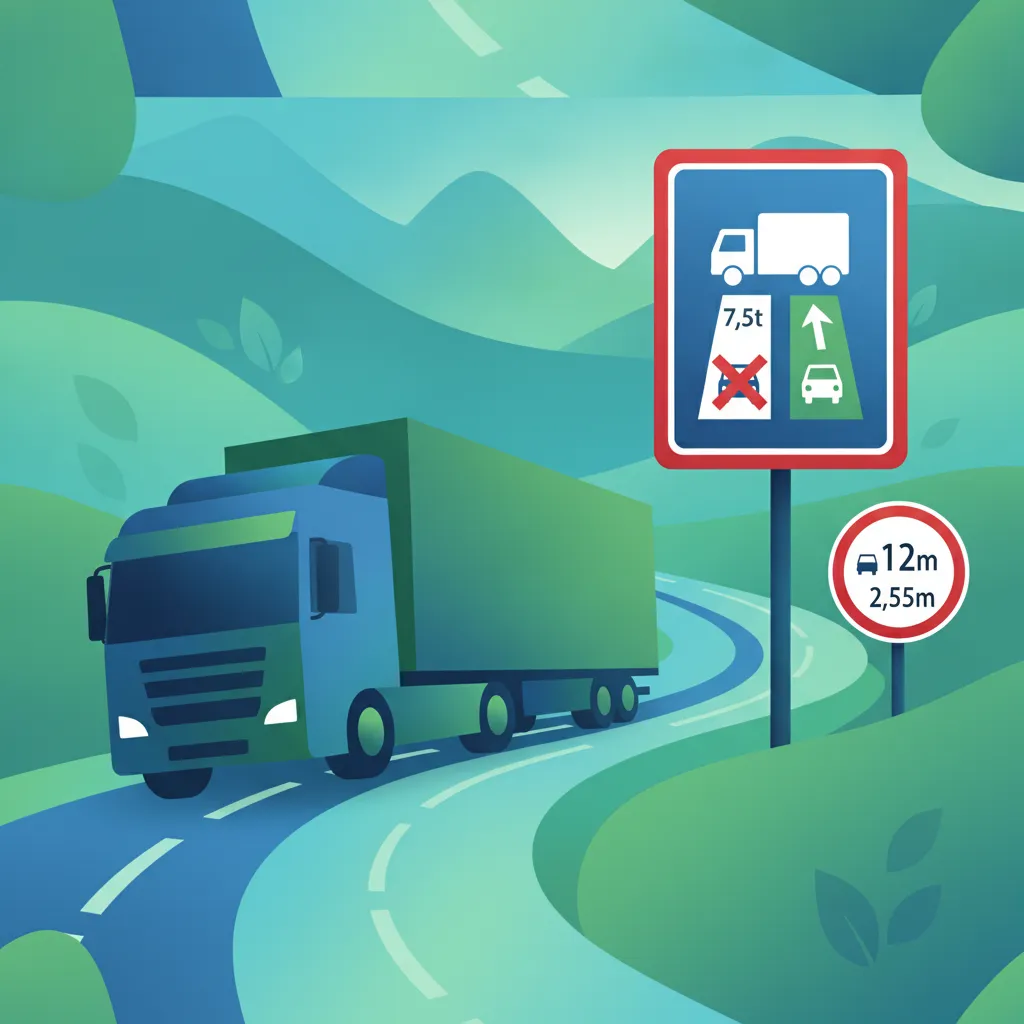
This lesson focuses on the specific Austrian road signs and supplemental plates that apply to heavy goods vehicles. It explains how to interpret signage indicating weight limits, height and width restrictions, lane usage rules, and other critical regulatory information. Correctly understanding these signs is essential for legal compliance and safe navigation on Austria's roads.

This lesson details the legal ramifications of operating an overloaded heavy vehicle in Austria, which include significant fines and penalty points. It also emphasizes the severe safety risks, such as compromised braking performance and increased mechanical stress on the vehicle. Understanding these consequences reinforces the importance of strict adherence to weight limits.
Learn essential safety aspects for towing trailers in Austria. Covers proper coupling, load distribution, trailer braking systems, pre-trip inspections, and common errors to avoid for a secure driving experience.
This lesson introduces the different classifications of trailers used in Austria, including drawbar trailers (Anhänger) and semi-trailers (Sattelanhänger/Auflieger). It explains their key structural differences, typical uses, and the types of coupling systems they employ. Understanding these types is the first step in learning to operate combination vehicles.
This lesson explains the critical importance of properly securing any load, whether inside the vehicle, on a roof rack, or in a trailer. It covers the principles of correct weight distribution to maintain the vehicle's center of gravity and stability. Learners will understand the legal requirements and best practices for using tie-downs and other securing methods to prevent items from shifting or falling, which could create a serious hazard on the road.

This lesson provides a step-by-step guide to the process of safely coupling a trailer to a tractor unit (Kuppeln). It covers aligning the vehicles, securing the mechanical lock (e.g., fifth wheel), and correctly connecting the air and electrical lines. A thorough safety check after coupling is mandatory to prevent trailer separation.

This lesson focuses on the phenomenon of off-tracking, where the rear wheels of a trailer follow a path inside that of the tractor's wheels during a turn. It explains how to anticipate this effect and allow extra space when cornering to avoid running over curbs, signs, or other roadside objects. Managing off-tracking is a key skill for navigating intersections and roundabouts.
Incorrectly coupling a trailer can lead to catastrophic failure. This lesson provides a detailed, step-by-step guide for safely attaching and detaching a trailer. It covers aligning the vehicle, securing the coupling mechanism, connecting brake and electrical lines, and performing a series of crucial safety checks (like a tug test) before moving off.

This lesson provides guidance on how to strategically distribute a load across both the main vehicle and its trailer. It covers planning the placement of cargo to maintain a stable centre of gravity for the entire combination. This holistic approach to loading is crucial for safe handling and adhering to individual vehicle and axle weight limits.
This lesson focuses on the management of tongue load (Stützlast), which is the downward force the trailer coupling exerts on the towing vehicle. It explains how too little or too much tongue load can negatively affect the stability and handling of the entire combination. Achieving the correct Stützlast is vital for safe towing.
This lesson outlines the standardized procedure for handling a vehicle breakdown safely. It covers pulling over to a safe location, activating hazard lights, deploying the warning triangle, and wearing a high-visibility vest. It also explains when and how to contact roadside assistance or emergency services.
This lesson teaches the systematic procedure for conducting a thorough pre-trip walk-around inspection. It provides a checklist of critical components to examine, including tyres, lights, braking systems, and load security. Performing this daily check is a legal requirement and a fundamental practice for preventing mechanical failures and ensuring safety.

This lesson emphasizes the need to inspect all load-securing equipment as part of the daily pre-trip check. It teaches drivers how to look for signs of wear, damage, or malfunction in straps, chains, ratchets, and other devices. Verifying the integrity of this equipment is essential before every journey to ensure the load remains secure.
Find clear answers to common questions learners have about Trailer Coupling, B96, and BE Permits Overview. Learn how the lesson is structured, which driving theory objectives it supports, and how it fits into the overall learning path of units and curriculum progression in Austria. These explanations help you understand key concepts, lesson flow, and exam focused study goals.
No. A standard Category B license allows you to tow a light trailer (up to 750 kg). If the trailer is heavier, the total permissible mass of the vehicle and trailer combination must generally not exceed 3,500 kg.
The B96 code is an extension for your Category B license. It allows you to tow trailer combinations where the total permissible mass is between 3,500 kg and 4,250 kg. It requires additional training but no separate practical test.
You need a BE license if your vehicle and trailer combination exceeds 4,250 kg in total permissible mass. This requires a specific theoretical and practical examination.
Improper load distribution can shift the center of gravity and reduce traction on the front wheels. This makes steering difficult and significantly increases the risk of the trailer fishtailing or the vehicle becoming unstable during braking.
Refine your study plan by searching for specific Austrian driving theory practice sets. Pinpoint questions related to particular road rules, signs, or challenge levels, and begin practicing immediately to reinforce your knowledge and excel in your official exam with confidence. Get started with focused revision today.