
This lesson bridges the gap between theoretical rules and everyday driving reality. You will learn how to maintain safety and efficiency during routine trips, preparing you for both the Category B theory exam and your future life on the road.

Lesson content overview
Navigating the diverse roads of Austria, from bustling city centers to scenic alpine routes, requires more than just knowing the rules; it demands a practical application of safe, responsible, and efficient driving habits. This lesson, part of the Austrian Driving License B Theory Course, consolidates the theoretical knowledge you've gained by applying it to common everyday driving scenarios. It aims to bridge the gap between understanding traffic laws and developing the confident, safe, and courteous real-world driving behaviors essential for a lifetime on the road.
We will explore crucial aspects like smooth driving for fuel efficiency, effectively managing distractions within your vehicle, and maintaining courtesy in challenging traffic conditions. By reinforcing defensive driving principles as a constant habit, this chapter prepares you to transition from a learner to a responsible driver, ensuring safety for yourself and all other road users.
Smooth driving is a cornerstone of safe, comfortable, and economical vehicle operation. It involves a driving style characterized by gradual acceleration and deceleration, maintaining a steady speed, and making minimal abrupt steering inputs. This approach not only enhances passenger comfort but also significantly reduces wear and tear on your vehicle's components, such as brakes and tires, leading to better fuel economy.
At its heart, smooth driving is about anticipation. By looking far ahead and understanding the flow of traffic, you can avoid sudden actions, making your driving predictable and safer for everyone.
Progressive acceleration refers to slowly increasing the throttle to gain speed without jerky movements. Instead of pressing the accelerator hard, you apply gentle, steady pressure, allowing the vehicle to build momentum smoothly. This technique is particularly beneficial for urban driving, merges, and when moving off from a stop.
Rapid acceleration consumes more fuel, puts undue stress on the engine and transmission, and can make passengers feel uncomfortable. By contrast, progressive acceleration improves fuel efficiency, reduces engine strain, and contributes to a more relaxed driving experience.
Engine braking is the technique of using your vehicle's engine resistance to slow down, rather than relying solely on the footbrake. This is typically achieved by lifting your foot off the accelerator while the car is still in gear, or by downshifting to a lower gear. When engine braking, modern vehicles often cut off fuel supply to the engine, resulting in zero fuel consumption.
This method significantly reduces wear on your brake pads and discs, extends their lifespan, and provides better control, especially on long descents or in slippery conditions. It’s a key component of anticipatory driving, allowing you to control your speed without sudden braking.
Anticipatory braking involves reacting to traffic conditions and road features well in advance. Instead of waiting until the last moment to brake, you begin to decelerate earlier, often by lifting off the accelerator and allowing engine braking to take effect, followed by gentle application of the footbrake if needed. This allows for a smoother, more controlled stop.
For example, when approaching a traffic light that has just turned red, you lift off the accelerator earlier, using engine braking to gradually reduce speed, arriving at the stop line without needing to brake abruptly. This technique improves fuel efficiency, reduces brake wear, and minimizes the risk of being rear-ended by a following vehicle.
Fuel-efficient driving, often called eco-driving, comprises practices aimed at reducing fuel consumption while maintaining safety and adherence to traffic regulations. These techniques not only save money on fuel but also reduce your vehicle's environmental impact by lowering emissions.
Understanding how your vehicle consumes fuel and adopting smart driving habits can make a significant difference over time. It's about optimizing your driving style, not necessarily driving slower.
Every vehicle has an optimal speed range where it achieves its best fuel economy. For most modern cars, this typically falls between 80 km/h and 100 km/h on open roads, where the engine operates efficiently without excessive aerodynamic drag. Driving significantly above this range drastically increases fuel consumption due to the exponential increase in air resistance.
While always adhering to posted speed limits, aim to maintain a steady speed within this optimal range on motorways and rural roads. Avoiding frequent acceleration and deceleration at high speeds is also crucial for maximizing efficiency.
For manual transmission vehicles, strategic gear selection is paramount for fuel efficiency. The general rule is to shift to a higher gear as early as possible, typically keeping the engine revolutions per minute (RPM) below 2,500 for petrol vehicles and around 2,000 for diesel vehicles. Driving in a higher gear at lower RPMs reduces engine strain and fuel consumption.
Modern automatic transmissions are designed to shift gears efficiently, but drivers can still influence consumption by driving smoothly and avoiding heavy throttle inputs that might cause the transmission to downshift unnecessarily. Using engine braking by downshifting (in manual or some automatic modes) is also a highly effective fuel-saving technique.
Coasting refers to allowing your vehicle to roll without power, either by lifting your foot off the accelerator while in gear (engine braking) or, in some contexts, by selecting neutral. While engine braking is a safe and fuel-efficient form of coasting, driving in neutral, especially downhill, is generally unsafe and strongly discouraged.
When in neutral, you lose the ability to use engine braking, which means your vehicle can accelerate unexpectedly, making it harder to control. Additionally, steering and braking might be compromised in some older vehicles without engine assistance. Always keep the vehicle in gear to maintain full control, especially on descents.
Coasting downhill in neutral gear is unsafe as it reduces vehicle control and removes engine braking capability. Always keep your vehicle in gear, using engine braking to manage your speed.
Distractions inside the vehicle cabin are a major contributor to road accidents. Any activity that diverts your attention from the primary task of driving—whether visual, manual, or cognitive—can impair your ability to react safely and make sound decisions. Effective distraction management is a critical defensive driving skill.
Maintaining your focus entirely on the road and surrounding traffic is non-negotiable for safety. This means actively minimizing non-driving related stimuli and establishing routines to handle potential distractions.
In Austria, Section 30 of the StVO (Straßenverkehrsordnung – Road Traffic Act) strictly prohibits the use of handheld mobile phones or other electronic devices while driving, except in emergencies. This regulation applies to drivers of all vehicle types and on all road environments.
If you need to use a mobile phone, it must be operated hands-free, typically via Bluetooth or a fixed car kit. Even with hands-free operation, engaging in complex conversations can still be a cognitive distraction. It is always best to set your navigation, select music, or make calls before you start driving, or pull over safely if adjustments are needed during your journey.
Before starting your journey, pre-set your GPS, choose your music, and make any urgent calls. This helps you avoid handling your phone while driving and keeps your focus on the road.
Passengers, while not always perceived as a direct hazard, can contribute to driver distraction. Lively conversations, requests for adjustments to climate control or entertainment, or even playful interactions can momentarily divert a driver's attention.
Establish clear communication protocols with your passengers. Politely request that they minimize distractions during critical driving moments, such as navigating complex intersections or merging onto a motorway. Explain the importance of your full concentration for everyone's safety. If a passenger needs to adjust something, ask them to wait for a safe opportunity, like a stop at a traffic light.
Fumbling for controls, whether for the radio, climate system, or even snacks, requires you to take your eyes off the road and your hands off the steering wheel. This brief moment of inattention can have severe consequences, especially at higher speeds.
Familiarize yourself with your vehicle's controls so you can operate them by touch as much as possible, or at least with minimal visual diversion. Arrange commonly used items within easy, instinctive reach to avoid stretching or searching. The fewer times you need to look away from the road, the safer your journey will be.
Courtesy on the road is not merely about good manners; it's a fundamental aspect of safe and efficient traffic flow. Predictable and considerate behavior from drivers reduces confusion, minimizes road rage, and prevents accidents. Being courteous means communicating your intentions clearly, respecting the rights of other road users, and being willing to cooperate to keep traffic moving smoothly.
This principle extends to all road users, from pedestrians and cyclists to other vehicle drivers. Understanding and practicing road etiquette, especially in busy Austrian urban environments or on complex motorways, is crucial.
Austria's traffic laws, particularly those concerning priority (§23 StVO), are designed to prevent collisions by clearly defining who has the right-of-way. However, courteous driving goes beyond just strict adherence to the law. It involves being willing to yield even when you technically have priority, if doing so prevents a dangerous situation or facilitates smoother flow.
For instance, at an uncontrolled intersection, while you might have priority from the right, making eye contact and slightly slowing down can reassure other drivers and prevent misjudgment. Similarly, when entering a roundabout or approaching a pedestrian crossing, always be prepared to yield, providing ample space and time for others.
On motorways and other multi-lane roads, merging traffic requires cooperation. A courteous driver will actively help other vehicles merge safely by creating a gap in their lane. This involves adjusting your speed or, if safe, temporarily changing lanes to allow the merging vehicle to enter smoothly.
When you are the one merging, it's your responsibility to match the speed of the flowing traffic and find a safe gap. However, the willingness of other drivers to create space significantly reduces stress and collision risk. This cooperative spirit is vital for maintaining steady traffic flow, especially on busy Austrian motorways.
The use of turn signals (§14 StVO) is a basic but incredibly important aspect of courteous and safe driving. Signals are your primary means of communicating your intentions to other road users. Always signal well in advance of a turn, lane change, or exit to give others enough time to react and adjust their driving.
Failure to signal, or signaling too late, can cause confusion, unexpected braking, and sudden maneuvers from other drivers, greatly increasing the risk of an accident. Whether you are turning into a side street, changing lanes on a busy road, or exiting a roundabout, clear and timely signaling is a mark of a responsible driver.
Defensive driving is not a specific maneuver but a mindset – a perpetual state of risk awareness and readiness to respond to unexpected events. It means assuming that other drivers might make mistakes and preparing yourself to react safely. This proactive approach significantly reduces your risk of involvement in a collision.
Integrating defensive driving principles into your everyday habits transforms theoretical knowledge into practical, life-saving skills. It empowers you to anticipate hazards, rather than merely reacting to them.
Effective observation involves constantly scanning your surroundings, not just directly ahead. This includes regularly checking your rearview and side mirrors (every 5-8 seconds), looking over your shoulder to check blind spots before changing lanes, and scanning far down the road, to the sides, and behind your vehicle.
This continuous scanning helps you build a comprehensive mental picture of the traffic situation, identifying potential hazards early. Be aware of vehicles approaching from behind, pedestrians near crossings, and changes in traffic flow well in advance.
A key aspect of defensive driving is anticipating what other road users might do, rather than simply assuming they will follow the rules. For example, when approaching a parked car, anticipate that its door might open or a pedestrian might step out from behind it. Near schools, always expect children to cross unexpectedly.
Observe visual cues: a vehicle indicating a turn but not slowing down, a pedestrian looking distracted, or brake lights flashing several cars ahead. By predicting potential actions, you gain valuable seconds to adjust your speed, position, or prepare to brake.
Maintaining a safe following distance is one of the most effective ways to prevent rear-end collisions and provide yourself with sufficient reaction time. In Austria, the general rule of thumb for dry roads is to maintain at least a "2-second rule" distance from the vehicle in front. This means picking a fixed point on the road and ensuring at least two seconds pass from when the vehicle ahead passes that point until you reach it.
In adverse conditions such as rain, fog, or icy roads, this distance should be significantly increased – to 3, 4, or even more seconds. A safe buffer also means leaving space to the sides (avoiding driving in blind spots) and being aware of the space behind you, allowing you room to maneuver if sudden braking is required.
While specific situations demand nuanced application of driving principles, certain fundamental Austrian traffic regulations (StVO) form the bedrock of safe and legal everyday driving. Adhering to these rules is not just a legal obligation but a core component of defensive and courteous behavior.
The following regulations are central to safe and responsible driving in Austria. Familiarity with these is essential for passing your theory test and for safe driving in practice.
Use of Turn Signals (§14 StVO): You must indicate your direction of travel well in advance of any turn, lane change, or intention to overtake. This mandatory action informs other road users of your plans, preventing confusion and collisions.
Safe Driving Obligation (§22 StVO): This broad clause mandates that drivers operate their vehicles in a manner that does not endanger anyone, including themselves. It underpins principles like maintaining safe following distances, driving at an appropriate speed for conditions, and maintaining full control of the vehicle.
Priority Rules (§23 StVO): Understanding who has the right-of-way at intersections, roundabouts, and other junctions is critical. At uncontrolled intersections, you must yield to vehicles approaching from the right. Road signs and markings always take precedence in determining priority.
Mobile Phone Prohibition (§30 StVO): As discussed, using a handheld mobile phone or other electronic device while driving is strictly prohibited to prevent driver distraction. Hands-free operation is permitted but should still be managed carefully to avoid cognitive overload.
Lighting Requirements (§28 StVO): Proper use of vehicle lights is crucial for visibility, both for you and for other road users. Headlights (dipped beams) must be used at night, in tunnels, and during the day when visibility is significantly impaired by fog, heavy rain, or snow. High beams should only be used when visibility is extremely low and no other traffic is approaching or directly ahead.
Alcohol and Drug Limits (§38 StVO): Driving under the influence of alcohol or drugs is strictly forbidden. The blood alcohol concentration (BAC) limit for experienced drivers is 0.5 per mille (‰). For novice drivers (during the probationary period) and professional drivers, a stricter limit of 0.1‰ applies. Impaired driving severely increases accident risk.
Seatbelt and Child Restraint Use (§16a StVO): All occupants of a vehicle must wear seat belts, and children must be secured in appropriate child restraint systems according to their age, height, and weight. Seatbelts are vital safety devices that prevent serious injury in the event of a collision.
Safe driving is not static; it constantly adapts to changing conditions. The principles of smooth driving, defensive habits, and courtesy become even more critical when facing variations in weather, road type, vehicle load, or the presence of vulnerable road users.
Understanding how to adjust your driving in different contexts is a hallmark of an experienced and responsible driver.
Rain and Fog: Reduce your speed significantly, as braking distances increase and visibility decreases. Increase your following distance. Use dipped beams (Abblendlicht), never just parking lights. In very heavy fog, activate fog lights (Nebelscheinwerfer) if your vehicle has them, but switch them off immediately when visibility improves. Ensure your wipers are functional and use them as needed.
Snow and Ice: Drive at a very slow speed, accelerate and brake extremely gently, and increase following distances dramatically. Black ice is particularly dangerous as it is invisible; be extra vigilant on bridges, shaded areas, and less-trafficked roads. Use engine braking more frequently. Winter tires are legally mandated in Austria during certain periods and conditions.
Nighttime: Use dipped beams; activate high beams (Fernlicht) only on unlit roads where no oncoming traffic or vehicles ahead are present. Reduce speed, as perception of distance and hazards is diminished. Be extra cautious of pedestrians, cyclists, and wild animals, who are harder to spot.
Urban Traffic: Expect frequent stops, complex intersections, and a high density of pedestrians, cyclists, and public transport. Practice continuous scanning, anticipate sudden movements from others, and maintain lower speeds. Be prepared to yield more often. Short, progressive acceleration bursts between stops can help maintain flow without wasting fuel.
Motorways: Maintain a steady speed within the optimal range (e.g., 80-100 km/h for fuel efficiency, within the legal limit of 130 km/h). Observe lane discipline strictly, using the rightmost lane unless overtaking. Signal well in advance for lane changes and exits. Use engine braking on deceleration for exits and traffic slowdowns. Increase following distance due to higher speeds.
Heavy Loads/Trailers: Vehicles carrying heavy loads or towing trailers have significantly increased inertia, meaning they accelerate slower and require much longer braking distances. Increase your following distance considerably. When ascending hills, you may need to downshift earlier to maintain power; when descending, rely heavily on engine braking to prevent brake fade. Always adhere to specific speed limits for vehicles with trailers.
Vulnerable Road Users (Pedestrians, Cyclists, Motorcyclists): Always give extra space and be highly vigilant around pedestrians and cyclists. Anticipate erratic behavior, sudden turns, or swerving. Always check blind spots meticulously before turning or changing lanes, as these users can be easily hidden. Yield more readily and always pass with a safe lateral distance. Motorcyclists can be harder to judge speed and distance; give them plenty of room.
Even experienced drivers can fall into bad habits. Being aware of common mistakes can help new drivers avoid developing them.
Abrupt Acceleration/Braking:
Coasting in Neutral Downhill:
Using Handheld Mobile Phones:
Failure to Signal Early:
Tailgating:
Ignoring Right-of-Way at Uncontrolled Intersections:
Poor Hill Start Technique:
This lesson bridges theoretical knowledge and everyday driving practice for Austrian Category B learners, covering smooth driving techniques like progressive acceleration and engine braking for fuel efficiency and safety. It emphasizes defensive driving as a continuous mindset involving continuous scanning, hazard anticipation, and maintaining safe buffer distances. Key Austrian traffic regulations are reinforced, including the mobile phone prohibition (§30 StVO), mandatory turn signaling (§14 StVO), priority rules (§23 StVO), and proper lighting requirements (§28 StVO). The content also addresses managing in-cabin distractions, practicing courteous driving etiquette, and adapting techniques to adverse weather, urban traffic, and motorway conditions. By understanding and avoiding common mistakes—such as coasting in neutral, tailgating, and late signaling—learners can develop the habits of a competent and responsible driver.
A short set of high-value points that capture the most important learning from this lesson.
Smooth driving—using progressive acceleration, engine braking, and anticipatory braking—enhances safety, comfort, passenger experience, and fuel efficiency simultaneously.
Defensive driving is a constant mindset of risk awareness and hazard anticipation, not just a set of reactions; it means assuming others may make mistakes and preparing accordingly.
Mobile phone use while driving is strictly prohibited under §30 StVO; even hands-free operation can cause cognitive distraction that impairs reaction time.
Courteous driving practices such as signaling well in advance, yielding even when you have priority, and creating merge gaps reduce conflict and improve overall traffic flow.
Maintaining appropriate following distances (minimum 2-second rule on dry roads, significantly longer in adverse conditions) and keeping the vehicle in gear on descents are fundamental safety habits.
Explore all units and lessons included in this driving theory course.
Engine braking—lifting off the accelerator while in gear—is safer and more fuel-efficient than coasting in neutral, especially on downhill sections.
Under §30 StVO, handheld mobile phones are prohibited; set navigation, music, and calls before starting your journey to avoid cabin distractions.
The 2-second following distance rule is the minimum on dry roads; increase to 3–4+ seconds in rain, fog, snow, or icy conditions.
Always signal at least 3 seconds before any turn, lane change, or exit; late or missing signals cause confusion and increase collision risk.
At uncontrolled intersections, yield to traffic approaching from your right (§23 StVO), even if you technically have priority, to prevent dangerous misunderstandings.
Coasting in neutral on downhill sections to save fuel—this removes engine braking capability, reduces vehicle control, and is strongly discouraged.
Using handheld mobile phones or adjusting GPS while driving instead of pre-configuring everything before departure; this violates §30 StVO.
Failing to signal or signaling too late (just as turning begins); other road users need adequate time to react to your intentions.
Following too closely behind other vehicles, especially in heavy traffic, leaving insufficient reaction time and increasing rear-end collision risk.
Neglecting to check blind spots thoroughly before changing lanes or turning, which endangers cyclists, pedestrians, and motorcyclists.
Lesson content overview
A short set of high-value points that capture the most important learning from this lesson.
Smooth driving—using progressive acceleration, engine braking, and anticipatory braking—enhances safety, comfort, passenger experience, and fuel efficiency simultaneously.
Defensive driving is a constant mindset of risk awareness and hazard anticipation, not just a set of reactions; it means assuming others may make mistakes and preparing accordingly.
Mobile phone use while driving is strictly prohibited under §30 StVO; even hands-free operation can cause cognitive distraction that impairs reaction time.
Courteous driving practices such as signaling well in advance, yielding even when you have priority, and creating merge gaps reduce conflict and improve overall traffic flow.
Maintaining appropriate following distances (minimum 2-second rule on dry roads, significantly longer in adverse conditions) and keeping the vehicle in gear on descents are fundamental safety habits.
Explore all units and lessons included in this driving theory course.
Engine braking—lifting off the accelerator while in gear—is safer and more fuel-efficient than coasting in neutral, especially on downhill sections.
Under §30 StVO, handheld mobile phones are prohibited; set navigation, music, and calls before starting your journey to avoid cabin distractions.
The 2-second following distance rule is the minimum on dry roads; increase to 3–4+ seconds in rain, fog, snow, or icy conditions.
Always signal at least 3 seconds before any turn, lane change, or exit; late or missing signals cause confusion and increase collision risk.
At uncontrolled intersections, yield to traffic approaching from your right (§23 StVO), even if you technically have priority, to prevent dangerous misunderstandings.
Coasting in neutral on downhill sections to save fuel—this removes engine braking capability, reduces vehicle control, and is strongly discouraged.
Using handheld mobile phones or adjusting GPS while driving instead of pre-configuring everything before departure; this violates §30 StVO.
Failing to signal or signaling too late (just as turning begins); other road users need adequate time to react to your intentions.
Following too closely behind other vehicles, especially in heavy traffic, leaving insufficient reaction time and increasing rear-end collision risk.
Neglecting to check blind spots thoroughly before changing lanes or turning, which endangers cyclists, pedestrians, and motorcyclists.
Explore search topics learners often look for when studying Everyday Driving Situations and Practical Tips. These topics reflect common questions about road rules, driving situations, safety guidance, and lesson level theory preparation for learners in Austria.
Browse additional driving theory lessons that cover connected traffic rules, road signs, and common driving situations related to this topic. Improve your understanding of how different rules interact across everyday traffic scenarios.
Understand essential Austrian traffic laws like signaling, safe driving obligations, priority rules, mobile phone use, and lighting requirements. Essential knowledge for safe and legal driving in Austria.

This lesson provides a comprehensive overview of a driver's legal responsibilities and the potential consequences of failing to adhere to traffic laws. Learners will explore the concept of liability in the event of an accident and the structure of the official penalty catalogue. The material covers the impact of fines, demerit points, and potential driving bans (Fahrverbot) on one's license, as well as the effects on insurance premiums.

This lesson delves into the specific Austrian laws and regulations that professional passenger drivers must adhere to. It provides an overview of rules concerning driving and rest times, the use of the digital tachograph, and the essential documents that must be carried at all times. Understanding these legal obligations is crucial for compliance and avoiding penalties during roadside checks.
This lesson provides a clear overview of the legal penalties for traffic violations in Austria. It details the system of fines, demerit points, and the conditions that can lead to license suspension or revocation. Understanding these consequences reinforces the importance of lawful and responsible riding.
This lesson details the essential legal and administrative requirements for operating an AM vehicle in Austria. It covers the processes for vehicle registration, the obligation for licence plates, and the necessity of third-party liability insurance. Furthermore, it explains the importance of regular technical inspections to ensure the vehicle remains roadworthy and compliant with national standards.
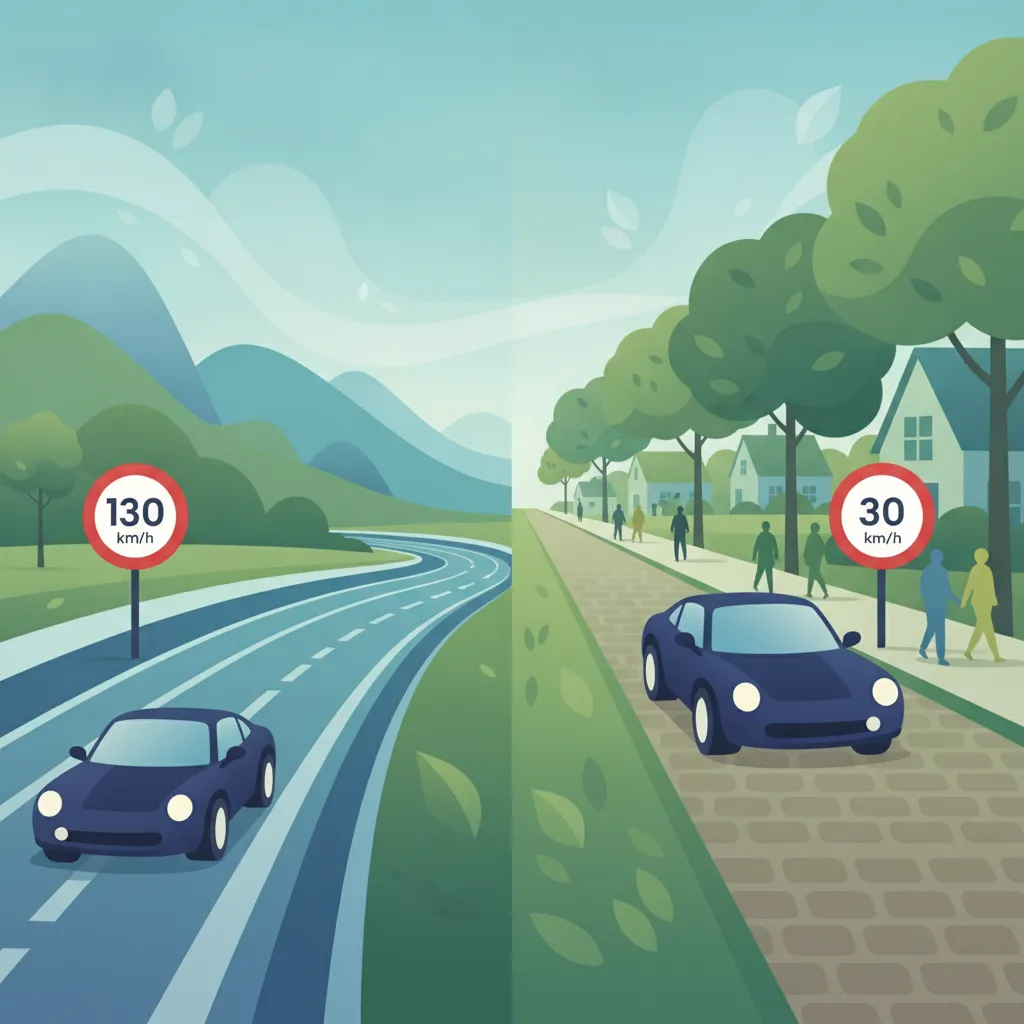
This lesson details the legally prescribed speed limits across Austria's road network, including the specific limits for urban areas (Ortsgebiet), rural roads (Landstraßen), motorways (Autobahnen), and expressways (Schnellstraßen). Learners will understand how to interpret speed limit signs, including those with supplementary conditions. Adherence to these legal requirements is a fundamental aspect of road safety and compliance with the Austrian road traffic act (StVO).
This lesson provides an overview of the legal framework governing heavy vehicle drivers in Austria. It details the potential penalties for violations, including fines, penalty points, and the risk of licence suspension. A clear understanding of these consequences reinforces the importance of compliant and responsible driving.

This lesson details the mandatory personal and vehicle documentation required for motorcyclists in Austria. It covers the necessity of carrying a valid licence card, vehicle registration papers, and proof of insurance at all times. Understanding these legal requirements ensures full compliance with Austrian traffic law and facilitates smooth interactions with law enforcement.

This lesson guides learners through the essential documentation required for legally operating a vehicle in Austria, including the registration certificate, proof of insurance, and the driver's license (Führerschein). It explains the Austrian Vignette system for using motorways (Autobahnen) and expressways (Schnellstraßen), covering how to purchase, affix, and comply with the regulations. The content also provides awareness of specific toll roads and their payment systems to ensure full legal conformity.

This lesson outlines the significant legal responsibilities placed on heavy-vehicle drivers under Austrian law, emphasizing a strong duty of care and professional conduct. It covers the obligation to perform thorough pre-trip inspections, comply with all load and weight regulations, and uphold safety standards to protect all road users. Adherence to these principles is crucial for professional and safe operation.

This lesson details the general traffic rules applicable to heavy goods vehicles on Austrian roads, highlighting differences from passenger car regulations. It covers key topics such as right-of-way at intersections, specific rules for overtaking, maintaining proper lane discipline, and adhering to designated speed limits. Understanding these rules is critical for safe integration into mixed traffic.
Learn about frequent driving errors such as abrupt maneuvers, tailgating, and mobile phone misuse. This lesson provides practical advice on defensive driving techniques and how to prevent common mistakes on Austrian roads.

This lesson introduces the proactive mindset of defensive driving, which focuses on anticipating potential hazards rather than just reacting to them. It teaches techniques for systematic risk assessment, including scanning the road ahead, checking mirrors frequently, and being aware of the potential actions of other road users. By adopting these safe habits, drivers can create a buffer of safety around their vehicle and significantly reduce the likelihood of being involved in an accident.
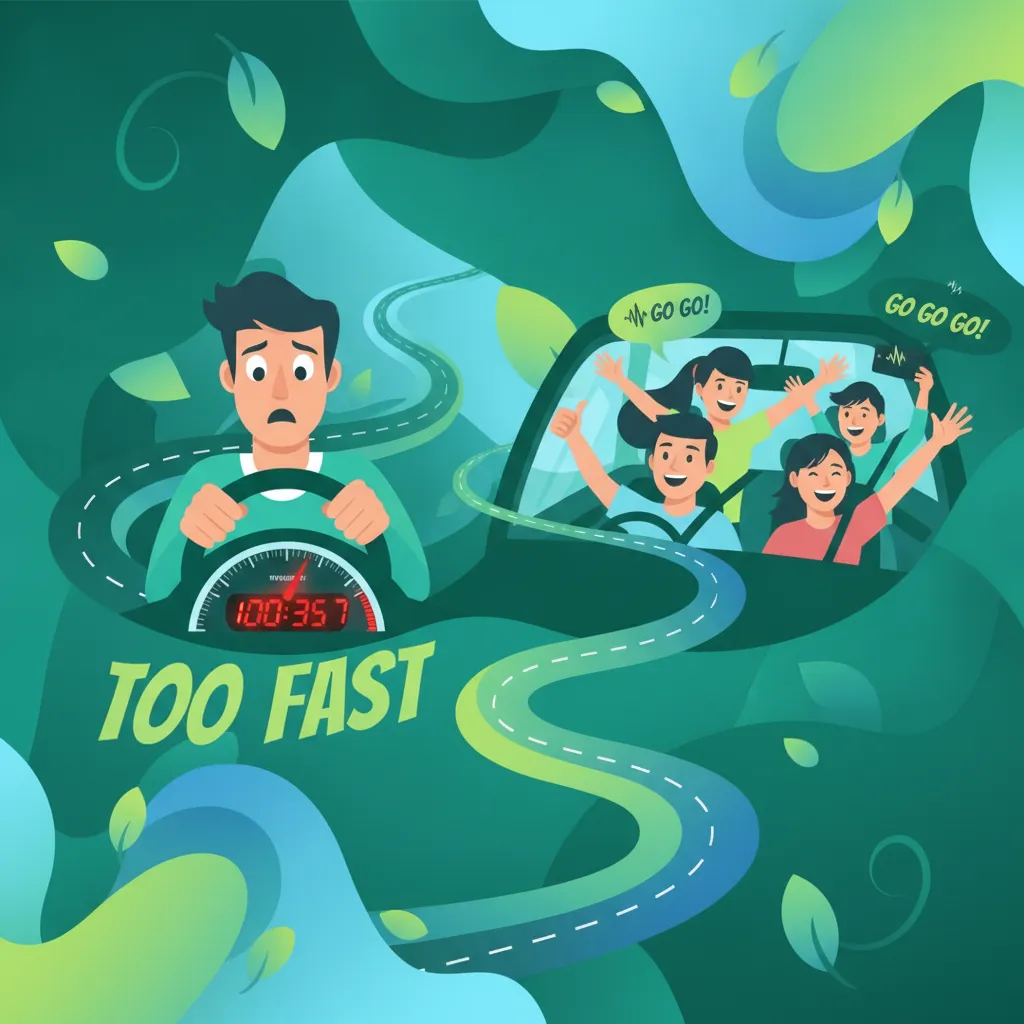
This lesson examines the specific risk factors that are statistically higher for novice drivers, including issues like inaccurate risk perception, overconfidence, and susceptibility to peer pressure and distractions. It aims to build self-awareness about these behavioural tendencies. By understanding these common pitfalls, new drivers can consciously adopt strategies to manage them, leading to safer driving habits from the very beginning of their driving career.
This lesson explores the key psychological factors that influence a driver's performance and safety on the road. It covers topics such as risk perception, attention allocation, and the process of making sound decisions, especially when under stress or facing unexpected hazards. By understanding concepts like cognitive load and the importance of maintaining a defensive mindset, drivers can better anticipate dangers and avoid common mental errors that lead to collisions.

This lesson explores the specific characteristics and hazards of rural roads (Landstraßen). It emphasizes the need for careful speed adjustment due to factors like narrow lanes, poor road surfaces, and hidden entrances. Learners will understand how to safely navigate blind curves, use passing places, and anticipate the presence of slow-moving agricultural vehicles or livestock on the road.

This lesson focuses on the safety-critical skill of reversing, emphasizing the importance of all-around observation before and during the manoeuvre. It covers the correct use of mirrors and the necessity of checking blind spots to ensure the path is clear of pedestrians, obstacles, and other vehicles. Learners will understand techniques for maintaining slow, controlled speed and making accurate steering adjustments while backing up in various situations.

This lesson provides advanced strategies for proactively managing interactions with vulnerable road users to prevent conflicts before they arise. It teaches drivers to predict the likely behavior of pedestrians, cyclists, and e-scooter riders, especially at intersections and in congested areas. Key techniques include maintaining larger safety distances, covering the brake, and making eye contact to ensure mutual awareness and avoid accidents.

This lesson introduces the foundational elements of Austrian traffic culture, placing a strong emphasis on cooperation, courtesy, and effective non-verbal communication between road users. It delves into the societal expectations for driver behavior, highlighting how mutual respect and clear signaling enhance safety for everyone. By understanding and applying these norms, drivers can contribute to a more harmonious and predictable traffic environment, reducing conflicts and potential accidents.

This lesson reinforces the critical importance of protecting vulnerable road users in dense urban settings. It teaches drivers to be hyper-aware of pedestrians and cyclists, especially near intersections and crosswalks. Key techniques include reducing speed, making eye contact to confirm intentions, and giving ample space.

Driving in tourist hotspots in cities like Salzburg or alpine resorts requires extra patience and vigilance. This lesson explores common unpredictable behaviours, such as pedestrians stepping into the road to take photos or groups of tourists being unaware of traffic. It teaches drivers to slow down, be prepared for anything, and use communication tools like the horn sparingly and appropriately.

Rural Austrian roads present unique challenges, including lack of markings, tight spaces, and slow-moving agricultural vehicles. This lesson teaches how to read the road ahead, anticipate hazards around blind bends, and use passing places effectively when meeting other large vehicles. It emphasizes adjusting speed to suit the limited visibility and variable road conditions.
Find clear answers to common questions learners have about Everyday Driving Situations and Practical Tips. Learn how the lesson is structured, which driving theory objectives it supports, and how it fits into the overall learning path of units and curriculum progression in Austria. These explanations help you understand key concepts, lesson flow, and exam focused study goals.
Eco-driving is emphasized because it promotes fuel efficiency, reduces emissions, and encourages smoother vehicle control, which leads to safer traffic flow and less mechanical wear.
The Austrian theory emphasizes patience and defensive driving; you should maintain safe distances, avoid sudden maneuvers, and accept that other drivers may make mistakes, prioritizing safety over urgency.
Common risks include overestimating one's abilities, failing to observe blind spots, and becoming distracted by passengers or devices, all of which are central topics in this lesson.
While it focuses on practical everyday habits, it reinforces the defensive mindset required for the ongoing Mehrphasenausbildung (multi-phase training) that follows your initial license acquisition.
Refine your study plan by searching for specific Austrian driving theory practice sets. Pinpoint questions related to particular road rules, signs, or challenge levels, and begin practicing immediately to reinforce your knowledge and excel in your official exam with confidence. Get started with focused revision today.