
This lesson guides you through the critical technical requirements for heavy vehicle tyres in Austria, an essential component of vehicle roadworthiness. It covers the specific legal standards for tyre pressure, load indices, and tread depth that you must know for your C and CE category theory exam. You will learn to identify wear patterns and ensure your vehicle is prepared for heavy-duty operations.
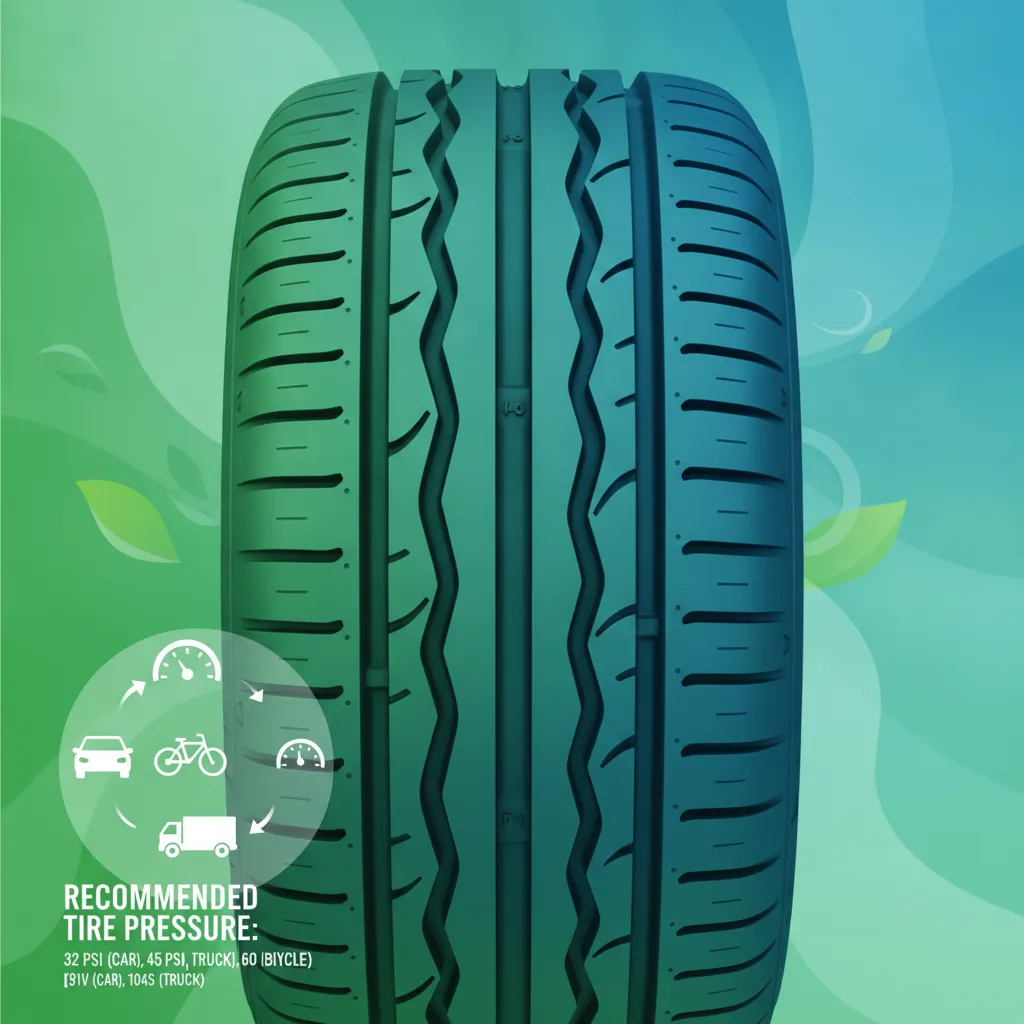
Lesson content overview
The tyres on a heavy goods vehicle (HGV) are far more than just rubber rings; they are critical components that directly influence safety, handling, braking efficiency, fuel consumption, and overall roadworthiness. For drivers operating vehicles in the C, C1, C1E, and CE categories within Austria, a thorough understanding of tyre specifications, maintenance, and legal requirements is not merely recommended, but absolutely essential. Proper tyre management is a cornerstone of safe and economical heavy-goods vehicle operation.
This lesson provides comprehensive insights into the various aspects of heavy vehicle tyres, from their fundamental construction and classification to the nuances of correct inflation pressures, the significance of load and speed ratings, and the critical legal requirements for tread depth in Austria. We will explore how to identify signs of abnormal wear or damage that could compromise safety, ensuring you are equipped to maintain your vehicle's tyres to the highest standards.
Heavy vehicle tyres are engineered to withstand immense loads, high speeds, and diverse road conditions. Their construction plays a pivotal role in determining their performance characteristics, durability, and suitability for specific applications. Knowing the fundamental types of tyre construction is key to making informed decisions about tyre selection and maintenance.
Historically, bias-ply tyres were the standard. These tyres are constructed with layers of cord (such as nylon or polyester) laid diagonally from bead to bead, typically at angles of 30 to 45 degrees to the running direction. Successive layers crisscross each other, creating a strong, flexible structure. While bias-ply tyres are generally more affordable and offer a comfortable ride due to their flexible sidewalls, they tend to generate more heat, have higher rolling resistance, and exhibit less stable tread contact at higher speeds. This makes them less fuel-efficient and less common on modern heavy goods vehicles, especially those used for high-speed motorway travel.
Modern heavy goods vehicles predominantly use radial tyres. In radial construction, the body ply cords run perpendicularly (at 90 degrees) to the direction of travel, extending from bead to bead. These layers are then reinforced by additional layers of steel belts running circumferentially beneath the tread. This design creates a much stiffer tread area and flexible sidewalls, leading to several advantages: improved fuel economy due to lower rolling resistance, superior stability and handling, better heat dissipation, and significantly longer tread life. The distinct construction allows the sidewall and tread to work independently, optimizing the contact patch with the road surface.
Another classification relates to how the tyre holds air. Tubeless tyres are the standard in modern heavy vehicle applications. They are designed to create an airtight seal with the wheel rim, eliminating the need for an inner tube. This design offers several advantages, including reduced weight, better heat dissipation, and a slower rate of air loss in the event of a puncture, as the air leaks gradually through the puncture rather than a sudden burst from an inner tube.
In contrast, tubed tyres incorporate an inner tube within the tyre to hold the air. While less common on contemporary HGVs, they are still found in older vehicles or specific heavy-duty, off-road, or specialty applications where rim conditions might make a tubeless seal unreliable. Maintenance for tubed tyres can be more complex due to the separate inner tube.
For specific conditions or economic considerations, specialized tyre types are employed:
Every heavy vehicle tyre carries an alphanumeric code on its sidewall that provides crucial information about its dimensions, load-carrying capacity, and maximum safe speed. Understanding this tyre size designation is paramount for correct tyre replacement and ensuring compatibility with the vehicle's specifications as outlined in its type approval documentation.
A typical heavy vehicle tyre designation might look like 295/80 R 22.5 152/148 M. Let's break down its components:
Always consult your vehicle's type approval booklet or manufacturer's guidelines when replacing tyres to ensure the new tyres match the specified size, load index, and speed rating. Deviation from these specifications can lead to legal non-compliance, unsafe operation, and potential insurance issues.
The cold inflation pressure of a heavy vehicle tyre is perhaps the single most critical factor influencing its performance, safety, and longevity. It is the manufacturer-specified air pressure, measured when the tyres are cold—meaning the vehicle has been stationary for at least three hours or has been driven for less than 1.5 km at low speed.
The primary purpose of maintaining correct inflation pressure is to ensure an optimal contact patch between the tyre tread and the road surface. This maximizes grip, promotes even tread wear, minimizes heat buildup, and preserves fuel efficiency.
Under-inflation is a common and dangerous issue for heavy vehicles. When a tyre is under-inflated, the sidewalls flex excessively, leading to:
While less common than under-inflation, over-inflation also presents significant problems:
Ensure Tyres are Cold: The most accurate readings are obtained when the vehicle has been stationary for at least three hours or has not been driven significantly. Even a short drive can heat the tyres and increase internal pressure.
Use a Calibrated Pressure Gauge: Invest in a reliable, calibrated pressure gauge designed for heavy vehicle pressures (typically measuring up to 10-12 bar or 150-175 psi). Check multiple times if unsure.
Check Each Tyre: Systematically check every tyre on the vehicle, including any spare tyres. Don't forget inner dual tyres if applicable, which can be difficult to access but are just as crucial.
Refer to Manufacturer Specifications: Always inflate tyres to the pressures specified by the vehicle or tyre manufacturer. These are typically found on a placard inside the driver's door, in the owner's manual, or directly from the tyre manufacturer's data. Do not rely on pressures listed on the tyre sidewall, as this usually indicates the maximum permissible pressure, not the recommended operating pressure.
Adjust for Temperature and Load: While the cold inflation pressure is the baseline, be aware that ambient temperature changes can affect pressure. In very cold weather, pressure will drop, and in very hot weather, it will rise. Similarly, heavily loaded vehicles might require slight adjustments upwards within the manufacturer's recommended range to account for increased stress, but this should always be done conservatively and according to specific guidelines.
Beyond size and pressure, two critical codes on a tyre's sidewall dictate its fundamental capabilities: the Load Index (LI) and the Speed Rating. These values are vital for matching tyres to a heavy goods vehicle's operational requirements and ensuring safety.
The Load Index (LI) is a numeric code that indicates the maximum load (in kilograms) a single tyre can support when inflated to its recommended pressure and operated at its corresponding speed rating. It is crucial that the load index of any tyre fitted to a heavy goods vehicle is equal to or greater than the maximum permissible axle load it is designed to carry, as specified by the vehicle manufacturer and type approval.
A numeric code on the tyre sidewall indicating the maximum load in kilograms that a tyre can support when correctly inflated and used at its specified speed.
Exceeding a tyre's load index significantly increases the risk of tyre failure, including tread separation, sidewall bulges, and sudden blowouts, especially under heavy cargo or during sustained high-speed operation. Heavy vehicles often use dual tyres on rear axles, and the load index for such applications is typically given as two numbers (e.g., 152/148), with the lower number applying to dual fitment.
The Speed Rating is an alphabetic code that specifies the maximum sustained speed (in kilometres per hour) at which the tyre can safely carry the load indicated by its load index. It is crucial that the speed rating of the tyres fitted to a heavy goods vehicle is appropriate for the vehicle's maximum operating speed, or at least for the maximum speed allowed by law for that vehicle category (e.g., 80 km/h or 90 km/h for most HGVs in Austria).
An alphabetic code on the tyre sidewall indicating the maximum sustained speed in km/h at which a tyre can safely operate under its specified load.
Using a tyre with an insufficient speed rating can lead to excessive heat buildup and structural fatigue, potentially resulting in catastrophic tyre failure at higher speeds. While a truck limited to 90 km/h does not need tyres rated for 240 km/h (V-rated), the tyres must still exceed the vehicle's maximum legal operating speed.
Adequate tread depth is fundamental for safety, particularly in wet conditions. The tyre tread is designed to channel water away from the contact patch, maintaining grip and preventing hydroplaning (aquaplaning). Insufficient tread depth severely compromises this capability, drastically increasing stopping distances and the risk of losing control.
In Austria, specific legal minimums apply to heavy goods vehicle tyres:
Drivers are responsible for regularly checking tyre tread depth. This can be done using a specialized tread depth gauge, which provides an accurate measurement.
Most tyres also incorporate tread wear indicators (TWIs). These are small raised bars, typically 1.6 mm high, located within the main tread grooves. When the tread has worn down to the point where these bars are flush with the surrounding tread surface, the tyre has reached its legal minimum depth and must be replaced immediately. For heavy vehicles, even if the TWIs indicate 1.6 mm, if the central groove is less than 3 mm, the tyre still needs replacement.
Driving with tyres below the legal tread depth is a serious traffic violation in Austria and significantly increases the risk of accidents, especially in adverse weather conditions.
Regular visual and tactile inspection of tyres is a critical part of pre-trip checks and ongoing maintenance. Identifying abnormal wear patterns and damage early can prevent dangerous tyre failures and allow for corrective action, saving lives and money.
Different tyre wear patterns can indicate underlying issues with inflation, alignment, suspension, or braking:
Beyond wear patterns, inspect for direct damage that compromises the tyre's structural integrity:
Any tyre displaying a sidewall bulge, significant cuts exposing internal cords, or visible tread separation should be considered extremely unsafe and must be taken out of service immediately.
Compliance with Austrian road traffic regulations (Straßenverkehrsordnung - StVO) and other relevant acts is non-negotiable for heavy goods vehicle operators. These regulations are designed to ensure maximum safety for all road users.
Austria has specific regulations concerning winter tyres, which are essential for heavy goods vehicles operating in challenging winter conditions.
The condition of a heavy vehicle's tyres has direct and profound safety implications. A single tyre failure can lead to loss of control, severe accidents, and considerable damage or injury. Common violations and unsafe practices related to tyres include:
Tyre performance and maintenance requirements are not static; they vary significantly based on environmental conditions and the vehicle's operational state.
Always perform a comprehensive tyre inspection as part of your pre-trip walk-around check, adapting your focus based on the planned route, cargo, and current weather conditions.
Understanding tyre theory is best reinforced with practical application. Here are several common scenarios faced by heavy goods vehicle drivers related to tyre management:
Setting: It's a cold winter morning (-5°C) in Austria. You are preparing to depart with a fully loaded 18-tonne truck for a long-haul journey. The manufacturer's recommended cold inflation pressure is 8.5 bar.
Decision Point: How should you approach the tyre pressure check?
Correct Action: Perform a thorough check on all tyres with a calibrated gauge before starting the engine or moving the vehicle. Expect the pressure to be slightly lower than 8.5 bar due to the cold temperature. Inflate each tyre to the specified 8.5 bar cold pressure, accounting for the anticipated pressure drop from the cold. Also, confirm that winter tyres with a minimum of 3mm central groove tread depth are fitted, as cold temperatures may indicate icy patches.
Incorrect Action: Visually inspect the tyres, assume they are fine, or check the pressure after driving a few kilometres, which would give a falsely high reading due to tyre warming.
Setting: During a routine check at a weighbridge, you notice that your truck's rear axle is slightly over its permissible load limit due to an uneven load distribution. Your dual-fitted tyres have a load index of 148 for dual application.
Decision Point: What are the immediate concerns for the tyres, and what action should be taken?
Correct Action: Immediately identify the cause of the overload. The tyres' load index (148) corresponds to a maximum weight per tyre for dual fitment. If the axle load exceeds the combined capacity of the tyres, there is a high risk of tyre failure (especially the inner tyres), overheating, and a blowout. The load must be redistributed or reduced to bring the axle within legal and tyre-rated limits before continuing the journey.
Incorrect Action: Continue driving, hoping the overload is minor. This greatly increases the risk of tyre failure, traffic fines, and an accident.
Setting: You are on a mandatory rest stop after several hours of driving. During your walk-around inspection, you spot a noticeable bulge on the sidewall of one of your drive axle tyres.
Decision Point: Can you continue your journey to the nearest garage?
Correct Action: No. A sidewall bulge indicates internal cord damage and imminent catastrophic tyre failure. The tyre is unsafe for any further operation, even for short distances. Immediately stop driving, secure the vehicle, and arrange for roadside tyre service or replacement.
Incorrect Action: Attempt to drive to the nearest service station or depot. The tyre could fail at any moment, leading to loss of vehicle control, especially at motorway speeds.
Setting: You encounter a sudden, heavy downpour on an Austrian motorway. You recall that your truck's front tyres have tread depths close to the 3 mm central groove legal minimum.
Decision Point: How should your driving strategy change?
Correct Action: Immediately reduce your speed significantly. Increase your following distance. Be extremely vigilant for signs of hydroplaning (a sudden lightness in steering). The reduced tread depth means the tyres cannot effectively displace water, dramatically increasing the risk of losing steering and braking control. Plan to replace the tyres as soon as possible.
Incorrect Action: Maintain your speed or rely on the vehicle's braking systems without adjusting for tyre condition. This significantly elevates the risk of an accident.
This lesson covers the essential technical requirements for heavy goods vehicle tyres as tested in the Austrian C and CE category theory exams. It explains that HGV tyres must have minimum 1.6mm tread depth overall with a stricter 3mm requirement in the central groove, and distinguishes between radial tyres (standard for modern vehicles with steel belt reinforcement) and bias-ply tyres (older diagonal construction). The lesson details how to interpret tyre markings including load index codes for single and dual axle applications, emphasises maintaining correct cold inflation pressure, and identifies critical damage such as sidewall bulges requiring immediate replacement. Austrian winter tyre regulations requiring M+S or 3PMSF marking when conditions warrant are also covered, along with how various wear patterns signal underlying mechanical issues.
A short set of high-value points that capture the most important learning from this lesson.
Heavy goods vehicles in Austria must maintain minimum tread depth of 1.6mm overall and at least 3mm in the central groove for each tyre
Tyres are classified as either radial (modern, fuel-efficient, with steel belt reinforcement) or bias-ply (older diagonal cord construction with less stable handling)
The Load Index code on tyre sidewalls indicates maximum load capacity in kilograms and must match or exceed the vehicle's permitted axle loads
Tyres must be inflated to the vehicle manufacturer's specified cold pressure, checked before driving or after at least 3 hours stationary
Winter tyres marked M+S or 3PMSF are mandatory for HGVs in Austria when road conditions require them, such as snow, ice, or slush
Explore all units and lessons included in this driving theory course.
Check tyre pressure when tyres are cold (vehicle stationary 3+ hours) using a calibrated gauge; pressure drops approximately 0.1 bar per 10°C temperature decrease
Tyre size designation like 295/80 R 22.5 152/148 M indicates section width (295mm), aspect ratio (80%), construction (R=radial), rim diameter (22.5in), and load/speed ratings (152/148 for single/dual axle, M for speed)
Sidewall bulges indicate broken internal cords and require immediate tyre replacement regardless of tread depth
Central groove tread depth of 3mm is the critical measurement for HGV tyres in Austria, stricter than the 1.6mm overall minimum
Different wear patterns indicate specific problems: centre wear means over-inflation, edge wear means under-inflation, one-sided wear indicates alignment issues
Assuming tyre sidewall markings show recommended pressure rather than maximum permissible pressure; always use vehicle manufacturer specifications instead
Neglecting to check inner tyres on dual-axle fitments because they are difficult to access
Continuing to drive after discovering a sidewall bulge, believing short distances are safe; this is an imminent failure risk
Mixing radial and bias-ply tyres on the same axle, which causes unstable handling due to different construction characteristics
Checking tyre pressure after driving or during a short stop, which yields falsely elevated readings due to heated tyres
Lesson content overview
A short set of high-value points that capture the most important learning from this lesson.
Heavy goods vehicles in Austria must maintain minimum tread depth of 1.6mm overall and at least 3mm in the central groove for each tyre
Tyres are classified as either radial (modern, fuel-efficient, with steel belt reinforcement) or bias-ply (older diagonal cord construction with less stable handling)
The Load Index code on tyre sidewalls indicates maximum load capacity in kilograms and must match or exceed the vehicle's permitted axle loads
Tyres must be inflated to the vehicle manufacturer's specified cold pressure, checked before driving or after at least 3 hours stationary
Winter tyres marked M+S or 3PMSF are mandatory for HGVs in Austria when road conditions require them, such as snow, ice, or slush
Explore all units and lessons included in this driving theory course.
Check tyre pressure when tyres are cold (vehicle stationary 3+ hours) using a calibrated gauge; pressure drops approximately 0.1 bar per 10°C temperature decrease
Tyre size designation like 295/80 R 22.5 152/148 M indicates section width (295mm), aspect ratio (80%), construction (R=radial), rim diameter (22.5in), and load/speed ratings (152/148 for single/dual axle, M for speed)
Sidewall bulges indicate broken internal cords and require immediate tyre replacement regardless of tread depth
Central groove tread depth of 3mm is the critical measurement for HGV tyres in Austria, stricter than the 1.6mm overall minimum
Different wear patterns indicate specific problems: centre wear means over-inflation, edge wear means under-inflation, one-sided wear indicates alignment issues
Assuming tyre sidewall markings show recommended pressure rather than maximum permissible pressure; always use vehicle manufacturer specifications instead
Neglecting to check inner tyres on dual-axle fitments because they are difficult to access
Continuing to drive after discovering a sidewall bulge, believing short distances are safe; this is an imminent failure risk
Mixing radial and bias-ply tyres on the same axle, which causes unstable handling due to different construction characteristics
Checking tyre pressure after driving or during a short stop, which yields falsely elevated readings due to heated tyres
Explore search topics learners often look for when studying Tyre Types, Pressures, Load Index, and Tread Depth. These topics reflect common questions about road rules, driving situations, safety guidance, and lesson level theory preparation for learners in Austria.
Browse additional driving theory lessons that cover connected traffic rules, road signs, and common driving situations related to this topic. Improve your understanding of how different rules interact across everyday traffic scenarios.
Understand specific Austrian laws regarding heavy vehicle tyre maintenance. Covers legal tread depth, mandatory winter tyre use, and load index compliance for C and CE categories to ensure roadworthiness and safety on Austrian roads.
This lesson focuses specifically on motorcycle tyre maintenance, a critical safety component. It explains how to accurately measure tyre pressure, inspect for adequate tread depth, and identify uneven wear patterns that may indicate other issues. Understanding how tyre condition affects grip, handling, and braking performance is essential for every rider to maintain control.
This lesson details the critical role tyres play in vehicle safety, focusing on Austrian regulations for seasonal use. Learners will understand the mandatory period for winter tyres, the legal minimum for tread depth, and the importance of maintaining correct tyre pressure for optimal grip and fuel efficiency. The content explains how tyre condition directly affects braking distance and the risk of aquaplaning, making it a key safety component.

This lesson covers the legal requirements for regular maintenance and periodic roadworthiness certification (known as the 'Pickerl' or TÜV inspection) in Austria. It explains the importance of adhering to manufacturer-recommended service intervals. Maintaining a certified, roadworthy vehicle is a core legal responsibility for any operator or driver.

This lesson focuses on the legal restrictions concerning a heavy vehicle's dimensions, including maximum height, width, and length. It teaches drivers how to interpret road signs and supplemental plates that indicate these limits. This knowledge is crucial for route planning, especially when navigating under bridges, through tunnels, and on restricted roads.

This lesson details the general traffic rules applicable to heavy goods vehicles on Austrian roads, highlighting differences from passenger car regulations. It covers key topics such as right-of-way at intersections, specific rules for overtaking, maintaining proper lane discipline, and adhering to designated speed limits. Understanding these rules is critical for safe integration into mixed traffic.
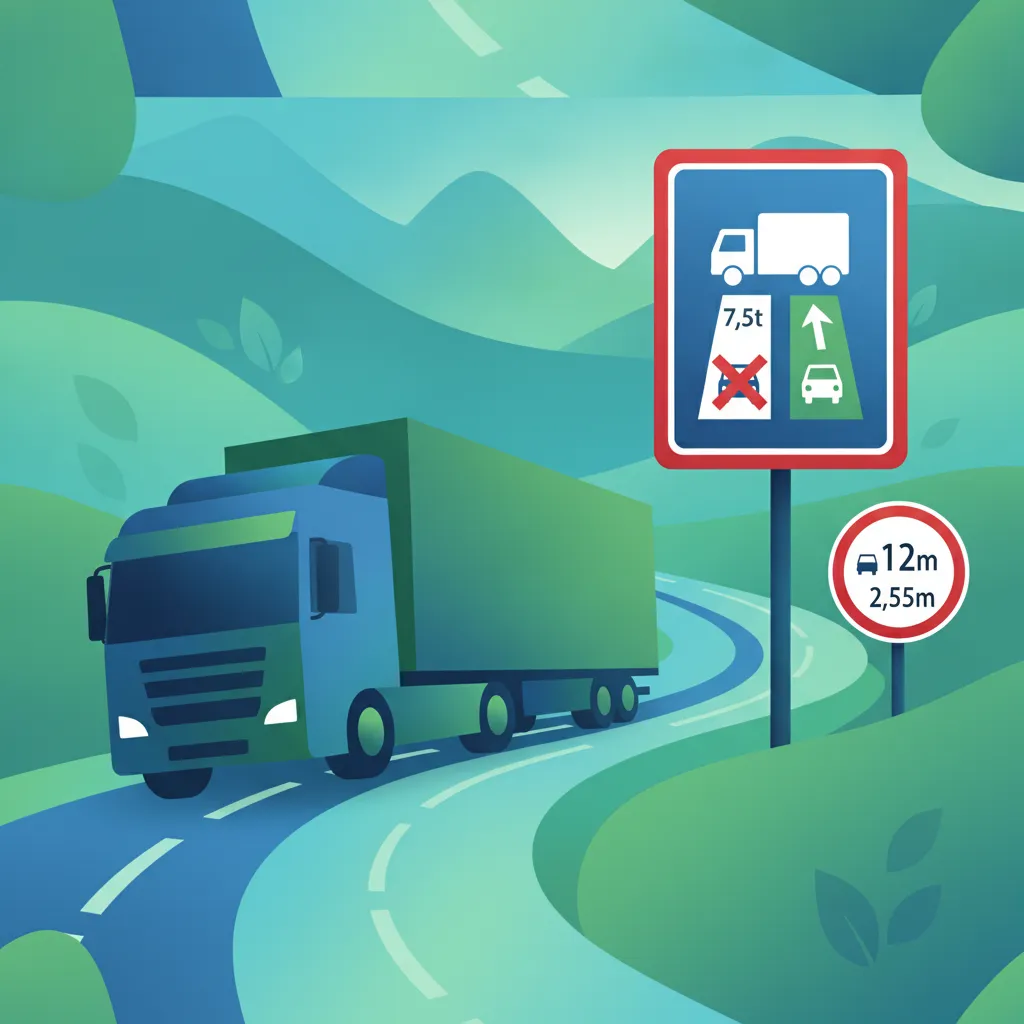
This lesson focuses on the specific Austrian road signs and supplemental plates that apply to heavy goods vehicles. It explains how to interpret signage indicating weight limits, height and width restrictions, lane usage rules, and other critical regulatory information. Correctly understanding these signs is essential for legal compliance and safe navigation on Austria's roads.

This lesson consolidates the legal restrictions on the maximum dimensions and weight for different vehicle combinations in Austria. It covers how to read signs indicating these limits and the importance of compliance for route planning. Adhering to these regulations is essential for legal operation and avoiding fines.

This lesson teaches the systematic procedure for conducting a thorough pre-trip walk-around inspection. It provides a checklist of critical components to examine, including tyres, lights, braking systems, and load security. Performing this daily check is a legal requirement and a fundamental practice for preventing mechanical failures and ensuring safety.

This lesson details the regulations for heavy goods vehicles on Austria's high-speed road network. It covers the specific speed limits, rules on lane usage (e.g., when overtaking is permitted), and procedures for entering and exiting the motorway. Adherence to these rules is crucial for safety in a fast-paced environment.
This lesson explains the system of penalties and enforcement for heavy vehicle operations in Austria. It covers the fines and penalty points associated with common traffic violations, such as overloading or insecure loads. Learners will understand the role of authorities in conducting roadside checks and inspections to ensure regulatory compliance.
Learn to identify common tyre wear patterns, such as center wear or edge wear, and critical damage like sidewall bulges on heavy vehicles. Essential knowledge for proactive maintenance and preventing tyre failures in Austrian driving conditions.
This lesson focuses specifically on motorcycle tyre maintenance, a critical safety component. It explains how to accurately measure tyre pressure, inspect for adequate tread depth, and identify uneven wear patterns that may indicate other issues. Understanding how tyre condition affects grip, handling, and braking performance is essential for every rider to maintain control.
This lesson details the critical role tyres play in vehicle safety, focusing on Austrian regulations for seasonal use. Learners will understand the mandatory period for winter tyres, the legal minimum for tread depth, and the importance of maintaining correct tyre pressure for optimal grip and fuel efficiency. The content explains how tyre condition directly affects braking distance and the risk of aquaplaning, making it a key safety component.
Find clear answers to common questions learners have about Tyre Types, Pressures, Load Index, and Tread Depth. Learn how the lesson is structured, which driving theory objectives it supports, and how it fits into the overall learning path of units and curriculum progression in Austria. These explanations help you understand key concepts, lesson flow, and exam focused study goals.
For heavy goods vehicles, the legal minimum tread depth is generally 1.6 mm across the entire tread surface. However, for winter operations, it is strongly recommended and sometimes legally required to have deeper treads to ensure adequate grip on snow and ice.
The load index indicates the maximum load each tyre can safely support. Using tyres with a lower load index than required by the vehicle's zGG (permissible overall mass) is illegal and dangerous, as it can lead to tyre failure, blowouts, or severe accidents under heavy loads.
Incorrect pressure leads to uneven wear, increased fuel consumption, and compromised braking distance. Under-inflated tyres generate excessive heat, increasing the risk of structural failure, which is especially dangerous on long motorway trips or steep descents.
You must check the vehicle's registration document (Zulassungsschein) for the specified tyre dimensions and indices. Always ensure the tyres installed match or exceed the minimum load and speed requirements listed for your specific vehicle configuration.
Refine your study plan by searching for specific Austrian driving theory practice sets. Pinpoint questions related to particular road rules, signs, or challenge levels, and begin practicing immediately to reinforce your knowledge and excel in your official exam with confidence. Get started with focused revision today.