
This lesson guides you through the critical adjustments required for operating heavy goods vehicles in adverse Austrian weather conditions. You will learn the legal and safety standards for winter equipment and how to adapt your driving style for snow, ice, and fog to ensure you are fully prepared for your C-category theory exam.

Lesson content overview
Driving heavy goods vehicles (HGVs) in Austria during winter presents unique challenges due to diverse weather conditions, from heavy snowfall in alpine regions to dense fog in valleys. This lesson provides essential knowledge and practical guidance on adapting your driving techniques and understanding legal requirements to ensure safety and compliance within the Austrian Driving License Theory Course for Heavy Goods Vehicles (C, C1, C1E, CE). Mastering these skills is crucial for professional drivers to navigate winter roads safely, reduce accident risks, and avoid legal penalties.
Austrian traffic law places specific obligations on heavy goods vehicle drivers during the colder months, primarily concerning vehicle equipment. Compliance with these regulations is paramount for safety and legal operation.
From November 1st to April 15th, heavy goods vehicles operating on Austrian motorways and roads where winter conditions are likely (including many alpine passes) must be equipped with suitable winter tyres. This mandate is critical for maintaining traction on cold, wet, snowy, or icy surfaces.
Winter tyres are specially designed with particular tread patterns and rubber compounds that remain pliable at low temperatures (typically below +7 °C), providing superior grip compared to summer tyres. For heavy vehicles, these tyres must carry the Alpine Symbol (Alpine-S), which depicts a snowflake within a three-peaked mountain. While older "M+S" (Mud + Snow) designated tyres may still be permitted under certain conditions, the Alpine Symbol indicates a tyre that has passed rigorous tests for severe snow conditions and is the preferred standard. It is crucial that these winter tyres are fitted on all wheels of a heavy vehicle, not just the driving axles, to ensure comprehensive stability and braking performance.
Failing to equip your HGV with legally compliant winter tyres during the mandatory period can result in significant fines and may lead to loss of insurance coverage in the event of an accident.
Even with winter tyres, extreme conditions such as heavy snow or severe ice on steep inclines may necessitate additional traction. This is where snow chains become indispensable. Austrian law mandates the use of snow chains when indicated by specific traffic signs.
The "Kettenpflicht" (chain duty) sign (Road Sign 4, blue circular sign with a white tyre with chains) indicates that snow chains must be fitted on the driving axle(s). It is crucial to have chains readily available during the winter period, especially when route planning includes alpine regions. Chains must be installed before you encounter the challenging conditions, typically at designated chain fitting areas. Driving with chains on dry roads is prohibited, as it can severely damage the road surface, the chains themselves, and the vehicle's tyres, as well as negatively affecting handling. Chains must be removed as soon as the "Kettenfrei" (no chains required) sign is encountered or road conditions improve significantly.
Reduced visibility due to fog is another common winter hazard that requires specific lighting adjustments. Proper use of fog lights enhances your visibility to other road users and improves your perception of the road ahead.
Low-mounted front lights that emit a wide, low-intensity beam designed to cut through fog and illuminate the road surface near the vehicle. Rear fog lights are bright red lights at the rear to warn following drivers.
According to Austrian traffic law, front fog lights may only be used when visibility is reduced to 50 metres or less. Rear fog lights, which are significantly brighter than standard tail lights, must be activated together with front fog lights in such dense fog conditions. It is important to switch off fog lights immediately once visibility improves beyond the 50-metre threshold to avoid dazzling other drivers. Using fog lights in clear weather is prohibited and can result in fines.
Navigating snow and ice requires a significant adjustment in driving technique. The key principles revolve around managing traction, adapting speed, and safe braking.
Traction is the grip your tyres have on the road surface, enabling acceleration, steering, and braking. On snow and ice, the coefficient of friction between tyres and the road drastically decreases. This means that even minor acceleration, braking, or steering inputs can easily lead to a loss of grip, particularly for heavy goods vehicles due to their mass and momentum.
To maintain traction, all inputs – steering, acceleration, and braking – must be smooth and gentle. Avoid sudden movements that can upset the vehicle's balance. When accelerating, apply the throttle very gradually to prevent wheel spin. When turning, steer gently and avoid sharp angles. Anticipate turns and hazards much earlier than in dry conditions to allow for gradual adjustments.
One of the most critical adjustments in winter driving is significantly reducing your speed and increasing your following distance. Posted speed limits are designed for ideal conditions; in snow, ice, or fog, they are often dangerously high.
On snowy or icy roads, your stopping distance can be ten times greater than on dry asphalt. For heavy goods vehicles, this multiplier can be even higher due to their mass.
Drivers must continuously assess the road conditions and adjust their speed to what is "appropriate to conditions," as stipulated by Austrian law. This often means driving well below the posted limit. Similarly, the safe following distance must be extended significantly. While a two or three-second rule might suffice in dry conditions, in snow or fog, aim for at least a five-second following distance, or even more depending on the severity of the conditions and vehicle load. This increased distance provides a larger buffer for reaction time and allows for the extended braking distances required.
Braking on slippery surfaces requires careful technique to prevent skidding and maintain control.
A braking technique where the driver applies the brakes just to the point of wheel lock-up, maximizing braking efficiency without losing directional control. This involves modulated pressure, easing off slightly if wheels begin to lock, then reapplying.
On ice, even vehicles equipped with Anti-lock Braking Systems (ABS) will have significantly longer stopping distances. ABS prevents the wheels from locking, allowing you to steer while braking, but it does not magically create more grip. The most effective braking technique on ice is often threshold braking, which involves applying firm, but not locking, pressure to the brake pedal. For HGVs, the use of retarders (compression brakes) and engine braking is highly recommended, especially on descents. These systems help control speed without solely relying on the service brakes, reducing the risk of overheating and brake fade, which is particularly dangerous on long, slippery downhill gradients.
Over-reliance on service brakes on long descents, especially in winter, can lead to brake fade where the brakes become less effective due to heat. Always use engine braking and retarders to assist.
Fog severely reduces visibility, making it difficult to see road markings, signs, other vehicles, and potential hazards. Heavy vehicles are particularly affected due to their size and longer stopping distances.
Fog consists of tiny water droplets suspended in the air, scattering light and obscuring vision. It can range from light mist to dense fog, where visibility can drop to only a few metres. For HGV drivers, this reduced perception significantly increases the risk of not seeing obstacles or other vehicles in time, especially given the longer stopping distances required for heavy loads. Fog can also be localized, appearing suddenly and disappearing just as quickly, demanding constant vigilance.
The proper use of lighting is critical in fog to ensure you can see and, more importantly, be seen by others.
Beyond lighting, specific driving practices are essential when operating an HGV in foggy conditions:
A deeper understanding of winter equipment is essential for effective preparation and safe operation.
For heavy goods vehicles, the choice and maintenance of winter tyres are paramount. As mentioned, the Alpine Symbol (Alpine-S) is the primary indicator of a tyre suitable for severe winter conditions, and it is mandatory for HGVs during the winter period in Austria. While some M+S tyres are still legally permitted, the Alpine Symbol indicates superior performance.
Winter tyres have unique features:
Regularly check your tyre pressure and tread depth. Worn winter tyres lose their effectiveness dramatically.
Snow chains are a last resort for extreme conditions and must be robust enough for heavy vehicles.
Park Safely: Pull over to a designated chain fitting area or a safe, level spot away from traffic. Ensure the parking brake is engaged and the vehicle is secure.
Prepare Chains: Lay out the chains in front of or behind the driving wheels that require them, ensuring they are not tangled.
Mount Chains: Drape the chain over the top of the tyre, making sure the main chain sits on the tread. Move the vehicle slightly forward or backward to fully wrap the chain around the tyre.
Secure Chains: Connect the inner and outer hooks/fasteners according to the manufacturer's instructions. Ensure the chain is tight and evenly distributed around the tyre.
Check Tension: Drive a short distance (e.g., 50-100 metres) at very low speed, then stop and re-check the chain tension. Retighten if necessary. Loose chains can damage your vehicle.
Remove When No Longer Needed: Once the "Kettenfrei" sign is reached or road conditions are clear, remove the chains immediately to prevent damage to the road, tyres, and vehicle.
Driving heavy goods vehicles through Austria's alpine regions in winter demands a sophisticated approach, combining all aspects of weather adaptation.
When ascending a steep, snow-covered pass, the judicious use of engine braking and retarders is crucial to maintain a controlled speed and prevent the service brakes from overheating during a descent. Anticipate changes in gradient and road conditions well in advance. Keep a keen eye on elevation changes and temperature, as conditions can vary dramatically over short distances. Be particularly aware of potential black ice in shaded areas, underpasses, and on bridges, even when the air temperature is above freezing.
On winding mountain roads, precise steering inputs and careful weight transfer management are vital to prevent rollovers or loss of control, especially for articulated vehicles. Distribute the load correctly, as covered in previous lessons, to maintain stability. In tight bends on slippery surfaces, excessive speed can easily lead to understeer or oversteer, which is much harder to recover with a heavy vehicle.
Understanding common pitfalls can help prevent accidents and legal issues.
This lesson covers essential Austrian legal requirements and driving techniques for heavy goods vehicles in winter conditions, including the mandatory winter tyre period (November 1 to April 15) requiring Alpine Symbol tyres, proper fog light usage at 50-metre visibility thresholds, and snow chain obligations indicated by the Kettenpflicht sign. Key techniques include threshold braking, use of retarders and engine braking on descents, and significantly increased following distances given that stopping distances can be ten times greater than on dry roads. The content emphasizes that all vehicle inputs must be smooth on slippery surfaces and that proper equipment maintenance and correct usage of winter gear are critical for both safety and legal compliance.
A short set of high-value points that capture the most important learning from this lesson.
Austrian law mandates winter tyres with the Alpine Symbol on all wheels of heavy vehicles from November 1st to April 15th on roads where winter conditions are likely.
Front fog lights may only be used when visibility drops to 50 metres or less, and rear fog lights must be activated together with front fog lights.
On snowy or icy roads, stopping distance for heavy vehicles can be ten times greater than on dry asphalt.
ABS prevents wheel lockup but does not significantly reduce stopping distance on low-friction surfaces like ice.
Snow chains must be fitted before encountering challenging conditions and removed immediately when the Kettenfrei sign is reached or conditions improve.
Explore all units and lessons included in this driving theory course.
The Alpine Symbol (snowflake in mountain) is the required indicator for winter tyres on HGVs in Austria.
Fog lights are prohibited when visibility exceeds 50 metres; high-beam headlights are strictly forbidden in fog.
The Kettenpflicht sign mandates chains on at least two driving wheels and requires having chains readily available in winter.
Engine braking and retarders must be used on descents to prevent brake fade, which is particularly dangerous for heavy vehicles.
All inputs—steering, acceleration, and braking—must be smooth and gentle on slippery surfaces to maintain traction.
Believing ABS guarantees short stopping distances on ice; it only helps maintain steering control, not reduce braking distance.
Using high-beam headlights in fog, which creates blinding glare from light reflecting off water droplets.
Failing to reduce speed below posted limits when conditions require driving 'appropriate to conditions'.
Removing snow chains too late or driving with chains on dry roads, causing damage to road surfaces and tyres.
Insufficient following distance in winter conditions; the two-second rule should extend to five seconds or more on snow and ice.
Lesson content overview
A short set of high-value points that capture the most important learning from this lesson.
Austrian law mandates winter tyres with the Alpine Symbol on all wheels of heavy vehicles from November 1st to April 15th on roads where winter conditions are likely.
Front fog lights may only be used when visibility drops to 50 metres or less, and rear fog lights must be activated together with front fog lights.
On snowy or icy roads, stopping distance for heavy vehicles can be ten times greater than on dry asphalt.
ABS prevents wheel lockup but does not significantly reduce stopping distance on low-friction surfaces like ice.
Snow chains must be fitted before encountering challenging conditions and removed immediately when the Kettenfrei sign is reached or conditions improve.
Explore all units and lessons included in this driving theory course.
The Alpine Symbol (snowflake in mountain) is the required indicator for winter tyres on HGVs in Austria.
Fog lights are prohibited when visibility exceeds 50 metres; high-beam headlights are strictly forbidden in fog.
The Kettenpflicht sign mandates chains on at least two driving wheels and requires having chains readily available in winter.
Engine braking and retarders must be used on descents to prevent brake fade, which is particularly dangerous for heavy vehicles.
All inputs—steering, acceleration, and braking—must be smooth and gentle on slippery surfaces to maintain traction.
Believing ABS guarantees short stopping distances on ice; it only helps maintain steering control, not reduce braking distance.
Using high-beam headlights in fog, which creates blinding glare from light reflecting off water droplets.
Failing to reduce speed below posted limits when conditions require driving 'appropriate to conditions'.
Removing snow chains too late or driving with chains on dry roads, causing damage to road surfaces and tyres.
Insufficient following distance in winter conditions; the two-second rule should extend to five seconds or more on snow and ice.
Explore search topics learners often look for when studying Weather Adaptation: Snow, Ice, Fog, and Winter Equipment. These topics reflect common questions about road rules, driving situations, safety guidance, and lesson level theory preparation for learners in Austria.
Browse additional driving theory lessons that cover connected traffic rules, road signs, and common driving situations related to this topic. Improve your understanding of how different rules interact across everyday traffic scenarios.
Understand Austrian traffic law for winter driving, including mandatory snow chains and winter tires for C-category vehicles. Learn essential techniques for navigating alpine roads, tunnels, and dealing with adverse weather conditions like snow and ice.
Winter driving in Austria presents a serious challenge that requires specific equipment and skills. This lesson covers how to drive on snow and ice, emphasizing smooth, gentle control inputs to maintain traction. It provides a practical overview of when and how to correctly fit snow chains ('Schneeketten') to the drive wheels, a legal requirement on many alpine roads.
This lesson provides practical information on the use of winter equipment for AM vehicles. It explains the legal requirements for winter tires and snow chains in Austria under specific conditions. The content includes guidance on how to correctly install and remove snow chains to ensure they are effective and safe.
This lesson focuses on the specialized skills required for navigating alpine roads safely. It covers techniques for managing steep gradients, such as using a lower gear for engine braking on descents, and how to safely negotiate hairpin turns. The content stresses the importance of being prepared for rapid weather changes and understanding the effects of altitude on both the driver and the vehicle's performance.
This lesson equips drivers with the knowledge to handle a range of adverse weather conditions safely. It explains the risks of hydroplaning in heavy rain, reduced visibility in fog, and loss of traction on snow and ice, including the hidden danger of black ice. The content provides practical strategies for speed adaptation, correct use of lighting, and maintaining vehicle control, as well as specific considerations for night driving.

This lesson prepares drivers for the demanding conditions of Alpine driving. It covers techniques for managing speed on steep up-hill and down-hill sections, being prepared for sudden weather changes, and following safety protocols inside mountain tunnels. This specialized knowledge is essential for operating safely in mountainous terrain.
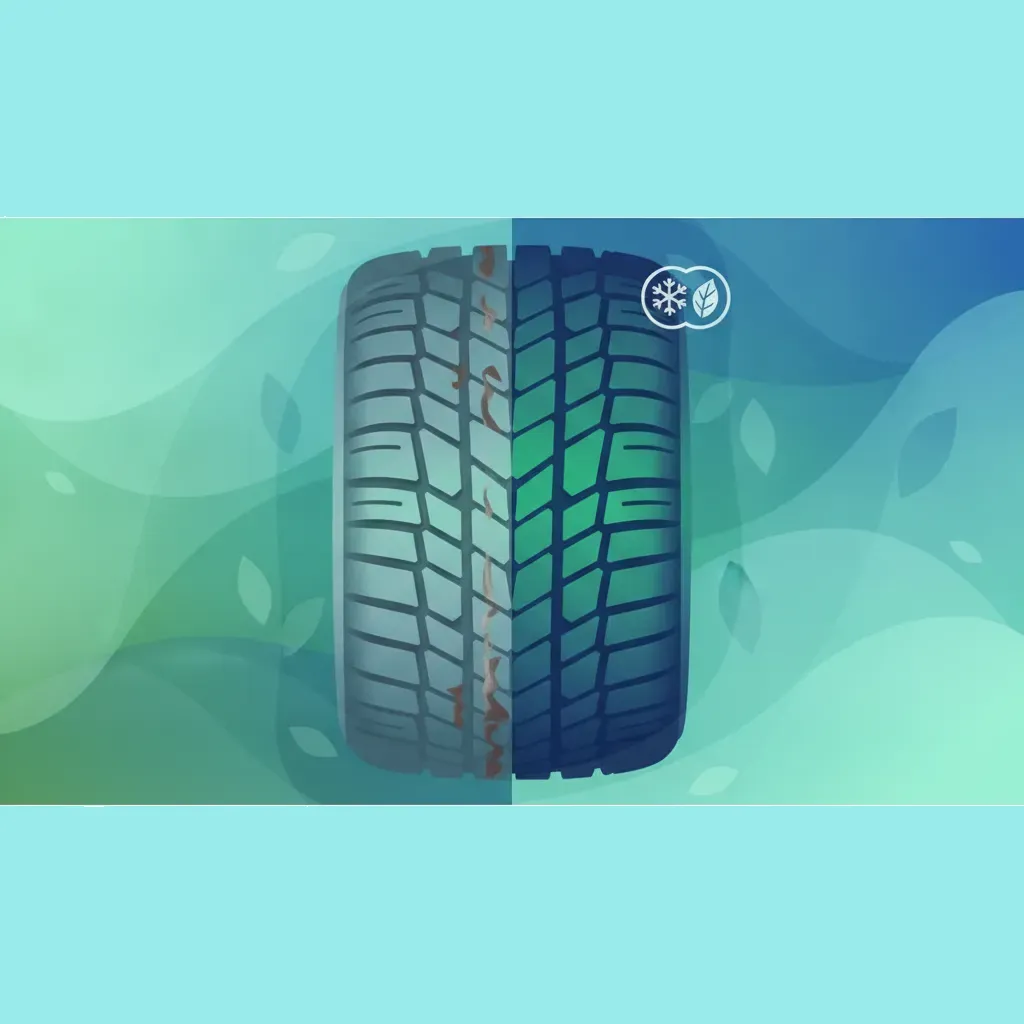
This lesson details the critical role tyres play in vehicle safety, focusing on Austrian regulations for seasonal use. Learners will understand the mandatory period for winter tyres, the legal minimum for tread depth, and the importance of maintaining correct tyre pressure for optimal grip and fuel efficiency. The content explains how tyre condition directly affects braking distance and the risk of aquaplaning, making it a key safety component.

Driving a heavy vehicle in the Alps requires specific skills to manage its energy and momentum. This lesson focuses on using lower gears and auxiliary braking systems (retarder/engine brake) to control speed on long descents and prevent brake overheating. It also covers the correct line and technique for navigating tight hairpin turns safely and efficiently.
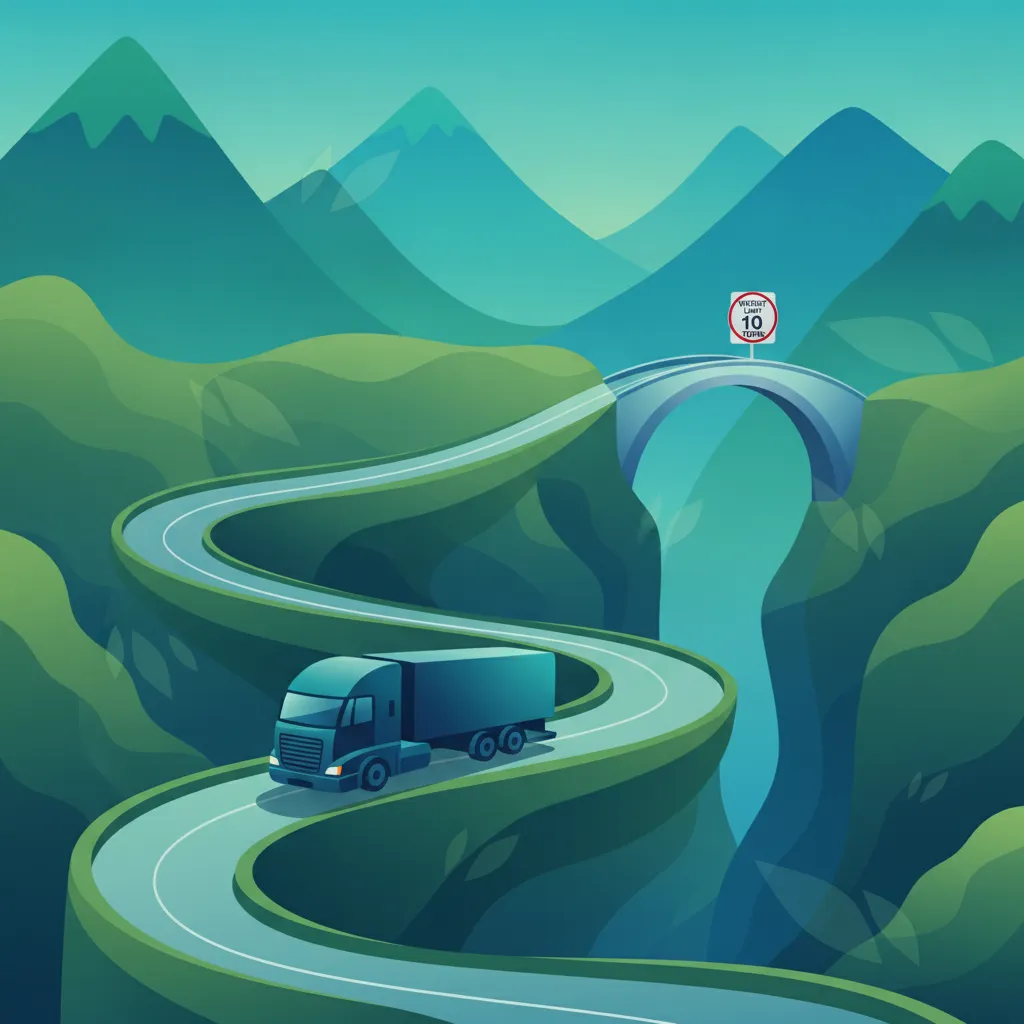
This lesson covers the specific weight restrictions that apply to sensitive infrastructure like Alpine passes and bridges throughout Austria. It explains how to identify these limits through road signage and incorporate them into route planning. Adhering to these restrictions is vital for preventing structural damage and ensuring safety in challenging terrain.

This lesson provides guidance on tailoring riding practices to the season. For colder months, it emphasizes the importance of layered clothing and awareness of icy patches, especially in shaded areas. For spring, it highlights hazards like leftover road salt and gravel from winter maintenance, as well as slippery wet leaves, requiring heightened caution.
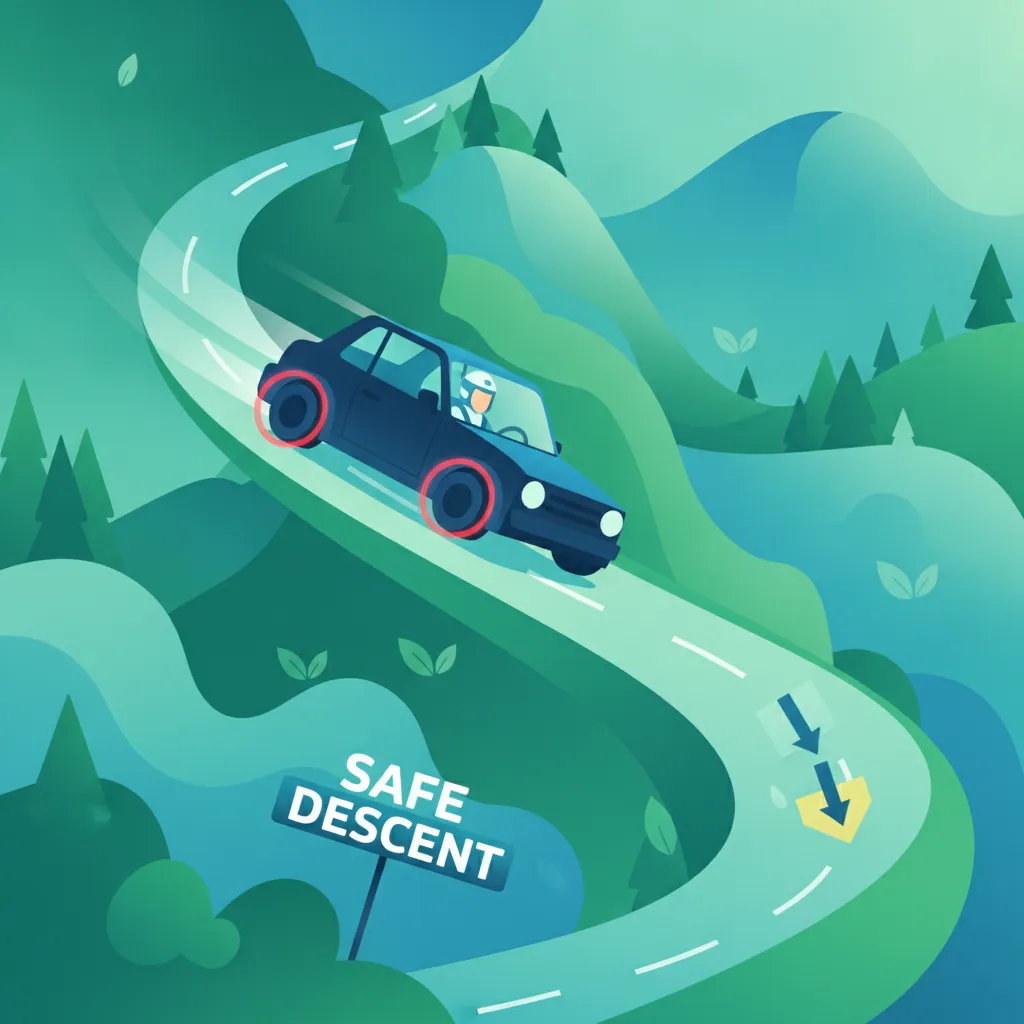
This lesson provides critical techniques for managing vehicle speed on the steep, long gradients found on Alpine roads. It emphasizes selecting the correct gear before the descent and using auxiliary braking systems to maintain a safe, controlled speed. These practices are essential to prevent service brake overheating and potential failure (brake fade).
Master safe driving practices in fog and other low visibility conditions according to Austrian driving theory for C-category licenses. This lesson covers speed adjustments, correct lighting usage, and hazard perception to maintain road safety.
This lesson equips drivers with the knowledge to handle a range of adverse weather conditions safely. It explains the risks of hydroplaning in heavy rain, reduced visibility in fog, and loss of traction on snow and ice, including the hidden danger of black ice. The content provides practical strategies for speed adaptation, correct use of lighting, and maintaining vehicle control, as well as specific considerations for night driving.

This lesson addresses the critical skill of adapting driving behavior to conditions of reduced visibility, such as fog, heavy rain, snow, or darkness. It explains the principle of driving only as fast as you can see, ensuring your stopping distance is within your visibility range. The content covers the correct use of headlights and fog lights and emphasizes why speed reduction is essential for maintaining safety when your ability to perceive hazards is compromised.

This lesson covers the proper and legal use of a vehicle's entire lighting system to see and be seen. It explains the regulations for using headlights, including daytime running lights, and the specific conditions under which fog lights and high beams are permitted. Correct use of turn signals and brake lights is also emphasized as essential for communicating intentions to other drivers and ensuring safety in all visibility conditions.
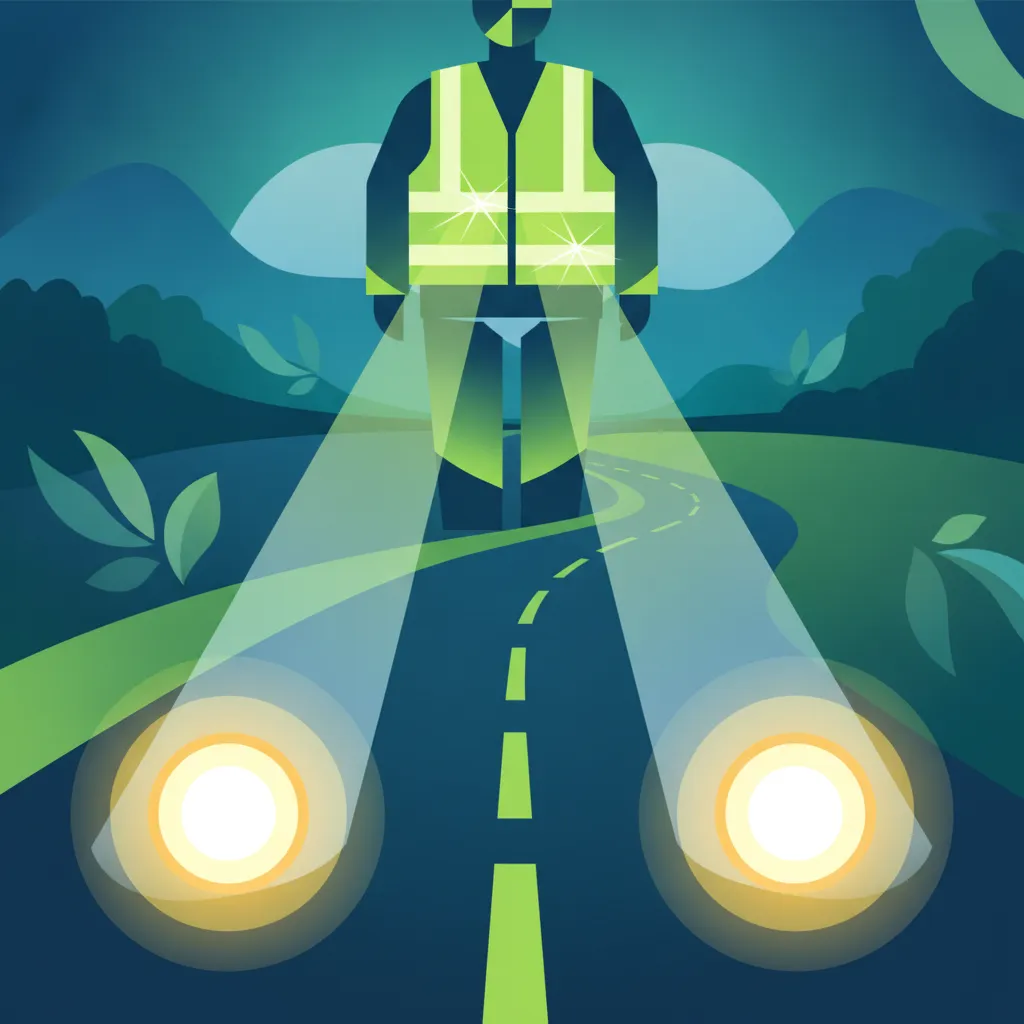
This lesson covers the various lighting and reflector systems required on heavy goods vehicles in Austria. It explains the function and legal requirements for headlights, taillights, brake lights, indicators, and reflective markings. Ensuring all lighting systems are operational is essential for visibility and communicating intentions to other road users.

This lesson focuses on strategies for riding safely in conditions of poor visibility, such as rain, fog, and low sun glare. It explains how to use lights effectively, increase following distances, and moderate speed to maintain control. The content also addresses braking techniques on wet surfaces to prevent skidding and hydroplaning.
Adverse weather demands a significant adjustment in driving technique. This lesson explains the dangers of aquaplaning in heavy rain, the need for drastically reduced speed in fog, and how to anticipate and correct for the effects of strong crosswinds on a high-sided vehicle. It reinforces the importance of increasing following distances and using appropriate lighting to see and be seen.

This lesson focuses on the critical role of mirrors, cameras, and other electronic aids in minimizing blind spots around a large vehicle. It provides guidance on how to properly adjust mirrors to maximize visibility. Effective use of these systems is vital for detecting smaller vehicles, cyclists, and pedestrians, especially during manoeuvres.

Rural Austrian roads present unique challenges, including lack of markings, tight spaces, and slow-moving agricultural vehicles. This lesson teaches how to read the road ahead, anticipate hazards around blind bends, and use passing places effectively when meeting other large vehicles. It emphasizes adjusting speed to suit the limited visibility and variable road conditions.

This lesson details the mandatory lighting and reflector requirements for Category AM vehicles in Austria. It explains the functions of different light settings, including daytime running lights, and their importance for being seen. Additionally, it covers the legal standards for protective helmets, a critical component of rider safety.
Find clear answers to common questions learners have about Weather Adaptation: Snow, Ice, Fog, and Winter Equipment. Learn how the lesson is structured, which driving theory objectives it supports, and how it fits into the overall learning path of units and curriculum progression in Austria. These explanations help you understand key concepts, lesson flow, and exam focused study goals.
Yes, for vehicles of category C, winter tires are mandatory during the specified winter period if road conditions involve snow, slush, or ice. You must be familiar with the tread depth requirements specific to heavy vehicles.
You are required to carry snow chains that fit your vehicle's drive tires whenever there is a possibility of encountering winter road conditions. The theory exam often tests your knowledge of when and where they must be mounted.
In reduced visibility, you should use your dipped headlights. Fog lights may only be used when visibility is significantly reduced by fog, rain, or snow, as per Austrian traffic law.
On snow or ice, braking distance increases exponentially. You must account for the vehicle's large mass and potential load shift when applying brakes on low-grip surfaces, often utilizing engine braking and retarders to maintain control.
Refine your study plan by searching for specific Austrian driving theory practice sets. Pinpoint questions related to particular road rules, signs, or challenge levels, and begin practicing immediately to reinforce your knowledge and excel in your official exam with confidence. Get started with focused revision today.