
Logo
Austrian Driving Theory Courses

Lesson 2 of the Motorways, Alpine Roads, Tunnels, Bridges, Weather and Route Planning unit

Austrian HGV Theory C: Alpine Passes: Gradients, Weather, and Tunnel Navigation

This lesson provides essential training for navigating Austria's challenging mountain routes in your HGV. You will learn how to safely manage steep gradients and adapt your driving to the unpredictable weather conditions found in Alpine regions. These skills are vital for maintaining control of heavy vehicles and ensuring safety in tunnels during your professional driving career.

alpine drivinghgv safetytunnel protocolsmountain pass rulesheavy vehicle exam
Austrian HGV Theory C: Alpine Passes: Gradients, Weather, and Tunnel Navigation

Lesson content overview

Austrian HGV Theory C

Navigating Alpine Passes: Gradients, Weather, and Tunnel Safety for Heavy Goods Vehicles

Driving a heavy goods vehicle (HGV) through Austria's stunning Alpine passes presents unique challenges that demand specialized knowledge and careful preparation. These demanding routes feature steep gradients, rapidly changing weather conditions, and long tunnels, all of which require precise driving techniques and adherence to specific safety protocols. This lesson equips drivers with the essential understanding to manage these conditions safely and efficiently, ensuring vehicle stability, preventing accidents, and complying with Austrian traffic regulations.

The inherent risks of Alpine driving for HGVs, such as increased stopping distances on descents, the potential for brake fade, and reduced traction due to adverse weather, underscore the critical importance of mastering these skills. Proper preparation not only enhances safety but also reduces the likelihood of vehicle damage, costly delays, and legal penalties. A thorough understanding of vehicle dynamics, braking systems, and load distribution—topics covered in earlier modules—serves as a crucial foundation for effective Alpine navigation.

Understanding Gradients: Uphill and Downhill Driving Techniques for HGVs

Gradients refer to the steepness of a road, expressed as a percentage, indicating the vertical rise or fall over a horizontal distance. For instance, a 6% gradient means the road rises or falls 6 meters for every 100 meters traveled horizontally. Navigating these inclines and declines effectively is paramount for HGV safety.

Mastering Uphill Gradients with Heavy Loads

Climbing steep uphill gradients requires careful management of engine power and gear selection. The objective is to maintain momentum without overstraining the engine or consuming excessive fuel.

Before commencing an ascent, drivers should select a gear that provides sufficient engine torque to comfortably pull the heavy load up the incline. Shifting down too late can lead to a loss of momentum, requiring even lower gears or potentially stalling the vehicle. Maintaining a steady, appropriate speed is crucial; sudden acceleration puts undue stress on the engine and drivetrain. Anticipating the road ahead, including curves or even steeper sections, allows for smoother transitions and prevents unnecessary braking or re-acceleration.

Safe Downhill Management: Preventing Brake Fade

Descending steep gradients is arguably more challenging and dangerous for HGVs than climbing them. Gravity significantly increases a heavy vehicle's momentum, demanding robust and sustained speed control. The primary danger is brake fade, a reduction or complete loss of braking power caused by the service brakes overheating from continuous use.

To prevent brake fade, HGV drivers must primarily rely on supplementary braking systems, such as engine braking and retarders.

Definition

Retarder

A supplementary braking system that helps control vehicle speed without using the service brakes, thereby preventing them from overheating. Retarders can be exhaust brakes, engine brakes, hydraulic retarders, or electromagnetic retarders.
Engine braking involves selecting a low gear (typically the same gear that would be used to climb the same gradient) so that the engine's compression provides a natural braking effect. Retarders, often controlled by a stalk on the steering column, provide additional, sustained braking force.

Procedure for Safe Downhill Driving

  1. Assess the Gradient: Note the steepness (percentage) indicated by road signs.

  2. Select Appropriate Gear: Before starting the descent, engage a low gear. A good rule of thumb is to use the same gear you would need to ascend that gradient.

  3. Activate Retarder: Engage your vehicle's retarder system (exhaust brake, engine brake, hydraulic, or electromagnetic) to control speed. Start with a lower setting and increase as needed.

  4. Intermittent Service Brake Use: Only use the service brakes for short, firm applications to reduce speed when the retarder and engine braking are insufficient. Release the brake pedal completely between applications to allow the brakes to cool.

  5. Monitor Speed: Keep a constant eye on your speedometer and maintain a safe, controlled speed. Never allow the vehicle to "run away."

  6. Maintain Following Distance: Increase your following distance significantly on descents, as stopping distances are much longer, especially for heavy vehicles.

Austrian traffic regulations mandate the use of retarders or engine braking on steep grades exceeding 5% for HGVs over 3.5 tonnes. Failing to adhere to this can lead to dangerous situations and legal penalties.

The Impact of Vehicle Load on Mountain Driving

The total weight of an HGV and the distribution of its cargo profoundly influence vehicle stability and braking performance, particularly on gradients. Understanding these dynamics is critical for safe Alpine navigation.

Load Weight and Momentum

A heavier vehicle possesses greater kinetic energy, which means it requires more force and distance to slow down or stop. This effect is amplified on downhill gradients where gravity adds to the vehicle's momentum. Conversely, climbing uphill with a heavy load demands more engine power and can significantly reduce acceleration capabilities. Drivers must account for their vehicle's gross vehicle weight when calculating safe speeds and braking distances.

Longitudinal and Vertical Load Shift

Cargo is not static; it can shift during acceleration, braking, or when traversing inclines and declines.

Definition

Load Shift

The movement of cargo from one part of the vehicle to another due to changes in vehicle motion, such as acceleration, braking, or driving on slopes.

  • Longitudinal Load Shift: When braking on a downhill, the momentum of the cargo pushes it forward. If not properly secured, this can shift the vehicle's center of gravity forward, potentially overloading the front axle and reducing traction on the rear drive wheels, which are crucial for engine braking. Conversely, accelerating uphill can cause cargo to shift backward, potentially lifting the front axle.
  • Vertical Load Transfer: On a steep downhill, some of the vehicle's effective weight is transferred towards the rear axle due to the angle of the slope. While this can sometimes aid rear-wheel traction, improper load distribution can still lead to instability.

Importance of Proper Load Securing (Ladungssicherung)

Austrian law (specifically L §21 of the Road Traffic Act) places strict demands on Ladungssicherung, or proper load securing. Cargo must be secured to prevent movement in all directions—forward, backward, sideways, and upward—under all expected driving conditions, including emergency braking and sharp turns on steep gradients.

Common mistakes include:

  • Overloading an axle: Exceeding the permissible weight for an individual axle can compromise steering control, braking efficiency, and tire integrity.
  • Failing to tie down cargo: Loose cargo can shift dramatically, causing loss of control, especially on curves or when braking on a slope. A shifting load can also damage the vehicle or the cargo itself.

Drivers must verify that their load is correctly distributed and securely fastened before every journey, paying particular attention when preparing for Alpine routes. This directly impacts vehicle stability and the effectiveness of braking systems on gradients.

Adapting to Alpine Weather Conditions

Alpine regions are notorious for their unpredictable and rapidly changing weather patterns. Drivers must be prepared to encounter a wide range of conditions, often within a short distance or time frame. This necessitates constant vigilance and proactive adaptation of driving behavior.

Snow and Ice: Reduced Traction and Essential Equipment

Snow and ice severely reduce road surface friction, dramatically increasing stopping distances and the risk of skidding.

  • Winter Tires: Austrian law (§59 StVO) mandates the use of winter tires (or all-season tires marked M+S) during specific periods or when winter road conditions (snow, slush, ice) are present. These tires have specialized tread patterns and rubber compounds designed for better grip in cold and slippery conditions.
  • Snow Chains: On certain Alpine passes, especially during heavy snowfall, snow chains may be legally required. These are indicated by specific road signs.

Drivers of HGVs must carry appropriately sized snow chains and know how to fit them quickly and safely. Using chains significantly improves traction but also requires a substantial reduction in speed, typically to 50 km/h or less.

Fog: Severely Reduced Visibility

Dense fog is a common occurrence in mountainous areas, particularly in valleys or at higher altitudes. It drastically reduces visibility, making it difficult to judge distances and spot hazards.

  • Fog Lights: Use low beam headlights and, if fitted, front fog lights when visibility is significantly reduced (generally below 50 meters). Rear fog lights should be used only when visibility is severely impaired (less than 50 meters) to make your vehicle more visible to following traffic. Remember to switch off fog lights once visibility improves, as they can glare oncoming drivers in clear conditions.
  • Speed Reduction: Reduce your speed significantly. Drive only as fast as conditions allow you to stop safely within the visible distance.
  • Increased Following Distance: Double or triple your normal following distance to allow more reaction time.

Warning

Never use high beam headlights in fog; the light reflects off the fog particles, worsening visibility for the driver.

Rainstorms: Hydroplaning and Wet Road Hazards

Sudden heavy rainstorms can quickly make Alpine roads treacherous.

  • Hydroplaning: This occurs when a layer of water builds up between the vehicle's tires and the road surface, causing the tires to lose contact with the road. The risk increases with speed and worn tire treads. Reduce speed immediately in heavy rain.
  • Reduced Friction: Wet roads reduce braking effectiveness and grip, increasing stopping distances.
  • Road Surface Monitoring: Be aware of water accumulation, especially in ruts or near the edges of the road. Adjust speed accordingly.

Ultimately, adapting to Alpine weather means prioritizing safety over maintaining a schedule. If conditions are too severe, it may be necessary to find a safe stopping place and wait for conditions to improve.

Ensuring Safety in Mountain Tunnels

Mountain tunnels are integral parts of Alpine road networks, allowing passage through terrain that would otherwise be impassable. However, their enclosed environment presents specific safety considerations and rules for HGV drivers.

Entry Procedure: Preparation is Key

  • Turn on Headlights: Austrian law (§38 StVO) mandates the use of low beam headlights inside tunnels. Switch them on well before entering, even if the tunnel appears brightly lit from the outside.
  • Remove Sunglasses: Take off sunglasses to allow your eyes to adjust more quickly to the change in light.
  • Check Speed: Observe and adhere to the posted speed limits. Tunnels often have specific, lower speed limits for HGVs, typically 80 km/h unless otherwise indicated.
  • Maintain Distance: Ensure you have a safe following distance from the vehicle ahead.

In-Tunnel Procedure: Vigilance and Awareness

  • Maintain Speed and Distance: Drive at a steady, appropriate speed, strictly observing the posted limits. Keep a safe following distance, remembering that enclosed spaces can exacerbate reaction times and impact.
  • No High Beams: Never use high beam headlights inside a tunnel. They can blind oncoming drivers and reflect off the tunnel walls, hindering visibility.
  • Hazard Lights (Only for Emergencies): Hazard warning lights should only be used if your vehicle breaks down or if you are stopped in an emergency situation within the tunnel. Do not use them to indicate slow driving or during fog inside the tunnel.
  • Emergency Procedures: Familiarize yourself with emergency exits, breakdown bays, and fire extinguisher locations, which are often signposted within tunnels.

Exit Procedure: Adjusting to the Outside World

  • Adjust to Light: Be prepared for a sudden change in light intensity upon exiting a tunnel. It may take a moment for your eyes to adjust to natural daylight or darkness.
  • Watch for Crosswinds: Some tunnel exits can experience sudden, strong crosswinds, especially on exposed mountain sections. Be prepared to adjust your steering to counteract these forces.
  • Check Conditions: The weather conditions outside the tunnel might be vastly different from those inside or at the entry point. Be ready to adapt your driving accordingly.

Tip

Always maintain focus inside tunnels. The monotonous environment can sometimes lead to reduced concentration. Stay alert for variable message signs or emergency signals.

Speed Management on Alpine Roads and Through Tunnels

Appropriate speed management is fundamental to safe driving on Alpine passes and within tunnels. This involves not only adhering to posted speed limits but also adapting speed to current conditions.

General Speed Limits for HGVs

On most Alpine passes, the general speed limit for HGVs (vehicles over 3.5 tonnes) is typically 80 km/h, unless specific signage indicates otherwise. However, this is an absolute maximum and often not a safe speed given the terrain.

Variable and Advisory Speed Limits

  • Variable Speed Limits: Many Alpine roads and tunnels utilize electronic variable message signs to display reduced speed limits based on real-time conditions such as traffic, weather (fog, snow, ice), or construction. These signs override general speed limits and must be strictly obeyed.
  • Advisory Signs: Yellow advisory speed signs (often for sharp curves, steep descents, or hazardous sections) recommend a maximum safe speed. While not legally binding in the same way as regulatory speed limits, ignoring them is a common cause of accidents. For HGVs, these advisory speeds should be treated with utmost seriousness due to increased momentum and risk of rollover.

Adapting Speed to Conditions

The Austrian StVO emphasizes that drivers must always adapt their speed to prevailing road, weather, and visibility conditions, regardless of the posted speed limit. This means that even if a limit of 80 km/h is posted, driving at 40 km/h might be necessary and appropriate on an icy descent or in dense fog. For HGVs, the additional weight and longer braking distances make this principle even more critical.

Austrian Regulations for Alpine HGV Driving

Compliance with Austrian traffic law is non-negotiable for professional HGV drivers. Specific regulations are designed to enhance safety on demanding Alpine routes.

RuleApplicabilityLegal StatusRationaleCorrect ExampleIncorrect Example
Retarder Use on Steep GradientsHGVs on gradients >5% (e.g., Alpine passes)MandatoryPrevents service brake overheating and fade, maintaining braking effectiveness.Driver activates retarder before descending a 9% grade, keeping service brakes cool.Driver relies solely on service brakes, causing them to overheat and fail on a long descent.
Winter Tire ObligationPeriods of snow/ice, especially in Alpine regionsMandatory (§59 StVO)Ensures adequate traction and vehicle control in slippery conditions.Driver equips winter tires and carries snow chains during the winter months, using them when roads are snow-covered.Driver uses summer tires in snowy conditions, resulting in loss of traction and potential skid.
Tunnel Lighting RequirementAll vehicles entering tunnelsMandatory (§38 StVO)Improves visibility for all road users within the confined, often darker tunnel environment.Driver switches to low beam headlights well before entering a tunnel.Driver enters a tunnel without headlights, creating a hazard for others.
Speed Limits in TunnelsAll vehicles, with specific lower limits for HGVsMandatory (per signage and §45 StVO)Controls kinetic energy in a confined space, reducing accident severity and allowing for safe stopping distances.Driver adheres to the 80 km/h limit for HGVs in a tunnel.Driver exceeds the speed limit in a tunnel, increasing the risk of a collision and facing fines.
Hazard Light Use in TunnelsBreakdowns or stopped vehicles inside tunnelsMandatory when stopped in tunnelAlerts following traffic and emergency services to a stationary hazard.Driver activates hazard lights and places a warning triangle after moving a broken-down vehicle to the side.Driver stops due to a breakdown in a tunnel without activating hazard lights, leading to a rear-end collision risk.
Load Distribution LimitsHGVs carrying cargo on Alpine routesMandatory (L §21 of Austrian Road Traffic Act)Prevents dangerous load shifts and ensures vehicle stability, especially on inclines and declines.Driver verifies load is evenly distributed and securely fastened within axle weight limits before setting off on an Alpine pass.Driver exceeds the rear axle load limit, causing reduced traction downhill and instability.
Reduced Speed for WeatherSnow, ice, fog, or heavy rain on Alpine passesRecommended/mandatory depending on conditionsCompensates for reduced friction and visibility, allowing for safe braking and maneuvering.Driver reduces speed to 40 km/h on an icy pass despite a higher posted limit, maintaining control.Driver maintains the posted speed limit on an icy pass, leading to a loss of control.

Common Pitfalls and How to Avoid Them on Alpine Routes

Even experienced drivers can fall victim to common errors in the challenging Alpine environment. Understanding these pitfalls is the first step to avoiding them.

  1. Braking Too Late or Too Continuously on Downhill Gradients:

    • Pitfall: Relying solely on service brakes for prolonged periods without engaging engine braking or retarders.
    • Consequence: Rapid brake overheating, leading to brake fade and potential complete loss of braking power.
    • Prevention: Proactively engage engine braking and retarders before starting a descent. Use service brakes only for short, firm, intermittent applications.
  2. Exceeding Speed Limits in Fog or Poor Visibility:

    • Pitfall: Maintaining the posted speed limit despite severely reduced visibility.
    • Consequence: Severely delayed reaction times, inability to stop within the visible distance, high risk of collision.
    • Prevention: Reduce speed significantly. Use low beam and front fog lights (and rear fog light if visibility is below 50m).
  3. Improper Load Securing:

    • Pitfall: Cargo not adequately secured, leading to movement during dynamic driving.
    • Consequence: Load shift, affecting vehicle stability (e.g., trailer sway, front axle lift on descents), potential loss of control or rollover.
    • Prevention: Thoroughly check load distribution and securing straps/devices before every journey, especially for Alpine routes.
  4. Using High Beams Inside Tunnels:

    • Pitfall: Activating high beam headlights within the enclosed space of a tunnel.
    • Consequence: Blinding oncoming traffic, reflection of light off tunnel walls creating glare, increased risk of head-on collisions.
    • Prevention: Always use low beam headlights in tunnels.
  5. Neglecting Winter Chains on Snow-Covered Roads:

    • Pitfall: Driving without snow chains where they are legally required or clearly necessary due to heavy snow.
    • Consequence: Insufficient traction, uncontrolled sliding, inability to climb or descend safely, legal penalties.
    • Prevention: Carry appropriate snow chains in winter and fit them promptly when conditions demand or signs indicate.
  6. Tailgating on Alpine Passes:

    • Pitfall: Following too closely, especially on steep descents where braking distances are longer and speeds may vary.
    • Consequence: Severely reduced reaction time, high risk of rear-end collision if the vehicle ahead brakes suddenly.
    • Prevention: Significantly increase following distance on Alpine roads, particularly on descents.
  7. Ignoring Variable or Advisory Signage:

    • Pitfall: Disregarding electronic variable speed limits or advisory speed signs for curves or steep sections.
    • Consequence: Inadequate speed control for specific hazards, potential loss of control, increased accident risk, fines.
    • Prevention: Always obey variable speed limits and treat advisory signs as critical safety recommendations.

Integrated Safety for Alpine Journeys

Safe navigation of Alpine passes requires an integrated approach that combines knowledge of vehicle dynamics, load management, environmental factors, and strict adherence to legal requirements.

  • Proactive Planning: Before embarking on an Alpine route, check weather forecasts, road conditions (e.g., pass closures, chain requirements), and any specific HGV restrictions.
  • Vehicle Preparation: Ensure the vehicle is in excellent mechanical condition, especially brakes and tires. Confirm winter equipment (tires, chains) is onboard and functional during the colder months.
  • Driver Readiness: Be well-rested and alert. Alpine driving can be mentally and physically demanding. Understand that fatigue can significantly impair judgment and reaction times.
  • Continuous Assessment: Constantly assess changing road and weather conditions. Be prepared to adjust your driving strategy, speed, and equipment at a moment's notice.

By conscientiously applying these principles, HGV drivers can navigate Austria's magnificent, yet challenging, Alpine passes with confidence, efficiency, and above all, safety.

Learn more with these articles

Check out these practice sets

Lesson recap

Quick summary before you move on

Fast revision

This lesson covers the essential skills for safely operating heavy goods vehicles on Austria's Alpine passes, focusing on gradient management through proper gear selection and retarder use to prevent brake fade, load dynamics and securing requirements under Austrian law, and weather adaptation including winter tire obligations and snow chain protocols. It also details specific tunnel safety procedures including mandatory low beam headlights and emergency protocols. Key Austrian regulations are clearly referenced including mandatory retarder use on gradients over 5%, winter tire requirements under §59 StVO, and tunnel lighting requirements under §38 StVO, all critical for C and CE license examination preparation.


Core takeaways

Main ideas from this lesson

A short set of high-value points that capture the most important learning from this lesson.

Retarders and engine braking are the primary methods for controlling speed on steep descents, with service brakes reserved only for brief, intermittent applications to prevent dangerous brake fade.

Load distribution and securing (Ladungssicherung) directly affects vehicle stability on gradients, as cargo can shift forward during downhill braking or backward during uphill acceleration.

Weather adaptation on Alpine routes is not optional: winter tires are mandatory under §59 StVO when conditions require it, and snow chains must be carried and fitted when signs indicate.

Tunnel entry requires low beam headlights (§38 StVO) regardless of apparent lighting, and high beams must never be used inside tunnels.

Speed must always be adapted to actual conditions (weather, visibility, traffic) even when posted limits allow higher speeds.

Remember this

Details worth keeping in mind

Point 1

A gradient percentage shows vertical change per 100m horizontal (e.g., 6% gradient = 6m rise/fall per 100m), and Austrian law mandates retarder use for HGVs over 3.5 tonnes on gradients exceeding 5%.

Point 2

When descending, engage the same low gear you would need to climb the same gradient and activate the retarder before starting the descent.

Point 3

High beam headlights create dangerous glare in fog and tunnels by reflecting off water droplets or walls; always use low beam in these conditions.

Point 4

Load shift on downhill gradients pushes cargo forward, potentially overloading the front axle and reducing rear-wheel traction needed for engine braking.

Point 5

Variable speed limits displayed on electronic signs override general posted limits and must be strictly obeyed based on current conditions.

Watch for this

Frequent learner mistakes

Relying solely on service brakes for prolonged downhill descents without engaging engine braking or retarders, leading to brake overheating and potential failure.

Using high beam headlights inside tunnels or in fog, which blinds oncoming drivers and creates reflective glare that worsens visibility.

Following too closely on Alpine descents where HGV stopping distances are significantly longer due to momentum and gradient effects.

Failing to properly secure cargo before Alpine routes, allowing dangerous load shift that can destabilize the vehicle on curves or gradients.

Disregarding advisory speed signs for curves or steep sections, which should be treated as critical safety recommendations for heavy vehicles.

Search topics related to Alpine Passes: Gradients, Weather, and Tunnel Navigation

Explore search topics learners often look for when studying Alpine Passes: Gradients, Weather, and Tunnel Navigation. These topics reflect common questions about road rules, driving situations, safety guidance, and lesson level theory preparation for learners in Austria.

Austrian HGV theory Alpine driving rulesHow to manage downhill gradients with heavy vehicleTunnel driving safety rules for trucks in AustriaHGV mountain pass driving techniques C categoryPreparing for alpine route questions on Austrian theory examTruck braking techniques for steep alpine roadsSafety requirements for HGV tunnel navigation

Related driving theory lessons for Alpine Passes: Gradients, Weather, and Tunnel Navigation

Browse additional driving theory lessons that cover connected traffic rules, road signs, and common driving situations related to this topic. Improve your understanding of how different rules interact across everyday traffic scenarios.

Alpine Weather and Tunnel Safety for Heavy Goods Vehicles in Austria

Learn how to safely navigate extreme weather conditions like snow and fog in the Alps. Understand crucial protocols for driving through mountain tunnels, including lighting and speed requirements for HGVs.

alpine drivingweather adaptationtunnel safetyhgv safetyaustrian traffic law
Austrian Tunnel Regulations and Safety Procedures lesson image

Austrian Tunnel Regulations and Safety Procedures

Austria's mountainous terrain means drivers will frequently encounter long tunnels. This lesson details the specific regulations, such as turning on lights and maintaining distance, as well as how to react to tunnel-specific warning signs and signals. Crucially, it covers the correct emergency procedures to follow in the event of a fire, accident, or breakdown inside a tunnel.

Austrian Driving Theory DRural Services, Alpine Routes, Motorways, Tunnels and Long-Distance Coaches
View lesson
Weather Adaptation: Snow, Ice, Fog, and Winter Equipment lesson image

Weather Adaptation: Snow, Ice, Fog, and Winter Equipment

This lesson focuses on adapting driving techniques for hazardous weather conditions. It details the legal requirements for winter tires and the proper use of snow chains in Austria. Additionally, it covers safe driving practices in low visibility conditions like fog, such as reducing speed and using appropriate lights.

Austrian HGV Theory CMotorways, Alpine Roads, Tunnels, Bridges, Weather and Route Planning
View lesson
Alpine Road Navigation, Gradients, and Weather Impacts lesson image

Alpine Road Navigation, Gradients, and Weather Impacts

This lesson focuses on the specialized skills required for navigating alpine roads safely. It covers techniques for managing steep gradients, such as using a lower gear for engine braking on descents, and how to safely negotiate hairpin turns. The content stresses the importance of being prepared for rapid weather changes and understanding the effects of altitude on both the driver and the vehicle's performance.
Austrian Driving Theory BRural Roads, Alpine Roads, Motorways, Tunnels and Weather
View lesson
Weather Conditions: Rain, Fog, Snow, Ice, and Night Driving lesson image

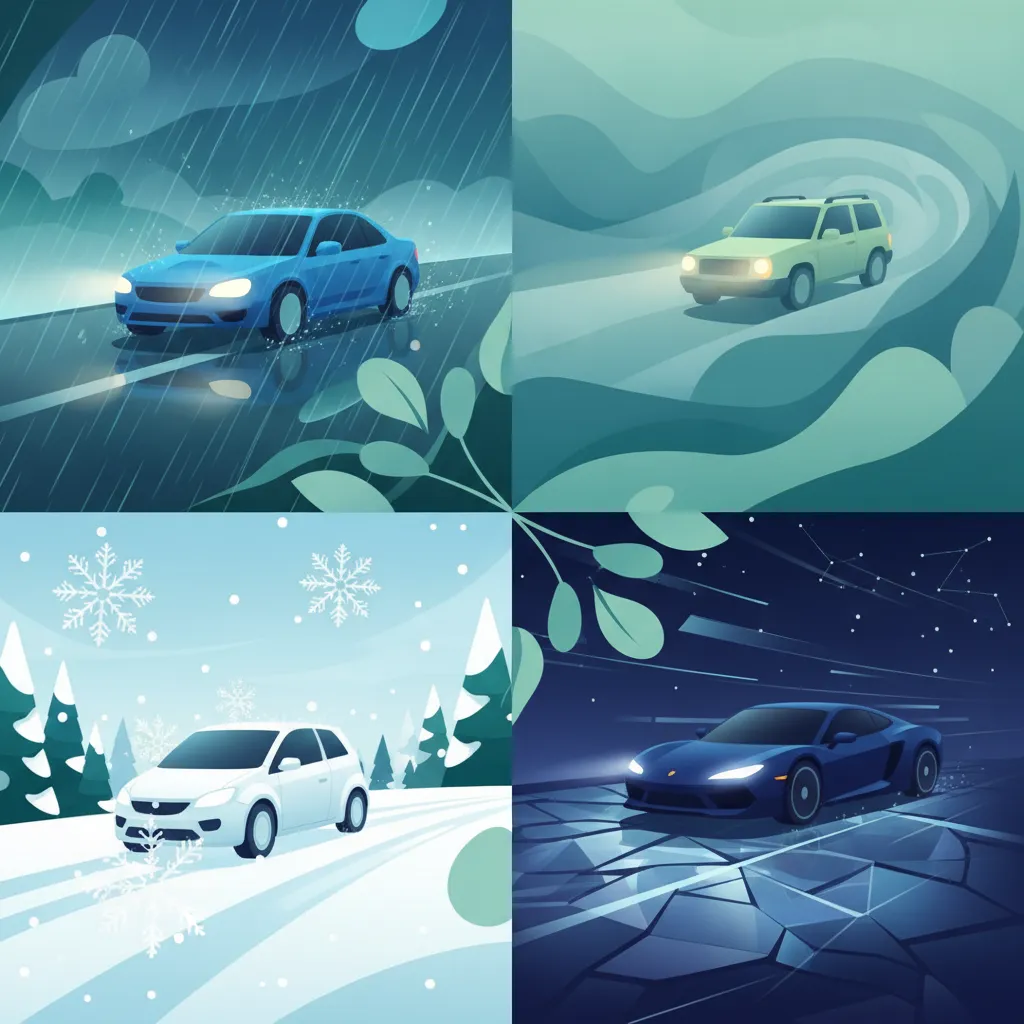
Weather Conditions: Rain, Fog, Snow, Ice, and Night Driving

This lesson equips drivers with the knowledge to handle a range of adverse weather conditions safely. It explains the risks of hydroplaning in heavy rain, reduced visibility in fog, and loss of traction on snow and ice, including the hidden danger of black ice. The content provides practical strategies for speed adaptation, correct use of lighting, and maintaining vehicle control, as well as specific considerations for night driving.
Austrian Driving Theory BRural Roads, Alpine Roads, Motorways, Tunnels and Weather
View lesson
Downhill Speed Management on Alpine Grades lesson image

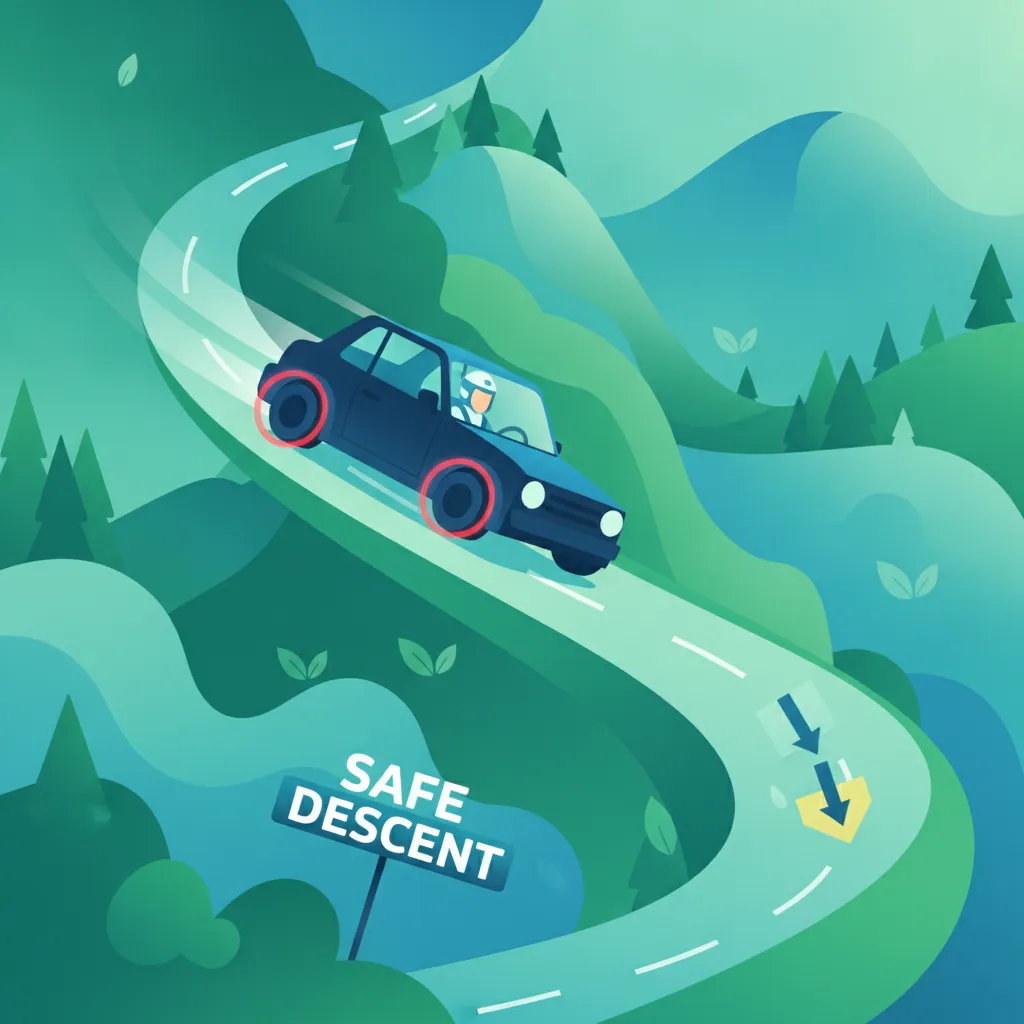
Downhill Speed Management on Alpine Grades

This lesson provides critical techniques for managing vehicle speed on the steep, long gradients found on Alpine roads. It emphasizes selecting the correct gear before the descent and using auxiliary braking systems to maintain a safe, controlled speed. These practices are essential to prevent service brake overheating and potential failure (brake fade).
Austrian HGV Theory CBrakes, Retarders, Downhill Control and Stopping Distance
View lesson
Tunnel Driving Rules and Emergency Procedures lesson image

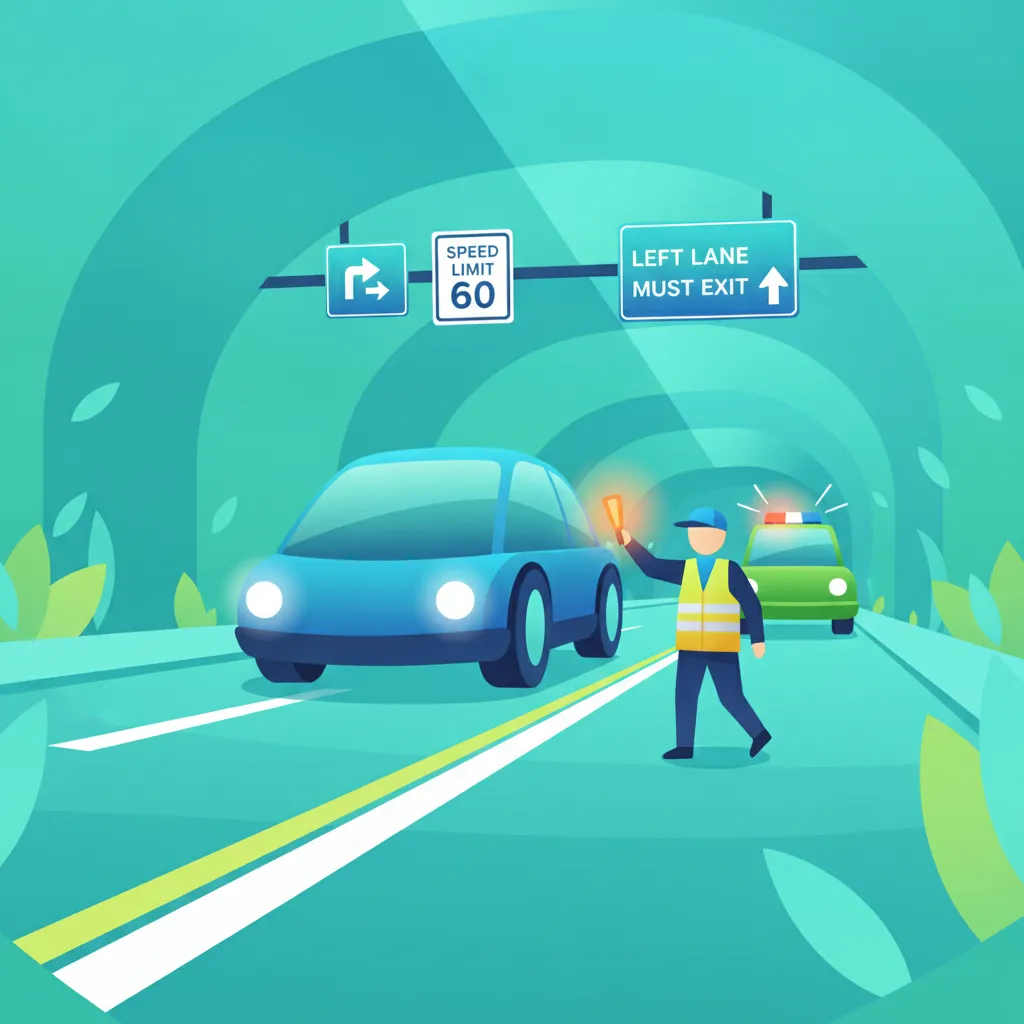
Tunnel Driving Rules and Emergency Procedures

This lesson covers the specific regulations for driving through Austria's numerous tunnels. It highlights mandatory rules such as turning on headlights, adhering to posted speed limits, and maintaining a safe following distance. Crucially, the content details the correct emergency procedures to follow in the event of a traffic jam, breakdown, or fire inside a tunnel, including how to use emergency exits and communication devices.
Austrian Driving Theory BRural Roads, Alpine Roads, Motorways, Tunnels and Weather
View lesson
Weight Restrictions on Alpine Passes and Bridges lesson image

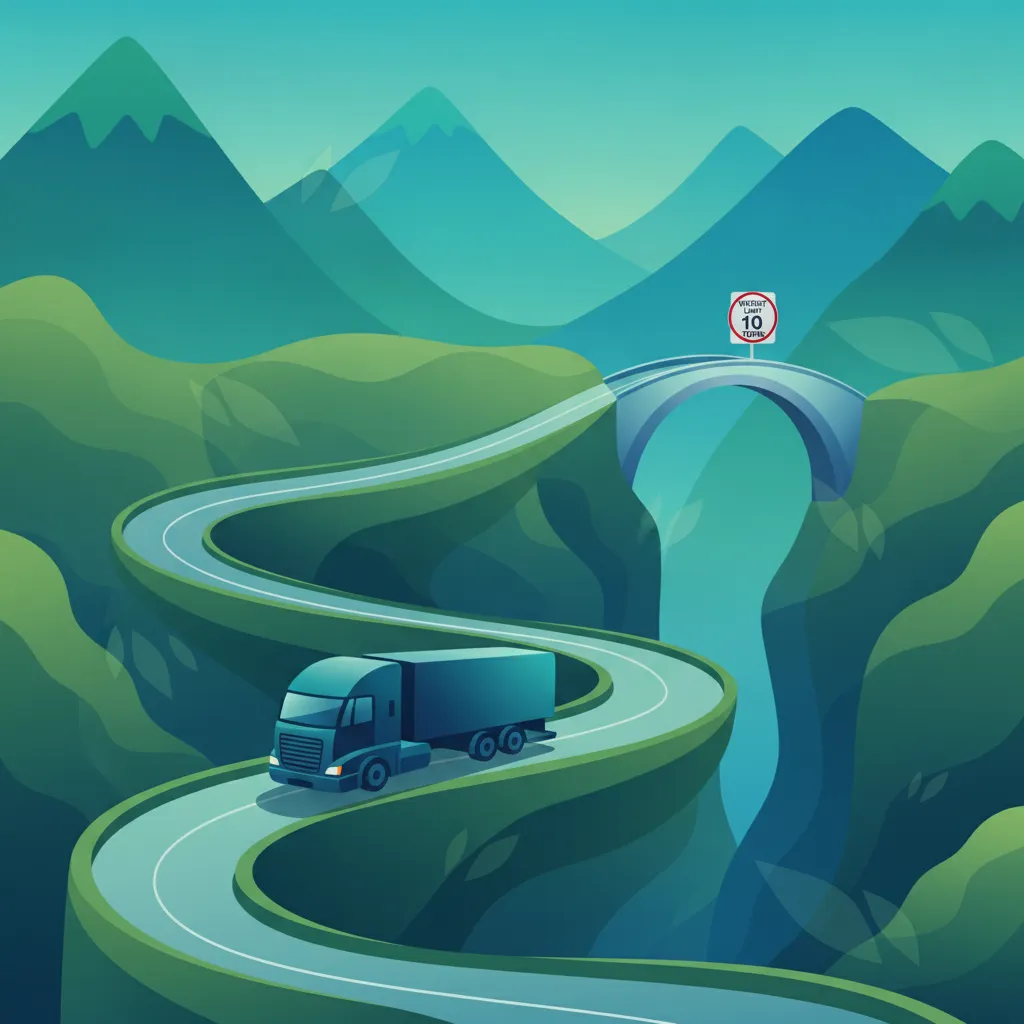
Weight Restrictions on Alpine Passes and Bridges

This lesson covers the specific weight restrictions that apply to sensitive infrastructure like Alpine passes and bridges throughout Austria. It explains how to identify these limits through road signage and incorporate them into route planning. Adhering to these restrictions is vital for preventing structural damage and ensuring safety in challenging terrain.

Austrian HGV Theory CMass, Dimensions, Axle Loads, Payload and Operating Limits
View lesson
Navigating Alpine Routes, Gradients and Hairpin Bends lesson image

Navigating Alpine Routes, Gradients and Hairpin Bends

Driving a heavy vehicle in the Alps requires specific skills to manage its energy and momentum. This lesson focuses on using lower gears and auxiliary braking systems (retarder/engine brake) to control speed on long descents and prevent brake overheating. It also covers the correct line and technique for navigating tight hairpin turns safely and efficiently.
Austrian Driving Theory DRural Services, Alpine Routes, Motorways, Tunnels and Long-Distance Coaches
View lesson
Tunnels and Galleries Navigation lesson image

Tunnels and Galleries Navigation

This lesson addresses the unique environment of road tunnels, common in Austria's alpine regions. Key safety practices include removing sunglasses before entry, adhering to specific tunnel speed limits, and maintaining a safe following distance. It also covers emergency procedures, such as locating emergency exits and using designated call boxes in case of a breakdown or accident.

Austrian Motorcycle Theory (A)Overtaking, Motorways, Tunnels, Rural Roads and Tourist Routes
View lesson
Navigating Narrow Streets and Restricted Access Roads lesson image

Navigating Narrow Streets and Restricted Access Roads

This lesson addresses the challenge of manoeuvring a large vehicle through streets not designed for its size. It covers how to assess vertical and horizontal clearances, plan the vehicle's path through tight turns, and heed all restrictive signage. Careful planning and slow, precise control are essential for success.

Austrian HGV Theory CCity Deliveries, Construction Traffic and Vulnerable Road Users
View lesson

Managing Steep Gradients and Load Stability in Alpine Driving

Understand the physics of driving heavy vehicles on steep inclines and declines. Learn how load weight and distribution impact stability and braking on Alpine passes, and discover essential securing techniques.

alpine drivinggradientsload securingvehicle stabilityheavy vehicle theory
Downhill Speed Management on Alpine Grades lesson image

Downhill Speed Management on Alpine Grades

This lesson provides critical techniques for managing vehicle speed on the steep, long gradients found on Alpine roads. It emphasizes selecting the correct gear before the descent and using auxiliary braking systems to maintain a safe, controlled speed. These practices are essential to prevent service brake overheating and potential failure (brake fade).

Austrian HGV Theory CBrakes, Retarders, Downhill Control and Stopping Distance
View lesson
Impact of Load Distribution on Stability lesson image

Impact of Load Distribution on Stability

This lesson explains the critical relationship between load distribution, the vehicle's centre of gravity, and its stability. It details how incorrect placement of cargo can negatively affect handling, increase the risk of rollovers, and reduce braking efficiency. Achieving a balanced load is a key component of safe heavy vehicle operation.

Austrian HGV Theory CMass, Dimensions, Axle Loads, Payload and Operating Limits
View lesson
Effects of Load Shift on Vehicle Stability lesson image

Effects of Load Shift on Vehicle Stability

This lesson explains the severe consequences of a load shift while the vehicle is in motion. It details how sudden movement of cargo can drastically alter the vehicle's stability, making it difficult to steer or brake effectively. This can lead to a loss of control or a rollover, highlighting the importance of proper load securing.

Austrian HGV Theory CLoad Distribution, Load Securing and Stability
View lesson
Principles of Load Distribution and Centre of Gravity lesson image

Principles of Load Distribution and Centre of Gravity

This lesson explains the physical principles of load distribution and its direct impact on a vehicle's centre of gravity and stability. It details how to arrange cargo to maintain a low centre of gravity and ensure weight is distributed correctly over the axles. Proper load distribution is fundamental to safe handling and preventing rollovers.

Austrian HGV Theory CLoad Distribution, Load Securing and Stability
View lesson
Navigating Alpine Routes, Gradients and Hairpin Bends lesson image

Navigating Alpine Routes, Gradients and Hairpin Bends

Driving a heavy vehicle in the Alps requires specific skills to manage its energy and momentum. This lesson focuses on using lower gears and auxiliary braking systems (retarder/engine brake) to control speed on long descents and prevent brake overheating. It also covers the correct line and technique for navigating tight hairpin turns safely and efficiently.

Austrian Driving Theory DRural Services, Alpine Routes, Motorways, Tunnels and Long-Distance Coaches
View lesson
Alpine Road Navigation, Gradients, and Weather Impacts lesson image

Alpine Road Navigation, Gradients, and Weather Impacts

This lesson focuses on the specialized skills required for navigating alpine roads safely. It covers techniques for managing steep gradients, such as using a lower gear for engine braking on descents, and how to safely negotiate hairpin turns. The content stresses the importance of being prepared for rapid weather changes and understanding the effects of altitude on both the driver and the vehicle's performance.

Austrian Driving Theory BRural Roads, Alpine Roads, Motorways, Tunnels and Weather
View lesson
Weight Restrictions on Alpine Passes and Bridges lesson image

Weight Restrictions on Alpine Passes and Bridges

This lesson covers the specific weight restrictions that apply to sensitive infrastructure like Alpine passes and bridges throughout Austria. It explains how to identify these limits through road signage and incorporate them into route planning. Adhering to these restrictions is vital for preventing structural damage and ensuring safety in challenging terrain.

Austrian HGV Theory CMass, Dimensions, Axle Loads, Payload and Operating Limits
View lesson
Combining Rigid and Trailer Loads for Optimal Stability lesson image

Combining Rigid and Trailer Loads for Optimal Stability

This lesson provides guidance on how to strategically distribute a load across both the main vehicle and its trailer. It covers planning the placement of cargo to maintain a stable centre of gravity for the entire combination. This holistic approach to loading is crucial for safe handling and adhering to individual vehicle and axle weight limits.
Austrian HGV Theory CLoad Distribution, Load Securing and Stability
View lesson
Route Planning for Load, Height, and Weight Restrictions lesson image

Route Planning for Load, Height, and Weight Restrictions

This lesson covers the practical aspects of planning a route for a heavy goods vehicle. It explains how to use maps and specialized GPS systems to identify and avoid roads with height, weight, or other restrictions. Proactive route planning is essential for ensuring an efficient, legal, and safe journey.
Austrian HGV Theory CMotorways, Alpine Roads, Tunnels, Bridges, Weather and Route Planning
View lesson
Trailer Load and Stützlast (Tongue Load) Management lesson image

Trailer Load and Stützlast (Tongue Load) Management

This lesson focuses on the management of tongue load (Stützlast), which is the downward force the trailer coupling exerts on the towing vehicle. It explains how too little or too much tongue load can negatively affect the stability and handling of the entire combination. Achieving the correct Stützlast is vital for safe towing.

Austrian HGV Theory CLoad Distribution, Load Securing and Stability
View lesson

Frequently asked questions about Alpine Passes: Gradients, Weather, and Tunnel Navigation

Find clear answers to common questions learners have about Alpine Passes: Gradients, Weather, and Tunnel Navigation. Learn how the lesson is structured, which driving theory objectives it supports, and how it fits into the overall learning path of units and curriculum progression in Austria. These explanations help you understand key concepts, lesson flow, and exam focused study goals.

Why is brake fading a particular risk for heavy vehicles in the Alps?

On long, steep descents, constant use of the service brake causes extreme heat build-up. This reduces friction effectiveness, leading to brake fade. Drivers must use engine brakes and retarders to maintain speed instead.

What is the most important rule if a fire breaks out in a tunnel?

You must attempt to leave the tunnel. If you cannot drive out, pull over to the side, switch off the engine, leave the key in the ignition, and immediately head to the nearest emergency exit following the marked signage.

Are there specific speed limits for HGVs on Alpine passes?

Yes, heavy vehicles are subject to lower speed limits on steep gradients compared to passenger cars. Always observe the local signs and adapt your speed based on the load, road conditions, and gradient severity.

How does weather affect HGV operations in mountain regions?

Sudden weather changes, such as heavy snow, fog, or high winds, can restrict road access for heavy vehicles. Always carry mandatory winter equipment and check route conditions before attempting to transit mountain passes.

Start Your Targeted Austrian Driving Theory Practice Search Now

Refine your study plan by searching for specific Austrian driving theory practice sets. Pinpoint questions related to particular road rules, signs, or challenge levels, and begin practicing immediately to reinforce your knowledge and excel in your official exam with confidence. Get started with focused revision today.

Search Practice Questions

Continue your Austrian driving theory learning journey

Austrian road signsAustrian article topicsSearch Austrian road signsAustrian HGV Theory C courseAustrian driving theory homeAustrian road sign categoriesAustrian driving theory topicsSearch Austrian theory articlesAustrian driving theory coursesAustrian Driving Theory B courseAustrian Driving Theory D courseAustrian driving theory articlesAustrian driving theory practiceAustrian practice set categoriesAustrian AM Driving Theory courseAustrian driving licence proceduresAustrian Motorcycle Theory (A) courseSearch Austrian driving theory practiceAustrian driving theory terminology A–ZAustrian driving theory terms and glossarySigns, Signals, Priority and Austrian Road Basics unit in Austrian AM Driving TheoryMass, Dimensions, Axle Loads, Payload and Operating Limits unit in Austrian HGV Theory CCategory AM in Austria and the First Responsibility of a Rider unit in Austrian AM Driving TheoryAustrian Traffic Culture, Core Behaviour Rules and Road Sharing unit in Austrian Driving Theory BMotorcycle Controls, Safety Checks and Protective Equipment unit in Austrian Motorcycle Theory (A)Category B in Austria, L17, Learner Practice and Driver Responsibility unit in Austrian Driving Theory BAustrian D Categories, Passenger Duty of Care and Professional Identity unit in Austrian Driving Theory DPassenger Vehicle Checks, Dimensions, Doors, Mirrors and Safety Systems unit in Austrian Driving Theory DAustrian A1, A2 and A Categories, Rider Identity and Responsibility unit in Austrian Motorcycle Theory (A)Austrian C Categories, Heavy-Vehicle Responsibility and Professional Mindset unit in Austrian HGV Theory CBridge Load Limits and Height Restrictions lesson in Motorways, Alpine Roads, Tunnels, Bridges, Weather and Route PlanningAutobahn and Schnellstraße Usage for Heavy Vehicles lesson in Motorways, Alpine Roads, Tunnels, Bridges, Weather and Route PlanningAlpine Passes: Gradients, Weather, and Tunnel Navigation lesson in Motorways, Alpine Roads, Tunnels, Bridges, Weather and Route PlanningImpact of Side Winds and Crosswinds on Vehicle Stability lesson in Motorways, Alpine Roads, Tunnels, Bridges, Weather and Route PlanningRoute Planning for Load, Height, and Weight Restrictions lesson in Motorways, Alpine Roads, Tunnels, Bridges, Weather and Route PlanningWeather Adaptation: Snow, Ice, Fog, and Winter Equipment lesson in Motorways, Alpine Roads, Tunnels, Bridges, Weather and Route Planning