
This lesson guides you through the essential operation and technical maintenance of the parking brake (Feststellbremse) for heavy goods vehicles. You will learn how the spring brake system functions when air pressure is released and how to apply these procedures to secure your vehicle safely during stops.

Lesson content overview
For professional drivers operating heavy goods vehicles within the Austrian Driving License Theory Course for Heavy Goods Vehicles (C, C1, C1E, CE), a comprehensive understanding of the parking brake (Feststellbremse) is paramount. This critical safety system ensures a stationary vehicle remains immobile, preventing dangerous roll-away incidents, especially on inclines, during loading and unloading, or when the vehicle is parked for extended periods. Unlike the service brake, which is actively engaged by the driver's foot, the parking brake in heavy vehicles often operates on a fail-safe principle, offering a robust solution for vehicle security.
The sheer mass and momentum of heavy goods vehicles make unintended movement a significant hazard. A runaway truck or bus can cause severe damage, injury, or even fatalities. The parking brake, or Feststellbremse, serves as the primary safeguard against such scenarios. Its correct operation is not merely a matter of convenience but a fundamental aspect of road safety and legal compliance. Professional drivers must master its application and release to maintain control over their vehicle in all stationary situations, protecting both their cargo and the public. This knowledge is crucial for securing loads, performing safety checks, and adhering to the strict requirements of heavy vehicle operation in Austria's varied terrains, including its challenging alpine routes.
The parking brake in most heavy goods vehicles operates on a sophisticated spring-brake system. This design is inherently fail-safe, meaning that in the event of an air pressure loss – a common issue in air brake systems – the parking brake automatically engages. This mechanism relies on strong springs that constantly exert a force to apply the brakes. Air pressure is then used to compress these springs, thereby releasing the brakes. When the air pressure is intentionally vented by the driver (e.g., when pulling the parking brake lever) or inadvertently lost (e.g., due to a leak), the springs are allowed to expand and apply the braking force, holding the vehicle securely. This default-to-safe design is a cornerstone of heavy vehicle braking technology, significantly reducing the risk of roll-away accidents.
To effectively operate and maintain the parking brake, heavy vehicle drivers must understand its underlying mechanism. The spring-brake system is a sophisticated engineering solution designed for maximum safety and reliability in large vehicles. Its operation is fundamentally different from the hydraulic or vacuum-assisted systems often found in passenger cars.
At the heart of the heavy vehicle parking brake is a delicate balance between spring force and air pressure. Within the brake chamber, powerful springs are constantly pushing to apply the brakes. When the driver wants to release the parking brake, compressed air from the vehicle's air system is directed into the brake chamber, overcoming the spring force and compressing the springs. This action retracts the brake actuators, disengaging the brakes. Conversely, when the driver engages the parking brake, or if there is a loss of air pressure, the air is vented from the brake chamber. With the air pressure removed, the powerful springs are free to expand, pushing the actuators and applying the braking force to the wheels. This ensures that the parking brake is always engaged by default if the air system is compromised or deactivated.
While the core principle remains the same, spring-brake systems can vary in their configuration. Most heavy vehicles, particularly those of categories C, C1, C1E, and CE, employ a combined service and parking brake chamber. This unit contains both the diaphragm for the service brake (foot pedal) and the spring for the parking brake. Some larger trucks and trailers might feature dual-spring systems for enhanced redundancy and braking force. Understanding that these systems typically operate on the rear axles is important, providing crucial holding power where the vehicle's weight distribution often provides the most traction when parked. The design is robust, but like all mechanical systems, it requires proper attention.
The driver's primary interface for controlling the parking brake is usually a dedicated lever or button, which operates the air pressure release valve. This valve is responsible for either supplying air to the spring-brake chamber to release the brake or venting air to engage it. When the driver pulls a typical parking brake lever (often red or yellow), they are venting air, allowing the springs to engage the brakes. To release the parking brake, the driver pushes or depresses this valve, which directs compressed air back into the brake chambers to overcome the spring force. It is crucial that this valve is fully operated to ensure complete engagement or disengagement, as partial operation can lead to dangerous situations like brake drag.
Properly engaging the parking brake (Feststellbremse) is a fundamental safety procedure for heavy goods vehicle drivers. Following a structured process ensures maximum vehicle stability and prevents unintentional movement, especially on challenging terrain like slopes or during critical operations such as loading and unloading. This procedure is a cornerstone of safe heavy vehicle operation.
Before engaging the parking brake, a responsible driver performs a quick mental checklist. Firstly, always ensure the vehicle is brought to a complete stop using the service brake (Betriebsbremse). Abruptly engaging the parking brake while still in motion, even at low speeds, can cause severe damage to the braking system, chassis, and potentially lead to loss of control, especially with a loaded trailer. Secondly, consider the immediate environment: Is the vehicle on a slope? Is cargo being loaded or unloaded? Are there vulnerable road users nearby? These factors influence the need for vigilance and potentially additional securing measures.
The following steps outline the correct and safe method for applying the parking brake in heavy goods vehicles:
Bring the heavy vehicle to a complete and controlled stop using the service brake pedal.
Maintain firm pressure on the service brake pedal with your foot to keep the vehicle stationary. This stabilizes the vehicle and prevents any lurching when the parking brake is applied.
Locate the parking brake control (often a pull-type lever, typically red or yellow, or a press-type button/pedal). Pull the lever fully or press the button/pedal to the "engaged" position. This action vents air from the spring-brake chambers.
Once the parking brake is visibly and audibly engaged (you might hear the springs activating), slowly and carefully release the service brake pedal. Observe if the vehicle remains absolutely stationary.
Place the transmission in neutral (or park for automatic transmissions) and switch off the engine if parking for an extended period.
Never rely solely on the service brake for long stops or when leaving the vehicle. Always engage the parking brake.
After engaging the parking brake and releasing the service brake, it is imperative to verify that the system is holding the vehicle securely. Most heavy vehicles are equipped with an indicator light or symbol on the dashboard (often a 'P' symbol within a circle, sometimes red) that illuminates when the parking brake is engaged. Always check this indicator. On a slope, gently attempt to move the vehicle forward or backward slightly while still in neutral (or with the clutch disengaged) to confirm it holds firm. If there is any movement, re-engage the service brake and repeat the parking brake application procedure. This verification step is vital for preventing roll-away accidents.
Releasing the parking brake (Feststellbremse) correctly is just as important as engaging it. An improper release can lead to a condition known as "brake drag," which has significant negative consequences for the vehicle's performance, fuel efficiency, and brake component lifespan. Understanding the procedure for complete disengagement ensures a smooth and safe departure.
The air pressure release valve, which you operate via the parking brake lever or button, is central to the disengagement process. When you push or depress this valve, it signals the air system to send compressed air into the spring-brake chambers. This air pressure then acts against the force of the springs, compressing them and thereby releasing the braking force from the wheels. For the brakes to be fully disengaged, the valve must be completely operated, allowing sufficient air pressure to reach and fully compress the springs. Any partial operation can leave the springs partially extended, resulting in brake drag.
To safely disengage the parking brake and prepare for movement, follow these steps:
Ensure the vehicle's engine is running and the air pressure system has built up to its operational range (check the air pressure gauges). Sufficient air pressure is crucial for releasing the spring brakes.
Apply the service brake pedal with your foot. This provides a safety backup to prevent unintended movement as the parking brake is released.
Locate the parking brake control (lever or button). Fully depress or push the lever/button to its "released" position. You should hear the air entering the brake chambers and possibly a 'hiss' as the system equalizes.
Verify that the parking brake indicator light or symbol on the dashboard is off. This confirms that the system believes the brake is fully released.
Before attempting to move, slowly release the service brake pedal and gently try to pull away. Feel for any resistance or unusual noise that might indicate brake drag.
Always listen for the distinct sound of air charging the brake chambers and watch for the dashboard indicator to ensure a complete release.
Brake drag occurs when the parking brake is not fully released but the vehicle attempts to move. This can happen if the release valve is not fully depressed, or if there's an issue with the air pressure system, or mechanical sticking within the brake components.
Brake drag is the unintended resistance experienced when the parking brake remains partially engaged while the vehicle is in motion.
The implications of brake drag are severe:
To avoid brake drag, always perform the full release procedure, verify the indicator light, and pay attention to any unusual resistance or sounds when starting to move. If brake drag is suspected, stop immediately and re-check the parking brake release. If the issue persists, the vehicle requires inspection and maintenance.
Regular inspection and maintenance of the parking brake (Feststellbremse) system are non-negotiable aspects of heavy goods vehicle operation. A well-maintained parking brake is crucial for roadworthiness, driver safety, and preventing costly accidents or breakdowns. Neglecting this system can have severe consequences, as a faulty parking brake might fail to hold a laden vehicle, particularly on an incline.
Drivers should incorporate basic parking brake checks into their daily pre-trip inspections (Abfahrtkontrolle). These visual and functional checks are vital to catch minor issues before they escalate:
A critical functional test for the parking brake is its ability to hold the vehicle securely on an incline. Austrian regulations, in line with European standards, mandate that the parking brake system must be capable of holding the vehicle stationary on a minimum 10% gradient (slope) when fully loaded. This test is a standard part of periodic vehicle inspections (like the Austrian 'Pickerl' or TÜV equivalent).
Drivers can perform a basic version of this test in a safe, controlled environment (e.g., a quiet industrial yard with a known incline) to ensure ongoing functionality:
Over time, components of the parking brake system are subject to wear and tear.
Addressing these issues proactively through scheduled maintenance and timely repairs is essential for maintaining the safety and roadworthiness of heavy goods vehicles.
Operating heavy goods vehicles in Austria necessitates strict adherence to specific legal requirements and regulations regarding the parking brake (Feststellbremse). These rules are designed to prevent accidents, ensure vehicle roadworthiness, and protect all road users. Professional drivers must be thoroughly familiar with these mandates as part of their Austrian Driving License Theory Course for Heavy Goods Vehicles.
Austrian road traffic regulations (StVO) clearly stipulate when the parking brake must be engaged. This is not optional but a mandatory safety measure:
The driver must engage the parking brake whenever the vehicle is left stationary, especially on slopes or during loading/unloading operations.
Incorrect Example: A driver pulls over on a slight downhill slope to check their map, switches off the engine, but forgets to pull the parking brake lever. The vehicle slowly begins to roll, potentially into traffic or another obstacle.
Just as crucial as engaging the parking brake is ensuring its complete release before the vehicle begins to move.
The parking brake must be fully released before the vehicle begins to move. Failure to do so leads to brake drag.
Incorrect Example: A driver, in a hurry, only partially presses the parking brake release button. As they pull away, they notice the truck feels sluggish and there's a burning smell, indicating the brakes are still partially engaged.
To ensure the continuous functional safety of the parking brake, heavy goods vehicles are subject to mandatory periodic inspections in Austria.
The parking brake must be checked during periodic vehicle inspections and be capable of holding the vehicle on a 10% incline.
Incorrect Example: A mechanic, during a routine inspection, overlooks the functional test of the parking brake's holding capacity, allowing a vehicle with weakened springs to remain on the road.
The parking brake's role extends to interacting with load securing (Ladungssicherung) practices.
When the vehicle is parked with cargo, the load must be secured such that the parking brake engagement does not cause load shift.
Incorrect Example: A driver parks a truck with heavy, loosely stacked pallets. When the parking brake is engaged, the sudden forward lurch causes some pallets to slide against the bulkhead, potentially damaging the goods.
While the basic operation of the parking brake (Feststellbremse) might seem straightforward, professional heavy goods vehicle drivers must understand its nuances and potential pitfalls. Various environmental and operational factors can influence its effectiveness, and certain mistakes can lead to dangerous situations.
Parking a heavy vehicle on a slope requires extra vigilance beyond simply engaging the parking brake. The immense weight of a truck, especially when fully loaded, exerts significant force on the braking system.
Weather conditions significantly impact the effectiveness of any braking system, including the parking brake.
When operating a heavy goods vehicle with a trailer or as part of a combination, the parking brake system becomes more complex.
Mistakes in parking brake operation can have serious repercussions:
Understanding these advanced considerations and diligently avoiding common mistakes are vital for any professional heavy goods vehicle driver to ensure safety and compliance within the Austrian transport environment.
The parking brake (Feststellbremse) in heavy goods vehicles uses a spring-brake system that is inherently fail-safe, engaging automatically when air pressure is vented and releasing when air pressure is supplied. Proper engagement requires stopping completely with the service brake first, then pulling the parking brake lever to vent air, while proper release requires sufficient air pressure in the system and complete valve operation to avoid brake drag. Austrian traffic law mandates parking brake use whenever the vehicle is stationary, with specific requirements for slopes, loading operations, and periodic vehicle inspections to verify holding capacity on a 10% incline. Understanding these procedures is essential for safe heavy vehicle operation and Austrian C/CE theory exam preparation.
A short set of high-value points that capture the most important learning from this lesson.
Spring-brake parking brake systems are fail-safe: they engage when air pressure is released and release when air pressure is applied
Pulling the parking brake lever vents air, allowing springs to apply the brakes; pushing the lever sends air to compress the springs and release the brakes
The parking brake must always be engaged when leaving the vehicle stationary, on any incline, and during loading/unloading operations
Brake drag from incomplete release causes increased fuel consumption, accelerated brake wear, overheating, and reduced vehicle performance
Austrian regulations require the parking brake to hold a fully loaded vehicle stationary on a minimum 10% gradient
Explore all units and lessons included in this driving theory course.
The parking brake defaults to engaged state when air pressure is lost, providing an inherent safety mechanism
Always verify complete engagement by checking the dashboard indicator light and testing for movement on inclines
The release valve must be fully operated to allow sufficient air pressure to fully compress the spring and release the brake
Trailers have independent parking brake systems that must also be engaged when parking combinations
Periodic inspections (Pickerl) verify the parking brake's holding capacity on a 10% incline as required by Austrian vehicle inspection standards
Engaging the parking brake while the vehicle is still in motion, which can damage the braking system and chassis
Only partially depressing the release valve, resulting in brake drag with associated fuel consumption and brake wear
Leaving the vehicle unattended without engaging the parking brake, even for brief stops on flat ground
Forgetting to engage the trailer parking brake when parking a tractor-trailer combination
Failing to use wheel chocks on steep inclines in addition to the parking brake for maximum security
Lesson content overview
A short set of high-value points that capture the most important learning from this lesson.
Spring-brake parking brake systems are fail-safe: they engage when air pressure is released and release when air pressure is applied
Pulling the parking brake lever vents air, allowing springs to apply the brakes; pushing the lever sends air to compress the springs and release the brakes
The parking brake must always be engaged when leaving the vehicle stationary, on any incline, and during loading/unloading operations
Brake drag from incomplete release causes increased fuel consumption, accelerated brake wear, overheating, and reduced vehicle performance
Austrian regulations require the parking brake to hold a fully loaded vehicle stationary on a minimum 10% gradient
Explore all units and lessons included in this driving theory course.
The parking brake defaults to engaged state when air pressure is lost, providing an inherent safety mechanism
Always verify complete engagement by checking the dashboard indicator light and testing for movement on inclines
The release valve must be fully operated to allow sufficient air pressure to fully compress the spring and release the brake
Trailers have independent parking brake systems that must also be engaged when parking combinations
Periodic inspections (Pickerl) verify the parking brake's holding capacity on a 10% incline as required by Austrian vehicle inspection standards
Engaging the parking brake while the vehicle is still in motion, which can damage the braking system and chassis
Only partially depressing the release valve, resulting in brake drag with associated fuel consumption and brake wear
Leaving the vehicle unattended without engaging the parking brake, even for brief stops on flat ground
Forgetting to engage the trailer parking brake when parking a tractor-trailer combination
Failing to use wheel chocks on steep inclines in addition to the parking brake for maximum security
Explore search topics learners often look for when studying Parking Brake (Feststellbremse) Operation and Maintenance. These topics reflect common questions about road rules, driving situations, safety guidance, and lesson level theory preparation for learners in Austria.
Browse additional driving theory lessons that cover connected traffic rules, road signs, and common driving situations related to this topic. Improve your understanding of how different rules interact across everyday traffic scenarios.
Focuses on the essential maintenance, regular inspections, and legal requirements for ensuring the parking brake (Feststellbremse) is in optimal working condition for Austrian C/CE license holders. Learn about common wear, testing on inclines, and avoiding critical mistakes.

This lesson explains the procedures for checking the functionality of a heavy vehicle's braking systems, with a focus on air brakes. It covers how to monitor air pressure gauges and conduct tests to ensure both the service and parking brakes are operating correctly. These daily checks are essential for confirming the vehicle's stopping capability.
This lesson covers the legal requirements for regular maintenance and periodic roadworthiness certification (known as the 'Pickerl' or TÜV inspection) in Austria. It explains the importance of adhering to manufacturer-recommended service intervals. Maintaining a certified, roadworthy vehicle is a core legal responsibility for any operator or driver.

This lesson teaches the systematic procedure for conducting a thorough pre-trip walk-around inspection. It provides a checklist of critical components to examine, including tyres, lights, braking systems, and load security. Performing this daily check is a legal requirement and a fundamental practice for preventing mechanical failures and ensuring safety.

This lesson covers the fundamental principles of the service brake (Betriebsbremse), which is the main braking system activated by the foot pedal. It explains the operation of air brake systems commonly found in heavy vehicles. Understanding how this system works is essential for smooth and safe braking in all driving situations.
This lesson explains the system of penalties and enforcement for heavy vehicle operations in Austria. It covers the fines and penalty points associated with common traffic violations, such as overloading or insecure loads. Learners will understand the role of authorities in conducting roadside checks and inspections to ensure regulatory compliance.
This lesson introduces the fundamentals of regular vehicle inspection and preventive maintenance. Learners will understand how to perform essential pre-drive checks, including verifying fluid levels (oil, coolant, washer fluid), testing brakes, and checking the responsiveness of the steering. Adhering to a basic maintenance schedule is presented as a critical habit for ensuring long-term vehicle safety and roadworthiness, helping to prevent mechanical failures.
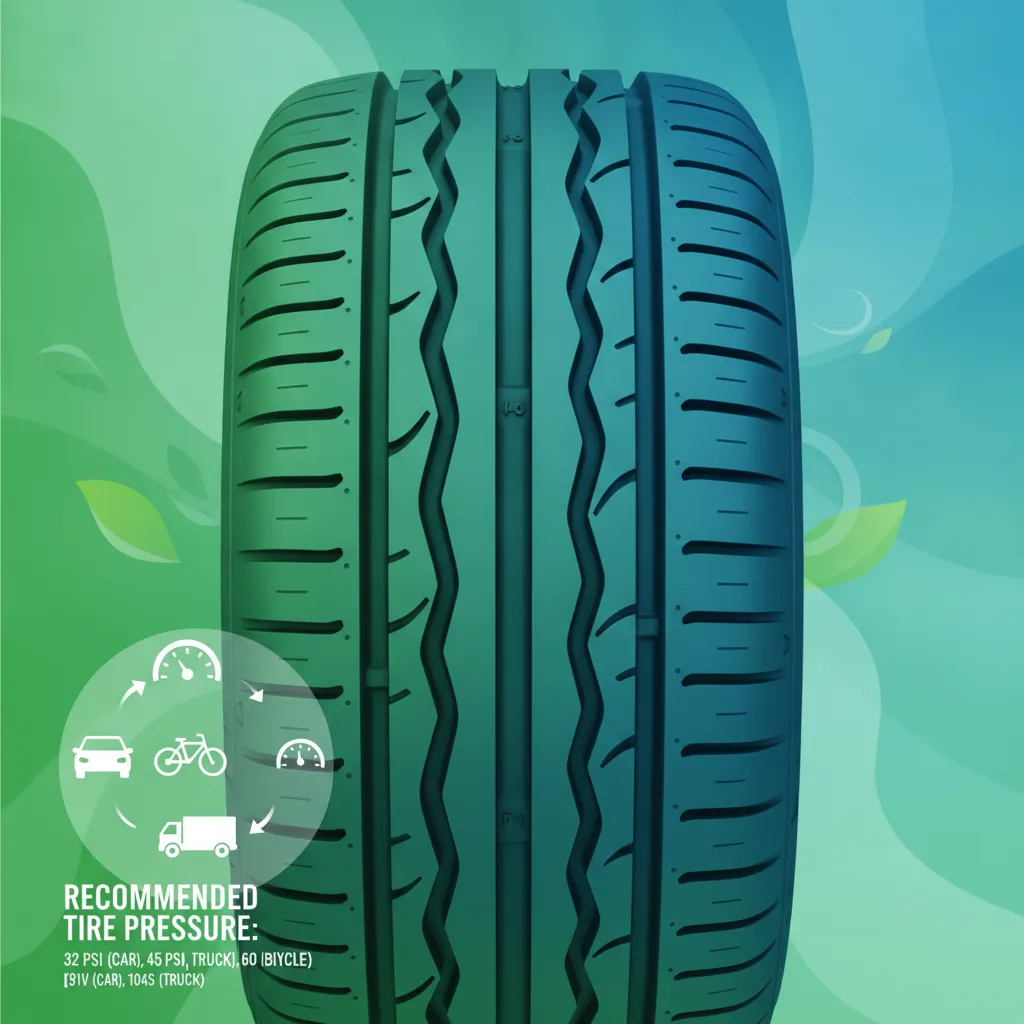
This lesson provides detailed information on heavy vehicle tyres, covering topics such as correct inflation pressures, legal tread depth requirements, and understanding the load index. It explains how to identify signs of abnormal wear or damage that could compromise safety. Proper tyre maintenance is crucial for optimal handling, braking, and overall vehicle safety.
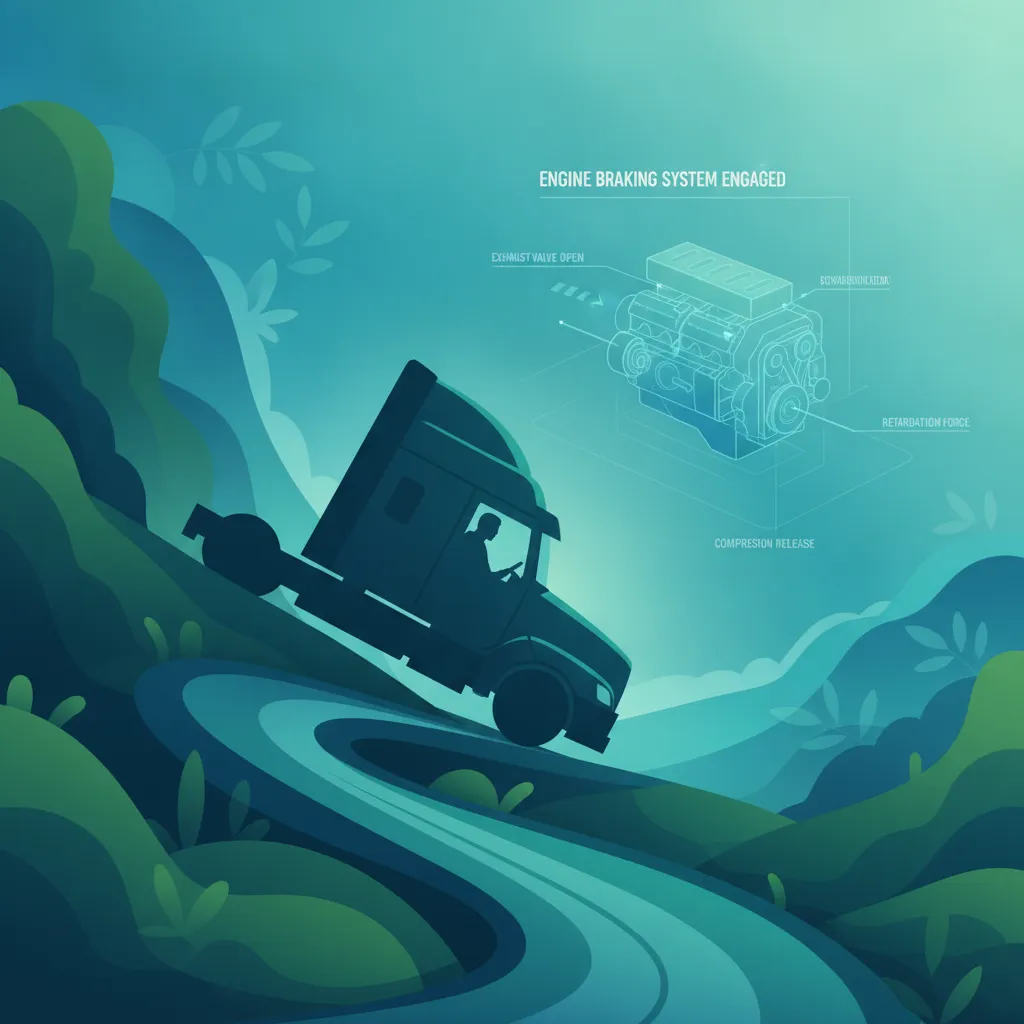
This lesson introduces auxiliary braking systems, such as engine brakes and retarders, which are designed to help control vehicle speed without using the service brakes. It explains how these systems function to slow the vehicle, especially on long downhill gradients. Using them effectively reduces service brake wear and prevents overheating.

This lesson covers the proper techniques for performing an emergency braking manoeuvre in a heavy vehicle. It explains how to apply maximum braking force without losing control, especially in vehicles equipped with an Anti-lock Braking System (ABS). The lesson also discusses how hard braking can affect cargo and the importance of proper load securing.
Explores advanced considerations for parking brake (Feststellbremse) usage in challenging Austrian driving environments, including steep slopes, adverse weather conditions, and operating with trailers. Understand critical mistakes and legal requirements for safe parking.

This lesson provides critical techniques for managing vehicle speed on the steep, long gradients found on Alpine roads. It emphasizes selecting the correct gear before the descent and using auxiliary braking systems to maintain a safe, controlled speed. These practices are essential to prevent service brake overheating and potential failure (brake fade).
This lesson covers the proper techniques for performing an emergency braking manoeuvre in a heavy vehicle. It explains how to apply maximum braking force without losing control, especially in vehicles equipped with an Anti-lock Braking System (ABS). The lesson also discusses how hard braking can affect cargo and the importance of proper load securing.
This lesson explains the procedures for checking the functionality of a heavy vehicle's braking systems, with a focus on air brakes. It covers how to monitor air pressure gauges and conduct tests to ensure both the service and parking brakes are operating correctly. These daily checks are essential for confirming the vehicle's stopping capability.

This lesson prepares drivers for the demanding conditions of Alpine driving. It covers techniques for managing speed on steep up-hill and down-hill sections, being prepared for sudden weather changes, and following safety protocols inside mountain tunnels. This specialized knowledge is essential for operating safely in mountainous terrain.

This lesson details the legal ramifications of operating an overloaded heavy vehicle in Austria, which include significant fines and penalty points. It also emphasizes the severe safety risks, such as compromised braking performance and increased mechanical stress on the vehicle. Understanding these consequences reinforces the importance of strict adherence to weight limits.

This lesson focuses on the phenomenon of off-tracking, where the rear wheels of a trailer follow a path inside that of the tractor's wheels during a turn. It explains how to anticipate this effect and allow extra space when cornering to avoid running over curbs, signs, or other roadside objects. Managing off-tracking is a key skill for navigating intersections and roundabouts.

This lesson addresses the challenge of manoeuvring a large vehicle through streets not designed for its size. It covers how to assess vertical and horizontal clearances, plan the vehicle's path through tight turns, and heed all restrictive signage. Careful planning and slow, precise control are essential for success.
This lesson outlines the standardized procedure for handling a vehicle breakdown safely. It covers pulling over to a safe location, activating hazard lights, deploying the warning triangle, and wearing a high-visibility vest. It also explains when and how to contact roadside assistance or emergency services.
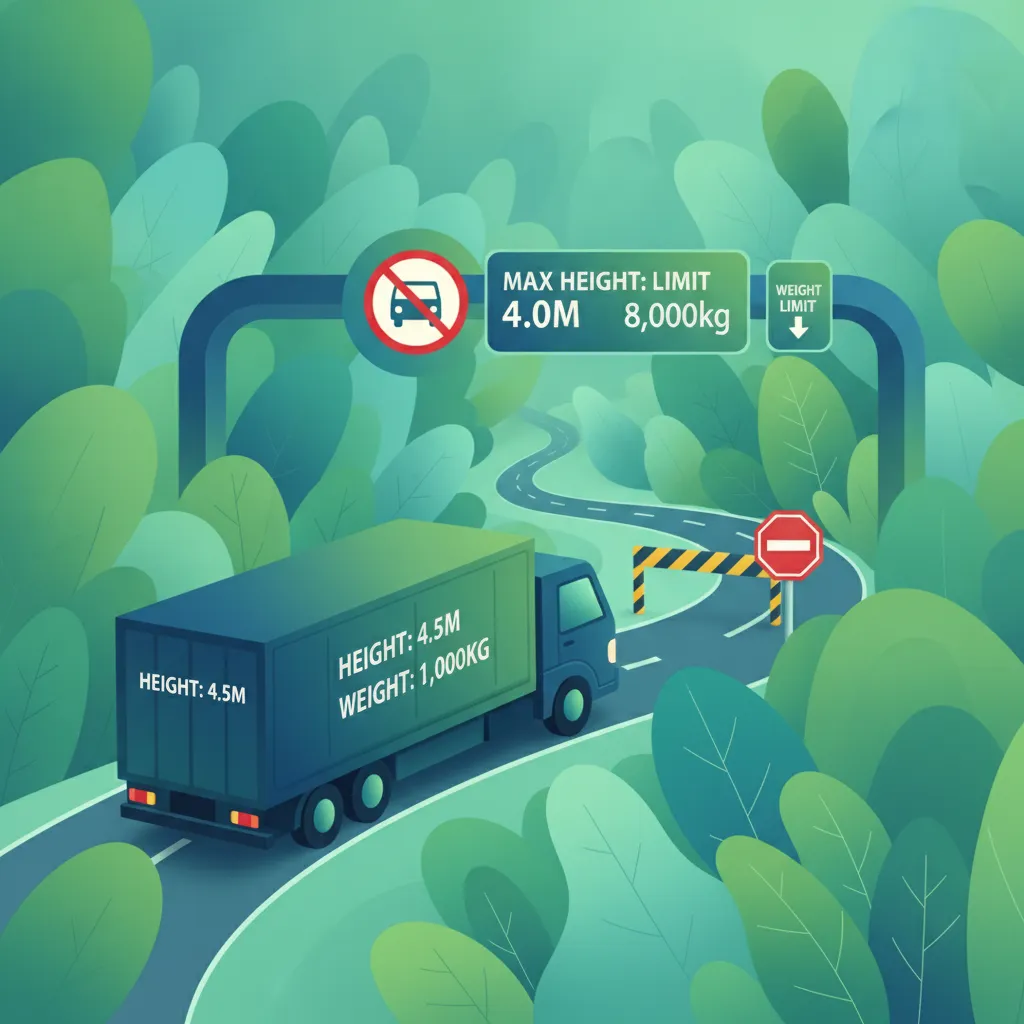
This lesson covers the practical aspects of planning a route for a heavy goods vehicle. It explains how to use maps and specialized GPS systems to identify and avoid roads with height, weight, or other restrictions. Proactive route planning is essential for ensuring an efficient, legal, and safe journey.

This lesson provides practical strategies for safely reversing in challenging environments like narrow streets or busy loading zones. It emphasizes the 'get out and look' principle, the proper use of mirrors and cameras, and the critical safety role of a reliable spotter. Executing these manoeuvres slowly and cautiously is paramount to avoiding collisions.
Find clear answers to common questions learners have about Parking Brake (Feststellbremse) Operation and Maintenance. Learn how the lesson is structured, which driving theory objectives it supports, and how it fits into the overall learning path of units and curriculum progression in Austria. These explanations help you understand key concepts, lesson flow, and exam focused study goals.
In heavy vehicles, the parking brake utilizes a spring-loaded system where the brake is applied by a powerful spring. When you release the parking brake, compressed air is used to compress the spring; if air pressure is lost, the spring forces the brakes to engage automatically as a safety measure.
Failing to verify the parking brake can lead to catastrophic vehicle movement. In the exam, you must demonstrate understanding that a non-functional or unengaged parking brake is a severe safety violation that makes a vehicle unroadworthy.
While the parking brake is designed to hold the vehicle, you should always supplement it by turning the wheels toward the curb and potentially using wheel chocks on extreme gradients, as taught in professional heavy vehicle practice.
The exam often includes questions on technical system failure and emergency procedures. Knowing how your parking brake operates is vital for answering scenario-based questions about vehicle security and air pressure warnings.
Refine your study plan by searching for specific Austrian driving theory practice sets. Pinpoint questions related to particular road rules, signs, or challenge levels, and begin practicing immediately to reinforce your knowledge and excel in your official exam with confidence. Get started with focused revision today.