
This lesson guides you through the technical requirements for safely managing heavy vehicles on steep downhill gradients in Austria. You will learn to correctly utilize auxiliary braking systems and engine braking, ensuring your vehicle remains under control and your service brakes are protected during long descents.
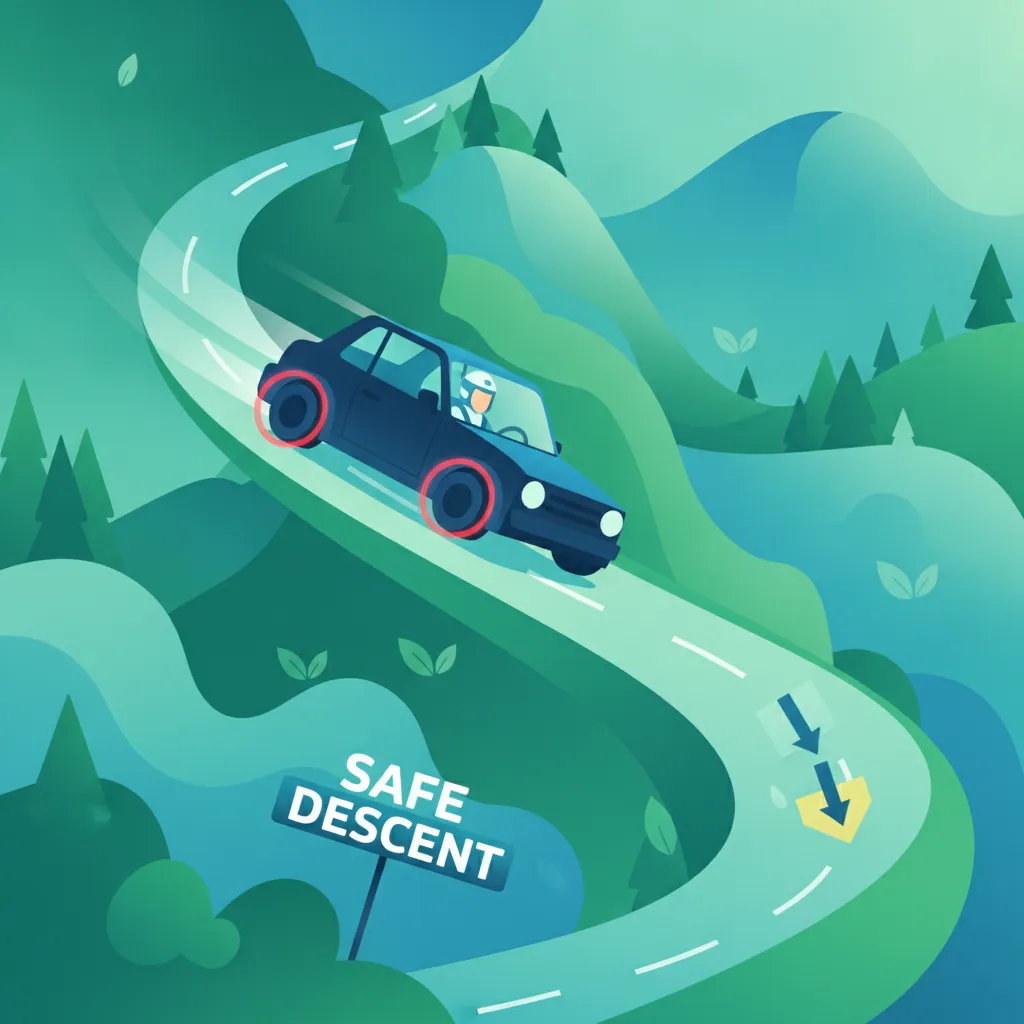
Lesson content overview
Driving heavy goods vehicles (HGVs) in mountainous regions, particularly on the challenging Alpine roads of Austria, demands specialized skills in speed management, especially during descents. These long, steep gradients exert immense gravitational forces on large vehicles, significantly increasing their kinetic energy and making speed control a critical safety factor. This lesson provides essential techniques and knowledge to safely navigate such descents, focusing on preventing service brake overheating and maintaining vehicle control.
The primary danger on long, steep descents for heavy goods vehicles is the overheating of the service brakes (Betriebsbremse). Prolonged and heavy use of friction brakes generates extreme heat, which can lead to a phenomenon known as brake fade. Brake fade drastically reduces braking effectiveness, increasing stopping distances and potentially causing a complete loss of braking power. Effective downhill speed management relies on a strategic combination of engine braking, auxiliary braking systems, and judicious, intermittent use of the service brakes to dissipate energy safely and maintain thermal balance.
Brake fade is the reduction in braking effectiveness caused by the overheating of a vehicle's friction brake components. As brake pads and discs (or drums) get excessively hot, their coefficient of friction decreases, and the heat can even cause the brake fluid to boil, creating vapor pockets that render the hydraulic system spongy and ineffective.
Preventing brake fade is paramount for heavy goods vehicles, which carry significant momentum. Once fade sets in, recovery can be difficult, risking uncontrolled acceleration and potential accidents. The strategies outlined in this lesson are designed to distribute braking effort across multiple systems, minimizing thermal load on the service brakes and preserving their performance for when they are most needed, such as in emergencies or for final stops.
Effective downhill speed management on Alpine grades is built upon several foundational principles that work in synergy to ensure safety and vehicle integrity.
Successful downhill speed management begins long before the vehicle enters the steepest part of the grade. It requires careful observation and proactive decision-making.
The first step is to recognize an upcoming steep descent. Drivers must be highly attentive to road signage, which provides critical information about the gradient and length of a downhill stretch.
In Austria, signs indicating gradients are common. A sign showing "10%" with a downward-sloping arrow signifies a 10 percent downhill gradient. This means for every 100 metres travelled horizontally, the road drops 10 metres vertically.
Beyond specific gradient signs, drivers should also look for:
The single most crucial action a driver can take before starting a descent is selecting the appropriate low gear. This enables effective engine braking and establishes a controlled initial speed.
Anticipate: Observe road signs and topography well in advance to identify upcoming descents.
Reduce Speed: Before the descent begins, use the service brakes to bring the vehicle down to a safe, controlled speed that is suitable for the gradient.
Downshift: Select a low gear that will allow the engine to hold the vehicle at a safe speed without over-revving and without needing constant service brake application. For many heavy trucks, this might be 3rd or 4th gear, depending on the load, gradient, and vehicle specifications.
Engage Auxiliaries: Once in the correct gear, activate your auxiliary braking systems (retarder, exhaust brake) as needed to assist in maintaining speed.
The principle is to use the gear you would typically use to ascend the same gradient. Downshifting before the descent starts prevents the vehicle from gaining excessive speed, which would then require heavy and potentially damaging braking to correct. Attempting to downshift while already travelling at high speed on a steep descent can cause engine over-revving, transmission damage, or loss of control due to sudden changes in traction.
Auxiliary braking systems are indispensable tools for heavy goods vehicles on long descents. They supplement the primary service brakes by dissipating kinetic energy through non-friction means, thereby preserving the service brakes for critical situations.
As defined earlier, engine braking is the resistance created by the engine itself when the throttle is released and a low gear is engaged. In modern diesel engines, this often involves a fuel cut-off mechanism, where fuel injection ceases, and the engine acts purely as an air pump, providing substantial resistance against the vehicle's momentum. This compression braking effect is directly proportional to the engine's RPM and the selected gear ratio. A lower gear maintains a higher engine RPM, thus increasing the engine's braking force.
Retarders are sophisticated auxiliary braking systems designed for continuous, powerful braking. They are typically integrated into the vehicle's driveline.
Both types of retarders can be modulated by the driver, typically via a stalk or lever on the steering column, allowing for fine control over the braking effort. They are designed for continuous use without overheating, making them ideal for long, steep descents.
An exhaust brake, sometimes colloquially referred to as a "Jelly Brake" in some regions, works by restricting the flow of exhaust gases from the engine. A valve or flap in the exhaust manifold closes, creating back pressure in the exhaust system. This back pressure increases the pumping losses within the engine cylinders, effectively turning the engine into a larger air compressor and significantly enhancing its natural engine braking capabilities. Exhaust brakes are generally less powerful than retarders but still provide valuable supplementary braking force.
While engine braking and auxiliary systems are the primary tools for downhill speed management, the service brakes (Betriebsbremse) still have a crucial role. Their application must be strategic and intermittent to avoid overheating.
The goal is to use the service brakes only when necessary to bring the vehicle's speed down to a level that the auxiliary systems and engine braking can then maintain. This typically involves a short, firm application of the brake pedal, followed by a complete release, allowing the brakes to cool in the airflow. This "stab braking" or "snub braking" technique ensures that heat is not allowed to build up continuously.
Continuous, light pressure on the service brake pedal should be avoided as it provides insufficient cooling and can still lead to heat buildup and fade over time. The key is short bursts of firm braking to achieve the desired speed reduction, followed by a complete release.
Driver awareness of brake temperature is vital. While some modern heavy vehicles are equipped with brake temperature gauges or warning indicators, often the primary means of monitoring is through tactile feedback and other sensory cues.
Signs of overheating brakes include:
If any of these signs are detected, the driver must immediately adjust their strategy. This means reducing speed further using engine braking and auxiliary systems, pulling over safely if necessary, and allowing the brakes to cool completely before continuing the descent. Ignoring these warnings can lead to total brake failure.
The way a heavy goods vehicle is loaded significantly impacts its stability and braking performance, particularly on steep descents. Improper load distribution can exacerbate braking challenges and increase the risk of losing control.
Understanding and adhering to load securing regulations (Ladungssicherung) is a prerequisite for safe driving, and its importance is amplified on challenging Alpine terrain.
Austrian road traffic regulations (StVO – Straßenverkehrsordnung) are specific about the conduct of heavy goods vehicles on steep descents, emphasizing safety and the mandatory use of auxiliary systems.
According to Austrian StVO § 62, heavy goods vehicles are required to use their auxiliary braking systems (such as retarders or exhaust brakes) on grades longer than 500 metres with a slope greater than 10% when descending. This regulation is legally binding and is in place to prevent service brake overheating, maintain vehicle control, and enhance overall road safety on mountainous routes. Ignoring this rule can lead to significant fines and dangerous situations.
Specific Austrian road signs, such as those marked "Bergabwärts" (downhill), indicate sections where particular attention and reduced speeds are required for heavy vehicles. These signs often accompany reduced speed limits for HGVs, which must be strictly adhered to.
Furthermore, the StVO imposes reduced speed limits for HGVs on grades exceeding 8%. For instance, a maximum speed of 50 km/h might be mandated for heavy vehicles on such descents. Drivers must actively monitor their speed and adjust it downwards as dictated by these signs and the actual road conditions, irrespective of general motorway or road speed limits.
While not always explicitly signposted, the principle of brake cooling is implicitly covered by general road safety laws. Continuous heavy braking for more than 2 km without interruption is generally considered unsafe. Drivers should consciously manage their braking to allow for cooling periods.
Load securing regulations (e.g., based on VDI 2700 standards, which are highly relevant in Austria) are also mandatory. These regulations require that all cargo be properly secured and evenly distributed to prevent shifting, which can severely compromise vehicle stability and braking performance on descents.
Awareness of common errors can help drivers avoid dangerous situations and legal penalties.
Safe downhill speed management is not a one-size-fits-all approach. Drivers must adapt their techniques to varying conditions.
The principles of downhill speed management are rooted in physics. Gravity constantly pulls the vehicle down the slope, converting potential energy into kinetic energy (speed). The braking systems must dissipate this kinetic energy, primarily as heat. The more kinetic energy, the more heat generated, and the greater the risk of brake fade.
From a psychological perspective, anticipation is key. Drivers who proactively assess the road, correctly interpret signs, and select the right gear before the descent feel more in control and are less likely to panic-brake later. Education and adherence to regulations help mitigate the common human tendency to underestimate the impact of gravity and momentum on heavy vehicles. Studies consistently show that the proper use of auxiliary braking systems can reduce the temperature rise in service brakes by a significant margin (e.g., up to 40% or more), directly translating to enhanced safety and reduced accident risk.
Mastering downhill speed management on Alpine grades for heavy goods vehicles involves a disciplined and anticipatory approach:
This lesson covers the critical techniques for managing heavy goods vehicle speed on steep Austrian Alpine descents, with a primary focus on preventing brake fade through combined use of engine braking, auxiliary systems (retarders and exhaust brakes), and strategic service brake application. Key regulatory requirements include mandatory auxiliary brake use on grades steeper than 10% exceeding 500 metres under StVO § 62, and reduced HGV speed limits on gradients above 8%. Safe descent management begins with pre-emptive gear selection before the grade starts, followed by early engagement of auxiliary braking, intermittent firm service brake applications to shed excess speed, and continuous monitoring for overheating indicators such as a soft pedal or burning odour. Load distribution and vehicle state (loaded vs. empty, towing) significantly impact braking strategy and must be accounted for in all descent planning.
A short set of high-value points that capture the most important learning from this lesson.
Downshift to an appropriate low gear BEFORE starting the descent, never during—late downshifting causes engine over-revving and transmission damage.
Engage auxiliary braking systems (retarders, exhaust brakes) early and consistently; StVO § 62 mandates their use on grades exceeding 10% with lengths over 500 metres.
Apply service brakes intermittently with firm, short applications, allowing cooling periods—avoid continuous light pressure that causes heat buildup and fade.
Engine braking effectiveness is directly tied to gear selection: lower gears maintain higher RPM, creating greater resistance against vehicle momentum.
Monitor for brake fade warning signs including increased pedal travel, burning odour, visible smoke, and reduced braking effectiveness.
Explore all units and lessons included in this driving theory course.
Never coast downhill in neutral or with clutch disengaged—this eliminates engine braking entirely and places full burden on service brakes.
Continuous heavy braking beyond approximately 2 km without interruption is unsafe; brakes must be allowed to cool.
HGV speed limits on steep Alpine descents can be reduced to 50 km/h for gradients exceeding 8%—observe all Bergabwärts signage.
Retarders dissipate kinetic energy as heat through fluid turbulence (hydraulic) or eddy currents (electromagnetic), preserving service brakes.
Heavier loads and trailer combinations increase kinetic energy, requiring earlier downshifts and stronger auxiliary brake use.
Downshifting after the vehicle has already gained speed on a steep descent, risking engine over-revving and loss of control.
Relying solely on service brakes for the entire descent, leading inevitably to brake fade and potential failure.
Neglecting to engage auxiliary brakes on long, steep grades as required by Austrian regulations and good practice.
Applying continuous, light pressure on the service brake pedal instead of intermittent firm applications, preventing adequate cooling.
Ignoring or misunderstanding Bergabwärts road signs and the specific reduced speed limits applicable to heavy vehicles on Alpine grades.
Lesson content overview
A short set of high-value points that capture the most important learning from this lesson.
Downshift to an appropriate low gear BEFORE starting the descent, never during—late downshifting causes engine over-revving and transmission damage.
Engage auxiliary braking systems (retarders, exhaust brakes) early and consistently; StVO § 62 mandates their use on grades exceeding 10% with lengths over 500 metres.
Apply service brakes intermittently with firm, short applications, allowing cooling periods—avoid continuous light pressure that causes heat buildup and fade.
Engine braking effectiveness is directly tied to gear selection: lower gears maintain higher RPM, creating greater resistance against vehicle momentum.
Monitor for brake fade warning signs including increased pedal travel, burning odour, visible smoke, and reduced braking effectiveness.
Explore all units and lessons included in this driving theory course.
Never coast downhill in neutral or with clutch disengaged—this eliminates engine braking entirely and places full burden on service brakes.
Continuous heavy braking beyond approximately 2 km without interruption is unsafe; brakes must be allowed to cool.
HGV speed limits on steep Alpine descents can be reduced to 50 km/h for gradients exceeding 8%—observe all Bergabwärts signage.
Retarders dissipate kinetic energy as heat through fluid turbulence (hydraulic) or eddy currents (electromagnetic), preserving service brakes.
Heavier loads and trailer combinations increase kinetic energy, requiring earlier downshifts and stronger auxiliary brake use.
Downshifting after the vehicle has already gained speed on a steep descent, risking engine over-revving and loss of control.
Relying solely on service brakes for the entire descent, leading inevitably to brake fade and potential failure.
Neglecting to engage auxiliary brakes on long, steep grades as required by Austrian regulations and good practice.
Applying continuous, light pressure on the service brake pedal instead of intermittent firm applications, preventing adequate cooling.
Ignoring or misunderstanding Bergabwärts road signs and the specific reduced speed limits applicable to heavy vehicles on Alpine grades.
Explore search topics learners often look for when studying Downhill Speed Management on Alpine Grades. These topics reflect common questions about road rules, driving situations, safety guidance, and lesson level theory preparation for learners in Austria.
Browse additional driving theory lessons that cover connected traffic rules, road signs, and common driving situations related to this topic. Improve your understanding of how different rules interact across everyday traffic scenarios.
Understand the critical causes and prevention methods for brake fade on steep Alpine descents. Learn how to manage heavy vehicle braking systems to maintain safety and effectiveness on challenging Austrian grades.
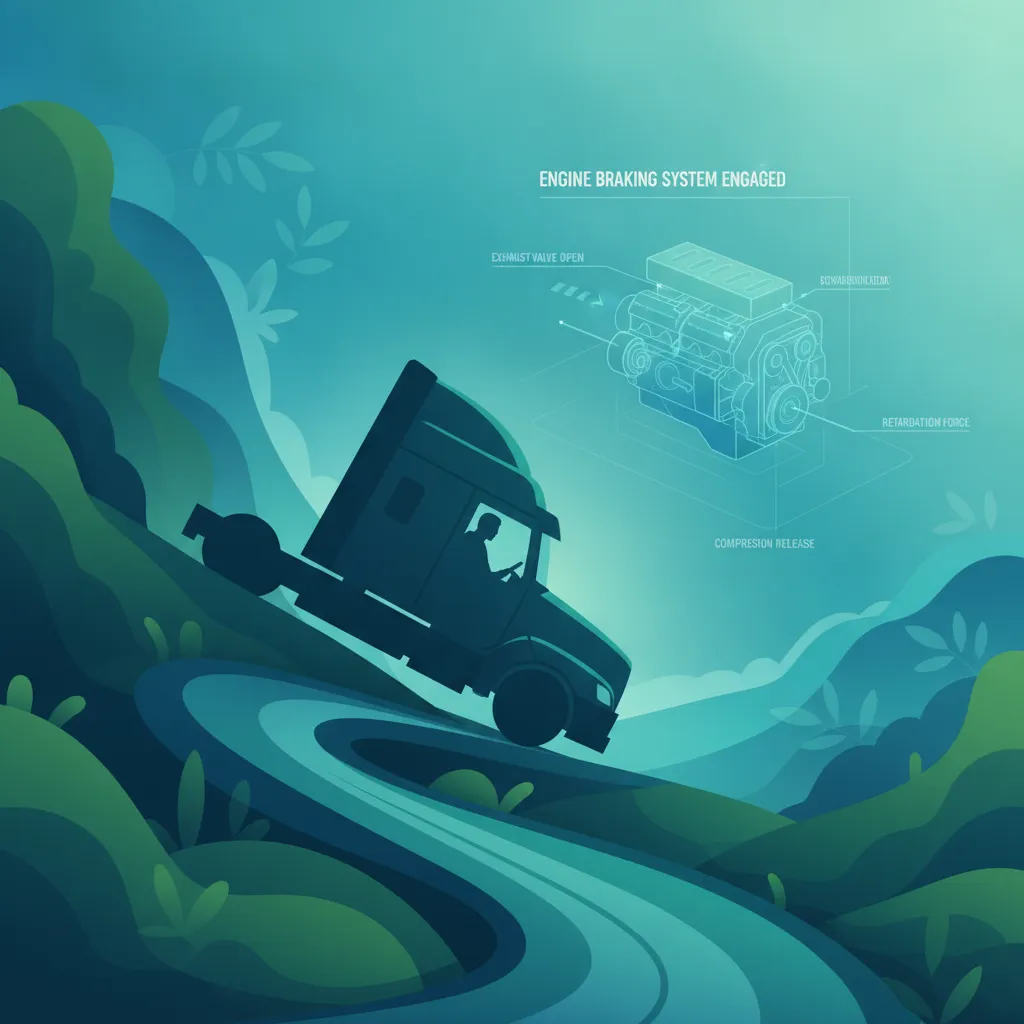
This lesson introduces auxiliary braking systems, such as engine brakes and retarders, which are designed to help control vehicle speed without using the service brakes. It explains how these systems function to slow the vehicle, especially on long downhill gradients. Using them effectively reduces service brake wear and prevents overheating.

This lesson covers the proper techniques for performing an emergency braking manoeuvre in a heavy vehicle. It explains how to apply maximum braking force without losing control, especially in vehicles equipped with an Anti-lock Braking System (ABS). The lesson also discusses how hard braking can affect cargo and the importance of proper load securing.

Driving a heavy vehicle in the Alps requires specific skills to manage its energy and momentum. This lesson focuses on using lower gears and auxiliary braking systems (retarder/engine brake) to control speed on long descents and prevent brake overheating. It also covers the correct line and technique for navigating tight hairpin turns safely and efficiently.

This lesson explains the various factors that determine the total stopping distance of a heavy vehicle. It covers the effects of speed, vehicle weight, road conditions, and driver reaction time. Understanding these variables helps drivers to maintain a safe following distance and anticipate how much space is needed to stop.

This lesson prepares drivers for the demanding conditions of Alpine driving. It covers techniques for managing speed on steep up-hill and down-hill sections, being prepared for sudden weather changes, and following safety protocols inside mountain tunnels. This specialized knowledge is essential for operating safely in mountainous terrain.

This lesson addresses the challenge of navigating terrain with changing elevation. It covers techniques for maintaining momentum and control on uphill climbs, including proper gear selection and throttle use. For descents, it emphasizes the use of engine braking to control speed and prevent brake overuse, a vital skill for long alpine descents.
Master the use of retarders, exhaust brakes, and engine braking techniques for controlled descents on Austrian Alpine roads. This lesson details how to leverage these systems to manage speed and preserve service brakes.
This lesson introduces auxiliary braking systems, such as engine brakes and retarders, which are designed to help control vehicle speed without using the service brakes. It explains how these systems function to slow the vehicle, especially on long downhill gradients. Using them effectively reduces service brake wear and prevents overheating.
This lesson addresses the challenge of navigating terrain with changing elevation. It covers techniques for maintaining momentum and control on uphill climbs, including proper gear selection and throttle use. For descents, it emphasizes the use of engine braking to control speed and prevent brake overuse, a vital skill for long alpine descents.
Driving a heavy vehicle in the Alps requires specific skills to manage its energy and momentum. This lesson focuses on using lower gears and auxiliary braking systems (retarder/engine brake) to control speed on long descents and prevent brake overheating. It also covers the correct line and technique for navigating tight hairpin turns safely and efficiently.
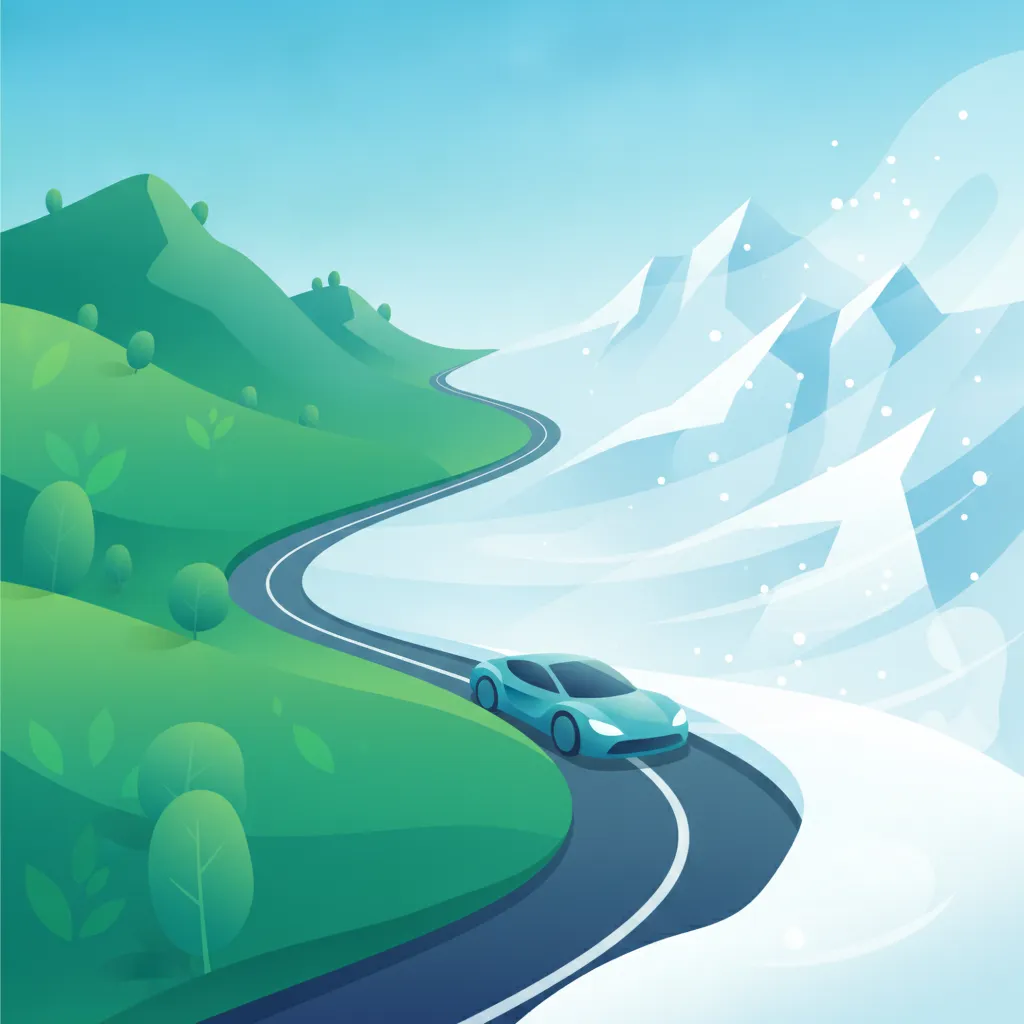
This lesson focuses on the specialized skills required for navigating alpine roads safely. It covers techniques for managing steep gradients, such as using a lower gear for engine braking on descents, and how to safely negotiate hairpin turns. The content stresses the importance of being prepared for rapid weather changes and understanding the effects of altitude on both the driver and the vehicle's performance.
This lesson covers the proper techniques for performing an emergency braking manoeuvre in a heavy vehicle. It explains how to apply maximum braking force without losing control, especially in vehicles equipped with an Anti-lock Braking System (ABS). The lesson also discusses how hard braking can affect cargo and the importance of proper load securing.

This lesson addresses the complex skill of braking while the motorcycle is leaned over in a corner or on low-traction surfaces. It introduces the concept of trail braking to adjust speed and tighten a cornering line, and provides strategies for gentle brake application on wet or loose surfaces. Mastering these techniques requires a delicate touch and a deep understanding of traction limits.
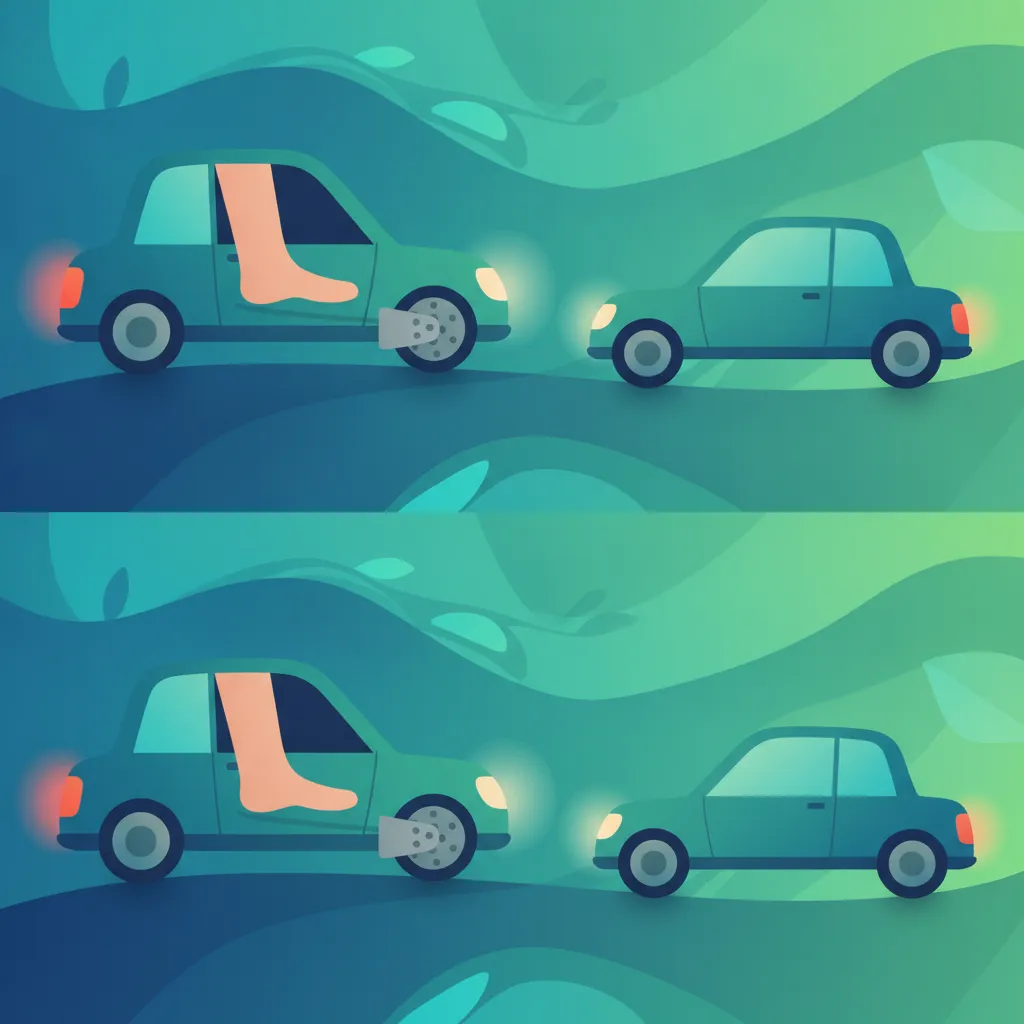
This lesson teaches correct braking techniques, including the coordinated use of front and rear brakes for maximum efficiency. It explains how to calculate total stopping distance based on speed, perception time, and reaction time. The content also covers adjustments needed for braking on wet or slippery surfaces to avoid loss of control.
This lesson provides a step-by-step guide to executing an emergency stop safely. It teaches riders how to apply firm, progressive pressure to both brakes to achieve the shortest possible stopping distance without locking the wheels. The role of ABS in these situations is also explained, highlighting how it assists the rider in maintaining steering control under maximum braking.

Sudden vehicle movements are a primary cause of passenger injury and discomfort. This lesson focuses on developing a high level of control over the throttle and brake pedals. It teaches how to apply power gradually and brake progressively by anticipating traffic flow, ensuring that passengers, particularly those standing or moving, are never caught off balance.

This lesson focuses on the art of coordinating the front and rear brakes to achieve stable and efficient deceleration. It explains how the ideal balance changes depending on speed, road surface, and whether the bike is traveling in a straight line or a curve. Proper brake balance enhances control, shortens stopping distances, and provides a smoother riding experience.
Find clear answers to common questions learners have about Downhill Speed Management on Alpine Grades. Learn how the lesson is structured, which driving theory objectives it supports, and how it fits into the overall learning path of units and curriculum progression in Austria. These explanations help you understand key concepts, lesson flow, and exam focused study goals.
Prolonged use of the service brake can lead to brake fade caused by overheating. This reduces the effectiveness of the brakes significantly, which can lead to total brake failure on steep mountain roads.
The retarder acts as a supplementary braking system that slows the vehicle without using the friction-based service brakes. This keeps the service brakes cool and ready for emergency stopping situations.
You should generally select a gear that allows the engine to assist in braking (engine braking). The rule of thumb is to select a gear that prevents the vehicle from accelerating beyond a safe speed without constant service brake application.
Yes, Austria uses specific warning signs indicating steep grades with percentage values. Drivers must acknowledge these before the descent to prepare their speed and gear choice accordingly.
Refine your study plan by searching for specific Austrian driving theory practice sets. Pinpoint questions related to particular road rules, signs, or challenge levels, and begin practicing immediately to reinforce your knowledge and excel in your official exam with confidence. Get started with focused revision today.