
This lesson provides essential training for operating heavy passenger vehicles on challenging Austrian alpine roads. You will learn to manage momentum, prevent brake fade through proper auxiliary systems, and navigate tight bends safely to ensure passenger comfort and vehicle stability.

Lesson content overview
Driving a heavy passenger vehicle, such as a bus or coach, through mountainous terrain like the Austrian Alps presents unique challenges that demand specific skills and knowledge. This lesson is designed for drivers holding a Category D licence, focusing on the critical techniques required to safely manage vehicle energy, control speed on steep descents, prevent brake overheating, and expertly navigate tight hairpin bends. Mastering these skills is paramount not only for driver competence but also for ensuring the utmost safety and comfort of all passengers.
The demanding nature of Alpine roads, with their often narrow passages, dramatic gradients, and sharp curves, necessitates a proactive and calculated approach to driving. Understanding the physics of vehicle motion on slopes and the capabilities of various braking systems is fundamental. This comprehensive guide will prepare you for the unique conditions found in Austria's mountainous regions, ensuring you operate your vehicle safely, efficiently, and in compliance with all relevant traffic regulations.
Controlling the speed of a heavy bus or coach on long, steep downhill gradients is primarily an exercise in energy management. As a vehicle descends, its gravitational potential energy is continuously converted into kinetic energy, causing it to accelerate. The primary objective for a professional driver is to dissipate this excess kinetic energy in a controlled and sustainable manner, preventing the vehicle from gaining dangerous speeds and, critically, avoiding the overheating of the service brakes.
This process involves a strategic combination of engine braking, auxiliary braking systems, and, only when necessary, intermittent use of the friction service brakes. Relying solely on the service brakes for prolonged periods on a descent is extremely dangerous, as it can lead to brake fade.
Gravitational Potential Energy Conversion
On a descent, the vehicle's altitude decreases, and its potential energy transforms into kinetic energy, increasing its speed. The steeper the gradient, and the heavier the vehicle, the faster this conversion occurs, requiring more significant braking force to maintain a controlled speed. A gradient is expressed as a percentage, indicating the rise or fall over a horizontal distance (e.g., a 10% gradient means a 10-meter drop over 100 meters horizontally).
The Role of Engine Braking
Engine braking, or compression braking, is a vital tool for speed control on descents. It works by using the resistance created within the engine when the accelerator pedal is released and a lower gear is selected. In a lower gear, the engine's revolutions per minute (RPM) increase, and the engine acts as a compressor, using its own internal friction and the energy required to draw air into the cylinders to slow the vehicle. This method helps to dissipate kinetic energy gradually and continuously without generating heat in the service brakes.
Auxiliary Braking Systems: Your Primary Defense
Modern heavy vehicles are equipped with sophisticated auxiliary braking systems designed specifically for long descents. These systems work independently of the friction service brakes and are crucial for managing energy efficiently.
Types of Retarders:
Proper selection and engagement of the retarder are critical. Drivers should select a retarder level appropriate for the gradient and current speed, using it proactively to maintain a steady, safe speed.
On any steep descent, especially when operating a heavy passenger vehicle, a strict hierarchy of braking systems must be followed to ensure safety and prevent brake fade. This strategy prioritizes systems that dissipate energy without generating excessive heat in the friction brakes, thereby preserving the service brakes for emergency situations or when auxiliary systems alone are insufficient.
Step 1: Engage Auxiliary Brakes (Retarder/Engine Brake) Before beginning a descent, or as soon as the gradient starts to increase, proactively engage the retarder and/or engine brake. Select a gear that allows the engine to rev sufficiently to provide effective engine braking (typically between 1500-2000 RPM, but refer to your vehicle's specific operating manual). This is your primary method for speed control.
Step 2: Select Lower Gear (Engine Braking Enhancement) If the retarder and current gear are not sufficient to maintain the desired speed, downshift to a lower gear. This further increases engine resistance, enhancing the engine braking effect and allowing the retarder to operate more effectively at a controlled vehicle speed. The goal is to choose a gear that allows you to descend at a safe, steady speed without over-revving the engine.
Step 3: Intermittent Service Brake Application (Last Resort) Only if the combined effect of the retarder and engine braking is still insufficient to control the speed, or if an additional reduction in speed is required, should the service brakes be applied. Critically, these applications must be intermittent and firm, not continuous. Apply the brakes for a few seconds to significantly reduce speed, then release them completely to allow them to cool. Repeat this process as necessary. Never "ride" the service brakes.
This hierarchy ensures that the service brakes, which are prone to overheating, are preserved for emergency stopping power. Austrian traffic regulations (StVO) emphasize the mandatory use of auxiliary brakes on steep descents for heavy vehicles where available, underlining the importance of this hierarchy.
Hairpin bends, characterized by their sharp, often 180-degree turns and small radius, are a common feature of Alpine roads. Negotiating these bends safely and comfortably in a long bus or coach requires precision, anticipation, and a specific driving technique known as the outside-inside-outside line.
The primary challenges of hairpin bends for heavy vehicles include managing the vehicle's length, minimizing lateral forces on passengers, and preventing encroachment into opposing lanes.
The Outside-Inside-Outside Line
This technique is crucial for maximizing the turning radius available to your vehicle and minimizing the severity of the turn.
Speed Adaptation and Precision Steering
Before entering a hairpin bend, significantly reduce your speed to a level that allows for full control without excessive braking mid-turn. This typically means braking before you enter the turn, and then maintaining a steady, low speed through the curve. For heavy vehicles, entering a hairpin bend at an excessive speed can lead to:
Smooth, progressive steering inputs are essential. Avoid sudden or jerky movements, as these can destabilize the vehicle and startle passengers. Accelerate gently only after the vehicle has passed the apex and is straightening out on the exit.
As discussed, auxiliary braking systems are indispensable for heavy vehicle operation, especially in mountainous regions. They provide a continuous, non-friction braking force, preserving the primary service brakes for emergency use.
A retarder is a dedicated system designed to slow the vehicle by converting its kinetic energy into heat through mechanisms other than friction.
Drivers must be familiar with their vehicle's specific retarder type and controls. Regularly checking the retarder's functionality during pre-trip inspections is crucial before embarking on any journey through mountainous terrain.
Engine braking is the resistance created by the engine itself when no fuel is being supplied and the vehicle is in gear. By downshifting to a lower gear, the engine's RPM increases, and the engine's internal friction and compression resistance become more pronounced, effectively slowing the vehicle.
The combined use of the retarder and appropriate gear selection for engine braking is the most effective strategy for managing speed on descents, providing reliable, continuous deceleration while preserving the service brakes.
The service brakes are the primary friction braking system on your vehicle, designed for stopping and for significant speed reduction. They operate by using friction between brake pads/shoes and rotors/drums to convert kinetic energy into heat. While essential, their continuous use on long descents is highly problematic for heavy vehicles.
When service brakes are applied continuously on a long descent, the constant friction generates extreme heat. This heat can cause several issues:
Therefore, the service brakes should be used sparingly and strategically on descents, primarily for supplementary speed reduction after auxiliary systems have been engaged, or for bringing the vehicle to a complete stop. When used on a descent, apply them firmly for a short duration to drop speed, then release completely to allow them to cool before the next application. This "stab braking" technique helps manage heat.
As a Category D licence holder in Austria, your passenger duty of care is paramount. On challenging Alpine routes, where gradients and sharp turns can exert significant forces on the vehicle, ensuring passenger comfort and safety becomes an even greater responsibility.
Abrupt acceleration, deceleration, or sudden steering inputs can cause discomfort, motion sickness, or even injury to passengers, especially those standing or not properly secured.
Proactive communication can significantly enhance passenger safety and comfort.
Adhering to specific Austrian traffic regulations (Straßenverkehrsordnung - StVO) is crucial when driving heavy passenger vehicles in mountainous regions. These rules are designed to enhance safety for all road users, particularly on challenging gradients and curves.
Key Regulations and Requirements:
Always be vigilant for specific local signage that may indicate reduced speed limits for heavy vehicles, mandatory gear selection zones, or other specific instructions for mountain passes.
Driving in mountainous regions means confronting a wider range of challenging environmental and road conditions than typically found on flat terrain. Professional drivers must continuously assess and adapt their driving strategy.
Understanding common pitfalls is as important as learning correct techniques. Avoiding these errors is critical for safety on Alpine routes.
Continuous Service Brake Use on Long Descents:
Entering Hairpin Bends at Excessive Speed:
Cutting Across Lanes (Skipping the Apex):
Failing to Announce Hazards to Passengers:
Neglecting Pre-trip Checks of Auxiliary Brakes:
Improper Gear Selection on Descents:
Ignoring Weather Conditions:
Allowing Unsecured Passengers:
Driving a heavy bus or coach through Alpine terrain requires mastering energy management through auxiliary braking rather than friction brakes. Steep descents convert gravitational potential energy into kinetic energy, which must be dissipated using retarders and engine braking to prevent dangerous brake fade. The three-step braking hierarchy prioritizes auxiliary systems first, then appropriate gear selection, with service brakes used only intermittently as a last resort. Hairpin bends demand the outside-inside-outside driving line technique combined with significant speed reduction before entry to maintain vehicle stability and passenger comfort. Austrian regulations mandate auxiliary braking on steep gradients and prohibit continuous service brake use, while drivers must communicate upcoming hazards to passengers and adapt their approach for weather and road conditions.
A short set of high-value points that capture the most important learning from this lesson.
Heavy vehicles must use auxiliary braking systems (retarder/engine brake) as the primary method for speed control on descents, not the friction service brakes
The correct braking hierarchy on steep descents is: engage retarder first, downshift to appropriate gear second, use service brakes only intermittently as a last resort
The outside-inside-outside driving line through hairpin bends maximizes the turning radius available for long vehicles and prevents encroachment into opposing lanes
Continuous service brake use on long descents causes dangerous brake fade, reducing stopping power and potentially causing complete brake failure
Drivers must inform passengers about upcoming challenging maneuvers so they can brace themselves and secure belongings
Explore all units and lessons included in this driving theory course.
Retarders (hydraulic and electromagnetic) and engine brakes convert kinetic energy into heat without using friction surfaces, preserving service brakes for emergencies
Gradients of 6% or steeper typically mandate auxiliary braking use for heavy vehicles under Austrian StVO regulations
Effective engine braking requires lower gears keeping engine RPM around 1500-2000 to provide sufficient compression resistance
If service brakes are needed on a descent, apply them firmly for a few seconds, then release completely to allow cooling before the next application
Hazard warning lights should be displayed when descending steep grades at significantly reduced speed to warn following traffic
Relying solely on the service brake to control speed on descents, leading to dangerous brake fade and loss of stopping power
Entering hairpin bends at excessive speed, risking loss of traction, passenger discomfort, rollover, or lane encroachment
Failing to check auxiliary braking systems during pre-trip inspection before mountain journeys
Driving at normal speeds on wet, icy, or snowy Alpine roads without adjusting speed and technique for reduced traction
Permitting passengers to stand or have loose items unsecured during challenging maneuvers on mountain roads
Lesson content overview
A short set of high-value points that capture the most important learning from this lesson.
Heavy vehicles must use auxiliary braking systems (retarder/engine brake) as the primary method for speed control on descents, not the friction service brakes
The correct braking hierarchy on steep descents is: engage retarder first, downshift to appropriate gear second, use service brakes only intermittently as a last resort
The outside-inside-outside driving line through hairpin bends maximizes the turning radius available for long vehicles and prevents encroachment into opposing lanes
Continuous service brake use on long descents causes dangerous brake fade, reducing stopping power and potentially causing complete brake failure
Drivers must inform passengers about upcoming challenging maneuvers so they can brace themselves and secure belongings
Explore all units and lessons included in this driving theory course.
Retarders (hydraulic and electromagnetic) and engine brakes convert kinetic energy into heat without using friction surfaces, preserving service brakes for emergencies
Gradients of 6% or steeper typically mandate auxiliary braking use for heavy vehicles under Austrian StVO regulations
Effective engine braking requires lower gears keeping engine RPM around 1500-2000 to provide sufficient compression resistance
If service brakes are needed on a descent, apply them firmly for a few seconds, then release completely to allow cooling before the next application
Hazard warning lights should be displayed when descending steep grades at significantly reduced speed to warn following traffic
Relying solely on the service brake to control speed on descents, leading to dangerous brake fade and loss of stopping power
Entering hairpin bends at excessive speed, risking loss of traction, passenger discomfort, rollover, or lane encroachment
Failing to check auxiliary braking systems during pre-trip inspection before mountain journeys
Driving at normal speeds on wet, icy, or snowy Alpine roads without adjusting speed and technique for reduced traction
Permitting passengers to stand or have loose items unsecured during challenging maneuvers on mountain roads
Explore search topics learners often look for when studying Navigating Alpine Routes, Gradients and Hairpin Bends. These topics reflect common questions about road rules, driving situations, safety guidance, and lesson level theory preparation for learners in Austria.
Browse additional driving theory lessons that cover connected traffic rules, road signs, and common driving situations related to this topic. Improve your understanding of how different rules interact across everyday traffic scenarios.
Learn to identify and avoid typical errors drivers make on steep mountain roads. Understand the consequences of misjudging speed, incorrect braking, and poor steering on Alpine gradients and hairpin bends for your Austrian Category D theory.

Rural Austrian roads present unique challenges, including lack of markings, tight spaces, and slow-moving agricultural vehicles. This lesson teaches how to read the road ahead, anticipate hazards around blind bends, and use passing places effectively when meeting other large vehicles. It emphasizes adjusting speed to suit the limited visibility and variable road conditions.
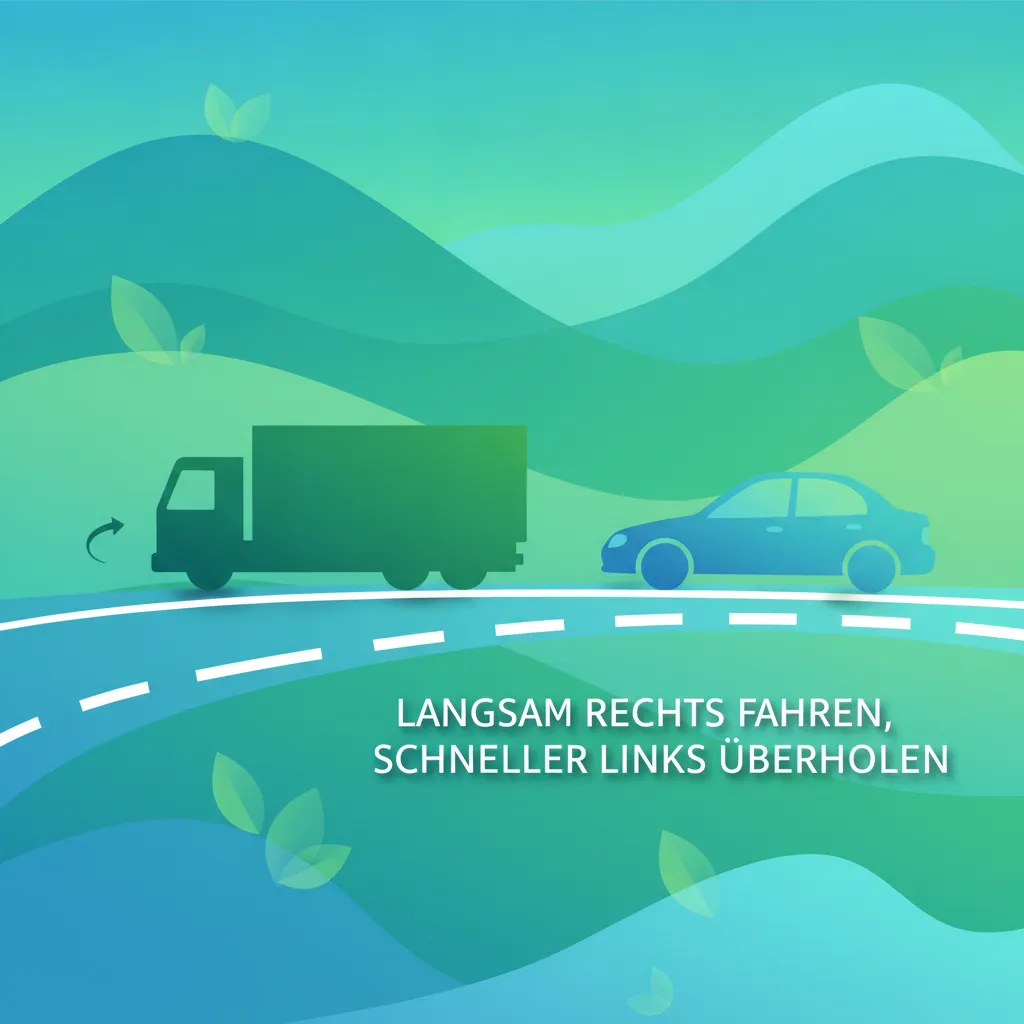
High-speed driving in a large vehicle requires excellent lane discipline and forward planning. This lesson covers Austrian speed limits for buses, rules for joining and leaving the motorway, safe overtaking procedures, and maintaining appropriate following distances. The critical importance of forming an emergency corridor ('Rettungsgasse') in traffic jams is also a key topic.
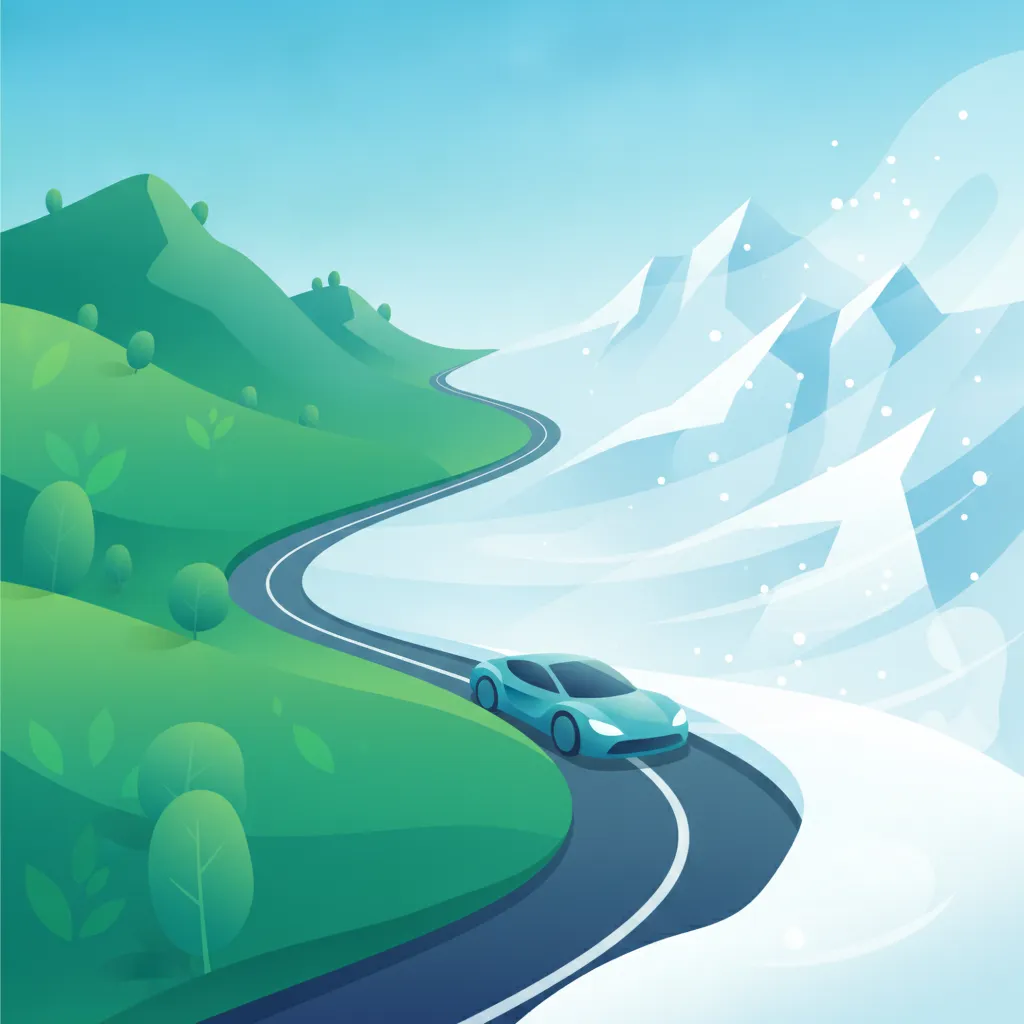
This lesson focuses on the specialized skills required for navigating alpine roads safely. It covers techniques for managing steep gradients, such as using a lower gear for engine braking on descents, and how to safely negotiate hairpin turns. The content stresses the importance of being prepared for rapid weather changes and understanding the effects of altitude on both the driver and the vehicle's performance.
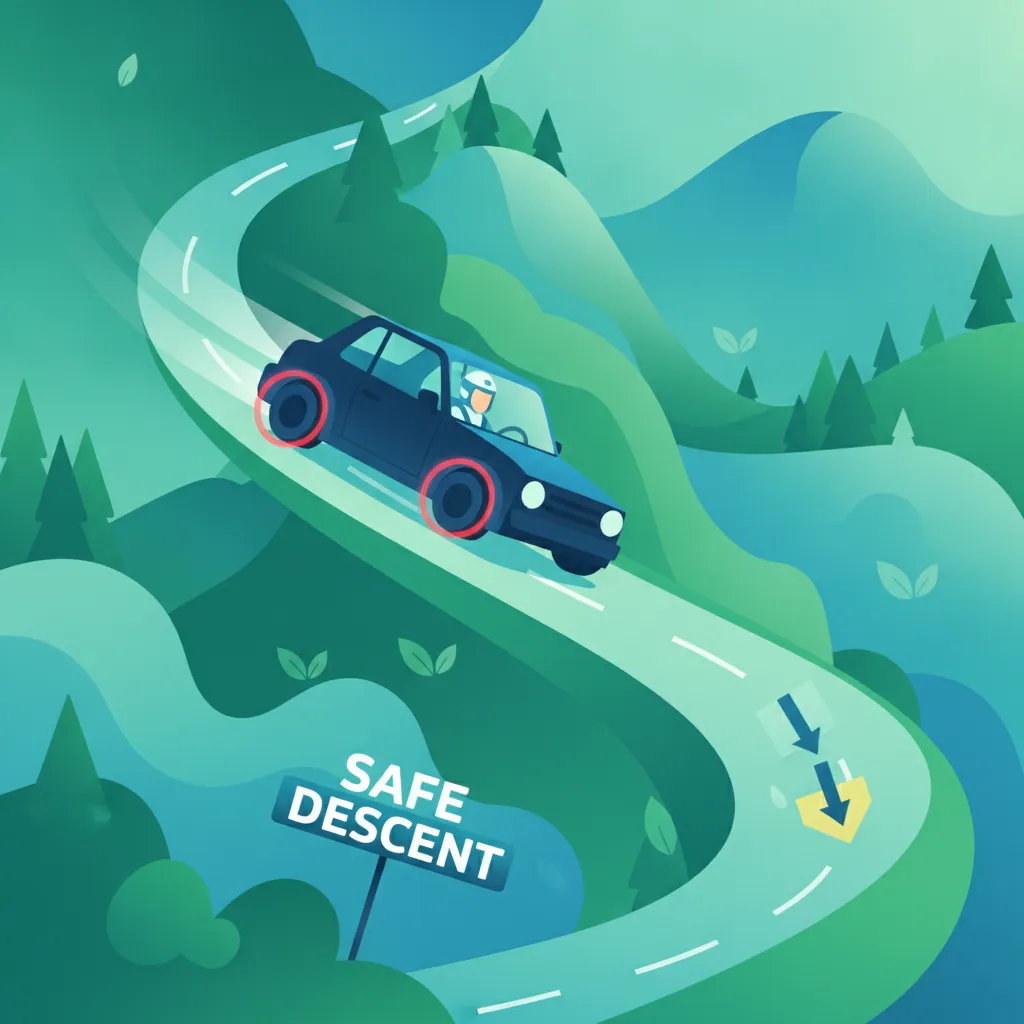
This lesson provides critical techniques for managing vehicle speed on the steep, long gradients found on Alpine roads. It emphasizes selecting the correct gear before the descent and using auxiliary braking systems to maintain a safe, controlled speed. These practices are essential to prevent service brake overheating and potential failure (brake fade).

This lesson prepares drivers for the demanding conditions of Alpine driving. It covers techniques for managing speed on steep up-hill and down-hill sections, being prepared for sudden weather changes, and following safety protocols inside mountain tunnels. This specialized knowledge is essential for operating safely in mountainous terrain.

Sudden vehicle movements are a primary cause of passenger injury and discomfort. This lesson focuses on developing a high level of control over the throttle and brake pedals. It teaches how to apply power gradually and brake progressively by anticipating traffic flow, ensuring that passengers, particularly those standing or moving, are never caught off balance.

Carrying standing passengers significantly increases a driver's responsibility for smooth control. This lesson details the specific adjustments required, such as reducing speed before turns to minimize sideways forces and increasing following distances to avoid sudden braking. It emphasizes the importance of awareness and observation of passengers' stability before accelerating from a stop.
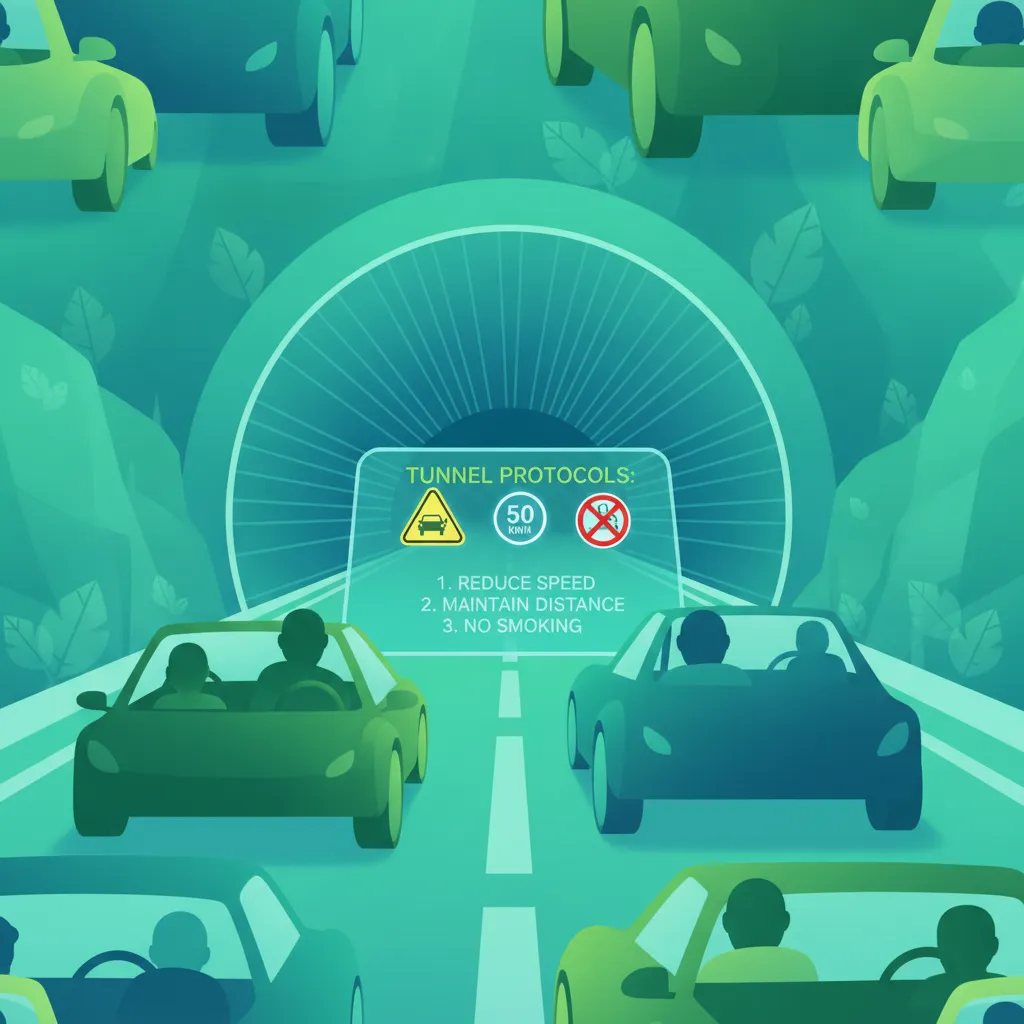
Austria's mountainous terrain means drivers will frequently encounter long tunnels. This lesson details the specific regulations, such as turning on lights and maintaining distance, as well as how to react to tunnel-specific warning signs and signals. Crucially, it covers the correct emergency procedures to follow in the event of a fire, accident, or breakdown inside a tunnel.
A safe stop begins with a planned approach. This lesson covers how to signal your intentions early, manage your speed, and scan for hazards like pedestrians and cyclists near the stop. It emphasizes the importance of aligning the bus parallel and close to the kerb to minimize the step for passengers, creating a safe platform for boarding and alighting.

Transporting children carries the highest level of responsibility. This lesson covers the specific Austrian rules for school buses, including the use of warning signs and lights. It focuses on developing a mindset of extreme caution, anticipating that children may run into the road unexpectedly, and managing the chaotic traffic environment often found around schools during drop-off and pick-up times.
Understand the specific Austrian StVO rules and legal requirements for driving heavy passenger vehicles on steep gradients and winding mountain roads. Covers mandatory use of auxiliary brakes and speed regulations for Category D drivers.
This lesson prepares drivers for the demanding conditions of Alpine driving. It covers techniques for managing speed on steep up-hill and down-hill sections, being prepared for sudden weather changes, and following safety protocols inside mountain tunnels. This specialized knowledge is essential for operating safely in mountainous terrain.
This lesson provides critical techniques for managing vehicle speed on the steep, long gradients found on Alpine roads. It emphasizes selecting the correct gear before the descent and using auxiliary braking systems to maintain a safe, controlled speed. These practices are essential to prevent service brake overheating and potential failure (brake fade).
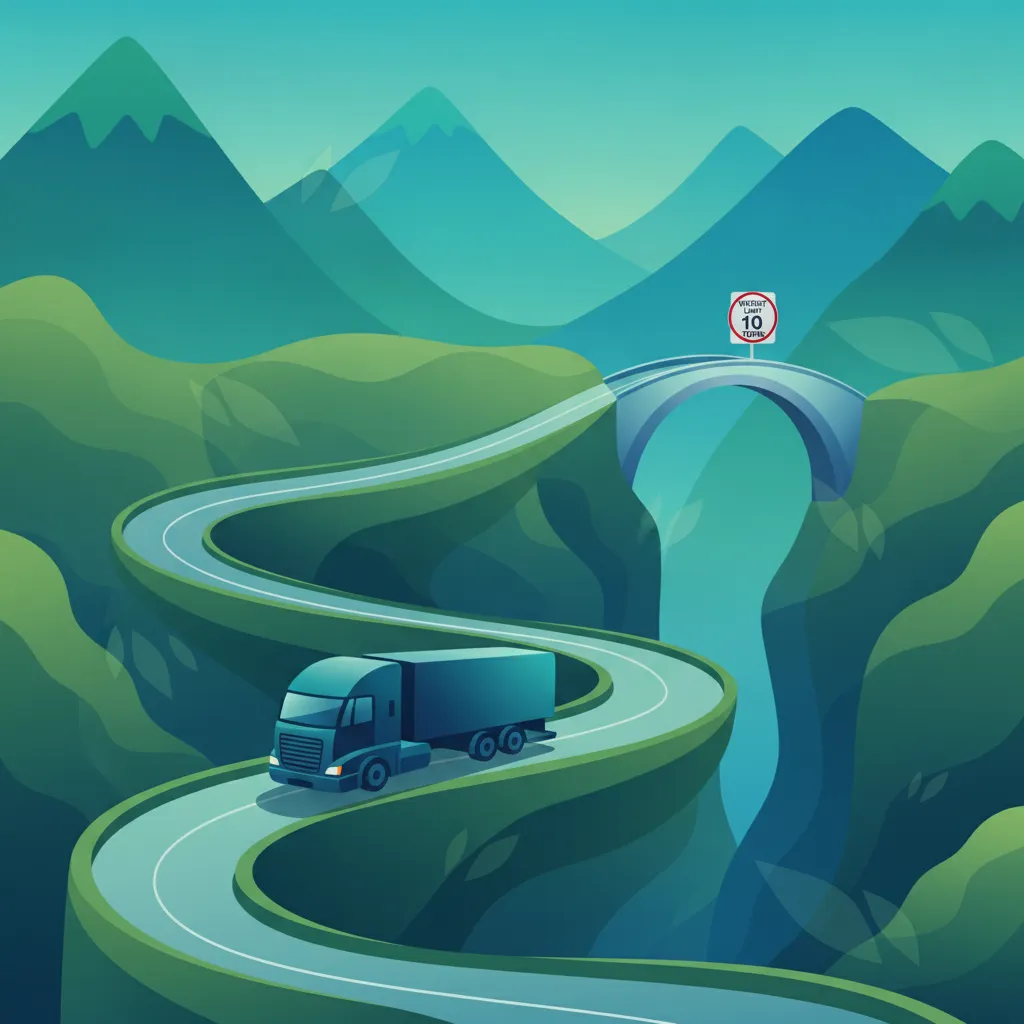
This lesson covers the specific weight restrictions that apply to sensitive infrastructure like Alpine passes and bridges throughout Austria. It explains how to identify these limits through road signage and incorporate them into route planning. Adhering to these restrictions is vital for preventing structural damage and ensuring safety in challenging terrain.

This lesson details the regulations for heavy goods vehicles on Austria's high-speed road network. It covers the specific speed limits, rules on lane usage (e.g., when overtaking is permitted), and procedures for entering and exiting the motorway. Adherence to these rules is crucial for safety in a fast-paced environment.
High-speed driving in a large vehicle requires excellent lane discipline and forward planning. This lesson covers Austrian speed limits for buses, rules for joining and leaving the motorway, safe overtaking procedures, and maintaining appropriate following distances. The critical importance of forming an emergency corridor ('Rettungsgasse') in traffic jams is also a key topic.

This lesson details the general traffic rules applicable to heavy goods vehicles on Austrian roads, highlighting differences from passenger car regulations. It covers key topics such as right-of-way at intersections, specific rules for overtaking, maintaining proper lane discipline, and adhering to designated speed limits. Understanding these rules is critical for safe integration into mixed traffic.
Austria's mountainous terrain means drivers will frequently encounter long tunnels. This lesson details the specific regulations, such as turning on lights and maintaining distance, as well as how to react to tunnel-specific warning signs and signals. Crucially, it covers the correct emergency procedures to follow in the event of a fire, accident, or breakdown inside a tunnel.

This lesson provides essential knowledge for using Austria's high-speed road network. It covers the correct procedure for entering via acceleration lanes, maintaining strict lane discipline (keeping right, passing left), and understanding the digital or physical Vignette (toll sticker) requirement. The formation of the 'Rettungsgasse' (emergency corridor) during traffic jams is also a key topic.
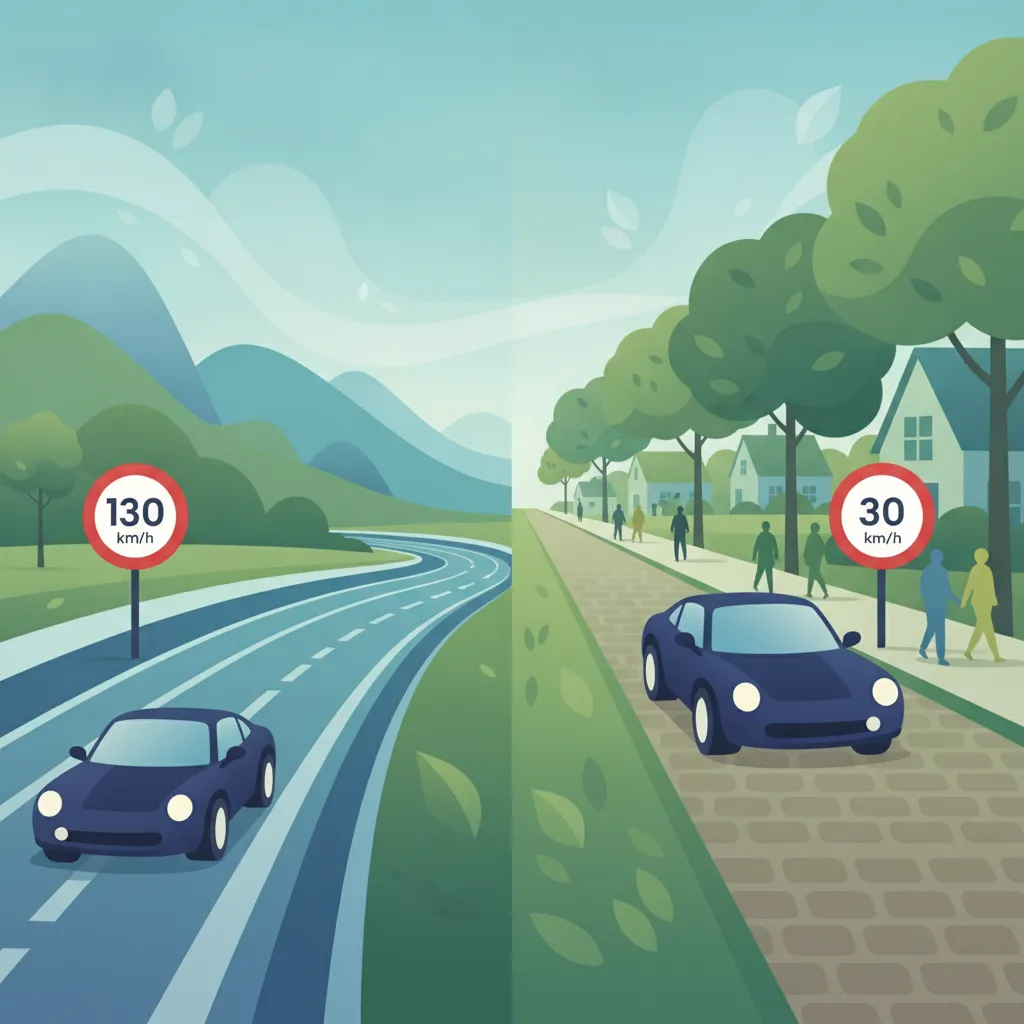
This lesson details the legally prescribed speed limits across Austria's road network, including the specific limits for urban areas (Ortsgebiet), rural roads (Landstraßen), motorways (Autobahnen), and expressways (Schnellstraßen). Learners will understand how to interpret speed limit signs, including those with supplementary conditions. Adherence to these legal requirements is a fundamental aspect of road safety and compliance with the Austrian road traffic act (StVO).
Rural Austrian roads present unique challenges, including lack of markings, tight spaces, and slow-moving agricultural vehicles. This lesson teaches how to read the road ahead, anticipate hazards around blind bends, and use passing places effectively when meeting other large vehicles. It emphasizes adjusting speed to suit the limited visibility and variable road conditions.
Find clear answers to common questions learners have about Navigating Alpine Routes, Gradients and Hairpin Bends. Learn how the lesson is structured, which driving theory objectives it supports, and how it fits into the overall learning path of units and curriculum progression in Austria. These explanations help you understand key concepts, lesson flow, and exam focused study goals.
Continuous use of the service brake on long descents leads to brake fade caused by overheating. The heat reduces the friction coefficient, making the brakes significantly less effective. Category D drivers must use auxiliary systems like retarders and engine brakes to control speed.
You should engage a lower gear before beginning any significant descent. This allows the engine's compression to act as a natural brake, providing steady speed control and keeping the primary braking system cool and ready for emergencies.
The primary risks are tail swing and the danger of the rear wheels clipping the inner kerb or off-tracking. You must take a wide approach while constantly checking your mirrors to ensure the vehicle's long wheelbase clears the turn without endangering stationary traffic.
The exam often presents scenarios regarding gradient percentages and the proper mechanical operation of a heavy vehicle. You may be asked to identify the safest sequence of actions when descending a steep road to prevent vehicle damage or loss of control.
Refine your study plan by searching for specific Austrian driving theory practice sets. Pinpoint questions related to particular road rules, signs, or challenge levels, and begin practicing immediately to reinforce your knowledge and excel in your official exam with confidence. Get started with focused revision today.