
This lesson teaches the fundamental techniques for smooth acceleration and braking, which are vital for every professional bus driver. You will learn how to anticipate traffic to maintain a stable, comfortable environment for your passengers, reducing the risk of falls and motion sickness. This is a crucial skill that builds upon the vehicle handling foundations covered in earlier units.

Lesson content overview
Operating a bus or coach requires a refined set of driving skills that prioritize passenger comfort and safety above all else. This lesson, designed for the Austrian Driving Theory Course for Bus & Coach Licence (Category D), focuses on developing precise control over acceleration and braking. Abrupt vehicle movements are a leading cause of passenger discomfort, falls, and potential injuries, particularly for those standing or moving within the vehicle. By mastering techniques for smooth power application and progressive braking, professional drivers can ensure a stable and secure environment for everyone on board.
For professional drivers of buses and coaches, every input to the vehicle controls directly impacts the passengers. Unlike private car driving, where the primary concern is the driver and immediate occupants, bus and coach operation involves a legal and ethical "duty of care" towards numerous passengers, many of whom may be standing, elderly, or have limited mobility. Smooth driving is not merely a preference; it is a fundamental safety requirement.
Sudden acceleration, deceleration, or sharp turns create inertial forces that can severely destabilize passengers. Imagine a standing passenger holding onto a rail: a sudden brake application can cause them to lurch forward, potentially losing their grip and falling. Similarly, rapid acceleration can throw them backward. These movements are not only unsettling but can lead to serious injuries, especially in crowded conditions or for vulnerable individuals. Smooth driving minimizes these forces, allowing passengers sufficient time to adjust their balance and maintain stability, thereby significantly reducing the risk of falls and enhancing overall journey quality.
Achieving a high level of control over a large passenger vehicle demands adherence to several core driving principles. These techniques enable drivers to manage the vehicle's dynamics in a way that prioritizes passenger comfort and safety. Mastering these principles is crucial for a professional bus and coach driver in Austria.
Progressive pedal application is the cornerstone of smooth driving. It refers to the incremental, controlled manner in which a driver applies pressure to both the accelerator and brake pedals, avoiding any sudden or abrupt changes. This technique is vital because it allows the heavy vehicle to respond gradually, preventing the jerks and sudden load shifts that can unbalance passengers.
The technique of applying pressure to the accelerator or brake pedal in a smooth, controlled, and incremental manner, avoiding abrupt changes in speed or direction.
For instance, when approaching a bus stop or a red traffic light, a skilled driver will begin applying the brake gently from a significant distance, progressively increasing pressure to bring the vehicle to a smooth, controlled halt without causing passengers to lurch forward.
Practice "feathering" the brake pedal: as you come to a complete stop, slightly ease off the brake pressure just before the final halt. This reduces the forward lurch.
Anticipatory driving is the practice of continually scanning the road and surrounding environment to predict and plan for upcoming traffic flow, potential hazards, and changes in road conditions well in advance. This proactive approach is indispensable for smooth driving, as it provides the necessary time to apply progressive pedal inputs, thereby minimizing the need for sudden reactions.
The practice of continuously observing and predicting traffic patterns, road conditions, and potential hazards ahead to plan vehicle movements and speed adjustments well in advance.
For example, spotting a distant red traffic light or a developing traffic jam far ahead allows the driver to gently ease off the accelerator and potentially coast or use engine braking to reduce speed gradually, rather than having to brake abruptly when closer to the obstruction.
Load transfer management involves a clear understanding of how the vehicle's weight shifts during acceleration and braking, and crucially, how this affects the stability of passengers. Large vehicles like buses and coaches experience significant weight transfer, which must be carefully managed to prevent passenger instability.
The phenomenon where a vehicle's weight shifts between its axles during acceleration (rearward) or braking (forward), affecting vehicle handling and passenger stability.
Understanding these dynamics allows drivers to use progressive pedal application to mitigate their effects. Gentle acceleration limits the rearward shift, while careful, progressive braking limits the forward shift, ensuring passengers remain stable and comfortable.
Speed consistency refers to the practice of maintaining a steady, appropriate speed whenever possible, thereby avoiding unnecessary acceleration and deceleration cycles. This principle not only enhances passenger comfort but also contributes to fuel efficiency, reduces wear and tear on the vehicle, and lowers emissions.
The practice of maintaining a relatively constant vehicle speed through smooth, minimal adjustments, avoiding frequent and unnecessary acceleration or deceleration.
On a relatively flat stretch of road with clear traffic, maintaining a consistent speed through subtle throttle adjustments and using higher gears is ideal. This avoids the "yo-yo" effect of frequent speed changes, which can be particularly jarring for passengers.
Operating a bus or coach in Austria is governed by specific traffic regulations that underscore the paramount importance of passenger safety and comfort. Professional drivers holding a Category D licence must be intimately familiar with these laws.
The Austrian Road Traffic Regulations (Verkehrsordnung) place a strong emphasis on the Duty of Care for professional drivers, particularly those transporting passengers. Specifically, § 38a Verkehrsordnung mandates that bus and coach drivers must ensure the safety and comfort of their passengers, explicitly including the avoidance of sudden vehicle movements.
The legal obligation for bus and coach drivers in Austria to ensure the safety and comfort of their passengers, explicitly requiring the avoidance of sudden vehicle movements like abrupt acceleration or braking.
The Road Traffic Act (Straßenverkehrsordnung - StVO), particularly § 12 StVO, mandates that drivers must adjust their speed to maintain a safe stopping distance from the vehicle ahead and other road users. While this regulation focuses on preventing collisions, its implications for smooth driving are direct: a safe stopping distance allows for progressive braking.
The legal requirement under Austrian Road Traffic Act § 12 for drivers to maintain a sufficient distance from other vehicles and hazards to allow for safe, controlled stopping.
§ 3 StVO dictates that drivers must not only adhere to posted speed limits but also adjust their speed according to the prevailing road, traffic, and weather conditions. While not directly about smooth acceleration or braking, it forms the foundation for it. Driving within appropriate speed limits significantly reduces the likelihood of needing sudden, harsh maneuvers.
The legal requirement under Austrian Road Traffic Act § 3 for drivers to observe posted speed limits and adjust their speed further based on prevailing road, traffic, and weather conditions.
Even experienced drivers can fall into habits that compromise passenger comfort and safety. Understanding common mistakes and their consequences is vital for refining driving techniques.
Smooth acceleration and braking are not static techniques; they must be dynamically adjusted based on prevailing conditions. A professional bus and coach driver understands that what works on a dry, straight road may be dangerous in adverse weather or heavy traffic.
Understanding the underlying principles of motion and human perception reinforces why smooth driving is paramount for bus and coach operations.
Let's illustrate these principles with common scenarios a professional bus and coach driver might encounter in Austria.
Mastering smooth acceleration and braking is a continuous process that improves with practice and a deep understanding of vehicle dynamics. To further enhance your skills and knowledge, consider exploring related topics.
This lesson teaches Category D bus and coach drivers in Austria the essential techniques for smooth vehicle control, emphasizing that progressive pedal application and anticipatory driving are fundamental professional skills rather than optional preferences. The content explains how Newton's laws of inertia directly affect passengers during acceleration and braking, making gentle inputs critical for standing passengers and vulnerable individuals. Austrian traffic law, particularly § 38a Verkehrsordnung, creates a legal duty of care requiring drivers to avoid sudden movements that could cause passenger falls. Practical scenarios demonstrate correct versus incorrect approaches to bus stops, highway driving, and uphill sections, while weather and load conditions are identified as factors requiring adaptive technique adjustments.
A short set of high-value points that capture the most important learning from this lesson.
Progressive pedal application is essential for passenger safety, requiring incremental throttle and brake inputs to prevent jarring movements
Anticipatory driving through continuous road scanning allows early, smooth adjustments that eliminate the need for sudden reactions
Load transfer during acceleration and braking directly impacts standing passengers and must be managed through gentle inputs
Speed consistency benefits both passenger comfort and fuel efficiency by avoiding unnecessary acceleration-deceleration cycles
Engine braking provides smoother deceleration than foot brakes alone, especially on downhill sections
Explore all units and lessons included in this driving theory course.
§ 38a Verkehrsordnung mandates duty of care for passenger safety, explicitly requiring avoidance of sudden vehicle movements
Late hard braking at traffic lights is a primary cause of passenger falls and constitutes a safety violation
Forward load transfer during braking pushes weight toward front wheels, destabilizing standing passengers
Adverse weather conditions (rain, snow, ice) require earlier braking initiation and gentler pedal inputs due to reduced traction
Brake feathering just before a full stop eliminates the forward lurch that catches passengers off balance
Misjudging braking distance for heavy vehicles and waiting until the last moment to apply brakes, causing abrupt stops
Accelerating too quickly from a standstill, creating a pronounced rearward lurch that destabilizes standing passengers
Ignoring load transfer effects on inclines by accelerating too aggressively uphill or braking too hard downhill
Failing to look far enough ahead, resulting in reactive rather than proactive driving that requires sudden corrections
Allowing excessive coasting deceleration that still produces a jarring vehicle movement before the stop
Lesson content overview
A short set of high-value points that capture the most important learning from this lesson.
Progressive pedal application is essential for passenger safety, requiring incremental throttle and brake inputs to prevent jarring movements
Anticipatory driving through continuous road scanning allows early, smooth adjustments that eliminate the need for sudden reactions
Load transfer during acceleration and braking directly impacts standing passengers and must be managed through gentle inputs
Speed consistency benefits both passenger comfort and fuel efficiency by avoiding unnecessary acceleration-deceleration cycles
Engine braking provides smoother deceleration than foot brakes alone, especially on downhill sections
Explore all units and lessons included in this driving theory course.
§ 38a Verkehrsordnung mandates duty of care for passenger safety, explicitly requiring avoidance of sudden vehicle movements
Late hard braking at traffic lights is a primary cause of passenger falls and constitutes a safety violation
Forward load transfer during braking pushes weight toward front wheels, destabilizing standing passengers
Adverse weather conditions (rain, snow, ice) require earlier braking initiation and gentler pedal inputs due to reduced traction
Brake feathering just before a full stop eliminates the forward lurch that catches passengers off balance
Misjudging braking distance for heavy vehicles and waiting until the last moment to apply brakes, causing abrupt stops
Accelerating too quickly from a standstill, creating a pronounced rearward lurch that destabilizes standing passengers
Ignoring load transfer effects on inclines by accelerating too aggressively uphill or braking too hard downhill
Failing to look far enough ahead, resulting in reactive rather than proactive driving that requires sudden corrections
Allowing excessive coasting deceleration that still produces a jarring vehicle movement before the stop
Explore search topics learners often look for when studying Techniques for Smooth Acceleration and Braking. These topics reflect common questions about road rules, driving situations, safety guidance, and lesson level theory preparation for learners in Austria.
Browse additional driving theory lessons that cover connected traffic rules, road signs, and common driving situations related to this topic. Improve your understanding of how different rules interact across everyday traffic scenarios.
Understand the core principles of progressive pedal application and anticipatory driving. Learn how to master smooth acceleration and braking to ensure passenger safety and comfort according to Austrian driving theory.
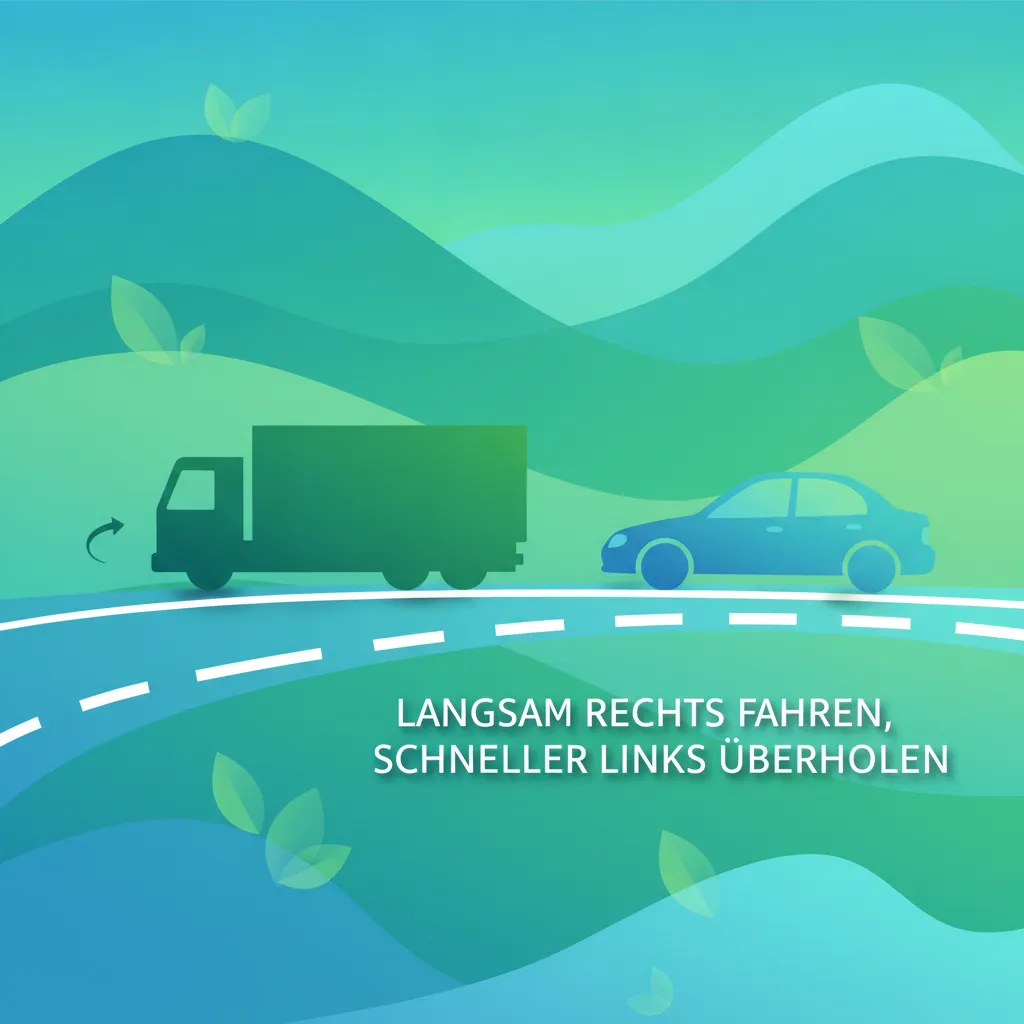
High-speed driving in a large vehicle requires excellent lane discipline and forward planning. This lesson covers Austrian speed limits for buses, rules for joining and leaving the motorway, safe overtaking procedures, and maintaining appropriate following distances. The critical importance of forming an emergency corridor ('Rettungsgasse') in traffic jams is also a key topic.

Driving a bus in a busy city like Vienna or Salzburg requires constant forward planning and anticipation. This lesson teaches techniques for maintaining adequate space around the vehicle, positioning correctly for upcoming junctions, and reading the flow of traffic. Adopting a defensive mindset is key to navigating complex urban environments without incident.
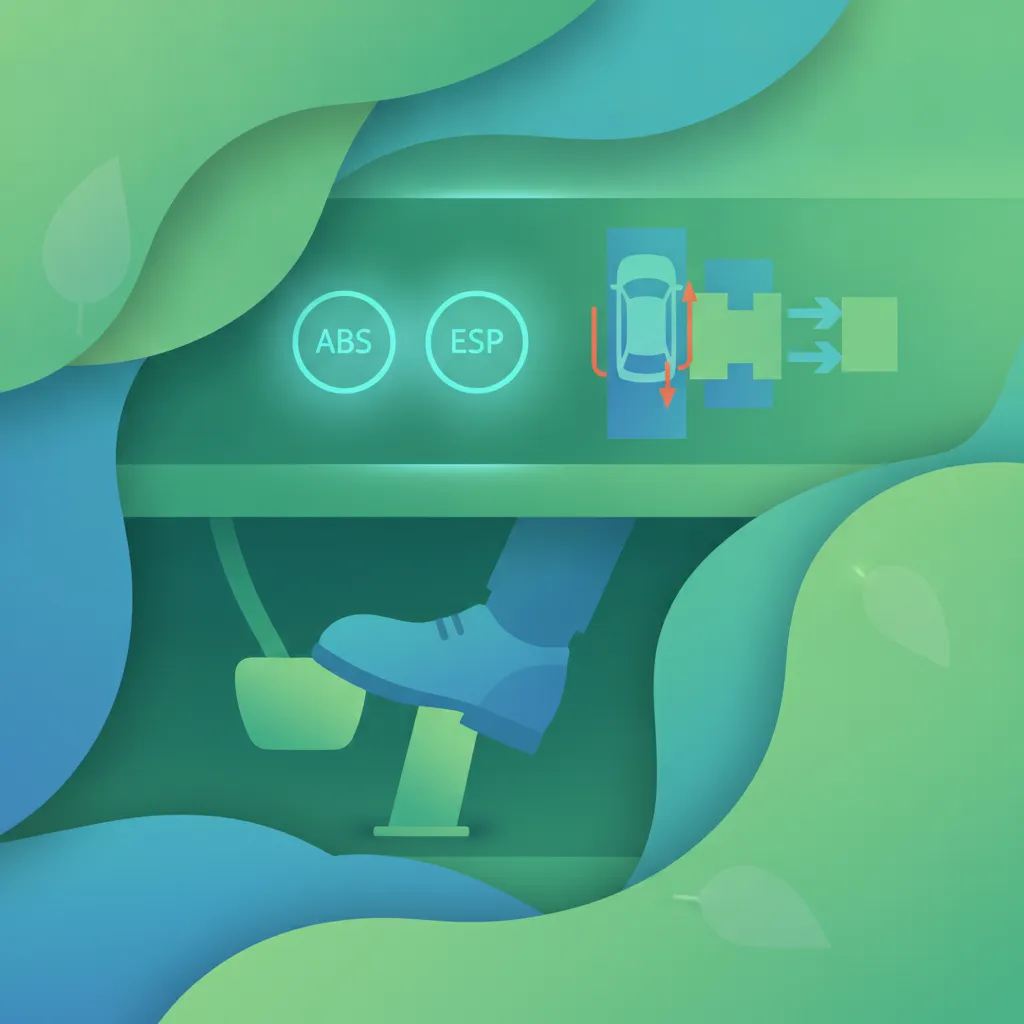
Modern passenger vehicles are equipped with advanced technology to improve safety. This lesson explains the function of systems like the Anti-lock Braking System (ABS) and Electronic Stability Program (ESP), detailing how they help prevent skidding and loss of control. It also provides an overview of other driver aids, such as retarders and engine brakes, which assist in managing speed on long descents.

Rural Austrian roads present unique challenges, including lack of markings, tight spaces, and slow-moving agricultural vehicles. This lesson teaches how to read the road ahead, anticipate hazards around blind bends, and use passing places effectively when meeting other large vehicles. It emphasizes adjusting speed to suit the limited visibility and variable road conditions.

Improper cornering technique can be unsettling and dangerous for passengers. This lesson teaches the correct approach to bends and turns: assess the corner, select the right speed and gear on approach, and steer with smooth, deliberate inputs. Understanding how to manage the vehicle's weight transfer and minimize lateral forces is key to ensuring passenger stability and comfort.

Many Austrian towns and city centres feature narrow roads not designed for large vehicles. This lesson provides strategies for assessing tight spaces, positioning the vehicle to maximize clearance, and navigating complex, non-standard junctions. It emphasizes the importance of slow speeds, constant observation, and understanding the vehicle's swept path to avoid contact with buildings, street furniture, and other vehicles.

Driving a heavy vehicle in the Alps requires specific skills to manage its energy and momentum. This lesson focuses on using lower gears and auxiliary braking systems (retarder/engine brake) to control speed on long descents and prevent brake overheating. It also covers the correct line and technique for navigating tight hairpin turns safely and efficiently.

Adding a trailer (Category DE/D1E) changes a vehicle's handling characteristics significantly. This lesson introduces key concepts, such as the increased turning circle, the effect of trailer swing, and the complexities of braking with the extra weight and length. It provides a theoretical foundation for understanding how to safely manage a combination vehicle, particularly during low-speed manoeuvres.
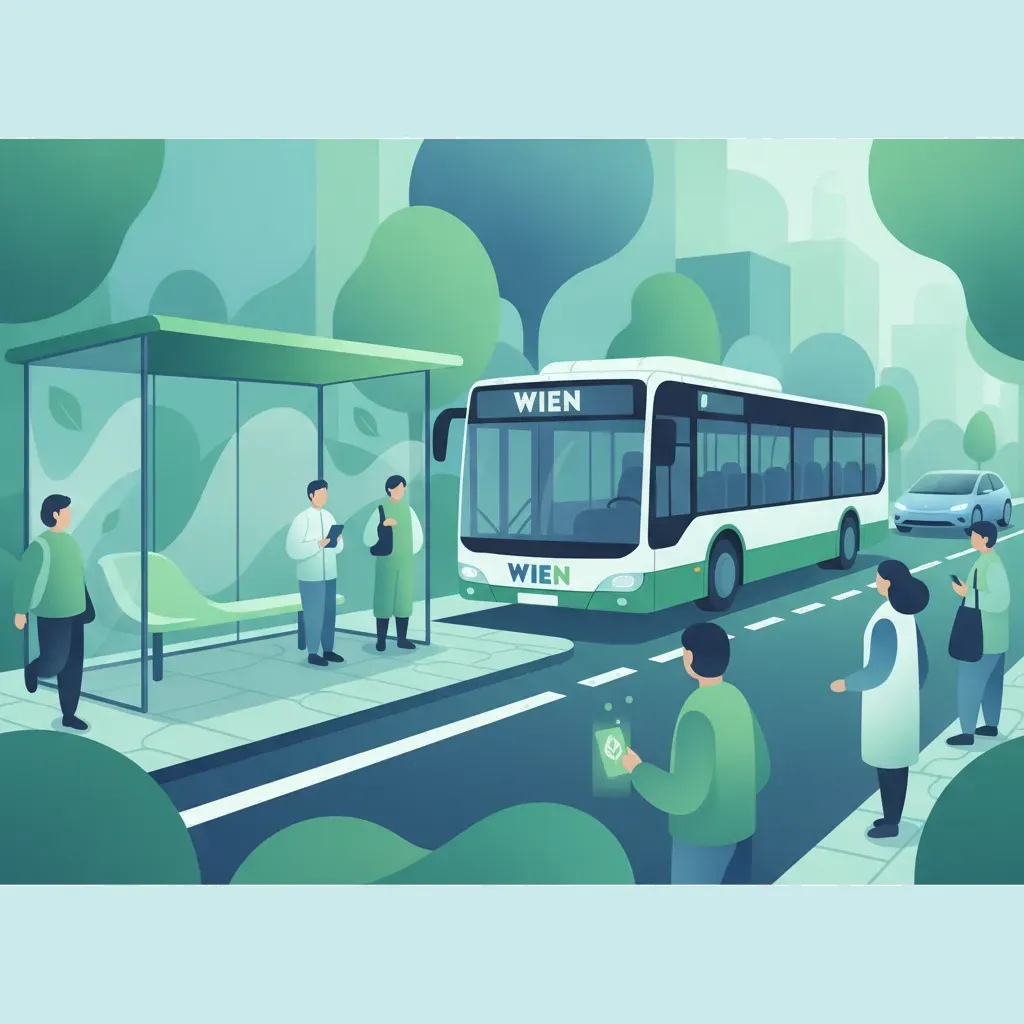
A safe stop begins with a planned approach. This lesson covers how to signal your intentions early, manage your speed, and scan for hazards like pedestrians and cyclists near the stop. It emphasizes the importance of aligning the bus parallel and close to the kerb to minimize the step for passengers, creating a safe platform for boarding and alighting.

The driver sets the tone for the entire journey. This lesson explores how a driver's calm demeanor and smooth driving style create a reassuring atmosphere for passengers. It also covers responsibilities for maintaining a comfortable onboard environment, such as appropriate heating or cooling, and the importance of a clean and well-presented vehicle in promoting passenger confidence and positive behaviour.
Explore how vehicle load transfer impacts passenger stability during acceleration and braking. Learn essential theory for managing these forces and adhering to Austrian regulations for professional drivers.

This lesson explains the critical relationship between load distribution, the vehicle's centre of gravity, and its stability. It details how incorrect placement of cargo can negatively affect handling, increase the risk of rollovers, and reduce braking efficiency. Achieving a balanced load is a key component of safe heavy vehicle operation.

This lesson explains the significant impact of extra weight from a passenger or luggage on a motorcycle's dynamics. It covers how to properly secure loads to maintain a low center of gravity and the importance of instructing a passenger on how to lean with the bike. Riders will learn to adjust their braking, acceleration, and cornering techniques to compensate for the altered handling characteristics.

This lesson explains the severe consequences of a load shift while the vehicle is in motion. It details how sudden movement of cargo can drastically alter the vehicle's stability, making it difficult to steer or brake effectively. This can lead to a loss of control or a rollover, highlighting the importance of proper load securing.

This lesson covers the proper techniques for performing an emergency braking manoeuvre in a heavy vehicle. It explains how to apply maximum braking force without losing control, especially in vehicles equipped with an Anti-lock Braking System (ABS). The lesson also discusses how hard braking can affect cargo and the importance of proper load securing.

Carrying standing passengers significantly increases a driver's responsibility for smooth control. This lesson details the specific adjustments required, such as reducing speed before turns to minimize sideways forces and increasing following distances to avoid sudden braking. It emphasizes the importance of awareness and observation of passengers' stability before accelerating from a stop.

This lesson offers a practical guide to managing additional weight on a motorcycle. It explains how to distribute luggage evenly and low on the bike, and how to brief a passenger on their role in maintaining balance. The lesson reinforces that acceleration will be slower and braking distances longer, requiring smoother control inputs and greater anticipation from the rider.

This lesson explains the critical importance of properly securing any load, whether inside the vehicle, on a roof rack, or in a trailer. It covers the principles of correct weight distribution to maintain the vehicle's center of gravity and stability. Learners will understand the legal requirements and best practices for using tie-downs and other securing methods to prevent items from shifting or falling, which could create a serious hazard on the road.

This lesson prepares drivers for the emergency scenario of a shifting or lost load. It covers how to react to the sudden change in vehicle handling, safely pull over, and assess the situation. The lesson also explains the driver's responsibility for securing the scene and reporting the incident to prevent hazards for other road users.

This lesson focuses on the driver's legal and ethical responsibility for the safety of all passengers. It details the mandatory use of seatbelts for all occupants and provides a thorough explanation of Austrian regulations concerning child restraints. Learners will understand how to choose and correctly install the appropriate child seat based on a child's age, weight, and height, ensuring maximum protection in the event of a collision.

This lesson explains the physical principles of load distribution and its direct impact on a vehicle's centre of gravity and stability. It details how to arrange cargo to maintain a low centre of gravity and ensure weight is distributed correctly over the axles. Proper load distribution is fundamental to safe handling and preventing rollovers.
Find clear answers to common questions learners have about Techniques for Smooth Acceleration and Braking. Learn how the lesson is structured, which driving theory objectives it supports, and how it fits into the overall learning path of units and curriculum progression in Austria. These explanations help you understand key concepts, lesson flow, and exam focused study goals.
Smooth driving prevents passenger injuries, particularly for those who are standing or have limited mobility. It is a core part of the duty of care required for professional bus drivers in Austria.
Because buses have high centres of gravity and significant mass, sudden braking can cause severe passenger displacement. You must brake progressively by anticipating stops early.
Yes, the theory exam includes scenarios where you must choose the safest action, such as how to decelerate when approaching a stop or handling a sudden traffic hazard.
Gradually depress the throttle and understand your bus's power band. Anticipating traffic flow allows you to adjust your speed steadily rather than needing to accelerate abruptly.
Refine your study plan by searching for specific Austrian driving theory practice sets. Pinpoint questions related to particular road rules, signs, or challenge levels, and begin practicing immediately to reinforce your knowledge and excel in your official exam with confidence. Get started with focused revision today.