
This lesson provides essential training for operating buses safely around tram networks, a critical skill for Category D drivers in cities like Vienna and Graz. You will learn to navigate complex shared stops, identify priority signals, and manage the unique risks posed by trams to ensure passenger safety.

Lesson content overview
Navigating urban environments in cities like Vienna or Graz as a bus driver for the Austrian Bus & Coach Licence (Category D) presents unique challenges, especially when interacting with extensive tram networks. Trams, being a vital part of public transport, operate under specific rules that prioritize their movement and, crucially, the safety of their passengers. This lesson provides a comprehensive guide to understanding these rules, the hazards at shared stops, and the best practices for ensuring safe and efficient operations when driving a bus near trams.
Trams operate on fixed tracks and possess unique right-of-way characteristics due to their inability to steer or stop quickly. Austrian traffic law grants trams a clear priority in most situations, a principle fundamental for all other road users, especially bus drivers, to understand and respect. This priority is crucial for maintaining the smooth flow of public transport and, most importantly, for preventing accidents involving these large vehicles and their passengers.
Tram priority refers to the legal right of a tram to proceed ahead of other vehicles when proceeding along its tracks. This applies even if other traffic signals might seem to indicate otherwise for motor vehicles. The rationale behind this is the tram's inherent operational constraints; its significant mass and steel-on-steel contact with tracks mean it has much longer braking distances compared to road vehicles, making sudden stops extremely difficult and potentially hazardous for passengers.
The rules for yielding to trams can vary slightly depending on whether a crossing is regulated by specific signals or signs, or if it is unregulated.
The most definitive indication of a tram's right-of-way comes from its specific traffic signals. Unlike standard red, yellow, and green lights, tram signals often use distinctive white lights on a black background, specifically a vertically aligned green-white bar or arrow to indicate "proceed" and a horizontally aligned red bar or circle to indicate "stop."
When you, as a bus driver, approach an intersection where tram tracks are present, always look for these dedicated tram signals in addition to your own lane signals. If the tram signal is green-white, a tram is permitted to proceed, and all other traffic, including buses, must ensure they do not obstruct its path. Failure to do so can lead to dangerous situations and significant delays for public transport.
Always prioritize observing tram signals at crossings. A tram's green-white light overrides the general traffic light for your lane if there is a conflict.
Austrian traffic law, primarily the Straßenverkehrsordnung (StVO), clearly defines tram priority.
These legal frameworks are designed to ensure safety and efficiency across Austria's integrated public transport networks. As a professional bus driver, your understanding and adherence to these laws are paramount for safe operation.
Shared tram stops, often referred to as "mixed stops" or "median stops," represent specific conflict zones where the paths of passengers, trams, and road traffic (including buses) intersect. These areas demand extreme caution from bus drivers because passengers frequently need to cross traffic lanes to board or alight from trams, placing them in a highly vulnerable position.
A shared stop conflict zone is the physical area at a mixed tram stop where passengers must cross a roadway or bus lane to access or exit a tram. These zones are designed for efficient public transport interchange but inherently create high-risk areas for pedestrians, who may be focused on the tram rather than surrounding traffic. Bus drivers must recognize these zones immediately and adjust their driving behavior accordingly.
Shared stops can take various forms, each presenting slightly different challenges:
When a tram is stopped at a shared stop, especially a median stop, specific rules apply to protect passengers:
The primary concern at shared stops is the safety of pedestrians. Passengers, especially children or those with mobility impairments, may be distracted, in a hurry, or less visible, particularly in adverse weather or low light conditions.
Failing to reduce speed or stopping for passengers at a shared tram stop is a leading cause of severe accidents involving trams and pedestrians. Prioritize safety above all else.
Many Austrian cities integrate bus and tram networks, often sharing lanes to optimize space and traffic flow. While bus lanes generally provide a quicker route for public transport, the presence of trams introduces specific rules regarding priority.
When operating in a mixed bus-tram lane, your primary responsibility as a bus driver is to ensure the unimpeded movement of trams.
Always remember that even in a lane shared with buses, trams operate on fixed tracks and cannot deviate. This physical constraint reinforces their overriding priority.
Understanding the general hierarchy of road users in Austria provides a crucial framework for decision-making in complex urban environments, especially when interacting with trams. This hierarchy dictates who must yield to whom in conflict situations, with safety and traffic flow as the guiding principles.
In Austria, the right-of-way is governed by a combination of traffic laws, signs, and signals. A general, though not exhaustive, hierarchy of road users in terms of priority can be observed:
An ordered ranking of traffic participants that determines who must yield in conflict situations, designed to promote safety and efficient traffic flow.
For Category D bus drivers, recognizing this hierarchy is vital, particularly the position of trams:
Interacting with trams presents specific challenges that require heightened awareness and adherence to safe driving practices. Understanding common pitfalls and preparing for varying conditions can significantly enhance safety for bus drivers, passengers, and other road users.
Many incidents involving buses and trams or pedestrians at tram stops stem from common errors:
Driving conditions are rarely static. Bus drivers must adapt their approach to tram interactions based on environmental and operational factors:
By understanding these nuances and proactively adjusting your driving, you can minimize risks and ensure safe interactions with trams and pedestrians in all conditions.
Understanding the rules is one thing; applying them in real-world driving situations is another. Here are some common scenarios you might encounter as a bus driver in Austria, along with the correct and incorrect responses.
Description: You are driving your Category D bus in an urban area during peak hour. Ahead, a tram has stopped at a median tram stop. Passengers are visibly alighting and beginning to cross your traffic lane to reach the pavement.
Description: You are approaching a signalized intersection. Your bus lane signal shows a green light. Simultaneously, a tram approaching from the left on its dedicated tracks has a green-white tram priority signal.
Description: You are driving in a mixed bus-tram lane. A tram ahead has just stopped at its designated stop within this shared lane and is now beginning to pull away. You need to merge forward into the space it occupied.
Description: It's late at night, and visibility is reduced due to light rain. You are approaching a shared tram stop where a tram is stopped. The tram's exterior lights are on, and you can see its blinking white (priority stopped) light.
As a professional bus driver in Austria, operating a Category D vehicle, your responsibility for passenger safety extends to your interactions with trams and pedestrians in shared public transport environments. Mastery of these principles is not just about compliance, but about ensuring the well-being of everyone on the road.
By internalizing these rules and maintaining a high level of vigilance, you contribute to safer, more efficient public transport operations across Austrian cities.
This lesson covers the essential rules for Category D drivers interacting safely with Austria's tram networks in cities like Vienna and Graz. Trams have clear legal priority under § 19 StVO and use specific green-white signals defined in § 49 StVO that override general traffic lights. At shared stops, pedestrians crossing traffic lanes to board or alight trams gain priority over buses, requiring significant speed reduction and readiness to stop. Mixed bus-tram lanes, governed by § 57 StVO, still require buses to yield to trams, which cannot deviate from their fixed tracks and have long braking distances. The lesson emphasizes defensive driving techniques, scenario-based decision-making, and adaptation to weather, lighting, and vehicle load conditions.
A short set of high-value points that capture the most important learning from this lesson.
Trams operating on their tracks have legal priority over buses in Austrian traffic, regardless of your own traffic light status.
At shared tram stops (median, side-by-side, or island stops), pedestrians boarding or alighting have priority over your bus and must be yielded to.
Tram priority signals (green-white bar for proceed, red bar for stop) override general traffic lights when conflicts arise.
Never overtake a stopped tram at a shared stop without first confirming all passengers have cleared the roadway.
In mixed bus-tram lanes, trams retain their priority and you must not obstruct their path or force merging situations.
Explore all units and lessons included in this driving theory course.
Tram signals use green-white lights on a black background; a green-white bar means the tram has right-of-way, even if your light is green.
Shared stop conflict zones require speed reduction to 10-20 km/h and readiness to stop immediately for crossing passengers.
Pedestrians at shared stops gain temporary priority over approaching vehicles, including buses with green lights.
Trams cannot deviate from their fixed tracks and require long stopping distances—never cut off a tram or assume it can stop quickly.
Right-of-way hierarchy places emergency vehicles first, then trams on tracks, then motor vehicles, then cyclists, with pedestrians prioritized at marked crossings and shared stops.
Proceeding through an intersection because your own traffic light is green, without checking that the tram's signal gives it priority.
Attempting to overtake a tram stopped at a shared stop without visually confirming all passengers have crossed the traffic lane.
Failing to reduce speed when approaching shared tram stops, leaving insufficient reaction time for unexpected pedestrian movements.
Assuming buses and trams have equal priority in mixed bus-tram lanes, leading to forcing right-of-way situations.
Neglecting mirror and head checks for cyclists or pedestrians in tram blind spots, especially when near large vehicles.
Lesson content overview
A short set of high-value points that capture the most important learning from this lesson.
Trams operating on their tracks have legal priority over buses in Austrian traffic, regardless of your own traffic light status.
At shared tram stops (median, side-by-side, or island stops), pedestrians boarding or alighting have priority over your bus and must be yielded to.
Tram priority signals (green-white bar for proceed, red bar for stop) override general traffic lights when conflicts arise.
Never overtake a stopped tram at a shared stop without first confirming all passengers have cleared the roadway.
In mixed bus-tram lanes, trams retain their priority and you must not obstruct their path or force merging situations.
Explore all units and lessons included in this driving theory course.
Tram signals use green-white lights on a black background; a green-white bar means the tram has right-of-way, even if your light is green.
Shared stop conflict zones require speed reduction to 10-20 km/h and readiness to stop immediately for crossing passengers.
Pedestrians at shared stops gain temporary priority over approaching vehicles, including buses with green lights.
Trams cannot deviate from their fixed tracks and require long stopping distances—never cut off a tram or assume it can stop quickly.
Right-of-way hierarchy places emergency vehicles first, then trams on tracks, then motor vehicles, then cyclists, with pedestrians prioritized at marked crossings and shared stops.
Proceeding through an intersection because your own traffic light is green, without checking that the tram's signal gives it priority.
Attempting to overtake a tram stopped at a shared stop without visually confirming all passengers have crossed the traffic lane.
Failing to reduce speed when approaching shared tram stops, leaving insufficient reaction time for unexpected pedestrian movements.
Assuming buses and trams have equal priority in mixed bus-tram lanes, leading to forcing right-of-way situations.
Neglecting mirror and head checks for cyclists or pedestrians in tram blind spots, especially when near large vehicles.
Explore search topics learners often look for when studying Safe Interaction with Trams and Shared Stops. These topics reflect common questions about road rules, driving situations, safety guidance, and lesson level theory preparation for learners in Austria.
Browse additional driving theory lessons that cover connected traffic rules, road signs, and common driving situations related to this topic. Improve your understanding of how different rules interact across everyday traffic scenarios.
Understand high-risk conflict zones at shared tram stops and bus lanes. Learn about passenger safety, identifying hazards, and specific rules for avoiding collisions with trams and unpredictable pedestrian movements in urban Austrian traffic.
Driving a bus in a busy city like Vienna or Salzburg requires constant forward planning and anticipation. This lesson teaches techniques for maintaining adequate space around the vehicle, positioning correctly for upcoming junctions, and reading the flow of traffic. Adopting a defensive mindset is key to navigating complex urban environments without incident.
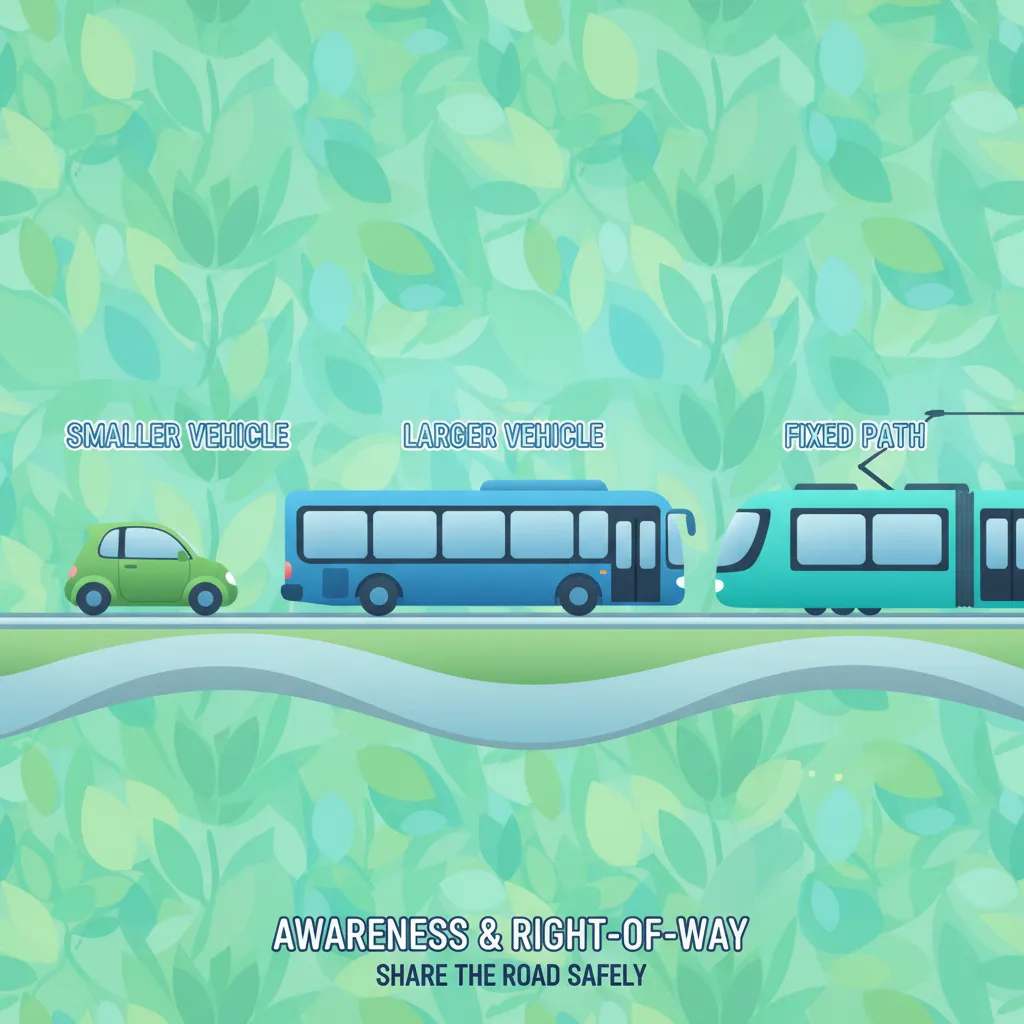
This lesson provides specific guidance for sharing the road with different types of vehicles in Austria. It covers the dangers of large vehicle blind spots, the rules for navigating near buses and dedicated tram tracks, and common conflict points at intersections. Understanding the behavior and limitations of other vehicles is key to safely navigating complex urban environments.

Driving in tourist hotspots in cities like Salzburg or alpine resorts requires extra patience and vigilance. This lesson explores common unpredictable behaviours, such as pedestrians stepping into the road to take photos or groups of tourists being unaware of traffic. It teaches drivers to slow down, be prepared for anything, and use communication tools like the horn sparingly and appropriately.
This lesson addresses the specific challenges of interacting with larger vehicles like buses and trams in an urban environment. It explains how to signal intentions clearly and predictably to avoid conflicts in shared spaces. Key topics include safely crossing tram tracks and maintaining awareness around public transport stops.
Not all bus stops are created equal. This lesson trains you to assess a stop's environment and identify potential hazards, such as poor sightlines, proximity to a busy junction, or frequent presence of vulnerable road users. It encourages a proactive approach, where the driver heightens their observation and slows their approach when dealing with these known high-risk locations.
This lesson details the specific regulations and best practices for driving in areas with high pedestrian activity, such as bus stops and school zones. It explains the driver's obligation to stop for school buses with flashing lights and to yield to public buses pulling out from a stop. The content emphasizes the requirement to significantly reduce speed in marked school zones to ensure the safety of children.
This lesson provides advanced strategies for proactively managing interactions with vulnerable road users to prevent conflicts before they arise. It teaches drivers to predict the likely behavior of pedestrians, cyclists, and e-scooter riders, especially at intersections and in congested areas. Key techniques include maintaining larger safety distances, covering the brake, and making eye contact to ensure mutual awareness and avoid accidents.

Pedestrians have absolute priority on marked crossings in Austria, and a bus driver must always be ready to give way. This lesson covers the rules for approaching and stopping for pedestrians, and highlights the risk of pedestrians being hidden by the vehicle's structure. It also stresses the danger of passengers crossing the road after alighting from your bus.

Rural Austrian roads present unique challenges, including lack of markings, tight spaces, and slow-moving agricultural vehicles. This lesson teaches how to read the road ahead, anticipate hazards around blind bends, and use passing places effectively when meeting other large vehicles. It emphasizes adjusting speed to suit the limited visibility and variable road conditions.
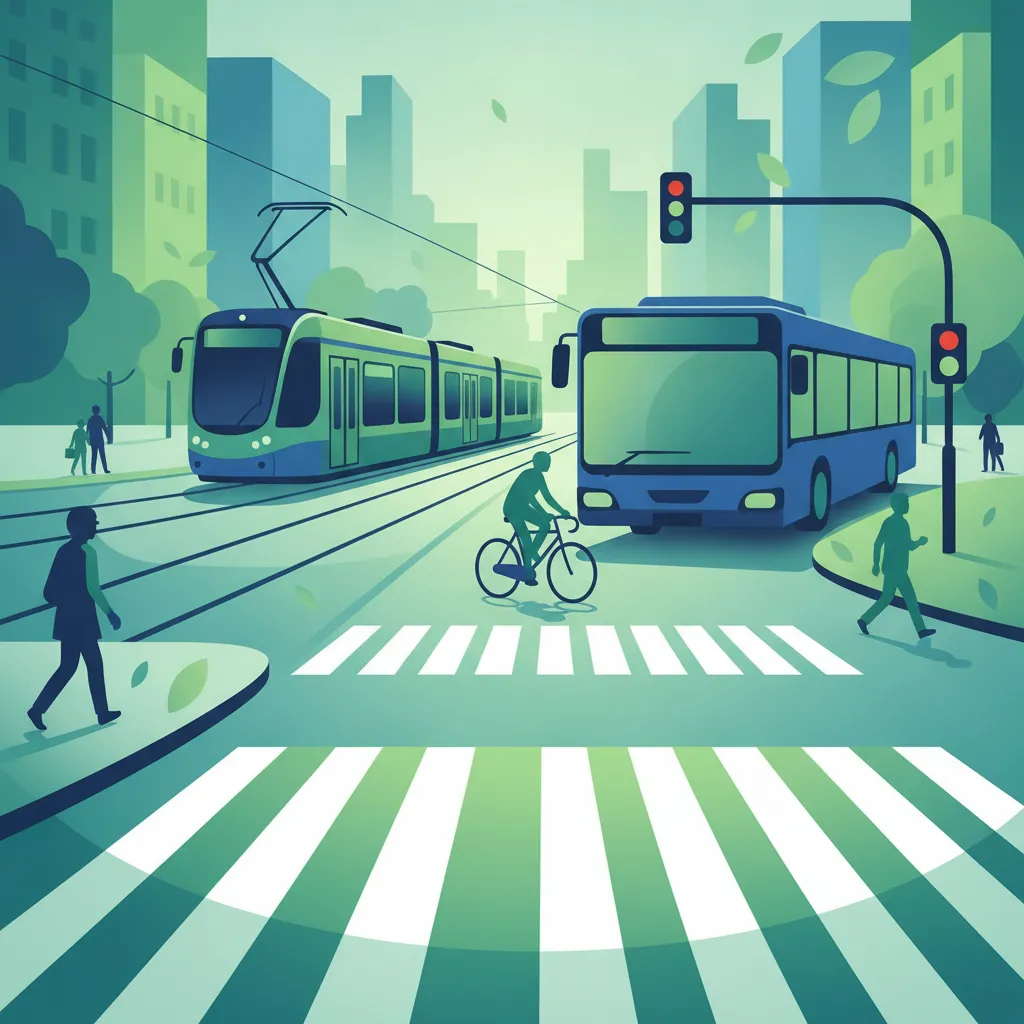
This lesson addresses the unique challenges and priority rules that apply when interacting with public transport and cyclists at intersections. It clarifies the specific right-of-way regulations for trams, which often have priority over other traffic, and the procedures for navigating around bus stops. The content also covers how to safely manage crossings with dedicated bicycle lanes, ensuring the protection of all road users.
Master the specific priority rules and traffic signals governing trams in Austria. Learn how bus drivers must yield to trams and understand the legal framework for public transport priority in complex urban environments.

This lesson focuses on the specific regulations and safety protocols for driving near trams (Straßenbahn) in Austrian cities. It clarifies the priority rules, which almost always favor the tram, and explains how to safely share lanes or cross tram tracks. The content provides critical guidance on how to behave at tram stops, ensuring the safety of boarding and alighting passengers is always the primary concern.
This lesson addresses the unique challenges and priority rules that apply when interacting with public transport and cyclists at intersections. It clarifies the specific right-of-way regulations for trams, which often have priority over other traffic, and the procedures for navigating around bus stops. The content also covers how to safely manage crossings with dedicated bicycle lanes, ensuring the protection of all road users.
Many Austrian cities use special signalling to give buses and trams priority at intersections. This lesson explains how to identify and understand these signals, which often use white bars or letters instead of standard colours. Learning to anticipate these signals allows for a smoother, more efficient driving style that takes full advantage of the public transport infrastructure.
This lesson details the specific regulations and best practices for driving in areas with high pedestrian activity, such as bus stops and school zones. It explains the driver's obligation to stop for school buses with flashing lights and to yield to public buses pulling out from a stop. The content emphasizes the requirement to significantly reduce speed in marked school zones to ensure the safety of children.
This lesson provides specific guidance for sharing the road with different types of vehicles in Austria. It covers the dangers of large vehicle blind spots, the rules for navigating near buses and dedicated tram tracks, and common conflict points at intersections. Understanding the behavior and limitations of other vehicles is key to safely navigating complex urban environments.
This lesson explains the operation and meaning of traffic light signals in Austria, including the standard red, yellow, and green phases, as well as flashing signals and arrows. It also covers other priority control devices, such as stop signs and yield signs, which are used to manage right-of-way at intersections. Understanding the hierarchy between these signals and signs is crucial for navigating junctions safely and in compliance with the law.
This lesson focuses on the unique challenges presented by tram systems in Austrian cities. It teaches riders how to cross tracks at a safe angle to avoid tyres getting caught, especially in wet conditions, and explains the absolute priority trams have in most situations. Awareness around tram stops and bus lanes is also covered to ensure safe coexistence with public transport.
Driving a bus in a busy city like Vienna or Salzburg requires constant forward planning and anticipation. This lesson teaches techniques for maintaining adequate space around the vehicle, positioning correctly for upcoming junctions, and reading the flow of traffic. Adopting a defensive mindset is key to navigating complex urban environments without incident.
This lesson addresses the specific challenges of interacting with larger vehicles like buses and trams in an urban environment. It explains how to signal intentions clearly and predictably to avoid conflicts in shared spaces. Key topics include safely crossing tram tracks and maintaining awareness around public transport stops.
Pedestrians have absolute priority on marked crossings in Austria, and a bus driver must always be ready to give way. This lesson covers the rules for approaching and stopping for pedestrians, and highlights the risk of pedestrians being hidden by the vehicle's structure. It also stresses the danger of passengers crossing the road after alighting from your bus.
Find clear answers to common questions learners have about Safe Interaction with Trams and Shared Stops. Learn how the lesson is structured, which driving theory objectives it supports, and how it fits into the overall learning path of units and curriculum progression in Austria. These explanations help you understand key concepts, lesson flow, and exam focused study goals.
Generally, yes, trams often have priority. However, you must always observe the specific road signs, traffic lights, and signals at each intersection. Never assume priority unless it is clearly indicated.
When approaching a shared stop, you must be hyper-aware of passengers crossing the tracks to board or exit. Always stop well before the designated area and ensure it is safe to proceed before moving your bus, keeping an eye out for passengers hidden by the tram.
These signals specifically manage traffic flow for trams and buses, often granting them earlier or exclusive movement. As a bus driver, you must recognize these signals to maintain your timetable while ensuring you do not conflict with the tram's right of way.
Many drivers underestimate the tram's braking distance and its restricted ability to steer. Failing to anticipate that a tram cannot maneuver around your bus is a common cause of accidents, which can be avoided by maintaining constant awareness of the tram's path.
Refine your study plan by searching for specific Austrian driving theory practice sets. Pinpoint questions related to particular road rules, signs, or challenge levels, and begin practicing immediately to reinforce your knowledge and excel in your official exam with confidence. Get started with focused revision today.