
This lesson focuses on the precision required to drive a large passenger vehicle through Austria's historic and narrow city streets. You will learn to manage your vehicle's physical footprint, ensuring safe clearance at junctions while navigating complex urban layouts.

Lesson content overview
Many Austrian towns and city centres present a unique challenge for bus and coach drivers: narrow roads and non-standard junctions that were not originally designed for large modern vehicles. Successfully navigating these confined urban environments is a critical skill for Category D licence holders. This lesson will equip you with the essential strategies for assessing tight spaces, precisely positioning your vehicle, and executing controlled manoeuvres to ensure the safety of your passengers, other road users, and property.
Operating a bus or coach within a bustling urban environment demands exceptional skill and awareness. Unlike driving a smaller passenger car, the sheer size and weight of a Category D vehicle mean that even minor misjudgements can lead to significant consequences. This lesson focuses on the specific difficulties posed by Austria's historic city centres and densely populated areas, where road infrastructure often predates modern vehicle dimensions.
Effective manoeuvring in these settings is paramount for several reasons. Firstly, it directly impacts passenger safety, preventing sudden jolts or potential collisions. Secondly, it protects the vehicle from damage and avoids costly repairs. Lastly, it ensures compliance with Austrian traffic regulations, which mandate careful driving in limited visibility or space, obliging drivers to adapt speed and trajectory to the prevailing conditions. Mastery of these techniques builds upon your understanding of vehicle dimensions, blind spots, and fundamental right-of-way rules.
Safe and efficient navigation through tight urban spaces relies on adherence to several core driving principles. These principles, when applied consistently, significantly reduce the risk of incidents and enhance overall driving professionalism. They combine an understanding of vehicle dynamics with heightened observational and decision-making skills.
The swept path refers to the entire geometric area covered by a vehicle's outermost points, including its wheels, bodywork, and any overhangs, during a specific manoeuvre. For a bus or coach, this is particularly important due to its considerable length and width. Understanding your vehicle's swept path is crucial for preventing contact with adjacent lanes, sidewalks, buildings, or other street furniture, especially when making turns or negotiating obstacles. Drivers must consistently choose trajectories that keep the entire swept path within the usable road width.
Maximum clearance utilisation is the practice of positioning your bus or coach precisely within the lane to maintain adequate, yet minimal, safe distances from obstructions on both sides. This doesn't necessarily mean staying as close to the curb as possible; often, centring the vehicle provides better overall clearance and reduces the risk of striking the curb or objects on the left. Precise lane positioning and continuous monitoring of distance markers are essential to reduce the risk of contact and provide leeway for minor steering corrections.
Maintaining a controlled low speed is perhaps the most critical principle when navigating narrow streets and complex junctions. Reducing speed to a level that allows ample time for observation, reaction, and precise vehicle control is vital. This approach enhances the driver's perception, significantly reduces stopping distances, and improves the vehicle's handling characteristics in tight spots. It often means driving well below the posted speed limit, especially when approaching or executing turns in confined environments.
Constant observation involves a continuous and systematic visual scanning of your entire surroundings, extending beyond the immediate road ahead to include mirrors, blind spots, and peripheral vision. This practice is essential for the early detection of hazards, moving objects (like pedestrians and cyclists), and rapidly changing traffic conditions. Drivers must adopt a disciplined scanning routine, frequently checking mirrors, performing left and right look-aheads, and reviewing the rear view before and during any manoeuvre.
Complex junctions, such as mini-roundabouts, staggered T-junctions, and tapered merges, often present ambiguous right-of-way situations. Right-of-way respect means not only knowing when you have priority but also understanding when to yield, even if legally entitled to proceed, if the physical layout or immediate conditions demand caution. This prevents conflicts and collisions at points where multiple traffic streams intersect and where vehicle size can easily intimidate or endanger other road users.
Properly positioning for safe turns involves aligning the bus or coach so that its outer wheels follow the correct arc, while simultaneously ensuring the rear wheels do not "clip" the curb or encroach on pedestrian areas. This often requires drivers to use a "pivot point" technique, where the vehicle is positioned to allow the rear wheels to track correctly. Adjusting the steering angle based on the vehicle's length and turning radius guarantees smooth turns without damaging infrastructure or endangering vulnerable road users.
To effectively implement the core principles, Category D drivers must develop a deep understanding of specific concepts related to vehicle dynamics, road characteristics, and traffic interactions in dense urban settings.
The swept path is a fundamental concept for driving large vehicles. It defines the maximum outward envelope traced by any part of the vehicle during a turn or lateral movement. For buses and coaches, this is especially critical because the front and rear overhangs, as well as the rear wheels, follow different paths than the driver's line of sight. Drivers must not only anticipate the front of the bus but also the potential trajectory of the rear to ensure it does not intersect with obstacles. Austrian law requires "appropriate speed and care" in confined areas, implicitly demanding this awareness. A common misunderstanding is underestimating the rear overhang during right turns, which can cause the rear of the bus to swing wide and hit an object.
The minimum width of roadway refers to the narrowest lane or street section that a Category D vehicle can safely traverse, taking into account its swept path and a necessary safety margin. While there are technical minimum widths specified by Austrian standards (e.g., often around 3.5 metres for buses), the operational minimum width is what matters most. This operational width must also consider parked vehicles, street furniture, and dynamic elements like pedestrians. Assuming the posted lane width equals usable width, without considering these factors, is a common error. A narrow side street of 3 metres, for instance, might be technically impassable for a standard 3-metre-wide bus without significant precautions or waiting for other traffic to clear.
Positioning for maximum clearance means deliberately centring the vehicle within the roadway to maintain safe distances from curbs and obstacles on both sides. This strategy enhances manoeuvrability and significantly reduces the risk of side-impact collisions. For instance, when entering a narrow lane, the driver should align the bus centrally before proceeding, rather than hugging one side. A frequent misconception is believing that staying very close to the curb provides better visibility or safety; in reality, it often increases the risk of striking the curb or static objects. Depending on the situation, parallel positioning (equidistant from both sides) or offset positioning (closer to one side to facilitate, for example, overtaking a parked car) may be required.
In confined spaces, observational techniques must be exceptionally thorough and systematic. This includes not just "head up" scanning of the road ahead, but also extensive peripheral scanning using all mirrors and side windows, and frequent, deliberate glances over the shoulder to check blind spots. The glance frequency should increase significantly, especially before and during turns. This constant vigilance provides early detection of vulnerable road users, opposing traffic, or unseen obstacles. Austrian law, specifically §12(1) StVO, mandates "due care" and "proper observation," which is paramount in these settings. Drivers must never rely solely on mirrors, as critical blind spots exist for large vehicles.
Navigating complex junctions (e.g., mini-roundabouts, staggered intersections, or areas with unclear markings) requires a precise understanding of legal priority rules, as defined by Austrian StVO. While rules like §24 StVO (priority road) and §25 StVO (yield to traffic from the right) generally apply, the physical constraints of narrow junctions often necessitate additional caution. Drivers must be prepared to yield even when they technically have priority if proceeding would create a dangerous situation or block traffic. Misreading give-way signs, especially when visibility is limited due to buildings or other vehicles, is a common error leading to conflicts.
A fundamental aspect of safe bus driving is a thorough understanding of vehicle dimensions, including overall length, width, front and rear overhangs, and the vehicle's specific turning circle. These dimensions directly dictate the space required to complete turns or navigate through narrow passages without incident. For example, a bus with a long rear overhang must initiate turns earlier than a vehicle with a shorter overhang to prevent the rear from swinging wide and clipping obstacles. Over-reliance on a vehicle's perceived "compactness" without accounting for its actual turning radius and blind spots can lead to miscalculations. Adhering to European Directive 2006/126/EC for Category D vehicles implicitly requires drivers to operate with full awareness of these dimensions.
Low-speed manoeuvring techniques are critical for precision and safety in tight urban settings. This typically means controlling vehicle speed to below 5 km/h, employing techniques such as "creeping" (maintaining minimal forward motion using clutch control or gentle braking) and modulating brake pressure while steering. These techniques provide maximum control over the vehicle's trajectory and ample time for reaction. While the StVO mandates adapting speed to conditions, the emphasis in narrow areas is on exceptionally slow and deliberate progress. A common pitfall is assuming that the vehicle's size only requires very low speeds; skilled technique at moderate low speeds is what truly enables safe navigation.
When creeping, use the clutch (if manual) or a light, consistent pressure on the brake pedal (if automatic) to maintain a steady, very slow speed. Avoid sudden acceleration or braking.
In narrow streets, especially those with limited or no sidewalks, the interaction with vulnerable road users (pedestrians, cyclists, motorcyclists) demands heightened caution. These areas often become "shared spaces" where anticipation of unpredictable movements is crucial. Drivers must be prepared to yield to pedestrians, not just at marked crossings, but wherever their presence indicates an intent to cross or where sidewalk space forces them onto the roadway. Austrian law, specifically §46 StVO, gives pedestrians priority at marked crossings and requires drivers to give way to cyclists in certain situations. Never assume your vehicle's size grants you right-of-way over vulnerable users.
Understanding and adhering to specific Austrian traffic regulations (Straßenverkehrsordnung – StVO) is fundamental to safe and legal operation of a bus or coach in confined urban environments. These laws provide the framework for responsible driving, especially where space is limited and hazards are prevalent.
Drivers are legally obligated to exercise due care and attention at all times, a principle that becomes even more critical in narrow streets and complex junctions. This mandatory rule serves to prevent accidents caused by insufficient observation, excessive speed, or inadequate planning. For example, a driver must approach a narrow junction at a crawling pace, scan the entire environment, and only proceed after confirming absolute clearance, rather than speeding through and potentially endangering others.
The horn is intended as a warning device to avoid imminent collisions, particularly useful in low-visibility or narrow situations where other road users may not see the large vehicle. While mandatory when necessary to prevent danger, its continuous or inappropriate use is prohibited. A gentle tap of the horn to alert a pedestrian hidden behind a parked car is appropriate; using it continuously while creeping through a busy market street is not, as it can startle and confuse.
While vehicles on a priority road (Vorfahrtstraße) generally have the right to proceed without stopping, drivers of buses and coaches must still adjust their speed and trajectory according to specific road conditions, especially in narrow sections. This ensures that priority does not inadvertently lead to danger. A bus on a priority road must still slow down before entering a tight section, and if necessary, yield to oncoming traffic or pedestrians if the road is too narrow for simultaneous passage.
At uncontrolled junctions without specific signage, vehicles must yield to traffic approaching from the right. This rule is particularly relevant at many narrow T-junctions or minor intersections common in Austrian towns. Failing to yield can lead to dangerous collisions, especially when the larger size of a bus might tempt a driver to assume dominance.
Austrian law clearly states that pedestrians have priority at marked crossings and wherever they clearly signal their intent to cross. In narrow streets, where pedestrians might have limited sidewalk space or where unmarked crossings are frequent, bus drivers must be exceptionally vigilant. Coming to a complete stop for a pedestrian crossing a narrow road at a designated crossing is mandatory; proceeding and cutting off the pedestrian is a serious violation.
European Directive 2006/126/EC, incorporated into Austrian law, dictates that Category D vehicles must be operated with full awareness of their dimensions and must not endanger others. This underpins the importance of swept path awareness and proper turning techniques. A driver who neglects to consider the vehicle's width and contacts a curb or a parked car is failing to adhere to this directive.
Beyond posted speed limits, speed must always be adapted to the specific road, traffic, visibility, and weather conditions. In narrow streets, this often means driving significantly slower than the default urban speed limit (e.g., 50 km/h). Driving at 15 km/h in a narrow, winding street might be appropriate, while exceeding 30 km/h in the same setting could easily lead to a loss of control or an inability to react to sudden hazards.
Even experienced drivers can fall prey to common errors when navigating the complexities of narrow streets and junctions with a large vehicle. Being aware of these pitfalls is the first step towards preventing them.
Underspeeding in Tight Turns: Accelerating too early before or during a narrow turn can cause the rear overhang to clip the curb or other obstacles. The correct approach is to enter the turn at a reduced, controlled speed, using clutch or brake to regulate, and initiate the turn earlier to account for the swept path.
Ignoring Oncoming Traffic at T-Junctions: Proceeding into a T-junction without yielding to traffic approaching from the right, or misjudging the speed of oncoming vehicles, can lead to a collision risk. Always wait for a clear and sufficient gap.
Failure to Maintain Safe Clearance: Driving too close to curbs, parked cars, or other obstacles significantly reduces the margin for error. Aim to keep the bus as centred as possible within the usable lane, maintaining at least 0.3 metres of clearance from static objects where possible.
Overreliance on Mirrors: While mirrors are crucial, they do not eliminate all blind spots. Relying solely on mirrors without combining them with thorough shoulder checks can lead to collisions with cyclists or pedestrians in narrow urban environments.
Not Adjusting Speed for Visibility Conditions: Maintaining a normal speed despite reduced visibility due to fog, heavy rain, or darkness in a narrow alley is highly dangerous. Speed must be reduced proportionally to the visible distance to ensure adequate stopping distance and reaction time.
Passing Through Insufficient Width: Attempting to enter a side street that is demonstrably narrower than the vehicle’s swept path will inevitably lead to blocking traffic, potential damage, or legal infractions. If a street is too narrow, an alternative route or a safe waiting position is necessary.
Not Yielding to Pedestrians at Curbside Crosswalks: Ignoring pedestrians who are stepping onto the roadway at marked or even clearly implied sidewalk crossings can result in serious accidents and significant fines under §46 StVO. Always come to a complete stop and allow them to cross safely.
Improper Use of Horn: Using the horn continuously or aggressively when approaching a narrow corner or pedestrian area can cause alarm rather than provide a clear warning. A single, short, gentle tap is usually sufficient to alert others.
Neglecting Load Impacts on Handling: A fully loaded bus has a different centre of gravity and requires longer braking distances. Failing to adjust driving style to account for a heavy passenger load can lead to understeer, oversteer, or dangerously extended stopping distances.
Ignoring Temporary Road Signs (e.g., construction): Disregarding signs indicating reduced lane width, temporary barriers, or changes in traffic flow due to road work is extremely hazardous. Always follow temporary signage, reduce speed, and adapt lane usage.
Driving a bus or coach is a dynamic task, requiring constant adaptation to changing conditions. In narrow streets and complex junctions, these adaptations are even more critical for maintaining safety and efficiency.
Let's consider practical examples to illustrate how these principles and techniques are applied in typical Austrian urban driving situations.
Setting: You are driving an Austrian Category D bus on a main road, intending to make a right turn into a narrow, one-way side street (approximately 3.5 metres wide) in a historic town centre. There are parked cars immediately to your left on the main road, a tight corner, and a designated pedestrian crossing just after the turn on the side street. An oncoming car is approaching on the main road, and a pedestrian is waiting to cross the side street.
Analysis & Correct Behaviour:
Incorrect Behaviour:
Explanation: This scenario highlights the need for swept path awareness, controlled low speed, maximum clearance utilisation, and constant observation, especially concerning vulnerable road users. Proper pre-positioning is key to making the turn safely, and the pedestrian's right-of-way must always be respected.
This lesson on manoeuvring in narrow streets and complex junctions is not an isolated topic. It draws heavily on concepts introduced in earlier units of the Austrian Driving Theory Course for Bus & Coach Licence (Category D) and provides a crucial foundation for future learning.
Furthermore, the skills and knowledge gained in this lesson will be expanded upon in Lesson 8 – Rural Services, Alpine Routes, Motorways, Tunnels and Long-Distance Coaches. In these more demanding environments, a solid understanding of vehicle dimensions and precise manoeuvring concepts will be crucial for navigating challenging mountain roads, narrow tunnels, and intricate long-distance routes.
Successfully manoeuvring a bus or coach through Austria’s narrow streets and complex junctions requires a comprehensive approach, integrating vehicle knowledge with advanced driving techniques and a deep understanding of local traffic laws.
By mastering these concepts, you will be well-prepared to navigate the demanding urban landscapes of Austria safely, professionally, and efficiently, ensuring the comfort and safety of your passengers.
This lesson teaches Category D drivers how to safely navigate Austria's narrow historic city streets and complex junctions with large buses and coaches. The core principles are swept path awareness (understanding where the entire vehicle travels during turns), maximum clearance positioning (centring within the usable lane), controlled low-speed manoeuvring (typically below 5 km/h), and constant systematic observation combining mirrors with shoulder checks. Austrian traffic law under StVO mandates due care (§4), pedestrian priority at crossings (§46), speed adapted to conditions (§5), and yield to traffic from the right (§25) at uncontrolled junctions. Drivers must account for vehicle dimensions, turning radius, and rear overhang when planning turns, and must yield even with legal priority when the physical layout demands caution.
A short set of high-value points that capture the most important learning from this lesson.
The swept path defines the entire geometric area covered by a vehicle's outermost points during a manoeuvre, including front and rear overhangs that follow different paths than the driver's line of sight.
Maximum clearance is achieved by centring the vehicle within the usable road width, not hugging the curb, to provide leeway for steering corrections on both sides.
Controlled low speed below 5 km/h (creeping) is essential for precise vehicle control and provides maximum reaction time in tight urban spaces.
Constant observation must combine mirror checks with shoulder glances to cover blind spots, as mirrors alone cannot eliminate all blind spots for large vehicles.
At complex junctions, you must yield even when you have legal priority if the physical layout or conditions make proceeding dangerous.
Explore all units and lessons included in this driving theory course.
Austrian §46 StVO gives pedestrians priority at marked crossings and wherever they signal intent to cross; failing to stop is a serious violation.
The rear overhang swings wide during right turns, requiring earlier turn initiation than you might expect from the front of the bus.
Minimum roadway width for buses is technically around 3.5 metres, but operational width must also account for parked vehicles, street furniture, and pedestrians.
Speed must always be adapted to conditions; in narrow streets this often means driving well below the default 50 km/h urban limit.
Under §4 StVO, due care is legally mandatory and becomes especially critical in confined spaces where misjudgement can cause significant harm.
Accelerating too early during tight turns causes the rear overhang to clip curbs or obstacles instead of following the intended arc.
Relying solely on mirrors without shoulder checks leads to collisions with cyclists or pedestrians in narrow urban blind spots.
Attempting to enter streets narrower than the vehicle's swept path, resulting in blocking traffic or contact with infrastructure.
Ignoring pedestrians at crossings or curb edges in narrow streets where sidewalk space is limited.
Failing to adjust speed for reduced visibility conditions (fog, rain, darkness) in narrow alleys, reducing stopping distance and reaction time.
Lesson content overview
A short set of high-value points that capture the most important learning from this lesson.
The swept path defines the entire geometric area covered by a vehicle's outermost points during a manoeuvre, including front and rear overhangs that follow different paths than the driver's line of sight.
Maximum clearance is achieved by centring the vehicle within the usable road width, not hugging the curb, to provide leeway for steering corrections on both sides.
Controlled low speed below 5 km/h (creeping) is essential for precise vehicle control and provides maximum reaction time in tight urban spaces.
Constant observation must combine mirror checks with shoulder glances to cover blind spots, as mirrors alone cannot eliminate all blind spots for large vehicles.
At complex junctions, you must yield even when you have legal priority if the physical layout or conditions make proceeding dangerous.
Explore all units and lessons included in this driving theory course.
Austrian §46 StVO gives pedestrians priority at marked crossings and wherever they signal intent to cross; failing to stop is a serious violation.
The rear overhang swings wide during right turns, requiring earlier turn initiation than you might expect from the front of the bus.
Minimum roadway width for buses is technically around 3.5 metres, but operational width must also account for parked vehicles, street furniture, and pedestrians.
Speed must always be adapted to conditions; in narrow streets this often means driving well below the default 50 km/h urban limit.
Under §4 StVO, due care is legally mandatory and becomes especially critical in confined spaces where misjudgement can cause significant harm.
Accelerating too early during tight turns causes the rear overhang to clip curbs or obstacles instead of following the intended arc.
Relying solely on mirrors without shoulder checks leads to collisions with cyclists or pedestrians in narrow urban blind spots.
Attempting to enter streets narrower than the vehicle's swept path, resulting in blocking traffic or contact with infrastructure.
Ignoring pedestrians at crossings or curb edges in narrow streets where sidewalk space is limited.
Failing to adjust speed for reduced visibility conditions (fog, rain, darkness) in narrow alleys, reducing stopping distance and reaction time.
Explore search topics learners often look for when studying Manoeuvring in Narrow Streets and Complex Junctions. These topics reflect common questions about road rules, driving situations, safety guidance, and lesson level theory preparation for learners in Austria.
Browse additional driving theory lessons that cover connected traffic rules, road signs, and common driving situations related to this topic. Improve your understanding of how different rules interact across everyday traffic scenarios.
Learn crucial Austrian driving theory for safely interacting with pedestrians and cyclists at narrow streets and complex urban junctions. Master observational techniques and right-of-way rules to protect vulnerable road users.

This lesson provides advanced strategies for proactively managing interactions with vulnerable road users to prevent conflicts before they arise. It teaches drivers to predict the likely behavior of pedestrians, cyclists, and e-scooter riders, especially at intersections and in congested areas. Key techniques include maintaining larger safety distances, covering the brake, and making eye contact to ensure mutual awareness and avoid accidents.

This lesson focuses on the critical skill of sharing the road safely with vulnerable users, such as pedestrians, cyclists, and e-scooter riders. It details the legally required distance buffers for overtaking and emphasizes heightened awareness in sensitive areas like school zones and designated pedestrian crossings. The content provides guidelines for interacting with bicycle lanes and shared spaces to foster a protective and respectful driving attitude towards those most at risk.
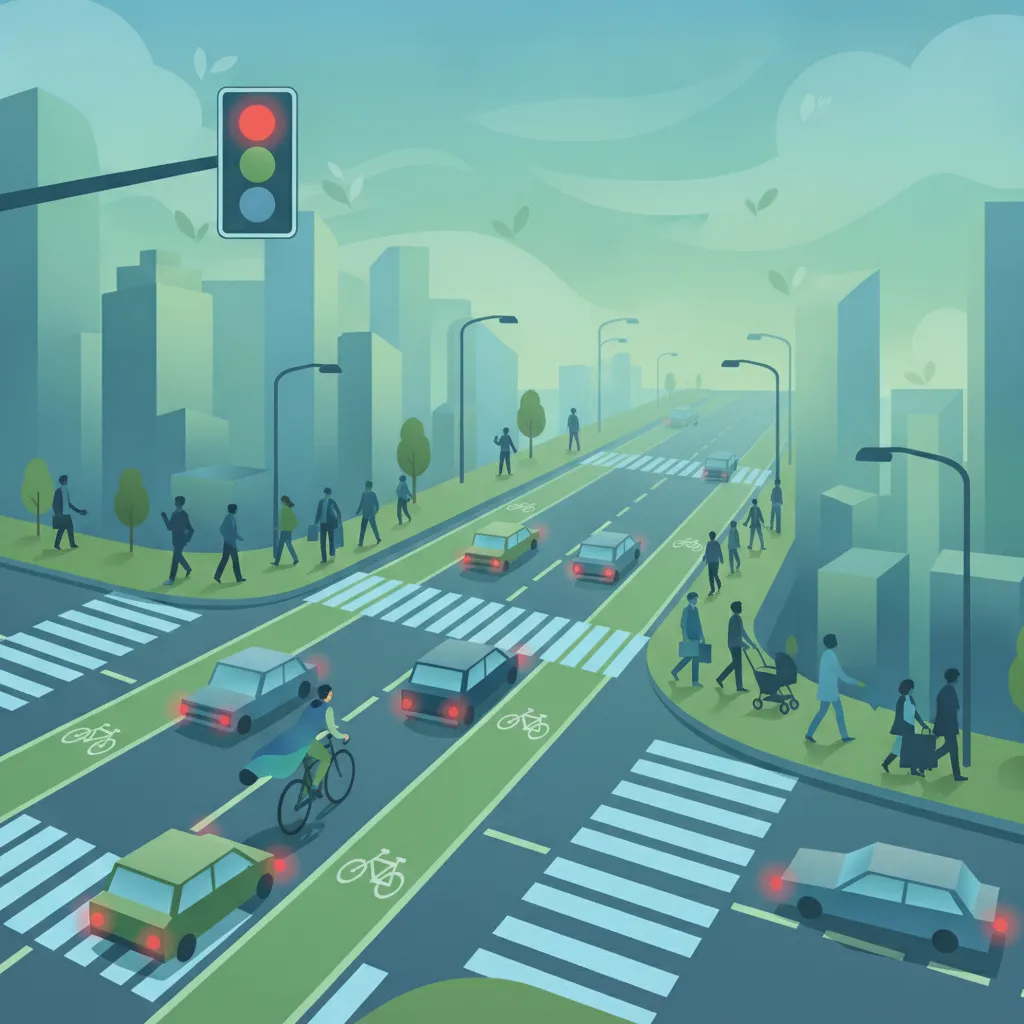
This lesson teaches drivers how to safely coexist with cyclists and pedestrians, who are prevalent in urban areas. It covers the rules for dedicated bike lanes (Radweg), the importance of yielding to pedestrians in designated zones, and the need for extra caution when turning or opening car doors. Maintaining safe overtaking distances and anticipating the movements of these vulnerable road users are key themes for preventing accidents.
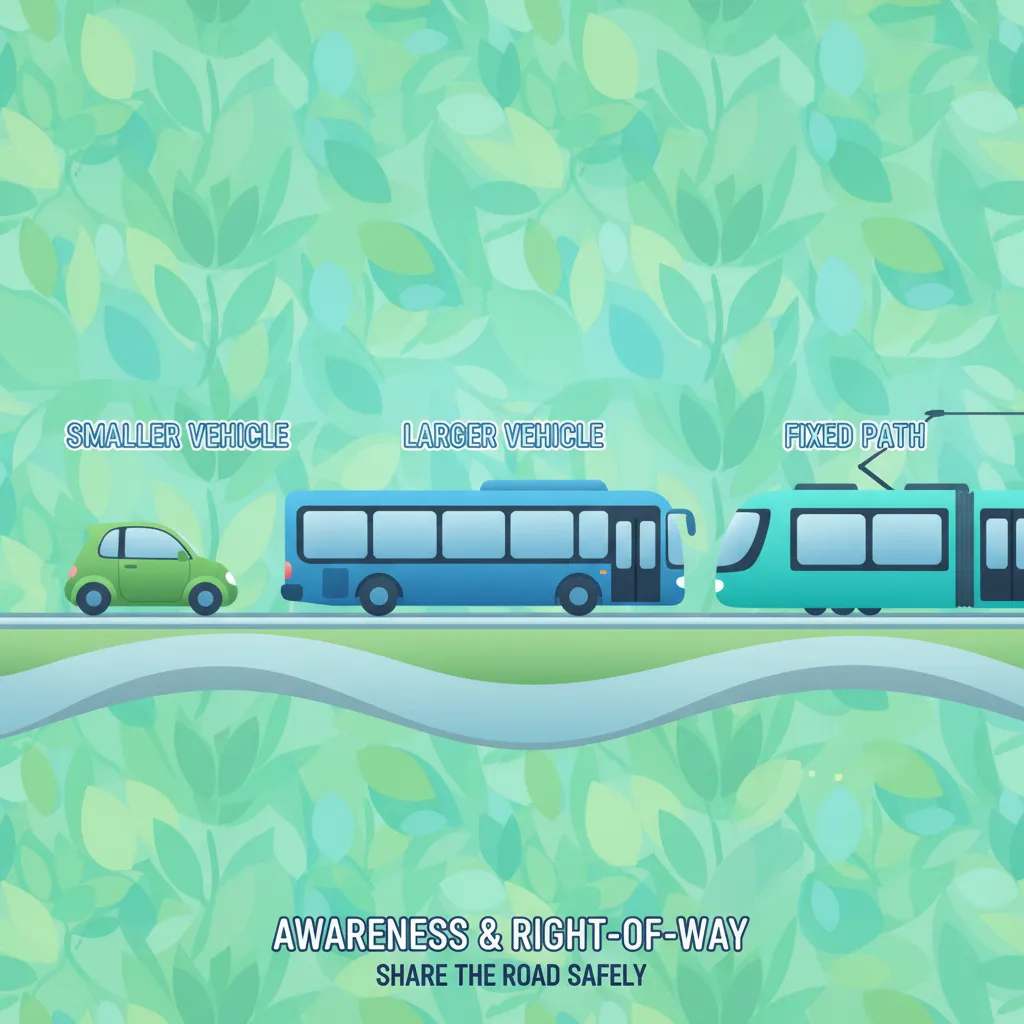
This lesson provides specific guidance for sharing the road with different types of vehicles in Austria. It covers the dangers of large vehicle blind spots, the rules for navigating near buses and dedicated tram tracks, and common conflict points at intersections. Understanding the behavior and limitations of other vehicles is key to safely navigating complex urban environments.

This lesson reinforces the critical importance of protecting vulnerable road users in dense urban settings. It teaches drivers to be hyper-aware of pedestrians and cyclists, especially near intersections and crosswalks. Key techniques include reducing speed, making eye contact to confirm intentions, and giving ample space.

This lesson explores the distinct challenges of urban driving, focusing on managing the vehicle in dense, slow-moving, or stop-and-go traffic. It covers strategies for effective lane management, anticipating traffic signal changes, and navigating common city road features like one-way streets and traffic calming measures. Understanding these dynamics helps reduce stress and improve safety in congested environments.

This lesson teaches a safe and systematic process for approaching and crossing intersections. It covers how to correctly assess priority based on signs and general rules, adjust speed appropriately, and perform thorough visual checks. Emphasis is placed on anticipating the actions of other road users to prevent conflicts at junctions.

Cyclists and e-scooter riders are highly vulnerable and can be hard to see from a high driving position. This lesson focuses on the critical danger points, such as making right turns across cycle lanes and checking blind spots before pulling away from a stop. It teaches the importance of giving ample space when overtaking and anticipating their movements in busy city traffic.

Driving a bus in a busy city like Vienna or Salzburg requires constant forward planning and anticipation. This lesson teaches techniques for maintaining adequate space around the vehicle, positioning correctly for upcoming junctions, and reading the flow of traffic. Adopting a defensive mindset is key to navigating complex urban environments without incident.
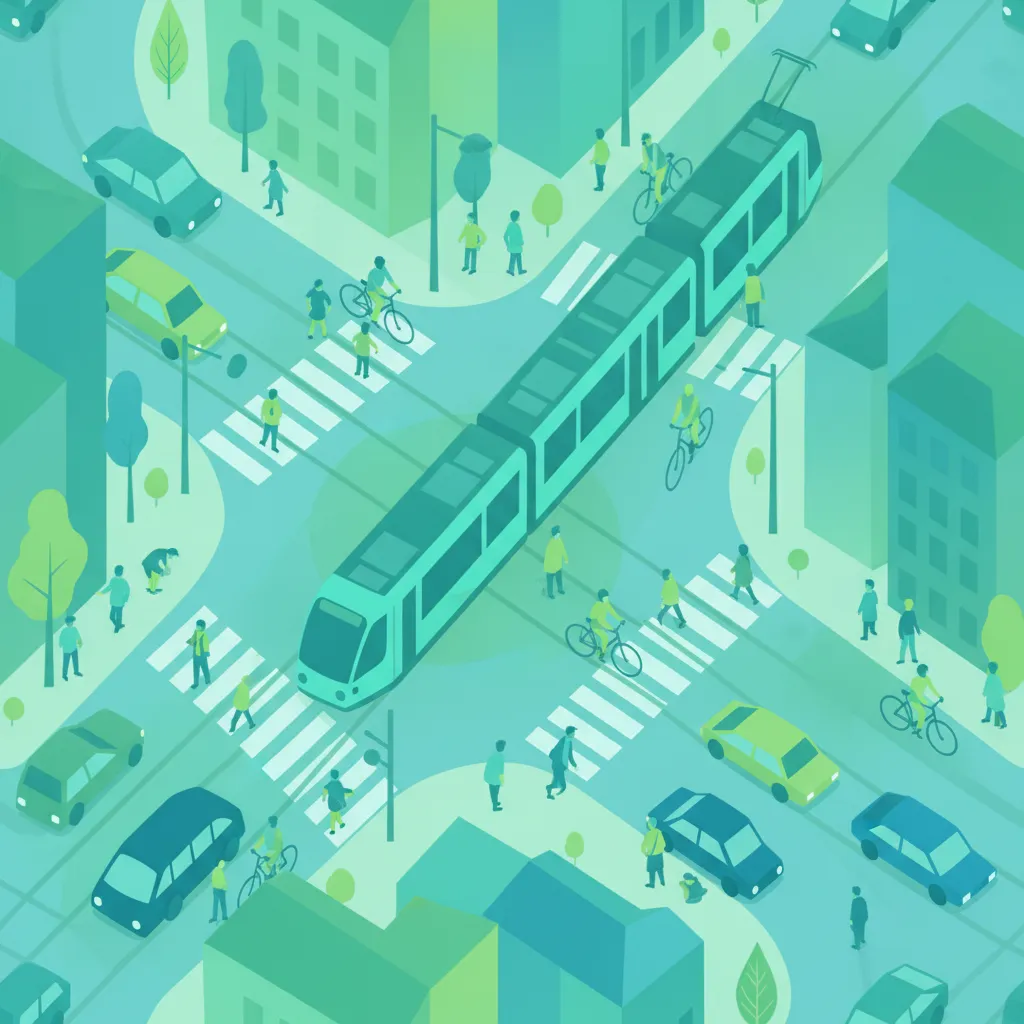
This lesson teaches a safe, methodical process for navigating intersections. It stresses the importance of proper lane positioning on approach, comprehensive visual scans for cross-traffic, pedestrians, and cyclists, and clear communication of intent. Special attention is given to the increased risks associated with left turns across oncoming traffic.
Understand essential Category D driving theory regarding bus swept path and clearance requirements for navigating narrow streets and complex junctions in Austria. Learn techniques for precise vehicle positioning and avoiding obstacles.
Driving a bus in a busy city like Vienna or Salzburg requires constant forward planning and anticipation. This lesson teaches techniques for maintaining adequate space around the vehicle, positioning correctly for upcoming junctions, and reading the flow of traffic. Adopting a defensive mindset is key to navigating complex urban environments without incident.

Operating a large passenger vehicle requires a precise understanding of its physical footprint. This lesson explains how to assess vehicle height for bridges and tunnels, and how length affects manoeuvrability. Key concepts like rear overhang (tail swing) and swept path are detailed to help you anticipate the vehicle's movement during turns and avoid collisions in confined areas.

Rural Austrian roads present unique challenges, including lack of markings, tight spaces, and slow-moving agricultural vehicles. This lesson teaches how to read the road ahead, anticipate hazards around blind bends, and use passing places effectively when meeting other large vehicles. It emphasizes adjusting speed to suit the limited visibility and variable road conditions.

When a long vehicle turns, the rear wheels follow a shorter path than the front wheels, creating a 'swept path'. This lesson explains how to position the vehicle correctly before a turn to allow for this off-tracking and avoid mounting the kerb or hitting obstacles. It also covers the outward movement of the vehicle's rear (tail swing), which poses a danger to anything alongside the bus.
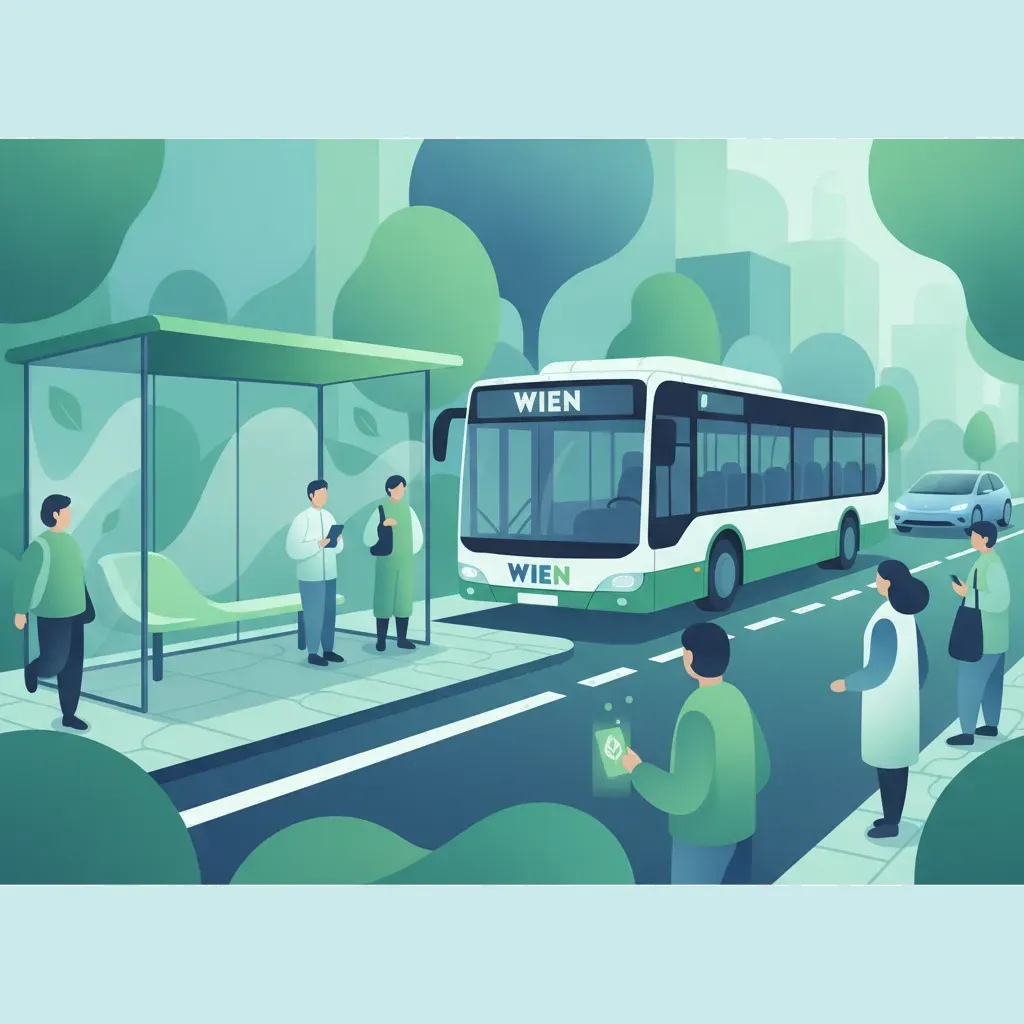
A safe stop begins with a planned approach. This lesson covers how to signal your intentions early, manage your speed, and scan for hazards like pedestrians and cyclists near the stop. It emphasizes the importance of aligning the bus parallel and close to the kerb to minimize the step for passengers, creating a safe platform for boarding and alighting.

Cities like Vienna and Graz have extensive tram networks that require special attention from bus drivers. This lesson covers the rules of priority concerning trams, the dangers of crossing tracks, and the specific hazards at shared stops where passengers cross traffic lanes. It emphasizes the need for extreme caution and clear communication with other road users in these complex environments.

Pedestrians have absolute priority on marked crossings in Austria, and a bus driver must always be ready to give way. This lesson covers the rules for approaching and stopping for pedestrians, and highlights the risk of pedestrians being hidden by the vehicle's structure. It also stresses the danger of passengers crossing the road after alighting from your bus.
Not all bus stops are created equal. This lesson trains you to assess a stop's environment and identify potential hazards, such as poor sightlines, proximity to a busy junction, or frequent presence of vulnerable road users. It encourages a proactive approach, where the driver heightens their observation and slows their approach when dealing with these known high-risk locations.
High-speed driving in a large vehicle requires excellent lane discipline and forward planning. This lesson covers Austrian speed limits for buses, rules for joining and leaving the motorway, safe overtaking procedures, and maintaining appropriate following distances. The critical importance of forming an emergency corridor ('Rettungsgasse') in traffic jams is also a key topic.
Cyclists and e-scooter riders are highly vulnerable and can be hard to see from a high driving position. This lesson focuses on the critical danger points, such as making right turns across cycle lanes and checking blind spots before pulling away from a stop. It teaches the importance of giving ample space when overtaking and anticipating their movements in busy city traffic.
Find clear answers to common questions learners have about Manoeuvring in Narrow Streets and Complex Junctions. Learn how the lesson is structured, which driving theory objectives it supports, and how it fits into the overall learning path of units and curriculum progression in Austria. These explanations help you understand key concepts, lesson flow, and exam focused study goals.
The most important factor is the swept path, which is the area the rear of the bus occupies as it follows the turn. You must monitor your front and rear overhangs to ensure they do not strike buildings, signs, or other vehicles.
Always utilize all available mirror systems and reversing cameras in tandem. Perform frequent, systematic scans and, if the situation is exceptionally tight, do not hesitate to proceed at a crawl or wait for a clear path to ensure safety.
Yes, many theory questions test your awareness of the vehicle's total width and length relative to infrastructure like bollards, traffic islands, and overhanging signs in urban areas.
Lower speeds allow you more time to observe, adjust your positioning, and react to unpredictable movements from cyclists or pedestrians emerging from behind parked cars or tight corners.
Refine your study plan by searching for specific Austrian driving theory practice sets. Pinpoint questions related to particular road rules, signs, or challenge levels, and begin practicing immediately to reinforce your knowledge and excel in your official exam with confidence. Get started with focused revision today.