
Logo
Austrian Driving Theory Courses

Lesson 1 of the City Traffic, Bus Lanes, Tram Interaction and Public Transport Priority unit

Austrian Driving Theory D: Strategies for Navigating Dense Urban Traffic

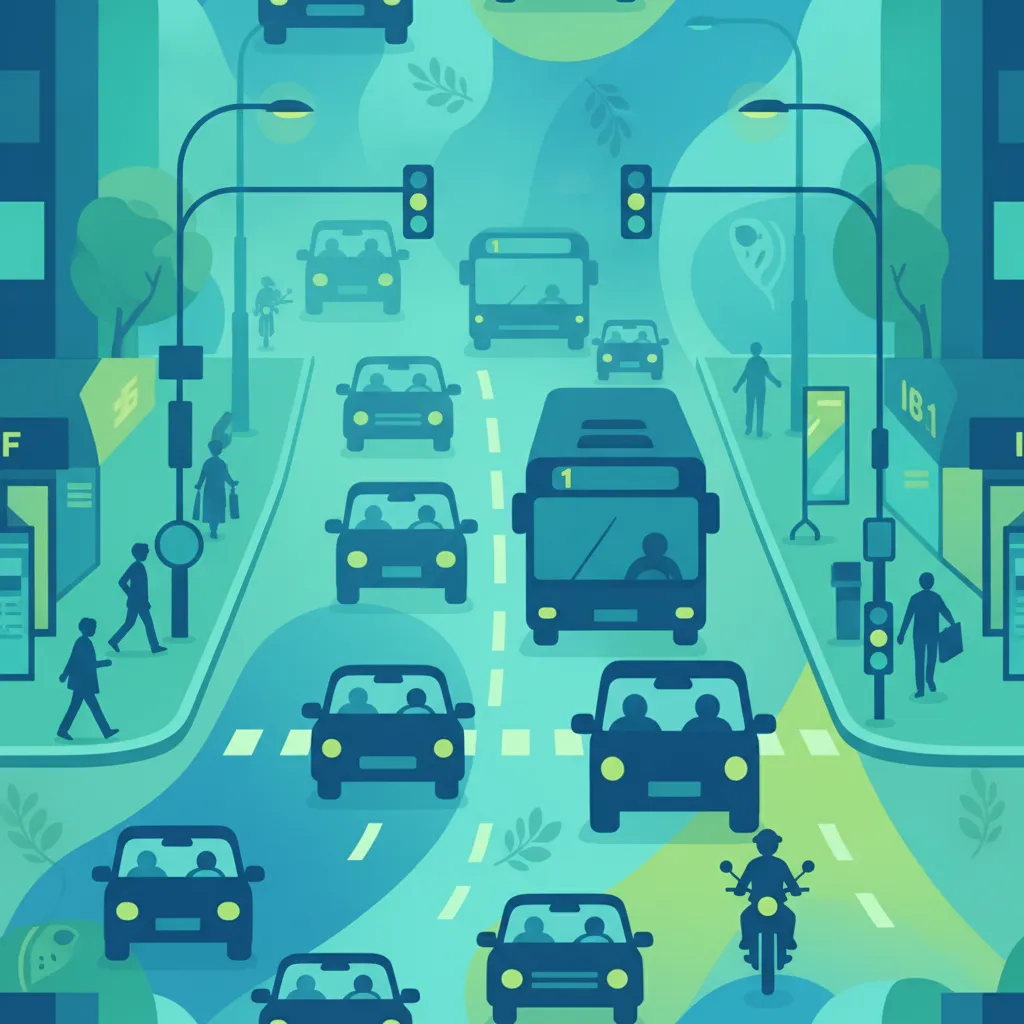
This lesson focuses on the specialized skills required to handle heavy passenger vehicles in busy Austrian urban environments like Vienna or Salzburg. It builds on your foundation of vehicle dimensions and safety systems to help you anticipate traffic flow and master complex junctions. Developing these defensive habits is vital for your Category D exam success and your professional life as a bus driver.
Category Durban drivingdefensive drivingbus transporttheory exam
Austrian Driving Theory D: Strategies for Navigating Dense Urban Traffic

Lesson content overview

Austrian Driving Theory D

Strategies for Navigating Dense Urban Traffic in Austria: Bus and Coach Driving (Category D)

Driving a bus or coach (Category D vehicle) through the bustling streets of Austrian cities like Vienna or Salzburg presents unique challenges that demand high levels of skill, concentration, and foresight. Unlike driving a private car, you are responsible for the safety and comfort of many passengers, requiring a proactive and defensive approach to every maneuver. This lesson will equip you with the essential knowledge and techniques to manage dense urban traffic safely and efficiently, ensuring compliance with Austrian traffic laws and upholding your duty of care to passengers.

Mastering Urban Driving: Essential Techniques for Category D Drivers

Navigating a large passenger vehicle in a congested urban environment requires constant vigilance and strategic planning. The high concentration of vehicles, pedestrians, cyclists, and trams, combined with frequent stops and complex junctions, creates a dynamic and often unpredictable driving scenario. Success hinges on a combination of strategic positioning, maintaining adequate safety margins, and accurately anticipating the actions of other road users. This proactive approach not only enhances safety but also improves passenger comfort and contributes to timely service.

The Challenges of Dense City Traffic for Buses

Urban areas inherently present a multitude of obstacles and variables for bus and coach drivers. Congestion is common, leading to stop-and-go traffic that can be physically and mentally demanding. Pedestrians and cyclists are often present in large numbers, sometimes acting unpredictably. Trams, with their fixed routes and specific right-of-way rules, add another layer of complexity, particularly at shared intersections. Furthermore, the sheer size and weight of a Category D vehicle mean longer stopping distances and larger turning radii, requiring more space and careful maneuvering compared to smaller vehicles.

Core Principles of Safe Urban Bus Operation

To effectively manage these challenges, professional bus and coach drivers must adopt several core principles. These include mastering defensive driving techniques, maintaining precise lane discipline and positioning, rigorously managing space around the vehicle, accurately anticipating traffic flow, and consistently adapting speed to prevailing conditions. Each of these principles is interconnected, working together to create a robust framework for safe and smooth urban transit operations.

Defensive Driving in Austrian Cities: Anticipating Hazards

Defensive driving is the cornerstone of safe bus and coach operation, especially in dense urban settings. It is a proactive driving style focused on anticipating potential hazards and planning actions to avoid them, rather than merely reacting to immediate threats. For a Category D driver, this mindset is crucial for protecting passengers, minimizing collision risk, and adhering to strict schedules safely.

Understanding Proactive Hazard Detection for Bus Drivers

Proactive hazard detection involves continuously scanning your surroundings far ahead, to the sides, and through your mirrors. This comprehensive observation allows you to identify potential risks long before they become immediate dangers. For instance, observing pedestrians gathering at a crossing ahead, or noticing brake lights several vehicles in front, enables you to adjust your speed and prepare to stop gradually, avoiding sudden maneuvers that could destabilize passengers or lead to a collision.

Situational Awareness and Risk Avoidance

Maintaining excellent situational awareness means being constantly aware of everything happening around your bus. This includes the positions of other vehicles, the movements of vulnerable road users, traffic signal changes, and road conditions. Risk avoidance involves making early decisions that minimize exposure to these hazards. For example, if you see a delivery van double-parked ahead, you might signal a lane change well in advance to avoid a last-minute swerve, ensuring a smooth and safe progression for your passengers.

Tip

Constantly move your eyes, checking your mirrors every 5-8 seconds, and scanning intersections for hidden dangers or sudden movements by other road users.

Optimal Bus Positioning and Lane Discipline in Urban Environments

Correct positioning and strict lane discipline are vital for Category D drivers in urban areas, optimizing visibility, facilitating safe maneuvers, and respecting public transport priority. Buses, being large vehicles, require precise handling to stay within designated lanes and avoid encroaching on other traffic or pedestrian areas.

Utilizing Dedicated Bus Lanes in Austria

In many Austrian cities, dedicated bus lanes (Busspuren) are provided to give public transport priority and improve traffic flow. These lanes are typically marked with specific road signs and road markings.

When available and indicated, buses are generally required to use these lanes. This helps maintain schedules and keeps buses separate from general traffic, reducing congestion. However, it's crucial to understand that using a bus lane to illegally overtake slower general traffic is strictly prohibited. The purpose of the bus lane is to facilitate bus movement, not to provide an unrestricted overtaking opportunity.

Lane Positioning at Bus Stops and Junctions

Proper lane positioning is particularly critical when approaching bus stops and negotiating junctions. At bus stops, you must position the bus precisely to allow passengers to board and alight safely, without obstructing the flow of pedestrians or other traffic. This often means aligning the bus close to the curb but allowing sufficient lateral space to avoid hitting the curb or street furniture. When approaching junctions, especially those where a bus lane might merge or end, you must position the bus to allow safe exits and entries into new traffic flows, indicating your intentions clearly and well in advance. Maintaining a central position within your lane (where no specific bus lane is present) provides the best visibility and offers maximum space on both sides of the vehicle, reducing the risk of side-swipes.

Space Management for Buses: Maintaining Safe Gaps in Urban Traffic

Maintaining adequate space around your bus, both in front (longitudinal gap) and to the sides (lateral gap), is fundamental to safe urban driving for Category D vehicles. Buses, being significantly heavier and longer than cars, require greater stopping distances and careful maneuvering, making ample space a non-negotiable safety buffer.

Longitudinal Gap: The 2-Second Rule for Heavy Vehicles

The longitudinal gap refers to the distance between the front of your bus and the rear of the vehicle directly ahead. In urban traffic, a minimum following distance of at least two seconds is universally recommended. This 'two-second rule' provides sufficient reaction time for braking and accounts for the longer stopping distances of a heavy, loaded bus. To apply this, choose a fixed point on the road (e.g., a lamppost). When the vehicle in front passes that point, begin counting "one thousand one, one thousand two." If you reach the same point before you finish counting, you are following too closely. This distance should be increased further in adverse weather conditions, on slippery roads, or when carrying a particularly heavy load of passengers.

Lateral Gap: Ensuring Side Clearance for Buses

The lateral gap is the distance maintained between the sides of your bus and adjacent vehicles, cyclists, pedestrians, or stationary obstacles. Given the width of a bus, maintaining sufficient lateral clearance is essential to prevent side-swipes, mirror damage, and collisions with vulnerable road users. This is especially critical when passing parked cars, navigating narrow streets, changing lanes, or turning corners. Always assume that cyclists and pedestrians might make unpredictable movements, and give them ample space – at least 1.5 metres if safe and possible when passing. Be acutely aware of your vehicle's blind spots (the areas around the bus not visible in your mirrors) and check them thoroughly before any lateral movement.

Anticipating Traffic Flow: Reading the Urban Environment

Anticipation of traffic flow is a critical skill for Category D drivers, enabling smoother driving, improved passenger comfort, and enhanced safety. It involves predicting the behavior of traffic at upcoming intersections, traffic lights, tram stops, and pedestrian crossings, allowing you to adjust your speed and position proactively.

Interacting with Trams: Austrian Priority Rules

In Austrian cities, particularly Vienna and Salzburg, trams are an integral part of the public transport network. Understanding tram priority rules is paramount for bus drivers. Generally, trams have priority over buses at intersections and crossings unless specific traffic signals or road signs indicate otherwise. This is due to their fixed tracks and limited maneuverability. As a bus driver, you must always be prepared to yield to trams, reducing speed and stopping if necessary to allow them to pass safely. Never assume you have equal priority; always give way to trams unless explicitly directed by a traffic light.

Pedestrian and Cyclist Awareness at Crossings

Urban environments are rich with pedestrians and cyclists, who are particularly vulnerable road users. As a bus driver, you must maintain heightened awareness of their presence, especially near designated crossings, bus stops, and areas with heavy foot traffic. Always be prepared for pedestrians to step onto the road unexpectedly, even outside designated crossings. Cyclists may also behave unpredictably, weaving in and out of traffic or suddenly changing direction. Reduce your speed when approaching areas with a high concentration of pedestrians or cyclists, and be ready to stop immediately. At pedestrian crossings, always yield to pedestrians who are waiting or already crossing, ensuring the path is clear before proceeding.

Speed Management for Category D Vehicles in Urban Zones

Effective speed management is about more than just adhering to legal limits; it's about adjusting your speed dynamically to match traffic density, road type, weather conditions, vehicle load, and the overall safety and comfort of your passengers. For Category D drivers, this nuance is vital for safe and efficient urban operations.

Adhering to Austrian Urban Speed Limits

The standard urban speed limit for all vehicles in Austria, including buses and coaches, is 50 km/h, unless otherwise indicated by road signs. However, many city areas, particularly residential zones or those with high pedestrian activity, may have lower limits, such as 30 km/h (Tempo 30 Zonen). It is your legal obligation to know and adhere to these limits. Exceeding speed limits, even slightly, increases stopping distances dramatically and reduces your ability to react to sudden hazards, putting passengers and other road users at risk.

Adjusting Speed for Conditions and Passenger Comfort

Beyond legal limits, professional drivers must constantly assess and adjust their operational speed. In heavily congested areas, maintaining 30-40 km/h might be safer and more practical, even if the limit is 50 km/h. During adverse weather (rain, snow, fog), reduce your speed significantly to account for reduced visibility and slippery road surfaces. A fully loaded bus also requires a longer stopping distance, necessitating a further reduction in speed. Moreover, smooth acceleration and braking, achieved through appropriate speed management, are essential for passenger comfort and preventing falls, especially for standing passengers. Abrupt changes in speed not only increase accident risk but also diminish the quality of the ride experience.

Austrian Traffic Regulations for Urban Bus Navigation

Compliance with Austrian traffic laws (Straßenverkehrsordnung – StVO) is non-negotiable for Category D drivers. Specific regulations govern bus lane usage, tram priority, following distances, and general conduct in dense urban environments. Understanding these rules is essential for safe and legal operation.

Mandatory Bus Lane Usage Rules (StVO)

Where designated bus lanes (Busspuren) are marked by signs and road markings, Category D vehicles are generally required to use them during their specified operational hours. These lanes are designed to give public transport priority and improve traffic flow for buses and, often, trams. Using a bus lane when prohibited, or using it to overtake general traffic in an adjacent lane (unless explicitly allowed by signage), constitutes a violation.

Tram Right-of-Way Laws in Austrian Cities

As discussed, trams typically have right-of-way over other traffic, including buses, at intersections and crossings in Austria, unless governed by specific traffic signals. This priority is a crucial safety measure due to trams' inability to swerve or stop quickly. Failing to yield to a tram can lead to severe collisions. Always ensure the tram has completed its movement or is safely clear before proceeding.

While the '2-second rule' is a safety recommendation, Austrian law generally requires drivers to maintain a sufficient distance to be able to stop safely in an emergency. For heavier vehicles like buses, this implicitly means a longer distance than for cars. Furthermore, buses must not block intersections, pedestrian crossings, or tram stops while waiting in traffic or picking up passengers. This prevents gridlock and ensures accessibility for other road users.

Avoiding Common Urban Traffic Violations for Bus Drivers

Several common mistakes in urban driving can lead to violations for bus drivers:

  • Using bus lanes illegally: Entering a bus lane outside its operational hours or for purposes other than designated transit.
  • Failing to yield to trams: Proceeding when a tram has priority.
  • Blocking intersections: Stopping the bus within an intersection, even momentarily, during heavy traffic.
  • Stopping on pedestrian crossings: Obstructing pedestrians at designated crossings.
  • Closing doors while moving: Operating passenger doors before the bus has come to a complete and safe stop.
  • Tailgating: Following too closely behind any vehicle, particularly vulnerable road users like cyclists.

Adapting Driving Strategies: Conditional Variations

The urban environment is rarely static. Professional bus and coach drivers must be adept at adjusting their driving strategies based on prevailing conditions, vehicle state, and the presence of vulnerable road users.

Driving Buses in Adverse Weather Conditions

Adverse weather significantly impacts driving safety. In rain, snow, or ice, braking distances increase dramatically, and visibility decreases. During such conditions:

  • Increase following distance: Extend the 2-second rule to 4 seconds or more.
  • Reduce speed: Drive well below the speed limit to allow more time for reaction and stopping.
  • Use appropriate lighting: Ensure dipped headlights (Abblendlicht) are on, and consider fog lights (Nebelscheinwerfer) in dense fog if visibility is severely reduced.
  • Gentle maneuvers: Avoid sudden acceleration, braking, or steering inputs to prevent skidding and maintain passenger comfort.

Managing High-Volume Passenger Loads and Vehicle Weight

A fully loaded bus or coach is a much heavier vehicle than an empty one. This increased mass directly affects acceleration, braking, and stability.

  • Longer stopping distances: Be aware that your braking distance will be considerably longer; adjust your following distance and speed accordingly.
  • Slower acceleration: Account for slower acceleration when pulling away from stops or entering traffic flow.
  • Increased momentum: Take corners more slowly to maintain stability and passenger comfort.
  • Center of gravity: Be mindful of how passenger movement or a full load might subtly shift the vehicle's center of gravity.

Austrian cities often feature narrow streets, historic centers, and complex multi-lane intersections that can be challenging for large vehicles.

  • Stay centered: In narrow streets, strive to keep the bus centrally positioned in the lane to avoid encroaching on sidewalks, parked cars, or opposing traffic.
  • Observe clearances: Be acutely aware of the bus's dimensions, especially its height and width, to safely navigate underpasses, through narrow gaps, and around tight corners.
  • Plan turns: For complex junctions, plan your turning trajectory in advance, ensuring you have enough space to complete the turn without conflicting with other lanes or obstacles. Utilize the full turning circle of the bus if necessary, but be aware of your rear overhang.

Warning

Always be extra cautious when encountering vulnerable road users near tram tracks, as cyclists can get wheels caught, and pedestrians may cross unexpectedly.

Key Concepts for Austrian Bus & Coach Drivers

Further Learning and Practice

Learn more with these articles

Check out these practice sets

Lesson recap

Quick summary before you move on

Fast revision

This lesson covers essential strategies for Category D bus drivers navigating dense Austrian urban traffic, emphasizing defensive driving techniques and proactive hazard detection. Key topics include proper positioning at junctions and bus stops, maintaining adequate longitudinal and lateral gaps, and understanding tram priority rules under Austrian traffic law. The content addresses speed management tailored to vehicle weight and load, adverse weather adaptations, and legal requirements specific to bus lane usage (Busspuren) under the Straßenverkehrsordnung (StVO). Successful mastery of these skills prepares learners for both real-world professional driving and complex situational questions in the Austrian Category D theory examination.


Core takeaways

Main ideas from this lesson

A short set of high-value points that capture the most important learning from this lesson.

Trams have priority over buses at Austrian intersections unless specific traffic signals indicate otherwise, requiring constant yielding readiness.

Maintain a minimum 2-second longitudinal gap when following other vehicles, extending it further for adverse weather and heavy passenger loads.

Use dedicated bus lanes (Busspuren) when available and indicated, but never for illegal overtaking of general traffic.

At pedestrian crossings and bus stops, always yield to vulnerable road users and position the bus to avoid blocking pedestrian flow.

Adjust your operational speed below legal limits based on traffic density, weather conditions, and passenger load for safety and comfort.

Remember this

Details worth keeping in mind

Point 1

The standard urban speed limit is 50 km/h, with Tempo 30 zones requiring further reduction in residential and pedestrian-heavy areas.

Point 2

Lateral gap should be at least 1.5 metres when passing cyclists and pedestrians who may behave unpredictably.

Point 3

Buses must not block intersections, pedestrian crossings, or tram stops while boarding or alighting passengers.

Point 4

Always check mirrors every 5-8 seconds and scan intersections for hidden dangers from pedestrians and cyclists emerging from blind spots.

Point 5

Fully loaded buses require significantly longer stopping distances and slower cornering speeds than empty vehicles.

Watch for this

Frequent learner mistakes

Assuming equal priority with trams instead of automatically yielding to their right-of-way at shared intersections.

Following other vehicles too closely by not accounting for the longer braking distance required by heavy Category D vehicles.

Using bus lanes to illegally overtake general traffic rather than treating them as transit priority infrastructure only.

Blocking intersections or pedestrian crossings momentarily during heavy traffic, which creates gridlock and safety hazards.

Closing doors before the bus has come to a complete stop, endangering passengers boarding or alighting.

Search topics related to Strategies for Navigating Dense Urban Traffic

Explore search topics learners often look for when studying Strategies for Navigating Dense Urban Traffic. These topics reflect common questions about road rules, driving situations, safety guidance, and lesson level theory preparation for learners in Austria.

driving a bus in Vienna city traffic rulesCategory D theory test urban driving tipshow to position a bus at junctions Austriadefensive driving strategies for bus driversAustrian Category D exam urban traffic questionsnavigating narrow city streets with a busbus driving tips for Austrian theory test

Related driving theory lessons for Strategies for Navigating Dense Urban Traffic

Browse additional driving theory lessons that cover connected traffic rules, road signs, and common driving situations related to this topic. Improve your understanding of how different rules interact across everyday traffic scenarios.

Advanced Austrian Urban Traffic Rules for Bus Drivers

Delve deeper into the specific Austrian traffic regulations and advanced techniques required for navigating dense urban environments with a Category D bus. Understand complex interactions with trams, cyclists, and pedestrians in city centers.

Category Durban drivingtraffic rulesAustriaadvanced
Safe Interaction with Trams and Shared Stops lesson image

Safe Interaction with Trams and Shared Stops

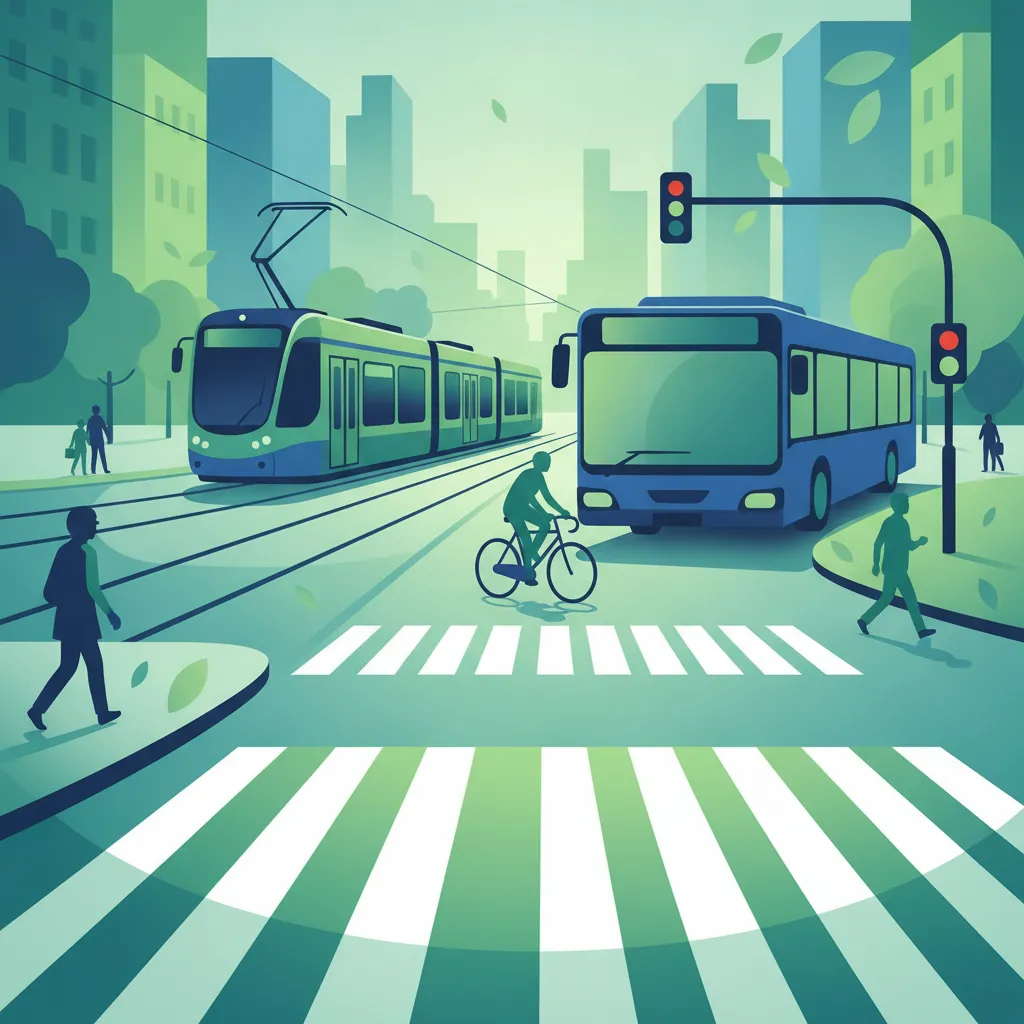
Cities like Vienna and Graz have extensive tram networks that require special attention from bus drivers. This lesson covers the rules of priority concerning trams, the dangers of crossing tracks, and the specific hazards at shared stops where passengers cross traffic lanes. It emphasizes the need for extreme caution and clear communication with other road users in these complex environments.
Austrian Driving Theory DCity Traffic, Bus Lanes, Tram Interaction and Public Transport Priority
View lesson
Special Situations: Trams, Buses, and Cyclists at Intersections lesson image

Special Situations: Trams, Buses, and Cyclists at Intersections

This lesson addresses the unique challenges and priority rules that apply when interacting with public transport and cyclists at intersections. It clarifies the specific right-of-way regulations for trams, which often have priority over other traffic, and the procedures for navigating around bus stops. The content also covers how to safely manage crossings with dedicated bicycle lanes, ensuring the protection of all road users.

Austrian Driving Theory BPriority, Pedestrian Crossings, Roundabouts and Intersections
View lesson
Manoeuvring in Narrow Streets and Complex Junctions lesson image

Manoeuvring in Narrow Streets and Complex Junctions

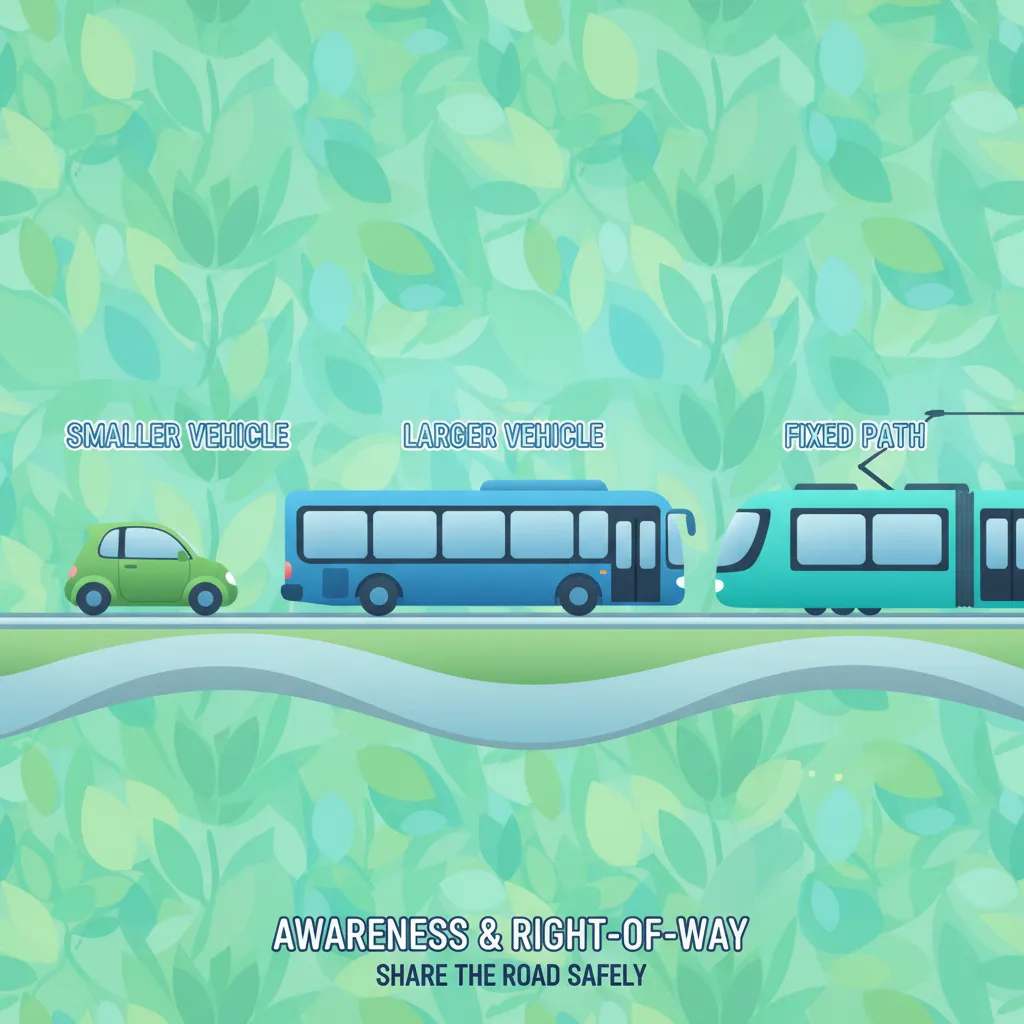
Many Austrian towns and city centres feature narrow roads not designed for large vehicles. This lesson provides strategies for assessing tight spaces, positioning the vehicle to maximize clearance, and navigating complex, non-standard junctions. It emphasizes the importance of slow speeds, constant observation, and understanding the vehicle's swept path to avoid contact with buildings, street furniture, and other vehicles.
Austrian Driving Theory DCity Traffic, Bus Lanes, Tram Interaction and Public Transport Priority
View lesson
Interaction with Cars, Buses, and Trams lesson image

Interaction with Cars, Buses, and Trams

This lesson provides specific guidance for sharing the road with different types of vehicles in Austria. It covers the dangers of large vehicle blind spots, the rules for navigating near buses and dedicated tram tracks, and common conflict points at intersections. Understanding the behavior and limitations of other vehicles is key to safely navigating complex urban environments.

Austrian Motorcycle Theory (A)Seeing, Being Seen and Communicating as a Rider
View lesson
Driving on Rural and Narrow Austrian Roads lesson image

Driving on Rural and Narrow Austrian Roads

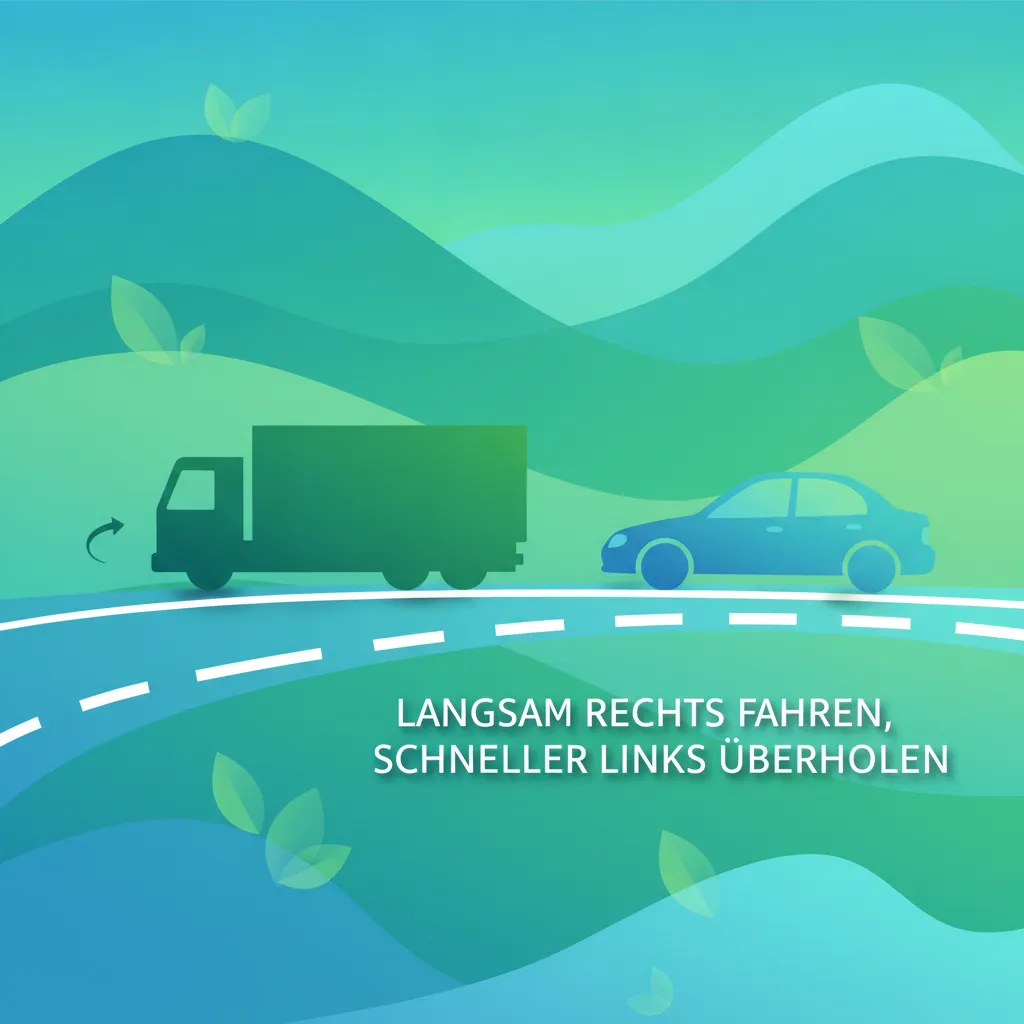
Rural Austrian roads present unique challenges, including lack of markings, tight spaces, and slow-moving agricultural vehicles. This lesson teaches how to read the road ahead, anticipate hazards around blind bends, and use passing places effectively when meeting other large vehicles. It emphasizes adjusting speed to suit the limited visibility and variable road conditions.
Austrian Driving Theory DRural Services, Alpine Routes, Motorways, Tunnels and Long-Distance Coaches
View lesson
Motorway and Schnellstraßen Driving Rules lesson image

Motorway and Schnellstraßen Driving Rules

High-speed driving in a large vehicle requires excellent lane discipline and forward planning. This lesson covers Austrian speed limits for buses, rules for joining and leaving the motorway, safe overtaking procedures, and maintaining appropriate following distances. The critical importance of forming an emergency corridor ('Rettungsgasse') in traffic jams is also a key topic.

Austrian Driving Theory DRural Services, Alpine Routes, Motorways, Tunnels and Long-Distance Coaches
View lesson
Tram Traffic Interaction and Priority Rules lesson image

Tram Traffic Interaction and Priority Rules

This lesson focuses on the specific regulations and safety protocols for driving near trams (Straßenbahn) in Austrian cities. It clarifies the priority rules, which almost always favor the tram, and explains how to safely share lanes or cross tram tracks. The content provides critical guidance on how to behave at tram stops, ensuring the safety of boarding and alighting passengers is always the primary concern.

Austrian Driving Theory BCity Traffic, Trams, Cyclists, Buses and Vulnerable Road Users
View lesson
Specific Rules and Hazards for School Transport lesson image

Specific Rules and Hazards for School Transport

Transporting children carries the highest level of responsibility. This lesson covers the specific Austrian rules for school buses, including the use of warning signs and lights. It focuses on developing a mindset of extreme caution, anticipating that children may run into the road unexpectedly, and managing the chaotic traffic environment often found around schools during drop-off and pick-up times.
Austrian Driving Theory DSchools, Pedestrians, Cyclists, Tourists and High-Risk Stop Areas
View lesson
Correct Use of Bus Lanes in Austria lesson image

Correct Use of Bus Lanes in Austria

Bus lanes are a key tool for public transport efficiency, but they have specific rules. This lesson explains how to identify Austrian bus lanes through road markings and signs, including their hours of operation. It clarifies the regulations for entering or leaving a lane to make turns and identifies other authorized users, such as taxis or cyclists, where permitted.

Austrian Driving Theory DCity Traffic, Bus Lanes, Tram Interaction and Public Transport Priority
View lesson
Communicating Intent to Cars, Buses, and Trams lesson image

Communicating Intent to Cars, Buses, and Trams

This lesson addresses the specific challenges of interacting with larger vehicles like buses and trams in an urban environment. It explains how to signal intentions clearly and predictably to avoid conflicts in shared spaces. Key topics include safely crossing tram tracks and maintaining awareness around public transport stops.
Austrian AM Driving TheoryVisibility, Road Position and Communication in Mixed Traffic
View lesson

Bus Driver Interaction with Pedestrians, Cyclists, and Trams in Austria

Focus on the critical aspects of safely interacting with vulnerable road users like pedestrians, cyclists, and trams within busy Austrian urban traffic. Learn to anticipate their movements and ensure passenger and public safety.

Category Durban drivingvulnerable road userspedestrianscycliststramsAustria
Safe Interaction with Trams and Shared Stops lesson image

Safe Interaction with Trams and Shared Stops

Cities like Vienna and Graz have extensive tram networks that require special attention from bus drivers. This lesson covers the rules of priority concerning trams, the dangers of crossing tracks, and the specific hazards at shared stops where passengers cross traffic lanes. It emphasizes the need for extreme caution and clear communication with other road users in these complex environments.

Austrian Driving Theory DCity Traffic, Bus Lanes, Tram Interaction and Public Transport Priority
View lesson
Interaction with Cars, Buses, and Trams lesson image

Interaction with Cars, Buses, and Trams

This lesson provides specific guidance for sharing the road with different types of vehicles in Austria. It covers the dangers of large vehicle blind spots, the rules for navigating near buses and dedicated tram tracks, and common conflict points at intersections. Understanding the behavior and limitations of other vehicles is key to safely navigating complex urban environments.

Austrian Motorcycle Theory (A)Seeing, Being Seen and Communicating as a Rider
View lesson
Communicating Intent to Cars, Buses, and Trams lesson image

Communicating Intent to Cars, Buses, and Trams

This lesson addresses the specific challenges of interacting with larger vehicles like buses and trams in an urban environment. It explains how to signal intentions clearly and predictably to avoid conflicts in shared spaces. Key topics include safely crossing tram tracks and maintaining awareness around public transport stops.

Austrian AM Driving TheoryVisibility, Road Position and Communication in Mixed Traffic
View lesson
Cyclist and Pedestrian Integration in City Streets lesson image

Cyclist and Pedestrian Integration in City Streets

This lesson teaches drivers how to safely coexist with cyclists and pedestrians, who are prevalent in urban areas. It covers the rules for dedicated bike lanes (Radweg), the importance of yielding to pedestrians in designated zones, and the need for extra caution when turning or opening car doors. Maintaining safe overtaking distances and anticipating the movements of these vulnerable road users are key themes for preventing accidents.
Austrian Driving Theory BCity Traffic, Trams, Cyclists, Buses and Vulnerable Road Users
View lesson
Managing Interactions with Cyclists and E-Scooter Riders lesson image

Managing Interactions with Cyclists and E-Scooter Riders

Cyclists and e-scooter riders are highly vulnerable and can be hard to see from a high driving position. This lesson focuses on the critical danger points, such as making right turns across cycle lanes and checking blind spots before pulling away from a stop. It teaches the importance of giving ample space when overtaking and anticipating their movements in busy city traffic.

Austrian Driving Theory DSchools, Pedestrians, Cyclists, Tourists and High-Risk Stop Areas
View lesson
Protecting Pedestrians at Crossings and Stops lesson image

Protecting Pedestrians at Crossings and Stops

Pedestrians have absolute priority on marked crossings in Austria, and a bus driver must always be ready to give way. This lesson covers the rules for approaching and stopping for pedestrians, and highlights the risk of pedestrians being hidden by the vehicle's structure. It also stresses the danger of passengers crossing the road after alighting from your bus.

Austrian Driving Theory DSchools, Pedestrians, Cyclists, Tourists and High-Risk Stop Areas
View lesson
Managing Conflicts with Vulnerable Road Users lesson image

Managing Conflicts with Vulnerable Road Users

This lesson provides advanced strategies for proactively managing interactions with vulnerable road users to prevent conflicts before they arise. It teaches drivers to predict the likely behavior of pedestrians, cyclists, and e-scooter riders, especially at intersections and in congested areas. Key techniques include maintaining larger safety distances, covering the brake, and making eye contact to ensure mutual awareness and avoid accidents.

Austrian Driving Theory BCity Traffic, Trams, Cyclists, Buses and Vulnerable Road Users
View lesson
Special Situations: Trams, Buses, and Cyclists at Intersections lesson image

Special Situations: Trams, Buses, and Cyclists at Intersections

This lesson addresses the unique challenges and priority rules that apply when interacting with public transport and cyclists at intersections. It clarifies the specific right-of-way regulations for trams, which often have priority over other traffic, and the procedures for navigating around bus stops. The content also covers how to safely manage crossings with dedicated bicycle lanes, ensuring the protection of all road users.

Austrian Driving Theory BPriority, Pedestrian Crossings, Roundabouts and Intersections
View lesson
Protecting Pedestrians and Cyclists in City Centers lesson image

Protecting Pedestrians and Cyclists in City Centers

This lesson reinforces the critical importance of protecting vulnerable road users in dense urban settings. It teaches drivers to be hyper-aware of pedestrians and cyclists, especially near intersections and crosswalks. Key techniques include reducing speed, making eye contact to confirm intentions, and giving ample space.

Austrian HGV Theory CCity Deliveries, Construction Traffic and Vulnerable Road Users
View lesson
Riding Near Tram Tracks and Public Transport lesson image

Riding Near Tram Tracks and Public Transport

This lesson focuses on the unique challenges presented by tram systems in Austrian cities. It teaches riders how to cross tracks at a safe angle to avoid tyres getting caught, especially in wet conditions, and explains the absolute priority trams have in most situations. Awareness around tram stops and bus lanes is also covered to ensure safe coexistence with public transport.

Austrian Motorcycle Theory (A)Intersections, Roundabouts, Tram Tracks, Roadworks and Urban Traffic
View lesson

Frequently asked questions about Strategies for Navigating Dense Urban Traffic

Find clear answers to common questions learners have about Strategies for Navigating Dense Urban Traffic. Learn how the lesson is structured, which driving theory objectives it supports, and how it fits into the overall learning path of units and curriculum progression in Austria. These explanations help you understand key concepts, lesson flow, and exam focused study goals.

Why is lane positioning so critical for buses in urban areas?

Because of a bus's length and width, improper positioning can lead to tail swing hazards or cause the vehicle to clip kerbs and street furniture. Correct positioning ensures you maintain enough space for your swept path while preventing smaller vehicles from dangerously attempting to pass on the inside.

How should I handle cyclists when navigating dense city traffic?

Always assume cyclists are in your blind spot. Before turning or moving off, perform a comprehensive check of all mirrors and cameras. In Austrian urban traffic, maintain a safe lateral distance and be prepared for cyclists to filter up alongside your bus at traffic lights.

Does the Austrian theory test focus heavily on urban traffic situations?

Yes, many exam scenarios involve city intersections, interaction with other public transport, and navigating busy streets. Understanding how to apply the 'Defensive Driving' mindset is key to picking the correct answer in these multiple-choice questions.

What is the biggest mistake bus drivers make in city traffic?

The most common error is failing to plan far enough ahead. Drivers often focus only on the car directly in front, failing to notice downstream traffic flow or upcoming lane restrictions that might require them to merge well in advance.

Start Your Targeted Austrian Driving Theory Practice Search Now

Refine your study plan by searching for specific Austrian driving theory practice sets. Pinpoint questions related to particular road rules, signs, or challenge levels, and begin practicing immediately to reinforce your knowledge and excel in your official exam with confidence. Get started with focused revision today.

Search Practice Questions

Continue your Austrian driving theory learning journey

Austrian road signsAustrian article topicsSearch Austrian road signsAustrian HGV Theory C courseAustrian driving theory homeAustrian road sign categoriesAustrian driving theory topicsSearch Austrian theory articlesAustrian driving theory coursesAustrian Driving Theory B courseAustrian Driving Theory D courseAustrian driving theory articlesAustrian driving theory practiceAustrian practice set categoriesAustrian AM Driving Theory courseAustrian driving licence proceduresAustrian Motorcycle Theory (A) courseSearch Austrian driving theory practiceAustrian driving theory terminology A–ZAustrian driving theory terms and glossarySigns, Signals, Priority and Austrian Road Basics unit in Austrian AM Driving TheoryMass, Dimensions, Axle Loads, Payload and Operating Limits unit in Austrian HGV Theory CCategory AM in Austria and the First Responsibility of a Rider unit in Austrian AM Driving TheoryAustrian Traffic Culture, Core Behaviour Rules and Road Sharing unit in Austrian Driving Theory BMotorcycle Controls, Safety Checks and Protective Equipment unit in Austrian Motorcycle Theory (A)Category B in Austria, L17, Learner Practice and Driver Responsibility unit in Austrian Driving Theory BAustrian D Categories, Passenger Duty of Care and Professional Identity unit in Austrian Driving Theory DPassenger Vehicle Checks, Dimensions, Doors, Mirrors and Safety Systems unit in Austrian Driving Theory DAustrian A1, A2 and A Categories, Rider Identity and Responsibility unit in Austrian Motorcycle Theory (A)Austrian C Categories, Heavy-Vehicle Responsibility and Professional Mindset unit in Austrian HGV Theory CCorrect Use of Bus Lanes in Austria lesson in City Traffic, Bus Lanes, Tram Interaction and Public Transport PrioritySafe Interaction with Trams and Shared Stops lesson in City Traffic, Bus Lanes, Tram Interaction and Public Transport PriorityStrategies for Navigating Dense Urban Traffic lesson in City Traffic, Bus Lanes, Tram Interaction and Public Transport PriorityUnderstanding Public Transport Priority Signals lesson in City Traffic, Bus Lanes, Tram Interaction and Public Transport PriorityManoeuvring in Narrow Streets and Complex Junctions lesson in City Traffic, Bus Lanes, Tram Interaction and Public Transport Priority