
Reversing a large passenger vehicle is one of the most high-risk manoeuvres you will face as a professional driver. This lesson guides you through the essential safety protocols and systematic checks required to navigate reversing situations safely, helping you prepare for your Category D driving theory exam in Austria.

Lesson content overview
Reversing large passenger vehicles like buses and coaches is among the most challenging and statistically hazardous manoeuvres a driver will perform. Due to the significant dimensions of Category D vehicles, limited rear visibility, and expansive blind spots, the risks to pedestrians, cyclists, and other road users are substantially elevated. This comprehensive chapter, part of your Austrian Driving Theory Course for Bus & Coach Licence (Category D), outlines the strict safety protocols and legal requirements necessary to execute reversing manoeuvres safely and competently, mitigating risks and ensuring the duty of care for all.
For Category D drivers, reversing is not merely an inconvenience but a high-risk operation demanding extreme caution and adherence to precise procedures. Unlike forward driving, reversing significantly restricts a driver's direct field of vision, forcing reliance on mirrors, cameras, and, crucially, human assistance. The inherent risks are compounded by the vehicle's length, width, and potential overhangs, which can easily sweep into areas unseen by the driver.
An understanding of these risks is paramount for professional bus and coach drivers. Accidents during reversing often result in severe consequences, including injuries to vulnerable road users, damage to vehicles and infrastructure, and significant legal and financial repercussions. By mastering the protocols outlined in this lesson, you will safeguard your passengers, protect the public, and uphold the high standards expected of a professional driver in Austria.
Safe reversing practices for heavy vehicles are built upon a foundation of core principles. These principles are designed to counteract the inherent challenges of moving a large vehicle backward, ensuring that all potential hazards are identified and managed before and during the manoeuvre. Strict adherence to these principles is not just good practice, but a legal obligation in Austria.
Before a Category D vehicle moves backward, a thorough physical inspection of the area behind the vehicle is non-negotiable. This step involves actively checking for any obstacles, pedestrians, or cyclists that might be in the vehicle's path. Relying solely on mirrors or technological aids is insufficient, as these can have limitations and blind spots.
The purpose of this physical check is to eliminate any uncertainty about the immediate surroundings, ensuring a clear and safe trajectory. This proactive measure prevents accidents by confirming that the path is free from static objects or moving individuals who might not be visible from the driver's seat. It is the first and most critical step in a safe reversing procedure.
In situations where the driver's visibility is compromised due to vehicle size, environmental factors, or complex surroundings, the assistance of a qualified banksman, or marshal, becomes essential. A banksman acts as the driver's "eyes" on the ground, guiding the manoeuvre from a safe vantage point behind the vehicle. Their role is to provide clear, standardized signals, enabling the driver to reverse safely.
The banksman's presence significantly enhances safety, particularly in busy depots, tight terminals, or high-risk urban environments where pedestrians or other vehicles may be present. This human element of direct guidance helps overcome the inherent limitations of mirrors and cameras, offering real-time, comprehensive situational awareness to the driver.
Speed control is paramount during reversing. A vehicle must be moved backward at a slow, controlled walking pace, typically not exceeding 5 km/h. This restricted speed is crucial because it drastically reduces the vehicle's kinetic energy, minimizing the severity of any potential impact. More importantly, it provides the driver with sufficient time to react and stop the vehicle instantly should an unforeseen hazard appear.
A walking pace allows for quick, decisive action if an obstacle is detected. It ensures that the stopping distance is minimal, aligning with a driver's natural reaction time. Exceeding this speed compromises safety margins and significantly increases the risk of a collision, making it a critical aspect of legal compliance and safe operation.
Modern buses and coaches are often equipped with advanced technological aids such as reversing cameras and proximity sensor alarms. These systems provide valuable supplementary information, helping drivers to perceive objects that might otherwise be in a blind spot or difficult to see. However, it is crucial to understand that these technologies are designed as aids, not as substitutes for physical checks and human assistance.
Cameras can be affected by dirt, poor lighting, or blind spots within their own fields of view. Alarms can be desensitized by false positives or ignored in busy environments. Therefore, while these tools enhance situational awareness, they must always be used in conjunction with, and not as replacements for, direct visual confirmation and the strict adherence to established safety protocols.
To effectively implement the fundamental principles, Category D drivers must be deeply familiar with several key concepts related to reversing manoeuvres. These concepts delve into the specifics of how to perform checks, interact with assistants, and manage the vehicle's unique characteristics when moving backward.
A physical rear inspection means the driver, or a designated banksman, physically walks around the rear of the vehicle to confirm a clear path. This direct observation is vital because it eliminates reliance on potentially limited views from mirrors or cameras. The driver should exit the vehicle and walk behind it, checking the entire area, including low obstacles such as bollards, small children, or debris, which might be invisible from the driver's seat.
Stop Safely: Bring the vehicle to a complete stop in a secure location before attempting to reverse. Engage the parking brake.
Exit Vehicle: Carefully exit the vehicle, ensuring your safety in traffic if applicable.
Walk Around: Walk around the entire rear perimeter of the bus or coach, looking for any obstacles, pedestrians, or cyclists. Pay close attention to low-lying objects.
Check Ground Clearance: Note any changes in ground level or potential hazards that might affect the vehicle's undercarriage or overhang.
Re-enter and Confirm: Once a clear path is confirmed, re-enter the vehicle. Before moving, perform a final check using mirrors and any available cameras.
This inspection is particularly critical at bus stops, within depots, or on narrow streets where space is confined and vulnerable road users might be present. It is a mandatory step before reversing in any situation where visibility from the driver's seat is deemed insufficient.
A banksman is a trained individual who stands in a safe, visible position behind the vehicle and guides the driver using clear, standardized hand signals. This person provides an invaluable external perspective, especially for identifying blind spots and judging distances that are difficult for the driver to assess.
For effective cooperation, clear communication is paramount. Both the driver and the banksman must understand and use the same set of signals. The banksman should always remain visible to the driver and position themselves in a way that allows them to see both the vehicle's path and any potential hazards. In Austria, the use of a qualified person to assist with reversing is mandatory when visibility is obstructed. This implies that the banksman should ideally have formal training or sufficient experience in traffic safety and signalling protocols.
Always establish eye contact with your banksman before initiating any movement and ensure their signals are unambiguous. If in doubt, stop and clarify the instructions.
The "reverse walking pace" refers to the maximum speed at which a Category D vehicle should move backward. This pace is explicitly defined as a speed that allows the driver to stop the vehicle instantly within the distance of a single step. For buses and coaches, this is generally interpreted as a speed of 5 km/h or less.
This slow speed minimizes the risk of severe impact and gives the driver maximum reaction time. It is a legally mandated speed limit for reversing in Austria, and failure to comply can result in fines and increased accident risk. Drivers must be particularly vigilant about maintaining this speed, especially when reversing downhill, where gravity can easily cause the vehicle to accelerate beyond the safe limit.
Reversing cameras provide a real-time video feed of the area behind the vehicle, typically displayed on a monitor in the cab. Proximity sensors emit audible beeps that increase in frequency as the vehicle approaches an obstacle. These systems are invaluable supplementary tools, especially for large vehicles with extensive blind spots.
However, they come with limitations. Cameras can have limited fields of view, be obscured by dirt or weather, or suffer from glare. Proximity alarms may generate false positives or fail to detect very small or specific types of objects. Drivers must acknowledge these limitations and use technology as a supportive measure, never as the sole means of ensuring a clear path. A functioning camera or alarm system does not negate the requirement for a physical inspection or banksman assistance when visibility is compromised.
Blind spots are areas around the vehicle that cannot be seen directly by the driver through mirrors or windows. For buses and coaches, these blind spots, particularly at the rear, are extensive. They can be categorized into:
Before any reversing manoeuvre, drivers must actively check these blind spots. This involves leaning forward or to the side, adjusting mirrors if necessary, and performing the physical inspection. The goal is to eliminate any "hidden" areas where hazards could exist. Blind spot awareness is crucial for preventing collisions with objects or individuals who might suddenly enter these unseen zones.
The safety of passengers is a primary responsibility for Category D drivers. During any vehicle movement, including reversing, strict protocols are in place to prevent passenger injury. It is a mandatory requirement that all passengers must be seated before the vehicle begins to move.
Specifically, when reversing:
Failure to ensure passenger seating and door closure before reversing is a serious safety violation that can lead to passenger injury and significant liability for the driver and operator.
Never initiate a reversing manoeuvre if passengers are standing, moving, or if any doors are open. Confirm all passengers are safely seated and all doors are securely closed first.
The procedures for safe reversing are not just best practices; they are enshrined in Austrian law, primarily within the Straßenverkehrsordnung (StVO) – the Road Traffic Act. Adherence to these regulations is mandatory for all drivers, but particularly critical for Category D professionals due to the higher risks associated with large passenger vehicles.
The Austrian Road Traffic Act, specifically § 54, outlines the core legal obligations for drivers performing reversing manoeuvres:
These legal provisions reinforce the core principles of physical inspection, banksman assistance, and slow speed, making them not just recommendations but binding requirements.
While the Fahrzeug-Equipment-Verordnung (Vehicle Equipment Regulation) primarily deals with vehicle construction and equipment, it implicitly covers the functionality of safety systems. For vehicles equipped with reversing cameras or proximity alarms, these systems must be operational and properly maintained. However, the regulation, combined with general traffic law principles, clarifies that such technical aids are supplementary. They do not replace the driver's fundamental duty to perform physical checks and ensure safety through direct observation or human assistance. Over-reliance on technology without primary visual confirmation is considered non-compliant with the spirit of safety regulations.
Beyond the StVO, specific regulations regarding passenger safety, often integrated into operational guidelines for public transport or coach services, reinforce the rule that all passengers must be seated before any vehicle movement. This regulation is particularly stringent during reversing manoeuvres to prevent injuries due to unexpected shifts or sudden braking. Drivers are legally obligated to confirm passenger seating and secure all doors before initiating reverse gear.
Failing to adhere to safe reversing procedures can lead to serious consequences. Understanding common violations helps drivers prevent them.
| Violation | Why It’s Wrong | Correct Behavior | Consequence |
|---|---|---|---|
| Reversing without a physical rear check | Increases the risk of collision with unseen pedestrians, cyclists, or obstacles. | Always perform a physical walk-around inspection or use a qualified banksman to confirm a clear path. | Accidents, injuries, legal penalties, vehicle damage. |
| Exceeding walking pace (over 5 km/h) while reversing | Significantly longer stopping distance; higher kinetic energy in a collision. | Maintain a speed of 5 km/h or less, ensuring you can stop instantly. | Increased collision severity, fines, legal charges. |
| Relying solely on camera or mirrors | Technical limitations (blind spots, glare, dirt) can lead to missed hazards. | Combine camera/mirror use with physical inspection and/or banksman assistance. | Failure to detect obstacles, serious accidents. |
| Allowing passengers to stand near rear doors | Risk of passengers falling, being struck by shifting objects, or exiting unsafely. | Ensure all passengers are safely seated and all doors are closed and secured before beginning to reverse. | Passenger injuries, liability exposure, operational suspensions. |
| Using an untrained person as banksman | Miscommunication, incorrect signals, or poor positioning can cause accidents. | Employ a trained and competent banksman who understands standardized signals and safety protocols. | Misjudgment of distances, collisions, potential fatalities. |
| Reversing in heavy traffic without a clear path | Obstructs traffic flow, increases the likelihood of multi-vehicle collisions. | Ensure the entire reversing path is clear of traffic and use a banksman if visibility is obstructed. | Traffic disruption, accidents, penalties. |
| Ignoring warning alarm signals | Missing close-range obstacles that the vehicle's sensors have detected. | Respond immediately to auditory alarms; stop and investigate the cause if signals indicate an immediate hazard. | Collision, vehicle damage, pedestrian injury. |
| Reversing with unsecured or shifting load | Alters vehicle handling and stability, increasing risk of loss of control. | Confirm all cargo (including passenger luggage) is secured and passengers are seated before any manoeuvre. | Loss of control, damage, serious accidents. |
Safe reversing procedures must be adapted to various environmental and operational contexts. A "one-size-fits-all" approach is insufficient; drivers must assess each situation for unique challenges.
Rain, fog, snow, or even low sunlight can severely impair visibility. In such conditions:
The context of the reversing manoeuvre dramatically influences the required precautions:
The state of the vehicle itself affects reversing dynamics:
Areas frequented by vulnerable road users – children, elderly pedestrians, and cyclists – demand heightened caution:
Reversing after dark presents unique difficulties:
The relationship between adhering to safe reversing procedures and preventing accidents is a clear cause-and-effect chain:
Safe reversing procedures are deeply integrated with other critical aspects of Category D driving theory covered in this Austrian Driving Theory Course. This lesson builds upon foundational knowledge and also prepares you for more advanced topics.
This lesson also serves as a critical prerequisite for future modules such as "7.6 Safe Coupling and Uncoupling Procedures," where precise reversing is essential for connecting a trailer, and understanding railway interactions in the context of safely moving a vehicle.
Understanding the theory is crucial, but applying it in real-world situations is where mastery is demonstrated. Here are common scenarios illustrating correct and incorrect reversing procedures for Category D vehicles.
The rigorous protocols for safe reversing are not arbitrary; they are deeply rooted in sound safety logic and extensive experience from accident prevention.
By integrating these robust safety measures – physical checks, competent assistance, controlled speed, and judicious use of technology – Category D drivers can effectively counteract the inherent dangers of reversing. This approach not only ensures compliance with Austrian traffic law but, more importantly, protects vulnerable road users, safeguards passengers, and upholds the highest standards of professional driving.
Safe reversing procedures for Category D vehicles in Austria are governed by strict legal requirements under StVO § 54, which mandate physical inspections, qualified banksman assistance when visibility is restricted, and controlled speeds allowing immediate stopping. The fundamental safety hierarchy requires drivers to exit the vehicle and walk around the rear before reversing, use trained banksmen for guidance in compromised situations, and maintain a walking pace of 5 km/h or less. While reversing cameras and proximity alarms provide valuable supplementary information, they cannot replace direct physical checks or human assistance due to their inherent limitations. Passenger safety is paramount: all doors must be closed and passengers must be seated before initiating any reverse, and the unique blind spots of large vehicles—extending up to one full vehicle length—demand constant vigilance and methodical procedures to prevent accidents with vulnerable road users.
A short set of high-value points that capture the most important learning from this lesson.
Reversing a large passenger vehicle is a high-risk manoeuvre requiring strict adherence to safety protocols as a legal obligation under Austrian law.
A thorough physical inspection by exiting the vehicle and walking around the rear is mandatory before any reversing manoeuvre, regardless of technological aids available.
A qualified banksman is legally required in Austria when visibility is insufficient, providing essential external guidance that mirrors and cameras cannot replace.
Reversing must always be performed at walking pace (5 km/h or less), allowing instant stopping within the distance of a single step.
Technological aids like reversing cameras and proximity alarms are supplementary support tools, never substitutes for physical checks or human assistance.
Explore all units and lessons included in this driving theory course.
StVO § 54 mandates that drivers ensure safe reversing without endangering others, use qualified assistance when visibility is insufficient, and maintain controlled speed allowing immediate stopping.
All passengers must be seated and all doors must be closed before initiating any reversing manoeuvre to prevent injuries from unexpected movements.
The immediate blind spot behind a large vehicle can extend up to one full vehicle length, completely obscuring small children, bollards, and short vehicles from view.
Cameras can be affected by dirt, weather, glare, or limited fields of view; proximity alarms can produce false positives and should never be the sole safety confirmation.
Exceeding the walking pace significantly increases stopping distance and quadruples kinetic energy (E = ½mv²), dramatically worsening collision outcomes.
Skipping the physical walk-around inspection and relying solely on mirrors or cameras, which may have blind spots or obscured views.
Exceeding the safe reversing speed of 5 km/h, reducing reaction time and increasing impact severity in case of collision.
Over-relying on reversing cameras or proximity alarms as the primary safety check without performing a physical inspection or using a banksman.
Attempting to reverse without a banksman in situations with compromised visibility, such as busy depots, narrow streets, or areas with pedestrians.
Initiating a reverse manoeuvre while passengers are still standing near doors or while doors remain open, creating fall and injury hazards.
Lesson content overview
A short set of high-value points that capture the most important learning from this lesson.
Reversing a large passenger vehicle is a high-risk manoeuvre requiring strict adherence to safety protocols as a legal obligation under Austrian law.
A thorough physical inspection by exiting the vehicle and walking around the rear is mandatory before any reversing manoeuvre, regardless of technological aids available.
A qualified banksman is legally required in Austria when visibility is insufficient, providing essential external guidance that mirrors and cameras cannot replace.
Reversing must always be performed at walking pace (5 km/h or less), allowing instant stopping within the distance of a single step.
Technological aids like reversing cameras and proximity alarms are supplementary support tools, never substitutes for physical checks or human assistance.
Explore all units and lessons included in this driving theory course.
StVO § 54 mandates that drivers ensure safe reversing without endangering others, use qualified assistance when visibility is insufficient, and maintain controlled speed allowing immediate stopping.
All passengers must be seated and all doors must be closed before initiating any reversing manoeuvre to prevent injuries from unexpected movements.
The immediate blind spot behind a large vehicle can extend up to one full vehicle length, completely obscuring small children, bollards, and short vehicles from view.
Cameras can be affected by dirt, weather, glare, or limited fields of view; proximity alarms can produce false positives and should never be the sole safety confirmation.
Exceeding the walking pace significantly increases stopping distance and quadruples kinetic energy (E = ½mv²), dramatically worsening collision outcomes.
Skipping the physical walk-around inspection and relying solely on mirrors or cameras, which may have blind spots or obscured views.
Exceeding the safe reversing speed of 5 km/h, reducing reaction time and increasing impact severity in case of collision.
Over-relying on reversing cameras or proximity alarms as the primary safety check without performing a physical inspection or using a banksman.
Attempting to reverse without a banksman in situations with compromised visibility, such as busy depots, narrow streets, or areas with pedestrians.
Initiating a reverse manoeuvre while passengers are still standing near doors or while doors remain open, creating fall and injury hazards.
Explore search topics learners often look for when studying Procedures for Safe Reversing. These topics reflect common questions about road rules, driving situations, safety guidance, and lesson level theory preparation for learners in Austria.
Browse additional driving theory lessons that cover connected traffic rules, road signs, and common driving situations related to this topic. Improve your understanding of how different rules interact across everyday traffic scenarios.
Learn to identify and manage complex hazards during bus and coach reversing in Austria. This lesson focuses on overcoming blind spots, adverse conditions, and protecting vulnerable road users for Category D drivers.

This lesson provides practical strategies for safely reversing in challenging environments like narrow streets or busy loading zones. It emphasizes the 'get out and look' principle, the proper use of mirrors and cameras, and the critical safety role of a reliable spotter. Executing these manoeuvres slowly and cautiously is paramount to avoiding collisions.

This lesson focuses on the safety-critical skill of reversing, emphasizing the importance of all-around observation before and during the manoeuvre. It covers the correct use of mirrors and the necessity of checking blind spots to ensure the path is clear of pedestrians, obstacles, and other vehicles. Learners will understand techniques for maintaining slow, controlled speed and making accurate steering adjustments while backing up in various situations.

Rural Austrian roads present unique challenges, including lack of markings, tight spaces, and slow-moving agricultural vehicles. This lesson teaches how to read the road ahead, anticipate hazards around blind bends, and use passing places effectively when meeting other large vehicles. It emphasizes adjusting speed to suit the limited visibility and variable road conditions.

This lesson outlines the standardized procedure for handling a vehicle breakdown safely. It covers pulling over to a safe location, activating hazard lights, deploying the warning triangle, and wearing a high-visibility vest. It also explains when and how to contact roadside assistance or emergency services.

Carrying standing passengers significantly increases a driver's responsibility for smooth control. This lesson details the specific adjustments required, such as reducing speed before turns to minimize sideways forces and increasing following distances to avoid sudden braking. It emphasizes the importance of awareness and observation of passengers' stability before accelerating from a stop.

Transporting children carries the highest level of responsibility. This lesson covers the specific Austrian rules for school buses, including the use of warning signs and lights. It focuses on developing a mindset of extreme caution, anticipating that children may run into the road unexpectedly, and managing the chaotic traffic environment often found around schools during drop-off and pick-up times.
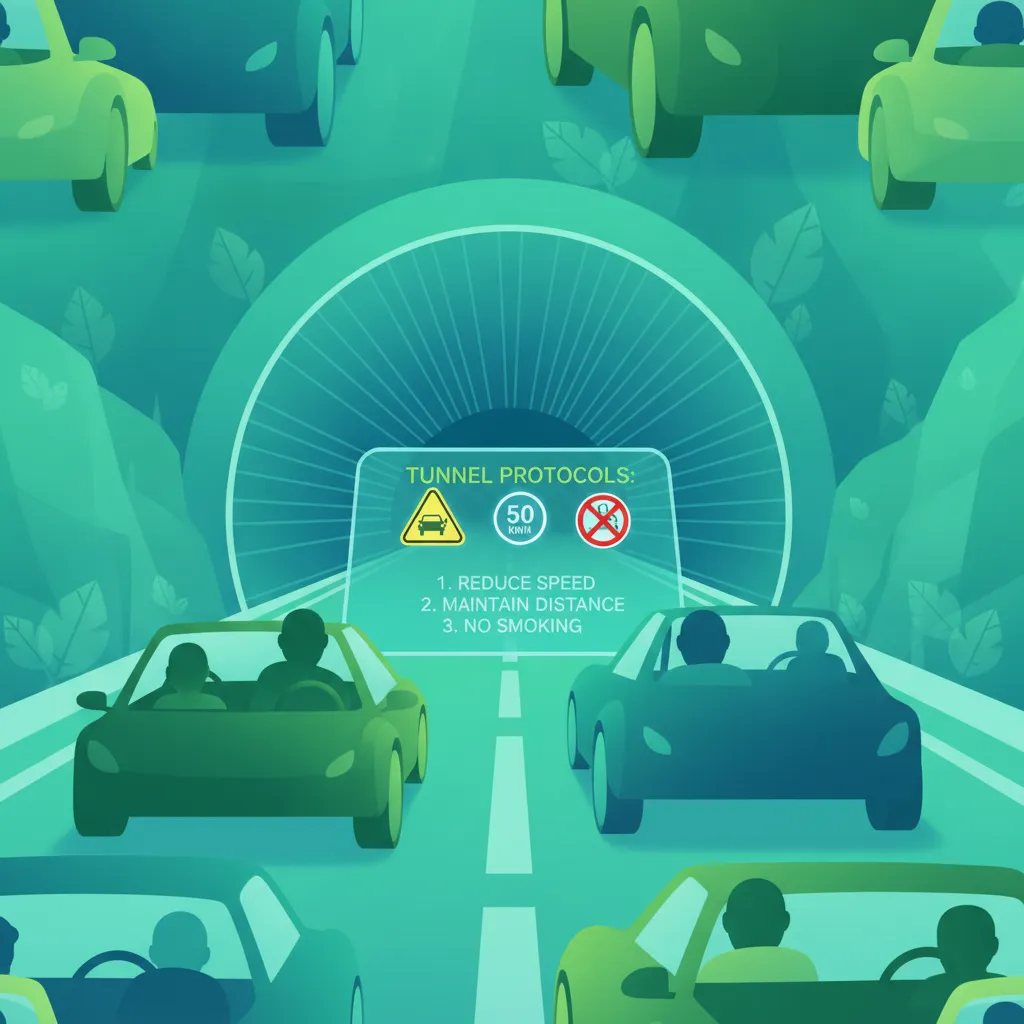
Austria's mountainous terrain means drivers will frequently encounter long tunnels. This lesson details the specific regulations, such as turning on lights and maintaining distance, as well as how to react to tunnel-specific warning signs and signals. Crucially, it covers the correct emergency procedures to follow in the event of a fire, accident, or breakdown inside a tunnel.

Driving a heavy vehicle in the Alps requires specific skills to manage its energy and momentum. This lesson focuses on using lower gears and auxiliary braking systems (retarder/engine brake) to control speed on long descents and prevent brake overheating. It also covers the correct line and technique for navigating tight hairpin turns safely and efficiently.

Driving in tourist hotspots in cities like Salzburg or alpine resorts requires extra patience and vigilance. This lesson explores common unpredictable behaviours, such as pedestrians stepping into the road to take photos or groups of tourists being unaware of traffic. It teaches drivers to slow down, be prepared for anything, and use communication tools like the horn sparingly and appropriately.

This lesson addresses the challenge of manoeuvring a large vehicle through streets not designed for its size. It covers how to assess vertical and horizontal clearances, plan the vehicle's path through tight turns, and heed all restrictive signage. Careful planning and slow, precise control are essential for success.
Understand the specific legal obligations under Austrian law for reversing buses and coaches. This lesson details the mandatory role of a qualified banksman and the rules for controlled speed, as per StVO §54.
This lesson focuses on the safety-critical skill of reversing, emphasizing the importance of all-around observation before and during the manoeuvre. It covers the correct use of mirrors and the necessity of checking blind spots to ensure the path is clear of pedestrians, obstacles, and other vehicles. Learners will understand techniques for maintaining slow, controlled speed and making accurate steering adjustments while backing up in various situations.
This lesson provides practical strategies for safely reversing in challenging environments like narrow streets or busy loading zones. It emphasizes the 'get out and look' principle, the proper use of mirrors and cameras, and the critical safety role of a reliable spotter. Executing these manoeuvres slowly and cautiously is paramount to avoiding collisions.

This lesson delves into the specific Austrian laws and regulations that professional passenger drivers must adhere to. It provides an overview of rules concerning driving and rest times, the use of the digital tachograph, and the essential documents that must be carried at all times. Understanding these legal obligations is crucial for compliance and avoiding penalties during roadside checks.
This lesson outlines the standardized procedure for handling a vehicle breakdown safely. It covers pulling over to a safe location, activating hazard lights, deploying the warning triangle, and wearing a high-visibility vest. It also explains when and how to contact roadside assistance or emergency services.
Find clear answers to common questions learners have about Procedures for Safe Reversing. Learn how the lesson is structured, which driving theory objectives it supports, and how it fits into the overall learning path of units and curriculum progression in Austria. These explanations help you understand key concepts, lesson flow, and exam focused study goals.
No. While cameras are excellent technological aids, they do not replace physical observations. As a professional Category D driver, you must always perform a walk-around check before the manoeuvre and ideally use a banksman to monitor areas the camera cannot see.
A banksman provides external guidance to the driver to prevent collisions with pedestrians or obstacles. They are your 'eyes' in blind spots and should be used whenever you are reversing in a terminal, depot, or busy passenger-loading area.
Tail swing occurs because the rear of a bus protrudes beyond the path of the rear wheels when turning. When reversing, you must account for this movement to avoid hitting nearby obstacles or street furniture, as it can catch drivers unaware.
Reversing at a slow, walking pace provides you with the time necessary to react to movement in your mirrors or warnings from a banksman. In the context of the Austrian exam, maintaining a slow, controlled speed demonstrates professional responsibility and high hazard awareness.
Refine your study plan by searching for specific Austrian driving theory practice sets. Pinpoint questions related to particular road rules, signs, or challenge levels, and begin practicing immediately to reinforce your knowledge and excel in your official exam with confidence. Get started with focused revision today.