
This lesson guides you through the technical aspects of maneuvering long passenger vehicles safely in Austrian traffic. You will learn to manage the swept path and tail swing to avoid obstacles, ensuring you can navigate turns without mounting kerbs or endangering other road users.

Lesson content overview
Operating a bus or coach (Category D vehicle) requires a precise understanding of vehicle dynamics, especially when navigating turns. Unlike smaller passenger cars, the sheer length and multi-axle configuration of these large vehicles introduce unique challenges, primarily the phenomena of off-tracking and tail swing. Mastering safe turning procedures is not just about skill; it's a fundamental aspect of passenger duty of care and adherence to Austrian traffic laws.
This comprehensive guide delves into the essential principles for executing turns safely. We will explore how to anticipate the vehicle's unique movement patterns, manage the space it occupies on the road (the swept path), and position your bus or coach correctly to prevent collisions, ensure passenger comfort, and maintain road infrastructure.
Turning a long vehicle like a bus or coach is fundamentally different from turning a car. The distinct geometric and dynamic characteristics demand a specialized approach. At the heart of safe turning lies a thorough understanding of how the vehicle's various parts move in relation to each other and the road environment.
The swept path refers to the total ground area occupied by a vehicle as it follows a curved trajectory. For a bus or coach, this path is not a simple curve defined by the front wheels; it's a complex envelope that accounts for the differing paths of all points on the vehicle’s perimeter, from the furthest front point to the furthest rear point. Visualizing and managing this area is critical to avoiding collisions.
Ignoring the full extent of the swept path can lead to serious incidents. It encompasses both the forward movement of the vehicle's front section and the rear movement, which can extend beyond the path of the rear wheels. Understanding the forward and rear swept paths helps drivers anticipate potential encroachments on other lanes, sidewalks, or obstacles.
Off-tracking is a geometric reality for multi-axle vehicles. It describes the phenomenon where the rear wheels of a vehicle follow a smaller turning radius than the front wheels. This results in a lateral displacement of the rear axle's trajectory relative to the front axle's path during a turn. Essentially, the rear of the bus "cuts the corner" more sharply than the front.
This lateral deviation is a direct consequence of the vehicle's wheelbase (the distance between the front and rear axles). The longer the wheelbase, the more pronounced the off-tracking will be. This effect is particularly noticeable at low speeds and during sharp turns, where the steering angle is greater. When executing a right turn, for instance, the rear of the bus will shift closer to the curb than the path taken by the front wheels. Conversely, in a left turn, the rear will move closer to the center of the intersection or road. Drivers must constantly anticipate this behavior to avoid mounting kerbs, hitting traffic islands, or colliding with fixed obstacles.
While off-tracking describes the inward deviation of the rear wheels, tail swing (also known as rear end swing) refers to the outward movement of the rear section of a vehicle beyond the path of its rear wheels during a turn. As the front of the bus turns, the rear overhang (the part of the vehicle extending beyond the rear axle) swings outwards, sometimes significantly.
This outward swing is most pronounced during wide, low-speed turns, where the steering angle is considerable. It poses a substantial danger because the driver’s view of this area can be limited, especially with the vehicle’s body obstructing direct sight. Tail swing can encroach on adjacent lanes, sidewalks, or even strike stationary objects or vulnerable road users like pedestrians and cyclists who might be alongside the vehicle. Awareness of this movement is crucial, requiring frequent mirror checks and an understanding of the vehicle’s physical dimensions.
To effectively manage the complexities of off-tracking and tail swing, bus and coach drivers must internalize several core principles. These principles form the foundation of safe and responsible turning maneuvers.
The clearance envelope is the minimum safe distance required between any part of the vehicle’s swept path and fixed or moving obstacles. This includes curbs, utility poles, parked vehicles, roadside barriers, pedestrians, and cyclists. Maintaining this envelope is paramount for protecting both the vehicle and external objects from collision.
It's not enough to consider only the front of the vehicle. The entire swept path, encompassing both off-tracking and tail swing, must be kept clear. This necessitates a proactive approach to lane positioning, speed management, and steering angle adjustments before and during the turn. A robust clearance envelope accounts for both static obstacles (e.g., street furniture) and dynamic obstacles (e.g., moving pedestrians or cyclists).
Positioning on approach is the lateral alignment of the vehicle within its lane or road before initiating a turn. This initial positioning is perhaps the most critical step in executing a safe turn with a large vehicle. The goal is to select an optimal position that maximizes the usable width of the lane for the entire swept path, while still respecting lane markings and other road users.
For a right turn, this often means positioning the bus slightly further away from the curb than a car would, creating more space for the rear wheels to off-track without mounting the curb. For a left turn, it might involve positioning slightly closer to the centerline (where permissible) to allow the tail to swing left without encroaching on the sidewalk or oncoming traffic. Early observation of lane width, traffic conditions, and potential obstacles dictates the optimal lateral position.
Always signal your intentions early. Austrian Road Traffic Regulations (§ 42 StVO) mandate early indication of a turn to alert surrounding road users, providing them ample time to react to your vehicle's movements.
Executing turns smoothly and safely requires precise control over both steering input and vehicle speed.
In Austria, the safe operation of all vehicles, including buses and coaches, is governed by the Straßenverkehrsordnung (StVO), the Road Traffic Regulations. Specific sections of the StVO are highly relevant to executing turns safely, emphasizing the driver's overarching duty of care.
Adherence to these regulations is not only a legal requirement but a critical component of professional driving and passenger safety.
Even experienced drivers can make mistakes, but with large vehicles, these errors have amplified consequences. Understanding common violations helps in developing proactive avoidance strategies.
Mounting Curbs or Roadside Obstacles:
Insufficient Clearance for Tail Swing:
Crossing into Opposite Lane During Turn:
Late Signaling:
Inadequate Speed Management:
The principles of safe turning remain constant, but their application must adapt to varying conditions and environments.
The presence of vulnerable road users (VRUs) such as pedestrians, cyclists, and scooter riders demands extra vigilance.
In all scenarios, the driver's duty of care towards passengers and other road users is paramount.
Safe turning is not an isolated skill; it is deeply interconnected with other fundamental aspects of professional driving.
Executing turns safely with a bus or coach is a nuanced skill that combines theoretical knowledge with practical application. By fully grasping concepts like off-tracking, swept path, and tail swing, and by diligently applying principles such as correct positioning, speed management, and continuous vigilance, drivers can significantly mitigate risks.
Remember, your responsibilities extend beyond merely staying within the lines; they encompass the safety and comfort of your passengers, the protection of other road users, and the preservation of infrastructure. Regular practice, continuous observation, and a deep respect for the physical limitations and dynamics of your large vehicle are the hallmarks of a professional Category D driver in Austria.
Explore all units and lessons included in this driving theory course.
Lesson content overview
Explore all units and lessons included in this driving theory course.
Explore search topics learners often look for when studying Executing Turns Safely and Managing Swept Path. These topics reflect common questions about road rules, driving situations, safety guidance, and lesson level theory preparation for learners in Austria.
Browse additional driving theory lessons that cover connected traffic rules, road signs, and common driving situations related to this topic. Improve your understanding of how different rules interact across everyday traffic scenarios.
Understand the critical concepts of off-tracking, swept path, and tail swing when turning large vehicles like buses. Learn the Austrian regulations and techniques for safe maneuvering in urban and rural environments.

Operating a large passenger vehicle requires a precise understanding of its physical footprint. This lesson explains how to assess vehicle height for bridges and tunnels, and how length affects manoeuvrability. Key concepts like rear overhang (tail swing) and swept path are detailed to help you anticipate the vehicle's movement during turns and avoid collisions in confined areas.

Improper cornering technique can be unsettling and dangerous for passengers. This lesson teaches the correct approach to bends and turns: assess the corner, select the right speed and gear on approach, and steer with smooth, deliberate inputs. Understanding how to manage the vehicle's weight transfer and minimize lateral forces is key to ensuring passenger stability and comfort.

This lesson focuses on the phenomenon of off-tracking, where the rear wheels of a trailer follow a path inside that of the tractor's wheels during a turn. It explains how to anticipate this effect and allow extra space when cornering to avoid running over curbs, signs, or other roadside objects. Managing off-tracking is a key skill for navigating intersections and roundabouts.
Many Austrian towns and city centres feature narrow roads not designed for large vehicles. This lesson provides strategies for assessing tight spaces, positioning the vehicle to maximize clearance, and navigating complex, non-standard junctions. It emphasizes the importance of slow speeds, constant observation, and understanding the vehicle's swept path to avoid contact with buildings, street furniture, and other vehicles.

This lesson teaches drivers how to develop spatial awareness regarding their vehicle's size. It covers how to judge the required space for making turns, considering the vehicle's turning radius and the effects of off-tracking. Planning ahead and positioning the vehicle correctly before a manoeuvre is key to navigating tight spaces successfully.

Adding a trailer (Category DE/D1E) changes a vehicle's handling characteristics significantly. This lesson introduces key concepts, such as the increased turning circle, the effect of trailer swing, and the complexities of braking with the extra weight and length. It provides a theoretical foundation for understanding how to safely manage a combination vehicle, particularly during low-speed manoeuvres.

Sudden vehicle movements are a primary cause of passenger injury and discomfort. This lesson focuses on developing a high level of control over the throttle and brake pedals. It teaches how to apply power gradually and brake progressively by anticipating traffic flow, ensuring that passengers, particularly those standing or moving, are never caught off balance.
Reversing is statistically one of the most dangerous manoeuvres. This lesson outlines a strict safety protocol: get out and check the area first, use a competent banksman (marshal) whenever possible, and proceed at a slow walking pace. It also covers the use of reversing cameras and alarms as aids, but stresses they are no substitute for a thorough physical check and direct assistance.

This lesson provides a detailed guide to executing turning manoeuvres safely and correctly at both intersections and roundabouts. It explains the importance of proper lane positioning well in advance of the turn, the correct timing for signaling, and the necessity of checking for pedestrians and cyclists. The content also reinforces priority rules that apply when turning, particularly when crossing the path of oncoming traffic during a left turn.
A safe stop begins with a planned approach. This lesson covers how to signal your intentions early, manage your speed, and scan for hazards like pedestrians and cyclists near the stop. It emphasizes the importance of aligning the bus parallel and close to the kerb to minimize the step for passengers, creating a safe platform for boarding and alighting.
Identify common violations and hazards when executing turns with large vehicles. Learn how to manage blind spots, protect pedestrians and cyclists, and apply Austrian StVO rules to ensure turning safety.
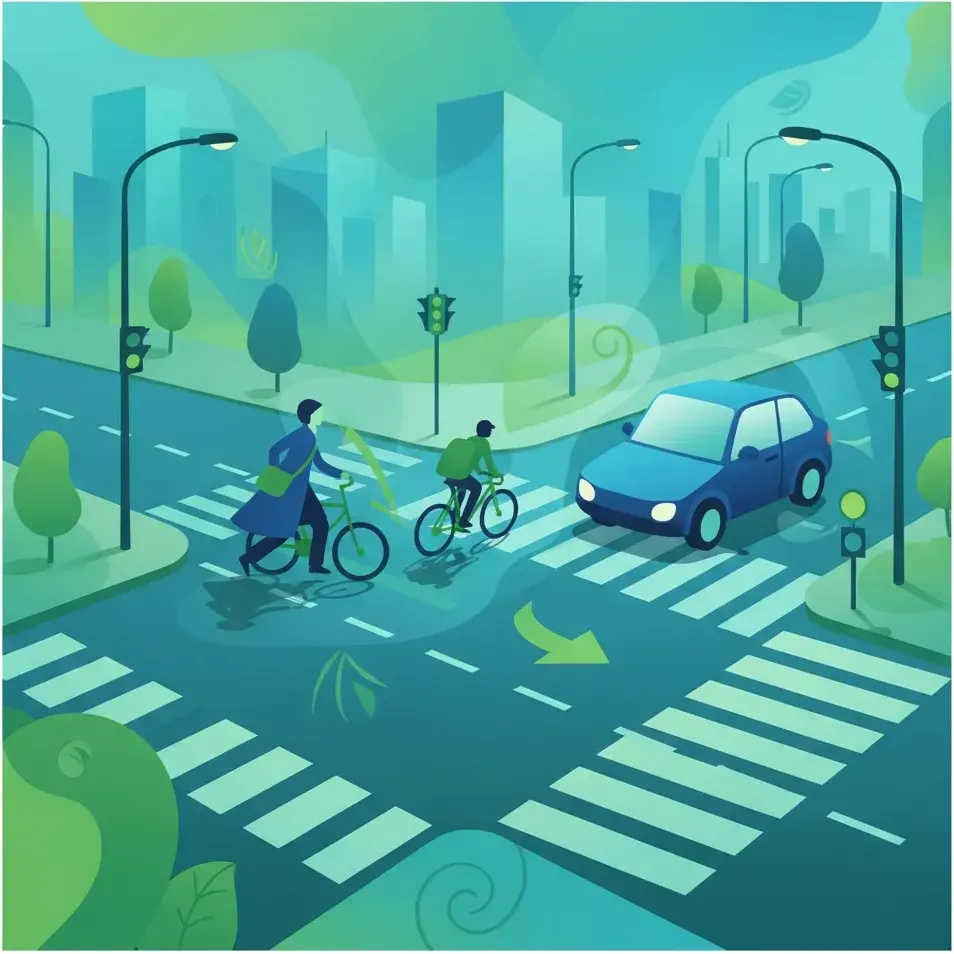
This lesson addresses the specific danger of right-hand turns, where cyclists and pedestrians in the vehicle's right-side blind spot are at high risk. It covers the defensive driving techniques required, including careful observation, slow speed, and yielding the right-of-way. These procedures are critical for preventing serious accidents in urban areas.

Buses and coaches have significant blind spots that pose a major risk to pedestrians, cyclists, and other vehicles. This lesson teaches you how to correctly set up and systematically scan all mirrors, including wide-angle and kerb-view mirrors. It also covers the use of modern camera systems to gain a complete picture of the area surrounding the vehicle, especially before moving off.
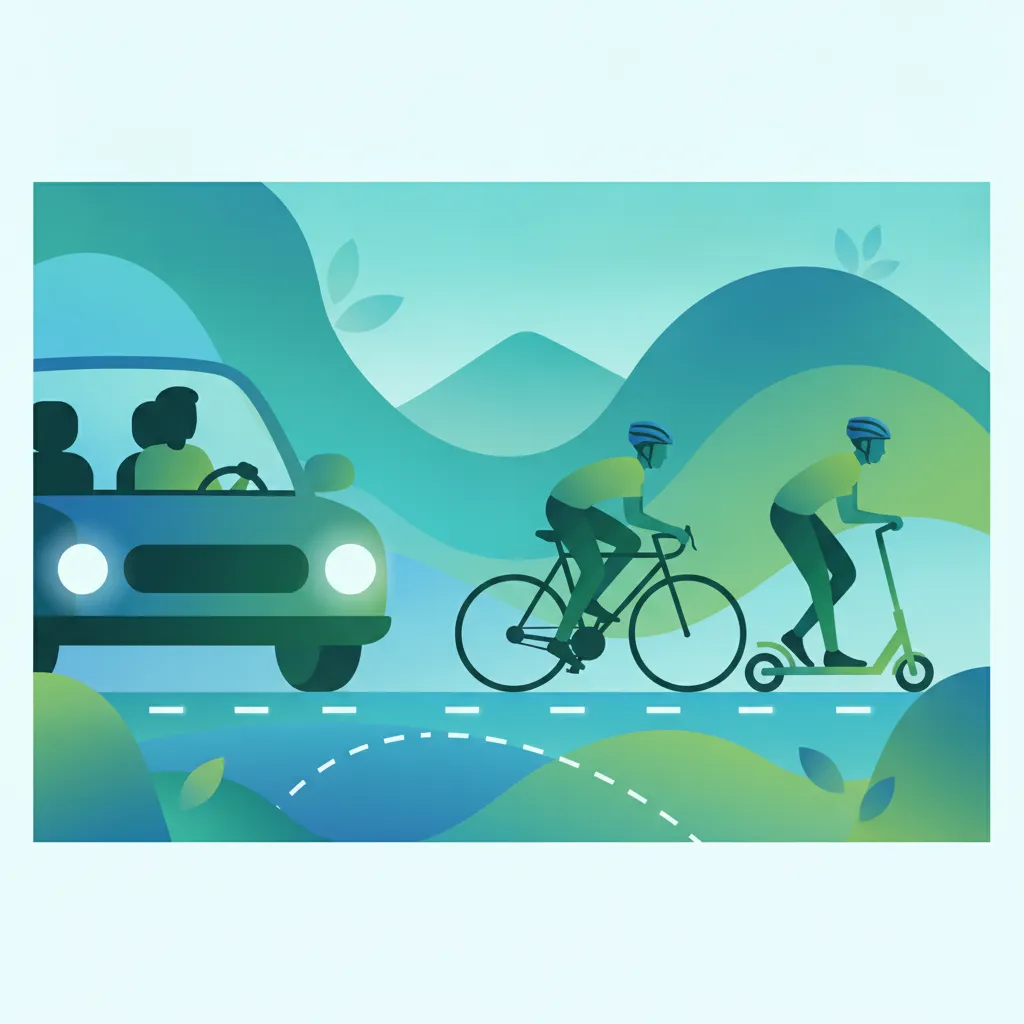
Cyclists and e-scooter riders are highly vulnerable and can be hard to see from a high driving position. This lesson focuses on the critical danger points, such as making right turns across cycle lanes and checking blind spots before pulling away from a stop. It teaches the importance of giving ample space when overtaking and anticipating their movements in busy city traffic.
This lesson provides a detailed guide to executing turning manoeuvres safely and correctly at both intersections and roundabouts. It explains the importance of proper lane positioning well in advance of the turn, the correct timing for signaling, and the necessity of checking for pedestrians and cyclists. The content also reinforces priority rules that apply when turning, particularly when crossing the path of oncoming traffic during a left turn.
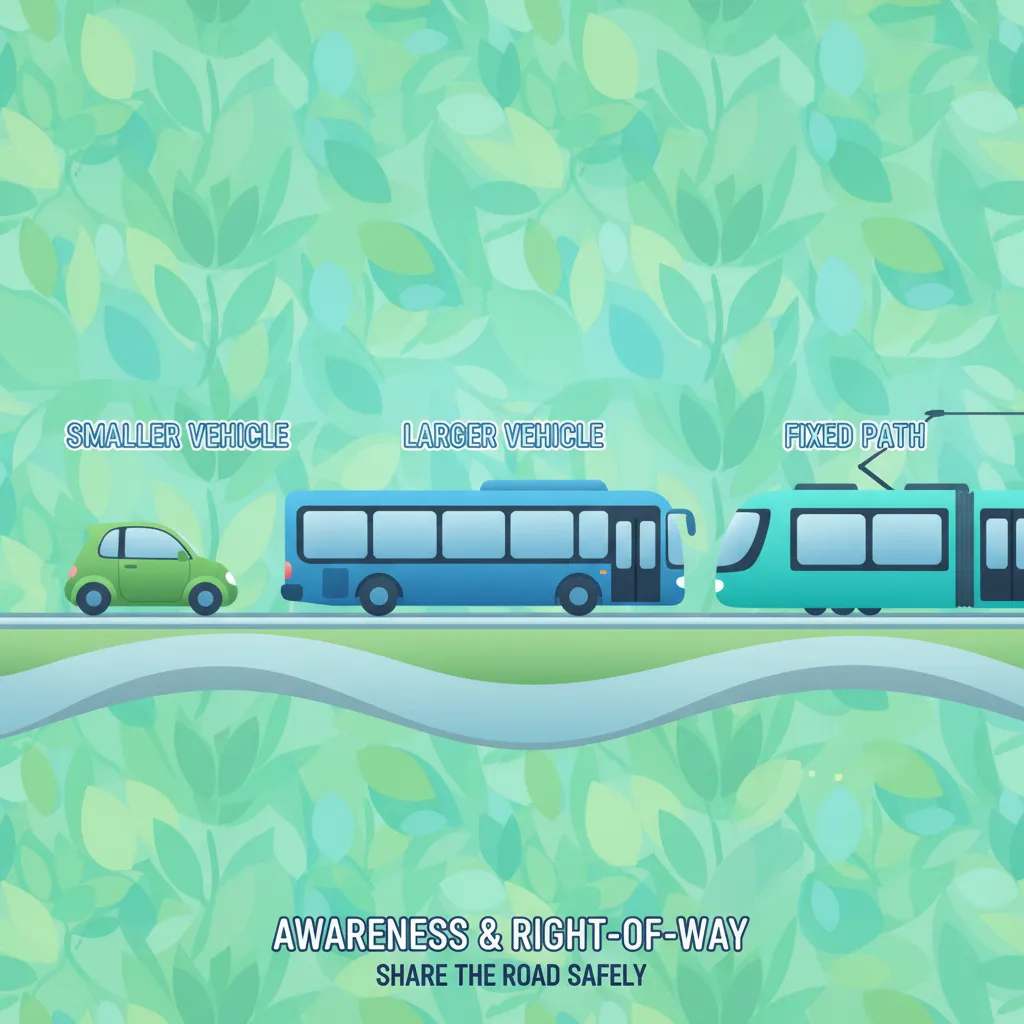
This lesson provides specific guidance for sharing the road with different types of vehicles in Austria. It covers the dangers of large vehicle blind spots, the rules for navigating near buses and dedicated tram tracks, and common conflict points at intersections. Understanding the behavior and limitations of other vehicles is key to safely navigating complex urban environments.
Many Austrian towns and city centres feature narrow roads not designed for large vehicles. This lesson provides strategies for assessing tight spaces, positioning the vehicle to maximize clearance, and navigating complex, non-standard junctions. It emphasizes the importance of slow speeds, constant observation, and understanding the vehicle's swept path to avoid contact with buildings, street furniture, and other vehicles.
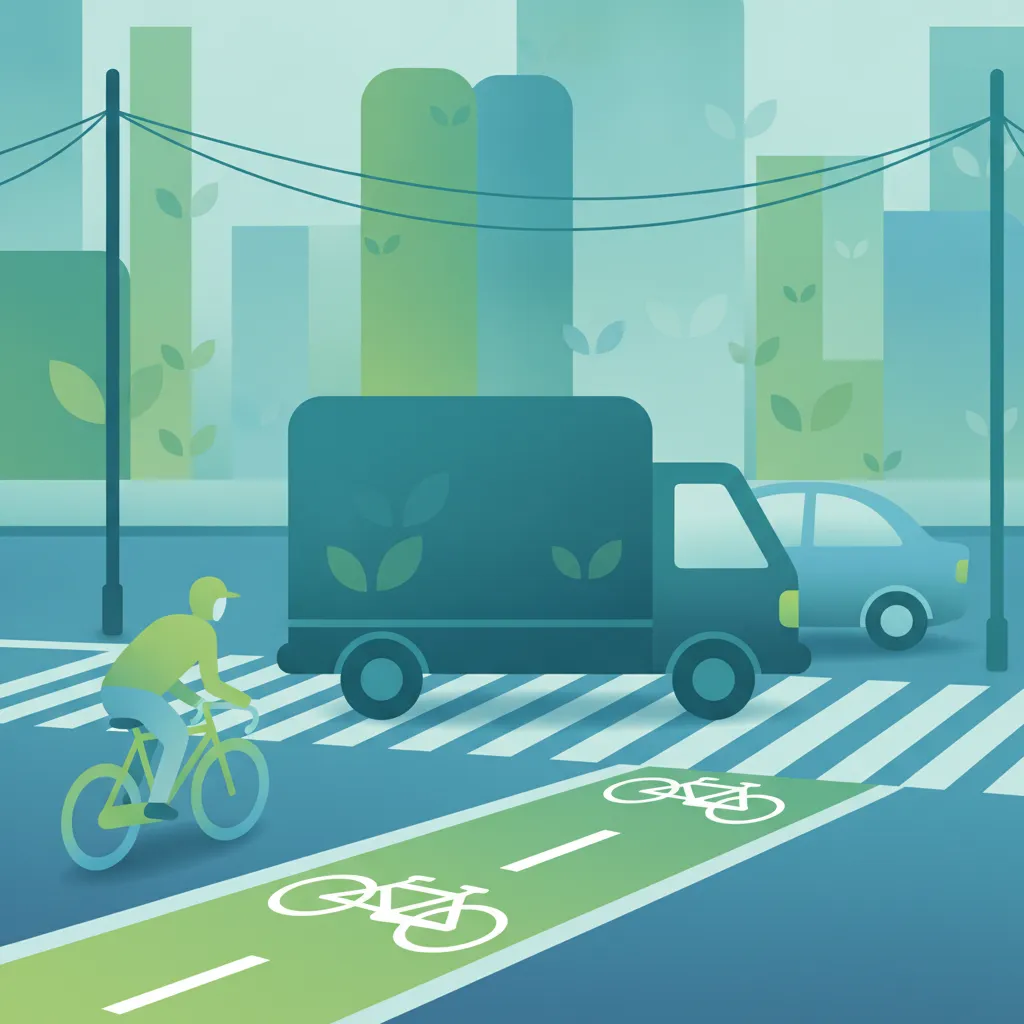
Not all bus stops are created equal. This lesson trains you to assess a stop's environment and identify potential hazards, such as poor sightlines, proximity to a busy junction, or frequent presence of vulnerable road users. It encourages a proactive approach, where the driver heightens their observation and slows their approach when dealing with these known high-risk locations.
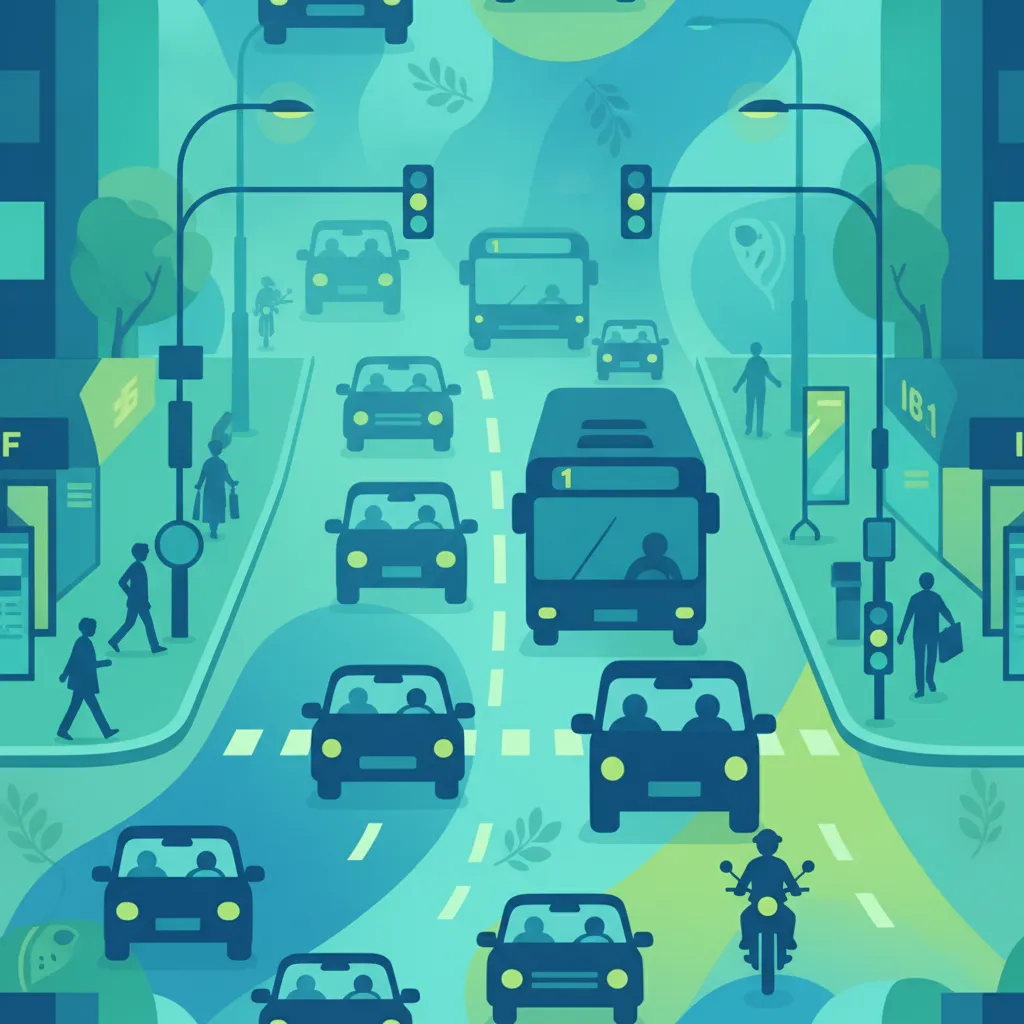
Driving a bus in a busy city like Vienna or Salzburg requires constant forward planning and anticipation. This lesson teaches techniques for maintaining adequate space around the vehicle, positioning correctly for upcoming junctions, and reading the flow of traffic. Adopting a defensive mindset is key to navigating complex urban environments without incident.

Rural Austrian roads present unique challenges, including lack of markings, tight spaces, and slow-moving agricultural vehicles. This lesson teaches how to read the road ahead, anticipate hazards around blind bends, and use passing places effectively when meeting other large vehicles. It emphasizes adjusting speed to suit the limited visibility and variable road conditions.

Transporting children carries the highest level of responsibility. This lesson covers the specific Austrian rules for school buses, including the use of warning signs and lights. It focuses on developing a mindset of extreme caution, anticipating that children may run into the road unexpectedly, and managing the chaotic traffic environment often found around schools during drop-off and pick-up times.
Find clear answers to common questions learners have about Executing Turns Safely and Managing Swept Path. Learn how the lesson is structured, which driving theory objectives it supports, and how it fits into the overall learning path of units and curriculum progression in Austria. These explanations help you understand key concepts, lesson flow, and exam focused study goals.
Because long vehicles do not track behind the front wheels in a straight line, the rear wheels follow a tighter path. If you do not account for this, your rear wheels may strike the kerb or road furniture, endangering pedestrians and causing vehicle damage.
Swept path refers to the area covered by the wheels (off-tracking) during a turn, whereas tail swing is the outward movement of the rear body of the bus when the front is steered in the opposite direction. Both require constant monitoring via mirrors.
The exam features scenarios where you must identify the safest path for a long vehicle or predict hazards at junctions. Understanding vehicle dynamics ensures you choose the correct answer regarding road positioning and hazard anticipation.
No. Depending on the length of the bus, you may need to position yourself slightly away from the kerb before turning to ensure the rear wheels clear the corner safely without cutting the curve too tightly.
Refine your study plan by searching for specific Austrian driving theory practice sets. Pinpoint questions related to particular road rules, signs, or challenge levels, and begin practicing immediately to reinforce your knowledge and excel in your official exam with confidence. Get started with focused revision today.