
Logo
Austrian Driving Theory Courses

Lesson 4 of the City Deliveries, Construction Traffic and Vulnerable Road Users unit

Austrian HGV Theory C: Navigating Narrow Streets and Restricted Access Roads

This lesson focuses on the critical skills required to operate heavy goods vehicles in confined spaces, such as narrow urban streets and restricted access routes. You will learn to assess clearance requirements and interpret signage, ensuring you can navigate safely while adhering to Austrian traffic regulations.

HGV theoryrestricted accessAustrian road signsheavy vehicle maneuverC license exam
Austrian HGV Theory C: Navigating Narrow Streets and Restricted Access Roads

Lesson content overview

Austrian HGV Theory C

Mastering Narrow Streets and Restricted Access Roads for Heavy Goods Vehicles

Driving heavy goods vehicles (HGVs) in Austria, particularly in urban areas or through historical towns, often presents the challenge of navigating streets not originally designed for their dimensions. This lesson provides crucial techniques and considerations for safely maneuvering your C, C1, C1E, or CE category vehicle through narrow streets, alleys, and roads with various access restrictions. Mastering these skills is essential to prevent vehicle damage, ensure the safety of all road users, and avoid costly traffic violations.

Understanding your vehicle's capabilities and limitations, combined with careful planning and precise control, forms the cornerstone of successful heavy goods vehicle operation in spatially constrained environments.

Assessing Vehicle Clearances: Vertical and Horizontal Limitations

A fundamental aspect of navigating narrow and restricted roads is accurately assessing the available space around your vehicle. This involves evaluating both vertical and horizontal clearances. Failure to do so can lead to collisions with infrastructure, other vehicles, or pedestrians, resulting in significant damage, injury, and legal consequences.

Understanding Vertical Clearance for Heavy Vehicles

Vertical clearance refers to the available height between the road surface and any overhead obstruction. These obstructions can include bridges, underpasses, tunnels, overhead power lines, low-hanging branches, or even building overhangs.

Warning

Always know your vehicle's exact height, including any load. This measurement is non-negotiable for safe passage under height-restricted structures.

Drivers must be acutely aware of their vehicle's total height, especially when loaded, as the load can significantly alter this dimension. Posted height limits on signs are absolute and must be obeyed. Misjudging vertical clearance can result in catastrophic collisions with structures, leading to severe damage to the vehicle and infrastructure, potential injury, and significant delays.

For instance, encountering a bridge with a sign indicating a maximum height of 3.5 metres means that any vehicle exceeding this height, even by a few centimetres, must seek an alternative route. Always stop and verify if there is any doubt.

Evaluating Horizontal Clearance and Vehicle Width

Horizontal clearance is the lateral space needed for your vehicle to pass safely without colliding with obstacles on either side. This includes the width of the lane, the distance between parked vehicles, the proximity of kerbs, street furniture (e.g., lampposts, traffic signs), and construction scaffolding.

When assessing horizontal clearance, it is vital to account for the full width of your vehicle, including side mirrors, which often extend beyond the main body of the cab. In narrow passages, these mirrors are frequently the first part of the vehicle to strike an obstacle. Also, be mindful of any load that might extend beyond the sides of your vehicle.

Tip

When unsure about horizontal clearance, it's safer to stop, assess the situation, and, if necessary, seek assistance or choose an alternative route. Never force your way through.

Mastering Maneuvering in Confined Spaces: Turning Radius and Overhang

Negotiating turns in narrow streets with a heavy goods vehicle requires a deep understanding of vehicle dynamics, specifically the turning radius and the often-overlooked "tracker effect" or rear overhang.

Understanding the Minimum Turning Circle

The minimum turning circle is the smallest circular path a vehicle can travel while performing a continuous turn. This value is specified by the manufacturer and is a critical piece of information for route planning. A larger wheelbase, common in heavy goods vehicles, naturally results in a larger turning circle compared to smaller vehicles.

In urban environments, tight corners and narrow intersections can make it challenging to complete a turn within the available road space. Drivers must anticipate the space needed and often use a wider initial approach to allow the vehicle to complete the turn without encroaching on pavements, hitting kerbs, or crossing into opposing lanes excessively.

The Dynamics of Overhang and the Tracker Effect

Overhang refers to the portion of a vehicle that extends beyond its axles. In HGVs, this is particularly relevant at the rear of the vehicle, extending past the rear axle. The tracker effect describes how the rear of a heavy vehicle swings outward and inward during a turn, effectively requiring more space than the vehicle's static width might suggest. As the front wheels steer into a turn, the rear wheels "track" on a smaller radius. This causes the rear section of the vehicle to swing either further out or further in, depending on the specific geometry and direction of the turn.

  • Rearward Extension: When turning, the rear of the vehicle, particularly a long trailer or the rear section of a rigid truck, will sweep a path that is significantly wider than the path of the front wheels. This requires extra lateral space, especially when making sharp turns into narrow alleys or around tight corners.
  • Front-End Swing: Conversely, when making a very sharp turn, the front corner of the vehicle can swing outwards, potentially impacting objects or vehicles on the inside of the turn.

Understanding these dynamics is crucial for path planning. Drivers must compensate for the tracker effect by approaching turns strategically, often starting wider than might seem intuitive, to ensure the rear of the vehicle clears obstacles.

Note

Always use your side mirrors extensively during turns to monitor the position of the rear of your vehicle and any potential hazards. A spotter can also be invaluable in extremely tight situations.

Understanding and Complying with Restricted Access Signage

Road signs play a critical role in regulating traffic flow and protecting infrastructure, especially for heavy goods vehicles. Restricted access signage explicitly indicates limitations on vehicle dimensions, weight, load type, or even specific times of access. Adhering to these signs is a legal obligation for every HGV driver in Austria.

Types of Dimension Restrictions

Several signs specifically address vehicle dimensions:

These signs are typically found at the entrance to tunnels, underpasses, narrow bridges, or historic town centres. Drivers must know their vehicle's exact dimensions (height, width, length) and those of their load. Ignoring these signs can lead to severe structural damage to both the vehicle and public infrastructure, costly fines, and legal action.

Weight and Load Type Restrictions

Other signs restrict access based on vehicle weight or load type:

Weight restrictions are crucial for protecting road surfaces, bridges, and underground utilities. Axle load limits are particularly important for bridges or roads with underlying structures vulnerable to concentrated weight. Hazardous goods restrictions (e.g., C17 "No Entry for Vehicles Carrying Dangerous Goods") are also common in tunnels or urban areas to protect public safety.

Time-Specific and General Access Restrictions

Some areas may have time-based restrictions, prohibiting heavy vehicles during certain hours (e.g., rush hour, night-time delivery bans). Others may have general "No Entry for Heavy Goods Vehicles" signs (C9 or C10), possibly with specific weight exemptions. Always read additional panels below signs, which often specify exceptions or timeframes.

Warning

Temporary signage, such as those used for construction or special events, holds the same legal authority as permanent signs. Always treat temporary restrictions as binding.

Precise Low-Speed Control for Heavy Goods Vehicles

Navigating narrow streets and making tight manoeuvres requires exceptional low-speed control. Operating your vehicle at minimal speeds (typically ≤5 km/h) allows for precise adjustments, reduces reaction time, and significantly mitigates the severity of any potential impact.

Techniques for Controlled Movement

  • Creeping: This involves maintaining an extremely slow, consistent forward or backward movement. It's achieved by carefully modulating the accelerator and brake pedals, or, more effectively, by using auxiliary braking systems. Creeping allows the driver to make minute steering corrections and stop instantly if an unforeseen obstacle appears.
  • Spot-Turning: In very tight spaces, a driver might need to perform a turn with minimal forward or backward motion. This often involves a series of small, precise movements, sometimes requiring slight back-and-forth adjustments, to align the vehicle perfectly.

The Role of Auxiliary Braking Systems

When performing low-speed manoeuvres, especially with heavy loads or on slight inclines, relying solely on the foot brake can be insufficient or lead to jerky movements. This is where auxiliary braking systems become invaluable:

  • Engine Brake (Motorbremse): This system uses the engine's compression to slow the vehicle down without using the service brakes. At low speeds, it can provide very fine control over vehicle momentum.
  • Retarder (Dauerbremse): An independent braking system (hydrodynamic or electromagnetic) that provides continuous braking power, ideal for maintaining a constant, very low speed without overheating the service brakes.

Tip

Engaging your retarder or engine brake, even at low speeds, helps prevent unintended acceleration, especially on slight downhill grades, allowing for smoother, more controlled creeping.

Adherence to specific rules outlined in the Austrian Straßenverkehrsordnung (StVO) is paramount when driving heavy goods vehicles in narrow and restricted areas.

1. Mandatory Observation of Height and Width Restriction Signs

Rule Statement: Drivers of heavy goods vehicles must strictly obey all signs indicating height (C11a) or width (C11b) limits. If your vehicle, including its load, exceeds the posted dimensions, you are legally prohibited from proceeding and must find an alternative route.

Rationale: This rule prevents collisions with bridges, tunnels, and other infrastructure, protecting both public safety and property.

2. Obligation to Yield to Oncoming Traffic in Narrow Streets

Rule Statement: When two vehicles approach each other on a street too narrow for both to pass simultaneously, the driver who is further back or who has less clear passage must yield. In practice, this often means the driver of the larger vehicle may need to exercise greater caution and be prepared to yield, especially to smaller, more agile vehicles.

Rationale: This prevents impasses and ensures traffic flow, particularly in situations where reversing a heavy vehicle in a narrow street is difficult and hazardous.

3. Prohibition of Blocking Intersections

Rule Statement: Heavy goods vehicles must never stop in or across an intersection, thereby blocking cross-traffic. Before entering an intersection, a driver must ensure that they can completely clear it, even if the traffic light is green.

Rationale: This rule is crucial for maintaining smooth traffic flow and preventing gridlock, especially in busy urban areas. Misjudging the time or space needed to clear an intersection can cause significant disruption.

4. Requirement for Parking in Designated Loading Zones (Ladezonen)

Rule Statement: Delivery vehicles must park only in clearly marked loading zones (Ladezonen) or designated waiting areas for loading and unloading operations.

Rationale: This ensures that regular traffic lanes and pedestrian pathways remain clear, facilitating safe passage for other road users and pedestrians. Illegal parking can obstruct emergency services and create hazardous situations.

5. Cooperation with Temporary Traffic Controls

Rule Statement: Drivers must obey directions given by traffic officers, police personnel, or flaggers (e.g., at construction sites or events), even if these instructions contradict standard road signs or traffic lights.

Rationale: Authorized personnel are on-site to manage specific, often temporary, situations for safety and efficiency. Their instructions supersede permanent rules.

Common Pitfalls and Challenging Scenarios

Navigating narrow streets and restricted access roads presents several common challenges and potential violations that heavy goods vehicle drivers must actively avoid.

1. Misjudging Overhang During Turns

A frequent mistake is underestimating the space required for the vehicle's rear overhang (tracker effect) to clear a tight corner. This can lead to the rear of the vehicle striking lamp posts, parked cars, or the inside of a curb. Correct Practice: Reduce speed significantly, start the turn wider than usual, and constantly monitor side mirrors. If needed, perform a multi-point turn.

2. Ignoring Temporary Height or Width Restriction Signs

Drivers sometimes assume temporary signs for construction or maintenance are less critical than permanent ones. However, temporary restrictions are equally binding and are often in place due to immediate, critical hazards. Correct Practice: Treat all restriction signs, permanent or temporary, with the same level of importance. Verify your vehicle's dimensions against all posted limits.

3. Blocking an Intersection Due to Poor Planning

Entering an intersection without confirming you can clear it entirely before the light changes or traffic blocks your exit is a common error, leading to gridlock and fines. Correct Practice: If there is insufficient space to clear the intersection, wait before the stop line, even if your traffic light is green.

4. Failing to Yield in Impasse Situations

In genuinely narrow sections where two vehicles cannot pass, failing to yield can create a deadlock. The common rule is for the vehicle that is further back or has the easier option to reverse to yield. Correct Practice: Assess the situation early. If an impasse is forming, be prepared to yield, communicate with the other driver, and reverse safely if necessary.

5. Parking in Non-Designated Areas for Deliveries

Parking on sidewalks, in active traffic lanes, or outside marked loading zones (Ladezonen) is illegal and obstructs other road users. Correct Practice: Always seek out and use designated loading zones. If none are available, find a legal and safe place to park and consider alternative delivery methods (e.g., using a hand truck over a greater distance).

6. Improper Use of Auxiliary Braking in Low-Speed Manoeuvres

Allowing the vehicle to "coast" or rely solely on friction brakes during low-speed creeping can lead to loss of precise control, especially on uneven ground or slight inclines. Correct Practice: Actively use the engine brake or retarder to maintain a controlled, consistent low speed, allowing for fine adjustments and immediate stops.

Conditional Factors and Contextual Adaptations

Driving a heavy goods vehicle through tight spaces requires dynamic adaptation to various conditions.

  • Weather Conditions: Rain, snow, or ice significantly reduce tyre grip, increasing stopping distances and making precise manoeuvres more challenging. Reduce speed further and be extra cautious when creeping or turning.
  • Light Conditions: Reduced visibility at night, dusk, or in heavy fog/rain necessitates greater reliance on vehicle lighting and mirrors. Use all available lights to make your vehicle visible and to illuminate obstacles. High-beam lights (where legally permitted and safe) can help assess overhead clearances.
  • Road Type and Environment: Residential streets often have cars parked on both sides, drastically reducing effective width. Urban alleys can have unpredictable obstacles (e.g., bins, parked bicycles, temporary deliveries) requiring even more conservative path planning.
  • Vehicle State: A heavily loaded truck has a higher centre of gravity, which affects stability and turning behaviour. It also has a greater effective overhang and can be less responsive. An unloaded vehicle might feel more agile but still requires careful clearance assessment.
  • Vulnerable Road Users: Pedestrians and cyclists are common in urban and narrow areas. They may appear suddenly or occupy space on pavements or shared paths. Always prioritize their safety and avoid encroaching on their zones, even when positioning for a turn.
  • Temporary Restrictions: Construction zones, public events, or temporary road works can introduce new, temporary clearance parameters. Always treat temporary signs as binding, even if they contradict permanent signage.

The Importance of Strategic Planning and Municipal Coordination

Successful navigation of restricted access roads often begins long before the vehicle reaches the site.

  • Route Assessment: Whenever possible, pre-plan your route using detailed maps, GPS systems designed for HGVs (which include height/weight restrictions), and recent local knowledge. Look for alternative routes to avoid known problematic areas.
  • Permits and Special Access: For some extremely restricted areas or oversized loads, special permits from municipal authorities may be required. Obtain these well in advance.
  • Coordination with Municipal Traffic Control: In certain situations, you might need to coordinate directly with local authorities, traffic officers, or temporary control systems. This could involve requesting flagger assistance, temporary traffic light overrides, or even police escorts for exceptionally challenging passages. Always follow instructions from authorized personnel (Lesson 8.5).

Ensuring Safety and Sound Decision-Making

  • Physics of Turning: A deep understanding of how larger wheelbases and overhangs increase the radius required for turns is fundamental. This knowledge allows you to anticipate space needs accurately.
  • Perception-Reaction Time: Operating at low speeds significantly extends your perception-reaction time, giving you more opportunity to identify hazards and make corrective adjustments.
  • Psychology of Overconfidence: Drivers of heavy goods vehicles must actively counteract the psychological tendency to underestimate vehicle dimensions and the space required. Always err on the side of caution.
  • Visibility Requirements: Maintaining a clear line of sight to all potential obstacles is paramount. Utilize all mirrors, and do not hesitate to use a spotter when direct vision is compromised.
  • Risk Management: Every decision in a tight space should involve a rapid assessment of potential consequences: damage to the vehicle, load, infrastructure, fines, or injury to others. Prioritize safety above all else.

This lesson builds upon your understanding of vehicle dimensions and operating limits (Lesson 2), manoeuvring space and blind spots (Lesson 7), and general city delivery practices (Lesson 8.1 - 8.3). It also prepares you for coordination with municipal traffic control (Lesson 8.5) and understanding legal obligations (Lesson 8.6). These skills are further refined when planning routes and navigating tunnels, bridges, and alpine roads (Lesson 9).

Learn more with these articles

Learn more with these articles

Learn more with these articles

Check out these practice sets

Lesson recap

Quick summary before you move on

Fast revision

This lesson covers the critical skills Austrian C-license HGV drivers need for navigating narrow streets and restricted access roads. It teaches how to assess vertical and horizontal clearances against vehicle dimensions, understand the tracker effect and rear overhang dynamics, and interpret official Austrian restriction signs (C11a-C14). Key techniques include low-speed creeping and spot-turning using auxiliary braking systems like engine brakes and retarders. The lesson also outlines five specific Austrian StVO legal obligations regarding restriction signs, yielding in narrow streets, intersection clearance, loading zone parking, and temporary traffic control compliance. Drivers learn to avoid common pitfalls including misjudging overhang during turns, ignoring temporary signage, and blocking intersections.


Core takeaways

Main ideas from this lesson

A short set of high-value points that capture the most important learning from this lesson.

Always know your vehicle's exact height, width, and length including any load before entering restricted zones

The tracker effect means the rear of an HGV swings outward during turns, requiring more lateral space than the vehicle's static width suggests

Posted height, width, and weight restriction signs are absolute legal limits that must be obeyed or an alternative route must be found

Low-speed creeping (≤5 km/h) using engine brake or retarder provides precise control for tight manoeuvres

Temporary restriction signs have the same legal authority as permanent signs and must be treated equally

Remember this

Details worth keeping in mind

Point 1

Side mirrors often extend beyond the cab width and are frequently the first point of contact in narrow passages

Point 2

When two vehicles meet in a passage too narrow to pass simultaneously, the driver further back or with less clear passage must yield

Point 3

HGVs must never enter an intersection unless they can completely clear it before the light changes

Point 4

Loading zones (Ladezonen) are the only legal parking locations for delivery operations in restricted areas

Point 5

Heavily loaded vehicles have a higher centre of gravity affecting stability and increased effective overhang during turns

Watch for this

Frequent learner mistakes

Underestimating rear overhang space required during turns, causing strikes on lampposts, parked cars, or kerbs

Treating temporary construction signs as less critical than permanent restrictions, leading to violations

Entering an intersection without confirming sufficient space to clear it, causing gridlock and fines

Relying solely on foot brakes for low-speed creeping, resulting in jerky movements and loss of control on inclines

Parking delivery vehicles on sidewalks or in active traffic lanes instead of designated Ladezonen

Search topics related to Navigating Narrow Streets and Restricted Access Roads

Explore search topics learners often look for when studying Navigating Narrow Streets and Restricted Access Roads. These topics reflect common questions about road rules, driving situations, safety guidance, and lesson level theory preparation for learners in Austria.

navigating narrow streets with heavy goods vehicle AustriaAustrian C license theory test restricted access rulesheavy vehicle height and width restrictions Austria theoryhow to plan routes for HGV in Austriapassing Austrian C category theory exam narrow roadsmeaning of access restriction signs for trucks in Austriaheavy goods vehicle maneuvering in urban zones theory

Related driving theory lessons for Navigating Narrow Streets and Restricted Access Roads

Browse additional driving theory lessons that cover connected traffic rules, road signs, and common driving situations related to this topic. Improve your understanding of how different rules interact across everyday traffic scenarios.

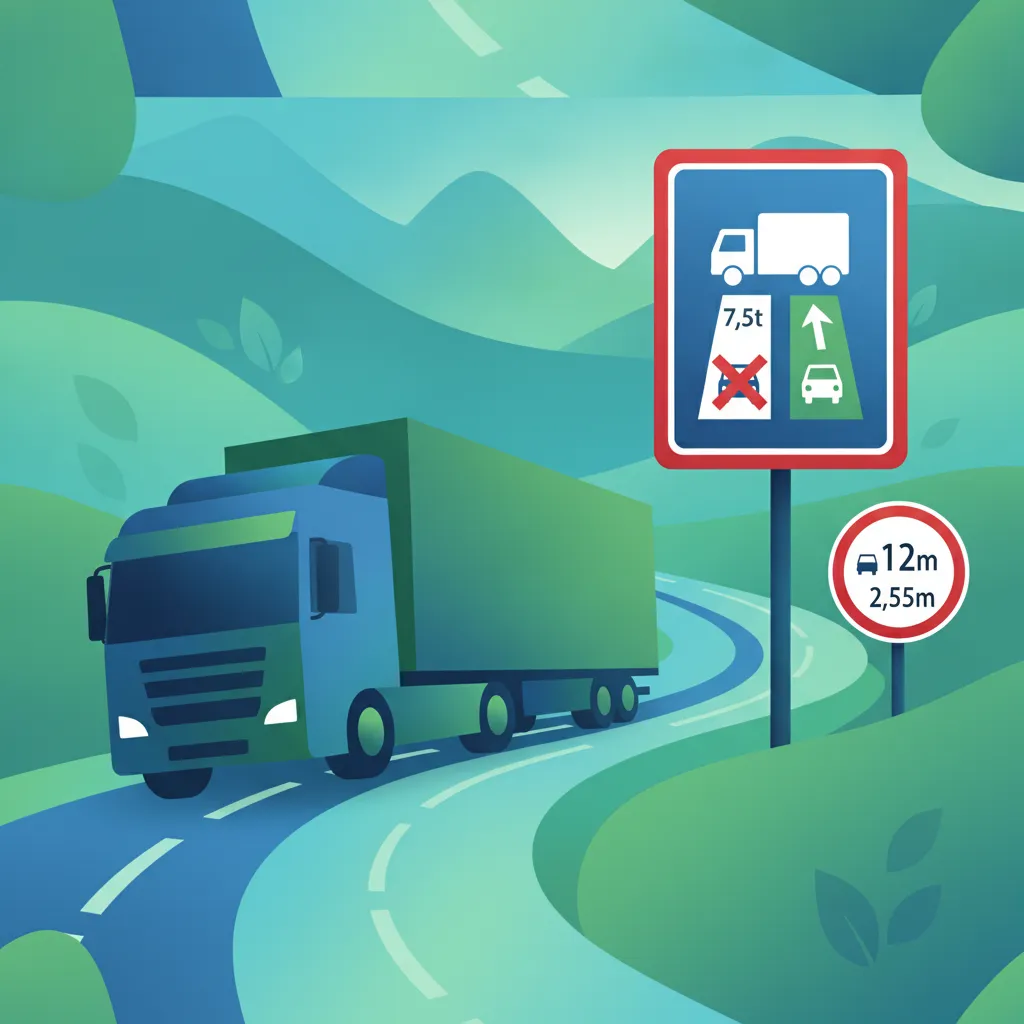
Austrian Road Signs for Heavy Vehicle Access Restrictions Explained

Understand specific Austrian road signs (C11a, C11b, C12, C13, C14) that restrict heavy goods vehicle access based on height, width, length, or weight. Essential knowledge for safe urban navigation and compliance with Austrian traffic law.
road signsheavy goods vehiclerestricted accessAustriadimension limitsweight limits
Austrian Road Signage Specific to Heavy Vehicles lesson image

Austrian Road Signage Specific to Heavy Vehicles

This lesson focuses on the specific Austrian road signs and supplemental plates that apply to heavy goods vehicles. It explains how to interpret signage indicating weight limits, height and width restrictions, lane usage rules, and other critical regulatory information. Correctly understanding these signs is essential for legal compliance and safe navigation on Austria's roads.
Austrian HGV Theory CAustrian C Categories, Heavy-Vehicle Responsibility and Professional Mindset
View lesson
Height, Width, Length Restrictions and Supplements lesson image

Height, Width, Length Restrictions and Supplements

This lesson focuses on the legal restrictions concerning a heavy vehicle's dimensions, including maximum height, width, and length. It teaches drivers how to interpret road signs and supplemental plates that indicate these limits. This knowledge is crucial for route planning, especially when navigating under bridges, through tunnels, and on restricted roads.

Austrian HGV Theory CMass, Dimensions, Axle Loads, Payload and Operating Limits
View lesson
Weight Restrictions on Alpine Passes and Bridges lesson image

Weight Restrictions on Alpine Passes and Bridges

This lesson covers the specific weight restrictions that apply to sensitive infrastructure like Alpine passes and bridges throughout Austria. It explains how to identify these limits through road signage and incorporate them into route planning. Adhering to these restrictions is vital for preventing structural damage and ensuring safety in challenging terrain.

Austrian HGV Theory CMass, Dimensions, Axle Loads, Payload and Operating Limits
View lesson
Combination Length, Weight, and Legal Restrictions lesson image

Combination Length, Weight, and Legal Restrictions

This lesson consolidates the legal restrictions on the maximum dimensions and weight for different vehicle combinations in Austria. It covers how to read signs indicating these limits and the importance of compliance for route planning. Adhering to these regulations is essential for legal operation and avoiding fines.
Austrian HGV Theory CTrailers, Semitrailers, Coupling and Combination Behaviour
View lesson
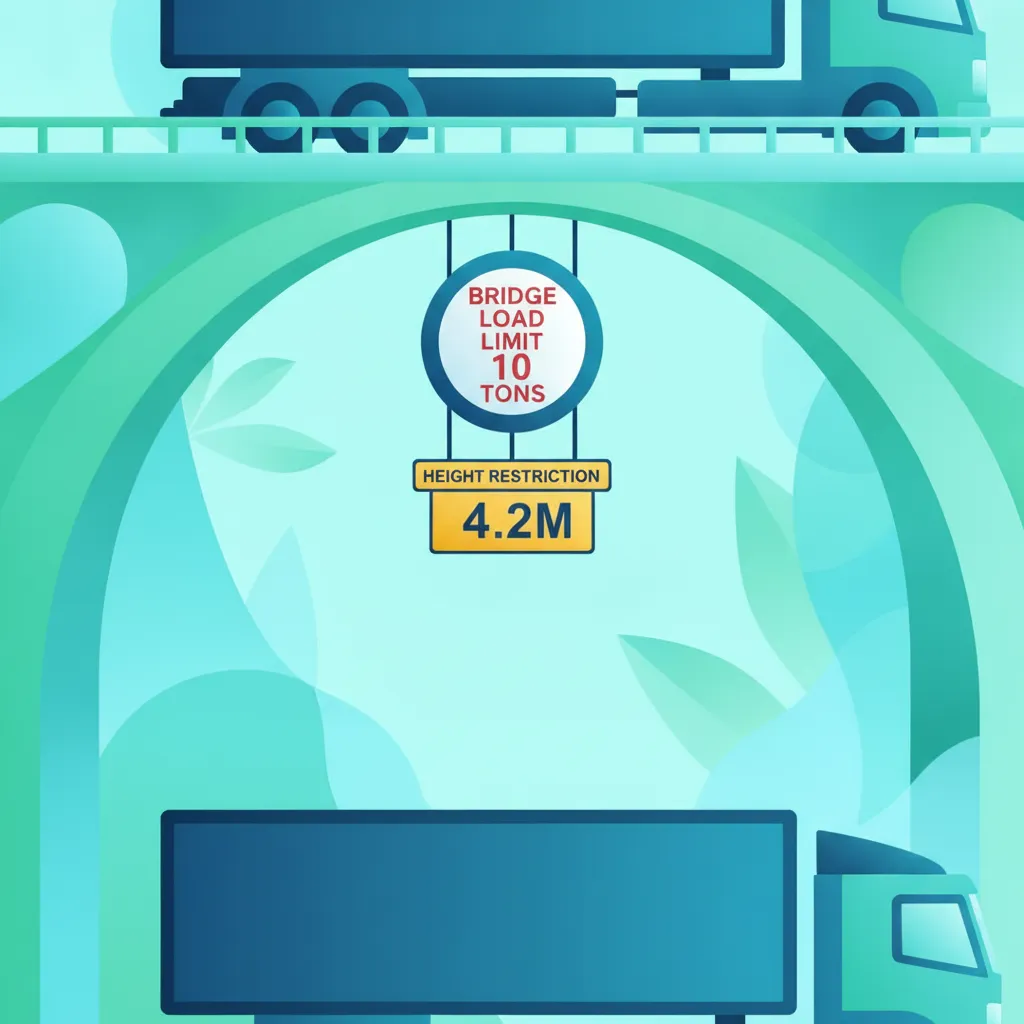
Bridge Load Limits and Height Restrictions lesson image

Bridge Load Limits and Height Restrictions

This lesson focuses on the critical importance of observing posted weight and height limits for bridges and other structures. It explains how to read the relevant signage and stresses the driver's responsibility to know their vehicle's exact height and weight. Ignoring these limits can lead to catastrophic structural failure and severe legal consequences.

Austrian HGV Theory CMotorways, Alpine Roads, Tunnels, Bridges, Weather and Route Planning
View lesson
General Traffic Rules for Heavy Vehicles lesson image

General Traffic Rules for Heavy Vehicles

This lesson details the general traffic rules applicable to heavy goods vehicles on Austrian roads, highlighting differences from passenger car regulations. It covers key topics such as right-of-way at intersections, specific rules for overtaking, maintaining proper lane discipline, and adhering to designated speed limits. Understanding these rules is critical for safe integration into mixed traffic.
Austrian HGV Theory CAustrian C Categories, Heavy-Vehicle Responsibility and Professional Mindset
View lesson
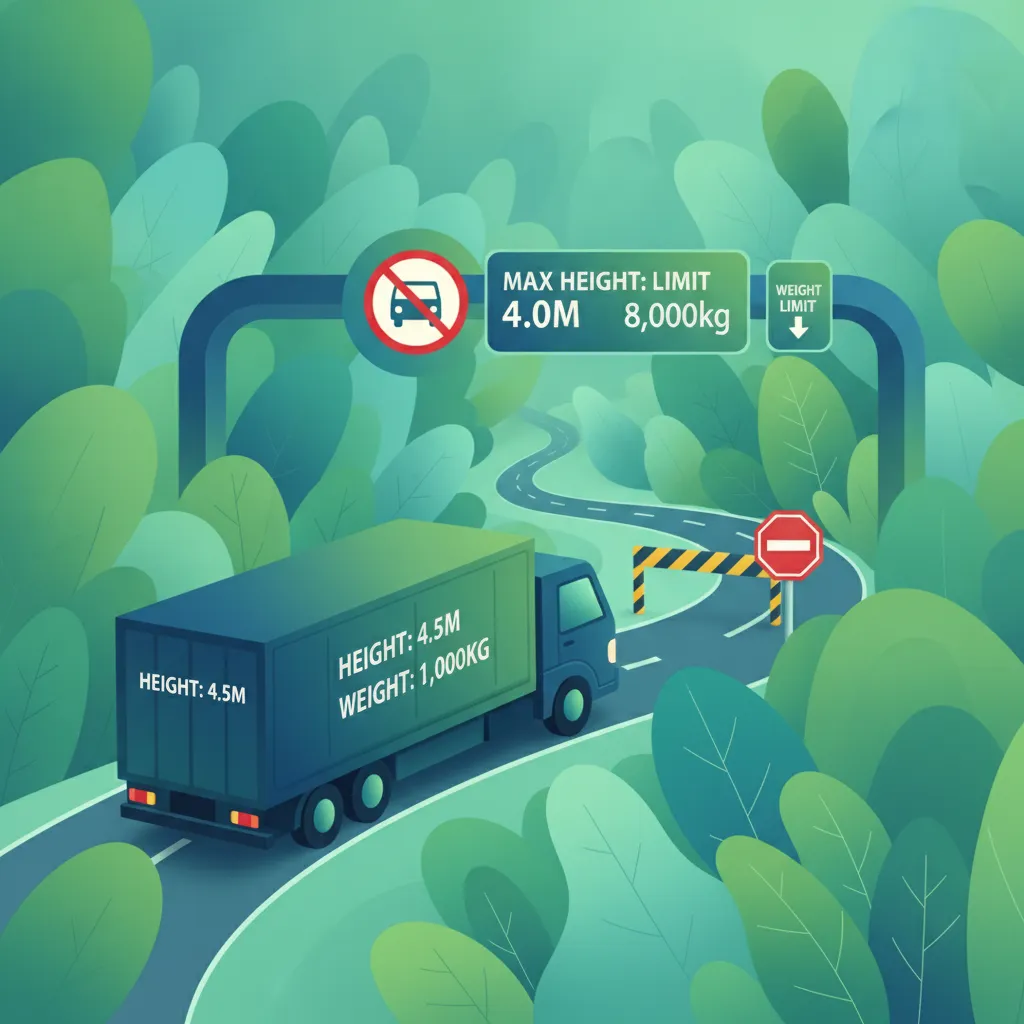
Route Planning for Load, Height, and Weight Restrictions lesson image

Route Planning for Load, Height, and Weight Restrictions

This lesson covers the practical aspects of planning a route for a heavy goods vehicle. It explains how to use maps and specialized GPS systems to identify and avoid roads with height, weight, or other restrictions. Proactive route planning is essential for ensuring an efficient, legal, and safe journey.

Austrian HGV Theory CMotorways, Alpine Roads, Tunnels, Bridges, Weather and Route Planning
View lesson
Legal Consequences of Overloading lesson image

Legal Consequences of Overloading

This lesson details the legal ramifications of operating an overloaded heavy vehicle in Austria, which include significant fines and penalty points. It also emphasizes the severe safety risks, such as compromised braking performance and increased mechanical stress on the vehicle. Understanding these consequences reinforces the importance of strict adherence to weight limits.

Austrian HGV Theory CMass, Dimensions, Axle Loads, Payload and Operating Limits
View lesson
Autobahn and Schnellstraße Usage for Heavy Vehicles lesson image

Autobahn and Schnellstraße Usage for Heavy Vehicles

This lesson details the regulations for heavy goods vehicles on Austria's high-speed road network. It covers the specific speed limits, rules on lane usage (e.g., when overtaking is permitted), and procedures for entering and exiting the motorway. Adherence to these rules is crucial for safety in a fast-paced environment.
Austrian HGV Theory CMotorways, Alpine Roads, Tunnels, Bridges, Weather and Route Planning
View lesson
Penalties and Enforcement in Heavy Vehicle Operation lesson image

Penalties and Enforcement in Heavy Vehicle Operation

This lesson explains the system of penalties and enforcement for heavy vehicle operations in Austria. It covers the fines and penalty points associated with common traffic violations, such as overloading or insecure loads. Learners will understand the role of authorities in conducting roadside checks and inspections to ensure regulatory compliance.

Austrian HGV Theory CAustrian C Categories, Heavy-Vehicle Responsibility and Professional Mindset
View lesson

Heavy Vehicle Maneuvering in Tight Urban Spaces and Narrow Streets

Learn essential driving theory for navigating Austrian urban environments with heavy goods vehicles. Covers strategies for assessing clearances, managing overhang, understanding turning radius, and applying precise low-speed control in confined areas.

heavy goods vehiclemaneuveringnarrow streetsurban drivingAustriaclearance assessment
Reversing Maneuvers in Restricted Urban Areas lesson image

Reversing Maneuvers in Restricted Urban Areas

This lesson provides practical strategies for safely reversing in challenging environments like narrow streets or busy loading zones. It emphasizes the 'get out and look' principle, the proper use of mirrors and cameras, and the critical safety role of a reliable spotter. Executing these manoeuvres slowly and cautiously is paramount to avoiding collisions.

Austrian HGV Theory CBlind Spots, Right Turns, Reversing and Manoeuvring Space
View lesson
Manoeuvring in Narrow Streets and Complex Junctions lesson image

Manoeuvring in Narrow Streets and Complex Junctions

Many Austrian towns and city centres feature narrow roads not designed for large vehicles. This lesson provides strategies for assessing tight spaces, positioning the vehicle to maximize clearance, and navigating complex, non-standard junctions. It emphasizes the importance of slow speeds, constant observation, and understanding the vehicle's swept path to avoid contact with buildings, street furniture, and other vehicles.

Austrian Driving Theory DCity Traffic, Bus Lanes, Tram Interaction and Public Transport Priority
View lesson
Protecting Pedestrians and Cyclists in City Centers lesson image

Protecting Pedestrians and Cyclists in City Centers

This lesson reinforces the critical importance of protecting vulnerable road users in dense urban settings. It teaches drivers to be hyper-aware of pedestrians and cyclists, especially near intersections and crosswalks. Key techniques include reducing speed, making eye contact to confirm intentions, and giving ample space.

Austrian HGV Theory CCity Deliveries, Construction Traffic and Vulnerable Road Users
View lesson
Coordination with Municipal Traffic Control Measures lesson image

Coordination with Municipal Traffic Control Measures

This lesson covers the interaction with various forms of urban traffic control. It includes anticipating traffic light cycles to avoid stopping in an intersection and following the directions given by police or road work personnel. Smooth cooperation with these systems ensures better traffic flow and safety for everyone.

Austrian HGV Theory CCity Deliveries, Construction Traffic and Vulnerable Road Users
View lesson
Delivery Zones and Loading Areas in Urban Settings lesson image

Delivery Zones and Loading Areas in Urban Settings

This lesson explains the regulations governing the use of designated delivery and loading zones in urban areas. It covers topics such as time restrictions, the potential need for permits, and the correct way to position the vehicle to minimize traffic disruption. Adhering to these rules is essential for efficient and legal urban logistics.

Austrian HGV Theory CCity Deliveries, Construction Traffic and Vulnerable Road Users
View lesson
Strategies for Navigating Dense Urban Traffic lesson image

Strategies for Navigating Dense Urban Traffic

Driving a bus in a busy city like Vienna or Salzburg requires constant forward planning and anticipation. This lesson teaches techniques for maintaining adequate space around the vehicle, positioning correctly for upcoming junctions, and reading the flow of traffic. Adopting a defensive mindset is key to navigating complex urban environments without incident.

Austrian Driving Theory DCity Traffic, Bus Lanes, Tram Interaction and Public Transport Priority
View lesson
Required Manoeuvring Space for Heavy Vehicles lesson image

Required Manoeuvring Space for Heavy Vehicles

This lesson teaches drivers how to develop spatial awareness regarding their vehicle's size. It covers how to judge the required space for making turns, considering the vehicle's turning radius and the effects of off-tracking. Planning ahead and positioning the vehicle correctly before a manoeuvre is key to navigating tight spaces successfully.

Austrian HGV Theory CBlind Spots, Right Turns, Reversing and Manoeuvring Space
View lesson
Urban Driving Dynamics and Traffic Flow lesson image

Urban Driving Dynamics and Traffic Flow

This lesson explores the distinct challenges of urban driving, focusing on managing the vehicle in dense, slow-moving, or stop-and-go traffic. It covers strategies for effective lane management, anticipating traffic signal changes, and navigating common city road features like one-way streets and traffic calming measures. Understanding these dynamics helps reduce stress and improve safety in congested environments.

Austrian Driving Theory BCity Traffic, Trams, Cyclists, Buses and Vulnerable Road Users
View lesson
Driving on Rural and Narrow Austrian Roads lesson image

Driving on Rural and Narrow Austrian Roads

Rural Austrian roads present unique challenges, including lack of markings, tight spaces, and slow-moving agricultural vehicles. This lesson teaches how to read the road ahead, anticipate hazards around blind bends, and use passing places effectively when meeting other large vehicles. It emphasizes adjusting speed to suit the limited visibility and variable road conditions.

Austrian Driving Theory DRural Services, Alpine Routes, Motorways, Tunnels and Long-Distance Coaches
View lesson
General Traffic Rules for Heavy Vehicles lesson image

General Traffic Rules for Heavy Vehicles

This lesson details the general traffic rules applicable to heavy goods vehicles on Austrian roads, highlighting differences from passenger car regulations. It covers key topics such as right-of-way at intersections, specific rules for overtaking, maintaining proper lane discipline, and adhering to designated speed limits. Understanding these rules is critical for safe integration into mixed traffic.

Austrian HGV Theory CAustrian C Categories, Heavy-Vehicle Responsibility and Professional Mindset
View lesson

Frequently asked questions about Navigating Narrow Streets and Restricted Access Roads

Find clear answers to common questions learners have about Navigating Narrow Streets and Restricted Access Roads. Learn how the lesson is structured, which driving theory objectives it supports, and how it fits into the overall learning path of units and curriculum progression in Austria. These explanations help you understand key concepts, lesson flow, and exam focused study goals.

What do I look for when a road has a weight or dimension restriction in Austria?

Always look for circular signs with a red border which indicate a prohibition. These are often accompanied by supplemental plates specifying the restriction for specific weight, height, or width in meters or tonnes, which must be strictly observed for your vehicle's total dimensions.

How do I handle narrow streets that are not explicitly marked with restrictions?

Even without specific signs, you must exercise professional judgment. If the width of your vehicle plus the required safety margin cannot be maintained, you must select an alternative route, as local authorities expect HGV drivers to account for their vehicle's size in all road environments.

Does a 'No Entry' sign for HGVs apply to all heavy vehicles?

Yes, unless a supplemental plate specifies a weight exemption or 'except loading/delivery'. Always verify the exact meaning of the supplemental plate to ensure you are legally authorized to enter.

Are there different rules for C1 vs CE vehicles in narrow streets?

While the general rules for road safety apply to all categories, the physical constraints for a CE vehicle (truck with trailer) are significantly higher due to articulation and off-tracking. You must account for the swing of the trailer when navigating tight turns.

Start Your Targeted Austrian Driving Theory Practice Search Now

Refine your study plan by searching for specific Austrian driving theory practice sets. Pinpoint questions related to particular road rules, signs, or challenge levels, and begin practicing immediately to reinforce your knowledge and excel in your official exam with confidence. Get started with focused revision today.

Search Practice Questions

Continue your Austrian driving theory learning journey

Austrian road signsAustrian article topicsSearch Austrian road signsAustrian HGV Theory C courseAustrian driving theory homeAustrian road sign categoriesAustrian driving theory topicsSearch Austrian theory articlesAustrian driving theory coursesAustrian Driving Theory B courseAustrian Driving Theory D courseAustrian driving theory articlesAustrian driving theory practiceAustrian practice set categoriesAustrian AM Driving Theory courseAustrian driving licence proceduresAustrian Motorcycle Theory (A) courseSearch Austrian driving theory practiceAustrian driving theory terminology A–ZAustrian driving theory terms and glossarySigns, Signals, Priority and Austrian Road Basics unit in Austrian AM Driving TheoryMass, Dimensions, Axle Loads, Payload and Operating Limits unit in Austrian HGV Theory CCategory AM in Austria and the First Responsibility of a Rider unit in Austrian AM Driving TheoryAustrian Traffic Culture, Core Behaviour Rules and Road Sharing unit in Austrian Driving Theory BMotorcycle Controls, Safety Checks and Protective Equipment unit in Austrian Motorcycle Theory (A)Category B in Austria, L17, Learner Practice and Driver Responsibility unit in Austrian Driving Theory BAustrian D Categories, Passenger Duty of Care and Professional Identity unit in Austrian Driving Theory DPassenger Vehicle Checks, Dimensions, Doors, Mirrors and Safety Systems unit in Austrian Driving Theory DAustrian A1, A2 and A Categories, Rider Identity and Responsibility unit in Austrian Motorcycle Theory (A)Austrian C Categories, Heavy-Vehicle Responsibility and Professional Mindset unit in Austrian HGV Theory CLegal Obligations During Urban Deliveries lesson in City Deliveries, Construction Traffic and Vulnerable Road UsersDelivery Zones and Loading Areas in Urban Settings lesson in City Deliveries, Construction Traffic and Vulnerable Road UsersProtecting Pedestrians and Cyclists in City Centers lesson in City Deliveries, Construction Traffic and Vulnerable Road UsersCoordination with Municipal Traffic Control Measures lesson in City Deliveries, Construction Traffic and Vulnerable Road UsersNavigating Narrow Streets and Restricted Access Roads lesson in City Deliveries, Construction Traffic and Vulnerable Road UsersInteraction with Construction Vehicles and Site Traffic lesson in City Deliveries, Construction Traffic and Vulnerable Road Users