
Navigating Belgian roads with agricultural machinery involves specific speed regulations. This article details the speed limits for tractors, focusing on the interplay between their type-approval maximum speed and the general road speed limits in Belgium. Mastering this topic is essential for safe driving and for passing your Belgian driving theory test.
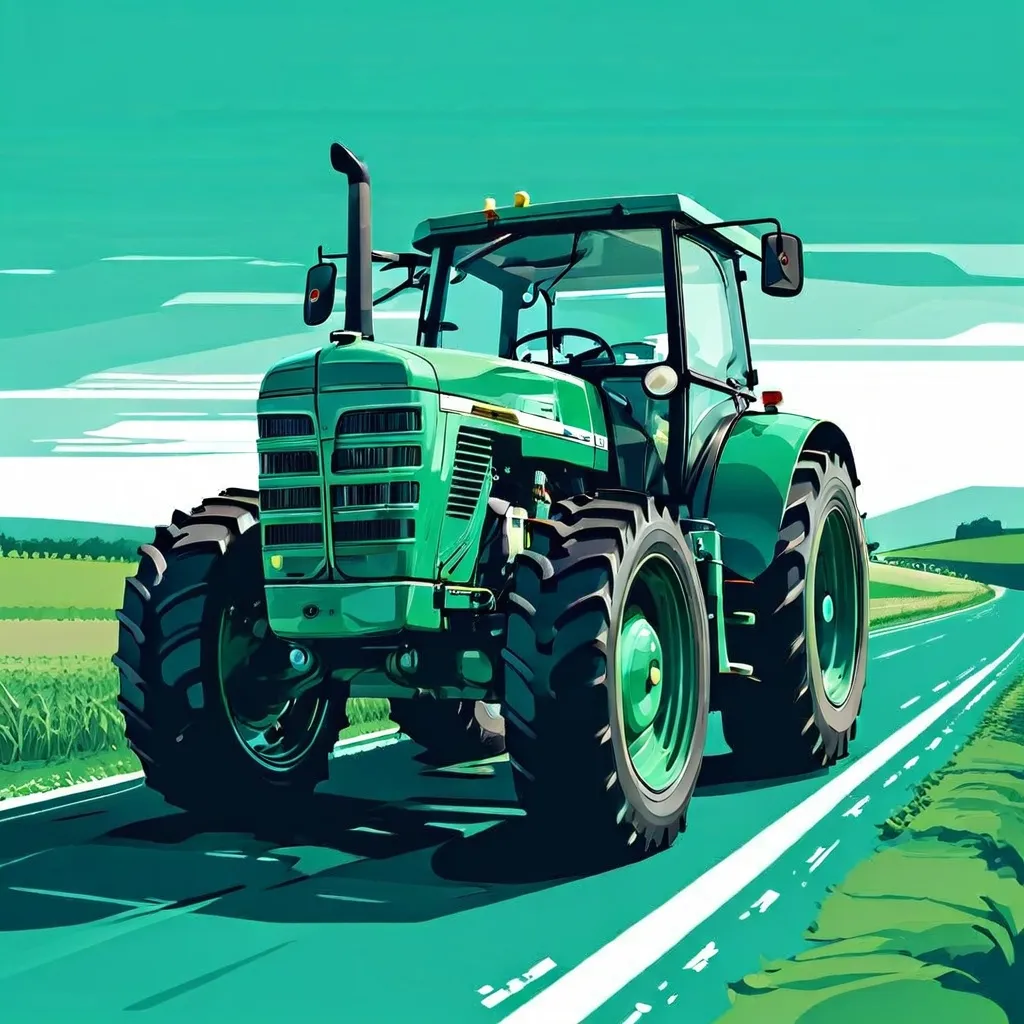
Article content overview
Navigating Belgian public roads with agricultural machinery requires a solid understanding of specific speed regulations. This article delves into the nuanced rules governing tractor speeds in Belgium, focusing on the critical interplay between a tractor's officially approved maximum speed (type-approval speed) and the general speed limits applicable to the roads they travel on. Mastering this distinction is not only vital for safe operation and compliance with Belgian road law but is also a crucial aspect of preparing for the Belgian driving theory examination.
When a tractor enters a Belgian public road, it is subject to two overarching speed considerations: its own technical limitations and the general speed restrictions of the road itself. The fundamental principle, which is frequently tested in the theory exam, is that the lower of these two applicable speeds always dictates the maximum legal speed. This means that even if a particular road allows for a higher speed, a tractor must not exceed its type-approved maximum speed. Conversely, if a tractor's type-approval speed is lower than the road's general limit, it must adhere to its own lower speed. This dual-regulation system is designed to ensure the safety of all road users, especially given the considerable size and slower pace of agricultural vehicles compared to standard passenger cars.
Every agricultural tractor intended for use on public roads in Belgium is subject to a type-approval process, which includes establishing a maximum authorized speed. This speed is determined by the vehicle's construction and is often explicitly stated in its registration documents. For many modern tractors, this type-approval speed is typically 40 km/h. However, older agricultural machinery might have a lower type-approval speed, such as 25 km/h. It is the driver's responsibility to be aware of their specific tractor's maximum authorized speed, as exceeding it on any public road, regardless of the posted speed limit, constitutes a violation of Belgian traffic law.
The maximum speed at which a vehicle, in this case an agricultural tractor, is permitted to travel on public roads based on its official design and certification by the relevant authorities. This speed is usually indicated in the vehicle's registration or technical documentation and is a crucial factor in determining its legal road speed.
Alongside the tractor's own speed limitation, general road speed limits are also strictly enforced. These limits vary significantly depending on the type of road and whether the vehicle is within or outside a built-up area. For instance, built-up areas typically have a 50 km/h speed limit, although certain zones, particularly those designated for pedestrians and cyclists, can have even lower limits, such as 30 km/h. Outside built-up areas, speed limits can range from 60 km/h to 90 km/h or even 120 km/h on motorways, depending on the road's characteristics and the vehicle's maximum authorised mass (MAM).
The critical point for drivers of agricultural machinery is to constantly cross-reference their tractor's type-approval speed with the posted speed limit for the road they are currently travelling on. The governing principle is always to adhere to the slower of the two. This is a common area for confusion and potential errors during the theory test, as it requires understanding multiple layers of regulation simultaneously.
Beyond the standard speed limit considerations, Belgium has specific regulations that can affect agricultural vehicles, particularly concerning their width and the need for special permits.
For operating agricultural and forestry vehicles, including their trailers, and registered agricultural machinery like tractors, a specific driving licence is required: the Category G licence. This category is nationally valid in Belgium and can be recognised in other countries, such as the Netherlands. While the Category G licence authorises the operation of these vehicles, it does not override the fundamental speed limit rules discussed previously; the type-approval speed and road speed limit still apply.
A specific Belgian driving licence category that permits the holder to operate agricultural and forestry vehicles, as well as agricultural machinery, on public roads. This licence is essential for legally driving tractors and similar specialised vehicles.
Agricultural machinery, such as combine harvesters or large beet harvesters, often exceed the standard width limit for vehicles on public roads, which is 2.55 metres. When a vehicle or load exceeds this width, it is classified as 'exceptionnel' (exceptional) or 'uitzonderlijk vervoer' (exceptional transport) in French and Dutch, respectively. Operating such wide machinery on public roads requires a special transport authorisation from the relevant regional road authority, such as Agentschap Wegen en Verkeer (AWV) in Flanders or Service Public de Wallonie (SPW) in Wallonia. This authorisation specifies the permitted routes, times of travel, and any necessary escort vehicles, ensuring that these large vehicles can navigate the road network safely and with minimal disruption. These permits are not related to speed limits directly but are a critical safety and regulatory component for agricultural operations.
Agricultural tractors are considered slow-moving vehicles and are subject to specific rules to ensure the smooth flow of traffic and prevent dangerous overtaking manoeuvres. At the rear of the vehicle, a distinctive orange-red triangular sign, known as the slow-vehicle sign, must be displayed. This sign clearly indicates to other road users that the vehicle is travelling at a reduced speed. In conditions of poor visibility, such as fog, heavy rain, or snow, additional orange flashing warning lights must also be activated.
Furthermore, Belgian traffic law mandates that the driver of a slow-moving vehicle must actively facilitate overtaking when it is safe to do so. This means pulling over to the right, if possible, or even briefly entering a gateway, verge, or lay-by, to allow queues of following vehicles to pass. Failing to do so can be considered an obstruction and a safety hazard. The theory exam often tests understanding of this obligation, as it is a key aspect of safe coexistence on rural roads.
Remember that even if a road is wide and appears safe for overtaking, the slow-moving vehicle driver has a legal obligation to assist following traffic whenever possible. Always be patient and allow them to safely pull over.
During the autumn harvest season, particularly in regions known for sugar beet cultivation in Wallonia and Flanders, a unique and significant road hazard emerges. Harvest vehicles, especially those involved in beet harvesting, can deposit mud and beet residue onto public roads. This residue creates extremely slippery surfaces, posing a severe risk of skidding and accidents for all vehicles, including tractors and cars. Belgian police authorities regularly issue warnings about these conditions, emphasizing the need for extreme caution.
When encountering such conditions, drivers of all vehicles must significantly reduce their speed and increase their following distance. For tractors, this means adhering even more strictly to their type-approved speed and the prevailing road conditions, which may necessitate travelling at speeds well below the posted limit. The Vias Institute, Belgium's institute for road safety, frequently publishes specific advisories regarding these autumn hazards, highlighting them as a critical safety concern for rural road users during this period.
Understanding Belgian tractor speed limits and related regulations is a common topic in the driving theory test. Examiners aim to assess whether candidates grasp the hierarchy of speed rules and the specific requirements for agricultural vehicles.
The maximum weight of a vehicle, including its load, as specified by the manufacturer. This is a key factor in determining speed limits on certain road types and for specific vehicle categories in Belgium.
Questions may present scenarios where a tractor with a specific type-approval speed is on a road with a different posted speed limit. Candidates must be able to identify the legally permissible speed by selecting the lower of the two values. They may also be tested on their knowledge of the slow-moving vehicle sign, the obligation to facilitate overtaking, and the hazards associated with agricultural operations, such as autumn harvest residue.
Operating agricultural tractors on Belgian public roads demands vigilance and a thorough understanding of the governing regulations. The dual nature of speed limits—type-approval versus road limits—is paramount, always requiring adherence to the most restrictive speed. Awareness of specific requirements for wide loads, slow-moving vehicle signage, and the unique hazards presented by autumn harvests further contributes to safe and compliant driving. By internalising these rules, drivers can contribute to a safer road environment for themselves and all other users, and confidently pass their Belgian driving theory examination.
This article explains the dual regulatory framework governing agricultural tractors on Belgian roads, where the type-approval speed and general road speed limits interact, always requiring adherence to the lower value. Key requirements include Category G driving licence, proper slow-moving vehicle signage, and the legal obligation to facilitate overtaking. Special regulations apply to wide agricultural machinery and exceptional transport, while seasonal hazards from autumn harvest operations demand heightened vigilance. Understanding these rules is essential for both safe driving and passing the Belgian driving theory examination.
A short set of high-value points that capture the most important ideas from this article.
The lower of a tractor's type-approval speed and the posted road speed limit always determines the maximum legal speed
A tractor's type-approval speed (often 40 km/h or 25 km/h) is specified in its registration documents and cannot be exceeded
Built-up areas enforce a 50 km/h limit while rural roads may allow up to 90 km/h depending on vehicle mass
Drivers must facilitate overtaking by pulling over when safe when operating slow-moving agricultural vehicles
Autumn harvest conditions create specific hazards from mud and beet residue requiring reduced speeds
Type-approval speed is the maximum certified speed based on vehicle construction, stated in registration documents
Slow-moving vehicles must display an orange-red triangular sign and use flashing warning lights in poor visibility
Category G licence authorises operation of agricultural vehicles but does not override speed limit rules
Vehicles exceeding 2.55 metres width require exceptional transport authorisation specifying routes and escort requirements
Maximum Authorised Mass (MAM) affects which speed limits apply on certain road types
Assuming the posted road speed limit always applies without checking the tractor's type-approval speed
Believing a Category G licence exempts drivers from general speed restrictions
Failing to recognise that type-approved speed may be lower than the road limit (e.g., older tractors at 25 km/h)
Not understanding the obligation to actively facilitate overtaking when operating slow-moving vehicles
Underestimating seasonal hazards from harvest operations on rural Belgian roads
Article content overview
A short set of high-value points that capture the most important ideas from this article.
The lower of a tractor's type-approval speed and the posted road speed limit always determines the maximum legal speed
A tractor's type-approval speed (often 40 km/h or 25 km/h) is specified in its registration documents and cannot be exceeded
Built-up areas enforce a 50 km/h limit while rural roads may allow up to 90 km/h depending on vehicle mass
Drivers must facilitate overtaking by pulling over when safe when operating slow-moving agricultural vehicles
Autumn harvest conditions create specific hazards from mud and beet residue requiring reduced speeds
Type-approval speed is the maximum certified speed based on vehicle construction, stated in registration documents
Slow-moving vehicles must display an orange-red triangular sign and use flashing warning lights in poor visibility
Category G licence authorises operation of agricultural vehicles but does not override speed limit rules
Vehicles exceeding 2.55 metres width require exceptional transport authorisation specifying routes and escort requirements
Maximum Authorised Mass (MAM) affects which speed limits apply on certain road types
Assuming the posted road speed limit always applies without checking the tractor's type-approval speed
Believing a Category G licence exempts drivers from general speed restrictions
Failing to recognise that type-approved speed may be lower than the road limit (e.g., older tractors at 25 km/h)
Not understanding the obligation to actively facilitate overtaking when operating slow-moving vehicles
Underestimating seasonal hazards from harvest operations on rural Belgian roads
Explore related topics, search based questions, and concepts that learners often look up when studying Belgian Tractor Speed Limits. These themes reflect real search intent and help you understand how this topic connects to wider driving theory knowledge in Belgium.
Find clear and practical answers to common questions learners often have about Belgian Tractor Speed Limits. This section helps explain difficult points, remove confusion, and reinforce the key driving theory concepts that matter for learners in Belgium.
The maximum speed for an agricultural tractor in Belgium is determined by its type-approval. While many modern tractors are type-approved for up to 40 km/h, older models may be limited to 25 km/h. This type-approval speed is the absolute maximum the vehicle can legally reach.
Yes, tractors must always adhere to the general speed limits applicable to the road they are using. The actual legal speed limit for a tractor on a public road is always the lower of its type-approval speed and the posted road speed limit.
Type-approval speed is the maximum speed officially registered and approved for a specific vehicle model, often indicated on its registration documents or a plate. For agricultural tractors in Belgium, this is commonly 40 km/h but can vary.
Yes, agricultural machinery exceeding 2.55 meters in width may require a special transport authorization (uitzonderlijk vervoer / transport exceptionnel) from regional authorities, specifying permitted routes and times.
Slow-moving vehicles, including tractors, must display the slow-vehicle sign (an orange inverted triangle) at the rear. In conditions of poor visibility, working rear orange warning lights are also mandatory. Drivers must also facilitate overtaking by moving to the right or pulling over when safe.
Continue your learning journey by exploring related articles and guides on specific Belgian traffic situations, advanced road signs, or vehicle safety topics. Use our search to pinpoint what you need to review next, deepening your understanding for your driving license theory exam.