
Prepare for the Belgian roads by familiarising yourself with mandatory motorcycle equipment, including the latest ECE 22.06 helmet standards and ABS requirements. This article clarifies the legal ambiguities surrounding filtering ('interfile') and provides essential context through stark accident statistics, highlighting why awareness and proper gear are paramount for all Belgian riders.
Article content overview
Navigating the Belgian roads on a motorcycle demands more than just skill; it requires a comprehensive understanding of specific regulations, safety equipment, and inherent risks. Whether you are pursuing your A1, A2, or full A licence, or simply aiming to enhance your awareness as an existing rider, this guide will equip you with the essential knowledge to ride safely and legally in Belgium. We delve into mandatory protective gear, the nuanced legality of filtering (or 'interfile'), and the critical statistics that underscore the importance of vigilance and preparation for every motorcyclist.
Belgian law, in line with European directives, mandates specific protective equipment for motorcyclists to mitigate the severity of potential accidents. The most critical piece of equipment, the helmet, has seen an update in standards, reflecting advancements in safety technology.
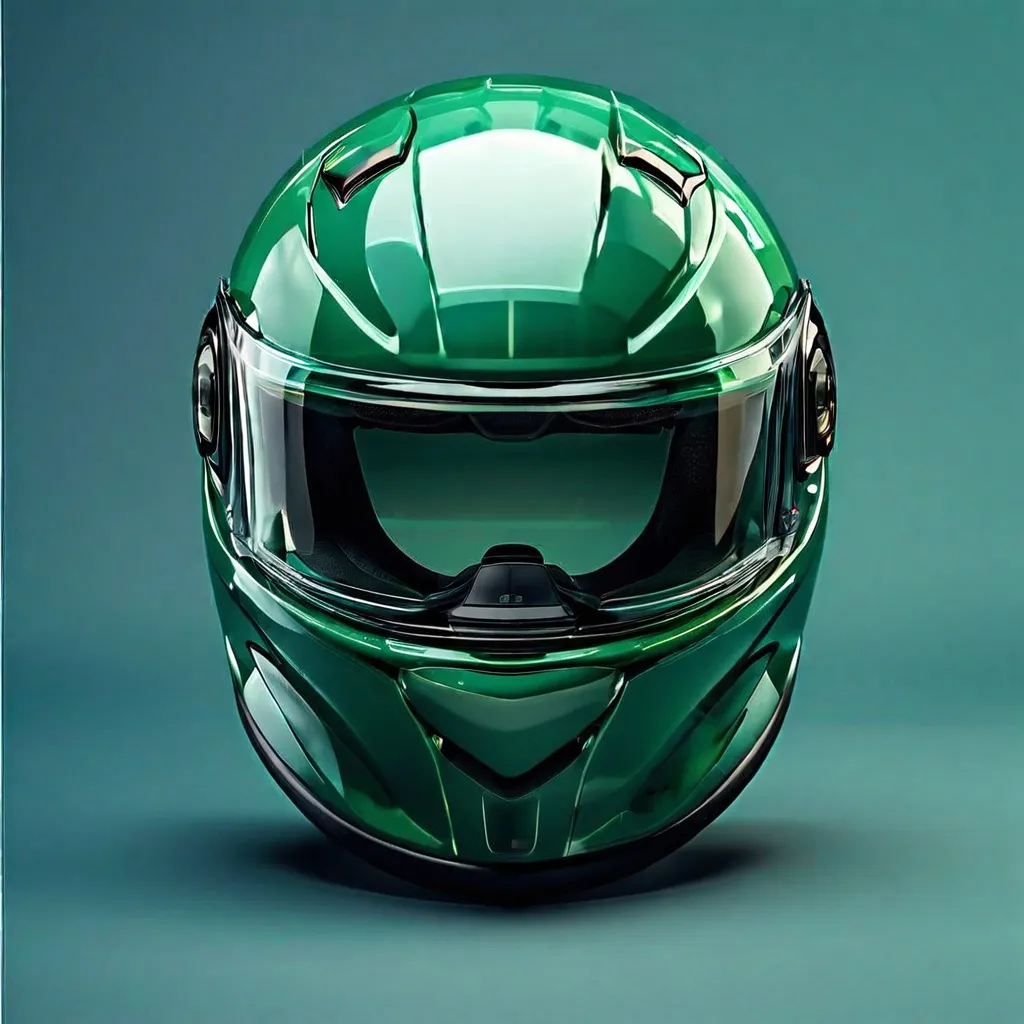
All riders and passengers on motorcycles, as well as on three- and four-wheeled vehicles with a motor but without a passenger compartment, must wear a protective helmet. For helmets purchased and certified under the newer standards, it must comply with ECE 22.06. Helmets certified under the previous ECE 22.05 standard remain legal as long as they were purchased before June 2023. Crucially, the helmet must be properly fastened and worn in a way that ensures its protective function is not compromised. Helmets worn by residents of Belgium must bear an homologation mark indicating conformity to the established standards.
For helmets where homologation is required, the ECE 22.06 standard represents the latest and most rigorous safety certification, encompassing a wider range of impact tests and ensuring better protection for riders.
While the helmet is paramount, Belgian regulations and safety recommendations extend to other vital protective items. Riders and passengers are strongly advised, and in some contexts legally required, to wear additional protective clothing. This includes:
These items are not merely recommendations; they form a critical layer of defence against road rash and impact injuries, significantly enhancing rider safety in the unfortunate event of an incident.
Since January 1st, 2016, all newly manufactured motorcycles sold in Belgium, as well as across the European Union, must be equipped with an Anti-lock Braking System (ABS). This regulation aims to reduce the likelihood of riders losing control due to aggressive braking, particularly on slippery surfaces. For riders preparing for their theory test or purchasing a motorcycle, understanding the presence and function of ABS is important.
The mandatory inclusion of ABS for new motorcycles is a significant safety advancement. Familiarise yourself with how ABS functions, especially during emergency braking scenarios, as this knowledge is vital for safe riding and can be a topic in your theory exam.
Belgium, like other EU countries, follows a graduated licensing system for motorcycles, ensuring riders gain experience progressively. The categories are AM, A1, A2, and A, each with specific age requirements and vehicle restrictions.
Progressive access to higher motorcycle licence categories (e.g., A2 from A1, or A from A2) allows riders to obtain more powerful licences after holding a lower category for a specified period (typically two years), often with modified training or examination requirements compared to direct access.
One of the most debated aspects of motorcycle riding in Belgium is lane filtering, often referred to as 'interfile' or 'rijden tussen rijstroken' (riding between lanes). Unlike some countries that explicitly permit or prohibit it, Belgium occupies a nuanced position.
Belgian law does not explicitly prohibit or authorise lane filtering. This means there isn't a specific article in the Highway Code that sanctions or forbids riding between lanes of slow or stationary traffic. However, this lack of explicit permission means that police officers can, in principle, issue fines based on general provisions related to safe driving and not impeding traffic.
While lane filtering is a common practice, especially in congested urban areas like Brussels and Antwerp, and is often tolerated by law enforcement, it is not legally protected. Riders engaging in filtering do so at their own risk, as a fine can be issued if an officer deems the manoeuvre unsafe or in violation of general traffic rules.
In practice, police tolerance for filtering tends to be higher in situations of significant traffic congestion, such as during peak hours on motorways or major arterial roads. The key factors influencing this tolerance typically revolve around the speed differential between the filtering motorcycle and the surrounding vehicles, and the overall traffic flow. If traffic is completely stationary, filtering at very low speeds (e.g., up to 20 km/h, or a 20 km/h differential from surrounding traffic) is more likely to be overlooked than aggressive weaving through fast-moving traffic.
Riders should always exercise extreme caution when filtering. This includes ensuring there is sufficient space to manoeuvre safely, being highly visible, and anticipating sudden movements from other vehicles. The decision to filter should always prioritise safety over expediency.
Motorcyclists are a vulnerable road user group, and statistics in Belgium unfortunately reflect this reality. Understanding these risks is crucial for fostering a culture of safety and making informed decisions on the road.
Data consistently shows that motorcyclists, despite accounting for a relatively small percentage of total kilometres travelled, are disproportionately involved in road accidents, particularly those resulting in fatalities or serious injuries. In Wallonia, for example, powered two-wheelers account for around 2% of kilometres driven but are involved in approximately 10% of all personal injury accidents and represent about 15% of road fatalities annually. This means a motorcyclist faces a significantly higher risk per kilometre compared to a car driver.
The higher risk associated with motorcycling is not a reason to avoid it, but rather a strong incentive to be exceptionally well-prepared, well-geared, and highly attentive. The theory test often includes questions designed to assess your awareness of these risks and your understanding of how to mitigate them.
Several factors contribute to the elevated risk for motorcyclists:
By understanding these factors and diligently adhering to Belgian traffic laws and safety recommendations, motorcyclists can significantly improve their safety and reduce their risk on the road.
This article covers essential Belgian motorcycle safety regulations including mandatory ECE 22.06 helmet standards and ABS requirements since 2016, while clarifying that older ECE 22.05 helmets purchased before June 2023 remain legal. The graduated licence system progresses from AM (mopeds) through A1, A2, to unrestricted A category, with specific power limits and age requirements for each stage. Lane filtering exists in a legal grey area in Belgium—it is not explicitly forbidden but also not legally authorised, meaning riders can face fines if deemed unsafe. The article emphasises that motorcyclists face significantly higher per-kilometre accident risk than car drivers, making proper equipment, licence compliance, and risk awareness critical for all Belgian riders.
A short set of high-value points that capture the most important ideas from this article.
ECE 22.06 is the mandatory helmet standard for new purchases; ECE 22.05 helmets remain legal only if purchased before June 2023
ABS has been mandatory on all newly manufactured motorcycles in Belgium and the EU since January 1st, 2016
Belgian licence progression follows a graduated system: AM (16 years) → A1 (18 years, 125cc/11kW) → A2 (18 years, 35kW) → A (24 years direct or 22 years progressive)
Lane filtering in Belgium occupies a legal grey area—neither explicitly permitted nor prohibited—so riders act at their own risk
Motorcyclists in Belgium face disproportionately higher accident risk per kilometre compared to car drivers despite lower overall mileage
Helmets must bear an homologation mark confirming compliance with current standards and must be properly fastened
Progressive access allows upgrading to higher licence categories after holding the lower category for at least two years
When filtering is tolerated by police, speed differential typically should not exceed approximately 20 km/h over surrounding traffic
Category A1 restricts power to 11 kW with a power-to-weight ratio not exceeding 0.1 kW/kg
Motorcyclists are classified as vulnerable road users due to minimal physical protection in collisions
Assuming ECE 22.05 helmets purchased after June 2023 remain legal—only helmets purchased before that date are grandfathered in
Confusing the power limits between A1 (11 kW) and A2 (35 kW) licence categories
Believing filtering is legally protected in Belgium; it is merely tolerated in specific congestion conditions
Overlooking that gloves, boots, and protective clothing significantly reduce injury severity despite not being as explicitly mandated as helmets
Neglecting to understand ABS function despite it being mandatory knowledge for both theory exams and safe riding
Article content overview
A short set of high-value points that capture the most important ideas from this article.
ECE 22.06 is the mandatory helmet standard for new purchases; ECE 22.05 helmets remain legal only if purchased before June 2023
ABS has been mandatory on all newly manufactured motorcycles in Belgium and the EU since January 1st, 2016
Belgian licence progression follows a graduated system: AM (16 years) → A1 (18 years, 125cc/11kW) → A2 (18 years, 35kW) → A (24 years direct or 22 years progressive)
Lane filtering in Belgium occupies a legal grey area—neither explicitly permitted nor prohibited—so riders act at their own risk
Motorcyclists in Belgium face disproportionately higher accident risk per kilometre compared to car drivers despite lower overall mileage
Helmets must bear an homologation mark confirming compliance with current standards and must be properly fastened
Progressive access allows upgrading to higher licence categories after holding the lower category for at least two years
When filtering is tolerated by police, speed differential typically should not exceed approximately 20 km/h over surrounding traffic
Category A1 restricts power to 11 kW with a power-to-weight ratio not exceeding 0.1 kW/kg
Motorcyclists are classified as vulnerable road users due to minimal physical protection in collisions
Assuming ECE 22.05 helmets purchased after June 2023 remain legal—only helmets purchased before that date are grandfathered in
Confusing the power limits between A1 (11 kW) and A2 (35 kW) licence categories
Believing filtering is legally protected in Belgium; it is merely tolerated in specific congestion conditions
Overlooking that gloves, boots, and protective clothing significantly reduce injury severity despite not being as explicitly mandated as helmets
Neglecting to understand ABS function despite it being mandatory knowledge for both theory exams and safe riding
Explore related topics, search based questions, and concepts that learners often look up when studying Belgian Motorcycle Safety & Rules. These themes reflect real search intent and help you understand how this topic connects to wider driving theory knowledge in Belgium.
Find clear and practical answers to common questions learners often have about Belgian Motorcycle Safety & Rules. This section helps explain difficult points, remove confusion, and reinforce the key driving theory concepts that matter for learners in Belgium.
In Belgium, motorcycle riders and passengers must wear a helmet that complies with either the ECE 22.05 standard or the newer ECE 22.06 standard for helmets certified after June 2023.
Lane filtering, or 'interfile', is not explicitly permitted or prohibited by Belgian law. While often tolerated in congested traffic, especially on motorways or ring roads, riders should be aware that police discretion can lead to enforcement if deemed unsafe.
Besides an approved helmet, riders in Belgium must wear gloves. Protective clothing such as a long-sleeved jacket, trousers or suit, and boots or ankle-high footwear that protect the ankles are also legally required.
Yes, motorcyclists in Belgium face significantly higher risks. They represent a disproportionately large percentage of road fatalities and serious injuries compared to their share of road usage, highlighting the vulnerability of riders.
ABS became mandatory for all new type-approved motorcycles and mopeds (over 125cc) in the European Union, including Belgium, from January 1, 2016.
Continue your learning journey by exploring related articles and guides on specific Belgian traffic situations, advanced road signs, or vehicle safety topics. Use our search to pinpoint what you need to review next, deepening your understanding for your driving license theory exam.