
Driving in Belgium requires adherence to specific rules when transporting animals, whether they are beloved pets or commercial livestock. This guide clarifies your responsibilities as a driver, including how to secure pets to prevent distractions and the strict regulations governing livestock transport. Mastering these points is essential for both road safety and passing your Belgian theory exam.
Article content overview
Driving in Belgium comes with a responsibility that extends beyond operating the vehicle; it includes the safe and legal transport of any animals accompanying you. Whether you are carrying a beloved pet or transporting livestock for professional reasons, understanding the specific regulations is crucial. Belgian traffic law prioritizes the safety of all road users, and this extends to ensuring animals do not pose a hazard. This article will guide you through the rules for transporting pets and livestock in Belgium, clarify your legal obligations, and highlight common areas of focus for the driving theory exam. By mastering these points, you will not only drive more safely but also demonstrate your knowledge of Belgian road laws, a key component of passing your theory test.
Belgian traffic law, much like that in many European countries, places a strong emphasis on the driver's overall responsibility to maintain control of their vehicle at all times. While the Belgian Highway Code does not mandate a specific type of restraint for domestic pets, this does not imply they can roam freely within the vehicle. The general duty of care, enshrined in Article 8 of the Belgian Highway Code, requires drivers to ensure their actions do not endanger themselves or others. An animal that interferes with the driver’s ability to control the vehicle, whether by obstructing vision, jumping onto controls, or causing a significant distraction, represents a direct contravention of this fundamental principle.
If an accident occurs and it is determined that an unrestrained animal caused a distraction or physically interfered with the driver's control, the driver can be held liable. Belgian civil courts have precedent for finding drivers partially or wholly responsible in such situations. This means that even if the primary cause of an accident was external, the presence and behaviour of an unsecured animal can contribute to a finding of contributory negligence against the driver. This principle is also a common exam topic, testing your understanding of how vehicle control and safety must be maintained irrespective of other factors.
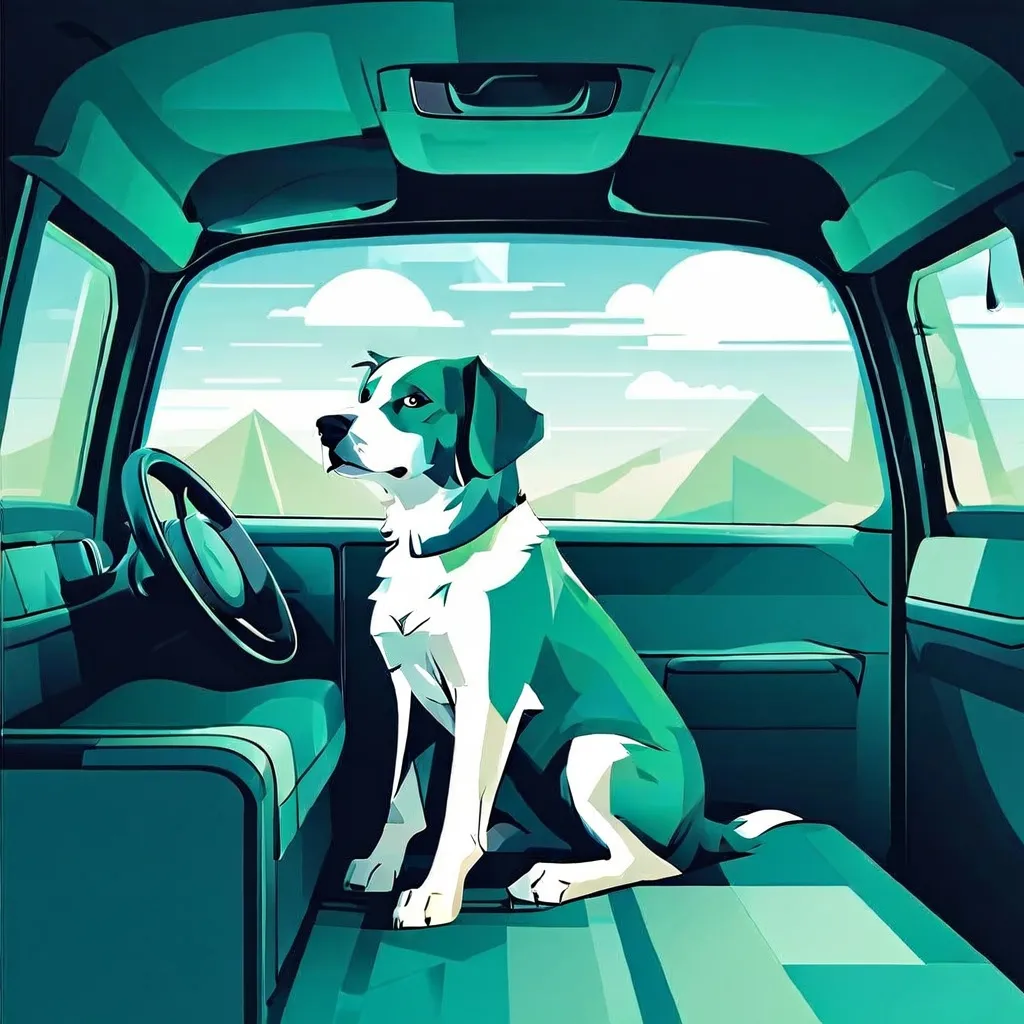
When transporting pets in Belgium, always consider the potential for distraction. Even a small animal can cause significant interference if it is not properly secured.
While Belgian law offers flexibility in the method of securing pets, safety and practicality are paramount. Animal welfare organisations and safety bodies like VIAS recommend several effective methods to ensure your pet is safely contained and does not become a hazard. These include using a crash-tested pet harness that attaches to a seat belt anchor point, employing an approved pet carrier that is securely fastened to prevent movement, installing a dedicated cargo barrier to keep the animal in the rear of the vehicle, or using a sturdy crate designed for the cargo area of SUVs or estates.
The choice of method should depend on the size and temperament of the animal, as well as the type of vehicle. For smaller animals, a secure carrier is often ideal, while larger dogs may benefit from a robust barrier or a crate. The key is that the method chosen effectively prevents the animal from moving into the driver’s space or interfering with driving operations.
It is important to be aware of the potential insurance implications if an accident is partly caused by an unrestrained pet. Your insurance policy may reduce or deny compensation for your own vehicle damage if it is established that your negligence in failing to secure your animal contributed to the incident. This underscores the financial and legal importance of adhering to best practices for animal transport, even when specific legal mandates are not explicitly detailed for every scenario.
Transporting livestock in Belgium falls under much more stringent regulations, primarily governed by EU Regulation 1/2005 on the protection of animals during transport. This regulation is designed to ensure the welfare of farm animals during journeys, and it has direct implications for drivers and vehicle operators. Unlike the more general guidance for pets, livestock transport involves specific legal requirements that must be met.
Vehicles used for transporting livestock must have specific authorization from the competent authorities. This means the vehicle must be equipped and maintained to standards that ensure the safety and well-being of the animals. Furthermore, drivers involved in transporting livestock for commercial purposes must hold a specific competence certificate, often referred to as an animal transport competence certificate. This certificate demonstrates that the driver has received adequate training in animal welfare during transport, including knowledge of handling, loading, unloading, and the specific needs of different species.
EU Regulation 1/2005 also dictates strict rules regarding journey times and rest periods for livestock. These rules are in place to minimise stress and fatigue for the animals. Drivers must adhere to prescribed maximum journey durations and ensure that adequate rest stops are provided at appropriate intervals. These stops allow animals to be watered, fed, and given space to move, which is vital for their welfare. Planning routes and schedules meticulously is therefore a non-negotiable aspect of livestock transport.
Accurate documentation is essential when transporting livestock. This can include movement records, health certificates, and any other required paperwork that verifies the animals' origin, destination, and health status. Failure to produce the correct documentation upon request by authorities can lead to penalties. The comprehensive nature of these regulations means that anyone considering livestock transport, even for non-commercial purposes like transporting horses as indicated in some official documentation, should familiarise themselves with the specific requirements.
Transporting livestock without the correct authorization, documentation, or a properly trained driver can result in significant fines and legal consequences. Always ensure full compliance with Belgian and EU regulations.
The Belgian driving theory test assesses a driver's understanding of all aspects of road safety and legislation. When it comes to animal transport, expect questions that probe your comprehension of driver liability and the practical implications of unsecured animals. Examiners often focus on scenarios where an animal could realistically cause a distraction or interfere with vehicle control, testing your knowledge of the general duty of care.
For instance, a typical theory question might present a situation where a driver is transporting a dog loose in the car and ask about the potential consequences or the driver's responsibilities. You should identify that the primary concern is the potential for distraction and the breach of the duty to maintain control. Similarly, questions related to livestock transport might assess your awareness that this is a specialised area with specific regulations and requirements beyond those for pets.
The theory test aims to ensure you understand that safety is paramount and that any factor, including a pet's behaviour, that compromises your ability to drive safely must be mitigated.
Mastering these terms and the principles behind them will significantly improve your understanding of driving regulations in Belgium.
Remember that while Belgian law doesn't specify how to secure a pet, it absolutely requires that you do secure it in a way that prevents it from interfering with your driving.
To solidify your understanding of animal transport rules, driver liability, and related traffic legislation in Belgium, it is essential to test your knowledge with practice questions.
This article covers Belgium's rules for transporting animals, distinguishing between the general duty of care for pet owners and the stricter regulatory framework for livestock. Drivers must secure pets to prevent distraction and maintain vehicle control, with liability potentially attaching if an unsecured animal contributes to an accident. Livestock transport falls under EU Regulation 1/2005, requiring authorized vehicles, trained drivers with competence certificates, and compliance with journey time limits and rest periods. Understanding these rules is essential for both safe driving and passing the Belgian theory exam.
A short set of high-value points that capture the most important ideas from this article.
Belgian law requires drivers to keep animals secured under the general duty of care in Article 8 of the Highway Code, even without a specific restraint method mandated
An unsecured animal that causes distraction or interferes with vehicle control can result in driver liability and contributory negligence findings
Livestock transport is governed by EU Regulation 1/2005 and requires specific vehicle authorization, driver competence certificates, and compliance with journey time limits
The choice of pet restraint method should match the animal's size and temperament, using harnesses, carriers, barriers, or crates
Insurance claims may be reduced or denied if an accident is linked to an unrestrained pet
Article 8 of the Belgian Highway Code establishes the driver's duty of care regarding animals in the vehicle
EU Regulation 1/2005 sets strict rules for livestock including authorized vehicles, driver training certificates, and mandatory rest periods
Livestock transport requires documentation such as movement records and health certificates to be available upon request
Pets must be secured to prevent them from obstructing vision, jumping onto controls, or causing any distraction to the driver
Contributory negligence can be assigned to a driver if an unsecured animal contributed to an accident, even partially
Assuming that because Belgian law does not specify a particular restraint type, pets can roam freely in the vehicle
Treating livestock transport regulations as equivalent to pet transport rules; livestock has much stricter requirements
Failing to properly document livestock journeys, leading to penalties when stopped by authorities
Believing that a minor distraction from a pet is unlikely to affect driving ability; even small animals can cause significant interference
Overlooking that insurance compensation may be denied if negligence in securing an animal contributed to an incident
Article content overview
A short set of high-value points that capture the most important ideas from this article.
Belgian law requires drivers to keep animals secured under the general duty of care in Article 8 of the Highway Code, even without a specific restraint method mandated
An unsecured animal that causes distraction or interferes with vehicle control can result in driver liability and contributory negligence findings
Livestock transport is governed by EU Regulation 1/2005 and requires specific vehicle authorization, driver competence certificates, and compliance with journey time limits
The choice of pet restraint method should match the animal's size and temperament, using harnesses, carriers, barriers, or crates
Insurance claims may be reduced or denied if an accident is linked to an unrestrained pet
Article 8 of the Belgian Highway Code establishes the driver's duty of care regarding animals in the vehicle
EU Regulation 1/2005 sets strict rules for livestock including authorized vehicles, driver training certificates, and mandatory rest periods
Livestock transport requires documentation such as movement records and health certificates to be available upon request
Pets must be secured to prevent them from obstructing vision, jumping onto controls, or causing any distraction to the driver
Contributory negligence can be assigned to a driver if an unsecured animal contributed to an accident, even partially
Assuming that because Belgian law does not specify a particular restraint type, pets can roam freely in the vehicle
Treating livestock transport regulations as equivalent to pet transport rules; livestock has much stricter requirements
Failing to properly document livestock journeys, leading to penalties when stopped by authorities
Believing that a minor distraction from a pet is unlikely to affect driving ability; even small animals can cause significant interference
Overlooking that insurance compensation may be denied if negligence in securing an animal contributed to an incident
Explore related topics, search based questions, and concepts that learners often look up when studying Transporting Animals in Belgium. These themes reflect real search intent and help you understand how this topic connects to wider driving theory knowledge in Belgium.
Find clear and practical answers to common questions learners often have about Transporting Animals in Belgium. This section helps explain difficult points, remove confusion, and reinforce the key driving theory concepts that matter for learners in Belgium.
Belgian law does not prescribe a specific restraint method for pets, but drivers must maintain full vehicle control at all times. An unsecured pet causing distraction or interference can lead to driver liability.
Drivers must ensure the animal does not obstruct their view, interfere with controls, or cause distraction. Failure to do so can result in liability in case of an accident.
Yes, livestock transport in Belgium falls under EU Regulation 1/2005. It requires specific vehicle authorization, adherence to journey and rest times, and drivers must hold a competence certificate for animal transport.
If an accident is attributed to a distracted or interfered-with driver due to an unrestrained pet, the driver may be held liable, and their insurance compensation could be reduced.
Practical recommendations include using a crash-tested pet harness, an approved and secured pet carrier, a cargo barrier to separate the animal from the driver, or a crate for larger dogs.
Continue your learning journey by exploring related articles and guides on specific Belgian traffic situations, advanced road signs, or vehicle safety topics. Use our search to pinpoint what you need to review next, deepening your understanding for your driving license theory exam.