
The F9 sign indicates the start of a motorroad, a type of road with specific rules and higher speeds, common in Belgium. As part of Belgium's information and indicatory signs, this sign requires drivers to adjust their behaviour, particularly regarding speed and lane positioning, before entering. Always pay attention to road markings and any supplementary panels that might accompany the F9 sign, as they can provide crucial details about directions, distances, or specific vehicle requirements.
Master the 'Start of a Motorroad' (F9) sign's meaning and practical implications for your Belgian driving theory test revision. This sign is crucial for understanding specific road rules and interpreting traffic situations correctly.
Belgian road sign F9, titled "Start of a motorroad", belongs to the belgian information and indicatory signs group. It is used to communicate start of a motorroad in a form that drivers can recognise quickly during Belgian theory study and real traffic. The practical task is to connect the sign with road markings, lanes, crossings, services, zones, or route directions in the immediate environment, because the legal effect of a road sign starts from its placement and can be refined by panels, lane markings, traffic lights, or zone signs. For learners, the safest approach is to identify the sign early, say what road users or manoeuvres it affects, and then choose speed, position, and priority behaviour that match the displayed instruction.
Belgian road sign F9 means "Start of a motorroad". In practice, it tells drivers to use the information before choosing speed, lane position, route, or next manoeuvre, while checking the exact road layout, markings, and any supplementary panels before acting.
Get clear, practical answers to the most common questions about the F9 - Start of a motorroad road sign. Learn how the sign works, what rules it represents, and how it affects real driving situations. This FAQ strengthens your understanding and supports accurate decision making for the Belgian driving theory exam in Belgium.
The F9 sign in Belgium marks the beginning of a motorroad. Its main purpose is to inform drivers that they are entering a road with characteristics and rules similar to a motorway, often involving higher speeds and specific lane discipline. It prompts drivers to prepare for these conditions.
Upon seeing the F9 sign, you should increase your awareness of the road ahead. You need to select an appropriate speed and lane position for a motorroad. This might involve accelerating to match traffic flow, using the rightmost lane for normal travel, and preparing for potential merging traffic. Always check road markings and any accompanying panels.
Yes, you must not ignore the information the F9 sign provides for lane positioning or route planning. It's prohibited to assume priority or permission beyond what the sign implies, and you should avoid waiting until the last moment to react to lane markings or direction signs. Blocking other road users while correcting a missed cue is also forbidden.
While functionally similar, the F9 sign specifically denotes the 'start of a motorroad' within the Belgian traffic system. This term might encompass roads that are not full motorways but share similar characteristics, such as higher speed limits and restricted access. The core behaviour required – preparing for higher speeds and specific lane usage – remains consistent.
The F9 sign itself doesn't state a specific speed limit, but it signals the start of a motorroad, which typically has higher speed limits than standard roads. You must adhere to the posted speed limits for motorroads in Belgium, which are usually 120 km/h unless otherwise indicated by supplementary signs. Always observe your surroundings and other traffic for context.
A common trap is assuming the F9 sign automatically grants priority or allows any speed. Learners might also fail to notice or incorrectly interpret supplementary panels (e.g., for specific vehicle types) or crucial road markings that define lane usage and merge points. You must always read the sign in conjunction with its immediate environment.
A clear reference image of the F9 - Start of a motorroad road sign used in Belgium.
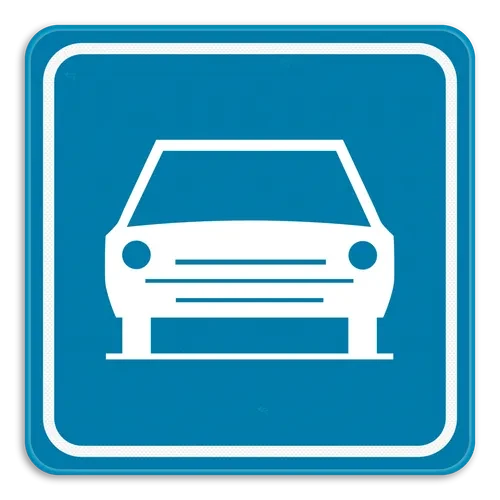
The F9 - Start of a motorroad road sign may also be known by these alternative names or terms.
The F9 - Start of a motorroad road sign is part of the Belgian Information and Indicatory Signs category, which groups together signs with similar rules and functions.
Reviewing related signs like F9, "Start of a motorroad", with similar traffic signs helps solidify your understanding and improve sign recognition for the Belgian theory test. Mastering traffic sign comparison is crucial for accurate hazard perception and successful exam preparation.
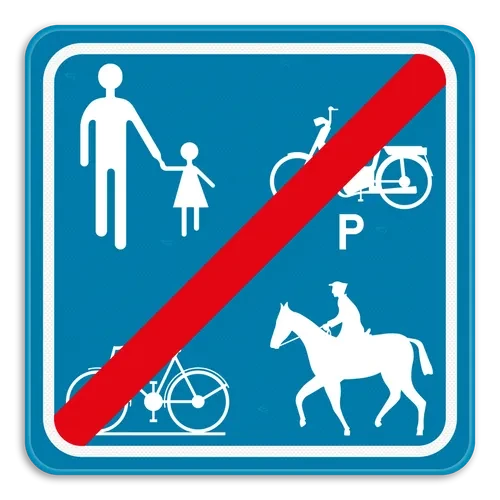
You've reached the end of a special zone for pedestrians, cyclists, horse riders, and speed pedelecs.
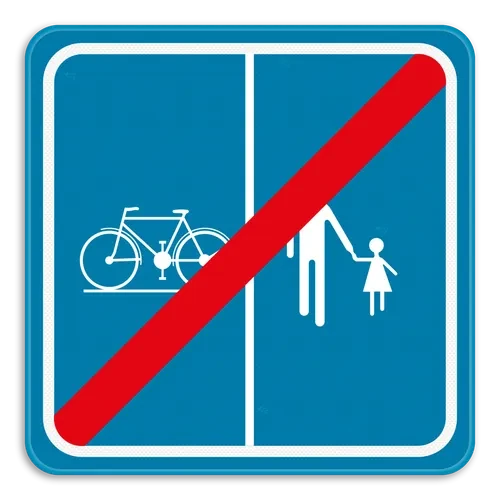
You're leaving a specially reserved lane for pedestrians, cyclists, horse riders, and speed pedelecs.
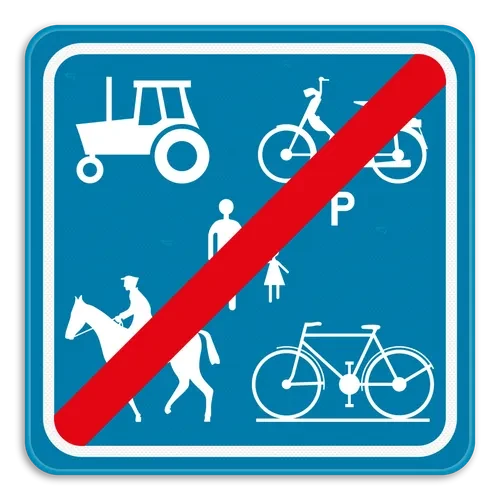
F101c: Signalling the End of a Restricted Road Zone
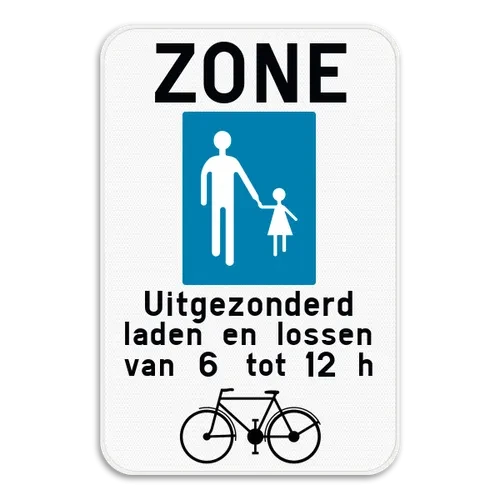
F103: You are entering a pedestrian zone – adjust your approach.
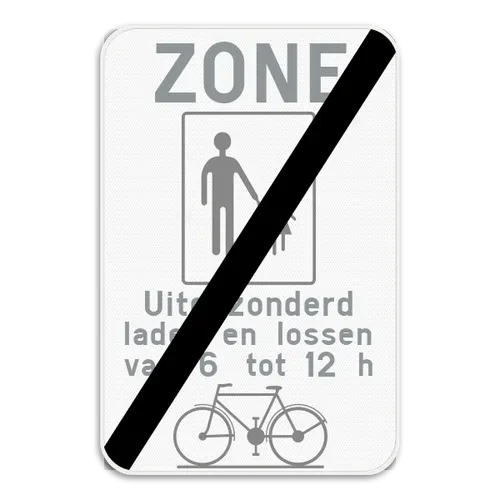
You're leaving the pedestrian zone with the F105 sign
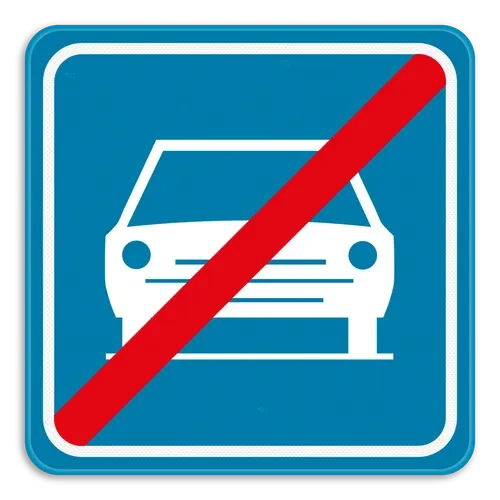
The F11 sign signals the end of a motorroad – know how to react safely.
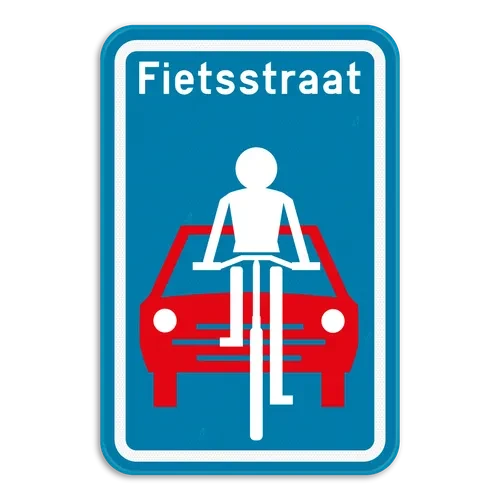
F111 'Cycle street' sign: know when cyclists have priority.
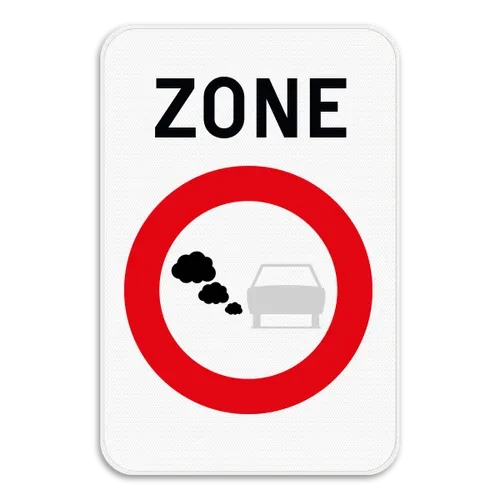
Understand Belgium's 'Start of a Low Emission Zone' F117 Road Sign
Deepen your understanding by exploring how specific road signs dictate right-of-way, speed limits, and safety obligations across Belgian roads. Review these related theory modules to ensure you can confidently identify and apply each sign correctly.
Belgian turbo roundabouts, known as 'turborotondes', have a distinct design that enhances safety. This article will guide you through the essential rules, emphasizing the non-negotiable need to select your lane upon approach. Understanding this concept is crucial for both safe driving in Belgium and for passing your theory test.
Master Belgian End-of-Restriction Signs for a Confident Drive and Exam Success
Be prepared for unexpected breakdowns on Belgian roads.
This article provides a clear, text-only overview of the Belgian motorcycle licence system, detailing the progression from A1 to A2 and finally to the unrestricted A licence. You will learn about the minimum age requirements for each category, the concept of progressive access requiring a two-year experience period, and the exceptions for direct access. Understanding these licensing steps is vital for your motorcycle theory exam preparation in Belgium.
Belgian road sign F101a, titled "End of a road or part of a road reserved for pedestrians, cyclists horse riders and drivers of speed pedelecs", belongs to the belgian information and indicatory signs group. It is used to communicate end of a road or part of a road reserved for pedestrians, cyclists horse riders and drivers of speed pedelecs in a form that drivers can recognise quickly during Belgian theory study and real traffic. The practical task is to connect the sign with road markings, lanes, crossings, services, zones, or route directions in the immediate environment, because the legal effect of a road sign starts from its placement and can be refined by panels, lane markings, traffic lights, or zone signs. For learners, the safest approach is to identify the sign early, say what road users or manoeuvres it affects, and then choose speed, position, and priority behaviour that match the displayed instruction.
Belgian road sign F101b, titled "End of a road or part of a road reserved for pedestrians, cyclists horse riders and drivers of speed pedelecs with segregation", belongs to the belgian information and indicatory signs group. It is used to communicate end of a road or part of a road reserved for pedestrians, cyclists horse riders and drivers of speed pedelecs with segregation in a form that drivers can recognise quickly during Belgian theory study and real traffic. The practical task is to connect the sign with road markings, lanes, crossings, services, zones, or route directions in the immediate environment, because the legal effect of a road sign starts from its placement and can be refined by panels, lane markings, traffic lights, or zone signs. For learners, the safest approach is to identify the sign early, say what road users or manoeuvres it affects, and then choose speed, position, and priority behaviour that match the displayed instruction.
After reviewing all Belgian road signs, deepen your understanding by exploring specific categories such as warning, regulatory, or prohibitory signs. Practice recognition with targeted quizzes to reinforce learning for a successful theory test.
All Belgian Road Signs List