
This lesson focuses on the unique challenges of riding on rural roads in Denmark. You will learn how to adjust your speed and scanning techniques to safely navigate encounters with agricultural vehicles and wildlife, essential for both your theory exam and real-world safety.
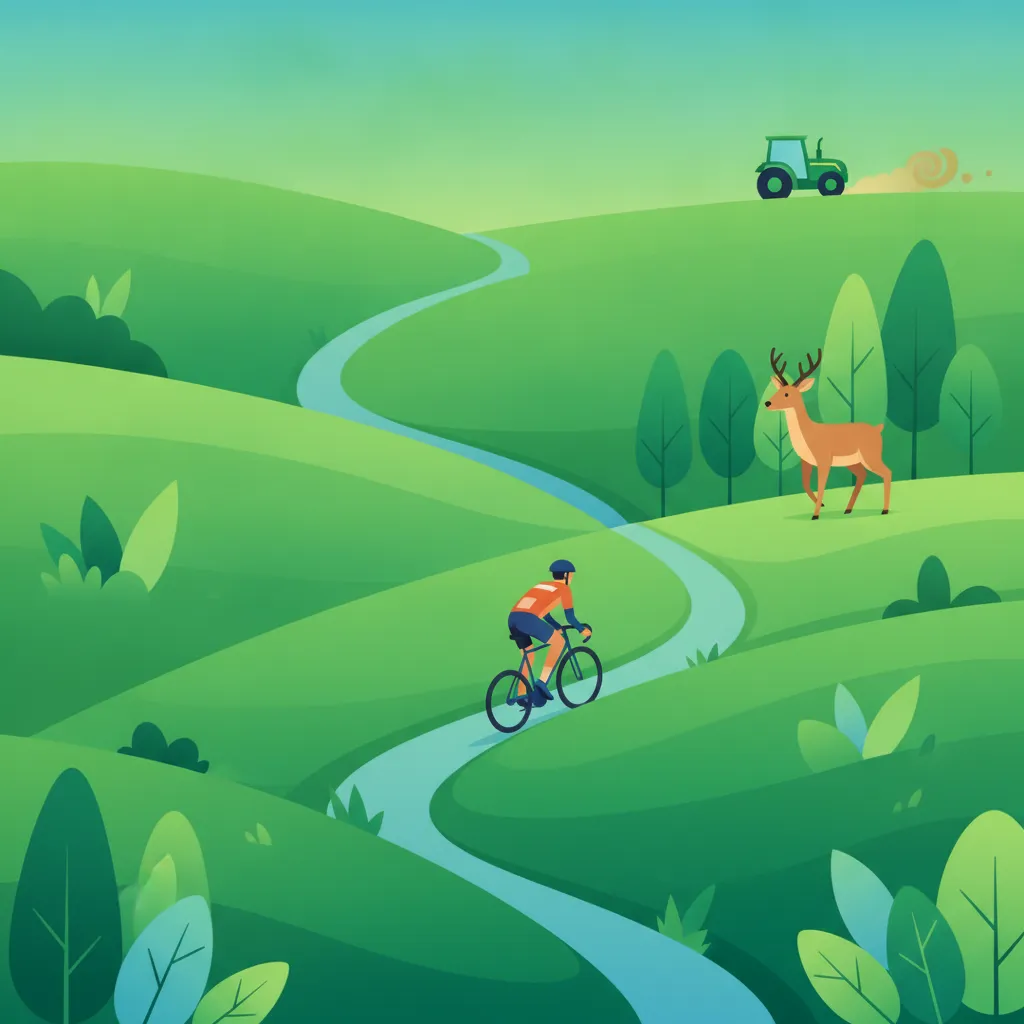
Lesson content overview
Rural roads offer motorcyclists unique experiences, often leading through scenic landscapes and quiet countryside. However, they also present a distinct set of challenges and hazards that demand heightened awareness and specific riding strategies. This lesson, part of your Danish Motorcycle Theory course, will equip you with the knowledge to navigate these roads safely, focusing on crucial aspects like limited visibility, unpredictable wildlife, and the safe interaction with slow-moving agricultural vehicles.
Understanding and mastering these specific skills is vital not only for passing your Danish motorcycle theory exam but, more importantly, for ensuring your safety and the safety of others on Danish rural routes. By anticipating potential dangers and adapting your riding style, you can transform these challenging environments into enjoyable and secure journeys.
One of the primary hazards on rural roads is reduced visibility, which refers to the limited distance a rider can clearly see ahead. Unlike urban environments with consistent lighting and clearer sightlines, rural settings often present a dynamic and frequently obstructed view of the road ahead. This limitation is not just an inconvenience; it's a critical factor that can drastically increase accident risk if not properly managed.
Reduced visibility can stem from various sources inherent to rural landscapes. Road geometry plays a significant role, with frequent sharp bends, crests of hills, and dips that create blind curves or hidden junctions. Natural elements such as dense hedges, tall crops in fields, or thick tree lines can further obstruct your view around corners and block sight of oncoming traffic or potential hazards.
Environmental factors also contribute significantly to poor visibility. Conditions such as fog, heavy rain, or even just dust from agricultural activity can severely diminish your ability to see far ahead. Furthermore, the changing light conditions at dawn, dusk, and night, coupled with the absence of streetlights, make it much harder to spot obstacles, road imperfections, or other road users.
Never assume the road beyond a blind spot is clear. Always prepare for the unexpected, whether it's a parked vehicle, a turning tractor, or an animal.
A common misunderstanding among riders is that posted speed limits on rural roads guarantee safety regardless of actual sight distance. This is a dangerous assumption. While a speed limit indicates the maximum legal speed under ideal conditions, the safe speed can, and often should, be much lower, especially when visibility is compromised. Your ability to react and stop safely is directly linked to how far you can see.
On rural Danish roads, you will encounter several specific types of visibility obstructions:
Riding defensively means constantly assessing your line of sight and adjusting your speed and lane position accordingly. By doing so, you create a crucial safety buffer, giving you enough time to identify, process, and react to any developing hazards.
Speed adaptation is a core principle of safe motorcycle riding, particularly vital on rural roads. It defines the practice of adjusting your speed proportionally to the distance you can see ahead, ensuring that you can always stop safely within that visible distance. This isn't merely a suggestion; it is a fundamental legal requirement in Danish traffic law and a cornerstone of defensive riding.
The essence of speed adaptation is simple: if you can only see 50 metres ahead due to a blind curve or heavy fog, your speed must be low enough that you can bring your motorcycle to a complete stop within those 50 metres. This accounts for your reaction time (the time it takes to perceive a hazard and initiate braking) and your braking distance (the distance your motorcycle travels from when you apply the brakes until it stops).
To effectively apply speed adaptation, you must:
A good rule of thumb: If you cannot see around or over it, assume there is a hazard.
Different road conditions necessitate different speed adaptations:
The total distance a vehicle travels from the moment a hazard is detected until the vehicle comes to a complete stop. It comprises reaction distance and braking distance.
One of the most unpredictable and dangerous hazards on Danish rural roads is the presence of wildlife. Animals can suddenly dart onto the road, causing riders to swerve, brake abruptly, or even collide, leading to serious accidents. Understanding when and where to expect animals, and how to react, is crucial for your safety.
While farm animals like cows and sheep can sometimes stray onto the road, the primary concern on rural Danish roads is wild mammals and birds.
Areas particularly prone to wildlife crossings include:
Vigilance is your best defense against wildlife collisions.
If you unfortunately hit an animal, especially a larger one like a deer, it is crucial to stop safely and report the incident to the police, especially in Denmark. Leaving an injured animal or failing to report a collision can have legal consequences.
Rural roads are the working environment for farmers, and that means you will inevitably encounter agricultural vehicles. These specialized machines, such as tractors, combine harvesters, and sprayers, are fundamental to farming operations but pose unique challenges to motorcyclists due to their size, speed, and operational characteristics.
Understanding the nature of farm machinery is key to safe interaction:
Overtaking an agricultural vehicle requires extreme patience, careful planning, and a clear understanding of the risks.
Assess the Situation Thoroughly: Before even considering an overtake, evaluate the road ahead. Is there sufficient clear visibility? Is the road wide enough? Are there any approaching bends, junctions, or hills that would make an overtake unsafe?
Maintain a Safe Following Distance: Stay far enough behind the farm vehicle to have a clear view of the road ahead, beyond the vehicle itself. This also gives you time to react if it brakes or turns unexpectedly.
Be Visible and Signal Clearly: Position yourself where the driver of the agricultural vehicle can see you in their mirrors. Use your indicators well in advance to signal your intention to overtake.
Check for Turning Intentions: Watch the farm vehicle's wheels and chassis for any subtle movements indicating a turn. Farmers often turn left into fields, and a tractor swinging right before a left turn is a common maneuver that can catch riders off guard. Do not assume a lack of indicators means they will continue straight.
Overtake on the Left: In Denmark, like most of Europe, you must overtake on the left. Ensure there is ample space and time to complete the maneuver safely without needing to rush.
Pass with Plenty of Room: Due to their size and potential for unexpected movements (e.g., hitting a bump, causing a slight swerve), give agricultural vehicles a very wide berth when passing. Do not squeeze past.
Accelerate Smoothly and Look Ahead: Once committed, accelerate smoothly past the vehicle. Continue scanning ahead for any new hazards that might appear.
Return to Your Lane Safely: Only return to your lane when you can see the entire front of the agricultural vehicle in your rearview mirror.
Never overtake an agricultural vehicle if you are unsure of the driver's intentions, especially near junctions or field entrances. Patience is paramount.
Be particularly vigilant when approaching farm entrances or areas where fields meet the road. This is where agricultural vehicles will most commonly enter or exit the main road. Expect slow-moving machinery to pull out or turn in, and be prepared for mud or debris on the road surface.
Adhering to specific traffic regulations, coupled with sound judgment, forms the bedrock of safe rural motorcycle riding in Denmark. While many general traffic laws apply, some have particular significance on country roads.
The most crucial rule for rural road riding, rooted in general Danish traffic law, states that: "Riders must adjust their speed to ensure that it is possible to stop within the distance they can see to be clear ahead."
This principle, often referred to as riding within your "synsfelt" (field of vision), is mandatory and applies universally across all road types, but its impact is most profound on rural roads where visibility is frequently limited.
Danish traffic rules concerning overtaking apply to agricultural vehicles with specific considerations for their unique characteristics:
"When overtaking agricultural vehicles, the overtaking rider must ensure they are visible to the vehicle driver at all times and must overtake on the left, maintaining a safe distance."
These rules are designed to prevent collisions and ensure the safety of all road users. They are not merely guidelines but legal obligations that must be strictly adhered to.
Even experienced riders can sometimes fall prey to common mistakes on rural roads. Recognizing these pitfalls is the first step toward avoiding them.
While good weather and dry roads are ideal, rural riding often involves contending with less-than-perfect conditions. Adapting your strategy to these variations is vital for maintaining safety.
Riding at night on unlit rural roads presents unique challenges to visibility and hazard perception.
Many rural roads, particularly secondary ones or farm tracks, may have gravel, loose chippings, or uneven asphalt surfaces.
Navigating the unique landscapes and challenges of Danish rural roads safely hinges on a few core principles. By internalizing these, you build a robust foundation for secure and enjoyable motorcycle journeys.
By diligently applying these principles, you enhance your safety and confidence when riding on rural roads, ensuring that your experience is both thrilling and secure.
Rural roads in Denmark challenge motorcyclists with limited visibility from blind curves, crested hills, and overgrown vegetation, making speed adaptation to sight distance a mandatory safety principle rather than optional advice. Wildlife such as deer are most hazardous during twilight hours and often travel in groups, requiring riders to scan verges constantly and brake progressively rather than swerve if a collision seems imminent. Agricultural vehicles travel slowly, occupy significant road width, and have large blind spots, demanding patient following distances, clear signaling, and left-side overtaking only when the entire road ahead is confirmed clear. By internalizing these defensive strategies, riders can manage rural hazards confidently for both the Danish theory exam and real-world countryside riding.
A short set of high-value points that capture the most important learning from this lesson.
Adjust your speed so you can always stop safely within the distance you can see ahead (synsfelt principle), regardless of posted limits.
Wildlife, especially deer, is most active at dawn, dusk, and night—if you see one animal, expect more to follow.
Agricultural vehicles have large blind spots and may turn without clear signaling; never assume they will continue straight.
When overtaking farm vehicles, pass on the left with plenty of room and only when you have a completely clear view ahead.
Rural roads demand constant scanning of verges, fields, and roadside vegetation for hidden hazards.
Explore all units and lessons included in this driving theory course.
The synsfelt rule: your speed must always allow you to stop within your visible field of vision.
Deer travel in groups; spotting one means others are likely nearby.
Farm machinery can be wider than a single lane and often has limited rear and side visibility.
Gravel, mud, and wet roads dramatically increase braking distance on rural stretches.
Use dipped headlights in fog; high beam worsens visibility by reflecting off the mist.
Relying on posted speed limits through blind curves instead of reducing speed based on actual sight distance.
Attempting to overtake an agricultural vehicle near a junction or field entrance without confirming the driver's intentions.
Swerving violently to avoid wildlife, which risks losing control or colliding with oncoming traffic.
Assuming a farm vehicle driver has seen you; their blind spots are significant and they may not notice a motorcycle.
Riding at normal speeds in fog or heavy rain without accounting for severely reduced visibility and longer stopping distances.
Lesson content overview
A short set of high-value points that capture the most important learning from this lesson.
Adjust your speed so you can always stop safely within the distance you can see ahead (synsfelt principle), regardless of posted limits.
Wildlife, especially deer, is most active at dawn, dusk, and night—if you see one animal, expect more to follow.
Agricultural vehicles have large blind spots and may turn without clear signaling; never assume they will continue straight.
When overtaking farm vehicles, pass on the left with plenty of room and only when you have a completely clear view ahead.
Rural roads demand constant scanning of verges, fields, and roadside vegetation for hidden hazards.
Explore all units and lessons included in this driving theory course.
The synsfelt rule: your speed must always allow you to stop within your visible field of vision.
Deer travel in groups; spotting one means others are likely nearby.
Farm machinery can be wider than a single lane and often has limited rear and side visibility.
Gravel, mud, and wet roads dramatically increase braking distance on rural stretches.
Use dipped headlights in fog; high beam worsens visibility by reflecting off the mist.
Relying on posted speed limits through blind curves instead of reducing speed based on actual sight distance.
Attempting to overtake an agricultural vehicle near a junction or field entrance without confirming the driver's intentions.
Swerving violently to avoid wildlife, which risks losing control or colliding with oncoming traffic.
Assuming a farm vehicle driver has seen you; their blind spots are significant and they may not notice a motorcycle.
Riding at normal speeds in fog or heavy rain without accounting for severely reduced visibility and longer stopping distances.
Explore search topics learners often look for when studying Rural Road Riding: Visibility, Wildlife, and Agricultural Vehicles. These topics reflect common questions about road rules, driving situations, safety guidance, and lesson level theory preparation for learners in Denmark.
Browse additional driving theory lessons that cover connected traffic rules, road signs, and common driving situations related to this topic. Improve your understanding of how different rules interact across everyday traffic scenarios.
Learn to navigate the specific dangers of Danish rural roads. This lesson explains how to handle reduced visibility, blind curves, wildlife encounters, and safely interact with slow-moving agricultural vehicles for your theory exam.
This lesson contrasts the driving techniques required for rural roads and motorways. It covers managing speed on narrow, winding lanes with potential hazards like farm machinery or animals. The content also explains the principles of safe motorway driving, including maintaining lane discipline, managing high-speed stability, and executing safe overtaking maneuvers.
This lesson addresses the combined challenges of navigating narrow rural roads and driving in adverse weather. It explains how to adapt speed and braking techniques for conditions like heavy rain, fog, or ice, which are common on rural routes. The content also integrates these factors into route planning, teaching drivers how to select the safest and most appropriate path while avoiding local weight or height restrictions.
This lesson teaches you to identify warning signs that alert drivers to upcoming hazards and changing road conditions. It covers common signs such as sharp curves, school zones, animal crossings, and temporary conditions like roadworks or slippery surfaces. Understanding these signs is crucial for anticipating risks and adjusting your driving to ensure safety on all types of Danish roads.

This lesson covers the core principles of defensive driving in an urban context. It teaches drivers how to anticipate the actions of other road users, maintain safe following distances in dense traffic, and navigate complex intersections with multiple signals. The content emphasizes heightened awareness of pedestrians, cyclists, and unexpected events common in Danish city environments.

This lesson emphasizes the professional driver's heightened responsibility to protect vulnerable road users. It revisits Danish regulations concerning cyclist priority, particularly during right turns, and details the correct procedures for maintaining safe overtaking distances. The content focuses on developing advanced situational awareness, using mirrors and cameras effectively, and anticipating the behavior of pedestrians and cyclists in urban environments.
This lesson introduces cooperative driving as a fundamental element of road safety in Denmark. It highlights the social responsibility of drivers to act predictably, anticipate the actions of others, and maintain courteous interactions with all road users. By fostering mutual respect and cooperation, you will learn how to reduce the potential for conflict and enhance overall traffic safety.
This lesson provides critical guidance for driving in environments with heavy cycle traffic, typical of Danish cities. It focuses on identifying and yielding to cyclists in dedicated bike lanes, especially when turning right across their path. The content emphasizes advanced observation skills to detect cyclists in blind spots and the importance of giving adequate space.
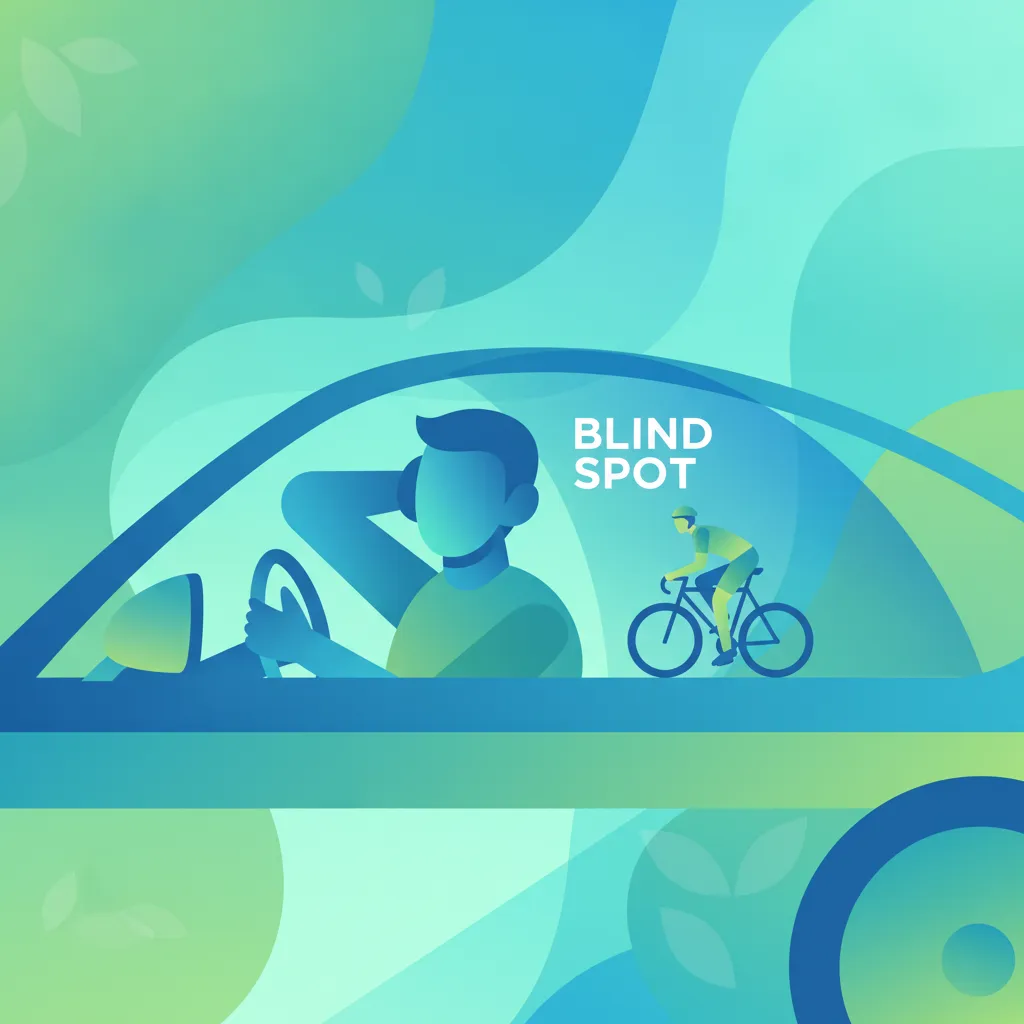
This lesson provides an in-depth analysis of the size and location of blind spots around a typical passenger bus. It teaches systematic scanning patterns that incorporate all mirrors, cameras, and direct head checks to maintain situational awareness. The content highlights high-risk areas where cyclists, pedestrians, or small vehicles can become hidden from view, especially during turns.

This lesson addresses the unique challenges of driving in tourist-heavy urban centers alongside cyclists. It teaches drivers to anticipate the behavior of individuals who may be distracted or unfamiliar with local traffic rules. The content provides strategies for communicating intentions clearly and navigating safely around large groups, luggage, and cyclists.
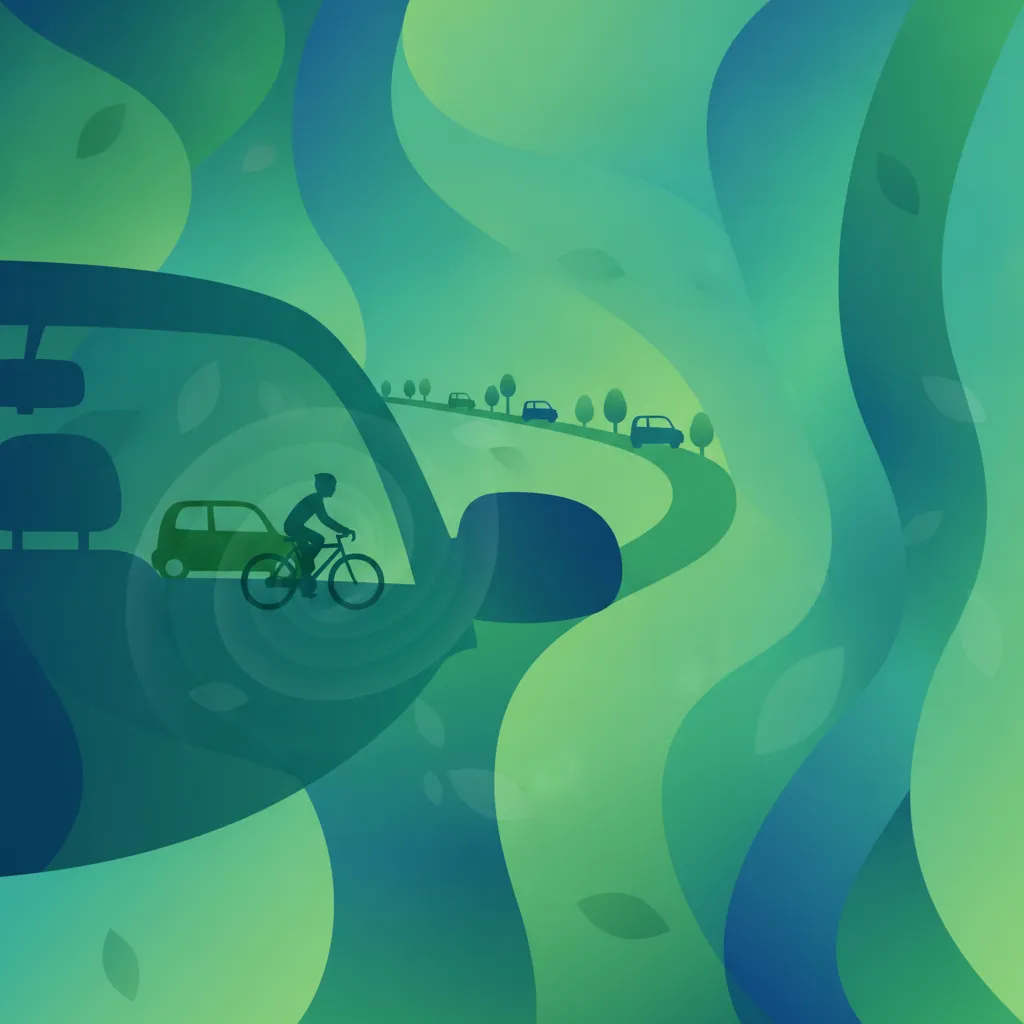
This lesson provides an in-depth look at the blind spots of other vehicles and how to manage them. It teaches riders to recognize the large 'no-zones' around trucks and buses where they cannot be seen. Strategies include avoiding lingering in these areas and positioning the motorcycle for maximum visibility.
Master the critical principle of speed adaptation on rural roads. Understand how to adjust speed for limited visibility and learn essential strategies for safely encountering and avoiding wildlife in Denmark.
This lesson contrasts the driving techniques required for rural roads and motorways. It covers managing speed on narrow, winding lanes with potential hazards like farm machinery or animals. The content also explains the principles of safe motorway driving, including maintaining lane discipline, managing high-speed stability, and executing safe overtaking maneuvers.
This lesson addresses the combined challenges of navigating narrow rural roads and driving in adverse weather. It explains how to adapt speed and braking techniques for conditions like heavy rain, fog, or ice, which are common on rural routes. The content also integrates these factors into route planning, teaching drivers how to select the safest and most appropriate path while avoiding local weight or height restrictions.
This lesson teaches the importance of adapting your speed to prevailing conditions, rather than simply adhering to the posted limit. It explains how factors like traffic density, road surface quality, visibility, and adverse weather should influence your speed choice. Developing this risk-aware approach is crucial for maintaining vehicle control and ensuring safety in all driving environments.
This lesson introduces cooperative driving as a fundamental element of road safety in Denmark. It highlights the social responsibility of drivers to act predictably, anticipate the actions of others, and maintain courteous interactions with all road users. By fostering mutual respect and cooperation, you will learn how to reduce the potential for conflict and enhance overall traffic safety.
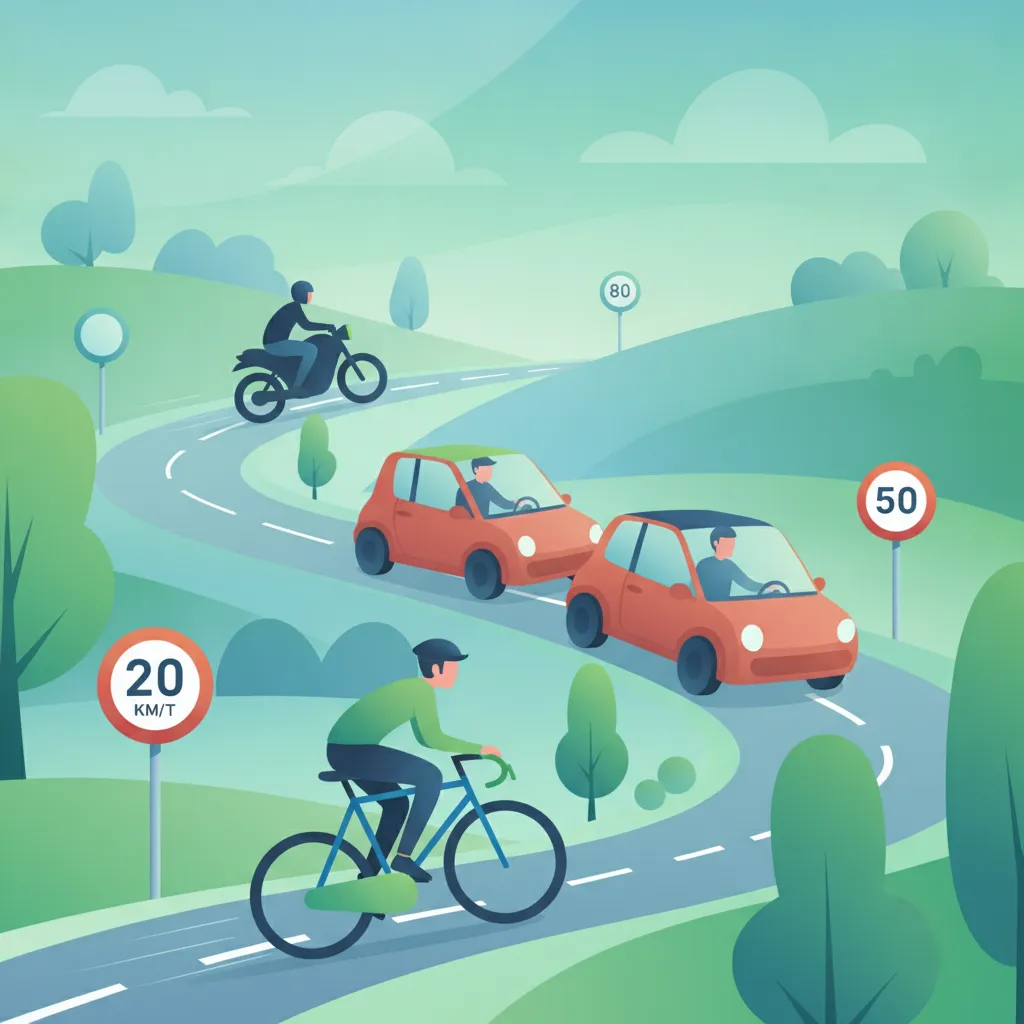
This lesson details the specific speed limits applicable to stor knallert riders in various Danish environments, including urban zones and rural roads. It emphasizes the concept of 'appropriate speed,' which requires adjusting speed based on weather, visibility, and traffic density. The content explains how to manage speed to ensure safety and legal compliance.
This lesson provides critical guidance for driving in environments with heavy cycle traffic, typical of Danish cities. It focuses on identifying and yielding to cyclists in dedicated bike lanes, especially when turning right across their path. The content emphasizes advanced observation skills to detect cyclists in blind spots and the importance of giving adequate space.
This lesson reinforces the driver's responsibility to protect pedestrians, particularly in busy urban areas and near schools. It details the procedures for approaching pedestrian crossings, the legal requirement to reduce speed significantly in marked school zones, and how to anticipate the unpredictable actions of pedestrians. The content covers traffic calming measures and the legal rights of pedestrians in various settings.

This lesson focuses on the rules and best practices for operating heavy vehicles on motorways and interchanges. It details Danish regulations regarding lane usage and speed limits for lorries, and explains safe techniques for merging into and exiting high-speed traffic. Maintaining a safe and appropriate following distance to allow for longer stopping distances is a key focus of the content.
This lesson provides essential training for driving on motorways. It details the correct procedure for using acceleration lanes to merge safely into fast-moving traffic, maintaining proper lane discipline, and executing safe overtaking manoeuvres. You will also learn the importance of keeping a safe following distance and planning for your exit well in advance.
This lesson provides detailed guidance on navigating pedestrian crossings (fodgængerfelter) and areas with high cyclist traffic. It clarifies your legal obligation to stop for pedestrians at zebra crossings and the proper speed to approach these zones. A central theme is understanding the rights of vulnerable road users and how to yield safely to them in accordance with Danish traffic law.
Find clear answers to common questions learners have about Rural Road Riding: Visibility, Wildlife, and Agricultural Vehicles. Learn how the lesson is structured, which driving theory objectives it supports, and how it fits into the overall learning path of units and curriculum progression in Denmark. These explanations help you understand key concepts, lesson flow, and exam focused study goals.
Always reduce speed early and look for a safe opportunity to pass. Wait until you have a clear view of the road ahead and ensure the driver of the tractor is aware of your presence before overtaking.
Rural roads often have debris, mud tracked by farm vehicles, and loose gravel near edges. These factors significantly reduce traction, requiring you to adjust your speed and cornering technique accordingly.
Always ride at a speed that allows you to stop within the distance you can see to be clear. Never assume the road ahead is empty, as tractors, cyclists, or wildlife may be present just around the bend.
Yes, you may encounter scenarios where you must identify the risk of deer or other animals crossing the road, especially at dawn or dusk. Recognizing warning signs and adjusting speed is a key part of these questions.
Use our powerful search tool to pinpoint specific Danish driving theory topics, road signs, or traffic situations you need to review. Start exploring relevant practice sets now to reinforce your knowledge and build confidence for your upcoming driving licence exam.