
This lesson teaches you the critical skills required for performing safe overtakes on Danish roads. As part of your motorcycle theory training, you will learn to assess distances, check for oncoming hazards, and execute maneuvers decisively to keep yourself and others safe.

Lesson content overview
Overtaking is a fundamental aspect of road riding, allowing you to safely pass slower vehicles and maintain appropriate traffic flow. However, it is also one of the most demanding maneuvers, requiring impeccable judgment, precise control, and a thorough understanding of traffic laws. For motorcyclists, the dynamics of speed, acceleration, and exposure make safe overtaking even more critical. This lesson will detail a systematic approach to assessing gaps, managing speed, communicating intentions, and executing overtaking maneuvers safely on Danish roads.
Overtaking is inherently a high-risk maneuver. It involves temporarily moving into a lane potentially occupied by oncoming traffic or another vehicle's blind spot, often at higher speeds. Misjudging the time and space required, underestimating the speed of oncoming vehicles, or overestimating your motorcycle's acceleration capabilities can lead to severe consequences, including head-on collisions or side-swipe accidents. Therefore, a cautious and systematic approach is paramount to prevent dangerous situations.
The principles of safe overtaking are deeply rooted in fundamental traffic safety principles, the physics of relative speed, and legal requirements designed to protect all road users. Effective overtaking relies on strong foundational skills such as lane positioning, speed management, and situational awareness, all of which are covered in previous lessons.
Successful and safe overtaking hinges on four core principles: accurate gap assessment, appropriate speed compatibility, clear signaling and communication, and precise execution. Mastering these elements ensures that you can complete the maneuver without endangering yourself or others.
Gap assessment is perhaps the most critical component of safe overtaking. It involves a rapid, accurate calculation of the distance required to complete the maneuver, the time it will take, and the availability of clear road ahead. This judgment must factor in your motorcycle's capabilities, the speed of the vehicle you intend to overtake, and crucially, the speed and distance of any oncoming traffic.
The total distance required to overtake is not simply the length of the vehicle you are passing. It includes:
For example, if you are travelling at 80 km/h and wish to overtake a vehicle moving at 70 km/h, you need to accelerate. During this acceleration and passing phase, you will cover a significant distance. If an oncoming vehicle is also approaching at 80 km/h, the combined closing speed can be as high as 160 km/h. This means any available gap will diminish very quickly.
Your motorcycle's acceleration capability is key here. A more powerful motorcycle can complete an overtake in a shorter distance due to higher relative speed during the passing phase. However, even with strong acceleration, the actual road distance required is substantial. Always consider the closing speed with oncoming traffic. If an oncoming vehicle is 300 metres away and you need 150 metres to overtake, it might seem sufficient. But if both vehicles are moving towards each other at 80 km/h, they cover 160 metres every 3.6 seconds, meaning the gap is closing rapidly.
One of the most frequent mistakes is underestimating the speed of oncoming vehicles or overestimating your motorcycle's acceleration. Many riders also fail to account for the additional distance needed to safely return to their lane with sufficient clearance. Always assume oncoming traffic might be travelling faster than it appears, and err on the side of caution.
Over 80% of head-on collisions occur due to insufficient gap assessment. Your human reaction time (averaging 1 second) must be factored into all gap calculations.
While overtaking, it is essential to adjust your speed to ensure the maneuver is completed efficiently but always within legal limits. Danish traffic law explicitly states that exceeding the speed limit, even for the purpose of overtaking, is prohibited.
To minimize the time spent in the opposing lane, you will need to accelerate decisively. However, this acceleration must be controlled and appropriate for the road conditions and traffic. A fully loaded motorcycle or riding in adverse weather conditions will reduce acceleration capability and thus necessitate a larger gap and potentially a longer overtaking distance.
Your primary goal is to safely pass the slower vehicle. Your secondary goal is to complete this within the legal speed limit. If you cannot overtake without exceeding the speed limit, you must not proceed. This requires a precise understanding of your motorcycle's performance at various speeds and the ability to gauge distances accurately. For example, if the speed limit is 90 km/h, and you are behind a truck travelling at 70 km/h, you might accelerate to 90 km/h to overtake. If the maneuver requires you to exceed 90 km/h, it is unsafe and illegal.
Effective communication is vital for any lane change or overtaking maneuver. Proper signaling informs other drivers of your intentions, allowing them to anticipate your actions and react accordingly, which significantly reduces the risk of collisions.
The use of turn signals is mandatory before initiating an overtaking maneuver. You must signal left before moving into the overtaking lane. Hold the signal on throughout the passing phase until you are clear of the overtaken vehicle and ready to signal right to return to your lane.
While turn signals are primary, your lane positioning can also serve as a communication cue. Moving slightly to the right within your lane (without swerving) can sometimes indicate your intention to overtake, especially on rural roads where an approaching vehicle might be less observant. However, always prioritize clear turn signal usage. Ensure eye contact with other drivers, especially if they might be impacted by your maneuver, such as a vehicle emerging from a side road.
Once you have assessed the gap, checked your speed, and signaled, the execution of the overtake must be smooth, decisive, and controlled. This involves a series of coordinated steps.
Initial Checks and Preparation: Before signalling, check your mirrors and blind spots for any vehicles behind or beside you that might also be preparing to overtake. Ensure the road ahead is clear, free of intersections, curves, hills, or any other hazards that would prohibit overtaking.
Initiating the Overtake (Signal Left): Signal left well in advance. Move smoothly but decisively into the adjacent lane (the opposing lane on two-lane roads, or the faster lane on multi-lane roads). Do not hesitate once you have committed.
Accelerating and Passing: Accelerate purposefully to pass the slower vehicle. Maintain a safe lateral distance from the vehicle you are overtaking. Avoid lingering in their blind spot. Keep the left turn signal active during this phase.
Safe Return to Your Lane (Signal Right): Once you can see the entire front of the overtaken vehicle in your right-hand mirror (or both headlights in your rearview mirror if riding a car), you have sufficient clearance. Signal right, and smoothly steer back into your original lane.
Maintaining Safe Distance: After returning, maintain a safe following distance from the vehicle you have now passed. Do not cut back too early, as this can force the overtaken driver to brake, creating a hazardous situation.
Overtaking on Danish roads is governed by specific rules designed to ensure safety and maintain traffic flow. Understanding and adhering to these regulations is not just about avoiding penalties, but about preventing accidents.
Under Danish traffic law, overtaking is permitted only when it can be done without any danger to other road users. This implies several conditions:
Danish traffic law explicitly prohibits overtaking in certain areas or under specific circumstances to enhance safety:
As previously mentioned, turn signals are a legal requirement. You must signal left before moving into the overtaking lane and signal right before returning to your lane. Failing to signal, or signaling too late, can result in legal penalties and, more importantly, create dangerous situations.
It is a common misconception that one can exceed the speed limit temporarily to complete an overtaking maneuver. This is incorrect and illegal in Denmark. All speed limits must be observed, even while overtaking. If an overtake cannot be completed safely within the posted speed limit, it should not be attempted.
Being aware of common mistakes can help you prevent them. Many overtaking accidents stem from poor judgment or disregard for regulations.
Safe overtaking is not a one-size-fits-all maneuver; it requires constant adaptation based on prevailing conditions.
A fully loaded motorcycle, with a passenger or luggage, will have reduced acceleration and increased braking distances compared to a solo rider. This directly impacts the feasibility and safety of an overtaking maneuver, requiring longer distances and more conservative gap assessments.
When overtaking cyclists, pedestrians, or horse riders, extra caution is paramount. You must allow a significantly wider lateral distance than you would for another motor vehicle. Never "squeeze" past them, even if it means waiting for a much larger gap. Danish law requires a minimum safe distance when passing vulnerable road users.
The emphasis on safe overtaking is backed by accident statistics. As noted, insufficient gap assessment is a leading cause of head-on collisions, which are often the most severe type of road accident.
To master safe overtaking:
By diligently applying these principles, motorcyclists can execute overtaking maneuvers safely and confidently, contributing to their overall riding proficiency and road safety.
Safe overtaking for motorcyclists requires a systematic approach combining accurate gap assessment, appropriate speed management, clear signaling, and decisive execution. The total overtaking distance comprises observation, acceleration, passing, and clearance phases, all of which must fit within available road space and time. Danish law explicitly prohibits overtaking at intersections, level crossings, blind curves, and anywhere a solid white line exists, while also requiring strict adherence to posted speed limits throughout the maneuver. Common mistakes include misjudging closing speeds with oncoming traffic, inadequate signaling, returning to lane too early, and attempting overtakes with limited visibility. Riders must adapt their strategy for weather conditions, road type, and vehicle load, while always maintaining extra distance when passing vulnerable road users.
A short set of high-value points that capture the most important learning from this lesson.
Gap assessment is the most critical component of safe overtaking, requiring calculation of observation distance, acceleration distance, passing distance, and clearance distance.
When two vehicles approach each other at 80 km/h, the closing speed reaches 160 km/h, rapidly diminishing any available gap.
Overtaking must never exceed the posted speed limit, even temporarily—if the maneuver cannot be completed within the limit, it must not be attempted.
Signal left well in advance before moving into the overtaking lane and maintain the signal throughout the passing phase.
Return to your lane only when you can see the entire front of the overtaken vehicle in your right-hand mirror, ensuring sufficient clearance.
Explore all units and lessons included in this driving theory course.
Overtaking is prohibited at intersections, level crossings, blind curves, hill crests, and wherever a solid white line (spærrelinje) exists.
A 1-second human reaction time at 100 km/h means covering approximately 28 metres before any physical response begins.
Always factor in reduced acceleration capability when riding a fully loaded motorcycle or in adverse weather conditions.
You must never overtake a vehicle that has stopped to allow pedestrians to cross.
Extra lateral distance is legally required when overtaking vulnerable road users such as cyclists and pedestrians.
Underestimating the speed of oncoming vehicles or overestimating your motorcycle's acceleration capabilities, leading to insufficient gap calculations.
Initiating an overtake on curves, hill crests, or other areas with limited visibility where oncoming traffic cannot be seen in time.
Failing to signal or signaling too late—signals must be activated well before the lane change, not during it.
Returning to the original lane too early and cutting off the overtaken vehicle, forcing them to brake suddenly.
Assuming temporary speed limit violations are acceptable during overtaking; exceeding the limit is both illegal and unsafe in Denmark.
Lesson content overview
A short set of high-value points that capture the most important learning from this lesson.
Gap assessment is the most critical component of safe overtaking, requiring calculation of observation distance, acceleration distance, passing distance, and clearance distance.
When two vehicles approach each other at 80 km/h, the closing speed reaches 160 km/h, rapidly diminishing any available gap.
Overtaking must never exceed the posted speed limit, even temporarily—if the maneuver cannot be completed within the limit, it must not be attempted.
Signal left well in advance before moving into the overtaking lane and maintain the signal throughout the passing phase.
Return to your lane only when you can see the entire front of the overtaken vehicle in your right-hand mirror, ensuring sufficient clearance.
Explore all units and lessons included in this driving theory course.
Overtaking is prohibited at intersections, level crossings, blind curves, hill crests, and wherever a solid white line (spærrelinje) exists.
A 1-second human reaction time at 100 km/h means covering approximately 28 metres before any physical response begins.
Always factor in reduced acceleration capability when riding a fully loaded motorcycle or in adverse weather conditions.
You must never overtake a vehicle that has stopped to allow pedestrians to cross.
Extra lateral distance is legally required when overtaking vulnerable road users such as cyclists and pedestrians.
Underestimating the speed of oncoming vehicles or overestimating your motorcycle's acceleration capabilities, leading to insufficient gap calculations.
Initiating an overtake on curves, hill crests, or other areas with limited visibility where oncoming traffic cannot be seen in time.
Failing to signal or signaling too late—signals must be activated well before the lane change, not during it.
Returning to the original lane too early and cutting off the overtaken vehicle, forcing them to brake suddenly.
Assuming temporary speed limit violations are acceptable during overtaking; exceeding the limit is both illegal and unsafe in Denmark.
Explore search topics learners often look for when studying Safe Overtaking Practices and Gap Assessment. These topics reflect common questions about road rules, driving situations, safety guidance, and lesson level theory preparation for learners in Denmark.
Browse additional driving theory lessons that cover connected traffic rules, road signs, and common driving situations related to this topic. Improve your understanding of how different rules interact across everyday traffic scenarios.
Explore specific Danish traffic laws and safety considerations for overtaking near intersections, level crossings, and in areas with limited visibility like curves and hills. Understand prohibited overtaking zones.
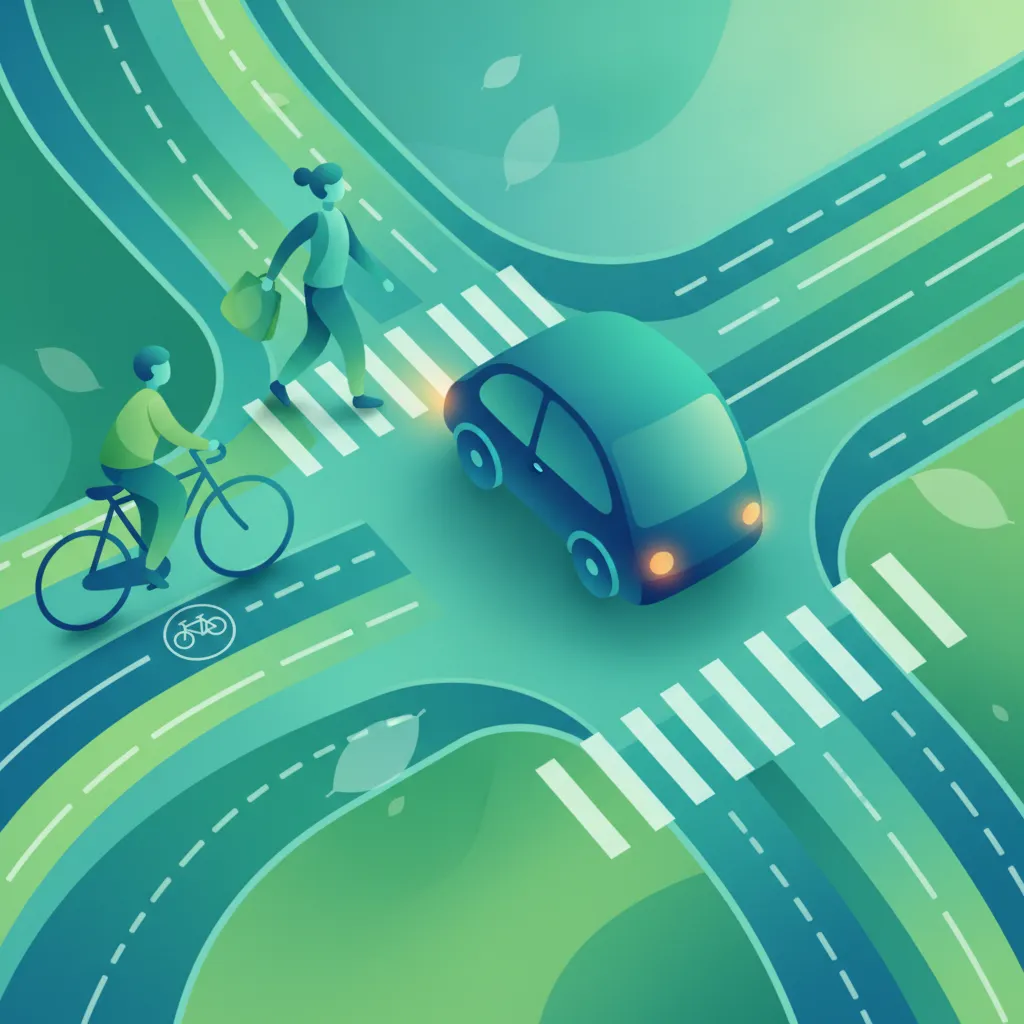
This lesson provides a systematic approach to safely navigating intersections. It covers how to interpret priority signs and traffic signals, establish right-of-way, and scan for potential conflicts from all directions. The importance of clear sightlines and anticipating the movements of other vehicles is a key focus.
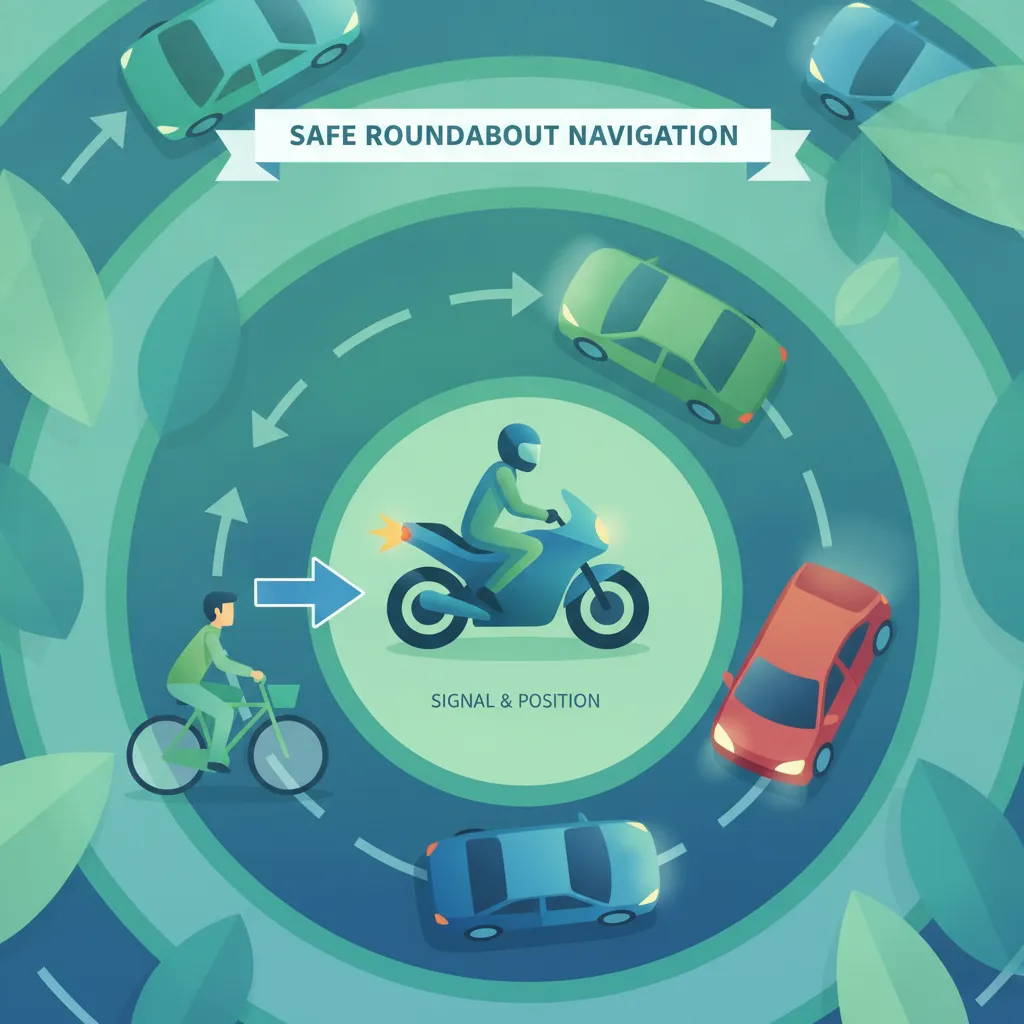
This lesson details the specific skills needed to navigate roundabouts on a motorcycle. It explains how to approach at a safe speed, select the correct lane based on your intended exit, and yield to circulating traffic. Proper use of signals to indicate intentions when entering and exiting is also covered.

This lesson prepares riders for the specific hazards of rural roads, which often have less visibility and more unpredictable surfaces. It covers strategies for approaching blind curves, safely passing agricultural machinery, and being vigilant for animals on the road. Adjusting speed to match visibility is a core principle.
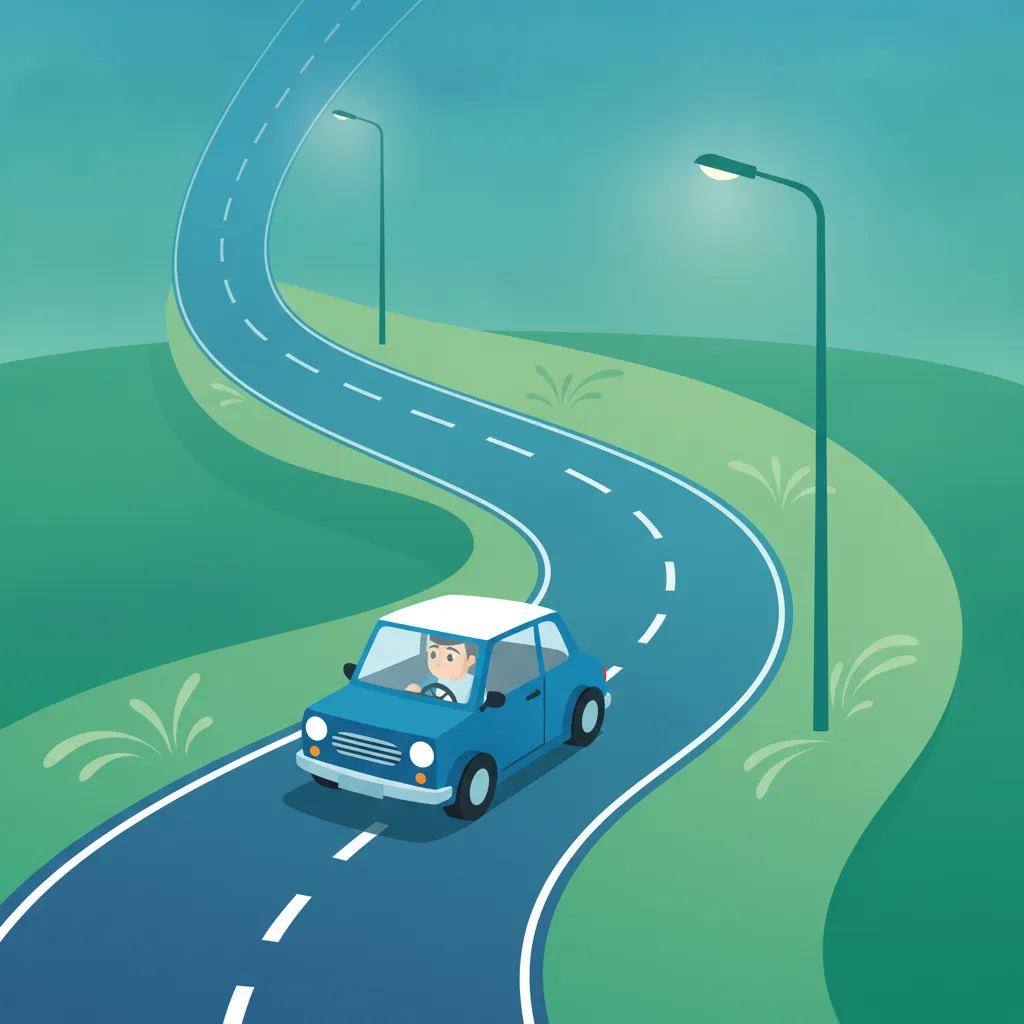
This lesson covers the correct techniques for various turning manoeuvres, including how to signal, position your vehicle, and judge gaps in traffic. It also details the legal and safety protocols for overtaking, emphasizing the importance of assessing speed, distance, and oncoming traffic. A thorough understanding of these procedures is crucial for navigating intersections and two-lane roads safely.

This lesson explains the strategic importance of lane positioning for a motorcyclist. It teaches how to select a position within the lane that makes you most visible to other road users and provides an escape route from potential hazards. The content covers how to adjust your position based on traffic, road conditions, and to avoid being in another vehicle's blind spot.
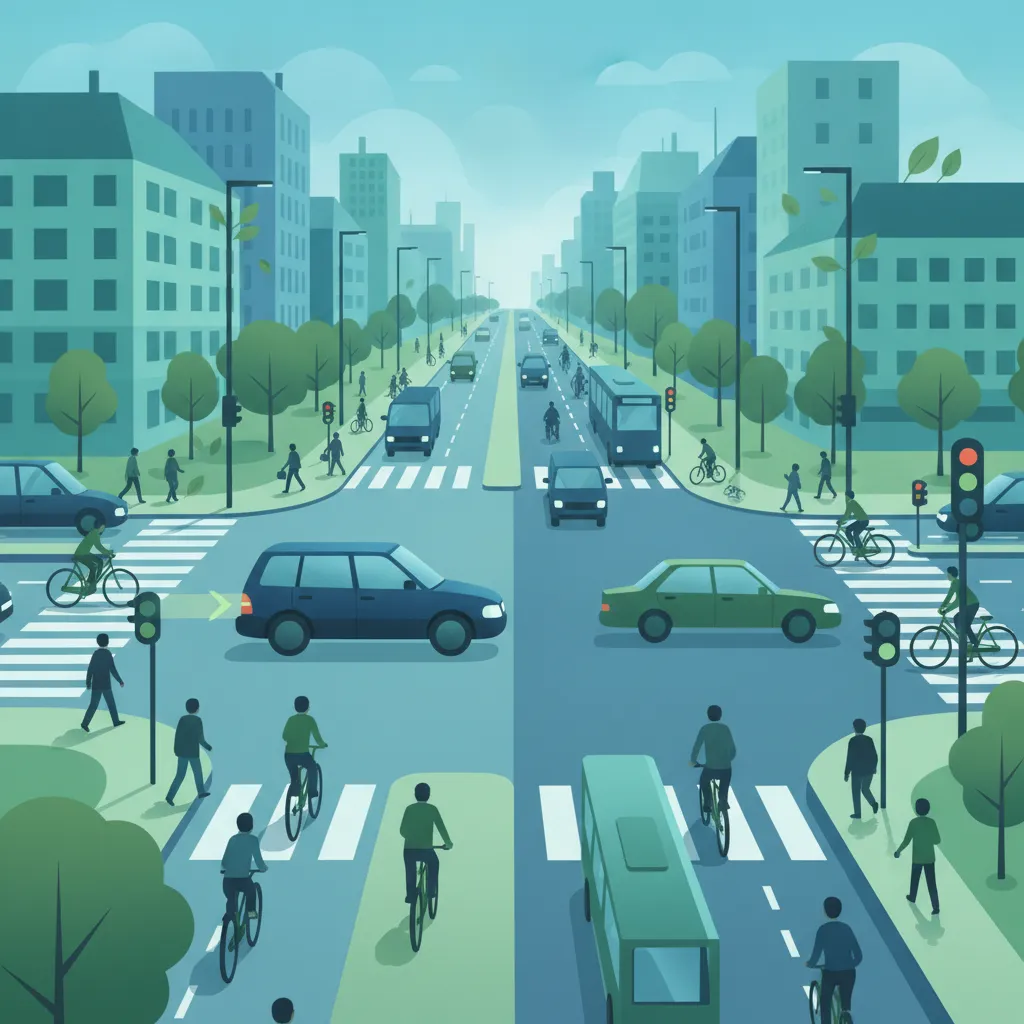
This lesson provides a structured method for approaching and crossing intersections safely. It reinforces the application of priority rules, the interpretation of signs and signals, and the importance of thorough observation. Specific attention is given to looking for cyclists and pedestrians who may be crossing the rider's path.

This lesson explains the procedures for safely riding through construction zones. It covers how to respond to temporary signage, lane closures, and flaggers directing traffic. Riders will learn to reduce speed and be vigilant for uneven pavement, loose gravel, and the movement of workers and equipment.
This lesson provides a guide to motorway riding, a high-speed and demanding environment. It details the process for using acceleration lanes to merge smoothly, maintaining proper lane discipline, and preparing for exits well in advance. Key safety principles like the two-second rule are reinforced for this context.

This lesson focuses on safe interactions with Denmark's large population of cyclists and other vulnerable road users. It covers the rules for passing cyclists, yielding at pedestrian crossings, and the specific hazard of turning across a bike lane. Developing heightened awareness for these interactions is critical for urban riding.

This lesson addresses the unique challenges of streets with dedicated cycle lanes and numerous bus stops. It teaches riders how to anticipate pedestrians moving to and from buses and how to position themselves to avoid conflict with cyclists. The goal is to navigate these complex environments smoothly and safely.
Learn the critical Danish rules and best practices for safely overtaking cyclists, pedestrians, and other vulnerable road users. Understand the importance of wider passing distances and enhanced awareness.
This lesson focuses on safe interactions with Denmark's large population of cyclists and other vulnerable road users. It covers the rules for passing cyclists, yielding at pedestrian crossings, and the specific hazard of turning across a bike lane. Developing heightened awareness for these interactions is critical for urban riding.

This lesson emphasizes the professional driver's heightened responsibility to protect vulnerable road users. It revisits Danish regulations concerning cyclist priority, particularly during right turns, and details the correct procedures for maintaining safe overtaking distances. The content focuses on developing advanced situational awareness, using mirrors and cameras effectively, and anticipating the behavior of pedestrians and cyclists in urban environments.

This lesson provides in-depth guidance on safely interacting with cyclists and e-bike riders, a daily reality in Danish cities. It explains how to provide adequate space when overtaking, how to anticipate their movements at intersections, and how to respect their right-of-way in designated lanes. Understanding these dynamics is essential for preventing common accidents and ensuring a safe urban driving experience for everyone.

This lesson focuses on the safe integration of cyclists and pedestrians within the traffic system, a key feature of Danish roads. It covers the specific rights and common behaviors of cyclists, including those on e-bikes and cargo bikes, and explains procedures for yielding to pedestrians. The content emphasizes maintaining safe distances and heightened awareness to prevent accidents and promote harmonious road sharing.

This lesson provides detailed guidance on navigating pedestrian crossings (fodgængerfelter) and areas with high cyclist traffic. It clarifies your legal obligation to stop for pedestrians at zebra crossings and the proper speed to approach these zones. A central theme is understanding the rights of vulnerable road users and how to yield safely to them in accordance with Danish traffic law.
This lesson explains the strategic importance of lane positioning for a motorcyclist. It teaches how to select a position within the lane that makes you most visible to other road users and provides an escape route from potential hazards. The content covers how to adjust your position based on traffic, road conditions, and to avoid being in another vehicle's blind spot.

This lesson addresses the critical skill of safely coexisting with cyclists and cargo bikes, which are prevalent in Denmark. It explains how to maintain a safe distance, overtake properly, and be vigilant for cyclists, especially when turning right. Understanding the infrastructure of cycle lanes and predicting cyclist behavior is a key focus.

This lesson provides critical guidance for driving in environments with heavy cycle traffic, typical of Danish cities. It focuses on identifying and yielding to cyclists in dedicated bike lanes, especially when turning right across their path. The content emphasizes advanced observation skills to detect cyclists in blind spots and the importance of giving adequate space.
This lesson provides a systematic approach to safely navigating intersections. It covers how to interpret priority signs and traffic signals, establish right-of-way, and scan for potential conflicts from all directions. The importance of clear sightlines and anticipating the movements of other vehicles is a key focus.

This lesson examines the specific risks inherent to motorcycling, emphasizing a rider's vulnerability due to reduced physical protection compared to other vehicles. It covers the heightened severity of injuries in accidents and the critical role of protective gear in mitigating harm. Learners will understand how to adopt defensive strategies, such as proper road positioning, to counteract these risks.
Find clear answers to common questions learners have about Safe Overtaking Practices and Gap Assessment. Learn how the lesson is structured, which driving theory objectives it supports, and how it fits into the overall learning path of units and curriculum progression in Denmark. These explanations help you understand key concepts, lesson flow, and exam focused study goals.
Overtaking is prohibited near pedestrian crossings, at most intersections, and where there is a solid white line or a specific 'no overtaking' road sign. Always check the road markings, as these indicate whether overtaking is allowed in a given area.
Practice the 'two-second rule' and learn to identify the speed differential between you and the vehicle ahead. During the exam, always look for oncoming traffic and ensure you have a clear view of the road ahead before committing to an overtake.
Yes, consistency is key. Using your indicators is a legal requirement and helps build a habit of signaling your intentions early, which is essential for safely navigating Danish roads and passing your theory exam.
Motorcycles are vulnerable road users; vehicles can easily hide in your blind spots or move into your path unexpectedly. A shoulder check is the only way to confirm it is safe to change lanes, even if your mirrors seem clear.
Use our powerful search tool to pinpoint specific Danish driving theory topics, road signs, or traffic situations you need to review. Start exploring relevant practice sets now to reinforce your knowledge and build confidence for your upcoming driving licence exam.