
This lesson provides a clear overview of two essential pathways for obtaining your German Class B driver's license. You will learn the specific legal requirements for driving at 17 under the BF17 program and understand the B197 regulation that allows you to operate manual transmission vehicles after automatic training.
Lesson content overview
Navigating the path to obtaining a German Category B driving license involves understanding several specific regulations designed to enhance safety and flexibility for new drivers. This lesson delves into two crucial programs: BF17, which allows for accompanied driving at the age of 17, and the B197 extension, providing a pathway for drivers licensed in automatic vehicles to operate manual transmission cars. These regulations are integral components of the German Driving License Theory – Comprehensive Category B Course, aimed at preparing you for responsible and competent driving on German roads.
The German system for driver licensing incorporates innovative programs like BF17 and B197, which go beyond the standard Category B requirements. These initiatives are not merely bureaucratic additions; they are strategically designed to improve driver competence, promote safety, and offer practical flexibility. BF17 fosters early, supervised driving experience, while B197 ensures a broad skill set for drivers who initially train on automatic vehicles.
Both BF17 and B197 aim to build more skilled and adaptable drivers. BF17 addresses the crucial transition period from learner to independent driver by providing a structured environment for practical experience under expert guidance. This supervised phase is intended to reduce accident rates among young drivers by allowing them to gain confidence and hone their skills before driving solo.
The B197 regulation, on the other hand, recognizes the increasing prevalence of automatic transmission vehicles while ensuring that drivers still have the option to operate manual cars. It allows for a targeted training module rather than a full re-test, making it more efficient to gain manual driving competence. These programs collectively contribute to a more comprehensive and safer driver education system in Germany.
BF17, short for "Begleitetes Fahren ab 17" (Accompanied Driving from 17), is a special provision under German law that allows individuals to start driving at 17 years old, provided they are always accompanied by a qualified supervising driver. This program is a cornerstone of traffic safety for young drivers, offering a gradual entry into independent mobility.
BF17 is a structured driving period designed for 17-year-olds to gain practical experience before they reach the legal age of 18 for solo driving. Its primary purpose is to bridge the gap between theoretical knowledge and practical application in real-world traffic conditions, under the direct supervision of an experienced driver. This early exposure to various traffic situations, weather conditions, and road types helps young drivers develop better judgment, hazard perception, and defensive driving skills.
The benefits of BF17 are significant. Studies have shown that participants in accompanied driving programs tend to have lower accident rates and fewer traffic violations once they begin driving independently. This is attributed to the extensive practice, the immediate feedback from the supervising driver, and the opportunity to experience a wider range of driving scenarios in a safe, controlled manner.
To participate in the BF17 program, a learner driver must meet specific criteria:
The provisional BF17 license is only valid within Germany and Austria. For driving abroad, you must wait until your 18th birthday to receive your full, unrestricted Category B license.
The role of the "Begleitperson" (supervising driver) is central to the BF17 program. This individual is not merely a passenger but an active mentor whose experience and judgment are crucial for the learner's development and safety. Strict requirements are in place to ensure supervisors are qualified:
A learner may have multiple supervising drivers, and all must be formally registered on the provisional BF17 driving license. It's essential that all listed Begleitpersonen understand and accept their responsibilities.
While not always a formal "contract" in the traditional sense, the learner, their legal guardians (if the learner is a minor), and all designated supervising drivers enter into an implicit agreement to adhere to the BF17 rules. The legal framework itself dictates the terms.
A crucial requirement for BF17 is the supervision logbook. This is a mandatory record where every supervised drive must be documented. Entries typically include:
The logbook serves as proof of supervised driving experience and helps track the learner's progress. Neglecting to fill it out can lead to issues with the validity of the BF17 experience.
Beyond the requirements for the learner and supervisor, specific rules govern the actual driving sessions:
Compliance with BF17 rules is critical; violations can lead to serious consequences.
Any serious violation of BF17 rules, especially driving without a qualified supervisor, can result in the revocation of the provisional license, a driving ban, and a significant delay in obtaining the full Category B license.
In modern driving, automatic transmission vehicles are becoming increasingly common. However, situations often arise where driving a manual transmission car is necessary or desired. The B197 regulation provides a practical solution for drivers who initially obtained their Category B license using an automatic vehicle, allowing them to legally drive manual cars without a full re-examination.
The B197 regulation (officially an extension to the Category B license, often referred to as "B mit Schaltkompetenz") allows a driver who passed their practical driving test in an automatic vehicle (which would normally restrict their license to automatics only, indicated by code 78) to also operate manual transmission vehicles. This is achieved not by taking another full practical test, but by completing a specific, structured training module.
The primary goal of B197 is to provide drivers with greater flexibility in vehicle choice, recognizing that many people prefer to learn on automatics due to their ease of operation, while still needing the option to drive manuals for work, rental cars, or other reasons.
The B197 extension involves a dedicated training module at a certified driving school. The process typically includes:
Initial Automatic Training and Test: The learner driver first completes the standard Category B training and passes the practical driving test in an automatic vehicle.
Mandatory Manual Training: After passing the automatic test, the driver must complete a minimum of 10 additional driving lessons (à 45 minutes) in a manual transmission vehicle with a certified driving instructor. These lessons focus specifically on clutch control, gear shifting, engine braking, and other manual-specific operations.
Competency Check: Upon completing the required lessons, the driving instructor conducts a 15-minute internal "competency check" (Fahrkompetenzprüfung) to ensure the driver can safely and proficiently operate a manual vehicle. This is not a formal test from an official examiner, but an assessment by the instructor.
Certification: If the competency check is successful, the driving school issues an official B197 certificate. This document confirms the completion of the manual transmission training and successful assessment.
License Entry: The B197 certificate must then be submitted to the local licensing authority (Führerscheinstelle). They will remove the code 78 restriction from the driver's license, allowing the holder to drive both automatic and manual transmission vehicles.
The B197 extension offers several practical advantages:
The primary violation related to B197 is operating a manual transmission vehicle without having completed the necessary training and had the code 78 removed from your license, if your initial test was taken in an automatic.
Compliance with both BF17 and B197 regulations is not just about avoiding penalties; it's fundamentally about promoting road safety. The regulations are designed to minimize risks associated with inexperienced drivers (BF17) and ensure competency across vehicle types (B197).
Violating BF17 rules, such as driving unsupervised, can lead to the revocation of the provisional license, a driving ban of several months, and a delay in receiving the full license. Furthermore, it often results in additional costs for a mandatory advanced seminar and an extension of the probationary period. For supervising drivers, knowingly allowing a violation can also result in fines and penalty points.
For B197, driving a manual vehicle without the proper certification (if your license is restricted to automatics) is treated as driving without a valid license. This can lead to heavy fines, penalty points, and potentially even criminal charges in serious cases, along with insurance complications in the event of an accident.
Both BF17 and B197 emphasize the importance of continuous learning and responsible behavior. The structured nature of BF17, with its supervision and logbook requirements, encourages a disciplined approach to driving during the critical learning phase. The B197 module ensures that drivers gain specific skills for manual transmissions under professional guidance, rather than relying on self-instruction which can be risky. Adhering to these regulations is a testament to a driver's commitment to safety and adherence to traffic laws.
BF17 and B197 are two specialized German driving license pathways that extend beyond standard Category B rules. BF17 permits supervised driving from age 17, requiring the learner to complete full training and always be accompanied by a qualified Begleitperson who meets strict age, experience, and penalty point criteria, with all drives documented in a mandatory logbook. B197 provides a streamlined route for automatic-licensed drivers to gain manual driving authority through at least 10 structured lessons and an internal competency assessment, avoiding the need for a full re-examination. Non-compliance with either program carries serious legal consequences including fines, penalty points, and potential driving bans, making adherence essential for new drivers in Germany.
A short set of high-value points that capture the most important learning from this lesson.
BF17 (Begleitetes Fahren ab 17) allows 17-year-olds to drive in Germany under constant supervision by a qualified Begleitperson until they receive their full license at 18.
BF17 supervising drivers must be at least 30 years old, hold a Category B license for at least 5 years, and have no more than one penalty point in the Fahreignungsregister.
The B197 regulation allows drivers who passed their test in an automatic vehicle to drive manual cars by completing at least 10 additional training lessons and a competency check.
Code 78 on a German driving license indicates restriction to automatic vehicles only, which the B197 extension removes upon proper certification.
Both programs require strict documentation: BF17 needs a supervision logbook for every drive, and B197 requires an official certificate submitted to the Führerscheinstelle.
Explore all units and lessons included in this driving theory course.
BF17 provisional license is valid only in Germany and Austria until the driver's 18th birthday.
The learner driver under BF17 must maintain 0.0‰ BAC, while the supervising driver must stay below 0.5‰ BAC.
B197 training requires 10 minimum driving lessons (45 minutes each) plus a 15-minute internal competency check by the instructor.
Violations like driving without supervision (BF17) or driving a manual with code 78 restriction (B197) can result in fines, penalty points, driving bans, and license revocation.
All designated supervising drivers must be formally registered on the BF17 provisional license before any supervised driving occurs.
Assuming any licensed driver can supervise a BF17 learner without checking the age, experience, and penalty point requirements.
Driving a manual transmission vehicle without completing the B197 training when the license carries the code 78 automatic restriction.
Neglecting to record supervised drives in the mandatory BF17 supervision logbook.
Not understanding that the BF17 provisional license becomes invalid abroad until the full license is issued at 18.
Failing to submit the B197 certificate to the Führerscheinstelle, leaving the automatic restriction active on the license.
Lesson content overview
A short set of high-value points that capture the most important learning from this lesson.
BF17 (Begleitetes Fahren ab 17) allows 17-year-olds to drive in Germany under constant supervision by a qualified Begleitperson until they receive their full license at 18.
BF17 supervising drivers must be at least 30 years old, hold a Category B license for at least 5 years, and have no more than one penalty point in the Fahreignungsregister.
The B197 regulation allows drivers who passed their test in an automatic vehicle to drive manual cars by completing at least 10 additional training lessons and a competency check.
Code 78 on a German driving license indicates restriction to automatic vehicles only, which the B197 extension removes upon proper certification.
Both programs require strict documentation: BF17 needs a supervision logbook for every drive, and B197 requires an official certificate submitted to the Führerscheinstelle.
Explore all units and lessons included in this driving theory course.
BF17 provisional license is valid only in Germany and Austria until the driver's 18th birthday.
The learner driver under BF17 must maintain 0.0‰ BAC, while the supervising driver must stay below 0.5‰ BAC.
B197 training requires 10 minimum driving lessons (45 minutes each) plus a 15-minute internal competency check by the instructor.
Violations like driving without supervision (BF17) or driving a manual with code 78 restriction (B197) can result in fines, penalty points, driving bans, and license revocation.
All designated supervising drivers must be formally registered on the BF17 provisional license before any supervised driving occurs.
Assuming any licensed driver can supervise a BF17 learner without checking the age, experience, and penalty point requirements.
Driving a manual transmission vehicle without completing the B197 training when the license carries the code 78 automatic restriction.
Neglecting to record supervised drives in the mandatory BF17 supervision logbook.
Not understanding that the BF17 provisional license becomes invalid abroad until the full license is issued at 18.
Failing to submit the B197 certificate to the Führerscheinstelle, leaving the automatic restriction active on the license.
Explore search topics learners often look for when studying BF17 and B197 Regulations. These topics reflect common questions about road rules, driving situations, safety guidance, and lesson level theory preparation for learners in Germany.
Browse additional driving theory lessons that cover connected traffic rules, road signs, and common driving situations related to this topic. Improve your understanding of how different rules interact across everyday traffic scenarios.
Understand the specific requirements for BF17 accompanied driving from age 17 and the B197 regulation that allows automatic-trained drivers to operate manual cars. Essential theory for your German Class B license.
This lesson explains the specific regulations for novice drivers during their mandatory two-year probationary period ('Probezeit'). Key rules include a strict zero-percent alcohol limit. The lesson also describes the system of A- and B-level violations and the consequences of committing offenses during this time, which can include a mandatory advanced seminar ('Aufbauseminar') and an extension of the probationary period.
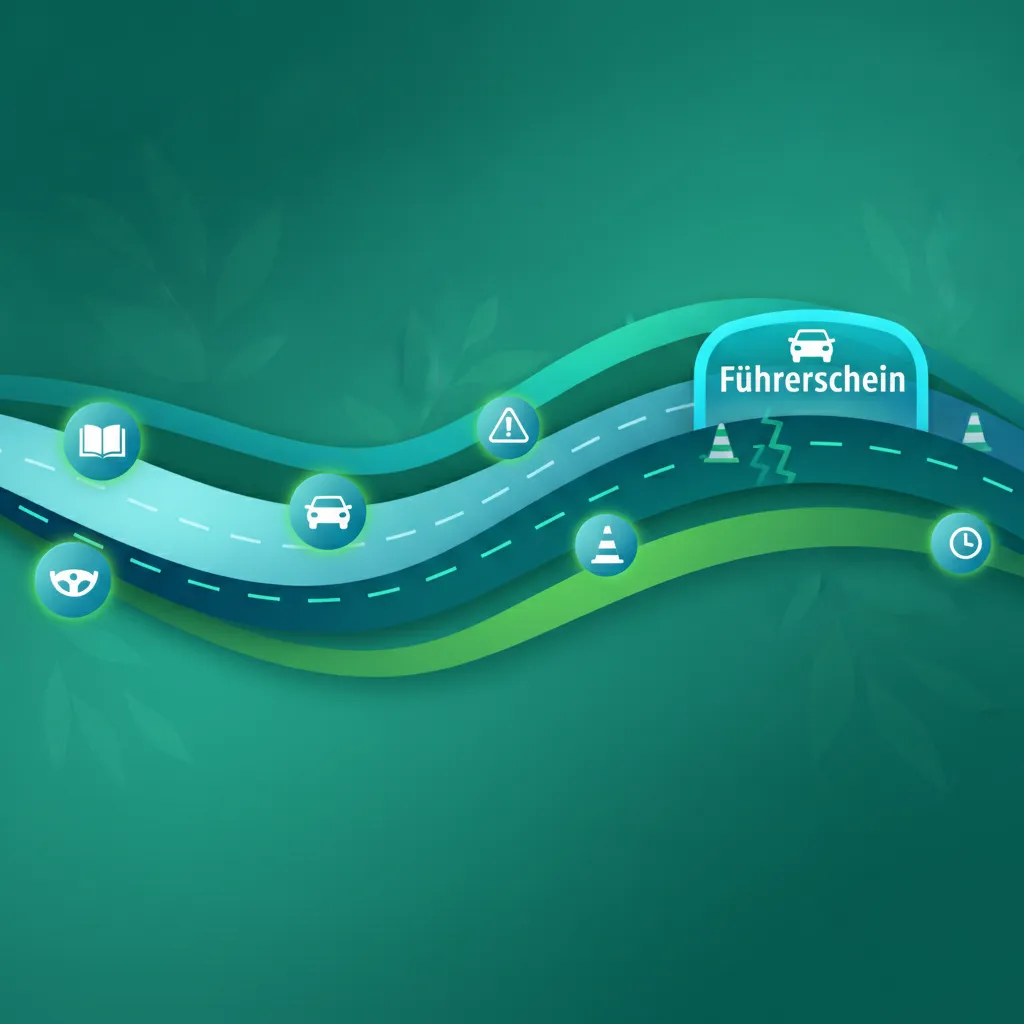
This lesson provides a comprehensive overview of the entire process for obtaining a driver's license in Germany, from enrolling in a driving school to passing the final tests. It explains the mandatory theoretical and practical training components, including the required number of lessons. The structure of both the theory and practical exams is detailed, clarifying what candidates need to know for successful registration and completion.

This lesson covers the strict laws in Germany concerning driving under the influence of alcohol, drugs, or impairing medication. It details the legal blood alcohol concentration (BAC) limits for drivers, with a specific focus on the absolute zero-tolerance policy for drivers in their probationary period and those under 21. The severe legal penalties, including fines, license suspension, and the medical-psychological assessment (MPU), are also explained.

This lesson provides a detailed overview of the legal framework governing the AM licence in Germany. It explains the classification of vehicles like mopeds and scooters based on engine displacement, power output, and weight. Learners will understand the official age requirements, licensing procedures, and fundamental StVO regulations.
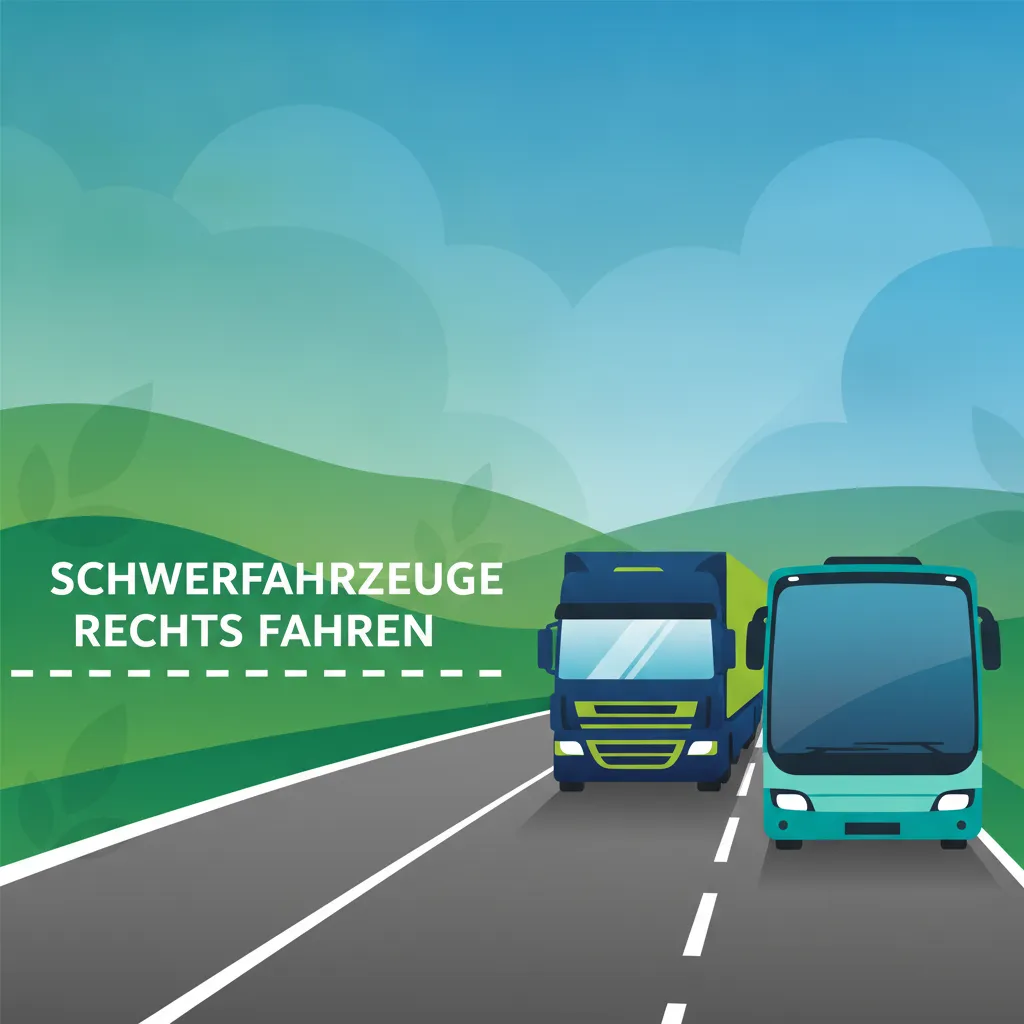
This lesson explains the specific regulations for operating heavy vehicles on Autobahnen, including speed limits, lane discipline, and overtaking rules. It discusses the use of dedicated truck lanes and the importance of maintaining appropriate following distances. The content also covers procedures for merging and exiting high-speed roads safely.

This lesson provides instruction on the rules and best practices for operating a large passenger vehicle on the Autobahn. It covers the principles of strict lane discipline, regulations for minimum speed, and correct procedures for overtaking and merging. The importance of maintaining significantly increased following distances at high speeds and planning for exits well in advance is a key focus.
This lesson provides a complete guide to driving on the German Autobahn. It covers the correct procedure for entering and exiting via acceleration and deceleration lanes, the strict lane discipline rule of keeping right ('Rechtsfahrgebot'), and the principle of overtaking only on the left. It also explains the recommended speed limit and the critical procedure for forming an emergency corridor ('Rettungsgasse') in a traffic jam.
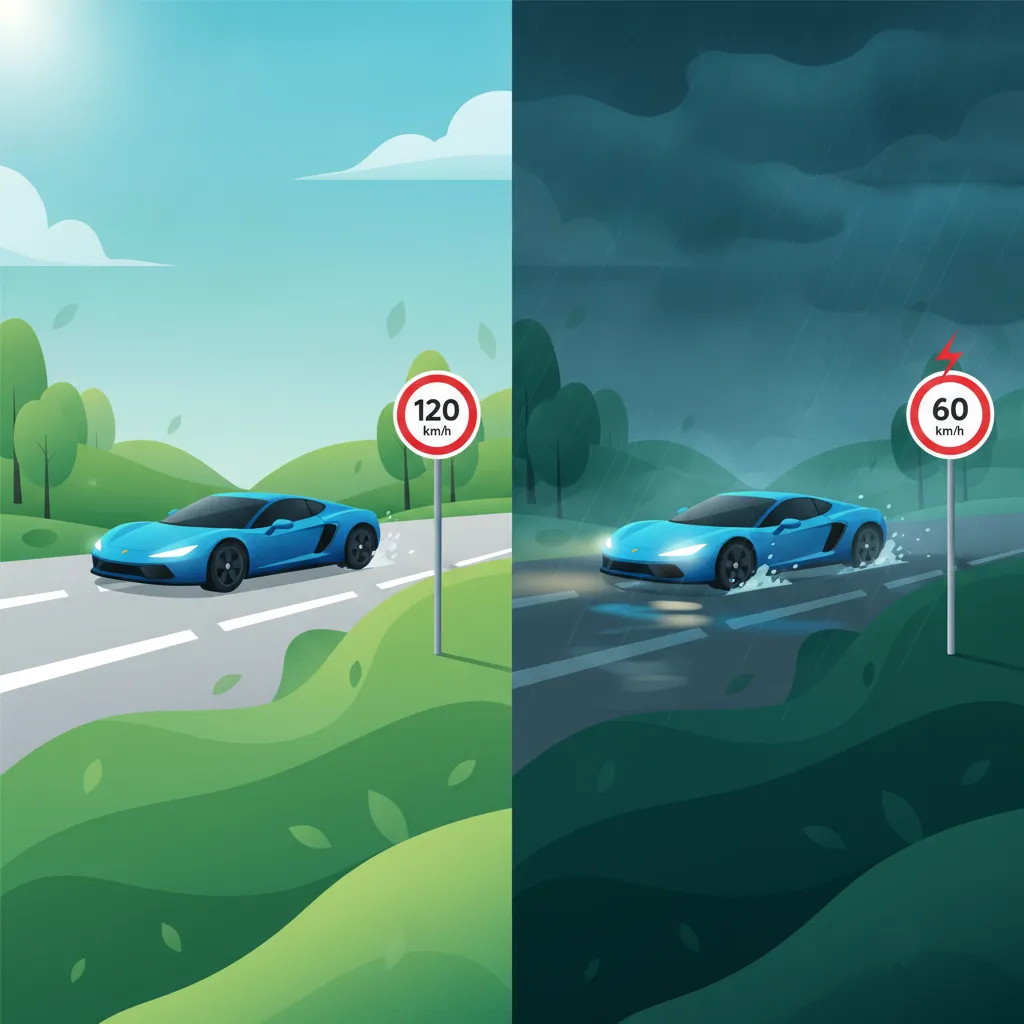
This lesson details the various speed limits applicable in Germany, from urban zones to rural roads. It emphasizes the critical skill of adapting speed to prevailing conditions such as rain, fog, or poor road surfaces. The content explains how external factors significantly impact vehicle handling and stopping distances.
This lesson outlines the driver's legal responsibility to ensure their vehicle is in a safe and roadworthy condition before every journey. It covers essential pre-drive checks, such as verifying lights, tyres, and fluid levels (oil, coolant, washer fluid). The lesson also explains the mandatory equipment that must be carried in the vehicle, including a warning triangle, high-visibility vest, and first-aid kit.
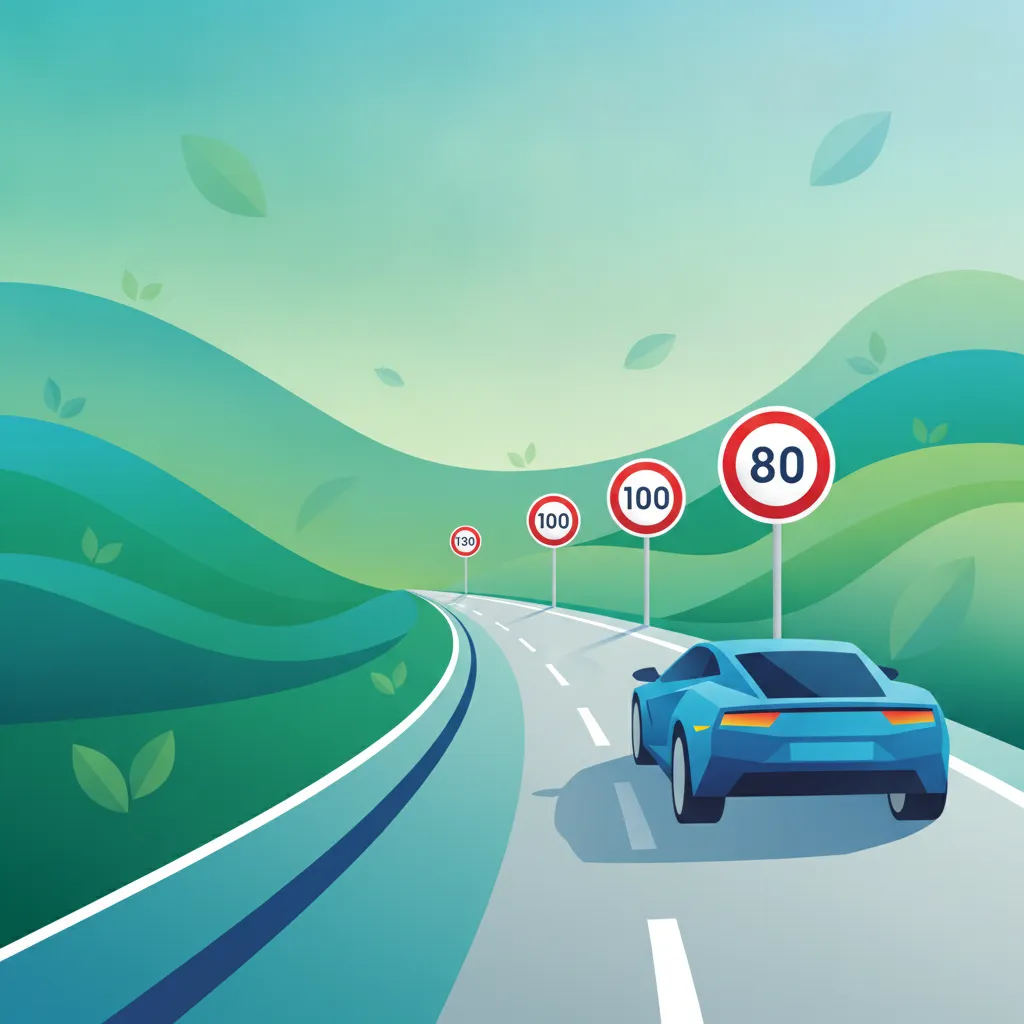
This lesson details the statutory speed limits in Germany, including the standard limits within built-up areas, on rural roads, and on the Autobahn. It emphasizes that the posted limit is a maximum and that drivers must always adapt their speed to traffic, weather, and visibility conditions. The concept of the recommended speed ('Richtgeschwindigkeit') on the Autobahn is also explained.
Learn about the fundamental duties and legal requirements for all drivers holding a German Class B license. Covers core StVO principles and general conduct on German roads.
This lesson focuses on the legal responsibilities and duties of a vehicle operator according to German traffic law, primarily the StVO. It covers the obligation to drive safely, the rules of conduct at an accident scene, and the legal consequences of traffic violations. Understanding these principles is crucial for maintaining road safety and avoiding penalties such as fines, points, or driving bans.
This lesson details the legal obligations every AM licence holder must follow. It emphasizes compliance with the Straßenverkehrs-Ordnung (StVO), including mandatory helmet use and maintaining vehicle roadworthiness. The content covers insurance requirements, accident reporting procedures, and the legal consequences of non-compliance.

This lesson focuses on the legal duties every motorcycle rider must adhere to under German traffic law. It covers the concept of 'duty of care' towards other road users, mandatory insurance requirements, and the importance of maintaining a roadworthy vehicle. The lesson also details the rules of the probationary period and the potential legal and financial consequences of traffic violations.

This lesson examines the professional standards expected of passenger-vehicle drivers. It covers the importance of maintaining public trust through reliability, punctuality, and a professional demeanor. Key skills such as effective passenger communication, conflict resolution, and stress management are discussed as vital components of a driver's accountability and adherence to regulations.

This lesson focuses on the essential legal principle of a heightened duty of care when carrying passengers. It details the driver's responsibility to ensure the safety, comfort, and accessibility of everyone on board, from boarding to alighting. Learners will understand how to conduct risk assessments, manage passenger behavior, and prepare for potential emergencies to fulfill this crucial obligation.

This lesson explores the legal framework governing heavy vehicle operation in Germany, focusing on the Straßenverkehrs-Ordnung (StVO) and specific commercial transport regulations. It details the professional duty of care required from drivers, including responsibilities for vehicle inspection and documentation. You will understand the enforcement mechanisms and potential penalties for non-compliance.

This lesson examines the ethical and environmental responsibilities of heavy vehicle drivers, including the impact of emissions, fuel consumption, and noise pollution. It explains the principles of sustainable logistics and making environmentally conscious decisions while operating heavy vehicles. The content also covers the broader implications of transportation on public health and resource usage.
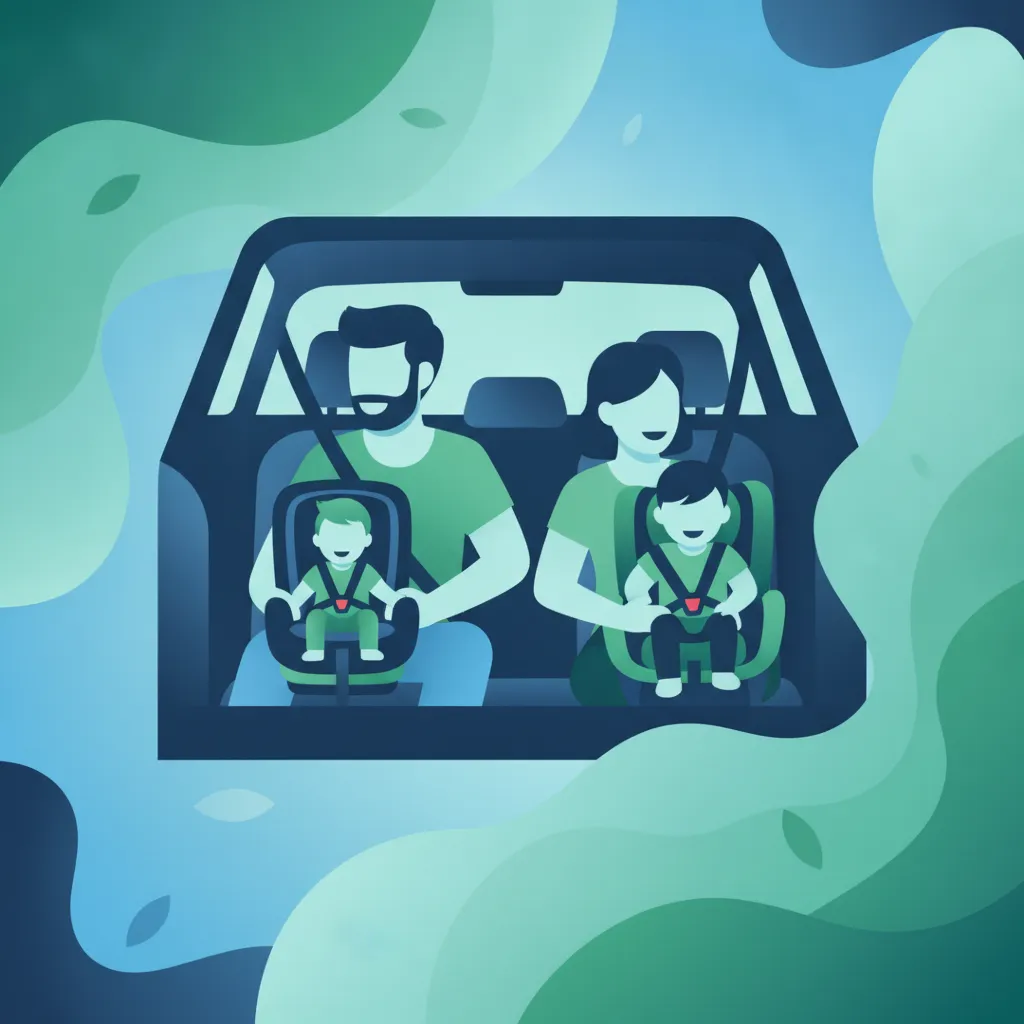
This lesson details the driver's legal responsibility for the safety of all passengers. It reinforces the mandatory use of seat belts for everyone in the vehicle. A significant focus is placed on the strict regulations for child safety, explaining the types of child restraint systems required based on a child's age, height, and weight, and how to install them correctly.
Find clear answers to common questions learners have about BF17 and B197 Regulations. Learn how the lesson is structured, which driving theory objectives it supports, and how it fits into the overall learning path of units and curriculum progression in Germany. These explanations help you understand key concepts, lesson flow, and exam focused study goals.
The accompanying person must be at least 30 years old, have held a Class B license for at least 5 years, and have no more than one point in the Flensburg traffic register at the time of permit issuance.
Yes, if you successfully complete the required B197 training on a manual vehicle during your course, your driving license will allow you to drive both automatic and manual transmission vehicles in the Class B category.
The BF17 license is primarily valid within Germany and Austria. You should always verify the current international recognition of your specific learner documentation before driving outside of these countries.
You must carry your test certificate and your valid ID at all times when driving. Failure to provide these documents during a traffic stop can lead to fines and may invalidate your driving permission, which is a serious violation during the probationary period.
Begin your targeted revision now. Use our practice search to quickly find specific German driving theory questions. Filter by StVO rules, road signs, or hazard perception to create your focused study plan. Master challenging areas and prepare confidently for your theoretical driving test.