
This lesson provides a vital overview of what you are legally allowed to do with your Category B driving license in Germany. It builds your understanding of license eligibility, insurance obligations, and the specific limitations that, if ignored, can lead to serious legal consequences or a loss of driving privileges.
Lesson content overview
Obtaining a German Category B driving license, often referred to as a "PKW-Führerschein" (car driving license), grants significant freedom and mobility. However, this privilege comes with a clear set of permissions and limitations designed to ensure road safety and driver responsibility. This lesson provides a comprehensive overview of the legal framework governing Category B license holders in Germany, detailing eligibility criteria, mandatory conditions like medical fitness and vehicle insurance, potential restrictions, special permits, and the consequences of driving bans.
Understanding these foundational aspects is not merely a formality; it is essential for maintaining your legal driving status, avoiding penalties, and contributing to a safe traffic environment. The German legal system, primarily through the Fahrerlaubnis-Verordnung (FeV - Driving License Ordinance), Straßenverkehrs-Ordnung (StVO - Road Traffic Regulations), and Fahrzeug-Zulassungs-Verordnung (FZV - Vehicle Registration Ordinance), sets out these rules clearly. This chapter aims to clarify these regulations, helping you navigate the complexities of holding a German driving license.
To be granted a German Category B driving license, applicants must meet specific requirements that ensure they possess the necessary maturity, knowledge, and physical capabilities to operate a vehicle safely. These criteria are foundational to the German licensing system.
The standard minimum age for obtaining a full Category B driving license in Germany is 18 years. However, Germany offers a special provisional permit called "Begleitetes Fahren ab 17" (BF17), allowing individuals to begin supervised driving from the age of 17. With BF17, the learner must always be accompanied by a qualified supervising person until their 18th birthday, at which point the provisional permit converts into a full Category B license. For regular Category B, driver education can typically begin at 17½ years.
Acquiring a Category B license necessitates comprehensive theoretical and practical training. This includes attending a state-approved driving school, completing a mandatory number of theoretical lessons covering traffic laws and safety, and undertaking practical driving lessons to develop vehicle control and road awareness. After completing the training, applicants must pass both a theoretical examination and a practical driving examination. The theoretical exam typically assesses knowledge of traffic rules, signs, and hazards, while the practical exam evaluates the ability to drive safely and skillfully in various traffic situations. The theoretical exam certificate is valid for 12 months, meaning the practical exam must be passed within this timeframe.
A driver's physical and mental health directly impacts their ability to react appropriately and safely on the road. Therefore, specific medical fitness standards are in place to prevent medical conditions from impairing safe vehicle operation.
All applicants for a German Category B driving license must undergo an official eye test (Sehtest). This test checks basic visual acuity, the ability to recognize colors, and peripheral vision. Drivers must meet minimum visual standards, with or without corrective lenses, to ensure they can clearly perceive traffic signs, road markings, and other road users. If corrective lenses (glasses or contact lenses) are required to meet these standards, this will be noted as a restriction on the driving license.
While a comprehensive medical examination is not typically mandatory for private Category B license applicants solely based on age in Germany, certain health conditions may necessitate a general health assessment or specific medical certificates. Conditions such as severe diabetes, epilepsy, significant heart conditions, or neurological disorders might require an assessment by a medical professional to determine driving fitness. If a medical condition is identified that could impair driving ability, the licensing authority may impose restrictions on the license, require periodic re-evaluations, or, in severe cases, deny or revoke the license to ensure public safety. Drivers are legally obligated to inform the authorities of any medical changes that could affect their driving ability.
In Germany, having valid vehicle insurance is a fundamental legal requirement for anyone operating a motor vehicle on public roads. This mandate is crucial for providing financial protection to third parties who might suffer damage or injury in an accident.
The core of German vehicle insurance obligation is third-party liability insurance ("Kfz-Haftpflichtversicherung"). This insurance covers damages caused to other vehicles, property, or individuals if you are at fault in an accident. Before a vehicle can be registered or legally driven, proof of insurance must be provided to the registration authority. This is done through an electronic insurance confirmation number, known as the "eVB-Nummer" (elektronische Versicherungsbestätigung). This number confirms that the vehicle has at least the minimum required third-party liability coverage. Drivers do not typically need to carry a physical insurance card, as the eVB number is digitally linked, but they must be able to prove valid insurance upon request (e.g., through digital means or by checking official databases).
Driving a vehicle without valid third-party liability insurance is a severe offense in Germany, falling under the Pflichtversicherungsgesetz (Compulsory Insurance Act). The penalties are significant and can include substantial fines, imprisonment for up to one year, accumulation of points in the central traffic register (Fahreignungsregister), and a driving ban. The vehicle may also be impounded immediately. Furthermore, if an uninsured driver causes an accident, they are personally liable for all damages, which can lead to immense financial burdens.
Driving without valid third-party liability insurance is a serious criminal offense in Germany, not merely a minor infraction. It carries severe penalties including fines, imprisonment, points, and driving bans.
A German Category B driving license may come with specific restrictions (Auflagen) or conditions (Nebenbestimmungen) that limit its use. These are typically imposed to mitigate risks associated with certain driver impairments or administrative decisions, ensuring that individuals drive only under conditions where they can do so safely.
One of the most common restrictions is the requirement to wear corrective lenses (glasses or contact lenses) while driving, indicated by specific codes on the license. This ensures that drivers with impaired vision maintain the necessary visual acuity. Other restrictions might include limitations on the type of vehicle that can be driven (e.g., only vehicles with automatic transmission if the practical test was taken exclusively in an automatic car, unless a B197 permit applies) or prohibitions on towing trailers if specific training for trailers has not been completed. Less common restrictions might pertain to driving at certain times (e.g., daylight hours only) or within specific geographical areas, though these are rare for standard Category B licenses.
Restrictions and conditions are denoted by specific numerical codes printed on the back of the driving license, usually in column 12. For instance, code "01" generally refers to corrective vision. Code "01.01" means glasses, "01.02" means contact lenses, and "01.06" means glasses or contact lenses. Understanding these codes is crucial, as violating a restriction can lead to fines, points on your license, and potentially more severe consequences, including the invalidation of your driving permit or a driving ban. Drivers must always adhere to the conditions specified on their license.
Germany offers specific programs that provide pathways for early driving experience or expanded driving capabilities under controlled conditions. These special permits are tailored to specific needs and situations.
The "Begleitetes Fahren ab 17" (BF17) program allows young people to gain driving experience from the age of 17, provided they are always accompanied by a qualified supervising driver. The supervising driver must meet strict criteria: they must be at least 30 years old, have held a Category B license for at least five uninterrupted years, and have no more than one point in the central traffic register (Fahreignungsregister) at the time of supervision. The BF17 permit is provisional and explicitly states the names of the authorized supervising persons. Driving without an authorized supervisor, or with one who does not meet the requirements, invalidates the permit and can lead to severe penalties, including fines, points, and a driving ban. Upon turning 18, the BF17 permit holder can exchange their document for a full, unrestricted Category B license.
The B197 permit is a special entry on the Category B driving license that allows individuals to take their practical driving test in a vehicle with an automatic transmission while still receiving a full Category B license that permits driving both manual and automatic cars. To qualify for B197, applicants must complete a minimum of 10 driving lessons in a manual transmission vehicle and pass a 15-minute test drive with their driving instructor in a manual car. This specific entry bypasses the previous rule where passing the practical test solely in an automatic car would lead to a license restricted only to automatic vehicles (code 78). B197 thus provides flexibility, allowing drivers to benefit from the ease of automatic vehicles for their test while still being qualified for manual transmission cars.
Driving privileges are not absolute and can be temporarily suspended or permanently revoked if a driver fails to adhere to traffic laws or is deemed unfit to drive. These measures are critical for enforcing road safety and penalizing dangerous behavior.
Germany employs a "Punkteordnung" (points system) managed by the Kraftfahrt-Bundesamt (KBA) in Flensburg. Demerit points are accumulated for various traffic violations, ranging from minor infractions to serious offenses.
Beyond traffic violations, a driving license can be suspended or revoked if a driver is deemed medically unfit to drive. This can occur if a previously unknown or worsening medical condition (e.g., severe epilepsy, advanced dementia, substance abuse) is identified that poses a significant risk to road safety. The licensing authority may request medical reports or an MPU if there are serious doubts about a driver's fitness. If the medical assessment concludes that the driver is no longer fit to safely operate a vehicle, the license will be revoked. Reinstatement in such cases typically requires comprehensive medical evidence demonstrating that the condition no longer impairs driving ability or is sufficiently managed.
Accumulation of 8 points in the central traffic register (Fahreignungsregister).
Official notification of license revocation by the driving license authority.
Mandatory waiting period (Sperrfrist) before a new application can be made.
Fulfilling potential conditions for re-application, such as a medical-psychological examination (MPU).
Re-application for a new driving license and potentially re-taking exams.
The permissions and limitations of a German Category B driving license are embedded within a comprehensive legal framework. The most important regulations include:
Understanding these interconnected laws is fundamental to responsible driving in Germany.
Awareness of common pitfalls can help drivers avoid penalties and maintain their driving privileges. Many violations stem from overlooking license conditions or legal obligations.
The German Category B driving license comes with significant responsibilities. Adhering to the defined permissions and limitations is not merely about avoiding fines; it is about ensuring your safety, the safety of other road users, and upholding the integrity of the traffic system. From meeting initial eligibility criteria and maintaining medical fitness to securing mandatory vehicle insurance and respecting license restrictions, every aspect plays a vital role.
Understanding special permits like BF17 and B197 provides pathways for different driving experiences, while knowledge of the points system and potential driving bans underscores the seriousness of traffic violations. By diligently complying with the regulations outlined in the FeV, StVO, and FZV, you contribute to a safer, more orderly, and more efficient road environment for everyone in Germany. Responsible driving is informed driving.
This lesson covers the legal permissions and limitations of a German Category B driving license, including eligibility requirements (minimum age 18, or 17 with BF17), mandatory medical fitness standards with vision testing, and third-party liability insurance obligations through the eVB number system. Special permits like BF17 (accompanied driving from 17) and B197 (automatic test with manual competence) are explained with specific conditions. The German points system operates through the Kraftfahrt-Bundesamt in Flensburg, with 8 points triggering automatic license revocation. Understanding these regulations from the FeV, StVO, and FZV is essential for maintaining legal driving status and passing theory exams on driver responsibility.
A short set of high-value points that capture the most important learning from this lesson.
A German Category B license permits driving vehicles up to 3,500 kg maximum authorized mass with up to 8 passenger seats.
The BF17 permit allows supervised driving from age 17, but the supervising driver must be at least 30 years old, hold Category B for at least 5 years, and have no more than 1 point in the Fahreignungsregister.
The B197 permit allows taking the practical test in an automatic car while still receiving a full Category B license for manual vehicles after completing at least 10 manual lessons and a 15-minute manual test.
Accumulating 8 points in the central traffic register (Fahreignungsregister) automatically triggers license revocation, requiring a new application after a waiting period.
Driving without valid third-party liability insurance is a criminal offense under the Pflichtversicherungsgesetz, carrying penalties including fines, up to one year imprisonment, points, and immediate vehicle impoundment.
Explore all units and lessons included in this driving theory course.
The eVB number (elektronische Versicherungsbestätigung) is the electronic confirmation required for vehicle registration proving at least third-party liability coverage.
License restriction codes on the back of the license indicate conditions: code 01 relates to vision, 01.01 means glasses, 01.02 means contact lenses, and code 78 indicates automatic-only restriction.
Drivers must report any medical changes that could impair driving ability to the licensing authority.
The theoretical exam certificate remains valid for 12 months, meaning the practical exam must be passed within this timeframe.
The Fahreignungsseminar (driver improvement seminar) can voluntarily reduce 1 point when a driver has 4-5 points.
Assuming BF17 allows solo driving at 17; the permit is only valid when accompanied by an authorized supervisor meeting all stated criteria.
Believing that passing the practical test in an automatic car automatically grants a manual transmission license; without B197, the license is restricted to automatic vehicles (code 78).
Forgetting that corrective lens requirements (code 01) on the license must be obeyed; driving without glasses or contacts when required results in violations.
Underestimating insurance requirements; drivers must be able to prove valid insurance upon request, even if the eVB number is digitally linked.
Assuming that accumulating 7 points is safe; at 8 points the license is automatically revoked and reinstatement requires meeting strict conditions including potentially an MPU.
Lesson content overview
A short set of high-value points that capture the most important learning from this lesson.
A German Category B license permits driving vehicles up to 3,500 kg maximum authorized mass with up to 8 passenger seats.
The BF17 permit allows supervised driving from age 17, but the supervising driver must be at least 30 years old, hold Category B for at least 5 years, and have no more than 1 point in the Fahreignungsregister.
The B197 permit allows taking the practical test in an automatic car while still receiving a full Category B license for manual vehicles after completing at least 10 manual lessons and a 15-minute manual test.
Accumulating 8 points in the central traffic register (Fahreignungsregister) automatically triggers license revocation, requiring a new application after a waiting period.
Driving without valid third-party liability insurance is a criminal offense under the Pflichtversicherungsgesetz, carrying penalties including fines, up to one year imprisonment, points, and immediate vehicle impoundment.
Explore all units and lessons included in this driving theory course.
The eVB number (elektronische Versicherungsbestätigung) is the electronic confirmation required for vehicle registration proving at least third-party liability coverage.
License restriction codes on the back of the license indicate conditions: code 01 relates to vision, 01.01 means glasses, 01.02 means contact lenses, and code 78 indicates automatic-only restriction.
Drivers must report any medical changes that could impair driving ability to the licensing authority.
The theoretical exam certificate remains valid for 12 months, meaning the practical exam must be passed within this timeframe.
The Fahreignungsseminar (driver improvement seminar) can voluntarily reduce 1 point when a driver has 4-5 points.
Assuming BF17 allows solo driving at 17; the permit is only valid when accompanied by an authorized supervisor meeting all stated criteria.
Believing that passing the practical test in an automatic car automatically grants a manual transmission license; without B197, the license is restricted to automatic vehicles (code 78).
Forgetting that corrective lens requirements (code 01) on the license must be obeyed; driving without glasses or contacts when required results in violations.
Underestimating insurance requirements; drivers must be able to prove valid insurance upon request, even if the eVB number is digitally linked.
Assuming that accumulating 7 points is safe; at 8 points the license is automatically revoked and reinstatement requires meeting strict conditions including potentially an MPU.
Explore search topics learners often look for when studying Permissions and Limitations. These topics reflect common questions about road rules, driving situations, safety guidance, and lesson level theory preparation for learners in Germany.
Browse additional driving theory lessons that cover connected traffic rules, road signs, and common driving situations related to this topic. Improve your understanding of how different rules interact across everyday traffic scenarios.
Understand the key permissions and limitations of your German Category B license. Covers essential requirements like medical fitness, insurance, and conditions that may lead to driving bans. Essential knowledge for German driving theory.
This lesson defines the specific vehicle types covered by the German Category B license, focusing on passenger cars and light commercial vehicles. It details the regulations concerning maximum permissible gross vehicle weight and the legal limits for towing trailers. You will learn to identify which vehicles fall under this category according to German and EU standards to ensure full compliance.
This lesson provides a comprehensive overview of the entire process for obtaining a driver's license in Germany, from enrolling in a driving school to passing the final tests. It explains the mandatory theoretical and practical training components, including the required number of lessons. The structure of both the theory and practical exams is detailed, clarifying what candidates need to know for successful registration and completion.
This lesson explains the specific rules for two special German driving license programs: BF17 (Accompanied Driving at 17) and the B197 extension. It details the requirements for young drivers and their supervisors under the BF17 program. Furthermore, it explains how the B197 regulation allows drivers trained on automatic vehicles to also operate manual transmission cars after completing specific training.

This lesson covers the strict laws in Germany concerning driving under the influence of alcohol, drugs, or impairing medication. It details the legal blood alcohol concentration (BAC) limits for drivers, with a specific focus on the absolute zero-tolerance policy for drivers in their probationary period and those under 21. The severe legal penalties, including fines, license suspension, and the medical-psychological assessment (MPU), are also explained.
This lesson explains the specific regulations for novice drivers during their mandatory two-year probationary period ('Probezeit'). Key rules include a strict zero-percent alcohol limit. The lesson also describes the system of A- and B-level violations and the consequences of committing offenses during this time, which can include a mandatory advanced seminar ('Aufbauseminar') and an extension of the probationary period.
This lesson explains the specific rules and limitations for towing trailers with a Category B license in Germany. It details how to calculate the permissible total weight of the car and trailer combination. The lesson also covers the practical aspects of safely coupling a trailer, checking its lights, and the changes in vehicle handling that drivers must adapt to when towing.
This lesson provides a complete guide to driving on the German Autobahn. It covers the correct procedure for entering and exiting via acceleration and deceleration lanes, the strict lane discipline rule of keeping right ('Rechtsfahrgebot'), and the principle of overtaking only on the left. It also explains the recommended speed limit and the critical procedure for forming an emergency corridor ('Rettungsgasse') in a traffic jam.
This lesson outlines the driver's legal responsibility to ensure their vehicle is in a safe and roadworthy condition before every journey. It covers essential pre-drive checks, such as verifying lights, tyres, and fluid levels (oil, coolant, washer fluid). The lesson also explains the mandatory equipment that must be carried in the vehicle, including a warning triangle, high-visibility vest, and first-aid kit.
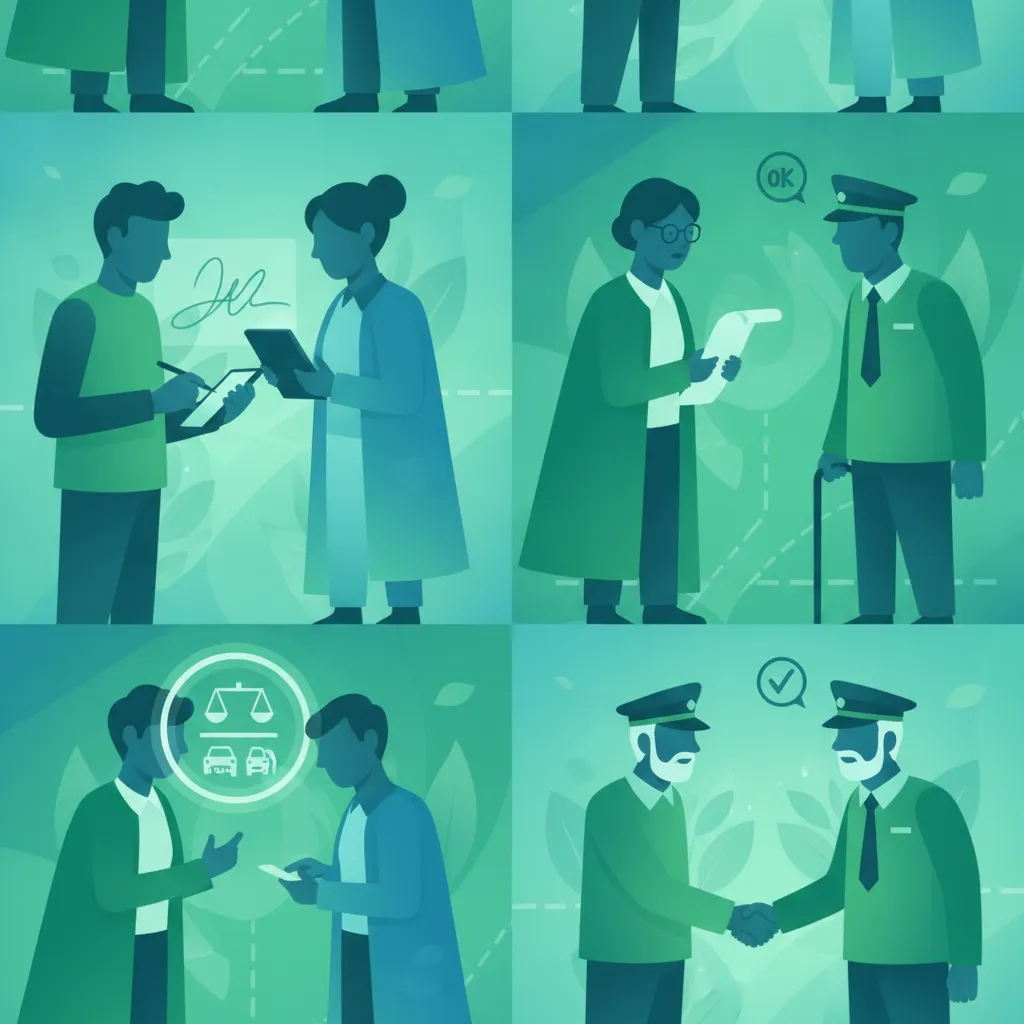
This lesson focuses on the legal responsibilities and duties of a vehicle operator according to German traffic law, primarily the StVO. It covers the obligation to drive safely, the rules of conduct at an accident scene, and the legal consequences of traffic violations. Understanding these principles is crucial for maintaining road safety and avoiding penalties such as fines, points, or driving bans.
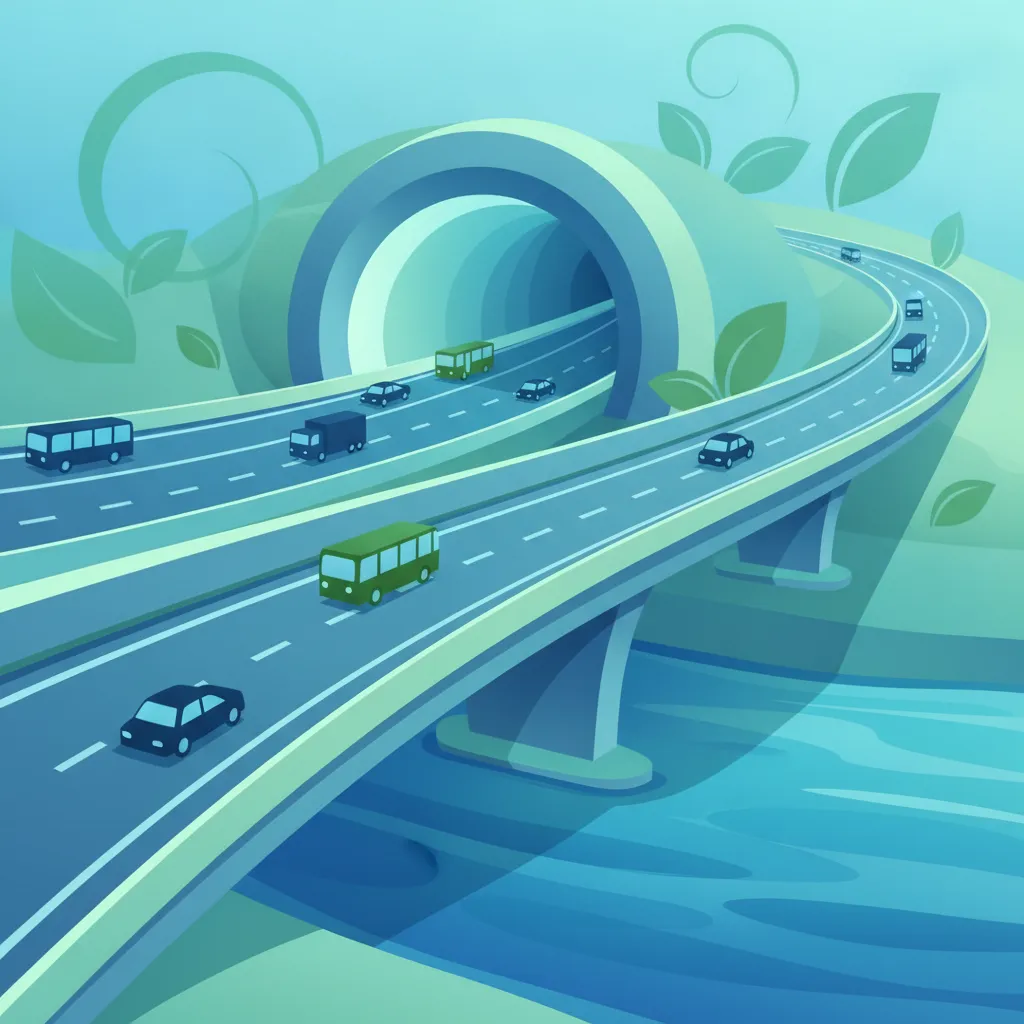
This lesson covers the specific rules and safety precautions for driving through tunnels. This includes turning on dipped headlights, maintaining a safe distance, and knowing the location and use of emergency exits and equipment. It also addresses the potential hazards on bridges, such as increased risk of ice in winter and susceptibility to strong crosswinds.
Explore the core legal obligations and responsibilities for drivers under German law (StVO). Learn about mandatory insurance, potential driving bans, and the consequences of traffic violations. Crucial for understanding your role as a driver.
This lesson focuses on the legal responsibilities and duties of a vehicle operator according to German traffic law, primarily the StVO. It covers the obligation to drive safely, the rules of conduct at an accident scene, and the legal consequences of traffic violations. Understanding these principles is crucial for maintaining road safety and avoiding penalties such as fines, points, or driving bans.

This lesson explores the legal framework governing heavy vehicle operation in Germany, focusing on the Straßenverkehrs-Ordnung (StVO) and specific commercial transport regulations. It details the professional duty of care required from drivers, including responsibilities for vehicle inspection and documentation. You will understand the enforcement mechanisms and potential penalties for non-compliance.
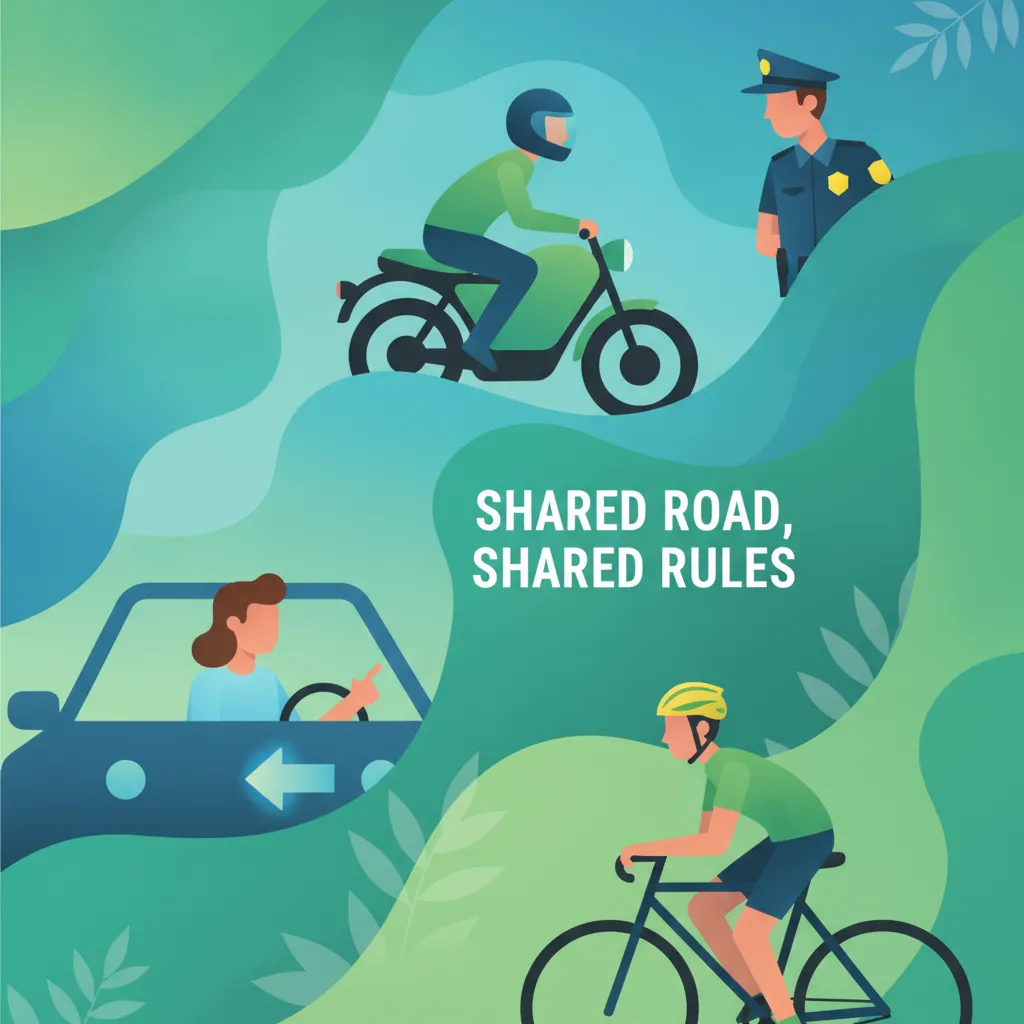
This lesson details the legal obligations every AM licence holder must follow. It emphasizes compliance with the Straßenverkehrs-Ordnung (StVO), including mandatory helmet use and maintaining vehicle roadworthiness. The content covers insurance requirements, accident reporting procedures, and the legal consequences of non-compliance.
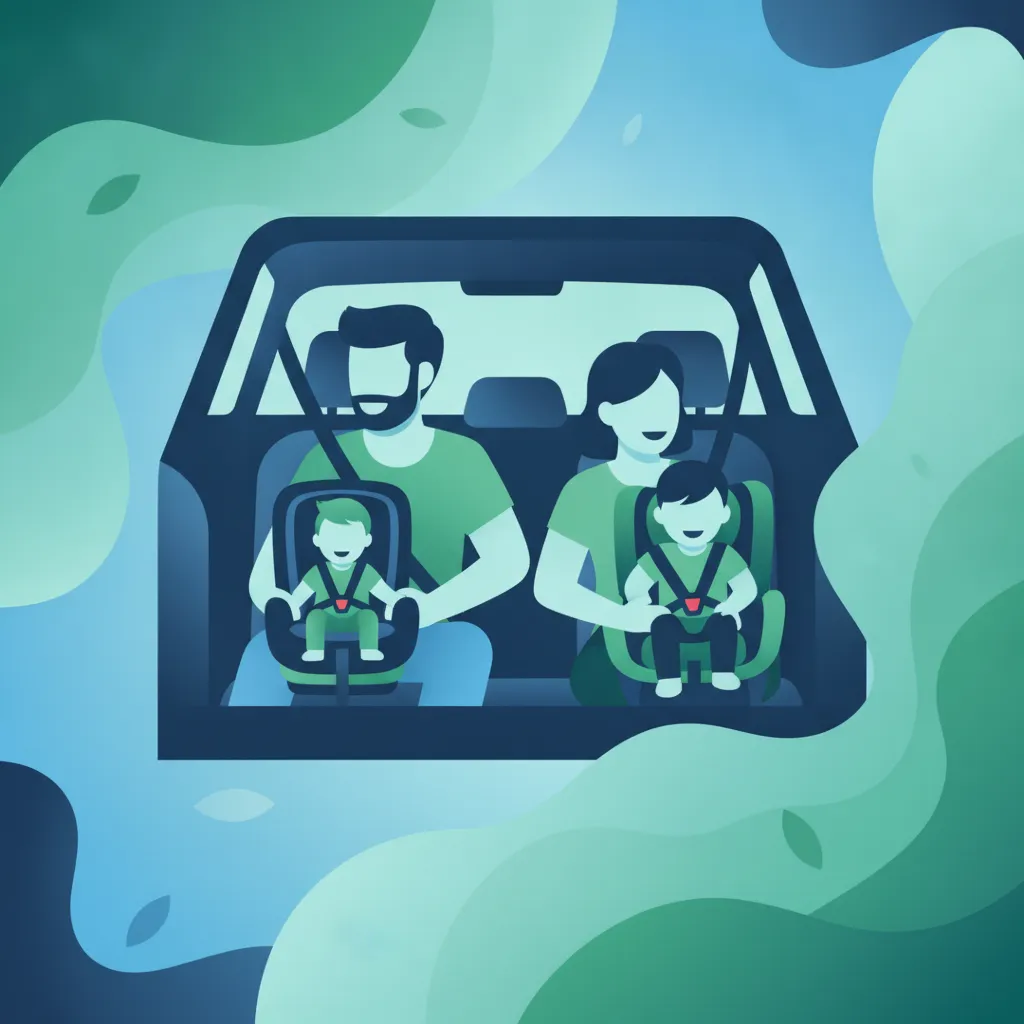
This lesson details the driver's legal responsibility for the safety of all passengers. It reinforces the mandatory use of seat belts for everyone in the vehicle. A significant focus is placed on the strict regulations for child safety, explaining the types of child restraint systems required based on a child's age, height, and weight, and how to install them correctly.
This lesson provides an overview of the German system for penalizing traffic offenses. It explains the catalogue of fines ('Bußgeldkatalog'), the system of demerit points ('Punkte in Flensburg') for more serious violations, and the conditions under which a temporary driving ban ('Fahrverbot') or a full revocation of the license can be imposed. Understanding these consequences reinforces the importance of lawful driving.
This lesson outlines the driver's legal responsibility to ensure their vehicle is in a safe and roadworthy condition before every journey. It covers essential pre-drive checks, such as verifying lights, tyres, and fluid levels (oil, coolant, washer fluid). The lesson also explains the mandatory equipment that must be carried in the vehicle, including a warning triangle, high-visibility vest, and first-aid kit.
This lesson outlines the proper response to an accident involving a heavy vehicle, including immediate actions and contacting emergency services. It details the legal obligations for reporting accidents and cooperating with police investigations. The content also covers documentation requirements for insurance claims and the importance of preserving the accident scene.
This lesson covers the essential behavioral rules mandated by the German Road Traffic Act (StVO) that form the foundation of safe driving. Key principles discussed include the mandatory rule to drive on the right side of the road, maintaining a safe following distance, and adapting speed to conditions. It also explains the regulations for overtaking, merging, and parking to ensure smooth and safe traffic flow.

This lesson focuses on the legal duties every motorcycle rider must adhere to under German traffic law. It covers the concept of 'duty of care' towards other road users, mandatory insurance requirements, and the importance of maintaining a roadworthy vehicle. The lesson also details the rules of the probationary period and the potential legal and financial consequences of traffic violations.
Find clear answers to common questions learners have about Permissions and Limitations. Learn how the lesson is structured, which driving theory objectives it supports, and how it fits into the overall learning path of units and curriculum progression in Germany. These explanations help you understand key concepts, lesson flow, and exam focused study goals.
Driving a vehicle that exceeds your license class is considered driving without a valid license, which is a criminal offense in Germany. You could face heavy fines, a driving ban, and potential imprisonment, and your insurance coverage will be void.
Not necessarily. If a medical condition impacts your ability to drive safely, you may be required to undergo a medical-psychological assessment (MPU). The authorities will determine if you are fit to drive, possibly with specific vehicle adaptations or restrictions.
Yes, third-party liability insurance (Haftpflichtversicherung) is strictly mandatory in Germany. You cannot legally operate a vehicle on public roads without it, as it ensures protection for other road users in the event of an accident.
Temporary bans are frequently issued for serious traffic violations, such as excessive speeding, driving under the influence of alcohol or drugs, or repeated failure to follow right-of-way rules. These bans are enforced to improve road safety and address dangerous driver behavior.
Begin your targeted revision now. Use our practice search to quickly find specific German driving theory questions. Filter by StVO rules, road signs, or hazard perception to create your focused study plan. Master challenging areas and prepare confidently for your theoretical driving test.