
This lesson details the critical StVO rules for overtaking safely on German roads. You will learn the correct procedure for assessing, signalling, and executing an overtake, as well as recognizing situations where passing is strictly prohibited to ensure your safety and that of others.
Lesson content overview
Overtaking, known as 'Überholen' in German, is a common maneuver in traffic that, when executed incorrectly, can lead to severe accidents. This lesson provides a comprehensive guide to the rules, safety considerations, and step-by-step procedures for overtaking within the framework of German traffic law (StVO). Mastering these principles is crucial for obtaining your German Category B driving license and ensuring safety on the road.
Overtaking refers to the act of one vehicle moving past another vehicle that is traveling in the same direction at a slower speed. This typically involves changing lanes, passing the slower vehicle, and then safely returning to the original lane. The fundamental goal of any overtaking maneuver is to enhance traffic flow without compromising the safety of any road user.
The core principles guiding safe overtaking are:
German traffic law (StVO § 5) strictly defines situations and locations where overtaking is forbidden. Recognizing these prohibited zones is vital for preventing collisions and avoiding penalties. Attempting to overtake in these areas is highly dangerous and illegal.
Overtaking is generally prohibited at intersections (Kreuzungen) and junctions (Einmündungen) if there is limited visibility or if the traffic situation is unclear. This rule applies particularly when approaching or driving through these areas, as vehicles may be turning, entering, or exiting, creating unpredictable movements. Even if the road appears clear, the potential for unexpected traffic makes overtaking exceptionally risky here.
On curves (Kurven) and bends where the view ahead is restricted, overtaking is forbidden. This is because oncoming traffic might suddenly appear, leaving no time to react or return to your lane. The same prohibition applies to hill crests (Kuppen) or any other location where visibility is significantly impaired, such as dense fog, heavy rain, or snow. A clear view of the road for a sufficient distance is a non-negotiable prerequisite for overtaking.
Overtaking is strictly prohibited immediately before and on pedestrian crossings (Zebrastreifen) to protect pedestrians. Drivers must be prepared to stop for pedestrians, and overtaking would obstruct visibility and reaction time. Similarly, overtaking is forbidden at railway crossings (Bahnübergänge) due to the inherent dangers of trains and potential barriers.
Road markings provide clear guidance on overtaking prohibitions. A continuous solid line (Sperrlinie or durchgezogene Linie) indicates that crossing or driving on it is forbidden. This means you cannot overtake if doing so would require crossing such a line. This applies to single solid lines and double solid lines.
Always be aware of road markings. A continuous solid line (Sperrlinie) means you absolutely cannot cross it to overtake. Disregarding this rule is a serious offense.
Before initiating an overtaking maneuver, a thorough assessment of safety is paramount. This involves careful judgment of visibility, the distance to other vehicles, and appropriate speed management.
For a safe overtaking maneuver on a straight road, you must have a clear view ahead for at least 150 meters. This minimum visibility distance allows you enough time to complete the maneuver safely and react to unexpected situations. In adverse conditions such as fog, heavy rain, or at night, even greater caution and potentially a longer visibility distance are required. If visibility is less than 50 meters due to fog, you are generally prohibited from overtaking.
When in doubt, do not overtake. It is always safer to remain behind the slower vehicle than to attempt a risky maneuver.
One of the most critical aspects of safe overtaking is accurately judging the speed and distance of any oncoming traffic. You must be absolutely certain that there is enough space and time for you to pull out, pass the vehicle, and return to your lane without forcing oncoming traffic to brake or swerve. Remember that speeds can be deceptive, and oncoming vehicles often appear to be further away or traveling slower than they actually are. The 'two-second rule' for following distance should also be applied to ensure a safe gap when returning to your lane.
To complete an overtaking maneuver efficiently and safely, you must be able to accelerate significantly faster than the vehicle you are passing. Your vehicle must have enough engine power to quickly increase speed and minimize the time spent in the opposing lane. While accelerating, you must never exceed the posted speed limit. If your vehicle cannot achieve a sufficient speed difference, or if doing so would require exceeding the speed limit, you should not attempt to overtake.
Road and weather conditions heavily influence the safety of an overtaking maneuver. Wet or icy roads reduce tire grip and increase braking distances, making overtaking much riskier. Strong crosswinds can affect vehicle stability, especially for larger vehicles. Low light conditions or blinding sunlight can also impair visibility, necessitating extra caution. Always adjust your assessment based on these environmental factors.
Overtaking should always be a planned and systematic procedure, not an impulsive act. Follow these steps to execute a safe and legal overtaking maneuver.
Step 1: Observation and Decision Making Before anything else, check all mirrors (rearview, side mirrors) and look over your shoulder into your blind spot. Ensure the road ahead is clear for at least 150 meters (or more, depending on speed and conditions) and that no oncoming traffic is approaching. Confirm no vehicle behind you is already attempting to overtake you. Evaluate the speed of the vehicle you intend to pass and ensure you can overtake without exceeding the speed limit.
Step 2: Signaling Your Intentions Once you have decided it is safe, signal your intention to move out using your left turn signal. This warns other road users, especially those behind you and the vehicle you are passing, of your impending maneuver.
Step 3: Moving Out and Accelerating Smoothly steer into the overtaking lane (usually the left lane on multi-lane roads in Germany) while simultaneously accelerating. Maintain a safe distance from the vehicle you are passing during this initial phase.
Step 4: Passing the Vehicle Accelerate to swiftly pass the slower vehicle. Maintain a safe lateral distance to the vehicle you are overtaking. Do not cut back in too early. You should be able to see the overtaken vehicle completely in your rearview mirror before even considering returning to your lane. This often means you need to be several car lengths ahead.
Step 5: Safely Returning to Your Lane Once you have a clear view of the overtaken vehicle in your rearview mirror and there is a sufficient gap, signal your intention to return to the original lane using your right turn signal. Gently steer back into your lane, ensuring you maintain a safe following distance from any vehicle ahead and do not force the overtaken vehicle to brake. Deactivate your turn signal.
If you are being overtaken, you have responsibilities too. According to StVO § 5, you must:
Adhering to speed limits is non-negotiable, even during an overtaking maneuver. While you must accelerate to pass another vehicle, you must never exceed the posted speed limit for that section of the road. This is a common misconception and a frequent cause of violations.
For example, if you are on a rural road with a speed limit of 100 km/h and you wish to overtake a vehicle traveling at 80 km/h, you can accelerate up to 100 km/h to perform the maneuver. Exceeding 100 km/h, even briefly, is illegal. If the speed limit is 80 km/h and the vehicle in front is going 75 km/h, your effective speed advantage is very small, making the overtake much longer and potentially riskier. In such cases, it might be safer to simply remain behind.
Exceeding the speed limit during an overtaking maneuver is a traffic violation and can result in fines and points on your license. Safety always takes precedence over speed.
Many accidents related to overtaking stem from common errors. Being aware of these can help you avoid them:
Overtaking rules and considerations can vary depending on specific road users and environmental factors.
Overtaking heavy goods vehicles (LKW) or vehicles with trailers requires significantly more time and distance due to their length and potentially slower acceleration. Be extra cautious, especially on inclines where they may lose speed. Additionally, if your own vehicle is heavily loaded, its acceleration and braking capabilities will be reduced, which must be factored into your overtaking decision.
When overtaking cyclists, motorcyclists, or pedestrians, it is crucial to maintain a much greater lateral safety distance. According to German law, a minimum lateral distance of 1.5 meters is required when overtaking cyclists and pedestrians, and 2 meters if outside of built-up areas. This provides them with sufficient space and protects them from air turbulence from your vehicle.
When overtaking cyclists or pedestrians, always ensure a minimum lateral distance of 1.5 meters within urban areas and 2 meters outside urban areas. Their vulnerability demands extra care.
This lesson covers the legal and procedural framework for overtaking (Überholen) under German traffic law (StVO § 5), emphasizing that safety is the overriding principle. Overtaking is prohibited at intersections, curves, pedestrian crossings, railway crossings, and wherever a Sperrlinie (continuous solid line) forbids it. Before initiating any pass, drivers must ensure at least 150 meters of clear visibility, judge oncoming traffic speed and distance accurately, and confirm they can complete the maneuver without exceeding the speed limit. The standardized five-step procedure—observation, signaling, moving out, passing, and returning—must be applied systematically, with special lateral distance requirements for vulnerable road users such as cyclists (1.5m urban, 2m rural). Common errors include misjudging oncoming traffic, cutting back in prematurely, and failing to signal, all of which significantly increase collision risk.
A short set of high-value points that capture the most important learning from this lesson.
Safety is the paramount principle in overtaking, overriding all other considerations when in doubt.
A clear view of at least 150 meters ahead is a non-negotiable prerequisite before attempting any overtaking maneuver.
Overtaking is strictly prohibited at intersections, curves, hill crests, pedestrian crossings, railway crossings, and anywhere a continuous solid line (Sperrlinie) prohibits it.
The five-step procedure—observe, signal left, move out and accelerate, pass, signal right and return—must be followed systematically every time.
Speed limits must never be exceeded during overtaking, even briefly to complete a pass.
Explore all units and lessons included in this driving theory course.
Minimum visibility for safe overtaking: 150 meters on straight roads; less than 50 meters visibility (e.g., fog) generally prohibits overtaking altogether.
Lateral safety distances when overtaking cyclists: 1.5 meters in urban areas, 2 meters outside built-up areas.
Do not overtake if the vehicle ahead is signaling left (intending to turn), if a school bus has stopped with hazard lights, or if the vehicle ahead is already overtaking.
The overtaken vehicle must not accelerate, must keep as far right as possible, and must not obstruct the overtaking maneuver.
Crossing a Sperrlinie (continuous solid line) to overtake is a serious traffic violation under StVO.
Misjudging the speed and distance of oncoming traffic by assuming it is slower or further away than it actually is.
Returning to the lane too early after passing, before the overtaken vehicle is fully visible in the rearview mirror.
Failing to use turn signals before moving out of the lane or before returning, depriving other drivers of critical information.
Attempting to overtake when visibility is restricted by curves, hills, weather, or road layout without sufficient clearance.
Accelerating beyond the posted speed limit while overtaking, which remains illegal regardless of the maneuver's duration.
Lesson content overview
A short set of high-value points that capture the most important learning from this lesson.
Safety is the paramount principle in overtaking, overriding all other considerations when in doubt.
A clear view of at least 150 meters ahead is a non-negotiable prerequisite before attempting any overtaking maneuver.
Overtaking is strictly prohibited at intersections, curves, hill crests, pedestrian crossings, railway crossings, and anywhere a continuous solid line (Sperrlinie) prohibits it.
The five-step procedure—observe, signal left, move out and accelerate, pass, signal right and return—must be followed systematically every time.
Speed limits must never be exceeded during overtaking, even briefly to complete a pass.
Explore all units and lessons included in this driving theory course.
Minimum visibility for safe overtaking: 150 meters on straight roads; less than 50 meters visibility (e.g., fog) generally prohibits overtaking altogether.
Lateral safety distances when overtaking cyclists: 1.5 meters in urban areas, 2 meters outside built-up areas.
Do not overtake if the vehicle ahead is signaling left (intending to turn), if a school bus has stopped with hazard lights, or if the vehicle ahead is already overtaking.
The overtaken vehicle must not accelerate, must keep as far right as possible, and must not obstruct the overtaking maneuver.
Crossing a Sperrlinie (continuous solid line) to overtake is a serious traffic violation under StVO.
Misjudging the speed and distance of oncoming traffic by assuming it is slower or further away than it actually is.
Returning to the lane too early after passing, before the overtaken vehicle is fully visible in the rearview mirror.
Failing to use turn signals before moving out of the lane or before returning, depriving other drivers of critical information.
Attempting to overtake when visibility is restricted by curves, hills, weather, or road layout without sufficient clearance.
Accelerating beyond the posted speed limit while overtaking, which remains illegal regardless of the maneuver's duration.
Explore search topics learners often look for when studying Overtaking Rules and Behaviors. These topics reflect common questions about road rules, driving situations, safety guidance, and lesson level theory preparation for learners in Germany.
Browse additional driving theory lessons that cover connected traffic rules, road signs, and common driving situations related to this topic. Improve your understanding of how different rules interact across everyday traffic scenarios.
Explore real-world scenarios and common hazards associated with overtaking. Learn how to accurately judge the speed and distance of oncoming traffic and other road users to ensure safe passing maneuvers according to German traffic regulations.
This lesson covers the regulations and safe techniques for overtaking other vehicles in urban environments. It emphasizes the importance of thorough observation, including mirror and blind spot checks, before committing to the maneuver. Learners will understand how to choose a safe gap, manage their speed differential, and maintain strict lane discipline throughout the overtaking process.

This lesson builds on defensive driving by focusing specifically on hazard perception ('Gefahrenerkennung'). It teaches you how to actively scan the driving environment for potential risks, not just immediate dangers. You will learn to anticipate the likely actions of other road users and identify clues that signal a developing hazardous situation, allowing you to react early and safely.

This lesson explores the critical role of visibility in safe driving, covering topics such as sight distance, managing blind spots, and the correct use of mirrors. It provides guidance on how to adjust your driving in conditions of reduced visibility, such as at night, in fog, or during heavy rain, including the proper use of headlights. The importance of the over-the-shoulder check ('Schulterblick') is also a key focus.
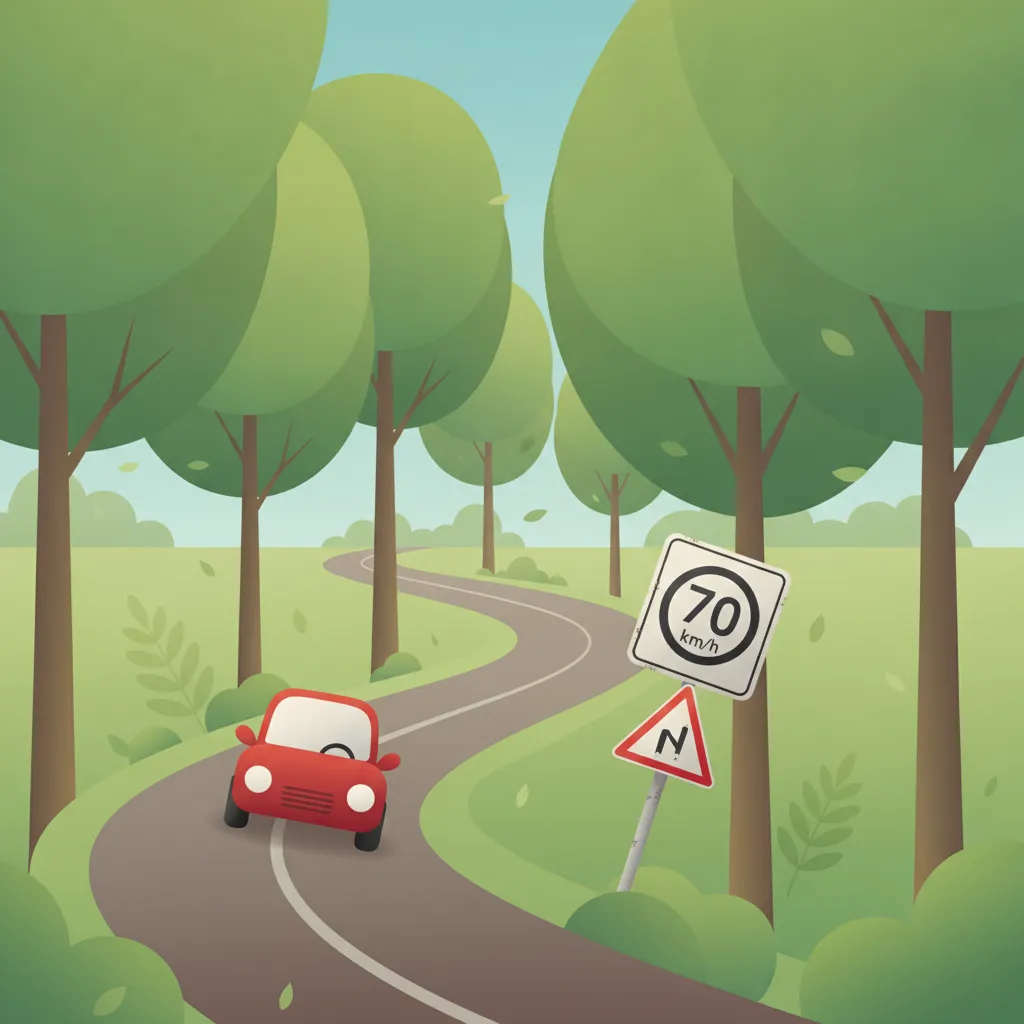
This lesson examines the specific hazards associated with driving on rural roads. It covers how to handle narrow lanes, sharp bends, and poor road surfaces, as well as how to anticipate and safely interact with slow-moving agricultural vehicles or livestock. Strategies for speed adaptation due to limited visibility and the risks associated with overtaking in these conditions are thoroughly discussed.

This lesson focuses on the high-risk maneuver of reversing, emphasizing the importance of all-around observation due to limited visibility. It teaches techniques for controlling the vehicle at very low speeds and using mirrors and direct observation to manage large blind spots behind the car. The priority is to ensure the path is clear of pedestrians and obstacles at all times.

This lesson covers the crucial skills of managing speed and maintaining a safe buffer from other vehicles. It teaches methods for calculating an appropriate following distance, such as the time-gap method, which adapts to different speeds and conditions. Learners will understand how to adjust their speed based on traffic flow, road surface, and weather to ensure they always have enough time and space to stop safely.

This lesson focuses on the importance of maintaining a safe following distance ('Sicherheitsabstand') to the vehicle ahead. It teaches practical methods for judging this distance, including the universally applicable two-second rule and the German 'halber Tacho' (half the speedometer reading in meters) rule. The lesson stresses the need to increase this distance in poor weather or when visibility is reduced.
This lesson focuses on maintaining a safe buffer around the vehicle in traffic. It explains the 'two-second rule' as a simple method for ensuring adequate following distance and discusses how to adjust this for adverse conditions. A key focus is on developing hazard anticipation skills through continuous scanning and risk assessment.

This lesson teaches riders how to develop strong visual perception skills for the road. It covers systematic scanning patterns, the correct use of mirrors, and the critical importance of performing a head check to cover blind spots. Understanding the larger blind spots of trucks and buses is also a key safety component.

This lesson teaches the systematic observation techniques required for safe driving, starting with how to scan the road far ahead, nearby, and to the sides. It details the correct frequency for checking interior and exterior mirrors to maintain situational awareness. The lesson highlights the indispensable over-the-shoulder check ('Schulterblick') to cover the vehicle's blind spot before any change in direction.
Understand the specific situations and locations where overtaking is forbidden according to German road traffic regulations (StVO). Learn to identify restricted zones and the legal implications of violating these rules for your driving theory knowledge.
This lesson covers the regulations and safe techniques for overtaking other vehicles in urban environments. It emphasizes the importance of thorough observation, including mirror and blind spot checks, before committing to the maneuver. Learners will understand how to choose a safe gap, manage their speed differential, and maintain strict lane discipline throughout the overtaking process.

This lesson covers the essential behavioral rules mandated by the German Road Traffic Act (StVO) that form the foundation of safe driving. Key principles discussed include the mandatory rule to drive on the right side of the road, maintaining a safe following distance, and adapting speed to conditions. It also explains the regulations for overtaking, merging, and parking to ensure smooth and safe traffic flow.

This lesson focuses on the legal responsibilities and duties of a vehicle operator according to German traffic law, primarily the StVO. It covers the obligation to drive safely, the rules of conduct at an accident scene, and the legal consequences of traffic violations. Understanding these principles is crucial for maintaining road safety and avoiding penalties such as fines, points, or driving bans.

This lesson provides a step-by-step guide to executing turns safely at intersections and other locations. It details the full observation sequence (mirrors, signal, blind spot check) required before initiating a turn. The lesson covers correct lane positioning for both left and right turns and explains the rules for performing U-turns or three-point turns where permitted.
This lesson focuses on the importance of maintaining a safe following distance ('Sicherheitsabstand') to the vehicle ahead. It teaches practical methods for judging this distance, including the universally applicable two-second rule and the German 'halber Tacho' (half the speedometer reading in meters) rule. The lesson stresses the need to increase this distance in poor weather or when visibility is reduced.
This lesson provides a complete guide to driving on the German Autobahn. It covers the correct procedure for entering and exiting via acceleration and deceleration lanes, the strict lane discipline rule of keeping right ('Rechtsfahrgebot'), and the principle of overtaking only on the left. It also explains the recommended speed limit and the critical procedure for forming an emergency corridor ('Rettungsgasse') in a traffic jam.
This lesson provides an overview of the German system for penalizing traffic offenses. It explains the catalogue of fines ('Bußgeldkatalog'), the system of demerit points ('Punkte in Flensburg') for more serious violations, and the conditions under which a temporary driving ban ('Fahrverbot') or a full revocation of the license can be imposed. Understanding these consequences reinforces the importance of lawful driving.

This lesson clarifies the legal distinction between 'stopping' ('Halten') and 'parking' ('Parken') in Germany and explains the specific rules for each. You will learn to identify areas where stopping and parking are prohibited through signs and road markings. The lesson also covers the correct use of parking aids like the blue parking disc ('Parkscheibe') and paid parking systems.
This lesson examines the specific hazards associated with driving on rural roads. It covers how to handle narrow lanes, sharp bends, and poor road surfaces, as well as how to anticipate and safely interact with slow-moving agricultural vehicles or livestock. Strategies for speed adaptation due to limited visibility and the risks associated with overtaking in these conditions are thoroughly discussed.
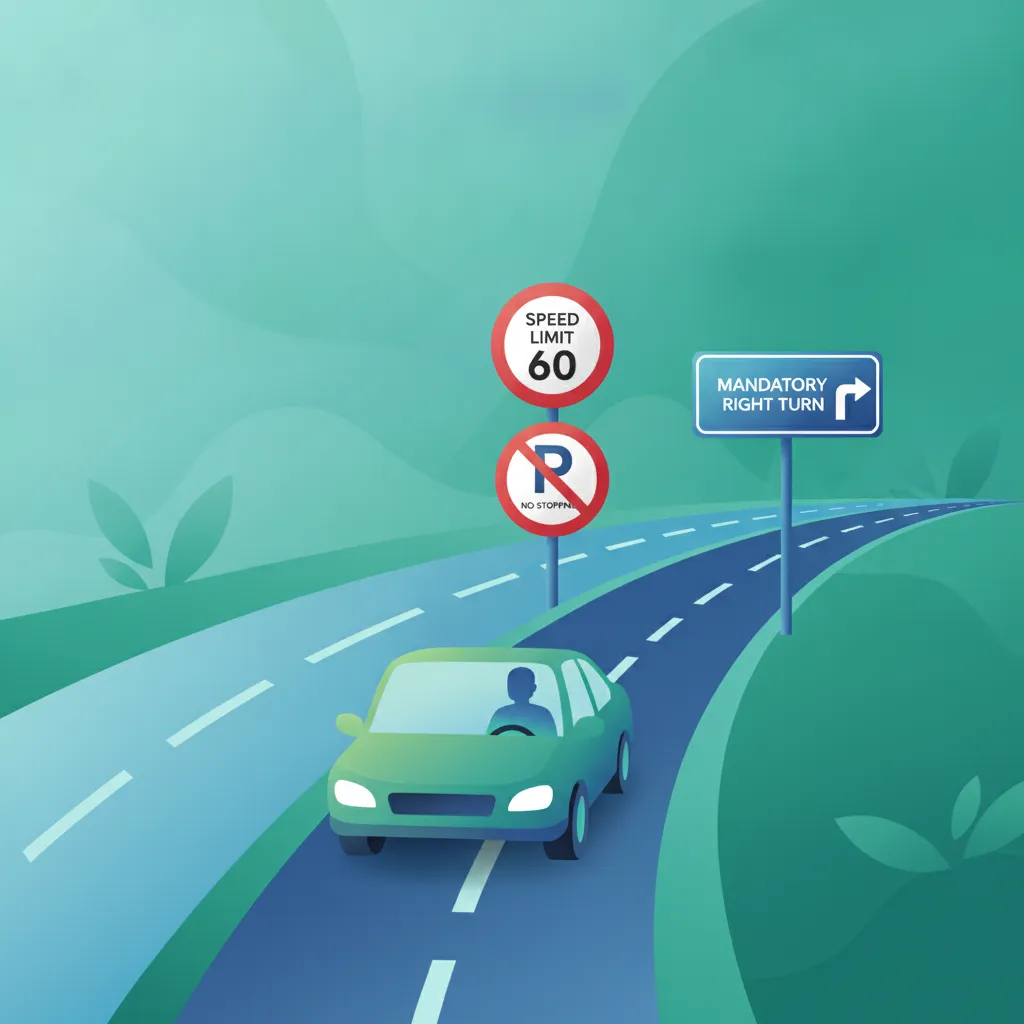
This lesson covers regulatory signs, which are legally enforceable and command specific actions from drivers. You will learn the meaning of critical signs such as the stop sign, yield sign, no-entry signs, and various parking and stopping prohibitions. The content also explains signs that establish speed limits, one-way streets, and restricted areas like environmental or pedestrian zones.
Find clear answers to common questions learners have about Overtaking Rules and Behaviors. Learn how the lesson is structured, which driving theory objectives it supports, and how it fits into the overall learning path of units and curriculum progression in Germany. These explanations help you understand key concepts, lesson flow, and exam focused study goals.
No, you must never cross or drive on a solid white line (Zeichen 295) to overtake. Crossing this line is a serious traffic violation in Germany.
When being overtaken, you must maintain your speed or slow down if necessary to facilitate the maneuver. You are strictly forbidden from increasing your speed while someone is passing you.
Yes, you must maintain a sufficient lateral distance—typically at least 1.5 meters in urban areas and 2 meters outside built-up areas—when passing cyclists to ensure their safety.
Overtaking is generally prohibited at and immediately before level crossings unless there are specific traffic signals or signage indicating otherwise, as visibility and safety are severely compromised.
Begin your targeted revision now. Use our practice search to quickly find specific German driving theory questions. Filter by StVO rules, road signs, or hazard perception to create your focused study plan. Master challenging areas and prepare confidently for your theoretical driving test.