
In this lesson, you will learn the critical techniques for adjusting your mirrors to maximize visibility when operating heavy vehicles in categories C1, C1E, C, and CE. Mastering these adjustments is essential for identifying hazards in your blind spots and ensuring overall road safety, which is a key focus in the German heavy vehicle theory examination.

Lesson content overview
Operating a heavy vehicle successfully and safely, particularly in categories C1, C1E, C, and CE under German traffic law, demands exceptional spatial awareness and the ability to interpret the surrounding environment accurately. A fundamental aspect of this is the correct adjustment and consistent use of mirrors, which significantly extend a driver's field of vision and help mitigate the inherent challenges posed by large vehicle dimensions and extensive blind spots. This lesson provides a comprehensive guide to mastering mirror adjustment and understanding the limits of indirect vision, ensuring you are well-prepared for the road and the official theory examination.
For drivers of trucks, lorries, and articulated vehicles, mirrors are not just an accessory; they are indispensable safety devices. Given the considerable length, width, and height of heavy vehicles, direct vision alone through the windshield is severely limited, creating substantial areas around the vehicle that are invisible to the driver. This is especially true for the sides and rear, which are critical zones for detecting other road users, planning maneuvers, and avoiding collisions.
Proper mirror adjustment is a prerequisite for safe driving. It directly impacts your ability to perform essential driving tasks such as changing lanes, overtaking, merging onto motorways, turning at intersections, and reversing safely. Neglecting these adjustments can lead to dangerous situations, particularly with vulnerable road users like cyclists and pedestrians who can easily be obscured in a heavy vehicle's blind spots.
The total area a driver can perceive from their seat is known as the field of vision (Sichtfeld). This field is a combination of two primary components: direct vision and indirect vision.
Direct vision is crucial for monitoring the road ahead, observing traffic signals, and identifying immediate hazards. However, due to the structure of heavy vehicles – including their length, cab design, and potential cargo – direct vision provides only a limited view of the areas to the sides and rear. This limitation underscores the vital role of mirrors in completing the driver's perception of their surroundings.
Indirect vision compensates for the limitations of direct vision. It extends your visual range to the sides, rear corners, and directly behind the vehicle. For heavy vehicle drivers, effective indirect vision is paramount. It allows you to monitor adjacent lanes, observe following traffic, keep track of your trailer (if applicable), and identify potential hazards that would otherwise be hidden. Optimizing indirect vision through precise mirror adjustment is a core skill for professional drivers.
Despite the extensive use of mirrors, there will always be areas around a heavy vehicle that remain invisible to the driver. These are known as blind spots (Toter Winkel).
Heavy vehicles inherently have larger and more numerous blind spots compared to passenger cars due to their dimensions. These blind spots can effectively hide entire vehicles, motorcycles, bicycles, or pedestrians. Awareness of these zones is critical, as they are a primary cause of collisions during maneuvers.
Effective blind spot management relies on a combination of correct mirror adjustment and proactive driving techniques, such as performing shoulder checks (direct head turns) before any lateral movement.
To ensure comprehensive visibility and minimize blind spots, mirrors must be adjusted systematically. This process should always be completed before you start driving and ideally from your customary, comfortable driving position. Any changes to your seating position, load, or trailer configuration may necessitate re-adjustment.
Establish Your Driving Position: Before adjusting any mirror, ensure your seat is set to your preferred driving position. This includes seat height, distance from pedals, and backrest angle. Your mirrors must be aligned with your eye level and perspective.
Adjust the Interior Rear-View Mirror (Hubschrauberblende): If your heavy vehicle has an interior mirror, this is the first one to set. Position it to show as much of the area directly behind your vehicle as possible. For many heavy vehicles, especially those with trailers or enclosed cargo areas, this mirror may offer a limited view or be entirely absent. If present, ensure it is clear and provides a stable image.
Adjust the Left Exterior Side Mirror (Außenblende): This mirror, located on the driver's side, is critical for monitoring traffic in the adjacent left lane and for safe lane changes and overtaking maneuvers.
Adjust the Right Exterior Side Mirror (Außenblende): The passenger side mirror is equally important, especially for wide vehicles and articulated combinations, as it covers the blind spot on the right side and aids in turning and parking maneuvers.
The "Just Barely Visible" Rule: For both side mirrors, seeing a small sliver of your own vehicle helps establish a crucial reference point for judging distances and relative positions of other vehicles. However, ensure that this sliver does not consume too much of the mirror's surface, as the primary purpose is to view the surrounding traffic lanes.
German traffic law places specific obligations on drivers regarding mirror adjustment and use to ensure maximum safety. Adherence to these regulations is not only a legal requirement but a fundamental aspect of responsible heavy vehicle operation.
This rule is mandatory and emphasizes proactive safety. It ensures that a driver has optimal visibility from the outset, without the distraction or danger of adjusting mirrors while moving.
Example: Before starting your engine and releasing the parking brake, you must ensure all your mirrors are correctly aligned to your seating position, providing the widest possible view of your surroundings.
Since mirrors cannot eliminate all blind spots, direct observation is essential. This regulation is crucial for preventing collisions, especially when changing lanes, merging, overtaking, or turning.
Example: Before initiating a lane change on the Autobahn, you should glance quickly over your shoulder in the direction of the intended lane to confirm no vehicle is hidden in your blind spot, even after checking your side mirror.
While this rule is strongly recommended for safety rather than a strict legal mandate with specific penalties, it is considered best practice for professional drivers. Constant situational awareness involves frequent glances into all mirrors.
Example: After completing an overtaking maneuver, a driver should immediately check their mirrors to verify the position of the overtaken vehicle and ensure the road behind remains clear. Similarly, after navigating an intersection, a quick mirror check helps confirm no new hazards have appeared.
Ignoring or improperly implementing mirror adjustment and use principles can lead to serious consequences. Being aware of common pitfalls helps heavy vehicle drivers avoid dangerous situations and potential legal infringements.
Optimal mirror adjustment is not static; it may require adaptation based on various driving conditions and vehicle states.
Dynamic Mirror Use: Professional drivers don't just set their mirrors once; they continuously scan them, adapting their focus and performing extra checks based on the evolving driving environment. This constant awareness is key to preventing incidents.
The relationship between proper mirror use and driving safety is direct and undeniable.
Understanding the theory is essential, but applying it in real-world scenarios is what makes a safe driver. Here are some examples:
Effective mirror adjustment and diligent use are fundamental skills for any heavy vehicle driver aiming for safety and professionalism. By understanding the critical role of mirrors in extending your field of vision, actively managing blind spots, and adhering to legal regulations, you significantly reduce the risks associated with operating large vehicles. Always remember to adjust your mirrors before starting your journey, continuously check them during driving, and supplement indirect vision with direct observation whenever necessary. This mastery will enhance your situational awareness, improve your reaction time, and ultimately contribute to safer roads for everyone.
This lesson covers the critical skill of mirror adjustment for heavy vehicles in German license categories C1 to CE. It establishes that proper mirror use is indispensable for safety due to the limited direct vision from large vehicle dimensions. The systematic mirror adjustment hierarchy—starting from driving position through interior to exterior mirrors—must be completed before every journey, with readjustment needed after any configuration change. Heavy vehicles have four main blind spot zones (front, sides, rear corners, directly behind) that require active management through both mirror scanning and direct head or shoulder checks. The lesson emphasizes that mirrors alone cannot eliminate all blind spots, making supplementary direct observation essential, particularly for detecting vulnerable road users like cyclists and pedestrians during turns and lane changes.
A short set of high-value points that capture the most important learning from this lesson.
Heavy vehicles require systematic mirror adjustment to compensate for extensive blind spots that cannot be fully covered by mirrors alone
The correct mirror adjustment sequence is: driving position first, then interior rear-view mirror, followed by left exterior mirror, then right exterior mirror
Side mirrors should show a small sliver of your own vehicle on the inner edge while dedicating 80-90% of the view to adjacent lanes
Four primary blind spot zones exist around heavy vehicles: front, sides along the full length, rear corners, and directly behind
Legal regulations mandate mirror adjustment before driving and active blind spot management through head or shoulder checks during maneuvers
Explore all units and lessons included in this driving theory course.
The 'just barely visible' rule for side mirrors: a small sliver of your own vehicle provides a reference point without sacrificing lane coverage
Mirrors must be re-adjusted if seating position, load, or trailer configuration changes
Articulated truck drivers must anticipate that the tractor-trailer angle changes during turns, temporarily affecting mirror visibility
Weather conditions (rain, fog, glare) and road type (Autobahn vs urban) may require mirror adjustment adaptations
German terms to know for the exam: Toter Winkel (blind spot), Sichtfeld (field of vision), Hubschrauberblende (rear-view mirror), Außenblenden (side mirrors)
Starting the journey without adjusting mirrors first, immediately compromising situational awareness
Relying solely on mirrors and skipping shoulder checks, believing blind spots are fully covered
Setting side mirrors too far inward, showing too much of your own vehicle and creating larger blind spots
Failing to perform blind spot checks before turning at intersections, risking collisions with cyclists or pedestrians
Attempting to adjust mirrors while driving, which is a dangerous distraction
Lesson content overview
A short set of high-value points that capture the most important learning from this lesson.
Heavy vehicles require systematic mirror adjustment to compensate for extensive blind spots that cannot be fully covered by mirrors alone
The correct mirror adjustment sequence is: driving position first, then interior rear-view mirror, followed by left exterior mirror, then right exterior mirror
Side mirrors should show a small sliver of your own vehicle on the inner edge while dedicating 80-90% of the view to adjacent lanes
Four primary blind spot zones exist around heavy vehicles: front, sides along the full length, rear corners, and directly behind
Legal regulations mandate mirror adjustment before driving and active blind spot management through head or shoulder checks during maneuvers
Explore all units and lessons included in this driving theory course.
The 'just barely visible' rule for side mirrors: a small sliver of your own vehicle provides a reference point without sacrificing lane coverage
Mirrors must be re-adjusted if seating position, load, or trailer configuration changes
Articulated truck drivers must anticipate that the tractor-trailer angle changes during turns, temporarily affecting mirror visibility
Weather conditions (rain, fog, glare) and road type (Autobahn vs urban) may require mirror adjustment adaptations
German terms to know for the exam: Toter Winkel (blind spot), Sichtfeld (field of vision), Hubschrauberblende (rear-view mirror), Außenblenden (side mirrors)
Starting the journey without adjusting mirrors first, immediately compromising situational awareness
Relying solely on mirrors and skipping shoulder checks, believing blind spots are fully covered
Setting side mirrors too far inward, showing too much of your own vehicle and creating larger blind spots
Failing to perform blind spot checks before turning at intersections, risking collisions with cyclists or pedestrians
Attempting to adjust mirrors while driving, which is a dangerous distraction
Explore search topics learners often look for when studying Mirror Adjustment and Field of Vision Limits. These topics reflect common questions about road rules, driving situations, safety guidance, and lesson level theory preparation for learners in Germany.
Browse additional driving theory lessons that cover connected traffic rules, road signs, and common driving situations related to this topic. Improve your understanding of how different rules interact across everyday traffic scenarios.
Learn about managing blind spots in heavy vehicles like trucks and combinations (C1, C, CE categories). This lesson focuses on understanding indirect vision limitations and safe manoeuvring strategies for German driving theory, complementing mirror adjustment.
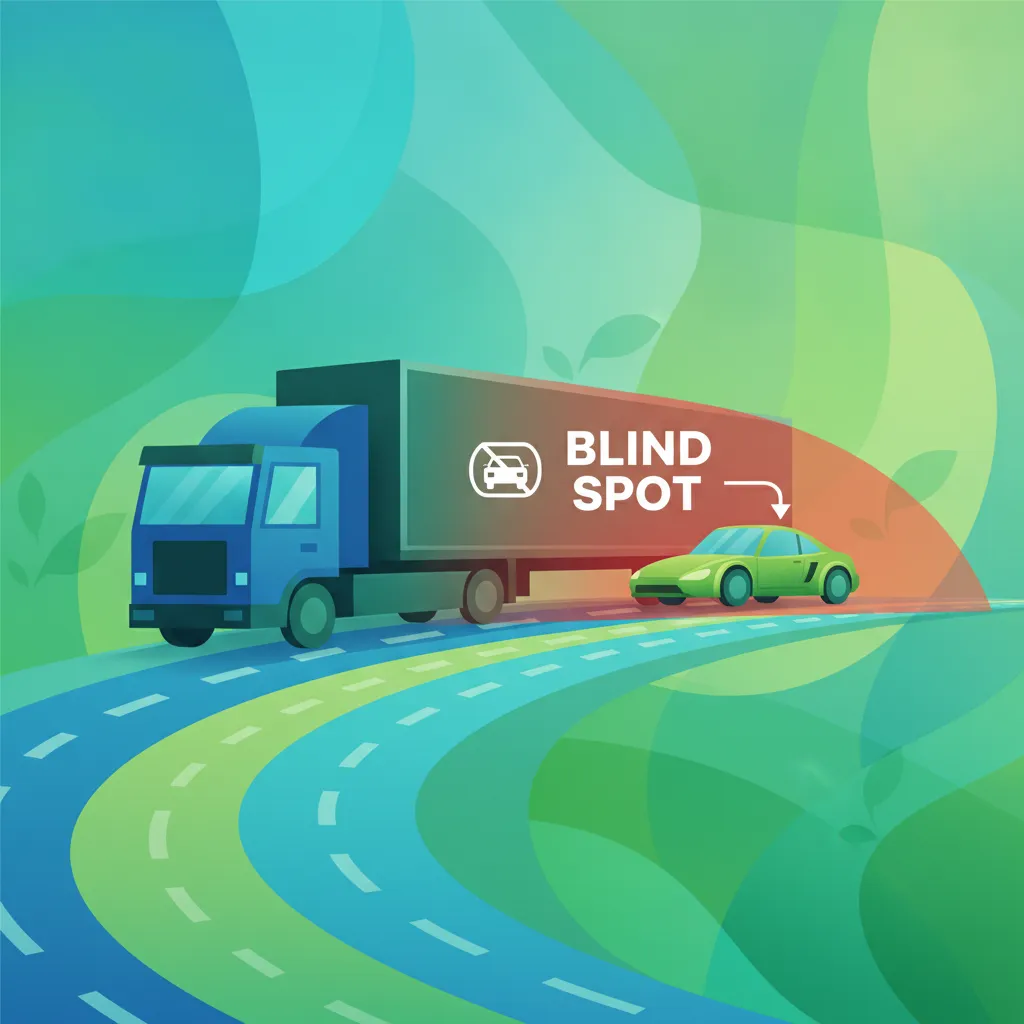
This lesson focuses on the blind spot zones specific to trucks and vehicle combinations, explaining where these zones are located. It covers the use of blind spot mirrors and other aids to enhance driver awareness during lane changes and turns. The content stresses the importance of maintaining safe distances from vulnerable road users.

This lesson provides a comprehensive guide to identifying and managing the significant blind spots around a large passenger vehicle. It covers the correct adjustment and use of all mirrors, supplemented by camera systems, to gain maximum visibility. The importance of performing physical checks ('shoulder checks') before turning or changing lanes is emphasized to detect smaller road users like cyclists and pedestrians who may be hidden from view.

This lesson focuses on the high-risk maneuver of reversing, emphasizing the importance of all-around observation due to limited visibility. It teaches techniques for controlling the vehicle at very low speeds and using mirrors and direct observation to manage large blind spots behind the car. The priority is to ensure the path is clear of pedestrians and obstacles at all times.

This lesson addresses the challenges of maneuvering heavy vehicles in confined spaces such as loading bays and narrow streets. It provides strategies for planning the maneuver, accounting for vehicle dimensions, turning radius, and blind spots. The content emphasizes slow, controlled movements and the need for high situational awareness.

This lesson explores the critical role of visibility in safe driving, covering topics such as sight distance, managing blind spots, and the correct use of mirrors. It provides guidance on how to adjust your driving in conditions of reduced visibility, such as at night, in fog, or during heavy rain, including the proper use of headlights. The importance of the over-the-shoulder check ('Schulterblick') is also a key focus.

This lesson teaches riders how to develop strong visual perception skills for the road. It covers systematic scanning patterns, the correct use of mirrors, and the critical importance of performing a head check to cover blind spots. Understanding the larger blind spots of trucks and buses is also a key safety component.
This lesson covers safe interaction with special vehicles. It details the challenges of driving near large trucks (LKW), including their extensive blind spots, longer stopping distances, and the effects of wind turbulence when overtaking them. A critical part of the lesson is explaining the correct procedure for reacting to emergency vehicles by creating an emergency corridor ('Rettungsgasse') on multi-lane roads.

This lesson teaches the systematic observation techniques required for safe driving, starting with how to scan the road far ahead, nearby, and to the sides. It details the correct frequency for checking interior and exterior mirrors to maintain situational awareness. The lesson highlights the indispensable over-the-shoulder check ('Schulterblick') to cover the vehicle's blind spot before any change in direction.

This lesson covers safe reversing techniques for both rigid trucks and articulated combinations, emphasizing the use of mirrors and cameras. It discusses the risks of jackknifing during reversal and the importance of speed control and safety checks. The content outlines best practices for planning a safe reversing path, potentially with a guide person.

This lesson covers the high-risk maneuver of reversing a large passenger vehicle. It details a systematic approach that includes using all available aids like mirrors, cameras, and audible alarms. The lesson stresses the need for slow, controlled movements, constant scanning of the surroundings, and conducting thorough clearance checks to prevent collisions with objects or people behind the vehicle, advocating for a spotter whenever possible.
Explore the principles of indirect vision and the inherent limits of visibility in heavy vehicles (C1, C, CE). This lesson delves into how mirror adjustment impacts safe driving and hazard perception according to German traffic laws.
This lesson focuses on the blind spot zones specific to trucks and vehicle combinations, explaining where these zones are located. It covers the use of blind spot mirrors and other aids to enhance driver awareness during lane changes and turns. The content stresses the importance of maintaining safe distances from vulnerable road users.
This lesson explores the critical role of visibility in safe driving, covering topics such as sight distance, managing blind spots, and the correct use of mirrors. It provides guidance on how to adjust your driving in conditions of reduced visibility, such as at night, in fog, or during heavy rain, including the proper use of headlights. The importance of the over-the-shoulder check ('Schulterblick') is also a key focus.

This lesson covers the lighting and reflector requirements for heavy vehicles, including headlamps, side markers, and brake lights. It explains the function of these systems and the necessity of underrun protection to safeguard other road users. The content also discusses regulations governing lighting systems and their importance for safety in all conditions.

This lesson covers the dimensional limits for heavy vehicles, focusing on height, width, and length restrictions. It explains how to interpret clearance signage for bridges, tunnels, and overhead obstacles, and discusses the implications for route planning. The content also addresses the importance of understanding turning radii and swept paths to avoid collisions.
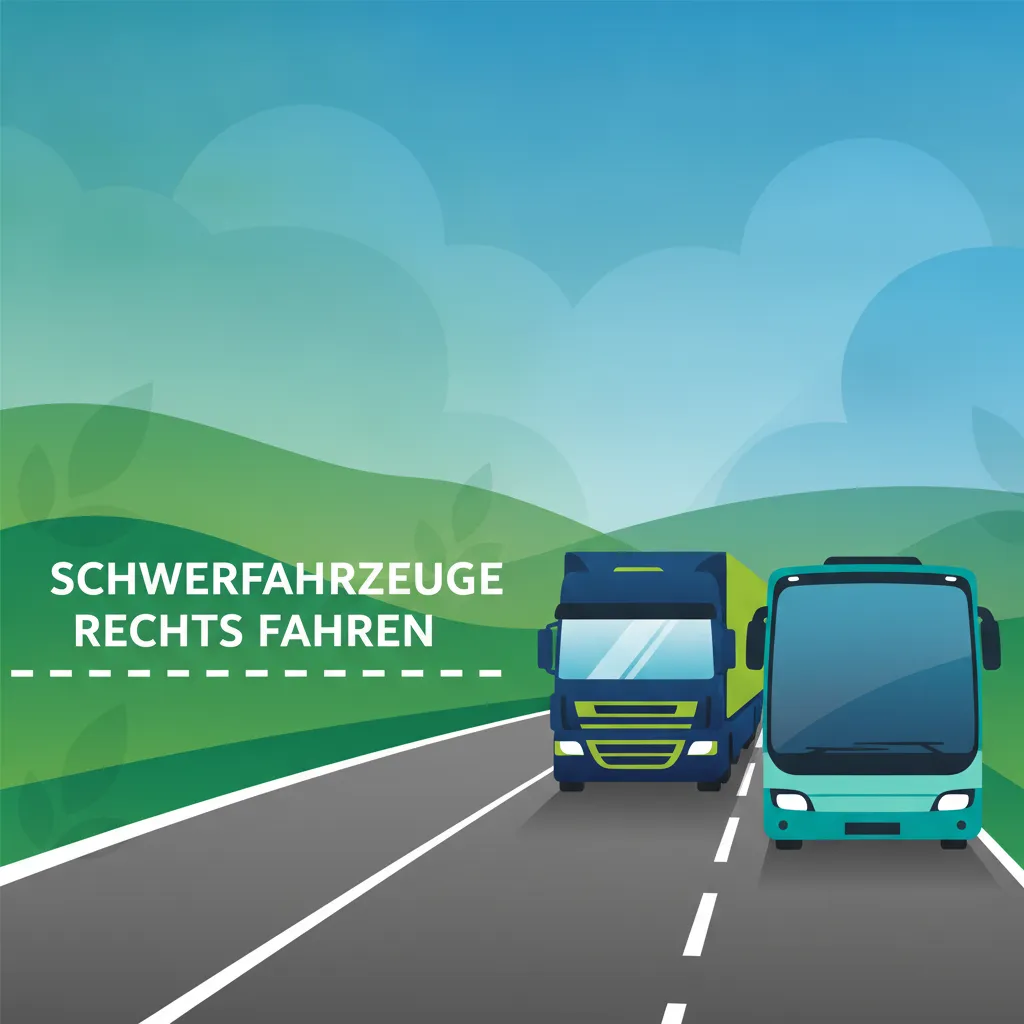
This lesson explains the specific regulations for operating heavy vehicles on Autobahnen, including speed limits, lane discipline, and overtaking rules. It discusses the use of dedicated truck lanes and the importance of maintaining appropriate following distances. The content also covers procedures for merging and exiting high-speed roads safely.

This lesson examines the specific height, width, and length constraints that affect heavy vehicle operation, including bridge and tunnel clearances. It discusses how to interpret and comply with traffic signs indicating dimensional limits and the consequences of violating these restrictions. The content also covers practical strategies for route planning to avoid restricted areas.

This lesson provides a comprehensive guide to a vehicle's lighting systems, explaining the purpose and correct usage of each type of light. It covers dipped and main beam headlights, fog lights, and the legally required use of lights during the day or in poor visibility. You will also review the function of brake lights, indicators, and hazard warning lights for communication and safety.

This lesson focuses on the interaction between heavy vehicles and vulnerable road users at crossings, particularly when turning right. It covers the need for heightened vigilance, the importance of properly using mirrors, and correct signaling to alert others. The content highlights legal responsibilities and safe distance requirements to prevent accidents.

This lesson focuses on the right-of-way rules that heavy vehicles must follow when interacting with cyclists and pedestrians, particularly at intersections and crossings. It emphasizes the need for trucks to yield appropriately and maintain safe distances. The content also covers the interpretation of traffic signs governing priority in urban areas.
This lesson covers safe interaction with special vehicles. It details the challenges of driving near large trucks (LKW), including their extensive blind spots, longer stopping distances, and the effects of wind turbulence when overtaking them. A critical part of the lesson is explaining the correct procedure for reacting to emergency vehicles by creating an emergency corridor ('Rettungsgasse') on multi-lane roads.
Find clear answers to common questions learners have about Mirror Adjustment and Field of Vision Limits. Learn how the lesson is structured, which driving theory objectives it supports, and how it fits into the overall learning path of units and curriculum progression in Germany. These explanations help you understand key concepts, lesson flow, and exam focused study goals.
Due to the vehicle's length, width, and height, the physical structure obstructs more of the surroundings. Even with multiple mirrors, the significant size of these vehicles creates larger areas near the corners and rear where other road users cannot be seen.
You should check your mirrors frequently as part of a constant scanning routine, specifically before changing lanes, turning, braking, or slowing down. In the exam, you will be expected to demonstrate that you are aware of your surroundings at all times.
The wide-angle mirror is specifically designed to cover the areas immediately adjacent to the vehicle, significantly reducing the blind spot along the sides. It is critical for spotting cyclists or pedestrians during turning maneuvers in urban areas.
Yes, always adjust your mirrors to your specific seating position before every drive. Mirrors that are perfectly set for one driver will create dangerous blind spots for another due to differences in eye level and posture.
Begin your targeted revision now. Use our practice search to quickly find specific German driving theory questions. Filter by StVO rules, road signs, or hazard perception to create your focused study plan. Master challenging areas and prepare confidently for your theoretical driving test.