
This lesson focuses on the critical observational skills needed to navigate German roads safely and effectively. You will learn the systematic approach to scanning your environment and the correct application of the shoulder check to eliminate blind spots, forming a key foundation for safe Category B driving.

Lesson content overview
Effective observation and scanning are fundamental skills for every driver, forming the bedrock of road safety and proactive decision-making. In the context of the German Category B driving license, mastering these techniques is not just about passing an exam; it's about developing an ingrained habit of continuous vigilance that protects you and other road users. This lesson will guide you through systematic observation practices, from scanning the horizon to checking your blind spots, ensuring you maintain comprehensive situational awareness at all times.
Continuous observation is the ongoing process of gathering information about the traffic environment in front, behind, and to the sides of your vehicle. It is the cornerstone of defensive driving, enabling you to detect potential hazards, anticipate the actions of others, and react safely and appropriately. Without a constant flow of information, a driver operates with limited awareness, significantly increasing the risk of accidents.
The dynamic nature of German roads, with their varying speed limits, diverse road users, and often complex traffic situations, demands unwavering attention. From high-speed Autobahnen to bustling city streets, unexpected events can occur in an instant. Constant vigilance allows you to register subtle changes in traffic flow, identify vulnerable road users, and prepare for maneuvers well in advance, giving you the crucial reaction time needed to prevent dangerous situations. The German Road Traffic Regulations (StVO) implicitly and explicitly demand this level of awareness, particularly in § 1 Abs. 1, which requires all road users to behave in a way that does not endanger or impede others, necessitating a full awareness of surroundings.
To simplify the vast amount of information a driver needs to process, observation can be categorized by the area it covers:
All three categories must be performed continuously and systematically, blending into a seamless process that keeps you fully informed about your driving environment.
Scanning technique refers to a systematic method for observing the road ahead, near the vehicle, and to the sides. It ensures comprehensive coverage of the driving environment, preventing tunnel vision and allowing you to gather all necessary information for safe decision-making.
Far scanning involves observing the road several hundred meters ahead of your vehicle. This long-range perspective allows you to detect potential hazards, changes in road conditions, or traffic flow issues well in advance, giving you ample time to adjust your speed or plan a maneuver.
On the Autobahn or rural roads, a far scan is crucial for identifying distant congestion, lane closures, or upcoming exit ramps. In urban areas, it helps you spot traffic lights, pedestrian crossings, or queues forming far down the street.
By consistently looking far ahead, you can avoid sudden braking, contribute to smoother traffic flow, and reduce stress. It connects directly to defensive driving principles, as early detection allows for early anticipation and a safer response.
Mid scanning focuses on the area directly ahead of and near your vehicle, typically within 10-20 seconds of your current position. This level of observation is critical for managing immediate hazards such as other vehicles, pedestrians crossing the road, road debris, or sudden braking by the car in front.
While far scanning provides the big picture, mid scanning provides the crucial details for your immediate path. It involves tracking the speed and position of surrounding vehicles, identifying potential conflicts at junctions, and noticing any changes in traffic patterns that might require an immediate reaction.
Side scanning involves observing the areas to the sides of your vehicle. This is vital for detecting vehicles in adjacent lanes, cyclists, motorcyclists, or pedestrians who may be hidden from your direct forward view. It requires glancing into your side mirrors and, crucially, performing a shoulder check.
In urban environments, side scanning is almost continuous due to the presence of multiple lanes, parked cars, and vulnerable road users. It helps in assessing gaps for lane changes, ensuring safe clearance from obstacles, and being prepared for sudden movements from the side.
Vehicle mirrors are indispensable tools for maintaining situational awareness, providing critical information about traffic behind and to the sides. However, they are only effective if used correctly and regularly.
The interior rearview mirror provides a view of the traffic directly behind your vehicle. Regular checks of this mirror are essential for:
It is recommended practice to check your interior rearview mirror approximately every 5-8 seconds under normal driving conditions, and more frequently in heavy traffic or before any change in speed or direction.
Your left and right side mirrors extend your field of vision to the sides of your vehicle, covering areas that the interior mirror cannot.
Like the interior mirror, side mirrors should be checked regularly and always before performing any lateral maneuver. They are a primary source of information for judging gaps in traffic and ensuring your intended path is clear.
Before starting your journey, always ensure your mirrors are correctly adjusted for optimal visibility.
Interior Rearview Mirror: Position it so you can see the entire rear window without moving your head. It should give you a clear view of the traffic directly behind your vehicle.
Left Side Mirror: Lean your head slightly towards the left side window. Adjust the mirror outwards until you can just barely see the rear quarter of your vehicle in the inner edge of the mirror. This maximizes your view of the lane beside you and reduces the blind spot.
Right Side Mirror: Lean your head slightly towards the center of the vehicle. Adjust the mirror outwards until you can just barely see the rear quarter of your vehicle in the inner edge of the mirror. This also maximizes the view to the right.
Properly adjusted mirrors are critical for minimizing blind spots, though they do not eliminate them entirely, making the 'Schulterblick' even more vital.
Even with perfectly adjusted mirrors, every vehicle has areas that remain invisible to the driver. These are known as blind spots. The 'Schulterblick', or shoulder check, is a mandatory quick glance over your shoulder that directly addresses these hidden zones. It is an indispensable safety measure in German road traffic.
A blind spot is an area around your vehicle that cannot be seen using the interior rearview mirror or the side mirrors. These areas exist on both sides of the vehicle, typically slightly behind and to the side, where another vehicle, cyclist, or pedestrian could be traveling completely unseen. The size and location of blind spots vary depending on the vehicle type, design, and even load (e.g., when towing a trailer).
The 'Schulterblick' is the only way to effectively eliminate these blind spots before making a lateral movement. It ensures that no one is lurking in these hidden zones, preventing potentially catastrophic side collisions.
The 'Schulterblick' is mandatory and must be performed before any lateral change in your vehicle's position, specifically:
Check Mirrors First: Before initiating a shoulder check, always check your relevant side mirror and interior rearview mirror. This gives you a general idea of the traffic situation.
Signal (if applicable): Activate your turn signal well in advance to indicate your intentions.
Quick Glance: Swiftly turn your head to glance over the appropriate shoulder (left for leftward movements, right for rightward movements). Your head movement should be minimal and quick, ensuring your eyes remain focused on the road ahead as much as possible.
Reassess and Act: If the path is clear, proceed with your maneuver. If not, wait for a safe opportunity. The entire process should take less than a second, allowing you to maintain control and awareness of the road ahead.
Never rely solely on mirrors. The 'Schulterblick' is a non-negotiable step to ensure safety and is heavily emphasized in German driving tests.
The German Road Traffic Regulations (StVO) lay down the legal framework for safe driving, and while not every observation technique is explicitly quantified, the general principles of care and hazard prevention are paramount.
The core message of the StVO, supported by driving instruction, is that a driver must always be fully aware of their surroundings. This goes beyond mere sight; it's about active, continuous information gathering.
Even experienced drivers can fall into bad habits regarding observation. New drivers, especially, must be vigilant to avoid these common pitfalls:
Effective observation is not a static process; it must be continuously adapted to changing conditions. The environment, the vehicle, and the presence of other road users all influence how and how often you need to scan.
Mastering observation and scanning techniques is arguably the single most important skill for a safe and responsible driver. It directly leads to:
By consistently applying these observation and scanning techniques, you contribute significantly to road safety, not just for yourself but for everyone around you.
This lesson teaches systematic observation techniques essential for safe German driving, covering far, mid, and side scanning methods to maintain continuous situational awareness. Proper mirror use—including interior checks every 5-8 seconds and side mirror checks before any lateral movement—forms the foundation of these techniques. The Schulterblick (shoulder check) is emphasized as mandatory and the only effective way to eliminate blind spots before changing lanes, turning, merging, or overtaking, as required by StVO regulations. Observation must adapt dynamically to weather, lighting, road type, and traffic density, with increased vigilance needed around vulnerable road users. These skills are directly tested in the German Category B theory exam and form the habit of proactive, defensive driving.
A short set of high-value points that capture the most important learning from this lesson.
Effective driving requires continuous 360-degree awareness covering forward, side, and rear observation simultaneously
Far scanning (hundreds of meters ahead) provides early hazard detection and allows smoother traffic flow
Mirrors must be checked regularly - interior every 5-8 seconds under normal conditions and always before lateral maneuvers
The Schulterblick (shoulder check) is mandatory and the only method to eliminate blind spots that mirrors cannot cover
Observation technique must adapt to conditions: higher frequency in poor weather, high speeds, heavy traffic, and urban environments with vulnerable road users
Explore all units and lessons included in this driving theory course.
Always perform far scan, mid scan, then side scan as a systematic routine before and during any maneuver
The mandatory sequence before any lane change or turn is: mirrors → signal → Schulterblick → execute maneuver
Blind spots exist on both sides of every vehicle regardless of mirror quality; the Schulterblick is non-negotiable
Before driving, ensure mirrors are correctly adjusted - interior shows full rear window, side mirrors show just the edge of your own vehicle
Cyclists, pedestrians, and motorcyclists are often in blind spots and require extra vigilance during turns and lane changes
Omitting mirror checks before lane changes, turns, or merging, leading to side-swipe collisions
Performing a shallow or rushed Schulterblick that fails to fully cover the blind spot area
Tunnel vision focusing only on the vehicle directly ahead while neglecting far scanning and side observation
Incorrect mirror adjustment that reduces visibility and creates larger undetected blind spots
Relying on modern blind spot monitoring systems as a substitute for the mandatory Schulterblick physical check
Lesson content overview
A short set of high-value points that capture the most important learning from this lesson.
Effective driving requires continuous 360-degree awareness covering forward, side, and rear observation simultaneously
Far scanning (hundreds of meters ahead) provides early hazard detection and allows smoother traffic flow
Mirrors must be checked regularly - interior every 5-8 seconds under normal conditions and always before lateral maneuvers
The Schulterblick (shoulder check) is mandatory and the only method to eliminate blind spots that mirrors cannot cover
Observation technique must adapt to conditions: higher frequency in poor weather, high speeds, heavy traffic, and urban environments with vulnerable road users
Explore all units and lessons included in this driving theory course.
Always perform far scan, mid scan, then side scan as a systematic routine before and during any maneuver
The mandatory sequence before any lane change or turn is: mirrors → signal → Schulterblick → execute maneuver
Blind spots exist on both sides of every vehicle regardless of mirror quality; the Schulterblick is non-negotiable
Before driving, ensure mirrors are correctly adjusted - interior shows full rear window, side mirrors show just the edge of your own vehicle
Cyclists, pedestrians, and motorcyclists are often in blind spots and require extra vigilance during turns and lane changes
Omitting mirror checks before lane changes, turns, or merging, leading to side-swipe collisions
Performing a shallow or rushed Schulterblick that fails to fully cover the blind spot area
Tunnel vision focusing only on the vehicle directly ahead while neglecting far scanning and side observation
Incorrect mirror adjustment that reduces visibility and creates larger undetected blind spots
Relying on modern blind spot monitoring systems as a substitute for the mandatory Schulterblick physical check
Explore search topics learners often look for when studying Observation and Scanning Techniques. These topics reflect common questions about road rules, driving situations, safety guidance, and lesson level theory preparation for learners in Germany.
Browse additional driving theory lessons that cover connected traffic rules, road signs, and common driving situations related to this topic. Improve your understanding of how different rules interact across everyday traffic scenarios.
Build upon foundational observation skills to enhance your 360-degree awareness. Learn to proactively scan for hazards, anticipate traffic flow, and integrate mirror checks and blind spot analysis into a comprehensive defensive driving strategy for German roads.

This lesson introduces the concept of defensive driving ('vorausschauendes Fahren'), a proactive approach focused on anticipating and mitigating potential risks. It teaches techniques for scanning the road ahead, identifying potential hazards early, and managing the space around your vehicle to create a safety buffer. The goal is to develop a mindset that prioritizes safety and collision avoidance above all else.

This lesson provides a complete guide to driving on the German Autobahn. It covers the correct procedure for entering and exiting via acceleration and deceleration lanes, the strict lane discipline rule of keeping right ('Rechtsfahrgebot'), and the principle of overtaking only on the left. It also explains the recommended speed limit and the critical procedure for forming an emergency corridor ('Rettungsgasse') in a traffic jam.

This lesson builds on defensive driving by focusing specifically on hazard perception ('Gefahrenerkennung'). It teaches you how to actively scan the driving environment for potential risks, not just immediate dangers. You will learn to anticipate the likely actions of other road users and identify clues that signal a developing hazardous situation, allowing you to react early and safely.

This lesson teaches the essential observation techniques required for safe riding, focusing on the systematic use of mirrors and shoulder checks to manage blind spots. It emphasizes developing active scanning habits to maintain constant situational awareness of the surrounding traffic environment. Learners will understand how effective head movement and use of peripheral vision are critical for detecting potential hazards early.

This lesson provides instruction on the rules and best practices for operating a large passenger vehicle on the Autobahn. It covers the principles of strict lane discipline, regulations for minimum speed, and correct procedures for overtaking and merging. The importance of maintaining significantly increased following distances at high speeds and planning for exits well in advance is a key focus.

This lesson explores the critical role of visibility in safe driving, covering topics such as sight distance, managing blind spots, and the correct use of mirrors. It provides guidance on how to adjust your driving in conditions of reduced visibility, such as at night, in fog, or during heavy rain, including the proper use of headlights. The importance of the over-the-shoulder check ('Schulterblick') is also a key focus.

This lesson teaches drivers how to safely manage their vehicle in challenging weather. It explains the dangers of aquaplaning in heavy rain, the loss of traction on snow and ice (including 'black ice'), and the severely reduced visibility in fog. You will learn to adjust your speed, increase following distances, and use lights correctly to suit these conditions.

This lesson covers the rules and safety considerations for overtaking ('Überholen'). It explains where overtaking is prohibited and how to assess whether it is safe and necessary to do so. The procedure for checking traffic, signaling, moving out, passing, and safely returning to the lane is detailed, with a strong focus on judging the speed and distance of oncoming traffic.
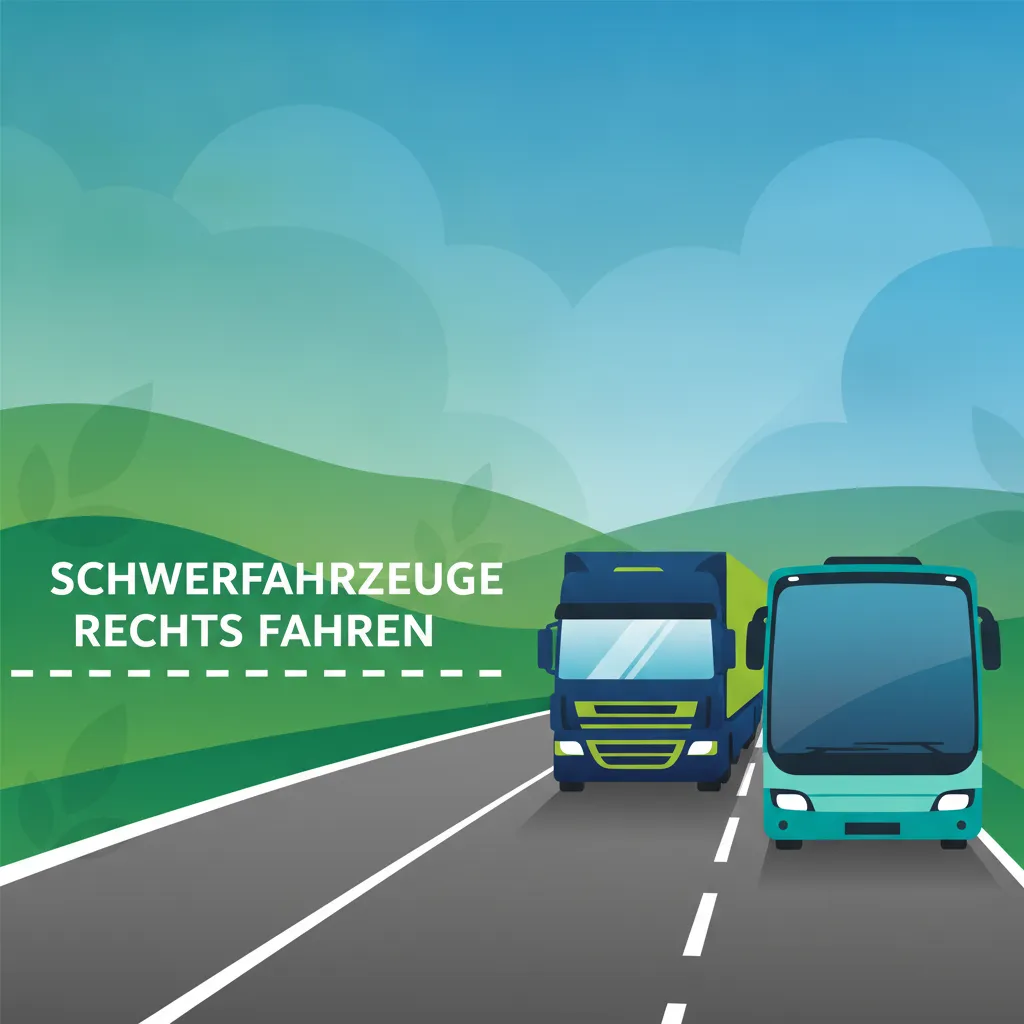
This lesson explains the specific regulations for operating heavy vehicles on Autobahnen, including speed limits, lane discipline, and overtaking rules. It discusses the use of dedicated truck lanes and the importance of maintaining appropriate following distances. The content also covers procedures for merging and exiting high-speed roads safely.

This lesson focuses on the importance of maintaining a safe following distance ('Sicherheitsabstand') to the vehicle ahead. It teaches practical methods for judging this distance, including the universally applicable two-second rule and the German 'halber Tacho' (half the speedometer reading in meters) rule. The lesson stresses the need to increase this distance in poor weather or when visibility is reduced.
Understand the critical role of interior and exterior mirrors in maintaining situational awareness. This lesson focuses on the essential 'Schulterblick' (over-the-shoulder check) and other techniques to effectively manage vehicle blind spots according to German traffic regulations.

This lesson teaches the proper adjustment of all required mirrors to maximize the field of vision and minimize blind spots. It discusses the limitations of indirect vision and the importance of aligning mirrors based on the driver's seating position. The content also outlines the typical blind zones for heavy vehicles and strategies to mitigate them.

This lesson provides a comprehensive guide to identifying and managing the significant blind spots around a large passenger vehicle. It covers the correct adjustment and use of all mirrors, supplemented by camera systems, to gain maximum visibility. The importance of performing physical checks ('shoulder checks') before turning or changing lanes is emphasized to detect smaller road users like cyclists and pedestrians who may be hidden from view.

This lesson focuses on the high-risk maneuver of reversing, emphasizing the importance of all-around observation due to limited visibility. It teaches techniques for controlling the vehicle at very low speeds and using mirrors and direct observation to manage large blind spots behind the car. The priority is to ensure the path is clear of pedestrians and obstacles at all times.
This lesson explores the critical role of visibility in safe driving, covering topics such as sight distance, managing blind spots, and the correct use of mirrors. It provides guidance on how to adjust your driving in conditions of reduced visibility, such as at night, in fog, or during heavy rain, including the proper use of headlights. The importance of the over-the-shoulder check ('Schulterblick') is also a key focus.
This lesson teaches the essential observation techniques required for safe riding, focusing on the systematic use of mirrors and shoulder checks to manage blind spots. It emphasizes developing active scanning habits to maintain constant situational awareness of the surrounding traffic environment. Learners will understand how effective head movement and use of peripheral vision are critical for detecting potential hazards early.
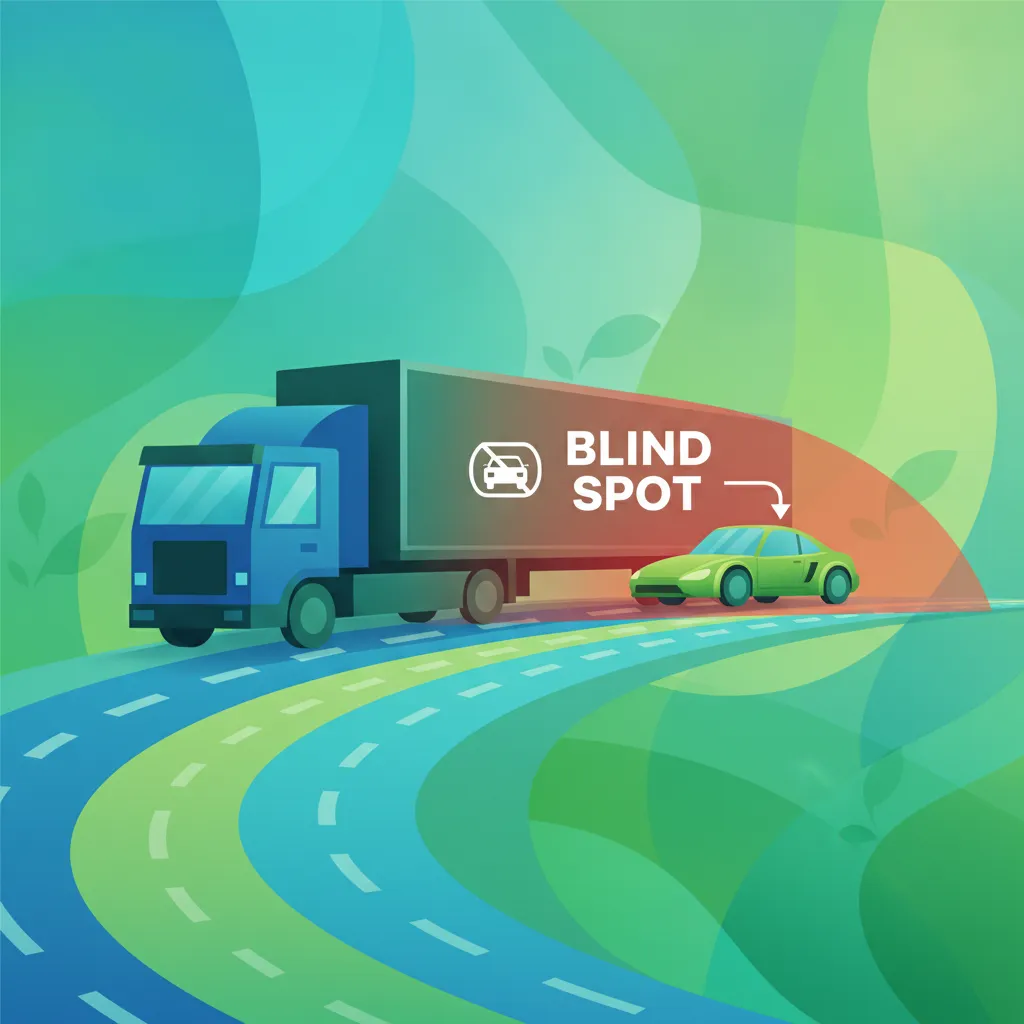
This lesson focuses on the blind spot zones specific to trucks and vehicle combinations, explaining where these zones are located. It covers the use of blind spot mirrors and other aids to enhance driver awareness during lane changes and turns. The content stresses the importance of maintaining safe distances from vulnerable road users.

This lesson teaches riders how to develop strong visual perception skills for the road. It covers systematic scanning patterns, the correct use of mirrors, and the critical importance of performing a head check to cover blind spots. Understanding the larger blind spots of trucks and buses is also a key safety component.

This lesson focuses on the critical maneuver of changing lanes ('Fahrstreifenwechsel'), a common cause of accidents if done incorrectly. It teaches a systematic, safe procedure based on thorough observation, clear signaling, and a final blind spot check. You will learn how to assess traffic speed and identify a safe gap before smoothly moving into the adjacent lane.

This lesson covers safe reversing techniques for both rigid trucks and articulated combinations, emphasizing the use of mirrors and cameras. It discusses the risks of jackknifing during reversal and the importance of speed control and safety checks. The content outlines best practices for planning a safe reversing path, potentially with a guide person.
Find clear answers to common questions learners have about Observation and Scanning Techniques. Learn how the lesson is structured, which driving theory objectives it supports, and how it fits into the overall learning path of units and curriculum progression in Germany. These explanations help you understand key concepts, lesson flow, and exam focused study goals.
The Schulterblick is critical because it covers the vehicle's blind spot that mirrors cannot see. Failing to account for this in exam scenarios—especially during overtaking or lane changing—is a common cause of accidents and incorrect answers.
You should maintain a constant scanning rhythm. Check your mirrors before every change in speed or direction, before braking, and regularly while driving straight to remain aware of traffic behind you.
Yes, the principles of observation and scanning are universal for all Class B vehicles. Whether you are driving a manual or an automatic (B197), your observational responsibility as a driver remains exactly the same.
The standard routine is Mirror, Signal, Position, Speed, and the final Schulterblick immediately before executing the turn. This ensures you have checked your surroundings at every stage of the maneuver.
Begin your targeted revision now. Use our practice search to quickly find specific German driving theory questions. Filter by StVO rules, road signs, or hazard perception to create your focused study plan. Master challenging areas and prepare confidently for your theoretical driving test.