
This lesson provides essential training on executing safe left, right, and U-turns, focusing on proper lane discipline and signaling. As part of our comprehensive Patente AM curriculum, it builds on previous knowledge of road signs and priority rules to help you master maneuvering in complex traffic environments.

Lesson content overview
Navigating the roads safely requires more than just knowing how to operate your vehicle. It demands a deep understanding of how to interact with other road users, anticipate their movements, and communicate your intentions clearly. Turning maneuvers are among the most critical actions a driver performs, presenting numerous points of potential conflict. This lesson provides a comprehensive guide to executing left turns, right turns, and U-turns, emphasizing the crucial role of lane discipline for holders of the Patente AM license in Italy.
Proper lane discipline ensures a predictable flow of traffic, preventing collisions and enabling all road users to share the infrastructure harmoniously. By mastering the techniques discussed here, you will enhance your safety, comply with the Italian Codice della Strada (Highway Code), and contribute to a more orderly road environment.
Successful turning maneuvers are built upon a foundation of interconnected principles. These principles guide your actions from the moment you decide to turn until you complete the maneuver, ensuring safety and compliance with traffic regulations.
Lane discipline refers to the practice of maintaining your vehicle within the correct lane for your intended maneuver, as indicated by road markings and arrows. This fundamental principle is paramount for preventing lateral collisions and clearly communicating your intentions to other drivers, cyclists, and pedestrians. Adhering to lane discipline minimizes confusion and helps maintain a smooth traffic flow, as required by the Codice della Strada.
Always select the correct lane well in advance of an intersection. Changing lanes at the last moment can be dangerous and is often illegal if it involves crossing solid lines.
Signaling, or using your vehicle's indicators, is your primary means of communicating your intent to turn. Activating your indicator at the appropriate time provides other road users with sufficient warning to react safely to your maneuver. For Patente AM vehicles, the indicator must be activated at least 30 meters before the intended turn. This early warning is crucial, especially in urban areas with dense traffic, where sudden maneuvers can lead to dangerous situations.
Vehicle positioning involves placing your vehicle correctly within your chosen lane to execute the turn efficiently and safely. The ideal position varies depending on the type of turn (left, right, or U-turn) and the geometry of the road. Correct positioning ensures your vehicle follows the legal trajectory, prevents encroachment into opposing lanes, and maintains a safe distance from curbs and other obstacles. It also aids in achieving the correct turning radius for your specific vehicle.
Blind spots are areas around your vehicle that are not visible in your rearview or side mirrors. Before and during any turn, it is crucial to perform a "shoulder check" – a quick turn of the head to physically observe these blind spots. This action is vital for detecting vulnerable road users such as cyclists, motorcyclists, or pedestrians who might be hidden from mirror view, significantly reducing the risk of collisions. This check should be performed immediately before initiating the turn and often throughout the maneuver.
Road markings and arrows are visual cues painted on the road surface that guide drivers to the correct lane and indicate permitted movements. Understanding these symbols is critical for making informed decisions and complying with traffic regulations. Lane arrows (straight, left, right, U-turn), solid lines prohibiting lane changes, and broken lines permitting them all provide essential information for navigating turns safely and legally. Misinterpretation of these markings can lead to illegal maneuvers and dangerous situations.
Each type of turn presents unique challenges and requires specific techniques to ensure safety and adherence to traffic laws.
A left turn is a maneuver where your vehicle changes direction to the left at an intersection or designated turning lane. In Italy, where traffic drives on the right, this often involves crossing the path of oncoming traffic, making it a high-risk maneuver that requires extra caution.
Procedure for a Left Turn:
Approach: Choose the leftmost lane designated for left turns. If there are no specific turn lanes, position your vehicle as close to the center line as safely possible without crossing it.
Signal: Activate your left indicator at least 30 meters before the intersection to signal your intent to turn.
Observation: Check your mirrors (rearview and left side) and perform a thorough left shoulder check to ensure no cyclists, motorcyclists, or other vehicles are in your blind spot.
Yielding: Unless a dedicated left-turn lane with a green arrow permits turning without oncoming traffic, you must yield to all oncoming vehicles. Wait for a safe gap in traffic. Also, be prepared to yield to pedestrians crossing the street you are turning onto.
Execution: When the path is clear, begin your turn. Maintain a smooth arc, keeping your vehicle within the designated lane and avoiding encroachment into opposing lanes. Keep monitoring for any sudden changes.
Exit: Straighten your vehicle in the new lane you have entered and switch off your indicator.
Common Mistakes in Left Turns:
A right turn changes your vehicle’s direction to the right. While generally less complex than left turns, right turns still require careful attention, especially due to the presence of pedestrians and cyclists.
Procedure for a Right Turn:
Approach: Choose the rightmost lane designated for right turns. If there are no specific turn lanes, position your vehicle as close to the right curb or edge of the road as safely possible, without touching it.
Signal: Activate your right indicator at least 30 meters before the intersection.
Observation: Check your mirrors (rearview and right side) and perform a thorough right shoulder check. Pay particular attention to cyclists and pedestrians who may be on your right side or crossing the street you intend to turn onto.
Yielding: You must yield to any pedestrians on a crosswalk (strisce pedonali) you are turning across, and also to any cyclists or other road users lawfully in the lane you are entering.
Execution: When the path is clear, begin your turn, maintaining a smooth, wide arc that keeps you close to the right curb. Do not swing wide into an adjacent lane before turning.
Exit: Straighten your vehicle in the new lane and switch off your indicator.
Common Mistakes in Right Turns:
A U-turn is a maneuver that reverses your vehicle’s direction of travel by 180 degrees. U-turns are highly restrictive and are only permitted in specific locations where signage or road markings allow them and conditions are safe.
Procedure for a U-Turn (where permitted):
Approach: Identify a location where U-turns are explicitly permitted by signs or road markings (e.g., a dedicated U-turn lane with a U-turn arrow). Ensure there is sufficient space to complete the turn safely without impeding traffic.
Signal: Activate your left indicator well in advance, at least 30 meters before the point of the U-turn.
Observation: Check your mirrors and perform a comprehensive left shoulder check. Be acutely aware of oncoming traffic and any vehicles behind you that might not anticipate your maneuver.
Yielding: You must yield to all oncoming traffic and any pedestrians. Do not attempt a U-turn if it requires other road users to brake or swerve suddenly.
Execution: When safe, proceed with the turn, using the entire width of the available road to complete the 180-degree turn smoothly. Keep monitoring your surroundings throughout the maneuver.
Exit: Straighten your vehicle in the new direction of travel and switch off your indicator.
U-Turns are Prohibited:
The Codice della Strada (Art. 150) strictly prohibits U-turns in several situations to prevent dangerous conflicts and maintain traffic flow:
Common Mistakes in U-Turns:
Road markings are vital for understanding where and how to turn. Misinterpreting them is a frequent cause of accidents and violations.
A continuous line on the road indicating that crossing is prohibited for lane changes or turns.
A dashed line on the road indicating that crossing is permitted if safe, for lane changes or turns.
Lane arrows painted on the road surface directly indicate the allowed movements from that specific lane.
You must always follow the direction indicated by the arrows in your chosen lane. Ignoring these arrows can lead to dangerous situations and fines.
The Italian Codice della Strada (Highway Code) outlines specific rules that govern turning maneuvers to ensure road safety. Adhering to these regulations is mandatory for all drivers, including Patente AM holders.
Violations of turning and lane discipline rules can lead to significant fines and points deducted from your license, in addition to increasing the risk of accidents.
Understanding common errors can help you actively prevent them, making your turning maneuvers safer and more efficient.
Driving conditions are rarely constant. Your approach to turning maneuvers must adapt to various environmental factors and vehicle states.
Safe and lawful turning maneuvers are fundamental to responsible driving, especially for Patente AM riders in Italy. This lesson has highlighted the critical elements required for successful turns:
By consistently applying these principles, you will enhance your safety, contribute to orderly traffic flow, and confidently navigate intersections and turns on Italian roads.
This lesson covers the essential techniques for executing left, right, and U-turns while maintaining proper lane discipline, critical for Patente AM theory and safe riding in Italy. Key procedures include selecting the correct lane, activating indicators at least 30 meters before turning, performing shoulder checks for blind spots, and yielding appropriately to oncoming traffic and pedestrians. Road markings such as solid white lines (which prohibit crossing) and broken white lines (which permit crossing) guide legal lane changes and turns. U-turns are heavily restricted under the Codice della Strada and may only be performed where explicitly permitted by signs or markings, never across solid lines or at signal-controlled intersections.
A short set of high-value points that capture the most important learning from this lesson.
Always select the correct lane well in advance of an intersection based on road markings and arrows
Activate your turn indicator at least 30 meters before any turn to give other road users adequate warning
Perform shoulder checks before and during every turn to detect cyclists and other vulnerable road users in blind spots
Yield to pedestrians on crosswalks during all turns and to oncoming traffic when turning left unless a dedicated green arrow permits otherwise
U-turns are only permitted where signage or road markings explicitly allow them and never across solid white lines
Explore all units and lessons included in this driving theory course.
Crossing a solid white line (Linea Continua Bianca) is prohibited for turns and lane changes
Left turns in Italy (right-hand traffic) require yielding to oncoming vehicles; position in the leftmost turn lane or as close to the center line as safely possible
Right turns require positioning close to the right curb without touching it and yielding to pedestrians on crosswalks
U-turns are prohibited at intersections with traffic signals, where continuous white lines separate lanes, and where "Divieto di Inversione di Marcia" signs are present
Lane arrows painted on the road must be followed—straight arrows mean no turning from that lane
Activating the indicator too late, depriving other road users of sufficient reaction time
Attempting to turn by crossing a solid white line or from a non-designated lane
Failing to perform shoulder checks, missing cyclists or mopeds hidden in blind spots
Turning across pedestrians who are on or about to enter a crosswalk (strisce pedonali)
Performing a U-turn in prohibited areas such as near traffic signals or across continuous white lines
Lesson content overview
A short set of high-value points that capture the most important learning from this lesson.
Always select the correct lane well in advance of an intersection based on road markings and arrows
Activate your turn indicator at least 30 meters before any turn to give other road users adequate warning
Perform shoulder checks before and during every turn to detect cyclists and other vulnerable road users in blind spots
Yield to pedestrians on crosswalks during all turns and to oncoming traffic when turning left unless a dedicated green arrow permits otherwise
U-turns are only permitted where signage or road markings explicitly allow them and never across solid white lines
Explore all units and lessons included in this driving theory course.
Crossing a solid white line (Linea Continua Bianca) is prohibited for turns and lane changes
Left turns in Italy (right-hand traffic) require yielding to oncoming vehicles; position in the leftmost turn lane or as close to the center line as safely possible
Right turns require positioning close to the right curb without touching it and yielding to pedestrians on crosswalks
U-turns are prohibited at intersections with traffic signals, where continuous white lines separate lanes, and where "Divieto di Inversione di Marcia" signs are present
Lane arrows painted on the road must be followed—straight arrows mean no turning from that lane
Activating the indicator too late, depriving other road users of sufficient reaction time
Attempting to turn by crossing a solid white line or from a non-designated lane
Failing to perform shoulder checks, missing cyclists or mopeds hidden in blind spots
Turning across pedestrians who are on or about to enter a crosswalk (strisce pedonali)
Performing a U-turn in prohibited areas such as near traffic signals or across continuous white lines
Explore search topics learners often look for when studying Turning Maneuvers and Lane Discipline. These topics reflect common questions about road rules, driving situations, safety guidance, and lesson level theory preparation for learners in Italy.
Browse additional driving theory lessons that cover connected traffic rules, road signs, and common driving situations related to this topic. Improve your understanding of how different rules interact across everyday traffic scenarios.
Explore challenging turning scenarios and advanced lane discipline techniques for Italian Patente AM. Understand how to navigate complex intersections, multi-lane roads, and priority situations during turns.
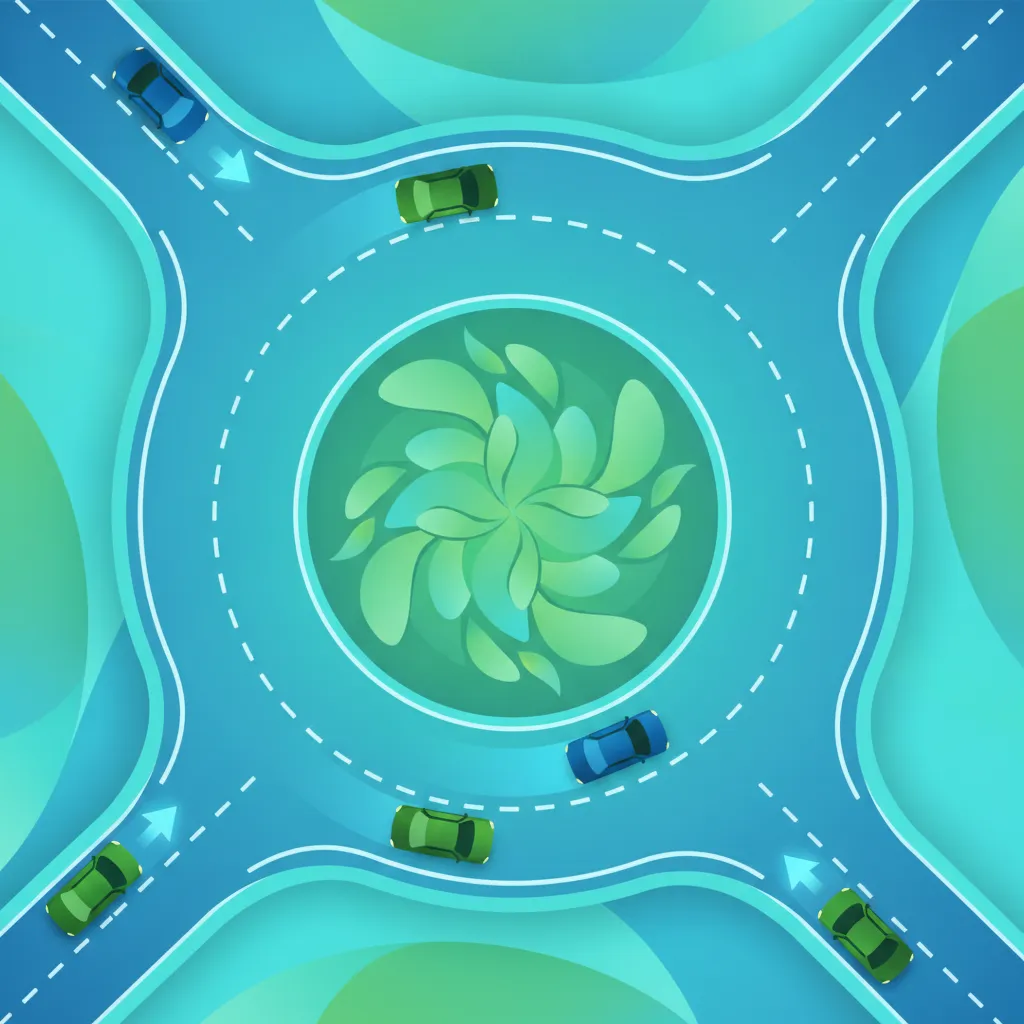
This lesson provides a step-by-step guide to safely and efficiently navigating roundabouts (rotatorie). It explains the primary rule of yielding to traffic already circulating within the roundabout before entering. The content covers correct lane positioning based on the intended exit, the proper use of turn signals when entering and exiting, and how to handle multi-lane roundabouts.

This lesson provides detailed instructions on how to correctly execute various turning maneuvers, including right turns, left turns, and U-turns where permitted. It emphasizes the importance of early signaling to communicate intentions, selecting the correct lane in advance, and adjusting speed before entering the turn. The content also covers the visual checks required before and during the maneuver to ensure it is safe to proceed.
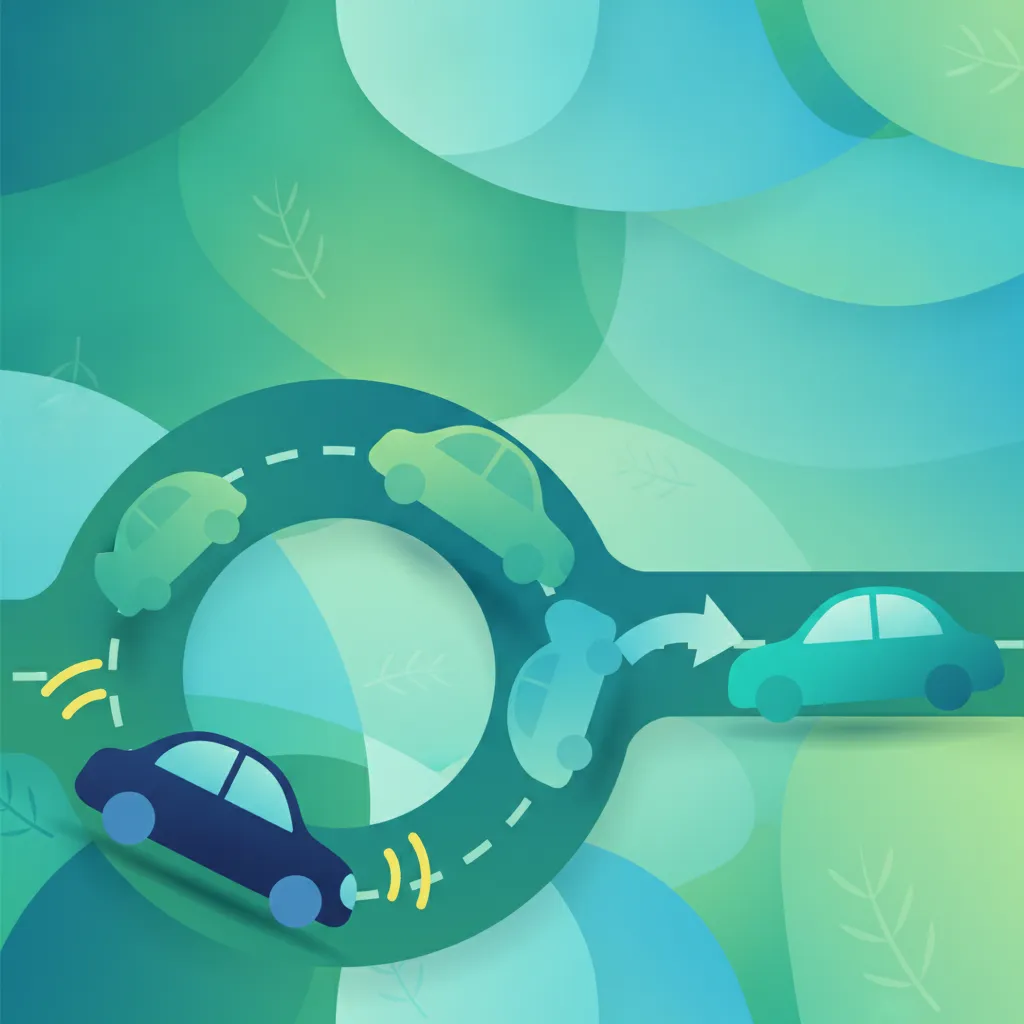
This lesson provides a step-by-step guide to navigating roundabouts safely and efficiently. It focuses on the critical rule of yielding to traffic already circulating within the roundabout before entering. You will also learn how to select the correct lane based on your intended exit and how to use your indicators to signal your maneuvers clearly.

This lesson provides essential rules and techniques for driving on Italian motorways (autostrade) and major extra-urban roads. It explains how to safely merge onto the motorway from an entry ramp, the strict lane discipline required (drive right, overtake left), and how to exit correctly. The content also covers speed regulations, maintaining a safe following distance at high speed, and procedures for using service areas and handling emergencies.

This lesson teaches the safe and systematic procedure for changing lanes. It covers the essential sequence of actions: signaling the intention, checking mirrors, performing a shoulder check to cover the blind spot, and then executing a smooth maneuver into the adjacent lane. The content stresses the need to judge the speed and distance of other vehicles to ensure a safe gap before initiating the lane change.
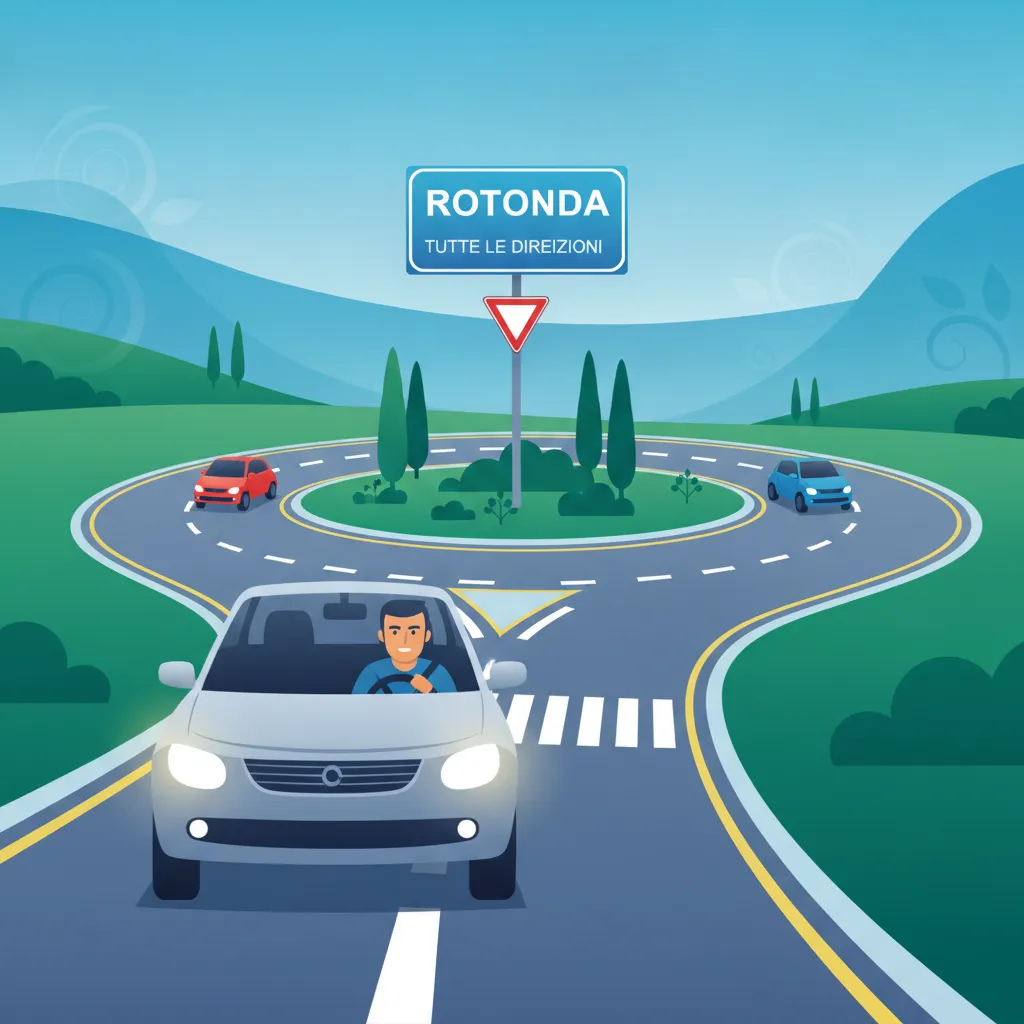
This lesson provides a step-by-step guide to safely navigating Italian roundabouts, known as rotatorie. It emphasizes the primary rule of yielding to traffic already circulating within the roundabout before entering. The content details correct lane positioning for different exits, the importance of signalling your intention to exit, and maintaining awareness of other vehicles.

This lesson focuses on the principles of correct vehicle positioning to enhance safety and stability. It teaches how to maintain a central position within the lane and how to adjust this position to navigate curves, prepare for turns, or create more space from potential hazards. Understanding how to adapt to the road's geometry is crucial for smooth and safe driving.

This lesson details how to safely approach and enter intersections by correctly interpreting traffic lights, stop signs, and give-way rules. It emphasizes the importance of scanning for hazards, checking blind spots, and anticipating the actions of other road users. You will learn to adjust your speed and position your vehicle correctly to navigate crossings without incident.

This lesson explains the principles of maintaining proper lane discipline and strategic positioning in an urban context. It covers how to adapt your position within the lane to enhance visibility, avoid road surface hazards, and prepare for turns or lane changes. The content also provides awareness of specific urban features like restricted traffic zones (ZTL) and how to navigate them legally and safely.

This lesson addresses the increased complexity of overtaking in urban environments with dense traffic and frequent intersections. It stresses the importance of thorough observation, including mirror and blind spot checks, to ensure a safe gap is available. The content covers judging speed differentials and the necessity of clear signalling to execute the maneuver without causing conflict with other road users.
Learn about frequent errors made during turning maneuvers and U-turns for the Italian Patente AM theory. Discover essential safety tips to avoid collisions and ensure compliance with traffic laws.
This lesson provides detailed instructions on how to correctly execute various turning maneuvers, including right turns, left turns, and U-turns where permitted. It emphasizes the importance of early signaling to communicate intentions, selecting the correct lane in advance, and adjusting speed before entering the turn. The content also covers the visual checks required before and during the maneuver to ensure it is safe to proceed.
This lesson provides a step-by-step guide to navigating roundabouts safely and efficiently. It focuses on the critical rule of yielding to traffic already circulating within the roundabout before entering. You will also learn how to select the correct lane based on your intended exit and how to use your indicators to signal your maneuvers clearly.
This lesson provides a step-by-step guide to safely and efficiently navigating roundabouts (rotatorie). It explains the primary rule of yielding to traffic already circulating within the roundabout before entering. The content covers correct lane positioning based on the intended exit, the proper use of turn signals when entering and exiting, and how to handle multi-lane roundabouts.

This lesson breaks down the process of cornering into three distinct phases: entry, apex, and exit. It teaches the importance of adjusting speed before entering the turn, selecting the appropriate line (often outside-inside-outside) to maximize visibility and smoothness. The content also explains how to use the throttle to maintain stability and traction throughout the cornering maneuver for a safe and controlled exit.

This lesson teaches the correct and safe technique for reversing a vehicle. It emphasizes the importance of performing a full 360-degree check for hazards before starting and maintaining slow, controlled movement. The content covers how to use mirrors and direct observation effectively, how to steer accurately while looking backward, and the increased need for caution regarding pedestrians and cyclists in the vehicle's blind areas.
This lesson provides a step-by-step guide to safely navigating Italian roundabouts, known as rotatorie. It emphasizes the primary rule of yielding to traffic already circulating within the roundabout before entering. The content details correct lane positioning for different exits, the importance of signalling your intention to exit, and maintaining awareness of other vehicles.

This lesson delves deeper into the dynamics of turning, introducing the concept of the 'swept path'—the total area a vehicle covers when making a turn. It builds on the idea of off-tracking, explaining how to position the vehicle before entering a turn to ensure the trailer safely clears corners, curbs, and other obstacles. Mastering this spatial judgment is essential for navigating junctions and roundabouts without incident.
This lesson teaches the safe and systematic procedure for changing lanes. It covers the essential sequence of actions: signaling the intention, checking mirrors, performing a shoulder check to cover the blind spot, and then executing a smooth maneuver into the adjacent lane. The content stresses the need to judge the speed and distance of other vehicles to ensure a safe gap before initiating the lane change.
This lesson addresses the increased complexity of overtaking in urban environments with dense traffic and frequent intersections. It stresses the importance of thorough observation, including mirror and blind spot checks, to ensure a safe gap is available. The content covers judging speed differentials and the necessity of clear signalling to execute the maneuver without causing conflict with other road users.

This lesson provides comprehensive guidance on the rules and best practices for safe overtaking. It explains how to assess whether it is legal and safe to pass, considering road markings, signs, and the distance of oncoming traffic. The content details the correct procedure, including signaling, accelerating, maintaining a safe distance during the maneuver, and returning to the original lane safely.
Find clear answers to common questions learners have about Turning Maneuvers and Lane Discipline. Learn how the lesson is structured, which driving theory objectives it supports, and how it fits into the overall learning path of units and curriculum progression in Italy. These explanations help you understand key concepts, lesson flow, and exam focused study goals.
Mirrors have blind spots that can hide bicycles or other scooters, especially when turning right. A quick shoulder check ensures the path is clear, which is a mandatory safety habit tested in the theory exam and required for safe riding.
Always look for lane arrows painted on the road surface well in advance. If no arrows exist, stay as close to the right edge of your lane as safely possible before a right turn, or move towards the center line for a left turn, respecting any solid lane divider lines.
No, you must obey all signs and markings. U-turns are prohibited where there is a solid line, near intersections where they create a hazard, or where specific signs forbid the maneuver, regardless of the vehicle type.
You must signal your intention well in advance, giving other road users enough time to react. In Italian traffic, this usually means signaling at least 20-30 meters before starting your turn maneuver.
Start searching now to pinpoint exactly which Italian driving theory topics, road signs, or traffic rules you need to master. Use our advanced filters to build a custom practice session and ensure you're fully prepared for every aspect of your official driving licence exam.