
This lesson teaches you the essential techniques for approaching and crossing intersections safely while riding your moped. You will learn how to identify priority signs, interpret traffic lights, and position your vehicle to navigate complex traffic junctions with confidence. This knowledge is a fundamental part of the Patente AM syllabus and a core requirement for passing your official theory exam.
Lesson content overview
Intersections are dynamic points on the road where multiple traffic streams converge, making them locations with the highest potential for collisions. Mastering the art of safely approaching and entering these junctions is crucial for all drivers, especially those operating Patente AM category vehicles like mopeds and light quadricycles, which can be less visible to other road users. This lesson will provide comprehensive guidance on interpreting traffic signals, understanding right-of-way rules, and applying essential driving techniques to navigate intersections without incident.
For new riders pursuing their Italian Patente AM license, understanding intersection dynamics is foundational to safe driving. These complex areas demand heightened awareness, precise decision-making, and adherence to specific traffic laws. Improper behavior at intersections can lead to serious accidents, disrupt traffic flow, and result in legal penalties. Therefore, a systematic approach to entering any intersection is not just a recommendation, but a critical safety imperative.
This lesson builds upon your existing knowledge of Italian traffic signs and signals (as covered in Unit 2), basic vehicle control and braking (Unit 4), and observation techniques (Unit 3). By integrating these skills, you will learn to predict potential hazards and react effectively, ensuring your safety and the safety of others on the road.
Navigating intersections safely relies on several core principles that dictate your actions and interactions with other road users. These principles work in tandem to create a predictable and orderly traffic environment, minimizing conflict points and providing sufficient time for awareness and reaction.
The legal precedence given to certain road users over others at intersections, defining which vehicle or road user has the right to proceed first.
Right-of-way, or Priorità in Italian, is a fundamental concept designed to prevent collisions by clearly defining who has the legal right to move first at any given junction. Understanding and correctly applying Priorità rules is paramount. It determines when you must stop, when you must yield, and when you can proceed without stopping. Misinterpreting Priorità is a common cause of accidents, especially for inexperienced drivers. Always be prepared to yield even if you believe you have the right-of-way, as a defensive driving measure.
The continuous visual assessment of the entire traffic environment, looking for hazards, gauging speeds, and anticipating the actions of other road users.
Effective observation and scanning are vital when approaching an intersection. This involves continuously moving your eyes to check all directions for approaching vehicles, pedestrians, and cyclists. Scan traffic lights, road signs, and markings well in advance to prepare for the intersection. It is not enough to just look straight ahead; you must actively look left, right, and ahead repeatedly, checking mirrors, and anticipating potential dangers such as a vehicle running a red light or a pedestrian stepping into the road unexpectedly. Your observational skills directly guide your decision-making, influencing whether you need to stop, slow down, or proceed.
Adjusting your speed appropriately is a critical aspect of intersection safety. You should begin to reduce your speed well before reaching the intersection, allowing more time to react to unexpected situations. This early speed reduction increases your reaction time, improves your ability to position your moped accurately, and ensures you can stop safely if required. Approaching an intersection too fast can drastically increase your stopping distance and reduce your ability to respond to sudden changes in traffic conditions, such as a changing traffic light or another vehicle unexpectedly entering your path.
Proper positioning of your moped within your lane as you approach an intersection is essential for several reasons. It maximizes your visibility to other road users, clearly signals your intended maneuver (e.g., turning left or right, or going straight), and prepares you for the required action. Incorrect positioning can obscure your view of cross-traffic, mislead other drivers about your intentions, and make it difficult to execute a turn safely. For example, when preparing to turn left, you should position your vehicle towards the centerline of the road (where safe and permitted), and for a right turn, stay closer to the right-hand curb.
The act of allowing other vehicles or road users to proceed before you, typically by slowing down or stopping, when you do not have the right-of-way.
Yielding, known as Cedere il Passaggio in Italy, is a courteous and legally required action when you do not have priority at an intersection. It involves adjusting your speed or coming to a complete stop to allow other vehicles or road users to pass safely before you proceed. Yielding prevents conflict and ensures a smooth flow of traffic. Failing to yield when required is a serious violation that can lead to collisions and legal penalties. Always be ready to yield, especially when facing a Segnale di Dare Precedenza (Give-Way sign) or at an uncontrolled junction.
Intersections are typically regulated by various traffic control devices that dictate the flow of vehicles. Understanding each of these and their specific meanings under the Codice della Strada (Italian Highway Code) is fundamental for safe navigation.
A signal device using colored lights (red, amber, green) to control and regulate the flow of traffic at intersections.
Traffic lights, or Semafori, are crucial for managing traffic at busy intersections. Each color has a specific meaning:
A flashing amber light indicates caution. It means that the traffic light system is either not working or is operating in a special mode, often found at quieter times or during malfunctions. When encountering a flashing amber light, you must slow down, proceed with extreme caution, and be prepared to stop and yield to traffic on the intersecting road, as well as pedestrians and cyclists. Do not treat a flashing amber light as a green light, nor as a mandatory stop sign unless a separate stop line or sign is present and applicable. It signifies that general right-of-way rules (e.g., yielding to vehicles from the right in uncontrolled intersections) may apply, or specific signs like Give-Way signs must be respected.
The Segnale di Stop is a universally recognized octagonal red sign that mandates a full and complete stop. When you encounter a Segnale di Stop, you must:
Come to a complete stop: Your vehicle must be stationary for at least a moment. Do not "roll" through the intersection, even if you slow down considerably.
Stop before the stop line: If a solid white stop line is present on the road, your front wheels must be behind it. If there's no line, stop before the intersection's edge where you have a clear view of cross-traffic.
Check all directions: Look left, right, and straight ahead for any approaching traffic, pedestrians, or cyclists.
Yield: Allow all traffic on the intersecting road (and any pedestrians) to pass before you proceed.
Proceed when safe: Only when the way is completely clear, and you can enter the intersection without causing a hazard, should you continue.
A Segnale di Stop indicates that the intersecting road has priority over your current road.
The Segnale di Dare Precedenza (Give-Way sign) is a triangular white sign with a red border, pointing downwards. This sign means you must yield to traffic on the intersecting road. Unlike a Segnale di Stop, a Segnale di Dare Precedenza does not always require a full stop. Instead, you must:
Misinterpreting this sign as a mandatory stop sign is a common mistake; however, the key difference is that a stop is only required if necessary to give way.
When you are driving on a Strada con Priorità (Priority Road), indicated by a yellow diamond-shaped sign with a white border, you generally have the right-of-way at upcoming intersections. This means vehicles on intersecting, non-priority roads must yield to you. As a driver on a priority road, you can typically continue without stopping unless traffic lights or other signs (like a stop sign at a major junction) explicitly indicate otherwise.
However, even on a priority road, you must always drive cautiously and be prepared for unexpected actions from other drivers. Never assume that other drivers will automatically yield to you; always be ready to react defensively if someone fails to respect your priority. The Strada con Priorità sign is usually repeated after each intersection to remind drivers of their priority status.
Road markings are painted lines, symbols, and arrows on the road surface that provide critical guidance and information for drivers, especially at intersections.
Segnale di Stop or a red traffic light. You must stop with your vehicle's front wheels behind this line.Segnale di Dare Precedenza.Ignoring road markings can lead to incorrect positioning, blocking traffic, or even collisions. Always ensure you are in the correct lane for your intended maneuver well in advance of the intersection.
An area around your vehicle that cannot be seen using mirrors alone.
Blind spots, or Zone Cieche, are critical areas around your moped that are not visible in your rear-view or side mirrors. These areas are particularly dangerous at intersections, especially when turning. Other vehicles, particularly smaller ones like bicycles, other mopeds, or even pedestrians, can easily be hidden in these spots.
Before making any turn or changing lanes at an intersection, it is mandatory to perform a blind spot check. This means turning your head to quickly look over your shoulder in the direction you intend to move, ensuring the area is clear. Relying solely on mirrors is insufficient and can lead to serious collisions, especially with vulnerable road users who might be alongside you.
Intersections come in various configurations, each requiring a slightly different approach:
Segnale di Stop, or Segnale di Dare Precedenza signs.regola della precedenza a destra), unless signs or markings indicate otherwise (e.g., if one road is a Strada con Priorità).Understanding the type of intersection helps you anticipate the rules of Priorità and choose the safest approach.
Adhering to the following rules is mandatory for safe and legal navigation of intersections in Italy:
Semafori.Semafori.Priorità according to general rules or specific signs.Segnale di Stop).
Segnale di Stop.Strada con Priorità).
Strada con Priorità, and the intersecting road is.Strada con Priorità.Segnale di Stop).Failing to adhere to intersection rules can lead to serious consequences. Here are common violations and correct behaviors:
Segnale di Stop).
Priorità.Priorità rules.Segnale di Dare Precedenza).
Segnale di Dare Precedenza without adequately checking for or yielding to Priorità traffic.Priorità traffic to pass.Priorità at an intersection without signs, especially when joining a main road. In Italy, the general rule is to yield to traffic from the right. At T-junctions, vehicles on the terminating road generally yield to traffic on the through road.Codice della Strada.Priorità traffic, fines, and legal liability.Safe intersection navigation is not static; it must adapt to changing conditions.
Priorità rules and thorough observation.Priorità or simply slow down and merge without adequately checking for oncoming traffic, leading to a potential collision.Segnale di Dare Precedenza)Segnale di Dare Precedenza sign and a corresponding yield line. A car is approaching from the left on the main road.Priorità, you wait for it to pass. Once the main road is clear, you proceed.Priorità rules based on signs (Segnale di Stop, Segnale di Dare Precedenza, Strada con Priorità) and general rules for uncontrolled junctions.Segnale di Stop signs and red lights, respecting the stop line.Segnale di Dare Precedenza or at uncontrolled junctions.Zona Cieca (blind spot) checks before any turn.This lesson covers the essential skills for safely navigating Italian intersections as a Patente AM rider, focusing on interpreting traffic control devices, applying Priorità rules, and performing systematic observation. Key procedures include complete stops at red lights and stop signs, proper yielding at give-way signs and uncontrolled junctions, and mandatory blind spot checks before turning. The lesson also addresses conditional variations like weather and visibility, and outlines common violations such as rolling stops and misinterpreting flashing amber signals. Mastering these principles is critical for both passing the theory exam and avoiding the high-risk collisions that occur at intersections.
A short set of high-value points that capture the most important learning from this lesson.
Priorità (right-of-way) rules determine when you must stop, yield, or proceed, and must be applied even when you believe you have priority as a defensive measure.
Traffic lights, stop signs, and give-way signs each require different responses: red light demands a full stop, stop signs require a complete halt, and give-way signs require slowing and yielding only if necessary.
Blind spot checks (Zona Cieca) are mandatory before any turn at intersections, as mirrors alone cannot detect cyclists, mopeds, or pedestrians alongside you.
Vehicle positioning within your lane must signal your intended maneuver and maximize visibility to other road users.
Adverse conditions such as rain, fog, or poor lighting require earlier speed reduction and more aggressive scanning at all intersections.
Explore all units and lessons included in this driving theory course.
At a Segnale di Stop (road sign B1), come to a complete stop behind the stop line before looking left, right, and ahead for all cross-traffic.
A Segnale di Dare Precedenza (road sign D1) does not require a full stop unless necessary to yield; always reduce speed significantly and be prepared to stop.
Flashing amber lights mean proceed with caution and yield to priority traffic, not an invitation to speed through like a green light.
At uncontrolled intersections, the general rule is to yield to vehicles approaching from your right (regola della precedenza a destra) unless a Strada con Priorità applies.
Even with a green light, you must always yield to pedestrians already in the crosswalk.
Rolling through a Segnale di Stop without coming to a complete stop, assuming that significant slowing is sufficient under Italian law.
Treating a flashing amber light as equivalent to a green light and entering the intersection without adequate caution or yielding.
Relying solely on mirrors before turning and failing to perform a head-check blind spot examination, missing vulnerable road users.
Misjudging speed and distance at uncontrolled T-junctions by assuming priority or failing to yield to traffic on the through road.
Stopping with front wheels past the stop line at a red light, blocking the crosswalk or encroaching into the intersection.
Lesson content overview
A short set of high-value points that capture the most important learning from this lesson.
Priorità (right-of-way) rules determine when you must stop, yield, or proceed, and must be applied even when you believe you have priority as a defensive measure.
Traffic lights, stop signs, and give-way signs each require different responses: red light demands a full stop, stop signs require a complete halt, and give-way signs require slowing and yielding only if necessary.
Blind spot checks (Zona Cieca) are mandatory before any turn at intersections, as mirrors alone cannot detect cyclists, mopeds, or pedestrians alongside you.
Vehicle positioning within your lane must signal your intended maneuver and maximize visibility to other road users.
Adverse conditions such as rain, fog, or poor lighting require earlier speed reduction and more aggressive scanning at all intersections.
Explore all units and lessons included in this driving theory course.
At a Segnale di Stop (road sign B1), come to a complete stop behind the stop line before looking left, right, and ahead for all cross-traffic.
A Segnale di Dare Precedenza (road sign D1) does not require a full stop unless necessary to yield; always reduce speed significantly and be prepared to stop.
Flashing amber lights mean proceed with caution and yield to priority traffic, not an invitation to speed through like a green light.
At uncontrolled intersections, the general rule is to yield to vehicles approaching from your right (regola della precedenza a destra) unless a Strada con Priorità applies.
Even with a green light, you must always yield to pedestrians already in the crosswalk.
Rolling through a Segnale di Stop without coming to a complete stop, assuming that significant slowing is sufficient under Italian law.
Treating a flashing amber light as equivalent to a green light and entering the intersection without adequate caution or yielding.
Relying solely on mirrors before turning and failing to perform a head-check blind spot examination, missing vulnerable road users.
Misjudging speed and distance at uncontrolled T-junctions by assuming priority or failing to yield to traffic on the through road.
Stopping with front wheels past the stop line at a red light, blocking the crosswalk or encroaching into the intersection.
Explore search topics learners often look for when studying Approaching and Entering Intersections Safely. These topics reflect common questions about road rules, driving situations, safety guidance, and lesson level theory preparation for learners in Italy.
Browse additional driving theory lessons that cover connected traffic rules, road signs, and common driving situations related to this topic. Improve your understanding of how different rules interact across everyday traffic scenarios.
Understand typical dangers and frequent errors Italian Patente AM drivers make when approaching and entering intersections. Learn to anticipate and avoid these risks for safer driving theory.
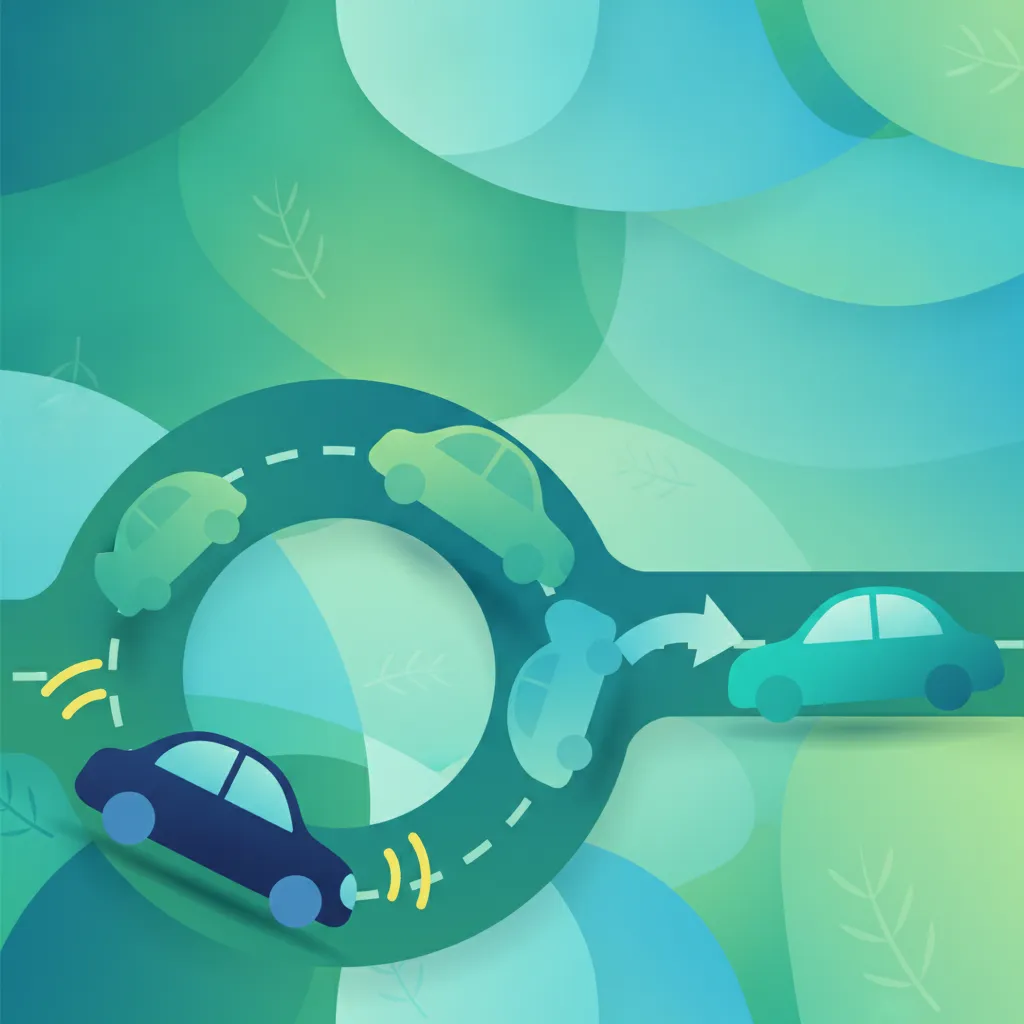
This lesson provides a step-by-step guide to navigating roundabouts safely and efficiently. It focuses on the critical rule of yielding to traffic already circulating within the roundabout before entering. You will also learn how to select the correct lane based on your intended exit and how to use your indicators to signal your maneuvers clearly.

This lesson provides a detailed explanation of the priority rules that govern Italian intersections and roundabouts. You will learn to identify priority roads and correctly apply the rules for stop and give way signs. It also covers the specific procedures for entering, navigating, and exiting roundabouts, emphasizing when to yield to circulating traffic.

This lesson introduces the philosophy and techniques of defensive driving, a proactive approach focused on anticipating and mitigating potential hazards. It teaches drivers to maintain constant situational awareness by scanning the road ahead, behind, and to the sides. The content covers how to manage the space around the vehicle, identify potential escape routes, and predict the actions of other road users to prevent dangerous situations from developing.

This lesson addresses the significant risk posed by parked vehicles, particularly the hazard of drivers opening their doors into traffic. You will learn to maintain a safe lateral distance when passing parked cars and to actively scan for signs of occupancy. This proactive approach helps prevent dangerous "dooring" incidents and ensures safe passage in urban environments.
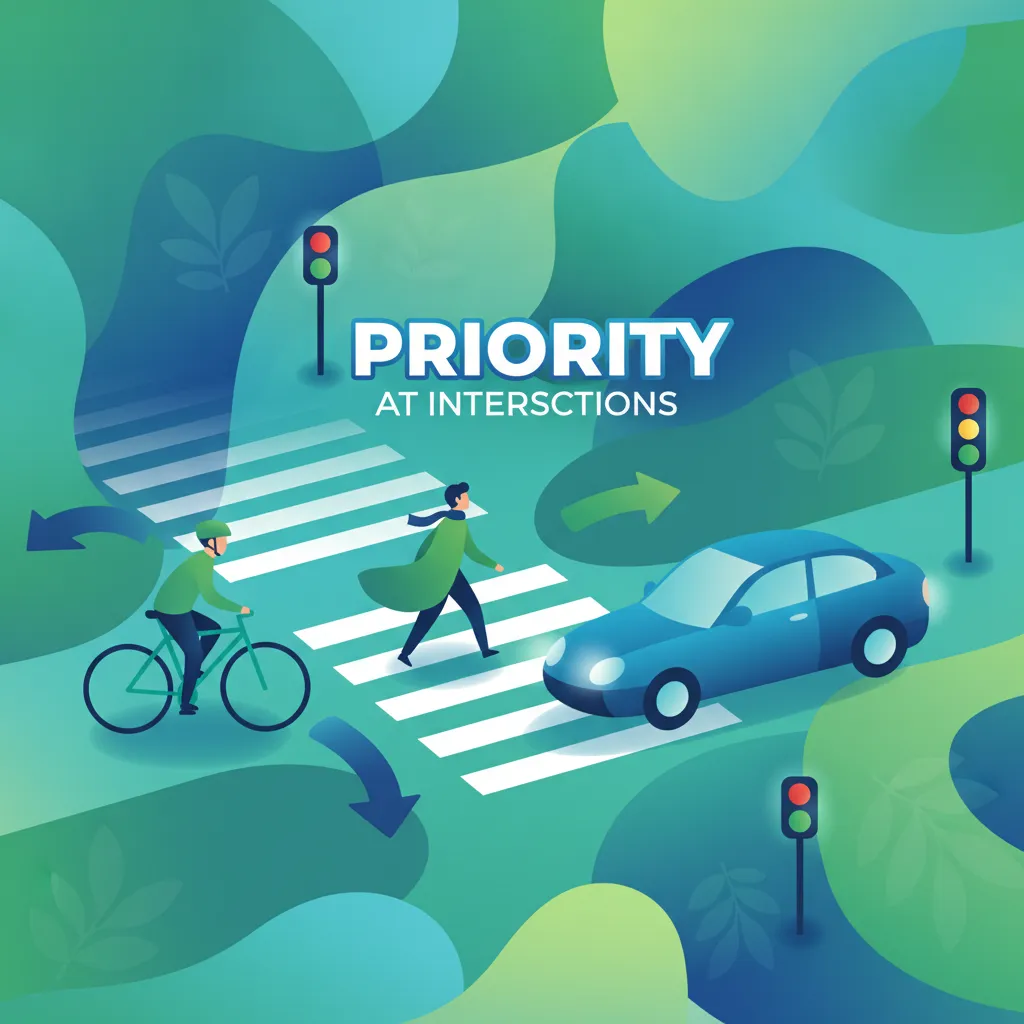
This lesson covers the general principles of priority at intersections governed by traffic signs and signals. It explains how to identify a priority road and the obligation to yield to traffic when encountering a 'dare la precedenza' (yield) or stop sign. The content also reviews the hierarchy of authority, where signals from a traffic officer override all other signs and lights.
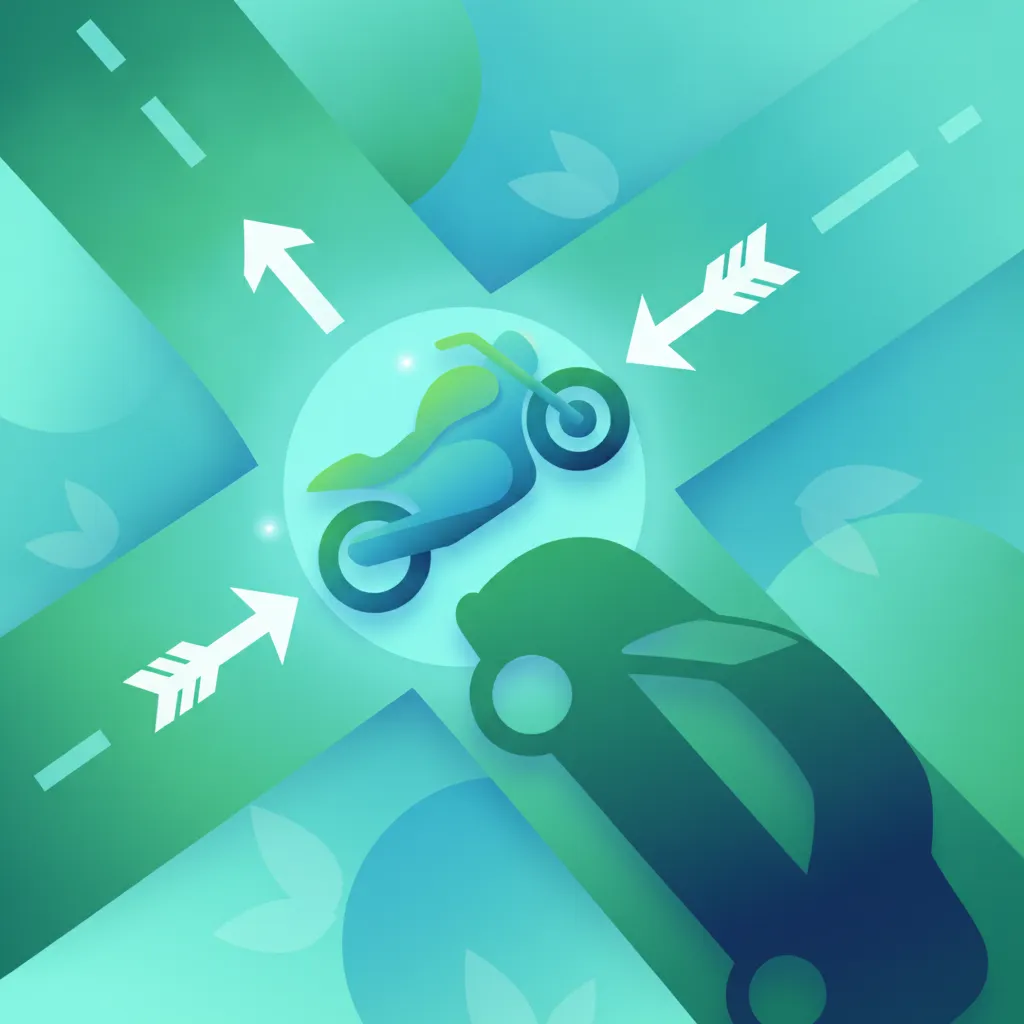
This lesson focuses on the crucial rule for navigating uncontrolled intersections in Italy: yielding to vehicles approaching from the right (precedenza a destra). It explains how to apply this default rule when no signs or signals are present to direct traffic flow. Learners will understand how to approach these junctions with caution, assess traffic, and proceed safely, while also learning about the few exceptions to this rule.
This lesson provides critical guidance on how to safely share the road with vulnerable users, including pedestrians, cyclists, motorcyclists, and children. It highlights the importance of increased awareness in specific areas like school zones and crosswalks. The content teaches techniques for maintaining a safe lateral distance when overtaking, checking blind spots thoroughly, and anticipating the often unpredictable movements of these users.
This lesson provides a step-by-step guide to safely and efficiently navigating roundabouts (rotatorie). It explains the primary rule of yielding to traffic already circulating within the roundabout before entering. The content covers correct lane positioning based on the intended exit, the proper use of turn signals when entering and exiting, and how to handle multi-lane roundabouts.
This lesson explains how to execute left turns, right turns, and U-turns safely while maintaining correct lane discipline. It covers interpreting road markings and arrows, selecting the proper vehicle position, and using signals in a timely manner. Performing shoulder checks to monitor blind spots before and during a turn is a key focus for preventing collisions.

This lesson provides an in-depth focus on sharing the road with the most vulnerable users. It teaches drivers to be acutely aware of pedestrians at crossings, cyclists filtering through traffic, and motorcyclists who may be in blind spots. The lesson emphasizes the importance of leaving extra space, signaling intentions clearly, and exercising extreme caution at junctions, where the majority of serious incidents occur.
Deepen your understanding of Italian priority rules and right-of-way at more challenging intersections, including multi-lane junctions and roundabouts. Essential theory for Patente AM success.
This lesson delivers a comprehensive explanation of right-of-way regulations at Italian intersections. It covers the interpretation of traffic light signals, the absolute requirement to stop at stop signs, and yielding at give-way signs. Furthermore, it details the default priority rules for unmarked intersections and the specific obligations a rider has towards pedestrians on crossings.
This lesson focuses on the crucial rule for navigating uncontrolled intersections in Italy: yielding to vehicles approaching from the right (precedenza a destra). It explains how to apply this default rule when no signs or signals are present to direct traffic flow. Learners will understand how to approach these junctions with caution, assess traffic, and proceed safely, while also learning about the few exceptions to this rule.
This lesson provides a detailed explanation of the priority rules that govern Italian intersections and roundabouts. You will learn to identify priority roads and correctly apply the rules for stop and give way signs. It also covers the specific procedures for entering, navigating, and exiting roundabouts, emphasizing when to yield to circulating traffic.
This lesson covers the general principles of priority at intersections governed by traffic signs and signals. It explains how to identify a priority road and the obligation to yield to traffic when encountering a 'dare la precedenza' (yield) or stop sign. The content also reviews the hierarchy of authority, where signals from a traffic officer override all other signs and lights.

This lesson explains the fundamental principles of right of way that govern interactions between different types of road users in Italy. It clarifies the legal precedence at intersections, pedestrian crossings, and when interacting with public transport like buses and trams. The content also details the absolute priority given to emergency vehicles and how to safely yield in accordance with the Codice della Strada.
This lesson provides a step-by-step guide to safely and efficiently navigating roundabouts (rotatorie). It explains the primary rule of yielding to traffic already circulating within the roundabout before entering. The content covers correct lane positioning based on the intended exit, the proper use of turn signals when entering and exiting, and how to handle multi-lane roundabouts.

This lesson clarifies the special priority rules for emergency vehicles and public transport. It explains the legal obligation to safely pull over and clear a path for any vehicle with active sirens and flashing lights. The content also details the absolute right-of-way that trams have in most situations and the requirement to yield to public buses signaling to pull out from a stop.
This lesson provides a step-by-step guide to navigating roundabouts safely and efficiently. It focuses on the critical rule of yielding to traffic already circulating within the roundabout before entering. You will also learn how to select the correct lane based on your intended exit and how to use your indicators to signal your maneuvers clearly.
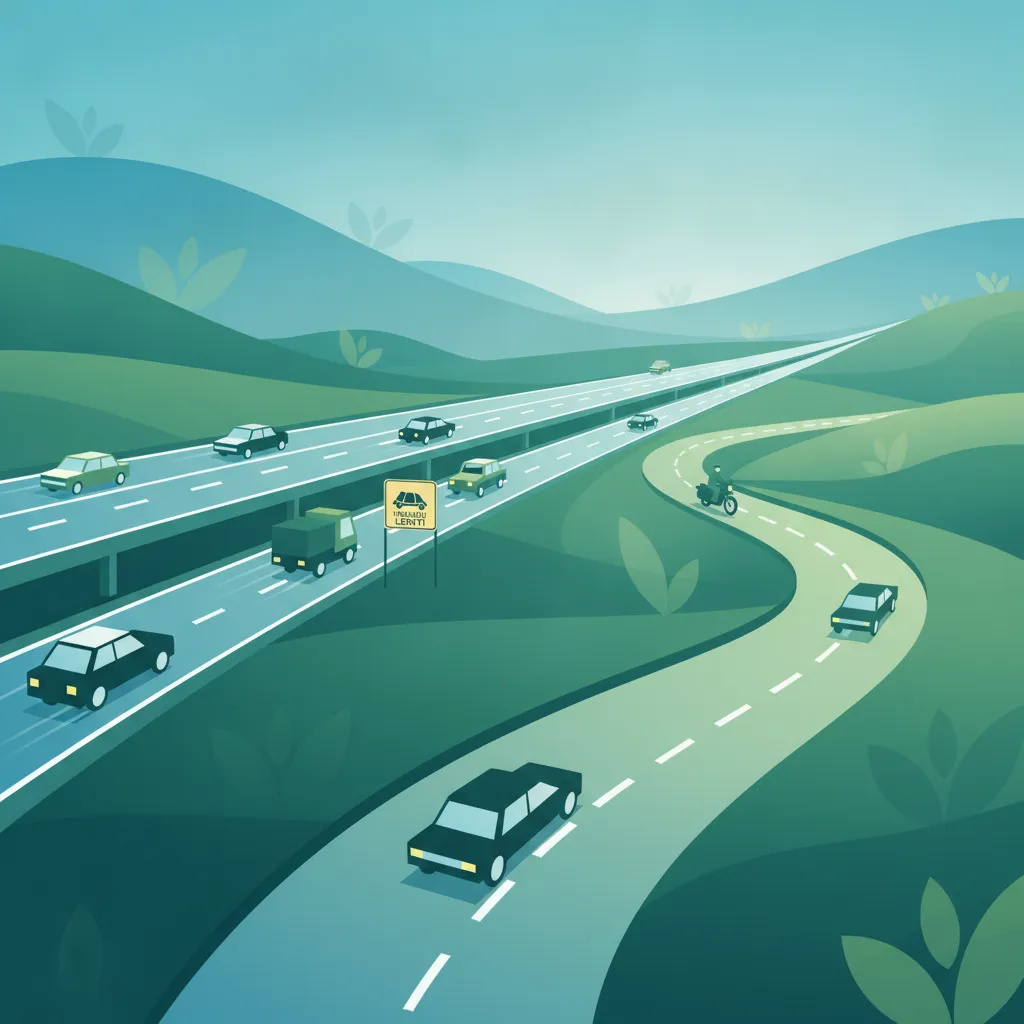
This lesson provides essential rules and techniques for driving on Italian motorways (autostrade) and major extra-urban roads. It explains how to safely merge onto the motorway from an entry ramp, the strict lane discipline required (drive right, overtake left), and how to exit correctly. The content also covers speed regulations, maintaining a safe following distance at high speed, and procedures for using service areas and handling emergencies.
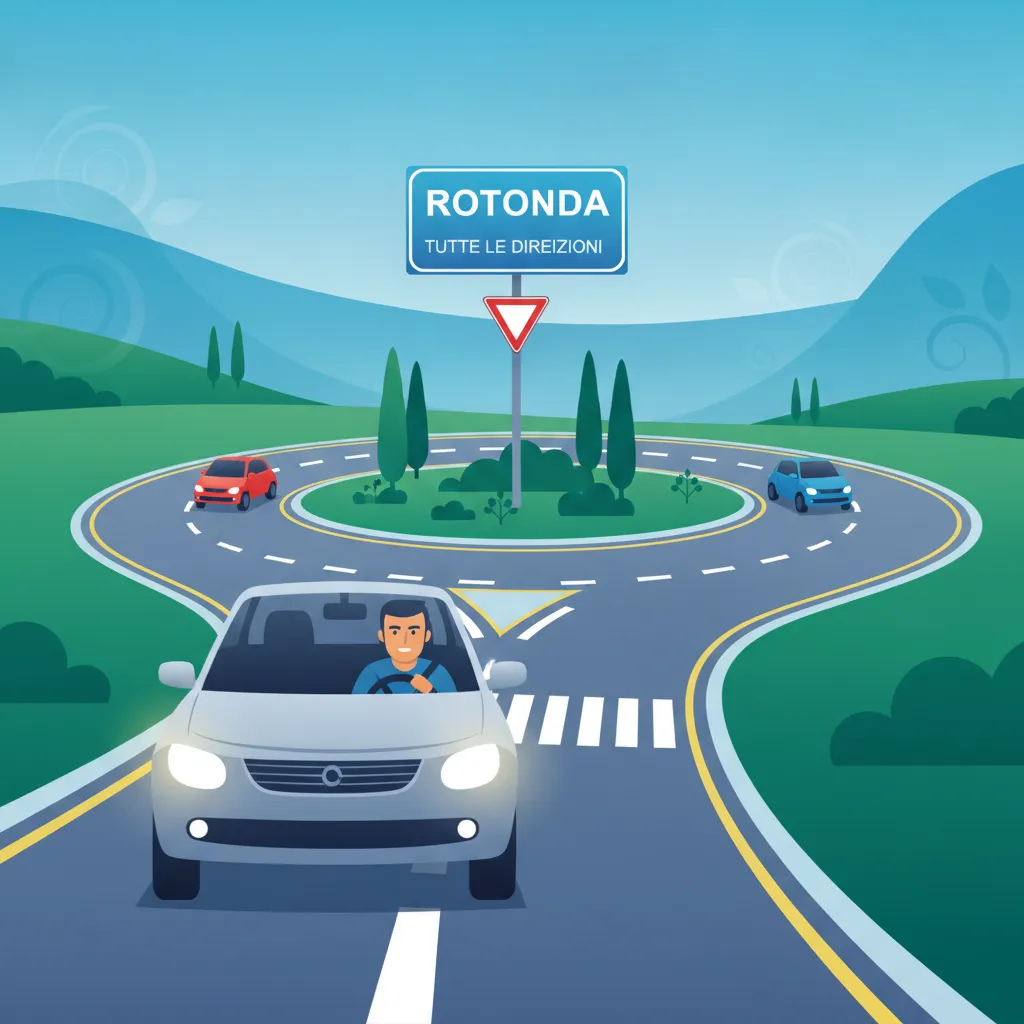
This lesson provides a step-by-step guide to safely navigating Italian roundabouts, known as rotatorie. It emphasizes the primary rule of yielding to traffic already circulating within the roundabout before entering. The content details correct lane positioning for different exits, the importance of signalling your intention to exit, and maintaining awareness of other vehicles.
Find clear answers to common questions learners have about Approaching and Entering Intersections Safely. Learn how the lesson is structured, which driving theory objectives it supports, and how it fits into the overall learning path of units and curriculum progression in Italy. These explanations help you understand key concepts, lesson flow, and exam focused study goals.
The most common error is failing to perform a complete stop at a 'Stop' sign or miscalculating the speed of incoming traffic before entering an intersection. Always ensure you come to a full stop and scan both directions thoroughly.
When a traffic light flashes yellow, it indicates that the light is malfunctioning or not in operation. You must follow the road signs present at the intersection, such as 'Give Way' or 'Stop' signs. If no signs are present, the general rule of priority to the right applies.
You should position your moped in a way that makes you visible to other drivers without obstructing traffic. Stay in the center of your lane and avoid hovering in the blind spots of larger vehicles like trucks or buses.
Yes, the fundamental priority rules outlined in the Italian Codice della Strada apply to all road users, including moped and car drivers. However, as a moped rider, you must pay extra attention to your visibility and vulnerability.
Start searching now to pinpoint exactly which Italian driving theory topics, road signs, or traffic rules you need to master. Use our advanced filters to build a custom practice session and ensure you're fully prepared for every aspect of your official driving licence exam.