
This lesson guides you through the fundamental principles of maintaining correct vehicle positioning and adapting to road geometry. Understanding how to align your vehicle properly within the lane is essential for safety, stability, and meeting the standards required for your Patente B theory exam.

Lesson content overview
Driving safely and efficiently requires more than just knowing how to operate your vehicle; it demands a deep understanding of vehicle positioning within lanes and how to adapt that positioning to the ever-changing road geometry. This comprehensive lesson, crucial for your Italian Patente B Theory preparation, delves into the principles of correct vehicle placement to enhance stability, improve visibility, and significantly reduce collision risks. By mastering these techniques, you'll navigate roads with greater confidence and control, ensuring compliance with Italian traffic regulations.
Proper vehicle positioning is fundamental to defensive driving. It's about more than just staying between the lines; it's a dynamic skill that anticipates road conditions, interacts safely with other road users, and optimizes your vehicle's performance.
Keeping your vehicle's longitudinal axis aligned with the central line of its designated lane, maintaining an equal distance from both lane boundaries.
The central lane position is the default and most stable way to drive on a straight road. By keeping your vehicle centered, you ensure symmetric tire wear, maintain consistent vehicle dynamics, and provide optimal clearance from both lane edges. This practice significantly reduces the risk of side collisions, improves your visibility of road signs and markings, and facilitates smoother transitions when changing lanes or overtaking. It’s the cornerstone of predictable and safe driving behavior.
Curves present a unique challenge, requiring a proactive adjustment to your vehicle's lateral position within the lane. Rather than staying perfectly central, you should adjust towards the outside edge of the lane before entering the curve.
Adjusting the lateral position within your lane towards the outside edge (while staying within lane boundaries) before entering a curve to optimize your path through the bend.
This technique allows your vehicle to follow the curve's natural arc more smoothly, maintaining optimal tire contact and grip throughout the maneuver. It prevents you from "clipping" the curb (driving too close to the inside edge) or encroaching on the opposite lane, dramatically improving driver comfort and reducing the centrifugal force that pushes your vehicle outwards.
Intersections demand precise positioning to clearly signal your intentions and execute turns safely without disrupting other traffic. This involves aligning your vehicle within the correct lane prior to the turn and then positioning it towards the inside of the curve during the actual turning maneuver.
Aligning your vehicle within the appropriate lane before an intersection and maneuvering towards the inside of the curve while turning, ensuring sufficient clearance and clear signaling.
This not only provides sufficient clearance for your vehicle's turning radius but also communicates your intentions unambiguously to other road users. It minimizes the risk of encroaching on opposing traffic lanes or wider areas, thus improving the predictability of your vehicle's movement.
Maintaining a minimum lateral distance from the road edge, curbs, or shoulders is critical for safety. This practice provides essential space for emergency maneuvers, protects vulnerable road users like pedestrians and cyclists on sidewalks, allows room for parked vehicles, and offers a buffer against unforeseen obstacles. Failing to maintain adequate lateral clearance increases the likelihood of side impacts and reduces your reaction time for corrective actions.
The minimum safe distance maintained between your vehicle and the road edge, curb, shoulder, or any adjacent obstacle or road user.
Developing excellent vehicle positioning skills involves understanding and applying several key concepts in various driving scenarios.
On any straight section of road, your vehicle's longitudinal center should be parallel to the lane's center line, maintaining a uniform distance from both the left and right lane markings. This applies whether you're cruising on a highway or navigating a multi-lane urban street.
When driving on a straight road, aim to keep your vehicle equidistant from the lane markings on either side. This often feels natural once you practice maintaining a consistent visual focus far down the road.
During lane merging, such as entering a motorway from an acceleration lane, initial central alignment in your current lane is crucial before gradually adjusting your position to integrate smoothly into the new lane. Italian traffic laws (Codice della Strada) mandate staying within lane boundaries unless overtaking or performing a permitted lane change. A common error is over-correcting towards one lane marking due to perceived speed or slight drift.
Navigating curves safely requires a dynamic approach to positioning.
When approaching a right-hand curve, position your vehicle slightly towards the left side of your lane. This creates a wider, gentler arc for your vehicle to follow, enhancing stability and allowing you a better view around the bend. As you progress through the curve, you will gradually move back towards the center or slightly to the right side of the lane, maintaining safe clearance from the curb.
Conversely, for a left-hand curve, position your vehicle slightly towards the right side of your lane as you approach. This also allows for a wider entry arc and improves your sightline into the curve, helping you to anticipate any oncoming traffic or obstacles. You'll then gently guide your vehicle towards the center or slightly to the left as you exit the curve.
Maintaining a central position throughout a curve is a common mistake that can lead to clipping the curb on tighter bends or feeling pushed out by centrifugal force.
The goal is to use the full width of your lane to your advantage, making the curve feel less sharp and reducing the strain on your tires and suspension.
Correct positioning at intersections is paramount for safety and smooth traffic flow.
For a right turn, position your vehicle to the right side of your lane well before the intersection, signaling your intention early. As you turn, follow the right-hand curvature, staying strictly within the boundaries of the turning lane. This ensures you do not swing wide and encroach on other lanes or sidewalks.
For a left turn from a multi-lane road, position your vehicle near the center line or the leftmost side of your lane (if it's a designated left-turn lane) before the intersection. Signal your intention, and as you turn, ensure you maintain your position within the appropriate lane, avoiding cutting the corner too sharply or swinging too wide into adjacent lanes.
While less common, U-turns require significant space. Position your vehicle to the far left of your lane (or a designated U-turn lane), signaling clearly. Execute the turn slowly, using the maximum available turning radius to complete the maneuver safely and avoid hitting curbs or crossing into opposing traffic unnecessarily.
Turning from the center of a lane at an intersection is a common misunderstanding that can cause confusion for other drivers and lead to side collisions. Always align within the designated lane before turning.
Maintaining adequate lateral clearance is a critical defensive driving technique. On urban streets, this means keeping enough space to avoid hitting parked cars, cyclists, or pedestrians on the pavement. On rural roads, it means providing a buffer against ditches, unpaved shoulders, or potential debris.
Driving too close to the road edge gives you less room to react to unexpected events. For instance, a car door might suddenly open, a pedestrian might step out, or a cyclist might swerve. The Italian Codice della Strada emphasizes safe distances to prevent accidents.
Before initiating a lane change, adjust your vehicle's position within your current lane to create sufficient space and improve visibility.
Check Mirrors and Blind Spots: Thoroughly check your rear-view and side mirrors, then perform a head check (turning your head briefly) to check your blind spot.
Signal Intention: Activate your turn signal well in advance to alert other drivers.
Position for Space: If moving to the right lane, position your vehicle slightly towards the left side of your current lane. If moving to the left, position slightly towards the right. This small adjustment maximizes the visual gap and helps you assess traffic.
Ensure Safe Gap: Verify that there is a sufficient gap (at least two vehicle lengths, or more depending on speed) between your vehicle and the one you intend to move in front of, as well as behind you in the target lane.
Smooth Transition: Gently steer into the new lane, maintaining your speed relative to the traffic flow, and then recenter your vehicle within the new lane.
A common misunderstanding is changing lanes while centered, which reduces your available gap and increases the risk. Proper initial positioning helps facilitate a smoother, safer transition.
The Italian Codice della Strada (Highway Code) provides specific regulations and guidelines regarding vehicle positioning, emphasizing safety and order on the road.
Rule 1: Drivers must keep the vehicle within the limits of a lane, respecting lane markings.
This rule is mandatory on all road types. It ensures order, predictability, and safety by preventing vehicles from wandering across lanes. Correct application means driving centrally within a lane. Incorrect application includes straddling lane markings or crossing into adjacent lanes without a proper overtaking or lane change maneuver.
Rule 2: When approaching a curve, drivers should position the vehicle towards the external side of the lane, maintaining a safe distance from the curb.
While often considered a best practice guideline, adhering to this principle is crucial for safe curve navigation. It allows the vehicle to follow the curve's path without clipping the curb or veering out of control. Moving slightly outward before a right-hand curve is a correct application, whereas maintaining a central position throughout can lead to difficulties.
Rule 3: While turning at an intersection, drivers must keep the vehicle within the lane designated for the turn and use the appropriate signal.
This rule is mandatory at all intersections. It ensures clear intention and prevents encroachment on other traffic lanes. Correct application involves positioning in the right-turn lane, signaling early, and staying within that lane while turning. Turning from the center of the lane or encroaching on opposing lanes constitutes an incorrect application and can lead to dangerous situations.
Rule 4: Drivers must not drive too close to the road edge (curb, shoulder) to allow safe maneuverability and avoid collisions with parked vehicles or cyclists.
This is a recommended best practice, crucial for preventing side collisions and providing adequate lateral clearance, especially on urban streets with parked cars or rural roads with narrow shoulders. Maintaining a central lane position is the correct application; driving directly adjacent to the curb is not advisable.
Rule 5: Prior to changing lanes, drivers must ensure a sufficient gap (minimum two vehicle lengths or as indicated by local regulations) and signal intention.
This rule is mandatory for all lane changes. It prevents collisions during lane transitions. Correct application includes checking mirrors, signaling well in advance, and only moving into the lane when a safe gap is ensured. Changing lanes without checking, signaling late, or squeezing between vehicles are incorrect applications that greatly increase collision risk.
Mistakes in vehicle positioning can lead to various hazards. Recognizing these common errors is the first step toward correcting them.
Vehicle positioning is not static; it must adapt to various external and internal factors.
Understanding why certain positioning techniques are recommended reinforces their importance and helps you apply them instinctively.
When a vehicle follows a curve, centrifugal force acts outwards, pushing the vehicle away from the center of the turn. By positioning your vehicle towards the lane's exterior before entering a curve, you effectively create a straighter path, allowing the vehicle to lean more naturally into the turn and counteract this outward force. This enhances stability, maintains better tire grip, and reduces the need for aggressive steering input.
Central lane positioning on straight roads maximizes your field of vision, allowing you to see road signs, markings, and potential hazards far ahead. On curves, anticipatory positioning not only aids stability but also improves your line of sight around the bend, allowing you to react sooner to unexpected obstacles or oncoming traffic. Maintaining predictable lane discipline also allows surrounding drivers to anticipate your movements, reducing sudden braking or steering actions and contributing to smoother traffic flow for everyone.
Let's consider how these positioning principles apply in common driving situations.
Correct Behavior: The driver maintains the vehicle perfectly centered within their lane, ensuring consistent gaps from the lane markings on both the left and right. This allows for predictable movement and safe overtaking by other vehicles.
Incorrect Behavior: The driver drifts slightly towards the left lane marking, occasionally touching or straddling it. This reduces the safety margin for the vehicle in the adjacent left lane and can cause confusion.
Correct Behavior: As the driver approaches the left bend, they ease the vehicle slightly towards the right edge of their lane (while staying within the lane). This broadens the curve's entry path, provides a better line of sight into the curve, and prepares the vehicle for a smooth, stable exit.
Incorrect Behavior: The driver maintains a central position throughout the curve. This makes the curve feel sharper, requiring more aggressive steering, potentially leading to the vehicle drifting close to the left lane marking or even over it.
Correct Behavior: The driver positions the vehicle firmly to the far right side of their lane, activates the right turn signal well in advance, and checks for pedestrians. They then execute the turn, keeping the vehicle within the arc of the designated turning path, ensuring not to clip the curb or swing wide into the pedestrian crossing area.
Incorrect Behavior: The driver signals late and turns from the middle of the rightmost lane. This causes the vehicle to swing wide into the intersection, potentially forcing the waiting pedestrian to step back or encroaching on the lane of oncoming traffic making a left turn.
Correct Behavior: The driver uses the acceleration lane to match the speed of motorway traffic. While doing so, they check their mirrors, activate the left turn signal, and position their vehicle slightly towards the right edge of the acceleration lane to maximize visibility into the target lane. Once a safe gap of at least two vehicle lengths is confirmed, they smoothly steer into the leftmost motorway lane.
Incorrect Behavior: The driver checks mirrors too late, signals at the last moment, and tries to merge while still centered in the acceleration lane. They then attempt to squeeze into an insufficient gap, forcing motorway vehicles to brake or swerve.
Mastering vehicle positioning is a continuous process of observation, anticipation, and precise control. For your Italian Patente B Theory, remember these critical takeaways:
By integrating these principles into your driving practice, you will not only pass your Italian Patente B theory test but also become a safer, more confident, and more responsible driver on Italian roads.
This lesson covers the fundamental principles of vehicle positioning for safe and stable driving on Italian roads, including central lane positioning on straight roads, anticipatory positioning before curves, and precise lane alignment for turns at intersections. The key insight is that correct positioning is dynamic and must adapt to road geometry, weather, visibility, and the presence of vulnerable road users. Italian traffic law (Codice della Strada) mandates staying within lane markings, signaling intentions, and maintaining safe lateral distances. Understanding the physics of centrifugal force explains why curve positioning techniques enhance stability and reduce collision risk, making these concepts essential for passing the Patente B theory exam and developing defensive driving habits.
A short set of high-value points that capture the most important learning from this lesson.
Central lane position is the default for straight roads, providing optimal stability, symmetrical tire wear, and maximum clearance from hazards on both sides.
Before entering a curve, position your vehicle slightly toward the lane's outside edge to create a wider, gentler arc and counteract centrifugal force.
At intersections, align in the correct designated lane before the turn and maneuver toward the inside of the curve while staying within lane boundaries.
Maintain adequate lateral clearance from road edges, parked vehicles, cyclists, and pedestrians to allow reaction space for emergency maneuvers.
Before changing lanes, position your vehicle toward the edge of your current lane, check mirrors and blind spots, signal early, and verify a safe gap of at least two vehicle lengths.
Explore all units and lessons included in this driving theory course.
For right-hand curves, position slightly to the left side of your lane before entering; for left-hand curves, position slightly to the right.
For right turns, position to the right side of your lane; for left turns, position near the center or left side of the designated lane.
Central lane position maximizes visibility of road signs and markings and provides reaction time for unexpected obstacles.
Centrifugal force pushes vehicles outward through curves; anticipatory positioning widens your path and maintains better tire grip.
The Codice della Strada mandates staying within lane boundaries, signaling before turns or lane changes, and maintaining safe lateral distances.
Staying centrally positioned throughout a curve, which risks clipping the curb or drifting toward the opposite lane due to centrifugal force.
Turning from the center of a lane at intersections instead of positioning within the designated turn lane, causing swings wide into opposing traffic.
Signaling late or not at all before lane changes, giving other drivers insufficient time to react.
Straddling lane markings on straight roads, reducing safe lateral space for adjacent vehicles and risking fines.
Driving too close to the road edge or parked vehicles, leaving inadequate room to react to opening doors, cyclists, or pedestrians.
Lesson content overview
A short set of high-value points that capture the most important learning from this lesson.
Central lane position is the default for straight roads, providing optimal stability, symmetrical tire wear, and maximum clearance from hazards on both sides.
Before entering a curve, position your vehicle slightly toward the lane's outside edge to create a wider, gentler arc and counteract centrifugal force.
At intersections, align in the correct designated lane before the turn and maneuver toward the inside of the curve while staying within lane boundaries.
Maintain adequate lateral clearance from road edges, parked vehicles, cyclists, and pedestrians to allow reaction space for emergency maneuvers.
Before changing lanes, position your vehicle toward the edge of your current lane, check mirrors and blind spots, signal early, and verify a safe gap of at least two vehicle lengths.
Explore all units and lessons included in this driving theory course.
For right-hand curves, position slightly to the left side of your lane before entering; for left-hand curves, position slightly to the right.
For right turns, position to the right side of your lane; for left turns, position near the center or left side of the designated lane.
Central lane position maximizes visibility of road signs and markings and provides reaction time for unexpected obstacles.
Centrifugal force pushes vehicles outward through curves; anticipatory positioning widens your path and maintains better tire grip.
The Codice della Strada mandates staying within lane boundaries, signaling before turns or lane changes, and maintaining safe lateral distances.
Staying centrally positioned throughout a curve, which risks clipping the curb or drifting toward the opposite lane due to centrifugal force.
Turning from the center of a lane at intersections instead of positioning within the designated turn lane, causing swings wide into opposing traffic.
Signaling late or not at all before lane changes, giving other drivers insufficient time to react.
Straddling lane markings on straight roads, reducing safe lateral space for adjacent vehicles and risking fines.
Driving too close to the road edge or parked vehicles, leaving inadequate room to react to opening doors, cyclists, or pedestrians.
Explore search topics learners often look for when studying Vehicle Positioning in Lanes and Road Geometry. These topics reflect common questions about road rules, driving situations, safety guidance, and lesson level theory preparation for learners in Italy.
Browse additional driving theory lessons that cover connected traffic rules, road signs, and common driving situations related to this topic. Improve your understanding of how different rules interact across everyday traffic scenarios.
Explore complex scenarios for vehicle positioning on varied road geometry, including challenging curves, narrow urban streets, and dynamic traffic. Understand how to adapt lane positioning for optimal safety and control in difficult driving conditions, aligning with Italian Codice della Strada principles for Patente B.

This lesson delves deeper into the dynamics of turning, introducing the concept of the 'swept path'—the total area a vehicle covers when making a turn. It builds on the idea of off-tracking, explaining how to position the vehicle before entering a turn to ensure the trailer safely clears corners, curbs, and other obstacles. Mastering this spatial judgment is essential for navigating junctions and roundabouts without incident.

This lesson provides essential rules and techniques for driving on Italian motorways (autostrade) and major extra-urban roads. It explains how to safely merge onto the motorway from an entry ramp, the strict lane discipline required (drive right, overtake left), and how to exit correctly. The content also covers speed regulations, maintaining a safe following distance at high speed, and procedures for using service areas and handling emergencies.

This lesson explains the concept of using lane positioning as a proactive safety tool. It details how to select a position within the lane to maximize visibility to other drivers, especially at junctions, and to create a buffer of space from potential dangers. The content emphasizes the 'see and be seen' principle, teaching riders to constantly adjust their position based on traffic, road conditions, and potential escape routes.

This lesson introduces the various electronic driver aids designed to improve visibility and safety during low-speed maneuvering. It covers the use of reversing cameras, blind-spot monitoring systems, and ultrasonic proximity sensors that provide visual and audible warnings. Learners will understand that while these technologies are valuable tools, they are aids to—not replacements for—the driver's own diligent observation and skill.

This lesson provides an in-depth focus on sharing the road with the most vulnerable users. It teaches drivers to be acutely aware of pedestrians at crossings, cyclists filtering through traffic, and motorcyclists who may be in blind spots. The lesson emphasizes the importance of leaving extra space, signaling intentions clearly, and exercising extreme caution at junctions, where the majority of serious incidents occur.

This lesson introduces modern Advanced Driver-Assistance Systems (ADAS) found in many contemporary vehicles. It explains the function of features such as lane-keeping assist, blind-spot monitoring, and adaptive cruise control. Crucially, the content emphasizes that these are assistance systems and do not replace the driver's responsibility to remain fully attentive and in control of the vehicle at all times.

This lesson teaches riders how to strategically position their vehicle within a lane for maximum visibility to others. It explains how to avoid riding in the blind spots of larger vehicles and how to maintain a safe buffer zone. Proper positioning enhances a rider's presence on the road and is a key component of defensive driving in mixed traffic.

This lesson focuses on a key dynamic behavior of articulated vehicles known as 'off-tracking' or 'cut-in'. It explains why, during a turn, the trailer's wheels follow a path inside that of the tractor's wheels, which requires the driver to make wider turns to avoid hitting curbs, signs, or other vehicles. Understanding and anticipating off-tracking is a fundamental skill for safely maneuvering a combination vehicle, especially in tight spaces.

This lesson focuses on the unique characteristics and challenges of driving on rural and mountain roads. It covers how to safely navigate sharp curves, steep inclines, and narrow lanes with limited visibility, often requiring the use of the horn to signal presence. The content also prepares drivers for potential hazards such as slow-moving agricultural vehicles, unexpected animal crossings, and variable road surface quality.

This lesson introduces the philosophy and techniques of defensive driving, a proactive approach focused on anticipating and mitigating potential hazards. It teaches drivers to maintain constant situational awareness by scanning the road ahead, behind, and to the sides. The content covers how to manage the space around the vehicle, identify potential escape routes, and predict the actions of other road users to prevent dangerous situations from developing.
Identify and understand frequent mistakes drivers make with vehicle positioning and lane discipline. Learn how to correct these errors based on Italian traffic law and safe driving principles to improve your understanding for the Patente B theory exam.
This lesson teaches riders how to strategically position their vehicle within a lane for maximum visibility to others. It explains how to avoid riding in the blind spots of larger vehicles and how to maintain a safe buffer zone. Proper positioning enhances a rider's presence on the road and is a key component of defensive driving in mixed traffic.
This lesson provides an in-depth focus on sharing the road with the most vulnerable users. It teaches drivers to be acutely aware of pedestrians at crossings, cyclists filtering through traffic, and motorcyclists who may be in blind spots. The lesson emphasizes the importance of leaving extra space, signaling intentions clearly, and exercising extreme caution at junctions, where the majority of serious incidents occur.

This lesson explains the critical importance of a continuous and systematic visual scan for maintaining 360-degree awareness around the vehicle. It details the correct technique for using interior and exterior mirrors in conjunction with direct vision and shoulder checks to effectively identify hazards. The content emphasizes the need to be aware of blind spots before any maneuver, such as changing lanes or turning.

This lesson explains how to execute left turns, right turns, and U-turns safely while maintaining correct lane discipline. It covers interpreting road markings and arrows, selecting the proper vehicle position, and using signals in a timely manner. Performing shoulder checks to monitor blind spots before and during a turn is a key focus for preventing collisions.

This lesson teaches the correct and safe technique for reversing a vehicle. It emphasizes the importance of performing a full 360-degree check for hazards before starting and maintaining slow, controlled movement. The content covers how to use mirrors and direct observation effectively, how to steer accurately while looking backward, and the increased need for caution regarding pedestrians and cyclists in the vehicle's blind areas.
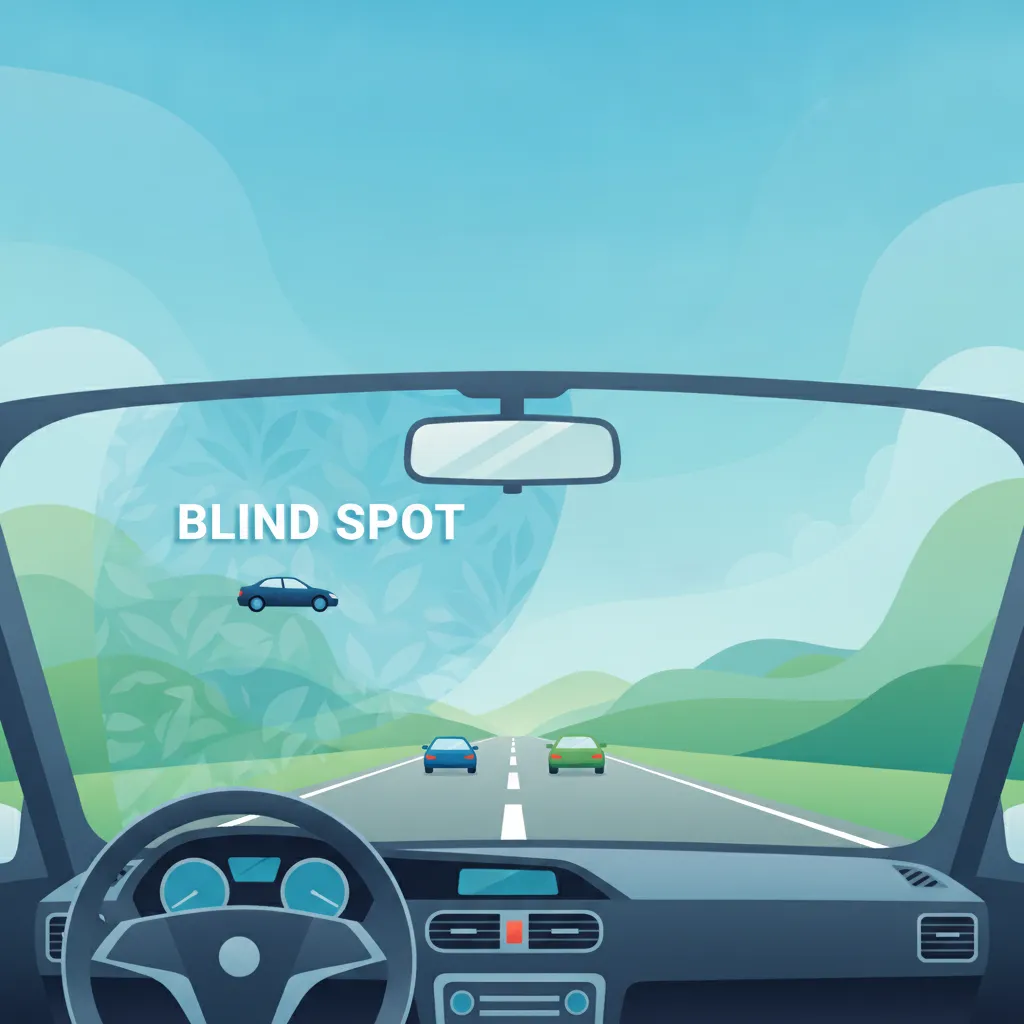
This lesson highlights the large blind spots—or 'no-zones'—that exist to the front, back, and sides of a heavy vehicle, where smaller vehicles, cyclists, and pedestrians can disappear from view. It teaches proactive scanning techniques, the importance of anticipating hazards, and how to use mirrors and direct vision effectively to manage these high-risk areas. Awareness and mitigation of blind spots are crucial for preventing collisions, especially in urban traffic.

This lesson details the proper and legal application of a vehicle's horn, lights, and signals as primary communication tools. It explains the specific circumstances for using high beams, low beams, and fog lights to maximize visibility without dazzling other drivers. The content also clarifies the rules for using the horn, turn indicators, and hazard lights to signal intentions, warn of danger, or indicate an emergency situation.

This lesson teaches the safe and systematic procedure for changing lanes. It covers the essential sequence of actions: signaling the intention, checking mirrors, performing a shoulder check to cover the blind spot, and then executing a smooth maneuver into the adjacent lane. The content stresses the need to judge the speed and distance of other vehicles to ensure a safe gap before initiating the lane change.

This lesson provides comprehensive guidance on the rules and best practices for safe overtaking. It explains how to assess whether it is legal and safe to pass, considering road markings, signs, and the distance of oncoming traffic. The content details the correct procedure, including signaling, accelerating, maintaining a safe distance during the maneuver, and returning to the original lane safely.

This lesson explains the function of the different classes of mirrors required on a heavy goods vehicle, including the main, wide-angle, and close-proximity (kerb) mirrors. It provides a systematic method for adjusting each mirror correctly from the driver's seating position to create the widest possible field of vision and minimize blind spots. Proper mirror setup is the foundation of safe observation and maneuvering.
Find clear answers to common questions learners have about Vehicle Positioning in Lanes and Road Geometry. Learn how the lesson is structured, which driving theory objectives it supports, and how it fits into the overall learning path of units and curriculum progression in Italy. These explanations help you understand key concepts, lesson flow, and exam focused study goals.
Maintaining a central position provides the maximum safety buffer from both the edge of the road and oncoming traffic. The exam tests this concept to ensure you understand how to maintain stability and avoid erratic movements.
Road geometry, such as the radius of a curve or the width of a lane, dictates the physical limits of your vehicle. You must adapt your speed and positioning before entering a curve to maintain control and stay within your lane.
Yes. When driving past parked cars, you should adjust your position slightly towards the center of your lane to allow for a safety margin in case a car door opens or a pedestrian steps out, while still respecting the center line.
Yes, you must position your vehicle well in advance for a turn—moving towards the right for right turns and towards the center for left turns—without crossing solid line markings, which is a common exam mistake.
Start searching now to pinpoint exactly which Italian driving theory topics, road signs, or traffic rules you need to master. Use our advanced filters to build a custom practice session and ensure you're fully prepared for every aspect of your official driving licence exam.