
This lesson guides you through the complexities of lane discipline and strategic road positioning in Italian urban environments. It builds on your foundation of motorcycle dynamics to ensure you can navigate city traffic, restricted zones, and intersections with precision and safety.

Lesson content overview
Navigating the bustling streets of Italian cities on a motorcycle requires more than just basic riding skills; it demands a keen understanding of lane discipline and strategic positioning. This lesson provides essential knowledge for riders seeking to obtain an Italian motorcycle license (A1, A2, or A categories), focusing on how to maintain safety, enhance visibility, and comply with the Codice della Strada (Italian Road Code) in dynamic urban environments. Proper positioning is crucial for anticipating hazards, communicating intentions to other road users, and executing maneuvers smoothly.
Urban traffic presents unique challenges, from dense vehicle flow and varied road surfaces to the presence of numerous vulnerable road users like pedestrians and cyclists. For motorcyclists, maintaining impeccable lane discipline is paramount to mitigating risks and ensuring a predictable presence on the road. It involves consciously choosing where to place your motorcycle within a lane, not just staying between the lines, but actively adapting your position to changing conditions.
In congested city settings, every meter counts. Correct lane positioning allows you to see more, be seen more easily by others, and gives you more time and space to react to unexpected events. It minimizes the risk of side-swiping incidents, helps avoid road hazards, and prepares you for turns or lane changes well in advance. Without proper discipline, riders are more prone to entering blind spots, causing confusion, and increasing the likelihood of collisions.
Effective lane discipline for motorcyclists is built upon several foundational principles. These principles guide your decisions about where to place your motorcycle within its lane, optimizing safety and maneuverability. They ensure you use the road space effectively while remaining predictable to other drivers.
Riding along the central longitudinal line of your lane, staying within designated lane markings. This provides a balanced position for visibility and maneuverability.
Adjusting your position within the lane (left, center, or right) to improve your view of the road ahead, make you more visible to others, or prepare for an upcoming maneuver like a turn or lane change.
Maintaining a safe distance from fixed objects, parked vehicles, the curb, or other road users (e.g., at least 0.5–1 meter). This prevents side impacts and provides a buffer zone.
These principles are not rigid rules but flexible guidelines that must be applied dynamically based on the prevailing traffic, road, and environmental conditions.
Mastering lane positioning involves a conscious and continuous effort to adapt to the immediate surroundings. These techniques are designed to enhance your safety and efficiency as a motorcyclist in urban traffic.
Riding along the central axis of your lane, known as lane centering, is often the default and safest position when traveling straight. This position ensures your motorcycle is clearly visible to drivers ahead and behind, reducing the chance of being overlooked. It also provides an equal safety margin on both sides of your motorcycle within the lane, protecting you from roadside obstacles and vehicles in adjacent lanes.
While lane centering is a good starting point, it's essential to understand that it's not always the optimal position. It serves as a base from which you make strategic adjustments. Continuous visual reference to road markings and careful steering micro-adjustments are necessary to maintain this balanced position.
The width of a lane dictates the maneuvering space available to you. City lanes can vary significantly, and understanding their dimensions is crucial for safe riding, particularly when considering actions like filtering or overtaking.
Selecting a lane that comfortably accommodates your motorcycle’s track width and allows for a safe maneuvering margin. This prevents unintentional encroachment into adjacent lanes.
In Italy, while motorcycles generally have the right to use the entire lane, attempting to squeeze through narrow gaps or filtering when the lane is too restricted can be highly dangerous. For safe filtering between stationary vehicles, the lane width should generally permit at least 2.5 metres of clearance. Attempting to filter in narrower lanes can compromise stability and risk contact with other vehicles.
Beyond mere centering, strategic lateral positioning is about deliberately placing your motorcycle within the lane to gain advantages in specific situations. This involves shifting your position to the left, center, or right of your lane based on your immediate needs.
For instance, moving to the right side of your lane can increase your visibility in a left-hand bend by giving you a better view around the curve, and it also creates a buffer from oncoming traffic. Conversely, moving slightly left (while staying within your lane) might be advantageous when preparing for a left turn, signaling your intention clearly and providing a better turning arc. This proactive adjustment enhances your ability to observe potential hazards and allows other road users to better anticipate your actions.
Maintaining adequate lateral clearance from curbs, parked vehicles, guardrails, and other roadside furniture is critical for motorcycle safety. Motorcycles are susceptible to instability if they brush against objects, and even a slight contact can lead to a loss of balance or a fall.
A general rule of thumb is to keep at least 0.5 to 1 meter of space between your motorcycle and any stationary objects or the edge of the road. This buffer zone provides room for error, allows you to react to sudden movements from parked vehicles (e.g., opening doors), and helps you avoid debris that often accumulates near the curb.
Urban roads are notorious for their imperfections, from potholes and uneven surfaces to temporary hazards like oil spills or debris. Due to their inherent instability, motorcycles are particularly vulnerable to these surface conditions. Proper lane discipline includes continuously scanning the road ahead and adjusting your position to avoid potential dangers.
Actively observing the road surface is an ongoing task for motorcyclists. Look several seconds ahead to identify potential hazards like:
When a hazard is identified, the safest approach is often to adjust your lateral position within the lane to bypass it. If avoidance is impossible, reducing speed and riding over the hazard with minimal input to controls can help maintain stability.
Even in urban areas, curves and intersections require specific positioning adjustments. For curves, strategic lateral positioning helps you see through the bend earlier and be seen by oncoming traffic. Typically, you would position yourself on the side of the lane opposite the direction of the turn as you approach, then move towards the inside of the curve as you lean into it.
At intersections, poor road surfaces, such as worn asphalt or raised drain covers, are common. Be vigilant, especially in rainy conditions, and adjust your approach to avoid hazardous patches.
Correct turn positioning is fundamental to safe urban riding, ensuring your intentions are clear and you navigate intersections without conflicting with other traffic. The Codice della Strada specifies how drivers must position themselves before making a turn.
When preparing for a left turn at an intersection in Italy, you should position your motorcycle as close as possible to the center line of your lane, or, if there are multiple lanes designated for your direction, in the leftmost lane that permits a left turn. This clear positioning signals your intention to other road users and helps you execute the turn without encroaching on the opposing lane's path. Always signal your intention early, at least 100 metres before the turn.
For a right turn, you should position your motorcycle close to the right-hand curb or edge of the carriageway, within the lane designated for right turns. This allows you to complete the turn smoothly and prevents other vehicles from attempting to pass you on the right. As with left turns, signaling your intent at least 100 metres in advance is mandatory.
Navigating rotatorie (roundabouts) requires careful lane selection and positioning.
Italian cities, especially those with historic centers, often have Zone a Traffico Limitato (ZTLs), or Restricted Traffic Zones, to manage congestion, reduce pollution, and preserve cultural heritage. Understanding and complying with ZTL regulations is crucial to avoid hefty fines.
ZTLs are areas where vehicle access is restricted based on time of day, vehicle type, emissions standards, or the possession of a specific permit. They are common in popular tourist destinations and central urban areas. The purpose is to improve the quality of urban life by reducing traffic volume and noise.
ZTLs are clearly marked by specific road signs.
The main sign (a white circle with a red border) typically includes supplementary panels that detail the specific restrictions:
Entering a ZTL during restricted hours without a valid permit or exemption will result in an automatic fine, often captured by cameras at the entry points. These fines can be substantial and may be issued for each time you pass through a ZTL camera within a restricted period. Therefore, it is absolutely essential to check ZTL signage carefully before entering any restricted area.
The Codice della Strada (Italian Road Code) provides the legal framework for lane discipline. Adhering to these rules is not just about avoiding fines; it's about contributing to a safe and predictable traffic flow for everyone.
Signaling your intentions clearly and well in advance is a legal requirement and a critical safety measure.
Lane filtering, or riding between stationary or slow-moving vehicles in the same lane, is a common practice for motorcyclists in many urban areas. In Italy, filtering is generally permitted under specific conditions:
Attempting to filter when lanes are too narrow or traffic is moving at speed is extremely dangerous and illegal. Always prioritize safety over saving a few seconds.
Overtaking in urban environments requires extreme caution due to higher traffic density, frequent intersections, and the presence of vulnerable road users.
Even experienced riders can fall into common traps regarding lane discipline. Awareness of these mistakes is the first step toward avoiding them.
Mistake: Consistently riding very close to the right-hand curb or parked cars. Risk: Collision with suddenly opening car doors, cyclists, pedestrians stepping into the road, or fixed obstacles. Accumulation of debris and poor road surface quality near the curb also increases risk. Correction: Maintain adequate lateral clearance (0.5–1 meter) from the curb and parked vehicles. Ride in the center or slightly right of center of your lane unless a specific maneuver requires otherwise.
Mistake: Attempting to filter through lanes that are too narrow, doing so at excessive speed, or overtaking where prohibited (e.g., solid lines, intersections). Risk: Side collisions with other vehicles, loss of control, fines, and creating unpredictable traffic situations. Correction: Only filter when lane width permits safe passage (>2.5m) and traffic is stopped or very slow. Always check mirrors and blind spots before filtering. Obey all overtaking signs and markings, and never overtake at intersections.
Mistake: Initiating a turn from the wrong part of the lane (e.g., a left turn from the far right of the lane) or from an incorrect lane. Risk: Confusion for other drivers, conflict with oncoming traffic, cutting corners dangerously, or blocking other lanes. Correction: Position your motorcycle appropriately for the turn as outlined in "Turn Positioning," signaling well in advance. Use dedicated turn lanes correctly.
Mistake: Entering a ZTL without recognizing the signage or verifying motorcycle exemptions. Risk: Automatic fines captured by cameras, which can accumulate if repeated. Correction: Always be vigilant for ZTL signs, especially in historic city centers. Look for supplementary panels indicating time restrictions and motorcycle exemptions. If unsure, assume restrictions apply and find an alternative route.
Effective lane discipline is dynamic; it changes with the environment. Riders must adapt their positioning based on various conditional factors.
Urban environments are shared spaces. When encountering pedestrians, cyclists, and trams, your lane discipline directly impacts their safety.
Mastering lane discipline and strategic positioning is a continuous learning process that significantly enhances your safety and confidence as a motorcyclist in Italian city traffic.
This lesson covers essential lane discipline and strategic positioning techniques for motorcyclists navigating Italian urban environments. Key topics include maintaining proper lateral clearance (0.5–1 metre), positioning for turns at intersections and roundabouts, and understanding ZTL restricted traffic zones with their specific exemptions for motorcycles. The lesson explains filtering rules (requiring at least 2.5 metres lane width), mandatory signaling distances (100 metres before turns), and how to adapt positioning for weather conditions and vulnerable road users. It also addresses avoiding common mistakes such as riding too close to curbs, incorrect turn positioning, and ZTL non-compliance.
A short set of high-value points that capture the most important learning from this lesson.
Maintain lane centering as your default position, adjusting strategically for visibility, upcoming turns, or road hazards.
Always check lane width adequacy before filtering—the lane must be at least 2.5 metres wide to allow safe passage between vehicles.
Signal your intentions (turns and lane changes) at least 100 metres in advance to give other road users time to react.
Position correctly for turns: near the center line for left turns, near the right curb for right turns, and use appropriate lanes at roundabouts.
Observe ZTL signage carefully and verify any motorcycle exemptions on supplementary panels before entering restricted traffic zones.
Explore all units and lessons included in this driving theory course.
Lateral clearance of 0.5–1 metre from curbs, parked vehicles, and fixed obstacles protects against door collisions and road debris.
ZTL zones are marked with a white circle and red border; always check time frames and vehicle exemptions on supplementary panels.
Use the rightmost lane approaching a roundabout for right turns or straight-ahead exits; use the leftmost lane for left exits.
Filtering is permitted only when traffic is stopped or moving very slowly, and only where lane width safely accommodates your motorcycle.
Maintain at least 1.5 metres lateral clearance when passing cyclists and exercise extreme caution near tram tracks, which become very slippery when wet.
Riding too close to curbs or parked vehicles, risking collision with opening doors, cyclists, or roadside debris.
Attempting to filter through lanes narrower than 2.5 metres or when traffic is moving at speed, which is dangerous and illegal.
Initiating turns from the wrong position within the lane, such as making a left turn from the far right of the lane.
Entering a ZTL zone without checking for specific time restrictions or motorcycle exemptions, resulting in automatic camera-issued fines.
Overtaking at intersections or where road markings show solid lines, which is prohibited and highly dangerous in urban traffic.
Lesson content overview
A short set of high-value points that capture the most important learning from this lesson.
Maintain lane centering as your default position, adjusting strategically for visibility, upcoming turns, or road hazards.
Always check lane width adequacy before filtering—the lane must be at least 2.5 metres wide to allow safe passage between vehicles.
Signal your intentions (turns and lane changes) at least 100 metres in advance to give other road users time to react.
Position correctly for turns: near the center line for left turns, near the right curb for right turns, and use appropriate lanes at roundabouts.
Observe ZTL signage carefully and verify any motorcycle exemptions on supplementary panels before entering restricted traffic zones.
Explore all units and lessons included in this driving theory course.
Lateral clearance of 0.5–1 metre from curbs, parked vehicles, and fixed obstacles protects against door collisions and road debris.
ZTL zones are marked with a white circle and red border; always check time frames and vehicle exemptions on supplementary panels.
Use the rightmost lane approaching a roundabout for right turns or straight-ahead exits; use the leftmost lane for left exits.
Filtering is permitted only when traffic is stopped or moving very slowly, and only where lane width safely accommodates your motorcycle.
Maintain at least 1.5 metres lateral clearance when passing cyclists and exercise extreme caution near tram tracks, which become very slippery when wet.
Riding too close to curbs or parked vehicles, risking collision with opening doors, cyclists, or roadside debris.
Attempting to filter through lanes narrower than 2.5 metres or when traffic is moving at speed, which is dangerous and illegal.
Initiating turns from the wrong position within the lane, such as making a left turn from the far right of the lane.
Entering a ZTL zone without checking for specific time restrictions or motorcycle exemptions, resulting in automatic camera-issued fines.
Overtaking at intersections or where road markings show solid lines, which is prohibited and highly dangerous in urban traffic.
Explore search topics learners often look for when studying Lane Discipline and Positioning in City Traffic. These topics reflect common questions about road rules, driving situations, safety guidance, and lesson level theory preparation for learners in Italy.
Browse additional driving theory lessons that cover connected traffic rules, road signs, and common driving situations related to this topic. Improve your understanding of how different rules interact across everyday traffic scenarios.
Understand essential lane discipline and strategic positioning for motorcycles in Italian cities. Learn to navigate urban traffic, avoid hazards, and comply with traffic laws like ZTL regulations.

This lesson focuses on the principles of correct vehicle positioning to enhance safety and stability. It teaches how to maintain a central position within the lane and how to adjust this position to navigate curves, prepare for turns, or create more space from potential hazards. Understanding how to adapt to the road's geometry is crucial for smooth and safe driving.

This lesson addresses the increased complexity of overtaking in urban environments with dense traffic and frequent intersections. It stresses the importance of thorough observation, including mirror and blind spot checks, to ensure a safe gap is available. The content covers judging speed differentials and the necessity of clear signalling to execute the maneuver without causing conflict with other road users.

This lesson explains the concept of using lane positioning as a proactive safety tool. It details how to select a position within the lane to maximize visibility to other drivers, especially at junctions, and to create a buffer of space from potential dangers. The content emphasizes the 'see and be seen' principle, teaching riders to constantly adjust their position based on traffic, road conditions, and potential escape routes.
This lesson provides a comprehensive guide to riding on high-speed motorways, or autostrade. It details the correct procedures for safely merging into traffic from an entry ramp and exiting via a deceleration lane. The content reinforces strict lane discipline, rules for overtaking, and the importance of maintaining a significantly larger following distance to compensate for higher speeds and potential wind gusts.

This lesson teaches riders how to strategically position their vehicle within a lane for maximum visibility to others. It explains how to avoid riding in the blind spots of larger vehicles and how to maintain a safe buffer zone. Proper positioning enhances a rider's presence on the road and is a key component of defensive driving in mixed traffic.

This lesson explains how to execute left turns, right turns, and U-turns safely while maintaining correct lane discipline. It covers interpreting road markings and arrows, selecting the proper vehicle position, and using signals in a timely manner. Performing shoulder checks to monitor blind spots before and during a turn is a key focus for preventing collisions.

This lesson is dedicated to fostering awareness and safe interaction with vulnerable road users commonly found in cities. It details the legal priority of pedestrians at crossings and the importance of giving ample space to cyclists. Additionally, it covers the specific hazards associated with tram tracks and the need to be vigilant around public transport vehicles like buses and taxis.

This lesson equips riders to safely manage the challenges posed by road construction zones. It explains how to interpret temporary signage, navigate lane closures or diversions, and maintain heightened awareness for surface hazards like gravel or steel plates. The content emphasizes the need to reduce speed and increase following distances to safely share the road with large construction vehicles and workers.
This lesson provides essential rules and techniques for driving on Italian motorways (autostrade) and major extra-urban roads. It explains how to safely merge onto the motorway from an entry ramp, the strict lane discipline required (drive right, overtake left), and how to exit correctly. The content also covers speed regulations, maintaining a safe following distance at high speed, and procedures for using service areas and handling emergencies.

This lesson provides a step-by-step guide to safely and efficiently navigating roundabouts (rotatorie). It explains the primary rule of yielding to traffic already circulating within the roundabout before entering. The content covers correct lane positioning based on the intended exit, the proper use of turn signals when entering and exiting, and how to handle multi-lane roundabouts.
Learn how to identify and legally navigate ZTLs in Italian cities. This lesson details signage, exemptions for motorcycles, and the consequences of non-compliance with restricted zone regulations.
This lesson explains the concept of 'Zone a Traffico Limitato' (ZTL), common in Italian city centers, which restricts vehicle access at certain times. It covers how to identify ZTL boundaries, understand the operating hours, and the procedures for obtaining permits for commercial deliveries. The lesson also touches on environmental zones that may restrict access based on a vehicle's emission standards.
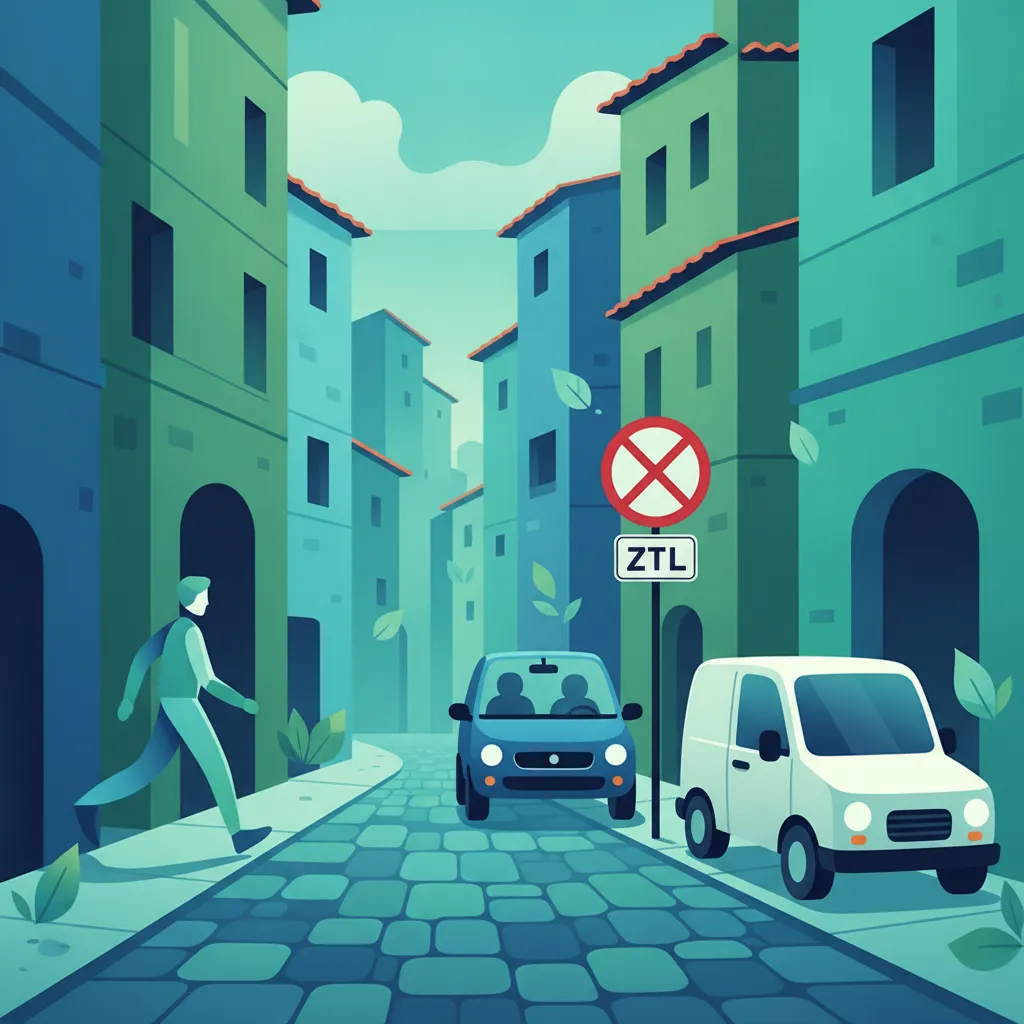
This lesson explains the rules for special urban traffic situations common in Italy. It provides a detailed explanation of Limited Traffic Zones (ZTL), including how to recognize the signage and understand the access restrictions to avoid fines. The content also offers guidance on navigating the narrow and complex streets of historic centers and safely maneuvering around frequently stopping delivery vehicles.

This lesson delivers a comprehensive explanation of right-of-way regulations at Italian intersections. It covers the interpretation of traffic light signals, the absolute requirement to stop at stop signs, and yielding at give-way signs. Furthermore, it details the default priority rules for unmarked intersections and the specific obligations a rider has towards pedestrians on crossings.
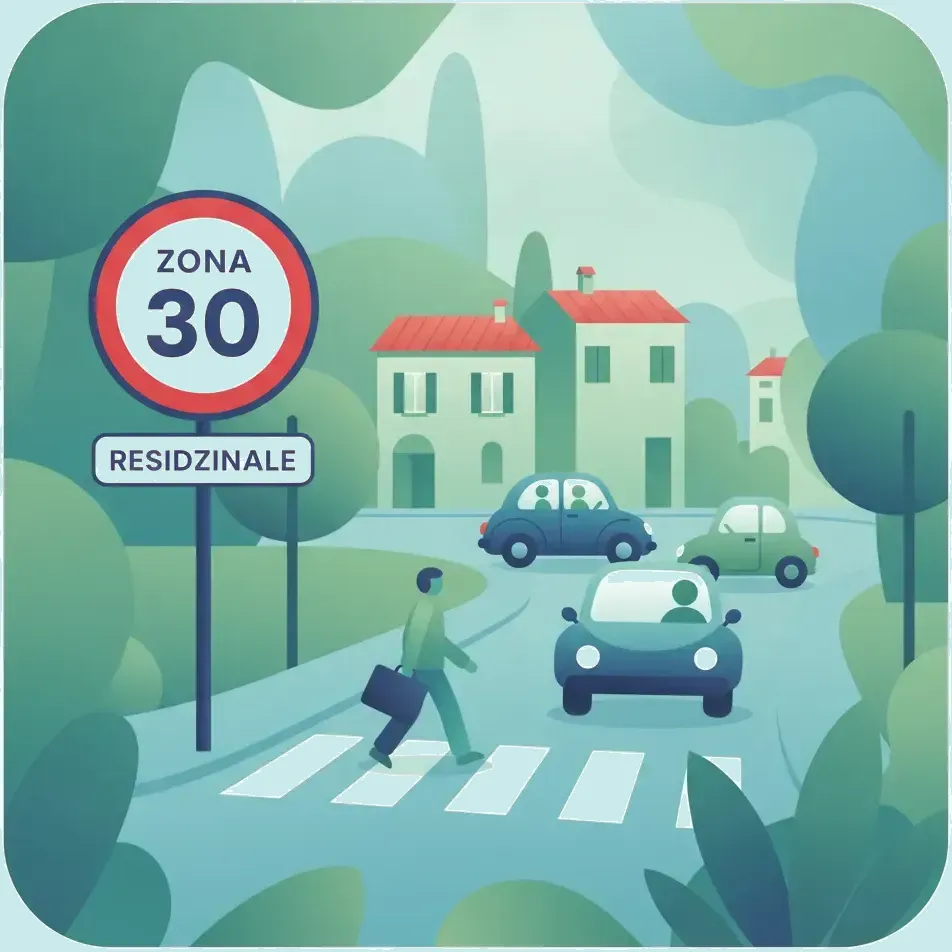
This lesson focuses on the specific signage and regulations for low-speed zones, such as "Zone 30" areas common in Italian towns. You will learn to recognize the signs that indicate reduced speed limits in residential areas, school zones, and other pedestrian-heavy environments. The content also explains various traffic calming measures and the priority rules that apply within these designated zones.
This lesson provides a comprehensive guide to riding on high-speed motorways, or autostrade. It details the correct procedures for safely merging into traffic from an entry ramp and exiting via a deceleration lane. The content reinforces strict lane discipline, rules for overtaking, and the importance of maintaining a significantly larger following distance to compensate for higher speeds and potential wind gusts.
This lesson explores the specific speed limits applicable to AM vehicles across various zones, including urban, residential, and rural roads. Emphasis is placed on understanding the signage that indicates both permanent and temporary speed restrictions. Learners will also examine the rationale behind these limits and the importance of adapting speed to road conditions and traffic density.
This lesson addresses the increased complexity of overtaking in urban environments with dense traffic and frequent intersections. It stresses the importance of thorough observation, including mirror and blind spot checks, to ensure a safe gap is available. The content covers judging speed differentials and the necessity of clear signalling to execute the maneuver without causing conflict with other road users.
This lesson equips riders to safely manage the challenges posed by road construction zones. It explains how to interpret temporary signage, navigate lane closures or diversions, and maintain heightened awareness for surface hazards like gravel or steel plates. The content emphasizes the need to reduce speed and increase following distances to safely share the road with large construction vehicles and workers.
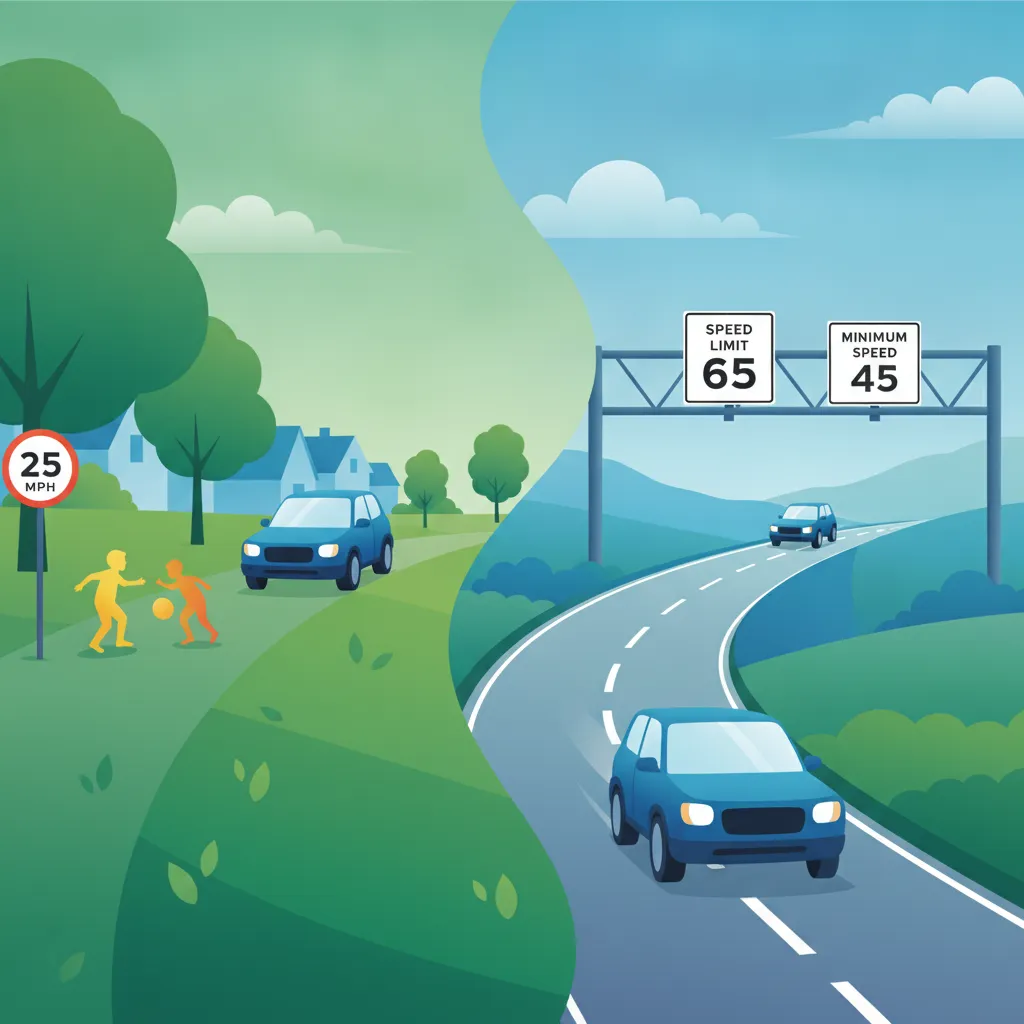
This lesson details the legal speed limits applicable to different road classifications in Italy. It covers the standard limits for urban centers, extra-urban secondary roads, main extra-urban roads, and motorways (autostrade). The content also highlights the lower speed limits that apply to beginner drivers and in specific conditions such as adverse weather or road construction zones.

This lesson addresses the unique hazards associated with riding through tunnels. It focuses on the importance of adapting vision when entering and exiting, managing speed within the confined space, and maintaining a steady lane position. The content also covers awareness of emergency exits and procedures, as well as the potential for changes in air quality due to ventilation systems.
Find clear answers to common questions learners have about Lane Discipline and Positioning in City Traffic. Learn how the lesson is structured, which driving theory objectives it supports, and how it fits into the overall learning path of units and curriculum progression in Italy. These explanations help you understand key concepts, lesson flow, and exam focused study goals.
You should generally maintain a position that ensures you are visible to drivers ahead and behind you, avoiding the 'gutter' or extreme edges where debris and oil accumulate. In city traffic, aim for the center or slightly to the side of the lane where you are most conspicuous to mirrors.
Not always. You must check local signs as some Italian ZTLs are restricted to authorized vehicles only, or may require specific permissions for certain motorcycle categories. Always look for the 'Zona Traffico Limitato' sign and the supplemental plate indicating permitted vehicles.
The theory exam often presents scenarios where choosing the wrong lane or improper positioning leads to a dangerous situation. Understanding the 'line of sight' and 'safety buffer' principles tested here will help you correctly answer questions about right-of-way and hazard avoidance.
Start searching now to pinpoint exactly which Italian driving theory topics, road signs, or traffic rules you need to master. Use our advanced filters to build a custom practice session and ensure you're fully prepared for every aspect of your official driving licence exam.