
This lesson explores the physics of heavy vehicle turning, focusing on the swept path and the complexities of off-tracking. Mastering these concepts is essential for maneuvering large goods vehicles through Italian urban junctions and narrow roads without creating road hazards.

Lesson content overview
Navigating heavy goods vehicles (HGVs) demands a profound understanding of how these large machines maneuver, particularly when turning. Unlike passenger cars, the sheer size, length, and often articulated nature of commercial vehicles introduce complex dynamics that require specialized knowledge to ensure safety and compliance. This lesson delves into the critical concepts of turning paths, swept path analysis, and minimum turning radius, essential for all drivers aiming to obtain their Italian Goods Vehicle License (C, C1, C1E, CE).
Mastering these principles is not just about passing an exam; it's about safeguarding lives, protecting property, and maintaining the flow of traffic in challenging environments like busy city junctions, tight roundabouts, and restricted loading zones. By understanding the unique way HGVs turn, you can anticipate potential hazards, position your vehicle correctly, and execute maneuvers with confidence and precision.
The way a heavy vehicle turns is fundamentally different from a car, primarily due to its longer wheelbase, wider dimensions, and the presence of articulation points in combination vehicles. These factors create unique challenges that must be addressed through careful planning and execution.
The swept path refers to the total area on the ground covered by a vehicle, including its outermost and innermost extremities, as it completes a specific turn from a starting point to an endpoint. This envelope encompasses the trajectories of the front corners, rear corners, and for articulated vehicles, the articulation point and the trailer's extreme points. Essentially, it's the "footprint" your vehicle leaves during a turn.
Understanding your vehicle's swept path is paramount for safety and legal compliance. It dictates whether your HGV can safely complete a turn without encroaching on curbs, colliding with obstacles such as lampposts or road signs, or endangering other road users, especially vulnerable ones like pedestrians and cyclists. The Codice della Strada mandates that drivers maintain control and ensure their vehicle clears all obstacles during maneuvers, making swept path analysis a fundamental skill.
This concept builds upon your knowledge of vehicle dimensions and articulation from previous lessons, offering a practical application of how these physical attributes dictate real-world maneuvering capabilities.
Several key principles govern how heavy vehicles turn. Grasping these concepts will provide a solid foundation for safe and efficient driving.
The minimum turning radius (MTR) is the smallest possible radius a vehicle can turn while keeping its entire swept area within a defined corridor. This critical measurement determines the innermost lane an HGV can occupy during a turn without encroaching on adjacent lanes, hitting curbs, or overrunning central islands.
The MTR is a direct indicator of your vehicle's maneuverability. It's often categorized into:
Drivers must always select an approach lane and initiate a turn with an MTR that comfortably accommodates their vehicle's dimensions. Misjudging this can lead to situations where the vehicle cannot complete a turn without dangerous encroachment. A common misconception is assuming an HGV can turn within the same lane dimensions as a passenger car, which is often far from true, especially for articulated combinations.
Off-tracking is the phenomenon where the rear axle (or trailer axle) follows a path inside the trajectory of the front axle during a turn. This occurs because the wheels are fixed to axles that pivot around a common center during a turn, but the front and rear axles are separated by the wheelbase. As the front wheels initiate the turn, the rear wheels are pulled inward.
Off-tracking is present in all vehicles, but its magnitude is significantly greater in HGVs due to their extended wheelbases.
The practical implication of off-tracking is crucial: if you position the front of your vehicle too close to the inside of a turn, the rear of your vehicle or trailer will almost certainly collide with a curb, sign, or other obstacle. Therefore, proper positioning involves positioning the front of the vehicle sufficiently outward before commencing the turn to ensure the rear clears any potential hazards.
Swept path geometry is the comprehensive envelope that encompasses all points of a vehicle’s body throughout a turn. This includes not only the wheels but also any front or rear overhangs, and for articulated vehicles, the articulation point and the extremities of the trailer. It provides a visual and mathematical representation of the entire space required for a maneuver.
This geometry can be further broken down:
Drivers must consider both inner and outer swept paths to ensure the vehicle remains within the designated road or turning lane boundaries and avoids any fixed objects. Ignoring overhang lengths or assuming the vehicle's width is simply the wheelbase can lead to dangerous misjudgments.
For articulated vehicles, the articulation point path is the specific trajectory traced by the pivot point where the tractor unit connects to the trailer. This point is crucial because it dictates the movement of the trailer and, consequently, its swept path.
When an articulated vehicle turns, the articulation point moves in an arc different from both the tractor's front wheels and the trailer's rear wheels.
Accurate assessment of this path is essential for drivers of tractor-semi-trailer combinations, as it directly influences trailer off-tracking and the amount of clearance needed on the inside of a turn. Misjudging the articulation point's movement can lead to the trailer swinging wide or cutting in excessively, potentially causing collisions.
Trailer off-set refers to the lateral distance between the path of the tractor’s rear axle and the trailer’s rear axle during a turn. This concept is particularly relevant for understanding the clearance required for the trailer's rear wheels on the inside of a turn.
The off-set can vary:
The magnitude of trailer off-set directly impacts how much space the trailer's rear needs to clear obstacles like curbs or other vehicles. Drivers must anticipate this offset to prevent the trailer's wheels from striking objects or crossing lane markings during a turn. Underestimating the trailer off-set is a common cause of accidents involving articulated vehicles in tight corners or urban environments.
In Italy, the Codice della Strada (Highway Code) provides the legal framework governing vehicle movements, including turning. While specific articles might not detail "swept path" explicitly, several provisions indirectly enforce safe turning practices by requiring drivers to maintain control, avoid obstruction, and ensure safety.
Drivers must ensure that their vehicle, including any attached trailer, completes a turn without the rear wheels crossing lane markings or striking a curb. This applies to all turning maneuvers at intersections, roundabouts, and curbside loading points.
Rationale: This regulation prevents property damage to infrastructure and vehicles, maintains safe distances from other road users, and avoids traffic obstruction. Correct Example: Before making a left turn at a junction with a semi-trailer, the driver positions the vehicle towards the right side of the approach lane (assuming a right-hand drive vehicle path), creating a wider entry angle. This allows the trailer's rear wheels to track inside without hitting the curb on the left. Incorrect Example: The driver initiates a left turn from the center of the lane, failing to account for off-tracking, which results in the trailer's rear wheels mounting or striking the curb.
When performing a turning maneuver in a restricted space, such as a loading bay or a narrow street, the driver must complete the turn such that the entire swept path remains strictly within the designated space boundaries.
Rationale: This ensures the safety of loading/unloading operations, prevents damage to facilities, and protects any personnel or other vehicles within the area. Correct Example: To execute a U-turn in a tight warehouse dock, the driver plans and executes a multi-point "box maneuver," backing up to reposition the tractor unit before completing the forward turn, ensuring the trailer's swept path remains within the defined boundaries. Incorrect Example: The driver attempts a single, tight U-turn without adequate space or repositioning, leading to the trailer colliding with a dock wall or a parked vehicle.
In urban environments, drivers must execute turns without obstructing traffic flow or endangering other road users, especially pedestrians and cyclists, respecting all right-of-way rules.
Rationale: This regulation is crucial for preventing traffic bottlenecks, ensuring safe passage for all road users, and maintaining urban mobility. Correct Example: When making a right turn at an intersection, the HGV driver yields to pedestrians crossing the road they are turning into, even if the vehicle's swept path would technically clear them if they were stationary. Incorrect Example: The driver proceeds with a left turn that requires temporarily blocking an opposing lane of traffic, forcing other vehicles to stop or pedestrians on the sidewalk to step back or into the road.
Always remember that local conditions, vehicle dimensions, and specific traffic management schemes can further influence these regulations. It is imperative for all drivers holding an Italian Goods Vehicle License to stay updated with the Codice della Strada and relevant municipal ordinances.
Even experienced drivers can make mistakes, and understanding common violations and edge cases can help you avoid them.
The theoretical principles of turning paths must be adapted to real-world driving conditions, which are rarely ideal.
Mastering turning paths involves a combination of theoretical knowledge, visual judgment, and practical execution.
The physics of off-tracking are rooted in basic geometry. When a vehicle turns, its wheels momentarily become part of a large circle. For a rigid vehicle, the front wheels steer to follow an arc, while the rear wheels, fixed on an axle further back, naturally want to follow a tighter, inner arc. This difference in arc paths is off-tracking. For articulated vehicles, this effect is compounded at the coupling point, where the trailer pivots, causing its wheels to off-track even further inward relative to the tractor's rear wheels. The longer the wheelbase (or combination length), the more pronounced this effect.
Many drivers, especially those transitioning from smaller vehicles, often underestimate the space required for large vehicles. There's a tendency to mentally scale up their car-driving experience, which is insufficient for HGVs. This psychological bias leads to risky maneuvers, such as cutting corners too sharply or attempting turns in spaces that are simply too small. Proper training aims to build a robust mental model of the HGV's dimensions and dynamic behavior, helping drivers accurately visualize the swept path and required clearances.
Studies on HGV accidents consistently show that a significant proportion of trailer-related incidents at intersections, roundabouts, and in urban environments are attributable to inadequate consideration of off-tracking and the full swept path. These incidents often involve striking curbs, road furniture, parked vehicles, or, tragically, vulnerable road users who enter the blind spots created by the vehicle's turning arc. This data underscores the critical importance of thorough training and continuous vigilance.
Before every turn, especially in complex situations, develop the habit of mentally "walking" your vehicle's swept path. Visualize where your front corners, rear wheels, and trailer extremities will be at each stage of the maneuver.
By internalizing these principles and applying them diligently, drivers of heavy goods vehicles can navigate turns with expertise, ensuring safety for themselves and others on the road, and fulfilling the requirements for their Italian Goods Vehicle License.
This lesson covers the critical spatial awareness skills needed for maneuvering heavy goods vehicles, focusing on swept path analysis—the complete ground area a vehicle occupies during turns. Key concepts include off-tracking, where rear wheels follow tighter arcs than front wheels, and how articulation points compound this effect in tractor-trailer combinations. The lesson emphasizes that safe turning requires appropriate lane positioning, speed modulation, and continuous awareness of vehicle dimensions and load effects. Understanding these dynamics is essential for passing Italian C and CE license theory exams and preventing collisions with curbs, infrastructure, or vulnerable road users in urban environments.
A short set of high-value points that capture the most important learning from this lesson.
The swept path is the total ground area a vehicle occupies during a turn, encompassing all extremities including trailer points and overhangs
Off-tracking causes rear wheels to follow a tighter path than front wheels during turns, requiring drivers to start maneuvers wider than expected
Minimum turning radius varies between static (low speed) and dynamic (higher speed) conditions, with speed increases demanding larger turning arcs
Articulated vehicles experience compound off-tracking where both tractor rear wheels and trailer wheels track progressively further inside the front wheel path
Correct positioning before initiating a turn is essential—positioning the front outward ensures the rear and trailer clear curbs and obstacles safely
Explore all units and lessons included in this driving theory course.
For left turns, position toward the right side of your lane to create a wider entry angle that allows trailer rear wheels to track inside without hitting the curb
Dynamic turning radius increases with speed, meaning you need more space for turns at higher speeds than at crawling pace
The articulation point traces a unique trajectory different from both the tractor's front wheels and trailer's rear wheels, dictating how the trailer swings
Trailer off-set varies between constant (semi-trailers) and variable (draw-bar trailers), affecting the clearance needed on turn insides
In confined spaces, multi-point maneuvers may be necessary when a single turn cannot accommodate the full swept path
Initiating a turn from the wrong lane that doesn't provide sufficient swept path clearance, forcing the vehicle to swing wide into other lanes
Assuming HGVs can turn within the same lane dimensions as passenger cars, leading to curb strikes or collisions at tight junctions
Underestimating compound off-tracking in articulated vehicles and positioning too close to the inside of turns
Neglecting that load distribution affects the center of gravity, potentially altering off-tracking characteristics and effective turning radius
Relying exclusively on electronic turning assistance systems without manually verifying the swept path and checking for undetected obstacles
Lesson content overview
A short set of high-value points that capture the most important learning from this lesson.
The swept path is the total ground area a vehicle occupies during a turn, encompassing all extremities including trailer points and overhangs
Off-tracking causes rear wheels to follow a tighter path than front wheels during turns, requiring drivers to start maneuvers wider than expected
Minimum turning radius varies between static (low speed) and dynamic (higher speed) conditions, with speed increases demanding larger turning arcs
Articulated vehicles experience compound off-tracking where both tractor rear wheels and trailer wheels track progressively further inside the front wheel path
Correct positioning before initiating a turn is essential—positioning the front outward ensures the rear and trailer clear curbs and obstacles safely
Explore all units and lessons included in this driving theory course.
For left turns, position toward the right side of your lane to create a wider entry angle that allows trailer rear wheels to track inside without hitting the curb
Dynamic turning radius increases with speed, meaning you need more space for turns at higher speeds than at crawling pace
The articulation point traces a unique trajectory different from both the tractor's front wheels and trailer's rear wheels, dictating how the trailer swings
Trailer off-set varies between constant (semi-trailers) and variable (draw-bar trailers), affecting the clearance needed on turn insides
In confined spaces, multi-point maneuvers may be necessary when a single turn cannot accommodate the full swept path
Initiating a turn from the wrong lane that doesn't provide sufficient swept path clearance, forcing the vehicle to swing wide into other lanes
Assuming HGVs can turn within the same lane dimensions as passenger cars, leading to curb strikes or collisions at tight junctions
Underestimating compound off-tracking in articulated vehicles and positioning too close to the inside of turns
Neglecting that load distribution affects the center of gravity, potentially altering off-tracking characteristics and effective turning radius
Relying exclusively on electronic turning assistance systems without manually verifying the swept path and checking for undetected obstacles
Explore search topics learners often look for when studying Turning Paths, Swept Path Analysis, and Minimum Turning Radius. These topics reflect common questions about road rules, driving situations, safety guidance, and lesson level theory preparation for learners in Italy.
Browse additional driving theory lessons that cover connected traffic rules, road signs, and common driving situations related to this topic. Improve your understanding of how different rules interact across everyday traffic scenarios.
Learn the crucial concepts of swept path, minimum turning radius, and off-tracking for heavy goods vehicles in Italy. Understand how these dynamics affect maneuvering at junctions and in restricted spaces.

This lesson explains how to execute left turns, right turns, and U-turns safely while maintaining correct lane discipline. It covers interpreting road markings and arrows, selecting the proper vehicle position, and using signals in a timely manner. Performing shoulder checks to monitor blind spots before and during a turn is a key focus for preventing collisions.

This lesson focuses on a key dynamic behavior of articulated vehicles known as 'off-tracking' or 'cut-in'. It explains why, during a turn, the trailer's wheels follow a path inside that of the tractor's wheels, which requires the driver to make wider turns to avoid hitting curbs, signs, or other vehicles. Understanding and anticipating off-tracking is a fundamental skill for safely maneuvering a combination vehicle, especially in tight spaces.

This lesson provides detailed instructions on how to correctly execute various turning maneuvers, including right turns, left turns, and U-turns where permitted. It emphasizes the importance of early signaling to communicate intentions, selecting the correct lane in advance, and adjusting speed before entering the turn. The content also covers the visual checks required before and during the maneuver to ensure it is safe to proceed.

This lesson focuses on the principles of correct vehicle positioning to enhance safety and stability. It teaches how to maintain a central position within the lane and how to adjust this position to navigate curves, prepare for turns, or create more space from potential hazards. Understanding how to adapt to the road's geometry is crucial for smooth and safe driving.
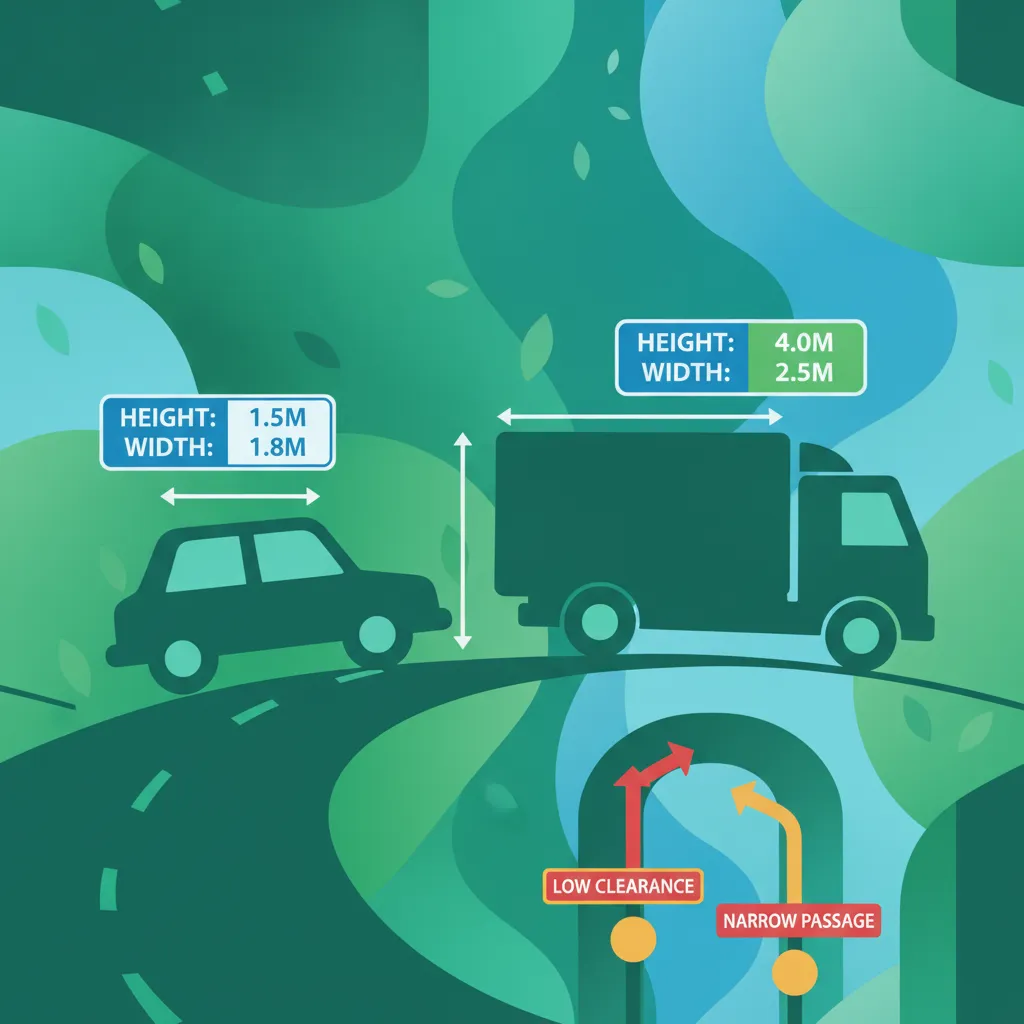
This lesson focuses on the specific dimensional limits that heavy goods vehicles must adhere to on Italian roads, as stipulated by the Codice della Strada. It covers the maximum permissible length, width, and height, explaining how these restrictions impact navigation through tunnels, under bridges, and within urban environments. Learners will also understand the conditions under which special permits for exceptional or oversized transport are required.

This lesson bridges the gap between general traffic laws and their specific application to heavy goods vehicles. It examines how rules regarding speed limits, lane discipline, overtaking, and priority are modified or have special considerations for trucks due to their size, weight, and reduced maneuverability. Drivers will learn to correctly interpret road signs and signals within the context of operating a large vehicle, ensuring safe and compliant integration with other traffic.

This lesson introduces the various electronic driver aids designed to improve visibility and safety during low-speed maneuvering. It covers the use of reversing cameras, blind-spot monitoring systems, and ultrasonic proximity sensors that provide visual and audible warnings. Learners will understand that while these technologies are valuable tools, they are aids to—not replacements for—the driver's own diligent observation and skill.

This lesson focuses on the specific regulations and techniques for operating a heavy vehicle on high-speed motorways. It covers mandatory lane discipline for trucks, the rules governing overtaking other heavy vehicles, and the specific speed limits that apply. Best practices for merging onto and exiting the motorway, maintaining safe following distances, and using the hard shoulder only in genuine emergencies are also detailed.

This lesson details the specific rules and safety considerations for driving through the extensive tunnels and high viaducts common in Italy. It covers pre-entry checks, maintaining a safe following distance, and the correct procedures to follow in case of a breakdown or fire inside a tunnel. The lesson also addresses the hazard of strong crosswinds on exposed viaducts and how to maintain vehicle control.

This lesson details the legal restrictions on the weight that can be supported by a single axle or a group of axles. It explains the importance of distributing the load correctly across the vehicle's length to prevent exceeding these limits, which can cause significant road damage and compromise vehicle safety. Learners will understand the relationship between load placement, axle pressure, and overall stability, particularly during braking and cornering.
Explore the Italian Codice della Strada regulations related to turning maneuvers for heavy vehicles. Understand common violations, complex scenarios, and the impact of environmental factors on safe driving.
This lesson focuses on the specific regulations and techniques for operating a heavy vehicle on high-speed motorways. It covers mandatory lane discipline for trucks, the rules governing overtaking other heavy vehicles, and the specific speed limits that apply. Best practices for merging onto and exiting the motorway, maintaining safe following distances, and using the hard shoulder only in genuine emergencies are also detailed.
This lesson details the specific rules and safety considerations for driving through the extensive tunnels and high viaducts common in Italy. It covers pre-entry checks, maintaining a safe following distance, and the correct procedures to follow in case of a breakdown or fire inside a tunnel. The lesson also addresses the hazard of strong crosswinds on exposed viaducts and how to maintain vehicle control.
This lesson explains how to execute left turns, right turns, and U-turns safely while maintaining correct lane discipline. It covers interpreting road markings and arrows, selecting the proper vehicle position, and using signals in a timely manner. Performing shoulder checks to monitor blind spots before and during a turn is a key focus for preventing collisions.
This lesson focuses on the specific dimensional limits that heavy goods vehicles must adhere to on Italian roads, as stipulated by the Codice della Strada. It covers the maximum permissible length, width, and height, explaining how these restrictions impact navigation through tunnels, under bridges, and within urban environments. Learners will also understand the conditions under which special permits for exceptional or oversized transport are required.
This lesson bridges the gap between general traffic laws and their specific application to heavy goods vehicles. It examines how rules regarding speed limits, lane discipline, overtaking, and priority are modified or have special considerations for trucks due to their size, weight, and reduced maneuverability. Drivers will learn to correctly interpret road signs and signals within the context of operating a large vehicle, ensuring safe and compliant integration with other traffic.

This lesson provides an in-depth focus on sharing the road with the most vulnerable users. It teaches drivers to be acutely aware of pedestrians at crossings, cyclists filtering through traffic, and motorcyclists who may be in blind spots. The lesson emphasizes the importance of leaving extra space, signaling intentions clearly, and exercising extreme caution at junctions, where the majority of serious incidents occur.
This lesson provides detailed instructions on how to correctly execute various turning maneuvers, including right turns, left turns, and U-turns where permitted. It emphasizes the importance of early signaling to communicate intentions, selecting the correct lane in advance, and adjusting speed before entering the turn. The content also covers the visual checks required before and during the maneuver to ensure it is safe to proceed.
This lesson details the legal restrictions on the weight that can be supported by a single axle or a group of axles. It explains the importance of distributing the load correctly across the vehicle's length to prevent exceeding these limits, which can cause significant road damage and compromise vehicle safety. Learners will understand the relationship between load placement, axle pressure, and overall stability, particularly during braking and cornering.
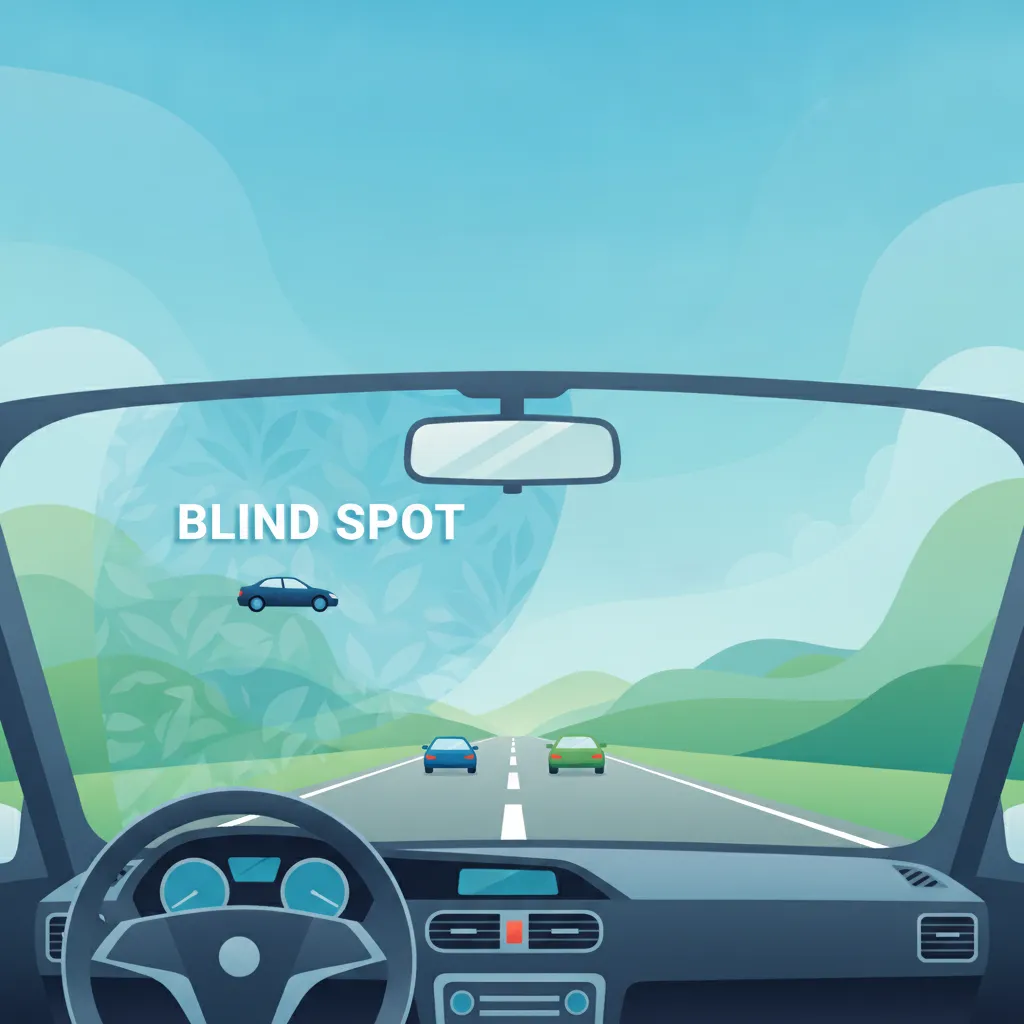
This lesson highlights the large blind spots—or 'no-zones'—that exist to the front, back, and sides of a heavy vehicle, where smaller vehicles, cyclists, and pedestrians can disappear from view. It teaches proactive scanning techniques, the importance of anticipating hazards, and how to use mirrors and direct vision effectively to manage these high-risk areas. Awareness and mitigation of blind spots are crucial for preventing collisions, especially in urban traffic.
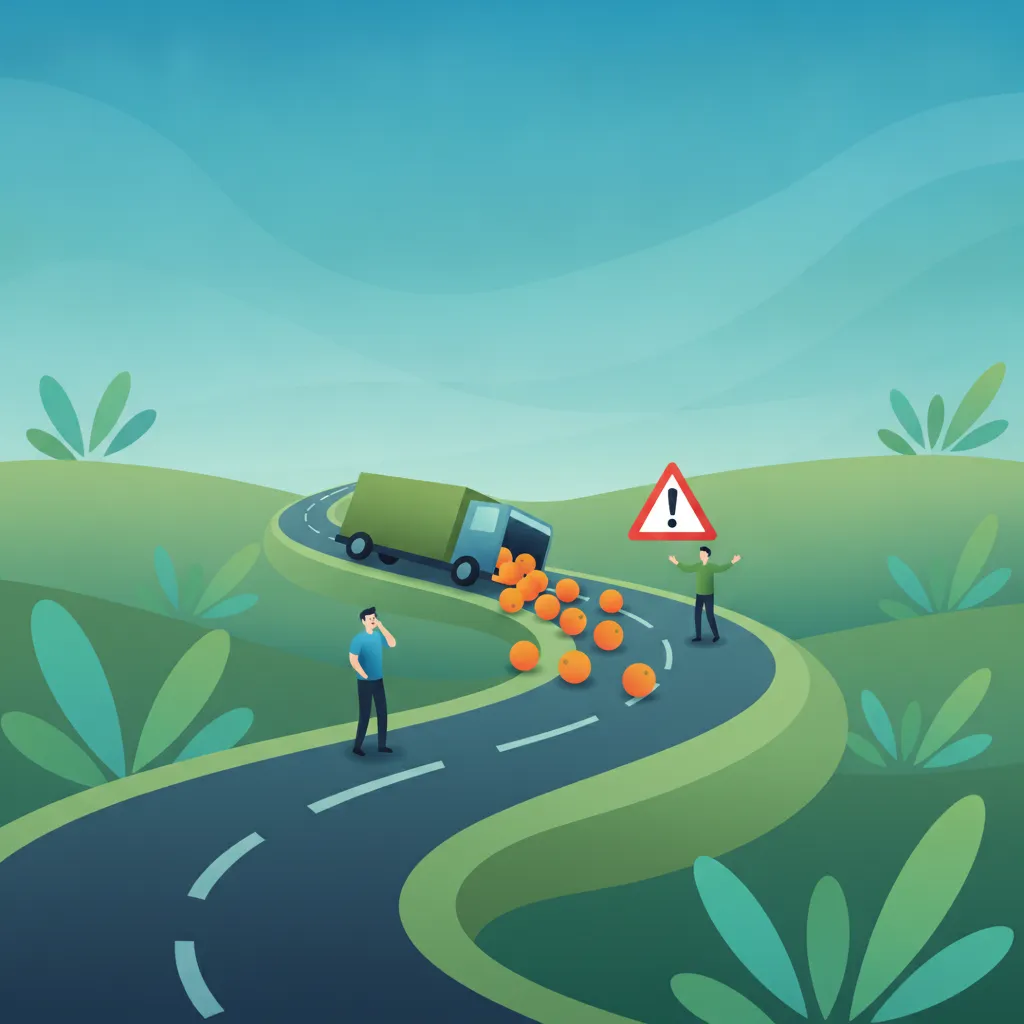
This lesson prepares drivers for incidents beyond a simple breakdown, such as losing part of the load onto the roadway or dealing with a spillage. It outlines the immediate priorities: ensuring personal safety, warning other traffic of the hazard, and notifying the authorities. The lesson also covers the fundamental principles of managing an accident scene, including protecting the area, assessing for casualties, and providing essential information to emergency services.
Find clear answers to common questions learners have about Turning Paths, Swept Path Analysis, and Minimum Turning Radius. Learn how the lesson is structured, which driving theory objectives it supports, and how it fits into the overall learning path of units and curriculum progression in Italy. These explanations help you understand key concepts, lesson flow, and exam focused study goals.
The turning radius usually refers to the path taken by the wheels, while the swept path refers to the entire area occupied by the vehicle body, mirrors, and trailer during a turn. As a professional driver, you must always account for the swept path to avoid hitting obstacles.
Off-tracking occurs because the rear wheels of a trailer follow a tighter path than the steering wheels of the tractor unit. In articulated vehicles, the combination of multiple pivot points causes the rear to track much further inward, necessitating a wider turn entry.
The exam often features scenarios involving complex junctions and urban environments. Understanding the physical limitations of your vehicle's turning path helps you identify correct versus incorrect positioning in multiple-choice questions.
Rear swing occurs when the tail of a vehicle or trailer swings outward in the opposite direction of the turn. This is a critical hazard, especially when turning near pedestrians, cyclists, or roadside infrastructure.
Start searching now to pinpoint exactly which Italian driving theory topics, road signs, or traffic rules you need to master. Use our advanced filters to build a custom practice session and ensure you're fully prepared for every aspect of your official driving licence exam.