
This lesson provides a step-by-step guide to the correct and safe execution of reversing maneuvers, a vital skill for both your Patente B practical safety and theoretical knowledge. You will learn to integrate consistent mirror use, effective blind-spot scanning, and slow, controlled movement to avoid common hazards. By mastering these basics, you prepare yourself for both the exam's situational questions and real-world urban driving.

Lesson content overview
Reversing a vehicle is a fundamental driving skill, yet it accounts for a significant proportion of road accidents, particularly those involving pedestrians and cyclists. For aspiring drivers preparing for the Italian Patente B theory test, understanding and executing safe reversing techniques is paramount. This lesson provides a comprehensive guide to mastering the art of backing up, focusing on systematic observation, precise vehicle control, and heightened awareness of all road users, in accordance with the Codice della Strada.
The act of reversing inherently limits a driver's forward visibility and expands blind zones, making it a high-risk maneuver if not performed with utmost caution. Accidents during reversing often result from overlooked obstacles, stationary objects, or, more tragically, vulnerable road users (VRUs) such as children, pedestrians, and cyclists who may be in the vehicle's path. Developing proficiency in reversing techniques not only reduces the risk of collisions but also ensures compliance with Italian road laws, which mandate extreme care during such maneuvers. Proper reversing skills build confidence and are crucial for various driving tasks, including parking, exiting driveways, and navigating tight spaces.
Effective and safe reversing relies on a set of core principles that integrate observation, control, and awareness. Adhering to these guidelines helps mitigate the inherent risks associated with moving a vehicle backward.
A comprehensive 360-degree check is the cornerstone of safe reversing. This involves a systematic visual sweep of your vehicle's entire surroundings—front, rear, left, and right sides—before initiating any backward movement. Its primary purpose is to identify any hazards that might not be immediately visible in your mirrors, such as children playing, parked vehicles, bollards, or approaching pedestrians and cyclists. Drivers must pause, perform this check thoroughly, and confirm that the path is clear before engaging reverse gear.
Vehicle mirrors (side mirrors and the rear-view mirror) are invaluable tools that extend your field of vision, helping you monitor lateral and rear zones without extensive head rotation. Proper adjustment of these mirrors is crucial to minimize blind spots and provide clear views of adjacent lanes and the area immediately behind your vehicle. Mirrors should be clean and correctly positioned before you start your journey and continuously checked during the reversing maneuver. However, mirrors are supplementary and do not replace direct observation.
While mirrors are helpful, direct observation by physically turning your head and shoulders to look through the rear windscreen is indispensable. Human vision offers superior clarity, depth perception, and a wider field of view compared to mirrors alone, making it essential for spotting small children, low obstacles, or fast-moving cyclists who might otherwise be missed. Drivers must avoid "tunnel vision" and ensure an unobstructed line of sight, performing periodic head checks while moving backward.
Controlled low-speed maneuvering is vital for safety when reversing. Moving backward at a slow, steady pace, typically not exceeding 5-10 km/h in urban environments, provides ample reaction time to identify and respond to unexpected hazards. This measured approach reduces the kinetic energy of the vehicle, significantly lowering the potential impact severity in case of an accidental collision. Drivers should keep their foot poised over the brake pedal, using gentle accelerator input only when necessary to maintain momentum.
Special vigilance for vulnerable road users (VRUs)—pedestrians, cyclists, and children—is paramount when reversing. These individuals are often less visible, more unpredictable, and at a higher risk of injury in a collision. VRUs frequently occupy vehicle blind spots and may not anticipate a vehicle reversing. Drivers must be prepared to yield to VRUs at driveways, crosswalks, and parking bay exits, ensuring their path is clear before proceeding.
Effective communication is key to preventing accidents. Using your vehicle's signaling devices, such as reverse lights and directional turn signals, alerts other road users to your intention to move backward or change direction. When backing out of a parking space or driveway, activating the appropriate turn signal (e.g., left signal if reversing to the left) further clarifies your maneuver. In situations of limited visibility or when you suspect unseen hazards, a brief, gentle tap of the horn can serve as an audible warning.
Mastering observation techniques is crucial for safe reversing, integrating both static pre-checks and dynamic continuous monitoring.
Before any backward movement, perform a static 360-degree check. This means stopping the vehicle, engaging the parking brake if necessary, and thoroughly scanning your entire surroundings—front, sides, and rear—for any potential hazards. Pay close attention to areas where children might play or where small objects could be hidden. Once you begin to move, transition to dynamic observation, continuously scanning your mirrors and turning your head periodically to monitor the evolving situation behind and to the sides of your vehicle. This continuous monitoring ensures you remain aware of any new hazards, such as a pedestrian suddenly walking behind your car or a cyclist approaching.
Stop: Bring your vehicle to a complete stop before initiating the reverse maneuver.
Initial Scan (Static): Look forward, check both side mirrors, glance at the rear-view mirror, then turn your head completely to look directly out the rear window over both shoulders. Actively scan for movement or obstacles.
Consider Blind Spots: Pay extra attention to potential blind spots where children, cyclists, or small objects might be obscured.
Signal Intent: Engage reverse gear (which activates reverse lights) and use appropriate turn signals if you will be reversing into a particular direction or lane.
Dynamic Scan (While Moving): As you begin to reverse slowly, continuously check your mirrors and periodically turn your head to maintain awareness of your surroundings.
To effectively use your vehicle's mirrors, ensure they are correctly adjusted for your seating position before you start driving. Your side mirrors should be angled so that you can just see a small sliver of your own vehicle's side, providing maximum view of the lanes beside you. The rear-view mirror should provide a clear view directly through the center of your rear window. Always keep mirrors clean and free from obstructions. When reversing, use your mirrors to quickly assess distances and spot larger approaching vehicles or obstacles. Remember that mirrors distort depth and distance, which is why direct observation is also essential.
Direct observation, achieved by physically turning your head and upper body to look through the rear windscreen, offers several advantages over mirrors. It provides a truer sense of depth and distance, helps you perceive smaller objects, and allows for a wider peripheral view, which is crucial for identifying hazards in immediate proximity to your vehicle. When reversing, make frequent, deliberate head turns over both shoulders to ensure your path is clear. Avoid simply "peeking" over your shoulder; a full turn is necessary to cover blind spots effectively.
Precision in steering and maintaining a controlled speed are fundamental to executing safe and accurate reversing maneuvers.
The key to safe reversing is maintaining a consistently slow speed. This gives you maximum time to react to unexpected situations and to make small, precise steering adjustments. In urban and residential areas, your speed should generally not exceed 5-10 km/h. To achieve this, use the clutch (in a manual transmission) or light brake pressure (in an automatic) to control your speed, only lightly pressing the accelerator if your vehicle struggles to move backward at idle speed. The goal is smooth, predictable movement, allowing you to stop instantly if necessary.
When reversing, use gentle and progressive brake applications. Abrupt braking can cause a sudden jolt, potentially unbalancing the vehicle or, in extreme cases, causing a skid, especially on slippery surfaces. Similarly, accelerator input should be minimal and smooth. Rapid acceleration while reversing can lead to a loss of control, making it difficult to correct your steering or stop in time. Always keep your foot poised over the brake pedal, ready to react.
The safety of pedestrians and cyclists must be a top priority when reversing, as they are particularly vulnerable to serious injury.
The Italian Codice della Strada explicitly grants priority to pedestrians at crosswalks (Art. 143) and generally expects drivers to yield to them in scenarios like entering or exiting driveways. When reversing into or across a sidewalk, driveway, or crosswalk, you must stop and yield to any pedestrians present in the area. Do not assume they will stop for you; it is your responsibility as the driver to ensure their safety. Wait until the path is completely clear before continuing your maneuver.
Cyclists can approach quickly and silently, often occupying blind spots alongside your vehicle or appearing unexpectedly. When reversing, be especially vigilant for cyclists, particularly when backing out of a parking space or driveway into a street. Before moving, thoroughly check your side mirrors and perform head turns to scan for approaching cyclists in the adjacent lane. If a cyclist is preparing to pass or is already in the vicinity, you must wait for them to pass safely before initiating or continuing your reverse maneuver. Failing to do so can lead to dangerous collisions, as cyclists may not anticipate a reversing vehicle.
The Italian Codice della Strada (Road Code) contains several articles that govern reversing techniques, emphasizing safety and responsibility. Understanding these regulations is crucial for all drivers holding or seeking an Italian Patente B.
Drivers must perform reversing maneuvers only when it does not endanger other road users and is carried out at a slow speed.
This article is a fundamental principle, mandating that you only reverse when it is safe to do so, without posing a risk to anyone else. It directly implies the need for comprehensive observation and speed control. Reversing into a blind spot without first checking for traffic or pedestrians would be a clear violation.
Vehicles must be equipped with mirrors and drivers must use them to observe the rear part of the vehicle, adjusting them properly.
Article 149 ensures that vehicles have the necessary equipment for rearward visibility and requires drivers to actively use and maintain them. Before every journey, and certainly before any reversing maneuver, ensure your mirrors are clean and correctly adjusted to minimize blind spots. Failing to use adjusted mirrors can be interpreted as negligent driving.
The use of signal lights is required when changing direction, including reversing out of a lane or parking space.
While reverse lights automatically activate when you engage reverse gear, Article 151 extends this to turn signals when your reversing maneuver involves a directional change. For example, if you are backing out of a perpendicular parking spot and intend to turn left, activating your left turn signal alerts drivers behind you and those on the main thoroughfare of your intended path.
Drivers must give way to pedestrians at crosswalks, which includes when reversing into or across them.
This article reinforces the paramount importance of pedestrian safety. If your reversing path crosses a pedestrian walkway or sidewalk, you are legally obliged to yield to any pedestrians. Starting to reverse while a pedestrian is still on the crosswalk or about to enter it is a violation of their right-of-way and a dangerous maneuver.
Awareness of common errors can significantly improve your reversing safety. Many accidents occur due to preventable mistakes.
Safe reversing is not a one-size-fits-all skill; it requires adaptation to varying environmental and vehicle conditions.
Adverse weather conditions significantly impair visibility and traction, making reversing more challenging.
The context of your reversing maneuver dictates the level of caution required.
A vehicle's characteristics can alter its reversing dynamics.
Modern vehicles often come equipped with reversing cameras and parking sensors. While these technologies are valuable aids, they are supplements, not replacements, for manual observation.
The principles of safe reversing are rooted in both physics and human psychology.
To ensure safety and comply with Italian driving regulations, remember these crucial points for any reversing maneuver:
By consistently applying these techniques, you will significantly reduce the risk of accidents and demonstrate competence as a responsible driver under Italian law.
Safe reversing requires a systematic approach combining thorough 360-degree observation with controlled low-speed movement. The Codice della Strada mandates specific precautions: using mirrors correctly (Art. 149), signaling direction changes (Art. 151), and yielding to vulnerable road users at crosswalks (Art. 143). A complete 360-degree check must transition from static to dynamic observation as you reverse. The primary dangers involve pedestrians and cyclists occupying blind spots, making slow, controlled movement and continuous monitoring essential for both passing the theory exam and real-world driving safety.
A short set of high-value points that capture the most important learning from this lesson.
A full 360-degree check using both mirrors and direct head rotation is essential before and during any reversing maneuver
Pedestrians and cyclists always have priority at crosswalks and driveways when reversing
Controlled low speed (5-10 km/h maximum in urban areas) provides maximum reaction time
Mirrors must be correctly adjusted and clean before driving as a legal requirement under Art. 149
Technology like reversing cameras and sensors supplements but never replaces manual observation
Explore all units and lessons included in this driving theory course.
Perform static observation first (vehicle stopped), then dynamic observation while moving backward
Turn signals must be used when reversing out of a lane or parking space involves a directional change
Children playing near driveways and cyclists approaching silently are the most unpredictable blind spot hazards
Reverse lights activate automatically when engaging reverse gear, but turn signals clarify intended path
In adverse weather, reduce speed further and increase observation frequency substantially
Relying only on mirrors without turning head for direct observation over both shoulders
Failing to yield to pedestrians at crosswalks or driveways during reversing maneuvers
Reversing at excessive speed, which reduces reaction time and increases collision severity
Not checking blind spots thoroughly where small children or cyclists may be hidden
Assuming parking sensors or cameras eliminate the need for manual observation and head checks
Lesson content overview
A short set of high-value points that capture the most important learning from this lesson.
A full 360-degree check using both mirrors and direct head rotation is essential before and during any reversing maneuver
Pedestrians and cyclists always have priority at crosswalks and driveways when reversing
Controlled low speed (5-10 km/h maximum in urban areas) provides maximum reaction time
Mirrors must be correctly adjusted and clean before driving as a legal requirement under Art. 149
Technology like reversing cameras and sensors supplements but never replaces manual observation
Explore all units and lessons included in this driving theory course.
Perform static observation first (vehicle stopped), then dynamic observation while moving backward
Turn signals must be used when reversing out of a lane or parking space involves a directional change
Children playing near driveways and cyclists approaching silently are the most unpredictable blind spot hazards
Reverse lights activate automatically when engaging reverse gear, but turn signals clarify intended path
In adverse weather, reduce speed further and increase observation frequency substantially
Relying only on mirrors without turning head for direct observation over both shoulders
Failing to yield to pedestrians at crosswalks or driveways during reversing maneuvers
Reversing at excessive speed, which reduces reaction time and increases collision severity
Not checking blind spots thoroughly where small children or cyclists may be hidden
Assuming parking sensors or cameras eliminate the need for manual observation and head checks
Explore search topics learners often look for when studying Reversing Techniques and Safety Checks. These topics reflect common questions about road rules, driving situations, safety guidance, and lesson level theory preparation for learners in Italy.
Browse additional driving theory lessons that cover connected traffic rules, road signs, and common driving situations related to this topic. Improve your understanding of how different rules interact across everyday traffic scenarios.
Understand how to safely reverse a vehicle in Italy. Learn essential observation techniques, mirror usage, and how to manage blind spots to avoid collisions with pedestrians and cyclists, as per the Codice della Strada.

This lesson teaches the safe and systematic procedure for changing lanes. It covers the essential sequence of actions: signaling the intention, checking mirrors, performing a shoulder check to cover the blind spot, and then executing a smooth maneuver into the adjacent lane. The content stresses the need to judge the speed and distance of other vehicles to ensure a safe gap before initiating the lane change.

This lesson explains the critical importance of a continuous and systematic visual scan for maintaining 360-degree awareness around the vehicle. It details the correct technique for using interior and exterior mirrors in conjunction with direct vision and shoulder checks to effectively identify hazards. The content emphasizes the need to be aware of blind spots before any maneuver, such as changing lanes or turning.

This lesson provides comprehensive guidance on the rules and best practices for safe overtaking. It explains how to assess whether it is legal and safe to pass, considering road markings, signs, and the distance of oncoming traffic. The content details the correct procedure, including signaling, accelerating, maintaining a safe distance during the maneuver, and returning to the original lane safely.

This lesson introduces the philosophy and techniques of defensive driving, a proactive approach focused on anticipating and mitigating potential hazards. It teaches drivers to maintain constant situational awareness by scanning the road ahead, behind, and to the sides. The content covers how to manage the space around the vehicle, identify potential escape routes, and predict the actions of other road users to prevent dangerous situations from developing.
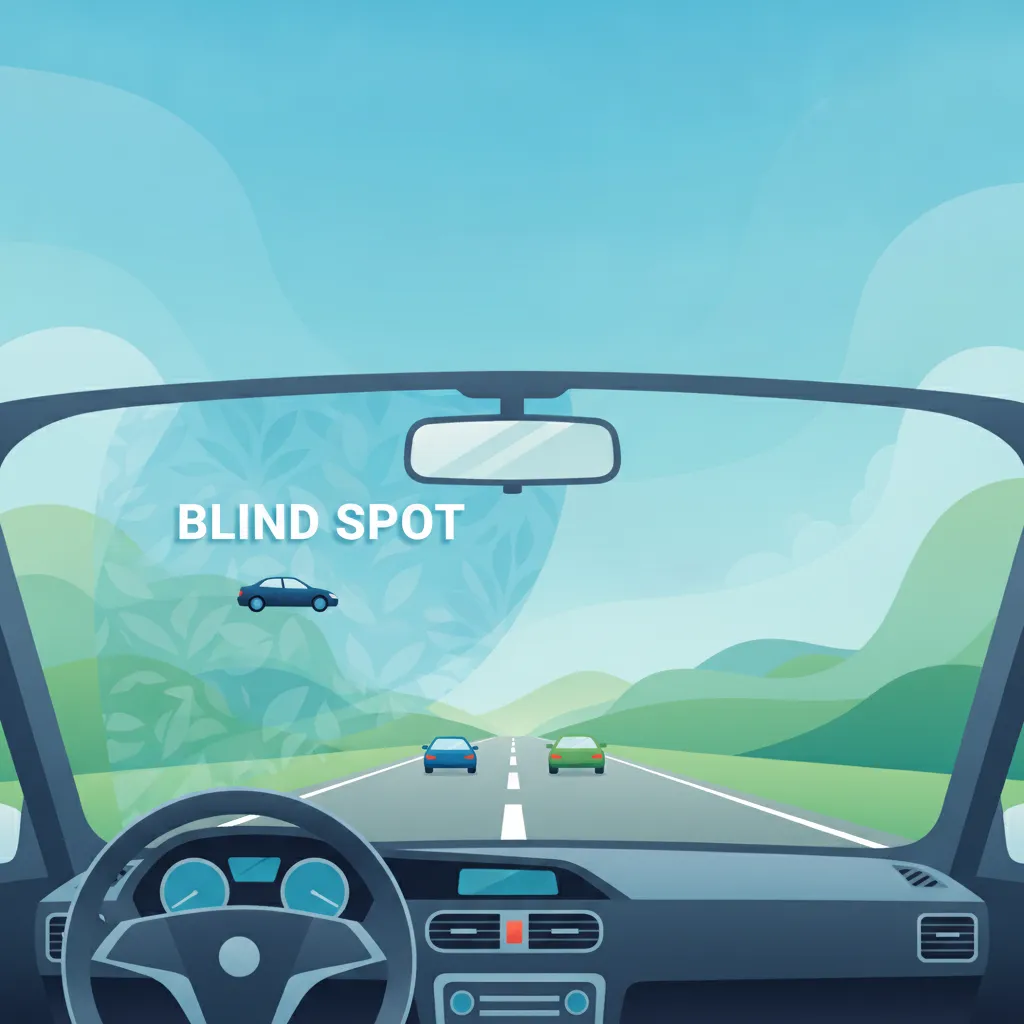
This lesson highlights the large blind spots—or 'no-zones'—that exist to the front, back, and sides of a heavy vehicle, where smaller vehicles, cyclists, and pedestrians can disappear from view. It teaches proactive scanning techniques, the importance of anticipating hazards, and how to use mirrors and direct vision effectively to manage these high-risk areas. Awareness and mitigation of blind spots are crucial for preventing collisions, especially in urban traffic.

This lesson introduces the various electronic driver aids designed to improve visibility and safety during low-speed maneuvering. It covers the use of reversing cameras, blind-spot monitoring systems, and ultrasonic proximity sensors that provide visual and audible warnings. Learners will understand that while these technologies are valuable tools, they are aids to—not replacements for—the driver's own diligent observation and skill.

This lesson explains how to execute left turns, right turns, and U-turns safely while maintaining correct lane discipline. It covers interpreting road markings and arrows, selecting the proper vehicle position, and using signals in a timely manner. Performing shoulder checks to monitor blind spots before and during a turn is a key focus for preventing collisions.

This lesson addresses two key aspects of defensive riding: maintaining a safe buffer and performing overtaking maneuvers. It details how to use time-based rules, such as the two-second rule, to ensure adequate following distance for reaction. The content also provides a structured approach to overtaking, covering observation, signalling, speed management, and ensuring sufficient clearance before returning to the lane.

This lesson provides an in-depth focus on sharing the road with the most vulnerable users. It teaches drivers to be acutely aware of pedestrians at crossings, cyclists filtering through traffic, and motorcyclists who may be in blind spots. The lesson emphasizes the importance of leaving extra space, signaling intentions clearly, and exercising extreme caution at junctions, where the majority of serious incidents occur.

This lesson addresses the increased complexity of overtaking in urban environments with dense traffic and frequent intersections. It stresses the importance of thorough observation, including mirror and blind spot checks, to ensure a safe gap is available. The content covers judging speed differentials and the necessity of clear signalling to execute the maneuver without causing conflict with other road users.
Learn the critical rules for yielding to pedestrians and cyclists when performing maneuvers like reversing. Understand your legal obligations to protect vulnerable road users in Italian traffic scenarios.
This lesson provides critical guidance on how to safely share the road with vulnerable users, including pedestrians, cyclists, motorcyclists, and children. It highlights the importance of increased awareness in specific areas like school zones and crosswalks. The content teaches techniques for maintaining a safe lateral distance when overtaking, checking blind spots thoroughly, and anticipating the often unpredictable movements of these users.
This lesson provides an in-depth focus on sharing the road with the most vulnerable users. It teaches drivers to be acutely aware of pedestrians at crossings, cyclists filtering through traffic, and motorcyclists who may be in blind spots. The lesson emphasizes the importance of leaving extra space, signaling intentions clearly, and exercising extreme caution at junctions, where the majority of serious incidents occur.

This lesson focuses on the crucial rule for navigating uncontrolled intersections in Italy: yielding to vehicles approaching from the right (precedenza a destra). It explains how to apply this default rule when no signs or signals are present to direct traffic flow. Learners will understand how to approach these junctions with caution, assess traffic, and proceed safely, while also learning about the few exceptions to this rule.

This lesson delivers a comprehensive explanation of right-of-way regulations at Italian intersections. It covers the interpretation of traffic light signals, the absolute requirement to stop at stop signs, and yielding at give-way signs. Furthermore, it details the default priority rules for unmarked intersections and the specific obligations a rider has towards pedestrians on crossings.

This lesson focuses on the driver's responsibility to protect pedestrians, especially at designated crossings (strisce pedonali). It reinforces the legal requirement to yield to pedestrians who are on or about to enter a crosswalk. The content also covers the importance of reducing speed and increasing vigilance in urban areas, school zones, and other places with high pedestrian activity.
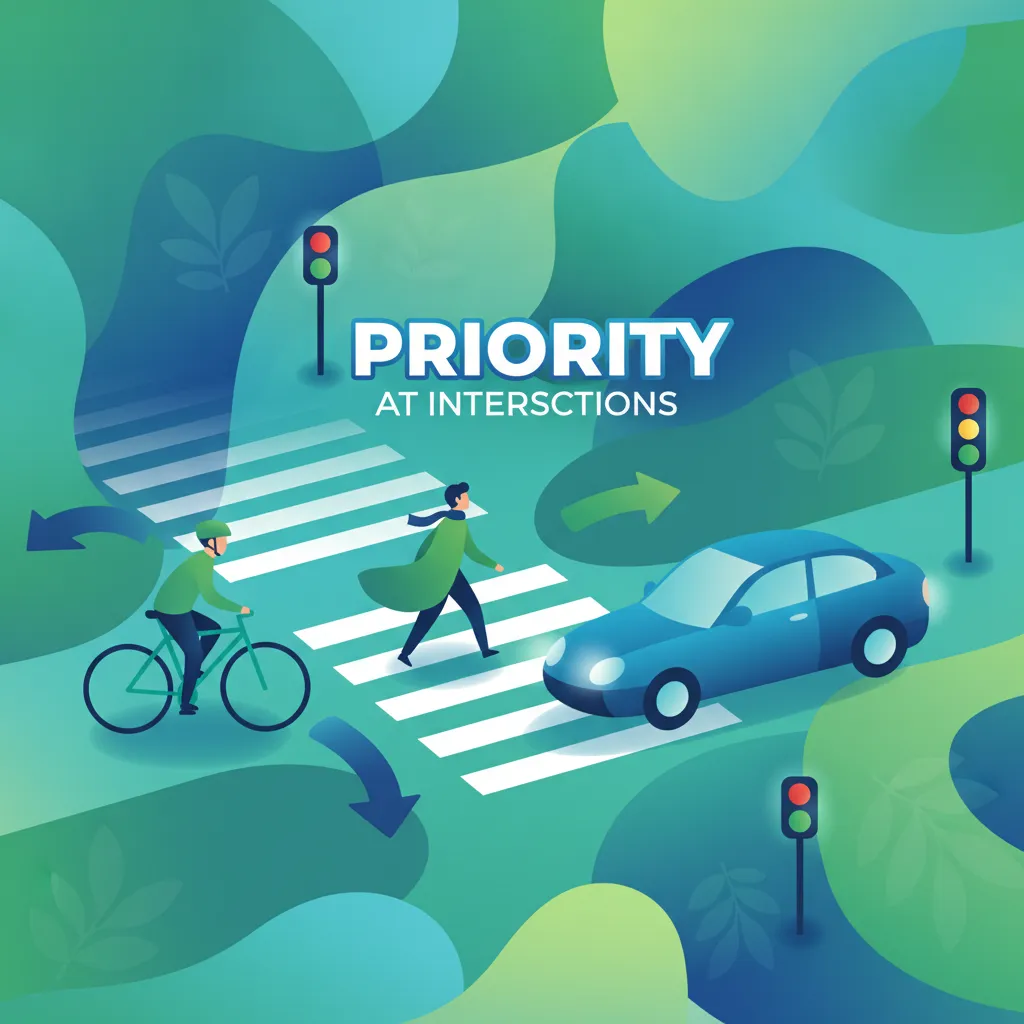
This lesson covers the general principles of priority at intersections governed by traffic signs and signals. It explains how to identify a priority road and the obligation to yield to traffic when encountering a 'dare la precedenza' (yield) or stop sign. The content also reviews the hierarchy of authority, where signals from a traffic officer override all other signs and lights.

This lesson clarifies the special priority rules for emergency vehicles and public transport. It explains the legal obligation to safely pull over and clear a path for any vehicle with active sirens and flashing lights. The content also details the absolute right-of-way that trams have in most situations and the requirement to yield to public buses signaling to pull out from a stop.

This lesson explains the fundamental principles of right of way that govern interactions between different types of road users in Italy. It clarifies the legal precedence at intersections, pedestrian crossings, and when interacting with public transport like buses and trams. The content also details the absolute priority given to emergency vehicles and how to safely yield in accordance with the Codice della Strada.

This lesson provides a detailed explanation of the priority rules that govern Italian intersections and roundabouts. You will learn to identify priority roads and correctly apply the rules for stop and give way signs. It also covers the specific procedures for entering, navigating, and exiting roundabouts, emphasizing when to yield to circulating traffic.

This lesson addresses the critical responsibility of protecting vulnerable road users, such as pedestrians, cyclists, and motorcyclists, who are most at risk in a collision with a heavy vehicle. It teaches drivers to be hyper-aware in urban settings, to anticipate the unpredictable movements of VRUs, and to provide ample space, especially when turning at junctions. A key focus is on scanning for VRUs in blind spots before moving off or making any maneuver.
Find clear answers to common questions learners have about Reversing Techniques and Safety Checks. Learn how the lesson is structured, which driving theory objectives it supports, and how it fits into the overall learning path of units and curriculum progression in Italy. These explanations help you understand key concepts, lesson flow, and exam focused study goals.
Before engaging reverse gear, you must perform a 360-degree visual scan, checking all mirrors and your blind spots, including turning your head to look through the rear and side windows. This ensures there are no pedestrians, cyclists, or obstacles in your immediate path that mirrors might miss.
Yes, if your maneuver involves steering or changing your lateral position on the road, you must signal your intentions to other road users. Always use your indicators to communicate your path of travel to nearby drivers or pedestrians.
Maintaining a very slow, controlled speed is critical because it gives you more reaction time to stop if a person or vehicle unexpectedly enters your path. It also allows for smoother steering corrections, ensuring you maintain a predictable path.
No, you should never reverse on a one-way street to correct a missed turn, as this is highly dangerous and illegal. You should continue to the next junction or safe area to find an alternative route.
Start searching now to pinpoint exactly which Italian driving theory topics, road signs, or traffic rules you need to master. Use our advanced filters to build a custom practice session and ensure you're fully prepared for every aspect of your official driving licence exam.