
This lesson details the critical rules and procedures for performing safe overtaking maneuvers on Italian roads. By understanding the interaction between road signs, markings, and vehicle positioning, you will learn how to make informed decisions that ensure safety for yourself and other road users.

Lesson content overview
Overtaking, known as "sorpasso" in Italian, is one of the most complex and potentially dangerous maneuvers a driver performs. Executed incorrectly, it is a leading cause of severe head-on collisions and other serious accidents on Italian roads. This lesson provides comprehensive guidance on the rules and best practices for safe overtaking, ensuring compliance with the Codice della Strada and promoting defensive driving.
To safely and legally overtake, drivers must develop a systematic approach. This involves a thorough assessment of road conditions, traffic, legal restrictions, and their vehicle's capabilities. Mastery of these procedures is fundamental not only for passing the Italian Patente B theory test but, more importantly, for ensuring your safety and the safety of other road users in real-world driving scenarios.
The fundamental principle of overtaking in Italy is that it is only permitted when it can be done safely and legally. This requires a clear understanding of specific road markings, traffic signs, and prevailing conditions. Ignoring these legal guidelines can lead to severe penalties, including fines, penalty points on your license, and, most critically, dangerous driving situations.
Road markings are crucial visual cues that dictate where overtaking is allowed. Drivers must always be attentive to these indicators, as they communicate the safety and legality of a pass based on road design, visibility, and potential hazards.
On a two-way road, overtaking is generally permitted when the road surface features a broken white line on your side of the carriageway. This broken line signals that it is safe to cross into the adjacent lane to perform a pass, provided all other conditions (visibility, oncoming traffic, speed) are met. Conversely, if there is a solid white line on your side, overtaking is prohibited, as it indicates a section of the road where crossing the line would be unsafe, often due to curves, hills, or intersections.
Certain traffic signs also regulate overtaking. The "Sorpasso Consentito" sign indicates the beginning of a section where overtaking is specifically allowed, usually a straight stretch with good visibility. This sign often appears after a "Divieto di sorpasso" zone, signaling the return to normal overtaking rules.
The Codice della Strada strictly prohibits overtaking in specific high-risk situations to prevent collisions and maintain traffic order. These prohibitions are absolute and must always be respected, regardless of how slow the vehicle ahead may be.
Attempting to overtake in prohibited areas is not only illegal but extremely dangerous, significantly increasing the risk of severe accidents.
Overtaking is forbidden in the following critical locations:
While standard European practice dictates overtaking on the left, the Codice della Strada permits overtaking on the right under specific, limited circumstances. This exception is designed to maintain traffic flow rather than encourage general right-side passing.
You may overtake a vehicle on its right-hand side when:
Overtaking on the right is prohibited on two-way roads unless the vehicle ahead is signaling a left turn. Always exercise extreme caution and ensure clear visibility before attempting to pass on the right.
Executing a safe overtaking maneuver is a sequence of precise actions that must be performed systematically. Skipping any step or performing it incorrectly can lead to dangerous situations. This procedure is crucial for Patente B drivers.
Before even considering moving into another lane, a thorough assessment is paramount. This initial phase involves gathering critical information to determine if overtaking is legal, safe, and feasible.
Assess Legality and Road Conditions: Verify that road markings (broken lines), traffic signs (no "Divieto di sorpasso"), and local regulations permit overtaking. Check the road ahead for any potential hazards such as junctions, pedestrian crossings, or curves with limited visibility. Ensure the road surface is in good condition.
Check Mirrors: Use your rear-view and side mirrors to confirm that no vehicle behind you has already started an overtaking maneuver or is approaching at a high speed. This prevents you from cutting off another driver.
Check Blind Spots: Glance quickly over your left shoulder (a "shoulder check") to identify any vehicles or vulnerable road users (like motorcycles or bicycles) that may be in your blind spot – an area not visible in your mirrors. This is a critical step before any lateral movement.
Signal Intent: Activate your left turn signal for at least seconds before you intend to move into the overtaking lane. This communicates your intention to other drivers, giving them time to react.
Evaluate Oncoming Traffic and Space: Critically assess the distance and speed of any oncoming traffic. You must have ample time and space to complete the entire maneuver and return to your lane safely before encountering oncoming vehicles. Also, ensure there is sufficient clear road ahead to complete the pass without needing to brake or excessively speed up.
Once the assessment confirms it is safe and legal to proceed, the actual execution of the pass begins. Precision and control are key during this phase.
Accelerate Smoothly: Increase your speed sufficiently to pass the slower vehicle quickly and efficiently, but always remain within the posted speed limits. Do not accelerate aggressively, but aim for a steady increase that allows you to gain a significant speed differential.
Move into the Adjacent Lane: Steer smoothly into the overtaking lane. Maintain a safe lateral distance from the vehicle you are passing. Avoid driving too close to it, which could intimidate the other driver or create a side-swipe risk.
Maintain Speed and Distance: Continue accelerating to pass the vehicle fully. Do not slow down or hesitate during the maneuver. Keep an eye on the overtaken vehicle in your right-side mirror.
The overtaking maneuver is not complete until you have safely returned to your original lane without creating a hazard for the vehicle you just passed.
Ensure Safe Clearance: Once you can see the entire front of the overtaken vehicle in your rear-view mirror, you have achieved a safe distance to begin returning to your lane. A common guideline is to ensure you are at least meters ahead of the overtaken vehicle before returning.
Signal Right: Activate your right turn signal to indicate your intention to move back into your original lane.
Check Mirrors and Blind Spots Again: Perform a final check of your right-side mirror and a quick glance over your right shoulder (blind spot check) to confirm that the lane is clear and there are no other vehicles or obstacles.
Steer Smoothly Back: Gently steer back into your original lane. Avoid sharp or sudden movements that could cut off the overtaken vehicle or cause them to brake.
Cancel Signal: Once safely back in your lane, cancel your right turn signal.
Overtaking rules and practices can vary significantly depending on the type of road, the presence of vulnerable users, and environmental conditions. Adapting your strategy is key to safe driving.
Motorways (autostrade) and dual carriageways (superstrade) are designed for high-speed traffic and have specific overtaking protocols to maintain safety and efficiency.
Overtaking on the right on a motorway, when not explicitly permitted (e.g., vehicle turning left), is a serious violation and highly dangerous due to high speeds.
When overtaking vulnerable road users such as cyclists (ciclisti) or motorcyclists (motociclisti), extra caution and a greater safety margin are required. These users are unprotected and much more susceptible to serious injury in a collision.
Adverse weather conditions significantly increase the risks associated with overtaking. Reduced visibility and decreased road grip demand a more conservative approach.
Overtaking large or heavy vehicles, or those towing trailers, presents unique challenges that require specific considerations.
Beyond legal requirements and procedural steps, a deep understanding of core safety principles underpins responsible overtaking. These principles are rooted in physics, human factors, and defensive driving philosophy.
Before initiating an overtaking maneuver, maintaining a safe following distance is critical. This "distanza di sicurezza" provides the necessary space and time to react if the vehicle ahead suddenly brakes or if conditions change.
Blind spots are areas around your vehicle that cannot be seen using your mirrors. Failing to check these spots is a major cause of collisions during lane changes and overtaking.
Overtaking requires increasing your speed, but this must always be done responsibly and within legal limits.
Understanding the underlying physics and human factors involved in overtaking can enhance your decision-making and safety.
Familiarity with common overtaking violations can help Patente B drivers avoid mistakes that lead to fines, penalty points, or, worse, accidents.
Successfully mastering safe overtaking practices under the Italian Patente B framework requires not only memorizing rules but also developing sound judgment and a responsible driving attitude. By diligently applying these principles and understanding the reasoning behind them, you will significantly enhance your safety and the safety of everyone on the road.
Safe overtaking (sorpasso) in Italy is governed by the Codice della Strada and requires understanding specific road markings, prohibited locations, and a systematic three-step procedure: pre-assessment (mirrors, blind spots, signaling, visibility check), execution (smooth acceleration and lane change), and safe return (mirror check, right signal, blind spot check). Overtaking is absolutely forbidden at pedestrian crossings, intersections, railway crossings, curves, hilltops, tunnels, and anywhere solid double lines exist. Special rules apply on motorways (left-lane overtaking only) and when passing vulnerable users (minimum 1.5-meter lateral clearance for cyclists and motorcyclists). The most critical mistakes to avoid include cutting in too early, failing blind spot checks, and attempting overtakes in poor visibility conditions.
A short set of high-value points that capture the most important learning from this lesson.
Overtaking (sorpasso) is only permitted when it can be done safely and legally, considering road markings, signs, and visibility
Solid double lines and solid white lines prohibit overtaking; broken white lines permit it when all other safety conditions are met
Overtaking is strictly forbidden at pedestrian crossings, intersections, railway crossings, curves, hilltops, and tunnels
Always overtake on the left in Italy; overtaking on the right is only permitted when the vehicle ahead is signaling a left turn on a multi-lane road
A systematic approach—mirror check, blind spot check, signal, and visibility assessment—must precede any overtaking maneuver
Explore all units and lessons included in this driving theory course.
The 'Divieto di sorpasso' sign explicitly prohibits overtaking and takes precedence over road markings
Maintain a minimum lateral distance of 1.5 meters when overtaking vulnerable road users such as cyclists and motorcyclists
Use the two-second rule for following distance and extend it significantly in adverse weather conditions
Never overtake on curves or hilltops where sight distance is insufficient to complete the pass safely
On motorways, use the left lane for overtaking and return to the rightmost lane once the pass is complete
Cutting back into the original lane too close behind the overtaken vehicle, forcing them to brake
Failing to perform a shoulder check to verify blind spots before moving into the adjacent lane
Overtaking cyclists or motorcyclists without maintaining the required 1.5-meter lateral distance
Attempting to overtake on curves or hilltops due to insufficient visibility and risk of head-on collision
Exceeding speed limits to complete an overtaking maneuver when it cannot be done safely within the limit
Lesson content overview
A short set of high-value points that capture the most important learning from this lesson.
Overtaking (sorpasso) is only permitted when it can be done safely and legally, considering road markings, signs, and visibility
Solid double lines and solid white lines prohibit overtaking; broken white lines permit it when all other safety conditions are met
Overtaking is strictly forbidden at pedestrian crossings, intersections, railway crossings, curves, hilltops, and tunnels
Always overtake on the left in Italy; overtaking on the right is only permitted when the vehicle ahead is signaling a left turn on a multi-lane road
A systematic approach—mirror check, blind spot check, signal, and visibility assessment—must precede any overtaking maneuver
Explore all units and lessons included in this driving theory course.
The 'Divieto di sorpasso' sign explicitly prohibits overtaking and takes precedence over road markings
Maintain a minimum lateral distance of 1.5 meters when overtaking vulnerable road users such as cyclists and motorcyclists
Use the two-second rule for following distance and extend it significantly in adverse weather conditions
Never overtake on curves or hilltops where sight distance is insufficient to complete the pass safely
On motorways, use the left lane for overtaking and return to the rightmost lane once the pass is complete
Cutting back into the original lane too close behind the overtaken vehicle, forcing them to brake
Failing to perform a shoulder check to verify blind spots before moving into the adjacent lane
Overtaking cyclists or motorcyclists without maintaining the required 1.5-meter lateral distance
Attempting to overtake on curves or hilltops due to insufficient visibility and risk of head-on collision
Exceeding speed limits to complete an overtaking maneuver when it cannot be done safely within the limit
Explore search topics learners often look for when studying Safe Overtaking Practices. These topics reflect common questions about road rules, driving situations, safety guidance, and lesson level theory preparation for learners in Italy.
Browse additional driving theory lessons that cover connected traffic rules, road signs, and common driving situations related to this topic. Improve your understanding of how different rules interact across everyday traffic scenarios.
Explore advanced Italian overtaking rules and procedures for special road situations. Learn when and where overtaking is forbidden, including complex scenarios and specific road types, to ensure safe driving and compliance with the Codice della Strada.

This lesson addresses the increased complexity of overtaking in urban environments with dense traffic and frequent intersections. It stresses the importance of thorough observation, including mirror and blind spot checks, to ensure a safe gap is available. The content covers judging speed differentials and the necessity of clear signalling to execute the maneuver without causing conflict with other road users.

This lesson addresses two key aspects of defensive riding: maintaining a safe buffer and performing overtaking maneuvers. It details how to use time-based rules, such as the two-second rule, to ensure adequate following distance for reaction. The content also provides a structured approach to overtaking, covering observation, signalling, speed management, and ensuring sufficient clearance before returning to the lane.
This lesson provides essential rules and techniques for driving on Italian motorways (autostrade) and major extra-urban roads. It explains how to safely merge onto the motorway from an entry ramp, the strict lane discipline required (drive right, overtake left), and how to exit correctly. The content also covers speed regulations, maintaining a safe following distance at high speed, and procedures for using service areas and handling emergencies.

This lesson delivers a comprehensive explanation of right-of-way regulations at Italian intersections. It covers the interpretation of traffic light signals, the absolute requirement to stop at stop signs, and yielding at give-way signs. Furthermore, it details the default priority rules for unmarked intersections and the specific obligations a rider has towards pedestrians on crossings.
This lesson provides a comprehensive guide to riding on high-speed motorways, or autostrade. It details the correct procedures for safely merging into traffic from an entry ramp and exiting via a deceleration lane. The content reinforces strict lane discipline, rules for overtaking, and the importance of maintaining a significantly larger following distance to compensate for higher speeds and potential wind gusts.

This lesson clarifies the special priority rules for emergency vehicles and public transport. It explains the legal obligation to safely pull over and clear a path for any vehicle with active sirens and flashing lights. The content also details the absolute right-of-way that trams have in most situations and the requirement to yield to public buses signaling to pull out from a stop.

This lesson focuses on the specific regulations and techniques for operating a heavy vehicle on high-speed motorways. It covers mandatory lane discipline for trucks, the rules governing overtaking other heavy vehicles, and the specific speed limits that apply. Best practices for merging onto and exiting the motorway, maintaining safe following distances, and using the hard shoulder only in genuine emergencies are also detailed.

This lesson provides a detailed explanation of the priority rules that govern Italian intersections and roundabouts. You will learn to identify priority roads and correctly apply the rules for stop and give way signs. It also covers the specific procedures for entering, navigating, and exiting roundabouts, emphasizing when to yield to circulating traffic.

This lesson provides an in-depth focus on sharing the road with the most vulnerable users. It teaches drivers to be acutely aware of pedestrians at crossings, cyclists filtering through traffic, and motorcyclists who may be in blind spots. The lesson emphasizes the importance of leaving extra space, signaling intentions clearly, and exercising extreme caution at junctions, where the majority of serious incidents occur.
This lesson covers the general principles of priority at intersections governed by traffic signs and signals. It explains how to identify a priority road and the obligation to yield to traffic when encountering a 'dare la precedenza' (yield) or stop sign. The content also reviews the hierarchy of authority, where signals from a traffic officer override all other signs and lights.
Understand proper vehicle positioning and safe execution of driving maneuvers in Italy. This lesson covers lane discipline, safe lane changes, turning procedures, and how these relate to safe overtaking and general road safety according to the Codice della Strada.

This lesson focuses on the principles of correct vehicle positioning to enhance safety and stability. It teaches how to maintain a central position within the lane and how to adjust this position to navigate curves, prepare for turns, or create more space from potential hazards. Understanding how to adapt to the road's geometry is crucial for smooth and safe driving.

This lesson explains how to execute left turns, right turns, and U-turns safely while maintaining correct lane discipline. It covers interpreting road markings and arrows, selecting the proper vehicle position, and using signals in a timely manner. Performing shoulder checks to monitor blind spots before and during a turn is a key focus for preventing collisions.

This lesson teaches the safe and systematic procedure for changing lanes. It covers the essential sequence of actions: signaling the intention, checking mirrors, performing a shoulder check to cover the blind spot, and then executing a smooth maneuver into the adjacent lane. The content stresses the need to judge the speed and distance of other vehicles to ensure a safe gap before initiating the lane change.
This lesson provides detailed instructions on how to correctly execute various turning maneuvers, including right turns, left turns, and U-turns where permitted. It emphasizes the importance of early signaling to communicate intentions, selecting the correct lane in advance, and adjusting speed before entering the turn. The content also covers the visual checks required before and during the maneuver to ensure it is safe to proceed.

This lesson explains the principles of maintaining proper lane discipline and strategic positioning in an urban context. It covers how to adapt your position within the lane to enhance visibility, avoid road surface hazards, and prepare for turns or lane changes. The content also provides awareness of specific urban features like restricted traffic zones (ZTL) and how to navigate them legally and safely.
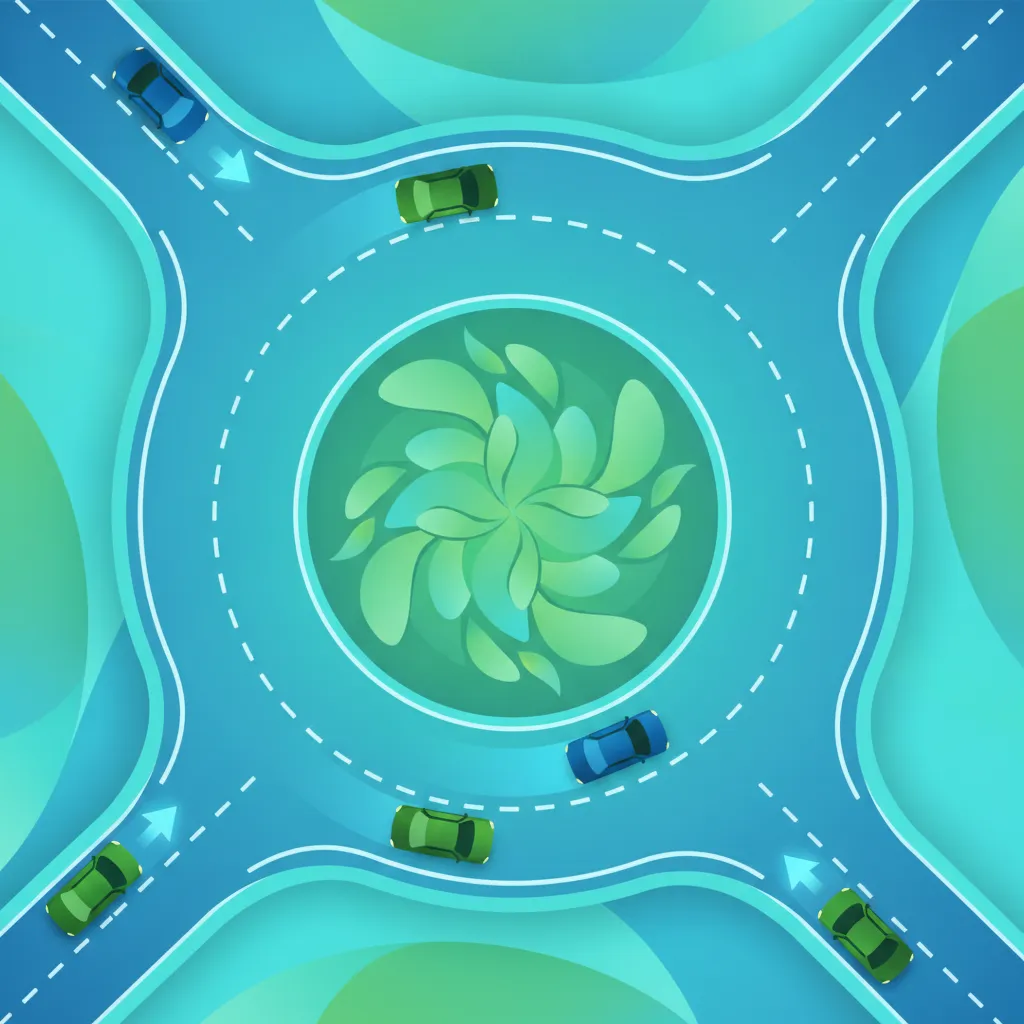
This lesson provides a step-by-step guide to safely and efficiently navigating roundabouts (rotatorie). It explains the primary rule of yielding to traffic already circulating within the roundabout before entering. The content covers correct lane positioning based on the intended exit, the proper use of turn signals when entering and exiting, and how to handle multi-lane roundabouts.
This lesson provides essential rules and techniques for driving on Italian motorways (autostrade) and major extra-urban roads. It explains how to safely merge onto the motorway from an entry ramp, the strict lane discipline required (drive right, overtake left), and how to exit correctly. The content also covers speed regulations, maintaining a safe following distance at high speed, and procedures for using service areas and handling emergencies.
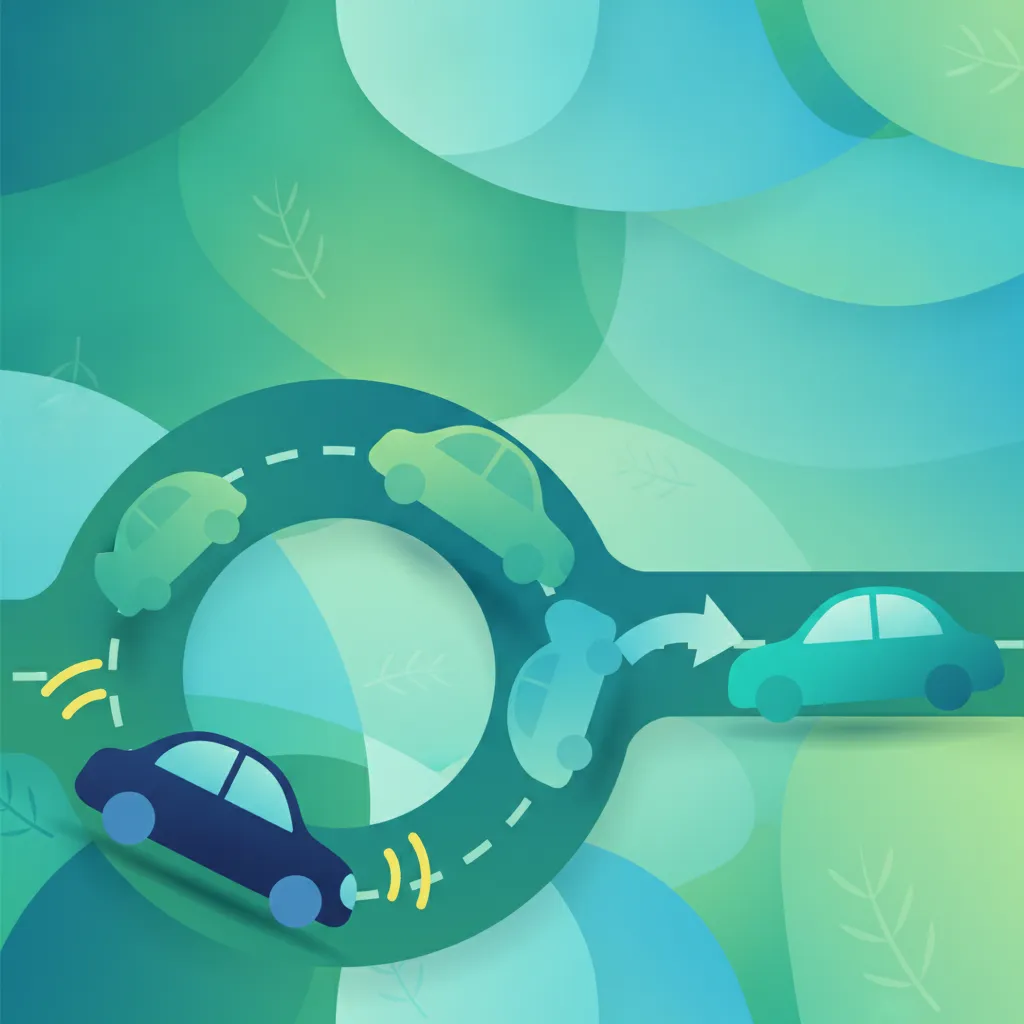
This lesson provides a step-by-step guide to navigating roundabouts safely and efficiently. It focuses on the critical rule of yielding to traffic already circulating within the roundabout before entering. You will also learn how to select the correct lane based on your intended exit and how to use your indicators to signal your maneuvers clearly.
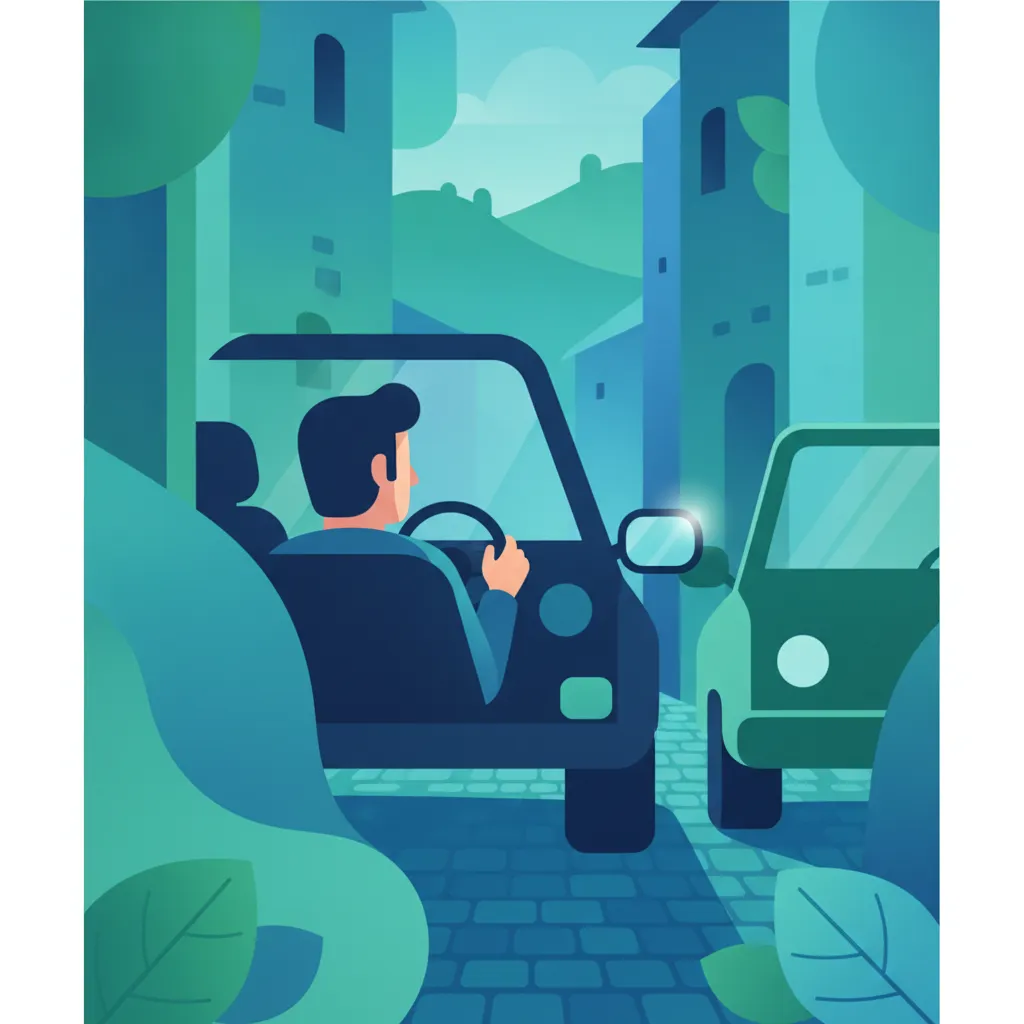
This lesson teaches the correct and safe technique for reversing a vehicle. It emphasizes the importance of performing a full 360-degree check for hazards before starting and maintaining slow, controlled movement. The content covers how to use mirrors and direct observation effectively, how to steer accurately while looking backward, and the increased need for caution regarding pedestrians and cyclists in the vehicle's blind areas.

This lesson teaches riders how to strategically position their vehicle within a lane for maximum visibility to others. It explains how to avoid riding in the blind spots of larger vehicles and how to maintain a safe buffer zone. Proper positioning enhances a rider's presence on the road and is a key component of defensive driving in mixed traffic.
Find clear answers to common questions learners have about Safe Overtaking Practices. Learn how the lesson is structured, which driving theory objectives it supports, and how it fits into the overall learning path of units and curriculum progression in Italy. These explanations help you understand key concepts, lesson flow, and exam focused study goals.
No. A solid white line indicates that overtaking is prohibited because you are not allowed to cross or straddle the line under any circumstances.
Yes. Overtaking is strictly prohibited at pedestrian crossings, railway crossings, curves, crossroads without priority, and in areas with poor visibility or where specific signs forbid it.
Yes, you must signal your intention to move into the adjacent lane well in advance using your direction indicator, and you must check your mirrors and blind spots to ensure it is safe to proceed.
Overtaking on the right is generally prohibited. However, there are specific exceptions, such as when the vehicle in front is signaling to turn left or when driving on multi-lane roads with heavy traffic in organized queues.
Start searching now to pinpoint exactly which Italian driving theory topics, road signs, or traffic rules you need to master. Use our advanced filters to build a custom practice session and ensure you're fully prepared for every aspect of your official driving licence exam.