
This lesson guides you through the critical steps for handling hazardous situations, such as load loss, cargo spillage, and road accidents. As a professional driver, mastering these emergency protocols is vital for both passing your theory exam and ensuring safety on Italy's road network.
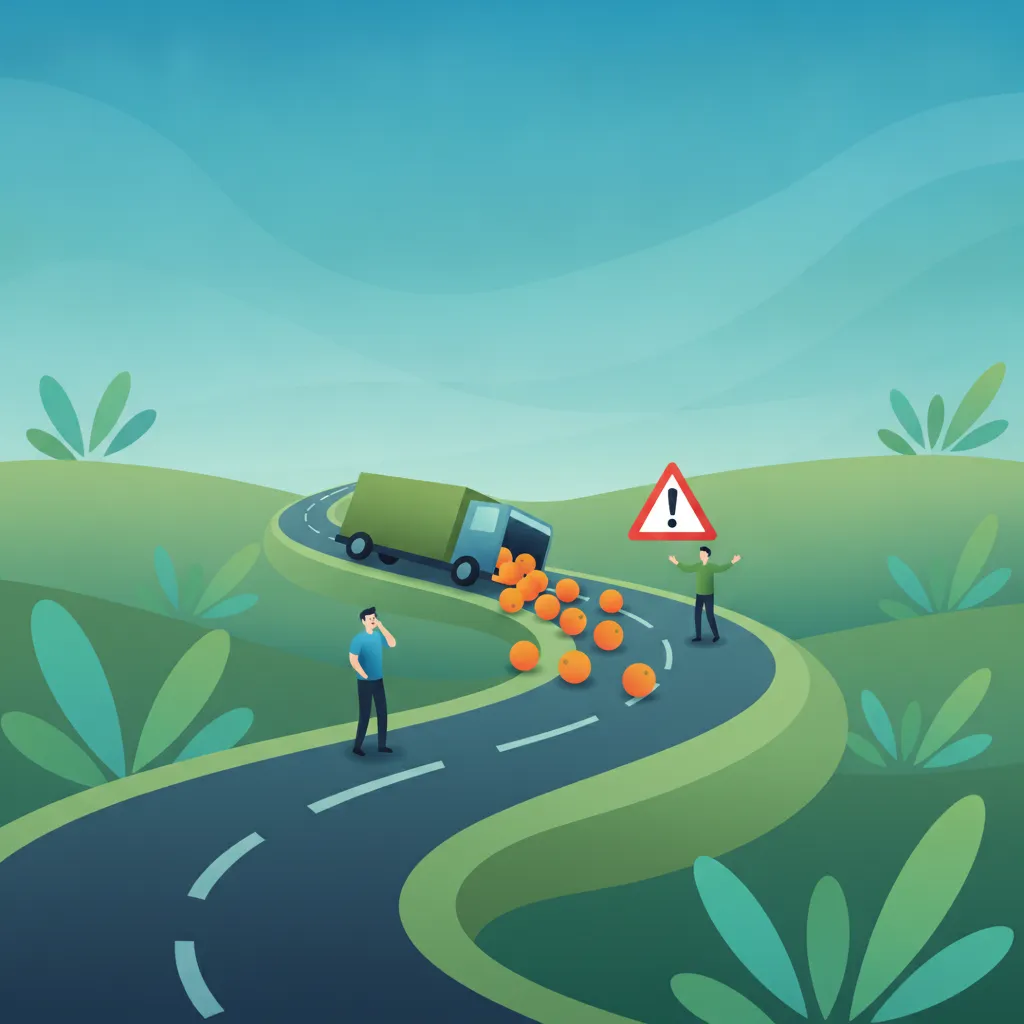
Lesson content overview
Nel contesto del conseguimento della patente di guida per veicoli pesanti (categorie C, C1, C1E, CE) in Italia, è fondamentale che i conducenti professionali siano preparati ad affrontare situazioni di emergenza che vanno oltre un semplice guasto meccanico. La perdita di parte o dell'intera merce trasportata, uno sversamento di materiali sulla carreggiata, o un incidente stradale con conseguenze più gravi, richiedono una risposta rapida, lucida e conforme alle normative vigenti. Questa lezione fornisce le conoscenze e le procedure essenziali per gestire tali scenari, mettendo in primo piano la sicurezza personale e altrui, la mitigazione dei rischi e la corretta interazione con le autorità.
Gli incidenti che coinvolgono la perdita di carico o lo sversamento di materiali rappresentano pericoli significativi per la sicurezza stradale. Tali eventi possono compromettere la stabilità del veicolo, creare ostacoli improvvisi o superfici scivolose per gli altri utenti della strada e, in casi gravi, causare danni ambientali o pericoli per la salute.
La perdita di carico si verifica quando una parte o l'intera merce trasportata si stacca accidentalmente dal veicolo e cade sulla carreggiata durante il trasporto. Questo può essere il risultato di un fissaggio inadeguato del carico, di una rottura del veicolo, o di una manovra brusca.
Il distacco o la caduta accidentale di parte o dell'intera merce trasportata dal veicolo sulla carreggiata.
Esistono principalmente due tipi di perdita di carico:
La caduta di oggetti sulla strada crea ostacoli che possono causare incidenti secondari, specialmente ad alta velocità o in condizioni di scarsa visibilità. I conducenti devono essere sempre vigili e, in caso di perdita di carico, la prima reazione deve essere la messa in sicurezza dell'area.
Uno sversamento è lo scarico non intenzionale di materiale, sia liquido che granulare, dal carico sulla carreggiata. A differenza della perdita di carico che riguarda oggetti solidi e integri, lo sversamento si riferisce a materiali che si disperdono sulla superficie stradale.
Lo scarico involontario di materiale (liquido o granulare) dal carico sulla carreggiata.
Gli sversamenti possono essere classificati in:
Esempi comuni includono una cisterna che perde carburante o un rimorchio che trasporta cereali che perde parte del suo carico a causa di un telone non ben fissato. Anche un piccolo sversamento, se ignorato, può avere conseguenze gravi, soprattutto in curva o durante la frenata.
Un incidente stradale è qualsiasi evento che si traduce in danni al veicolo, lesioni personali o decessi, e che richiede un intervento che va oltre le normal procedure di guasto. La gestione di un incidente è una delle situazioni più complesse e stressanti che un conducente professionista possa affrontare.
Qualsiasi evento che comporta danni al veicolo, lesioni o decessi, richiedendo un intervento che va oltre le procedure di guasto ordinario.
Gli scenari di incidente possono coinvolgere:
La priorità assoluta in qualsiasi scenario di incidente è la salvaguardia della vita umana e la prevenzione di ulteriori danni.
Appena ci si trova coinvolti o si assiste a un incidente, è cruciale seguire una sequenza di azioni ponderate per garantire la massima sicurezza possibile.
Fermare il veicolo in sicurezza: Se possibile, spostare il veicolo sulla corsia di emergenza o sul bordo della strada per evitare di creare ulteriori pericoli. Assicurarsi di non ostacolare il traffico più del necessario.
Spegnere il motore e azionare il freno di stazionamento: Questo previene movimenti involontari del veicolo e riduce il rischio di incendio.
Accendere le luci di emergenza (hazard warning lights): Attivarle immediatamente per segnalare la vostra presenza e il pericolo agli altri utenti della strada.
Indossare il giubbotto riflettente: Prima di scendere dal veicolo, indossare sempre il giubbotto ad alta visibilità, obbligatorio in Italia per tutti i conducenti e passeggeri che scendono dal veicolo in caso di sosta forzata fuori dai centri abitati.
Valutare la situazione e posizionare il triangolo di pericolo: Verificare l'entità del danno, la presenza di feriti e la natura della perdita o dello sversamento. Posizionare il triangolo di pericolo come indicato dalle normative.
Proteggere la scena: Se possibile e sicuro, utilizzare coni o altri segnali riflettenti per delimitare l'area del pericolo.
Allertare i servizi di emergenza: Chiamare immediatamente il numero unico di emergenza (112 in Italia) fornendo tutte le informazioni necessarie.
È un errore comune credere che un piccolo sversamento sia insignificante o ignorare la necessità di segnali di avvertimento, specialmente quando si è sotto stress. La mancata adozione di queste misure può aggravare la situazione e comportare responsabilità legali.
La protezione della scena di un incidente è vitale per prevenire incidenti secondari e per consentire ai soccorritori di operare in sicurezza. Per quanto riguarda le persone ferite, la regola d'oro è:
Non spostare mai persone ferite a meno che non si trovino in immediato pericolo (es. incendio del veicolo, rischio di caduta in un precipizio). Lo spostamento può aggravare lesioni, in particolare quelle spinali. Attendere sempre l'arrivo del personale medico specializzato.
Se possibile e sicuro, tentare di contenere lo sversamento o di mettere in sicurezza il carico rimanente per evitare ulteriori perdite. Tuttavia, la sicurezza personale ha sempre la precedenza. Non mettere mai a rischio la propria vita o quella degli altri per recuperare il carico.
L'uso corretto dei dispositivi di avvertimento è cruciale per segnalare un pericolo sulla strada e proteggere sia se stessi che gli altri utenti.
Le luci di emergenza (o quattro frecce) sono un sistema di segnalazione luminosa (solitamente di colore ambra) che fa lampeggiare contemporaneamente tutti gli indicatori di direzione del veicolo.
Sistema di lampeggio simultaneo degli indicatori di direzione, utilizzato per segnalare un pericolo o una fermata d'emergenza sulla strada.
Scopo: Il loro scopo principale è avvertire gli altri utenti della strada che il veicolo è fermo a causa di un'emergenza o di un pericolo imminente, e che devono procedere con estrema cautela.
Implicazioni:
Il triangolo di pericolo è un dispositivo riflettente, obbligatorio in Italia per tutti i veicoli, utilizzato per segnalare agli automobilisti in avvicinamento la presenza di un veicolo fermo o di un ostacolo sulla carreggiata.
Dispositivo riflettente obbligatorio, posizionato sulla strada per avvertire il traffico in avvicinamento di un veicolo fermo o di un ostacolo.
Regole di Posizionamento:
Implicazioni:
Il Codice della Strada italiano impone precisi obblighi ai conducenti coinvolti in incidenti, perdite di carico o sversamenti. La loro osservanza è fondamentale non solo per la sicurezza, ma anche per evitare sanzioni legali.
È obbligatorio segnalare l'incidente alle autorità competenti nei seguenti casi:
In Italia, il numero unico di emergenza per contattare tutte le autorità (Polizia, Carabinieri, Vigili del Fuoco, Emergenza Sanitaria) è il 112.
Quando si contatta il 112, è essenziale fornire informazioni accurate e complete per consentire un intervento rapido ed efficace. Queste includono:
Mantenere la calma: Parlare in modo chiaro e conciso.
Fornire la posizione precisa: Questo è l'elemento più critico per un intervento rapido. Usare cartelli chilometrici, numeri civici o nomi di località.
Descrivere la natura del pericolo: Specificare se si tratta di perdita di carico (che tipo di carico), sversamento (che liquido/materiale), o incidente (numero di veicoli coinvolti, feriti).
Segnalare eventuali sostanze pericolose: Se il carico è infiammabile, corrosivo o tossico, è fondamentale comunicarlo immediatamente.
Non riattaccare finché l'operatore non lo dice: L'operatore potrebbe aver bisogno di ulteriori informazioni o istruzioni.
La gestione di un incidente non è mai una situazione standard. Fattori ambientali, il tipo di strada e le condizioni del veicolo richiedono un adattamento delle procedure.
Ricordare che la paura e il panico possono compromettere il giudizio. Seguire una procedura sistematica aiuta a mantenere la calma e ad agire correttamente, minimizzando ulteriori rischi.
La disattenzione o la mancanza di conoscenza possono portare a errori gravi durante la gestione di incidenti, con conseguenze sia per la sicurezza che per la legge.
Alcune delle violazioni e degli errori più comuni includono:
La capacità di gestire perdite di carico, sversamenti e incidenti è una componente critica della professionalità del conducente di veicoli pesanti. Essa si basa su alcuni principi fondamentali:
La prevenzione è sempre la migliore strategia. Controlli pre-viaggio accurati, un corretto fissaggio del carico e una guida attenta e difensiva possono ridurre drasticamente la probabilità di questi incidenti. Quando si verificano, però, la preparazione e la conoscenza delle procedure possono fare la differenza tra un inconveniente gestibile e una tragedia.
This lesson covers the critical emergency procedures for professional HGV drivers in Italy when dealing with load loss, cargo spillage, or road accidents. The immediate priorities are: secure your own safety, warn other traffic using hazard lights and a properly positioned warning triangle (30m on ordinary roads, 150m on motorways), and call emergency services at 112 with precise details about location, cargo, and casualties. Key legal obligations include never moving injured persons unnecessarily, always wearing a reflective vest before exiting the vehicle outside built-up areas, and reporting significant road obstructions to authorities. Understanding these protocols is essential for both passing the C-category theory exam and ensuring safety on Italian roads.
A short set of high-value points that capture the most important learning from this lesson.
Prioritize personal safety first: activate hazard lights immediately, wear reflective vest before exiting, then position warning triangle.
Never move injured persons unless they face immediate life-threatening danger such as fire or falling - wait for qualified medical personnel.
The warning triangle must be placed at least 30 metres on regular roads and 150 metres on motorways to give approaching drivers adequate reaction time.
Contact emergency services (112 in Italy) immediately with precise location, cargo type, number of injuries, and any hazardous materials involved.
Sudden load loss can dramatically shift a vehicle's centre of gravity, compromising stability and requiring immediate assessment before exiting.
Explore all units and lessons included in this driving theory course.
Hazard warning lights (four-way flashers) must be activated as soon as the vehicle stops in any emergency situation.
Italy's single emergency number 112 connects you to police, ambulance, fire brigade, and road authorities.
On motorways, always exit via the passenger side and move well away from traffic before positioning the warning triangle.
Partial load loss requires securing the remaining cargo to prevent further spillage before leaving the scene.
Leaving the scene of an accident involving injuries or significant road obstruction is a criminal offence under Italian law.
Failing to activate hazard lights immediately after a load loss or accident, or driving on with emergency lights activated.
Placing the warning triangle too close to the vehicle instead of the required 30m (roads) or 150m (motorways) distance.
Attempting to move injured victims without medical training, which can aggravate spinal or internal injuries.
Not providing accurate location information when calling 112, such as motorway kilometre markers or nearest exit numbers.
Neglecting to secure remaining cargo after a partial spill, leading to continued loss and extended road hazards.
Lesson content overview
A short set of high-value points that capture the most important learning from this lesson.
Prioritize personal safety first: activate hazard lights immediately, wear reflective vest before exiting, then position warning triangle.
Never move injured persons unless they face immediate life-threatening danger such as fire or falling - wait for qualified medical personnel.
The warning triangle must be placed at least 30 metres on regular roads and 150 metres on motorways to give approaching drivers adequate reaction time.
Contact emergency services (112 in Italy) immediately with precise location, cargo type, number of injuries, and any hazardous materials involved.
Sudden load loss can dramatically shift a vehicle's centre of gravity, compromising stability and requiring immediate assessment before exiting.
Explore all units and lessons included in this driving theory course.
Hazard warning lights (four-way flashers) must be activated as soon as the vehicle stops in any emergency situation.
Italy's single emergency number 112 connects you to police, ambulance, fire brigade, and road authorities.
On motorways, always exit via the passenger side and move well away from traffic before positioning the warning triangle.
Partial load loss requires securing the remaining cargo to prevent further spillage before leaving the scene.
Leaving the scene of an accident involving injuries or significant road obstruction is a criminal offence under Italian law.
Failing to activate hazard lights immediately after a load loss or accident, or driving on with emergency lights activated.
Placing the warning triangle too close to the vehicle instead of the required 30m (roads) or 150m (motorways) distance.
Attempting to move injured victims without medical training, which can aggravate spinal or internal injuries.
Not providing accurate location information when calling 112, such as motorway kilometre markers or nearest exit numbers.
Neglecting to secure remaining cargo after a partial spill, leading to continued loss and extended road hazards.
Explore search topics learners often look for when studying Load Loss, Spillage, and Accident Scenarios. These topics reflect common questions about road rules, driving situations, safety guidance, and lesson level theory preparation for learners in Italy.
Browse additional driving theory lessons that cover connected traffic rules, road signs, and common driving situations related to this topic. Improve your understanding of how different rules interact across everyday traffic scenarios.
Understand critical Italian driving theory procedures for managing load loss, spills, and accident scenes. Learn how to ensure safety, properly signal hazards, and report incidents as required for C, C1, C1E, CE licences.

This lesson provides a step-by-step guide for managing a vehicle breakdown safely. It reinforces the procedure for stopping on the hard shoulder, activating hazard lights, and placing a warning triangle at the correct distance. The lesson emphasizes the importance of wearing high-visibility clothing, exiting the vehicle from the side away from traffic, and waiting in a safe location before contacting a roadside assistance service.

This lesson outlines the correct protocols for stopping to make a delivery in a public area. It covers the legal use of designated loading bays, the importance of making the vehicle highly visible with hazard lights, and ensuring that the parking brake is securely applied. The lesson stresses the need to conduct loading and unloading activities efficiently and safely, without causing undue obstruction or danger to other road users and pedestrians.

This lesson provides a comprehensive overview of the essential documentation required for both the driver and the vehicle. It covers the driver's license (patente), CQC card, vehicle registration (carta di circolazione), insurance certificate, and transport-specific documents like the cargo manifest. Learners will understand the importance of ensuring all documents are valid and readily available for inspection by authorities to avoid legal penalties and operational delays.
This lesson prepares drivers for unexpected emergencies that may occur far from base. It provides a clear, step-by-step guide on what to do in the event of a breakdown on a motorway, including how to stop safely on the hard shoulder, make the vehicle visible, and call for assistance. Basic procedures for dealing with a vehicle fire or being the first at an accident scene are also covered, prioritizing personal safety at all times.

This lesson provides a detailed overview of the legal framework for load securing in Italy, focusing on the relevant articles of the Codice della Strada. It outlines the driver's legal responsibility for ensuring the load is secure and covers the standards that securing equipment must meet. Learners will be made aware of the significant fines and other penalties that can be imposed for violations, reinforcing the importance of diligent compliance.
This final lesson focuses on the administrative and legal procedures following an accident or incident. It explains how to correctly complete an accident report form (Constatazione Amichevole di Incidente - CAI), the information that must be exchanged with other parties, and the importance of accurate reporting. The lesson also provides guidance on how to interact calmly and professionally with police or other officials, providing required documentation and a clear account of events.

This lesson focuses on the specific regulations and techniques for operating a heavy vehicle on high-speed motorways. It covers mandatory lane discipline for trucks, the rules governing overtaking other heavy vehicles, and the specific speed limits that apply. Best practices for merging onto and exiting the motorway, maintaining safe following distances, and using the hard shoulder only in genuine emergencies are also detailed.

This lesson covers the complete set of lighting, reflective equipment, and protective guards mandated for heavy vehicles. It explains the function of each light, from headlights to side markers, and the importance of keeping them clean and operational to ensure the vehicle is visible to others. The lesson also details the legal requirements and safety purpose of side guards and rear underrun protection, which are designed to protect vulnerable road users in a collision.
This lesson details the specific rules and safety considerations for driving through the extensive tunnels and high viaducts common in Italy. It covers pre-entry checks, maintaining a safe following distance, and the correct procedures to follow in case of a breakdown or fire inside a tunnel. The lesson also addresses the hazard of strong crosswinds on exposed viaducts and how to maintain vehicle control.

This lesson delves into the specific articles of the Italian Codice della Strada that apply to heavy goods vehicles. It outlines the core legal and professional obligations of a driver, including the heightened duty of care owed to other road users and the responsibility for the vehicle's roadworthiness and load. Learners will understand the legal consequences of non-compliance, such as fines and sanctions, reinforcing the importance of adhering to all traffic regulations.
Master the legal framework and reporting duties for Italian heavy vehicle drivers following accidents, load loss, or spills. This lesson covers essential communication with emergency services and understanding consequences.
This final lesson focuses on the administrative and legal procedures following an accident or incident. It explains how to correctly complete an accident report form (Constatazione Amichevole di Incidente - CAI), the information that must be exchanged with other parties, and the importance of accurate reporting. The lesson also provides guidance on how to interact calmly and professionally with police or other officials, providing required documentation and a clear account of events.
This lesson delves into the specific articles of the Italian Codice della Strada that apply to heavy goods vehicles. It outlines the core legal and professional obligations of a driver, including the heightened duty of care owed to other road users and the responsibility for the vehicle's roadworthiness and load. Learners will understand the legal consequences of non-compliance, such as fines and sanctions, reinforcing the importance of adhering to all traffic regulations.
This lesson outlines the mandatory legal procedures a rider must follow after being involved in a traffic accident. It covers the obligation to stop, render aid if necessary, and report the incident to the appropriate authorities. The content explains the process of exchanging information with other parties, documenting the scene for insurance purposes, and the potential legal and financial liabilities that may arise.
This lesson provides a comprehensive overview of the essential documentation required for both the driver and the vehicle. It covers the driver's license (patente), CQC card, vehicle registration (carta di circolazione), insurance certificate, and transport-specific documents like the cargo manifest. Learners will understand the importance of ensuring all documents are valid and readily available for inspection by authorities to avoid legal penalties and operational delays.
This lesson provides a clear overview of the legal consequences for failing to comply with road transport regulations in Italy. It covers the system of fines for common offenses like speeding, overloading, and violations of driving hours. The lesson also explains the penalty point system that can lead to license suspension and touches upon the responsibilities and potential liability of the transport company.
This lesson provides a detailed overview of the legal framework for load securing in Italy, focusing on the relevant articles of the Codice della Strada. It outlines the driver's legal responsibility for ensuring the load is secure and covers the standards that securing equipment must meet. Learners will be made aware of the significant fines and other penalties that can be imposed for violations, reinforcing the importance of diligent compliance.
This lesson covers the complete set of lighting, reflective equipment, and protective guards mandated for heavy vehicles. It explains the function of each light, from headlights to side markers, and the importance of keeping them clean and operational to ensure the vehicle is visible to others. The lesson also details the legal requirements and safety purpose of side guards and rear underrun protection, which are designed to protect vulnerable road users in a collision.
This lesson provides a step-by-step guide for managing a vehicle breakdown safely. It reinforces the procedure for stopping on the hard shoulder, activating hazard lights, and placing a warning triangle at the correct distance. The lesson emphasizes the importance of wearing high-visibility clothing, exiting the vehicle from the side away from traffic, and waiting in a safe location before contacting a roadside assistance service.
This lesson prepares drivers for unexpected emergencies that may occur far from base. It provides a clear, step-by-step guide on what to do in the event of a breakdown on a motorway, including how to stop safely on the hard shoulder, make the vehicle visible, and call for assistance. Basic procedures for dealing with a vehicle fire or being the first at an accident scene are also covered, prioritizing personal safety at all times.
This lesson outlines the correct protocols for stopping to make a delivery in a public area. It covers the legal use of designated loading bays, the importance of making the vehicle highly visible with hazard lights, and ensuring that the parking brake is securely applied. The lesson stresses the need to conduct loading and unloading activities efficiently and safely, without causing undue obstruction or danger to other road users and pedestrians.
Find clear answers to common questions learners have about Load Loss, Spillage, and Accident Scenarios. Learn how the lesson is structured, which driving theory objectives it supports, and how it fits into the overall learning path of units and curriculum progression in Italy. These explanations help you understand key concepts, lesson flow, and exam focused study goals.
Your absolute priority is to stop in a safe position, activate hazard warning lights, and ensure your own safety before attempting to alert other drivers. You must immediately notify the road authorities and follow instructions to clear the hazard without endangering yourself.
Yes, under the Codice della Strada, professional drivers have strict duties to stop, assist if safe to do so, report the accident, and remain at the scene until authorized to leave. Failure to follow these steps can lead to severe administrative and criminal penalties.
The theory exam often presents complex multi-vehicle accident scenarios involving trailers. This lesson covers the specific complexities of articulated vehicles, such as jack-knifing or load displacement, which are key focus areas for high-level licence candidates.
Prioritize personal evacuation and alerting emergency services immediately. If the fire is small and you are trained and equipped, you may attempt to use the vehicle's fire extinguisher, but your safety always takes precedence over the vehicle or cargo.
Start searching now to pinpoint exactly which Italian driving theory topics, road signs, or traffic rules you need to master. Use our advanced filters to build a custom practice session and ensure you're fully prepared for every aspect of your official driving licence exam.