
This lesson explores the critical blind spots inherent in heavy goods vehicles, often referred to as no-zones. As part of our professional driving course, you will learn how to identify these dangerous areas and apply systematic observation techniques to ensure the safety of other road users.
Lesson content overview
Operating a heavy goods vehicle (HGV) in Italy, whether for a C, C1, C1E, or CE license, demands a profound understanding of the vehicle's unique characteristics. Among the most critical aspects of safe HGV operation is recognizing and mitigating blind spots, often referred to as "no-zones." These are areas around your vehicle that are invisible to you, the driver, even with correctly adjusted mirrors. This lesson will equip you with the knowledge and techniques to identify these high-risk areas and proactively prevent collisions, especially with vulnerable road users in dense urban traffic.
Effective blind spot management is a cornerstone of professional driving, building upon foundational knowledge of vehicle dimensions, proper mirror placement, and general roadworthiness. It is essential for maintaining complete situational awareness and ensuring safety for all road users.
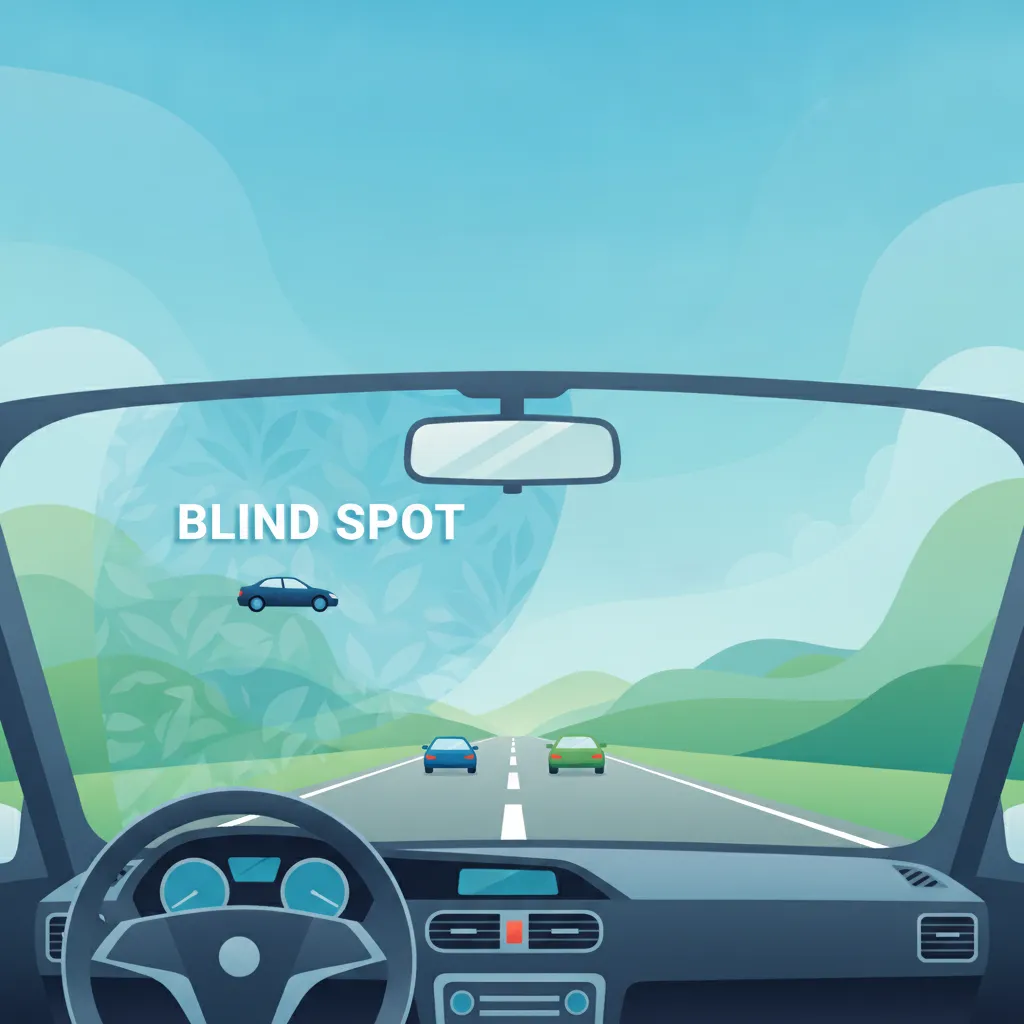
Blind spot zones are three-dimensional spaces around a heavy vehicle that cannot be seen directly from the driver's seat through the windshield or standard mirrors. The sheer size, length, width, and height of heavy goods vehicles inherently create larger and more numerous blind spots compared to passenger cars. These zones are not fixed but can vary based on the vehicle's specific configuration, load, and even the driver's seating position.
The area directly in front of the HGV cab, particularly below the windshield level and immediately in front of the bumper, constitutes a significant front blind spot. Due to the elevated driving position and the length of the bonnet or cabin, anything close to the front of the vehicle can be completely obscured.
This zone poses a critical risk, especially in urban environments, for pedestrians, small children, and cyclists who might cross directly in front of a stationary or slow-moving truck. Even if a driver checks their mirrors, these users will not be visible. Proactive scanning and a deep understanding of vehicle dimensions are crucial to managing this blind spot.
Side blind spots are extensive areas along both sides of the heavy vehicle, stretching from the side mirrors outwards and backwards. On the driver's side, this zone typically extends from the immediate area next to the cab rearward, often several metres. On the passenger side, due to the driver's position on the left (in Italy), this blind spot is often even larger and more perilous. It can encompass several metres wide and extend far back along the entire length of a rigid truck or articulated trailer.
Small vehicles, motorcycles, and especially cyclists can easily "disappear" into these zones when attempting to overtake a truck or when the truck prepares for a turn. Drivers must be acutely aware that if they cannot see a vehicle in their mirrors, that vehicle might be exactly within one of these side no-zones.
The rear blind spot behind a heavy goods vehicle, particularly an articulated combination with a trailer, is substantial. The trailer itself completely obstructs any direct view to the rear. Even with an interior rear-view mirror in the cab, it primarily shows the load within the trailer or the immediate rear of the cab, not what is behind the entire vehicle combination.
This area is often referred to as a "spiral blind spot" in the trailer's wake or a "periscope blind spot" created by the cab roof. When reversing or maneuvering in tight spaces, this blind spot becomes exceptionally dangerous for pedestrians, other vehicles, and stationary objects. The length of the trailer means that any object close behind the vehicle will be out of sight for a considerable distance.
The specific dimensions of your HGV, including its length, width, height, and the presence of a trailer, directly influence the size and location of blind spots. A longer articulated vehicle (like those requiring C1E or CE licenses) will have more extensive side and rear blind spots than a shorter rigid vehicle (C1 or C). Understanding these physical parameters, as covered in Lesson 2 on Heavy Vehicle Dimensions, is fundamental to comprehending the scale of your blind spots.
Mirrors are the primary tool for extending a driver's field of view around a heavy vehicle. While they are indispensable for safe operation, it is crucial to understand their capabilities and, more importantly, their limitations. The Italian Codice della Strada mandates correct mirror adjustment for optimal safety.
Heavy vehicles typically employ a combination of mirror types to maximize visibility:
Proper mirror adjustment is not a one-time task but a routine pre-trip check. Mirrors must be correctly positioned before starting each journey to provide the maximum possible view of adjacent lanes and the rear zone.
Adjust your driver's side direct mirror so that you can see a small portion of your vehicle's side (e.g., the rear corner of the trailer) and the lane directly alongside, extending to the horizon. This provides reference for your vehicle's position.
Adjust your passenger's side convex mirror to see the lane next to your vehicle and the lane beyond it. Since it's convex, it will show a very wide area. The goal is to minimize the blind spot directly to your right.
If present, adjust additional convex mirrors (e.g., wide-angle or blind spot mirrors) to specifically cover areas not visible in your main side mirrors, such as the area immediately next to the front passenger wheel or further back along the trailer.
If an interior rear-view mirror is present and useful (e.g., in a rigid truck without a full load obscuring the view), adjust it to see as much as possible directly behind your cab or load. However, for most articulated HGVs, this mirror's utility is limited.
Remember that "objects in mirror are closer than they appear" is particularly true for convex mirrors. Always exercise extra caution and judgment when using these mirrors, especially when gauging distances to other vehicles.
Despite optimal adjustment, mirrors cannot eliminate all blind spots. The physical structure of the HGV, the cab design, roof pillars, and the sheer length of the vehicle or its trailer will always create zones that mirrors simply cannot capture. This inherent limitation makes direct observation, through techniques like head checks and peripheral vision, absolutely vital. Overreliance on mirrors alone is a common misunderstanding that can lead to dangerous situations.
The systematic and sequential checking of all available mirrors (inside, passenger side, driver side) before and during any maneuver to gain the broadest possible understanding of the surrounding traffic situation.
Since mirrors have limitations, proactive scanning techniques are indispensable for heavy vehicle drivers. These techniques involve physical actions to visually inspect areas not covered by mirrors, filling the gaps and ensuring complete situational awareness.
A head check (controllo visivo diretto) is a brief, momentary turn of the head to physically look into a blind spot area that mirrors cannot show. This is a mandatory safety action under the Italian Codice della Strada (Art. 148) before performing any lane change, overtaking, or turning maneuver.
Never assume a blind spot is clear without a physical head check. Even a second of direct observation can prevent a collision.
An effective mirror scan involves a systematic sequence of checking your mirrors. This procedure ensures you gather maximum information about your surroundings before committing to a maneuver.
Check the inside rear-view mirror (if applicable) to assess traffic directly behind you.
Check the side mirror corresponding to your intended maneuver (e.g., right side mirror for a right turn). Pay attention to traffic speed and proximity.
Check the opposite side mirror to maintain awareness of traffic on both sides, especially on multi-lane roads.
Perform a head check (controllo visivo diretto) in the direction of your maneuver to actively scan the blind spot not covered by mirrors.
Re-check your primary mirror for the maneuver just before executing it, as traffic conditions can change quickly.
Peripheral vision, while not precise for identifying objects at high speeds, plays a role in detecting movement at the edges of your direct view. As you drive, consciously be aware of any movement in your peripheral vision, especially when approaching intersections or complex areas. This can serve as an early warning for road users potentially entering your blind spots, prompting you to perform a more focused mirror check or head turn.
Anticipatory scanning means looking well ahead and to the sides before you need to make a maneuver. For heavy vehicles, with their longer stopping distances and larger swept paths, scanning at least 12-15 seconds ahead is recommended. This provides ample time to:
This proactive approach minimizes surprises and allows for smooth, controlled driving, reducing the risk associated with blind spots.
The way cargo is distributed and secured on a heavy vehicle has a direct and significant impact on the size and location of blind spots. Proper load management, therefore, is not just about stability and legal compliance but also a critical component of maintaining clear driver visibility.
Excessive load overhang is one of the most dangerous aspects of improper load distribution regarding blind spots. It creates a vast, unavoidable blind zone directly behind the vehicle, making reversing maneuvers exceptionally hazardous. The Italian Codice della Strada specifies limits for load overhang, and exceeding these limits not only incurs penalties but dramatically elevates collision risk. Even within legal limits, an overhang demands heightened vigilance and alternative observation methods.
To minimize the impact of loads on visibility:
Vulnerable Road Users (VRUs)—pedestrians, cyclists, and motorcyclists—are at significantly higher risk around heavy vehicles because they are small, difficult to see, and offer no protection in a collision. Blind spots are particularly dangerous for VRUs.
In urban environments, with their higher density of VRUs, vigilance must be amplified. Drivers of HGVs must adopt a defensive driving style that prioritizes the safety of these users.
The Italian Codice della Strada (Highway Code) includes specific articles that underpin the requirements for drivers to manage visibility and prevent collisions, particularly concerning blind spots. Adherence to these regulations is mandatory for all drivers, especially those operating heavy vehicles.
Rule: The driver must perform a head check (controllo visivo diretto) before performing any lane change, overtaking maneuver, or turning.
Rule: Mirrors must be correctly adjusted before driving to provide the maximum possible view of adjacent lanes and the rear zone of the vehicle.
Rule: When operating a vehicle with a trailer, the driver must be fully aware that the trailer creates a significant blind spot directly behind the vehicle, necessitating careful inspection using mirrors and direct observation before reversing.
Rule: The driver must maintain a safe distance from the vehicle ahead to allow for adequate reaction time and compensate for blind zone limitations during braking.
Effective blind spot mitigation isn't a static set of rules; it requires adaptability based on changing environmental and operational contexts.
Failing to adequately manage blind spots is a leading cause of preventable collisions involving heavy vehicles. Understanding common violations can help you proactively avoid dangerous situations.
This lesson covers the identification and management of blind spot zones around heavy goods vehicles, essential for C and CE license theory. Heavy vehicles have significant front, side, and rear blind spots where cyclists, pedestrians, and small vehicles can disappear from view. Drivers must correctly adjust and systematically scan mirrors, then perform mandatory head checks (controllo visivo diretto) before any maneuver to physically clear blind zones. Load distribution directly affects blind spot size, particularly rear overhang during reversing. Adapting scanning frequency and vigilance to urban environments, weather conditions, and vulnerable road user density is critical for preventing collisions under Italian traffic law.
A short set of high-value points that capture the most important learning from this lesson.
Heavy goods vehicles have three major blind spot zones: front (below windshield level), side (extending several metres along both sides), and rear (blocked by trailer length).
Mirrors extend visibility but cannot eliminate all blind spots; flat direct mirrors show accurate distance, while convex mirrors show a wider area with distorted size perception.
Head checks (controllo visivo diretto) are mandatory under Codice della Strada Art. 148 before any lane change, overtaking, or turning to physically confirm blind zones are clear.
Load overhang (sporgenza del carico) increases the rear blind spot, making reversing maneuvers particularly hazardous and requiring heightened vigilance.
Vulnerable road users—cyclists, pedestrians, and motorcyclists—are most at risk in blind spots, especially during right turns in urban environments where cyclists may overtake on the right.
Explore all units and lessons included in this driving theory course.
Mirror perusal must follow a systematic sequence: interior mirror, maneuver-side mirror, opposite-side mirror, then head check.
Objects in convex mirrors appear further away than they actually are; never rely solely on them to judge closing speeds or distances.
The passenger-side blind spot is larger than the driver's side in Italy due to the left-hand driving position.
Articulated combinations (C1E, CE) create substantially larger side and rear blind spots than rigid vehicles (C, C1).
Anticipatory scanning should cover at least 12-15 seconds ahead to allow time for safe reactions given HGVs' longer stopping distances.
Relying exclusively on mirrors for lane changes or turns without performing the mandatory head check, allowing vehicles or cyclists to remain hidden in side blind spots.
Incorrectly adjusted mirrors that show the sky, ground, or vehicle body instead of adjacent lanes, unintentionally creating larger blind zones.
Failing to account for load overhang when reversing; a load extending past the rear axle drastically enlarges the invisible zone behind the vehicle.
Turning right without specifically checking the right rear blind spot, causing 'right-hook' collisions with cyclists positioned alongside the truck.
Assuming a convex mirror's wide view eliminates the need for direct observation; size distortion means head checks remain essential.
Lesson content overview
A short set of high-value points that capture the most important learning from this lesson.
Heavy goods vehicles have three major blind spot zones: front (below windshield level), side (extending several metres along both sides), and rear (blocked by trailer length).
Mirrors extend visibility but cannot eliminate all blind spots; flat direct mirrors show accurate distance, while convex mirrors show a wider area with distorted size perception.
Head checks (controllo visivo diretto) are mandatory under Codice della Strada Art. 148 before any lane change, overtaking, or turning to physically confirm blind zones are clear.
Load overhang (sporgenza del carico) increases the rear blind spot, making reversing maneuvers particularly hazardous and requiring heightened vigilance.
Vulnerable road users—cyclists, pedestrians, and motorcyclists—are most at risk in blind spots, especially during right turns in urban environments where cyclists may overtake on the right.
Explore all units and lessons included in this driving theory course.
Mirror perusal must follow a systematic sequence: interior mirror, maneuver-side mirror, opposite-side mirror, then head check.
Objects in convex mirrors appear further away than they actually are; never rely solely on them to judge closing speeds or distances.
The passenger-side blind spot is larger than the driver's side in Italy due to the left-hand driving position.
Articulated combinations (C1E, CE) create substantially larger side and rear blind spots than rigid vehicles (C, C1).
Anticipatory scanning should cover at least 12-15 seconds ahead to allow time for safe reactions given HGVs' longer stopping distances.
Relying exclusively on mirrors for lane changes or turns without performing the mandatory head check, allowing vehicles or cyclists to remain hidden in side blind spots.
Incorrectly adjusted mirrors that show the sky, ground, or vehicle body instead of adjacent lanes, unintentionally creating larger blind zones.
Failing to account for load overhang when reversing; a load extending past the rear axle drastically enlarges the invisible zone behind the vehicle.
Turning right without specifically checking the right rear blind spot, causing 'right-hook' collisions with cyclists positioned alongside the truck.
Assuming a convex mirror's wide view eliminates the need for direct observation; size distortion means head checks remain essential.
Explore search topics learners often look for when studying Blind Spot Zones and Their Mitigation. These topics reflect common questions about road rules, driving situations, safety guidance, and lesson level theory preparation for learners in Italy.
Browse additional driving theory lessons that cover connected traffic rules, road signs, and common driving situations related to this topic. Improve your understanding of how different rules interact across everyday traffic scenarios.
Explore sophisticated mirror usage for heavy vehicles, focusing on advanced convex and direct mirror adjustments. Learn to compensate for inherent blind spots and improve situational awareness crucial for Italian C licence theory.

This lesson explains the function of the different classes of mirrors required on a heavy goods vehicle, including the main, wide-angle, and close-proximity (kerb) mirrors. It provides a systematic method for adjusting each mirror correctly from the driver's seating position to create the widest possible field of vision and minimize blind spots. Proper mirror setup is the foundation of safe observation and maneuvering.

This lesson introduces the various electronic driver aids designed to improve visibility and safety during low-speed maneuvering. It covers the use of reversing cameras, blind-spot monitoring systems, and ultrasonic proximity sensors that provide visual and audible warnings. Learners will understand that while these technologies are valuable tools, they are aids to—not replacements for—the driver's own diligent observation and skill.

This lesson explains the critical importance of a continuous and systematic visual scan for maintaining 360-degree awareness around the vehicle. It details the correct technique for using interior and exterior mirrors in conjunction with direct vision and shoulder checks to effectively identify hazards. The content emphasizes the need to be aware of blind spots before any maneuver, such as changing lanes or turning.

This lesson covers the complete set of lighting, reflective equipment, and protective guards mandated for heavy vehicles. It explains the function of each light, from headlights to side markers, and the importance of keeping them clean and operational to ensure the vehicle is visible to others. The lesson also details the legal requirements and safety purpose of side guards and rear underrun protection, which are designed to protect vulnerable road users in a collision.

This lesson focuses on the vital systems for visibility and communication: mirrors, lighting, and signals. It provides instruction on the proper adjustment of mirrors to minimize blind spots and the correct use of headlamps, indicators, and brake lights as per Italian regulations. The content underscores how maintaining these systems in full working order is crucial for being seen and signalling intentions clearly in traffic.

This lesson focuses on the correct use of mirrors to maintain situational awareness and the techniques required to manage blind spots. It explains how to adjust mirrors for the best possible view of surrounding traffic. You will also learn why shoulder checks are critical before changing lanes or turning to detect vehicles hidden in blind zones.

This lesson provides essential guidance on how to adjust driving techniques for a range of hazardous weather conditions. It covers reducing speed and increasing following distances in rain to prevent aquaplaning, using lights correctly in fog, and understanding the vehicle's reduced traction on snow and ice. It also explains how to anticipate and counteract the effects of strong crosswinds on high-sided vehicles.

This lesson focuses on the specific regulations and techniques for operating a heavy vehicle on high-speed motorways. It covers mandatory lane discipline for trucks, the rules governing overtaking other heavy vehicles, and the specific speed limits that apply. Best practices for merging onto and exiting the motorway, maintaining safe following distances, and using the hard shoulder only in genuine emergencies are also detailed.

This lesson provides an in-depth focus on sharing the road with the most vulnerable users. It teaches drivers to be acutely aware of pedestrians at crossings, cyclists filtering through traffic, and motorcyclists who may be in blind spots. The lesson emphasizes the importance of leaving extra space, signaling intentions clearly, and exercising extreme caution at junctions, where the majority of serious incidents occur.

This lesson addresses the critical responsibility of protecting vulnerable road users, such as pedestrians, cyclists, and motorcyclists, who are most at risk in a collision with a heavy vehicle. It teaches drivers to be hyper-aware in urban settings, to anticipate the unpredictable movements of VRUs, and to provide ample space, especially when turning at junctions. A key focus is on scanning for VRUs in blind spots before moving off or making any maneuver.
Understand the critical risks HGVs pose to pedestrians, cyclists, and motorcyclists due to blind spots. Learn specific techniques for safe interaction in complex urban traffic environments, essential for professional driving theory.
This lesson addresses the critical responsibility of protecting vulnerable road users, such as pedestrians, cyclists, and motorcyclists, who are most at risk in a collision with a heavy vehicle. It teaches drivers to be hyper-aware in urban settings, to anticipate the unpredictable movements of VRUs, and to provide ample space, especially when turning at junctions. A key focus is on scanning for VRUs in blind spots before moving off or making any maneuver.
This lesson provides an in-depth focus on sharing the road with the most vulnerable users. It teaches drivers to be acutely aware of pedestrians at crossings, cyclists filtering through traffic, and motorcyclists who may be in blind spots. The lesson emphasizes the importance of leaving extra space, signaling intentions clearly, and exercising extreme caution at junctions, where the majority of serious incidents occur.

This lesson is dedicated to fostering awareness and safe interaction with vulnerable road users commonly found in cities. It details the legal priority of pedestrians at crossings and the importance of giving ample space to cyclists. Additionally, it covers the specific hazards associated with tram tracks and the need to be vigilant around public transport vehicles like buses and taxis.
This lesson provides critical guidance on how to safely share the road with vulnerable users, including pedestrians, cyclists, motorcyclists, and children. It highlights the importance of increased awareness in specific areas like school zones and crosswalks. The content teaches techniques for maintaining a safe lateral distance when overtaking, checking blind spots thoroughly, and anticipating the often unpredictable movements of these users.
This lesson introduces the various electronic driver aids designed to improve visibility and safety during low-speed maneuvering. It covers the use of reversing cameras, blind-spot monitoring systems, and ultrasonic proximity sensors that provide visual and audible warnings. Learners will understand that while these technologies are valuable tools, they are aids to—not replacements for—the driver's own diligent observation and skill.

This lesson focuses on the principle of 'appropriate speed' in urban environments, which often means driving slower than the legal maximum. It explains how to assess the environment for potential hazards—such as schools, parked cars, and busy intersections—and adjust speed accordingly to allow for adequate reaction time. Maintaining a safe, consistent speed reduces the need for harsh braking and contributes to a safer environment for everyone.

This lesson addresses the increased complexity of overtaking in urban environments with dense traffic and frequent intersections. It stresses the importance of thorough observation, including mirror and blind spot checks, to ensure a safe gap is available. The content covers judging speed differentials and the necessity of clear signalling to execute the maneuver without causing conflict with other road users.
This lesson covers the complete set of lighting, reflective equipment, and protective guards mandated for heavy vehicles. It explains the function of each light, from headlights to side markers, and the importance of keeping them clean and operational to ensure the vehicle is visible to others. The lesson also details the legal requirements and safety purpose of side guards and rear underrun protection, which are designed to protect vulnerable road users in a collision.
Find clear answers to common questions learners have about Blind Spot Zones and Their Mitigation. Learn how the lesson is structured, which driving theory objectives it supports, and how it fits into the overall learning path of units and curriculum progression in Italy. These explanations help you understand key concepts, lesson flow, and exam focused study goals.
Heavy vehicles have significantly larger dimensions, a higher seating position, and different mirror configurations. These factors create larger no-zones, especially directly in front of the vehicle, along the sides, and immediately behind the trailer, which the driver cannot see directly or through mirrors.
The area to the immediate front and the nearside (the passenger side) are extremely dangerous in urban environments. Vulnerable road users like cyclists often linger in these spaces, making it critical for the driver to use advanced vision aids and maintain extreme caution at intersections.
Professional drivers must perform systematic, frequent mirror checks. This should be part of a constant scanning routine, not just before changing lanes, but continuously throughout the drive to maintain a mental map of where other road users are positioned relative to the vehicle.
Yes, the theory exam for C and CE categories requires an understanding of how different types of mirrors, such as wide-angle and curb-view mirrors, help minimize blind spots. You should be prepared to identify their roles in maintaining visibility.
Start searching now to pinpoint exactly which Italian driving theory topics, road signs, or traffic rules you need to master. Use our advanced filters to build a custom practice session and ensure you're fully prepared for every aspect of your official driving licence exam.