
This lesson focuses on the vital skills for sharing the road with pedestrians, cyclists, and motorcyclists when driving heavy goods vehicles. As part of our urban delivery unit, it ensures you understand the high-stakes responsibility of navigating around vulnerable road users in challenging Italian traffic environments.

Lesson content overview
As a professional driver holding an Italian Goods Vehicle License (C, C1, C1E, CE), you operate vehicles that are significantly larger and heavier than most other road users. This brings increased responsibility, especially when sharing the road with pedestrians, cyclists, and two-wheeled motor vehicles (motorcycles and mopeds). These groups are collectively known as vulnerable road users (VRUs) due to their lack of protective structures and greater susceptibility to serious injury in a collision.
This lesson provides essential knowledge and practical guidance for safely navigating interactions with VRUs, ensuring compliance with the Italian Codice della Strada and minimizing accident risks. Mastering these interactions is not only a legal requirement but a fundamental aspect of professional driving ethics and public safety.
Vulnerable road users are those without the physical protection of a vehicle's chassis, airbags, or seatbelts. This includes pedestrians, cyclists, and riders of motorcycles and mopeds. Their smaller size also makes them less visible and prone to being in a heavy vehicle's blind spots.
The kinetic energy involved in a collision with a goods vehicle can have devastating consequences for VRUs. Therefore, professional drivers must adopt a highly defensive and predictive driving style, constantly anticipating the movements of these users and adjusting their driving accordingly.
The vulnerability principle dictates that drivers of larger, more protected vehicles bear a greater responsibility to ensure the safety of those who are less protected. For heavy goods vehicle (HGV) drivers, this means internalizing that any error on their part can result in severe injuries or fatalities for pedestrians, cyclists, or motorcyclists.
This principle translates into practical actions such as allowing greater safety margins, reducing speed, and being prepared to stop suddenly, particularly in urban and residential areas. The goal is to minimize collision severity and account for the often slower reaction times and less predictable movements of VRUs.
The Italian Codice della Strada establishes clear priorities to protect vulnerable road users. Understanding and respecting these rules is paramount for ensuring predictable traffic flow and preventing conflicts. At intersections, crossings, and dedicated lanes, specific legal priorities are assigned to ensure the safety of pedestrians and cyclists.
As a driver of a heavy goods vehicle, you must always be ready to yield when required by signage, road markings, or the implied layout of the road, such as at pedestrian crossings or dedicated bike lanes. Failure to observe right-of-way rules is a common cause of accidents involving VRUs.
Pedestrians are the most exposed road users. Their unpredictable movements and often limited visibility, especially in adverse conditions, demand constant vigilance from drivers. Heavy goods vehicle drivers must pay particular attention to pedestrians near crossings, at intersections, and in shared spaces.
Pedestrian crossings are designated points on the road where pedestrians have priority to cross. In Italy, these are primarily identified by white longitudinal stripes, commonly known as zebra crossings (strisce pedonali). Some crossings may also feature pedestrian islands (salvagente pedonale), which are raised platforms in the center of the road providing a refuge for pedestrians.
A pedestrian crossing marked with distinctive white longitudinal stripes on the road surface, where pedestrians typically have right-of-way.
A raised platform located in the middle of a road, designed to provide a safe waiting area for pedestrians crossing multi-lane roads.
Practical Meaning for HGV Drivers: At a zebra crossing, pedestrians have right-of-way as soon as they step onto or are about to step onto the crossing. As an HGV driver, you must stop before the stop line and allow the pedestrian to complete their crossing. It is a common misunderstanding to think you can proceed if the pedestrian is only partially on the crossing or if they are still on the other side. The rule applies as soon as any part of the pedestrian enters the crossing area.
Associated Rules:
Heavy vehicles have significantly longer braking distances. Therefore, anticipating pedestrian movements and being ready to stop well in advance is crucial, especially in wet conditions or with a heavy load.
Turning at intersections, particularly right turns, presents a significant hazard for pedestrians. When an HGV turns right, pedestrians often have a crossing signal allowing them to cross the street the vehicle is turning onto.
Rule 5: Right Turn Yield to Pedestrians: When turning right at an intersection, drivers must yield to pedestrians who are crossing the street onto which they are turning. Always check for pedestrians before and during your turn, as they may enter the crossing after you've started your maneuver. Ensure your large vehicle's turning radius does not inadvertently push pedestrians back or trap them.
Cyclists are particularly vulnerable due to their lack of protection and often their unpredictable movements. Their presence is increasingly common in urban areas and on rural roads. Heavy vehicle drivers must exercise extreme caution, provide ample space, and anticipate their actions.
Cyclist filtering (filtrare) is the practice of cyclists moving through gaps in stationary or slow-moving traffic, typically when heading in the same direction. This can occur within a lane, where a cyclist rides between vehicles, or when crossing lanes to access a side road or a dedicated bike lane.
The act of a cyclist moving through stationary or slow-moving vehicle traffic, often between lanes or vehicles, to advance their position.
Practical Meaning for HGV Drivers: Due to the size of your heavy vehicle, it's easy for cyclists to be out of your direct line of sight, especially when they are filtering close to your vehicle. You must always maintain sufficient lateral distance from cyclists and be prepared for them to move into gaps or change direction. This is particularly important at traffic lights or in congested traffic where cyclists may filter to the front.
Associated Rules:
When approaching a cyclist from behind, reduce your speed significantly and only overtake when you can maintain the full 1.5-meter lateral distance safely. Consider waiting for a clearer section of road, especially if you are driving a long or wide vehicle.
At intersections, cyclists may need to adjust their position to make a turn or access a bike lane. This might involve briefly crossing lanes.
Rule 6: Cyclist Filtering at Intersections: Drivers must anticipate that cyclists may briefly cross lanes to turn or join bike lanes and must provide them with adequate space. Do not block a cyclist's path if they are maneuvering safely for a turn. For example, if a cyclist needs to move to the center of a lane to make a left turn, allow them the space to do so.
Two-wheeled motor vehicles, including motorcycles, scooters, and mopeds, share many vulnerabilities with cyclists but differ in their speed and acceleration capabilities. Their smaller profile makes them difficult to spot, and they are frequently in a heavy vehicle's blind spots.
A motorized vehicle with two wheels, such as a motorcycle, scooter, or moped, capable of higher speeds and acceleration than a bicycle.
Practical Meaning for HGV Drivers: Two-wheelers may occupy any lane unless specific markings prohibit them. They can approach quickly and position themselves in areas that are very difficult for HGV drivers to see. Their ability to accelerate rapidly means they might appear "out of nowhere" if you are not constantly scanning.
Common Misunderstandings: Many drivers assume motorcycles always ride far away from traffic. In reality, motorcyclists often filter through traffic or position themselves close to other vehicles, especially when maneuvering or waiting at lights. They can be on either side of your vehicle.
The blind spot (angolo cieco) is an area around a vehicle not covered by the standard interior or exterior mirrors. For heavy goods vehicles, these blind spots are significantly larger and more numerous than for passenger cars, making them a primary hazard for vulnerable road users.
An area around a vehicle that cannot be seen by the driver through the vehicle's mirrors or direct line of sight. These areas are significantly larger for heavy goods vehicles.
Rule 4: Use of Mirrors and Head Checks: Before any lane change, turning maneuver, or overtaking action, the driver must check all mirrors and perform a physical head turn (also known as a "head check" or "shoulder check") to eliminate blind spots.
Check Interior Mirror: Briefly glance at your interior mirror (if available) to assess traffic behind.
Check Side Mirrors: Systematically check both the main and wide-angle side mirrors relevant to your direction of travel.
Perform Head Check: Physically turn your head and glance over your shoulder in the direction you intend to move to directly check the blind spot. This is vital for detecting hidden cyclists or motorcyclists.
Signal Intention: Activate your turn signal well in advance.
Execute Maneuver: Smoothly and gradually move into the new lane or begin your turn only when you are certain the path is clear.
Due to the sheer size of heavy vehicles, improperly adjusted mirrors can dramatically increase the size of blind spots. Always ensure your mirrors are correctly set before starting your journey.
Turning an HGV, especially making a right turn, creates a hazardous situation for cyclists and motorcyclists who may be riding alongside or filtering up the right side of your vehicle. The front right corner and the entire right side of your trailer can become a massive blind spot.
When making a right turn:
Managing your speed appropriately is one of the most effective ways to enhance safety, particularly in urban environments where vulnerable road users are abundant.
The practice of adjusting vehicle speed not only to comply with posted limits but also to suit current road, traffic, and environmental conditions, especially when vulnerable road users are present.
Practical Meaning for HGV Drivers: Reducing speed significantly improves your reaction time and decreases your braking distance. This is absolutely critical near pedestrian zones, school zones, bike lanes, and residential areas where unexpected movements from VRUs are more likely.
Associated Rules:
Safe interaction with vulnerable road users is not static; it requires dynamic adaptation to various conditions.
Successfully interacting with pedestrians, cyclists, and two-wheeled motor vehicles requires a combination of adherence to the Codice della Strada, heightened awareness, and a proactive driving mindset.
By rigorously applying these principles, goods vehicle drivers contribute significantly to road safety for all, uphold their professional responsibilities, and comply with the demanding standards of the Italian Goods Vehicle License.
This lesson addresses the critical responsibility of HGV drivers in protecting vulnerable road users (VRUs) including pedestrians, cyclists, and motorcyclists under Italian traffic law. Key rules include absolute pedestrian priority at zebra crossings, the mandatory 1.5-meter overtaking distance for cyclists and motorcyclists, and the requirement to perform both mirror checks and physical head checks to eliminate blind spots before any maneuver. Drivers must anticipate unpredictable VRU movements, especially during right turns and in urban environments, and adjust speed downward in conditions of poor visibility, heavy load, or articulated configuration. The vulnerability principle underscores that HGV drivers bear greater responsibility for preventing collisions due to the devastating consequences of their vehicle's kinetic energy.
A short set of high-value points that capture the most important learning from this lesson.
Heavy goods vehicle drivers carry greater responsibility to protect vulnerable road users due to their vehicle's size and longer braking distances.
At zebra crossings (strisce pedonali), pedestrians have absolute right-of-way and drivers must stop before the line as soon as any pedestrian enters or is about to enter.
A minimum lateral distance of 1.5 meters must be maintained when overtaking cyclists and motorcyclists on any road type.
Blind spots on HGVs are significantly larger than passenger vehicles, particularly on the right side and front, requiring both mirror checks and physical head checks before any maneuver.
When turning right, always yield to pedestrians crossing the street you are entering and be aware that cyclists and motorcyclists may be filtering on your right side.
Explore all units and lessons included in this driving theory course.
Never overtake a vehicle that has stopped at a pedestrian crossing—the pedestrian may be hidden from your view.
Cyclists frequently filter through stationary or slow-moving traffic, positioning themselves in areas difficult to see from an HGV cab.
Loaded or articulated vehicles have significantly extended braking distances and larger blind spots than empty rigid trucks.
In shared spaces (zone 30, aree pedonali), pedestrians have priority throughout and you must drive at walking pace.
Poor visibility conditions (rain, fog, night) increase danger for VRUs and require reduced speeds and increased safety margins.
Assuming motorcyclists always ride far from traffic when they frequently filter close to other vehicles at traffic lights.
Beginning a right turn without checking mirrors and performing a head check for cyclists positioned alongside the vehicle.
Attempting to proceed at a zebra crossing if the pedestrian has not fully crossed, when the rule applies as soon as they step onto the crossing.
Not adjusting mirrors correctly before starting a journey, which dramatically increases the already large blind spots of an HGV.
Overtaking cyclists without maintaining the full 1.5-meter lateral distance due to impatience or insufficient road space.
Lesson content overview
A short set of high-value points that capture the most important learning from this lesson.
Heavy goods vehicle drivers carry greater responsibility to protect vulnerable road users due to their vehicle's size and longer braking distances.
At zebra crossings (strisce pedonali), pedestrians have absolute right-of-way and drivers must stop before the line as soon as any pedestrian enters or is about to enter.
A minimum lateral distance of 1.5 meters must be maintained when overtaking cyclists and motorcyclists on any road type.
Blind spots on HGVs are significantly larger than passenger vehicles, particularly on the right side and front, requiring both mirror checks and physical head checks before any maneuver.
When turning right, always yield to pedestrians crossing the street you are entering and be aware that cyclists and motorcyclists may be filtering on your right side.
Explore all units and lessons included in this driving theory course.
Never overtake a vehicle that has stopped at a pedestrian crossing—the pedestrian may be hidden from your view.
Cyclists frequently filter through stationary or slow-moving traffic, positioning themselves in areas difficult to see from an HGV cab.
Loaded or articulated vehicles have significantly extended braking distances and larger blind spots than empty rigid trucks.
In shared spaces (zone 30, aree pedonali), pedestrians have priority throughout and you must drive at walking pace.
Poor visibility conditions (rain, fog, night) increase danger for VRUs and require reduced speeds and increased safety margins.
Assuming motorcyclists always ride far from traffic when they frequently filter close to other vehicles at traffic lights.
Beginning a right turn without checking mirrors and performing a head check for cyclists positioned alongside the vehicle.
Attempting to proceed at a zebra crossing if the pedestrian has not fully crossed, when the rule applies as soon as they step onto the crossing.
Not adjusting mirrors correctly before starting a journey, which dramatically increases the already large blind spots of an HGV.
Overtaking cyclists without maintaining the full 1.5-meter lateral distance due to impatience or insufficient road space.
Explore search topics learners often look for when studying Interactions with Pedestrians, Cyclists, and Two-Wheelers. These topics reflect common questions about road rules, driving situations, safety guidance, and lesson level theory preparation for learners in Italy.
Browse additional driving theory lessons that cover connected traffic rules, road signs, and common driving situations related to this topic. Improve your understanding of how different rules interact across everyday traffic scenarios.
Learn advanced strategies for interacting safely with pedestrians, cyclists, and motorcyclists. This lesson focuses on anticipating behaviour, managing blind spots, and applying defensive driving principles in complex urban and Italian traffic scenarios.
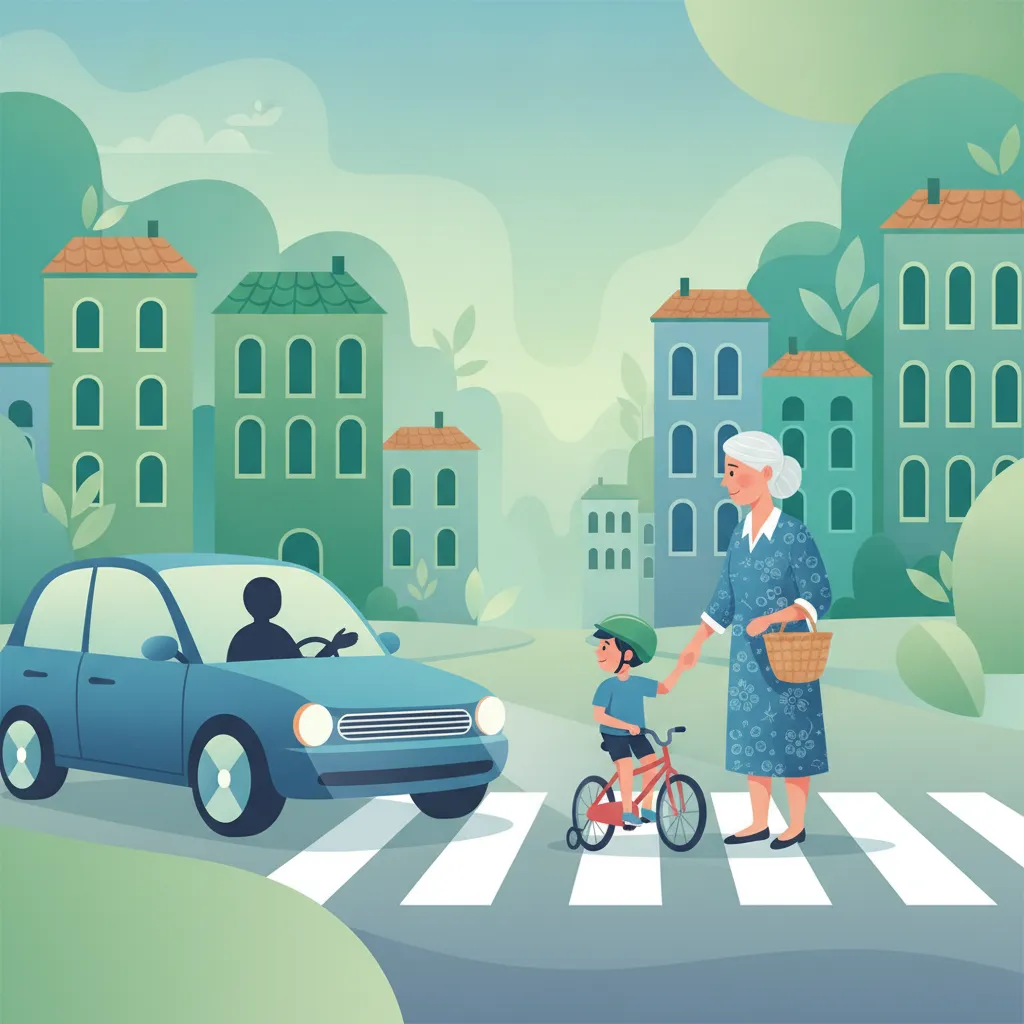
This lesson addresses the critical responsibility of protecting vulnerable road users, such as pedestrians, cyclists, and motorcyclists, who are most at risk in a collision with a heavy vehicle. It teaches drivers to be hyper-aware in urban settings, to anticipate the unpredictable movements of VRUs, and to provide ample space, especially when turning at junctions. A key focus is on scanning for VRUs in blind spots before moving off or making any maneuver.
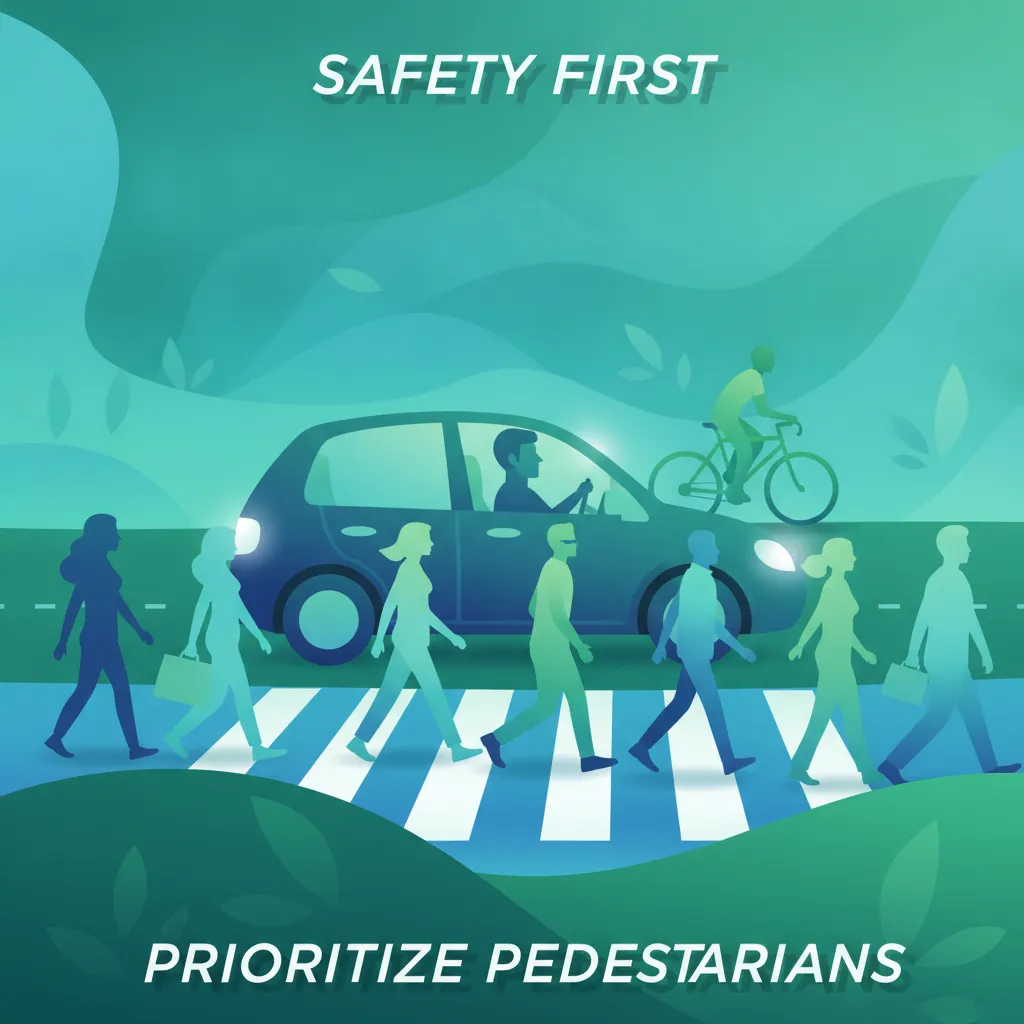
This lesson provides critical guidance on how to safely share the road with vulnerable users, including pedestrians, cyclists, motorcyclists, and children. It highlights the importance of increased awareness in specific areas like school zones and crosswalks. The content teaches techniques for maintaining a safe lateral distance when overtaking, checking blind spots thoroughly, and anticipating the often unpredictable movements of these users.

This lesson introduces the philosophy and techniques of defensive driving, a proactive approach focused on anticipating and mitigating potential hazards. It teaches drivers to maintain constant situational awareness by scanning the road ahead, behind, and to the sides. The content covers how to manage the space around the vehicle, identify potential escape routes, and predict the actions of other road users to prevent dangerous situations from developing.
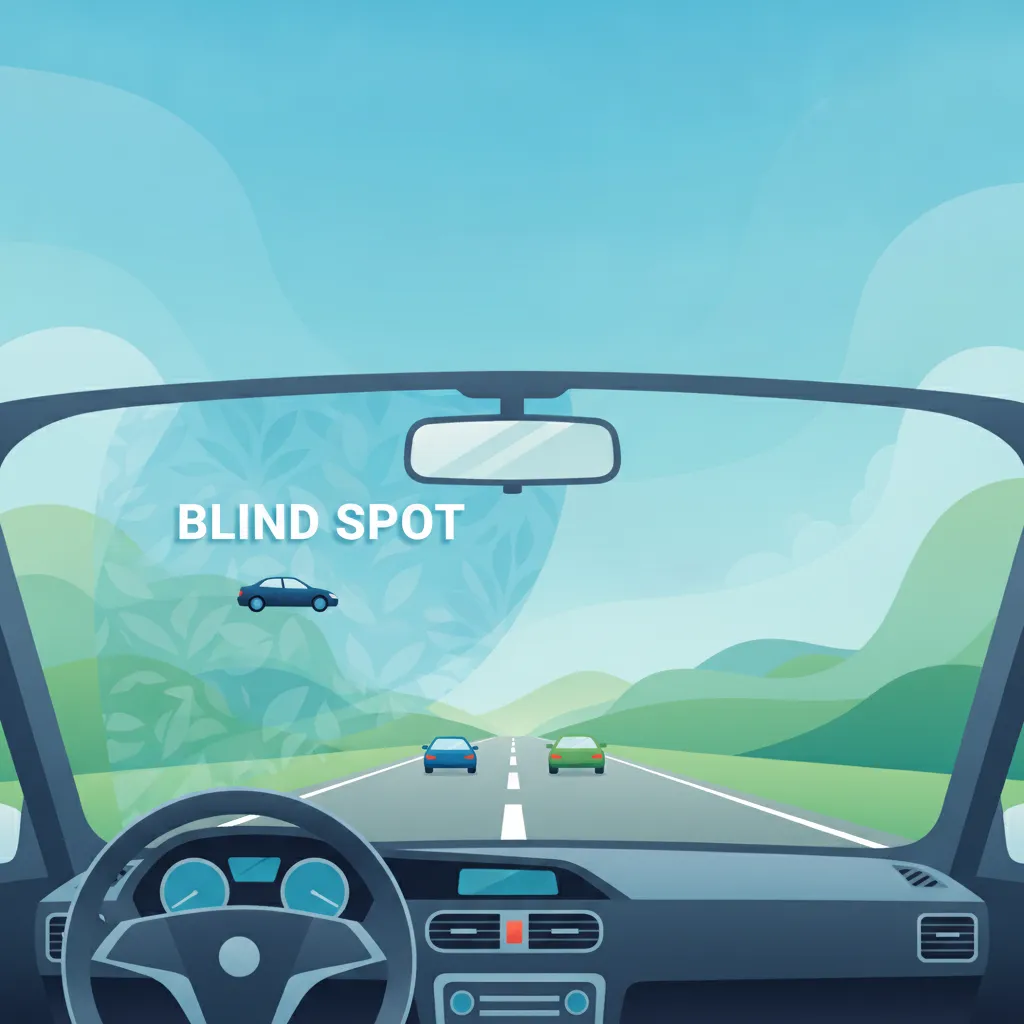
This lesson highlights the large blind spots—or 'no-zones'—that exist to the front, back, and sides of a heavy vehicle, where smaller vehicles, cyclists, and pedestrians can disappear from view. It teaches proactive scanning techniques, the importance of anticipating hazards, and how to use mirrors and direct vision effectively to manage these high-risk areas. Awareness and mitigation of blind spots are crucial for preventing collisions, especially in urban traffic.

This lesson is dedicated to fostering awareness and safe interaction with vulnerable road users commonly found in cities. It details the legal priority of pedestrians at crossings and the importance of giving ample space to cyclists. Additionally, it covers the specific hazards associated with tram tracks and the need to be vigilant around public transport vehicles like buses and taxis.

This lesson addresses the specific challenges of sharing the road with two-wheeled motor vehicles like motorcycles and scooters. It highlights their reduced visibility and stability compared to cars, requiring drivers to double-check blind spots and maintain a greater following distance. The content also discusses common behaviors like lane filtering and the need for drivers to be predictable and signal intentions clearly.
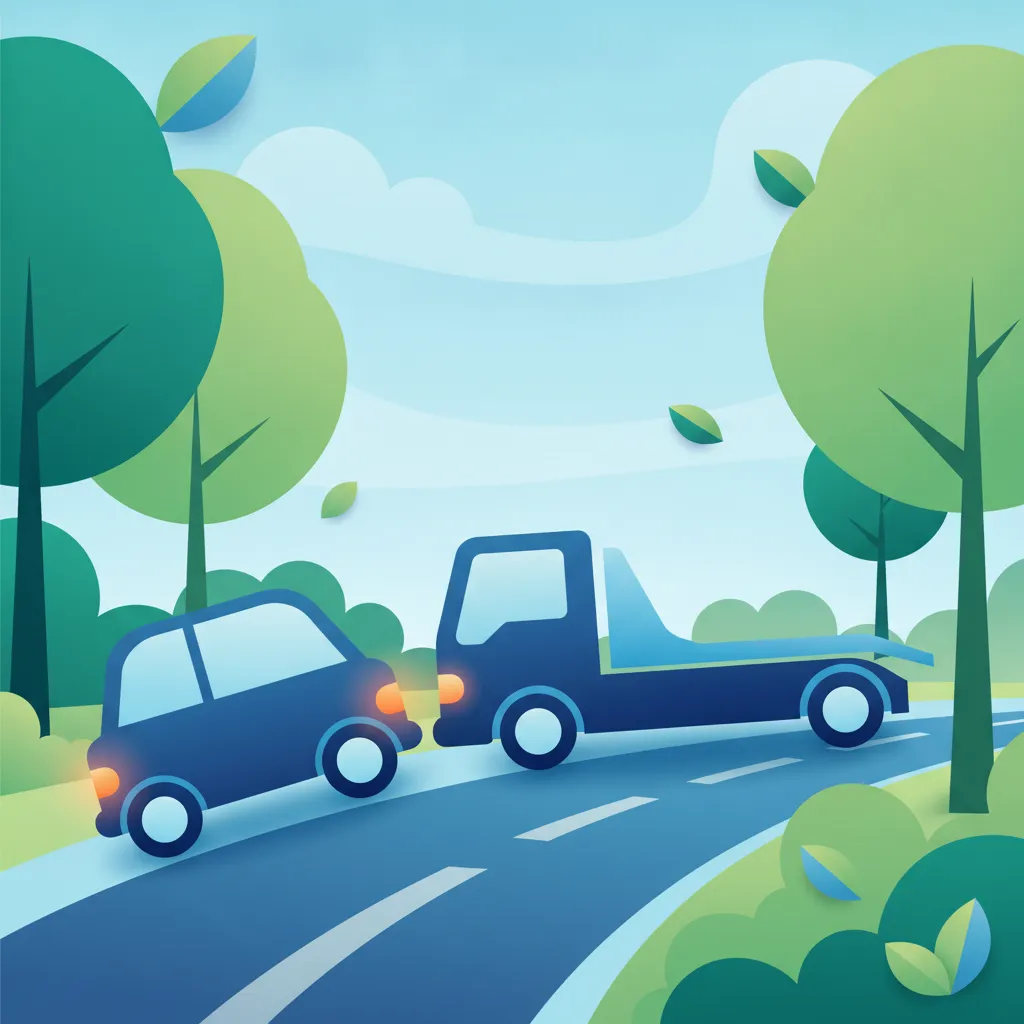
This lesson provides a step-by-step guide for managing a vehicle breakdown safely. It reinforces the procedure for stopping on the hard shoulder, activating hazard lights, and placing a warning triangle at the correct distance. The lesson emphasizes the importance of wearing high-visibility clothing, exiting the vehicle from the side away from traffic, and waiting in a safe location before contacting a roadside assistance service.

This lesson introduces the various electronic driver aids designed to improve visibility and safety during low-speed maneuvering. It covers the use of reversing cameras, blind-spot monitoring systems, and ultrasonic proximity sensors that provide visual and audible warnings. Learners will understand that while these technologies are valuable tools, they are aids to—not replacements for—the driver's own diligent observation and skill.
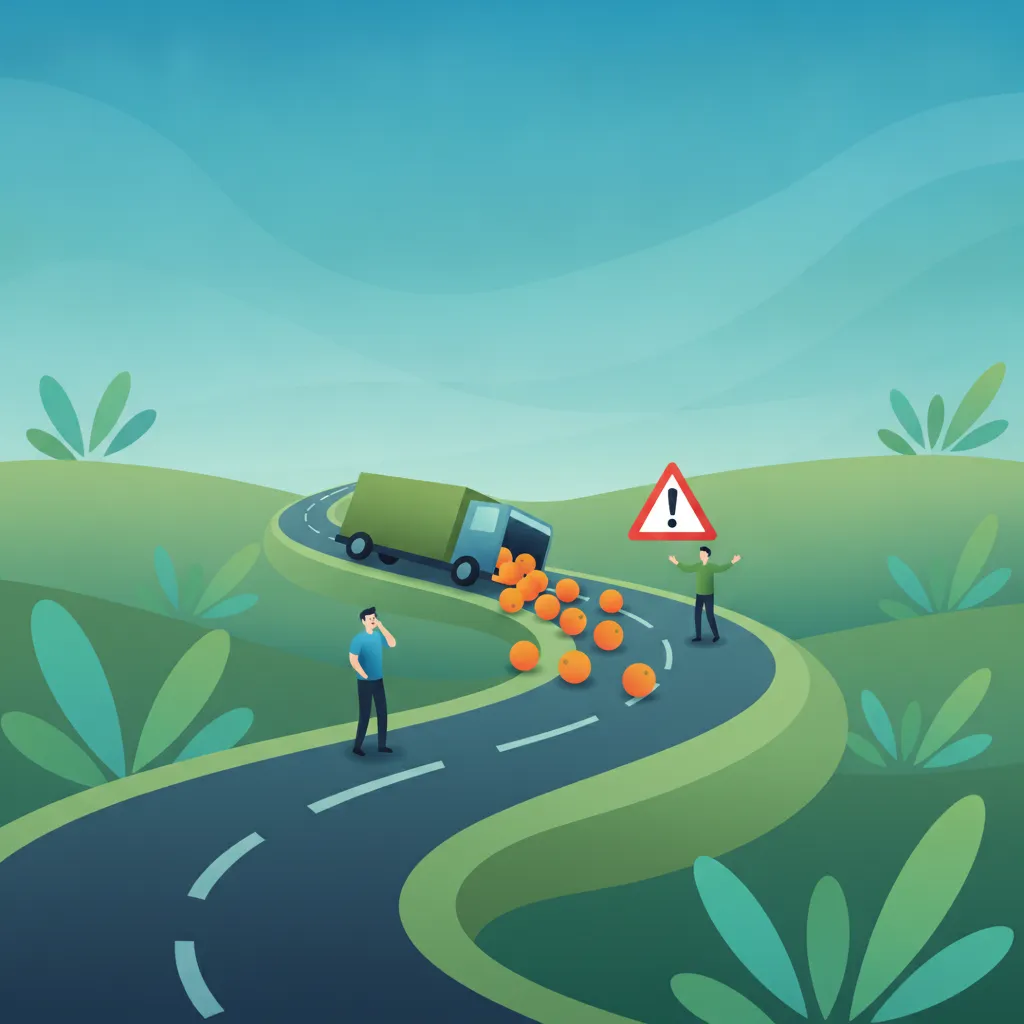
This lesson prepares drivers for incidents beyond a simple breakdown, such as losing part of the load onto the roadway or dealing with a spillage. It outlines the immediate priorities: ensuring personal safety, warning other traffic of the hazard, and notifying the authorities. The lesson also covers the fundamental principles of managing an accident scene, including protecting the area, assessing for casualties, and providing essential information to emergency services.
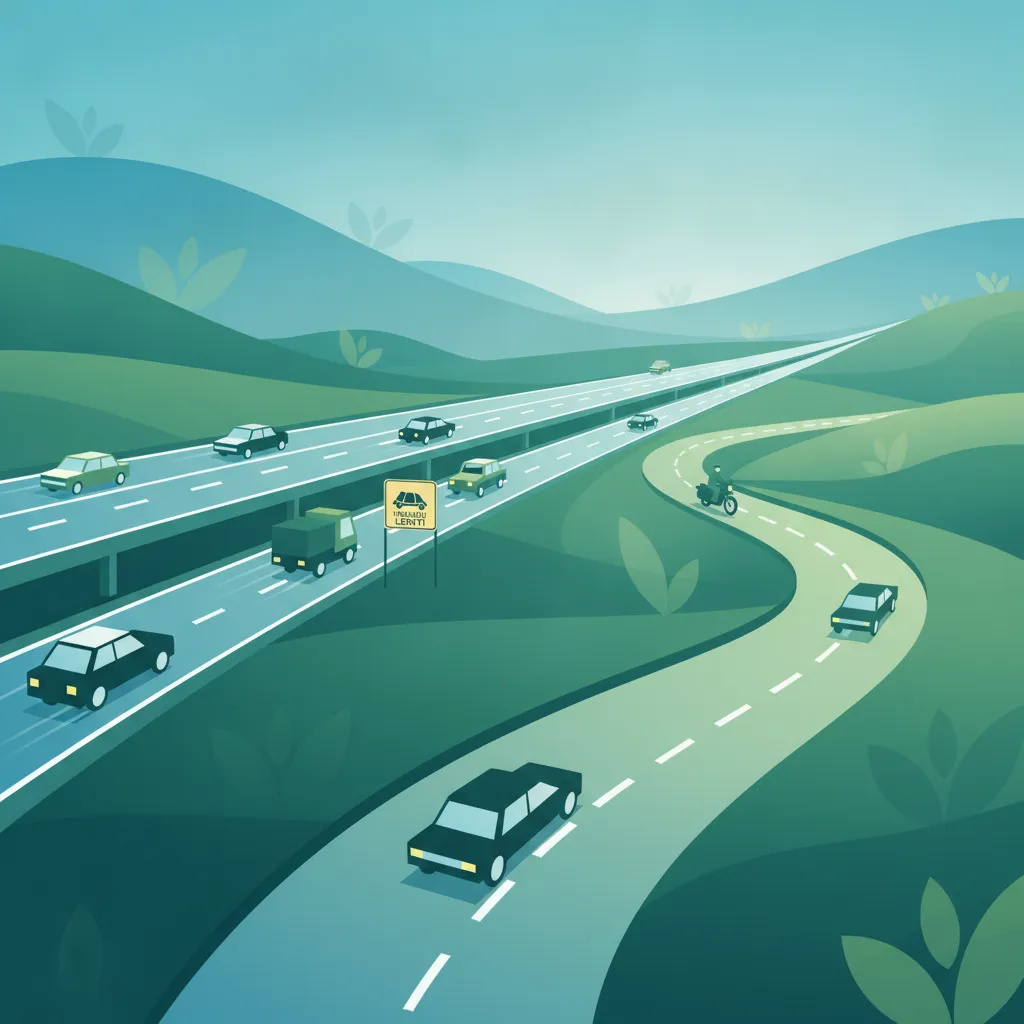
This lesson provides essential rules and techniques for driving on Italian motorways (autostrade) and major extra-urban roads. It explains how to safely merge onto the motorway from an entry ramp, the strict lane discipline required (drive right, overtake left), and how to exit correctly. The content also covers speed regulations, maintaining a safe following distance at high speed, and procedures for using service areas and handling emergencies.
Understand critical safety aspects for heavy goods vehicles operating in urban Italian environments. Covers interactions with vulnerable road users, speed control, and specific regulations relevant to professional drivers navigating city traffic.
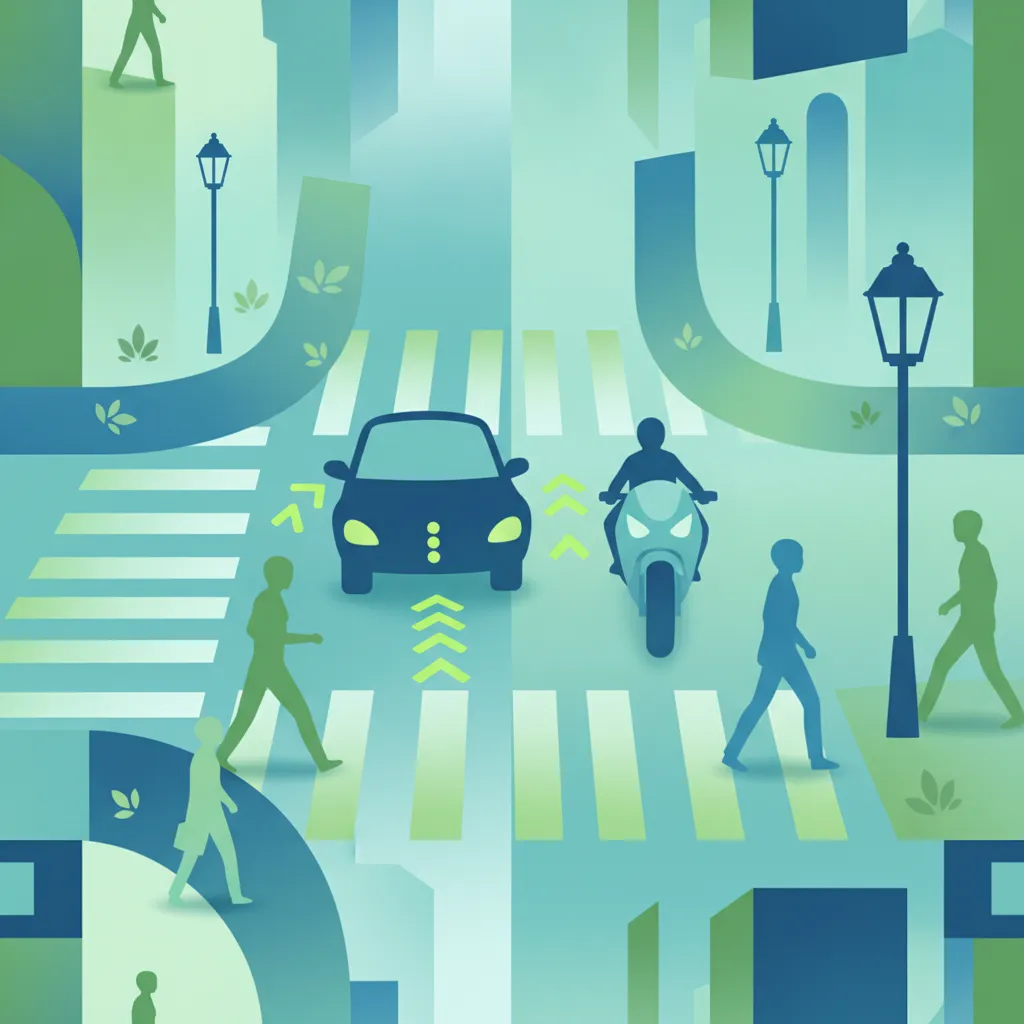
This lesson bridges the gap between general traffic laws and their specific application to heavy goods vehicles. It examines how rules regarding speed limits, lane discipline, overtaking, and priority are modified or have special considerations for trucks due to their size, weight, and reduced maneuverability. Drivers will learn to correctly interpret road signs and signals within the context of operating a large vehicle, ensuring safe and compliant integration with other traffic.

This lesson focuses on the specific regulations and techniques for operating a heavy vehicle on high-speed motorways. It covers mandatory lane discipline for trucks, the rules governing overtaking other heavy vehicles, and the specific speed limits that apply. Best practices for merging onto and exiting the motorway, maintaining safe following distances, and using the hard shoulder only in genuine emergencies are also detailed.
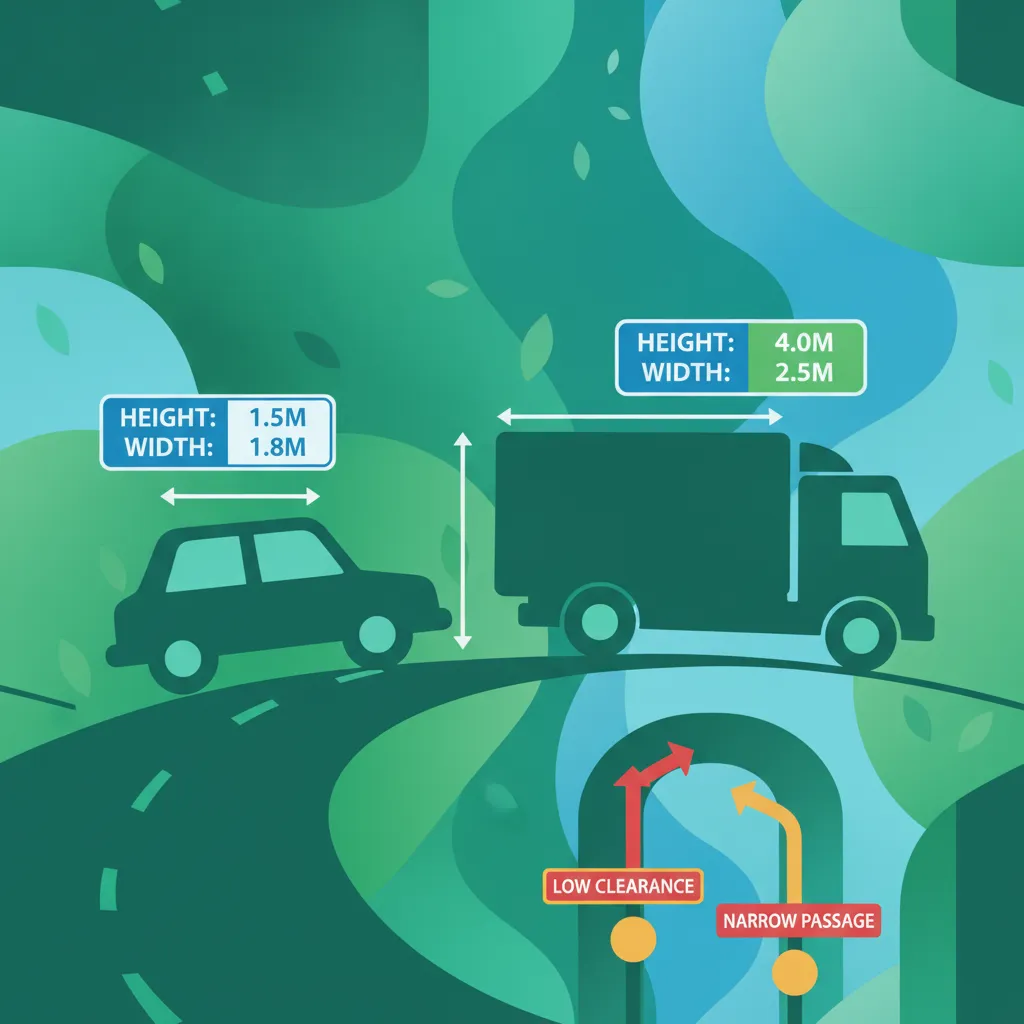
This lesson focuses on the specific dimensional limits that heavy goods vehicles must adhere to on Italian roads, as stipulated by the Codice della Strada. It covers the maximum permissible length, width, and height, explaining how these restrictions impact navigation through tunnels, under bridges, and within urban environments. Learners will also understand the conditions under which special permits for exceptional or oversized transport are required.

This lesson delves into the specific articles of the Italian Codice della Strada that apply to heavy goods vehicles. It outlines the core legal and professional obligations of a driver, including the heightened duty of care owed to other road users and the responsibility for the vehicle's roadworthiness and load. Learners will understand the legal consequences of non-compliance, such as fines and sanctions, reinforcing the importance of adhering to all traffic regulations.
This lesson focuses on the principle of 'appropriate speed' in urban environments, which often means driving slower than the legal maximum. It explains how to assess the environment for potential hazards—such as schools, parked cars, and busy intersections—and adjust speed accordingly to allow for adequate reaction time. Maintaining a safe, consistent speed reduces the need for harsh braking and contributes to a safer environment for everyone.

This lesson focuses on the importance of meticulous pre-journey planning for urban deliveries. It teaches drivers how to use maps and digital tools to plan routes that avoid physical restrictions (low bridges, narrow streets), legal restrictions (ZTLs, weight limits), and temporary disruptions. Effective route planning saves time, reduces stress, and ensures that all deliveries can be made legally and safely.

This lesson outlines the correct protocols for stopping to make a delivery in a public area. It covers the legal use of designated loading bays, the importance of making the vehicle highly visible with hazard lights, and ensuring that the parking brake is securely applied. The lesson stresses the need to conduct loading and unloading activities efficiently and safely, without causing undue obstruction or danger to other road users and pedestrians.

This lesson provides a comprehensive overview of the essential documentation required for both the driver and the vehicle. It covers the driver's license (patente), CQC card, vehicle registration (carta di circolazione), insurance certificate, and transport-specific documents like the cargo manifest. Learners will understand the importance of ensuring all documents are valid and readily available for inspection by authorities to avoid legal penalties and operational delays.
This lesson covers the complete set of lighting, reflective equipment, and protective guards mandated for heavy vehicles. It explains the function of each light, from headlights to side markers, and the importance of keeping them clean and operational to ensure the vehicle is visible to others. The lesson also details the legal requirements and safety purpose of side guards and rear underrun protection, which are designed to protect vulnerable road users in a collision.
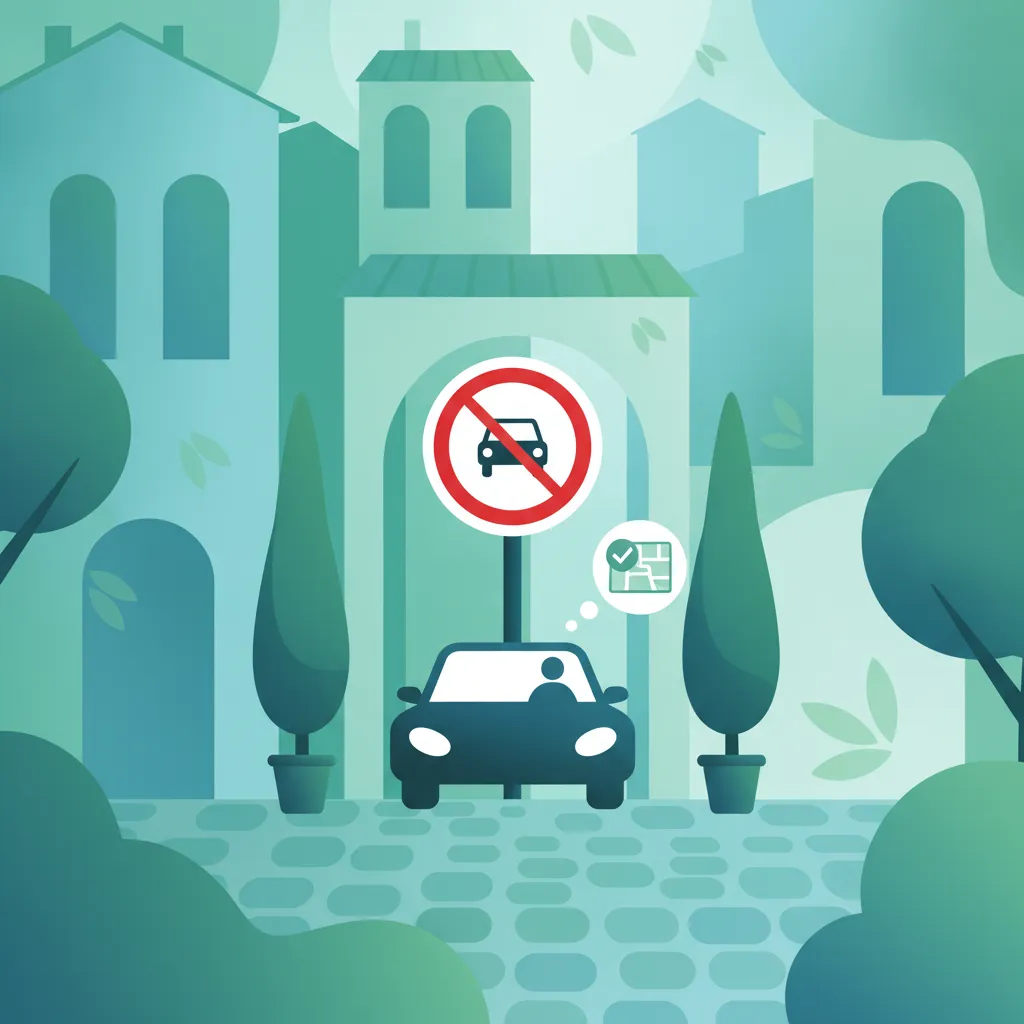
This lesson explains the concept of 'Zone a Traffico Limitato' (ZTL), common in Italian city centers, which restricts vehicle access at certain times. It covers how to identify ZTL boundaries, understand the operating hours, and the procedures for obtaining permits for commercial deliveries. The lesson also touches on environmental zones that may restrict access based on a vehicle's emission standards.
Find clear answers to common questions learners have about Interactions with Pedestrians, Cyclists, and Two-Wheelers. Learn how the lesson is structured, which driving theory objectives it supports, and how it fits into the overall learning path of units and curriculum progression in Italy. These explanations help you understand key concepts, lesson flow, and exam focused study goals.
Heavy vehicles have large blind spots and significant length, making it easy for cyclists to be 'hidden' from view. They are also much more vulnerable in a collision, so you must always maintain a safe distance and never turn across their path without verifying their position.
You must check all your mirrors carefully before moving or turning. If a cyclist is alongside you, you must yield until they have passed or turned, ensuring you do not trap them against the curb or street furniture.
The exam often uses visual scenarios of junctions and city streets. You will be tested on your ability to correctly identify who has priority and where your vehicle's specific hazards—like rear-swing or blind spots—intersect with the paths of pedestrians and cyclists.
Yes, you must always yield to pedestrians waiting to cross at a pedestrian crossing. As a professional driver of a heavy vehicle, you are expected to show greater caution and stop well in advance to ensure they can cross safely.
Start searching now to pinpoint exactly which Italian driving theory topics, road signs, or traffic rules you need to master. Use our advanced filters to build a custom practice session and ensure you're fully prepared for every aspect of your official driving licence exam.