
This lesson explores the critical impact of alcohol and drugs on driving ability and the specific legal framework in Italy. As part of your Patente B preparation, you will learn why sobriety is essential for safety and understand the strict penalties applied to DUI offences.
Lesson content overview
Driving a vehicle demands complete focus, quick reactions, and sound judgment. The consumption of alcohol or psychoactive substances profoundly impairs these critical abilities, drastically increasing the risk of accidents. In Italy, operating a vehicle under the influence (DUI) carries severe legal consequences, reflecting the serious threat it poses to public safety. This lesson details the physiological impact of these substances, the strict legal limits defined by the Codice della Strada (Italian Highway Code), and the comprehensive penalties for violations, especially emphasizing the zero-tolerance policy for novice and professional drivers.
Alcohol is a psychoactive substance that acts as a central nervous system depressant. Even in small quantities, it significantly affects a driver's cognitive, psychomotor, and sensory functions. These impairments are not always immediately obvious to the individual consuming alcohol, leading to a dangerous overestimation of one's driving capabilities.
The primary ways alcohol impairs driving include:
The effects of alcohol are not instantaneous; they depend on various factors such as body weight, gender, metabolism, the amount of food consumed, and the type of alcoholic beverage. There is no reliable method to quickly sober up, as only time allows the liver to metabolize alcohol. Coffee, cold showers, or exercise do not accelerate this process.
Beyond alcohol, psychoactive substances, commonly referred to as drugs, also pose an extreme risk to road safety. This category includes illicit drugs, many prescription medications, and even some over-the-counter (OTC) substances that can alter mental state, perception, mood, or behavior.
The impairment caused by drugs can manifest in various forms:
It is a common misunderstanding that if a medication is prescribed by a doctor, it is always safe to drive while taking it. Drivers must always check the side effects of any medication (prescription or over-the-counter) and consult their doctor or pharmacist if there is any doubt about driving safety. Many medications carry warnings about operating heavy machinery or vehicles.
In Italy, there is a zero-tolerance policy for driving under the influence of drugs. This means that if any detectable psychoactive substance is found in a driver's system that impairs driving ability, it constitutes a severe offense, regardless of the perceived level of impairment or whether it was medically prescribed. The focus is on the presence of the substance and its potential to affect driving performance.
Italian law establishes clear and strict legal limits for Blood Alcohol Concentration (BAC), measured in grams of ethanol per 100 milliliters of blood (‰). These limits vary depending on the driver's experience and professional status. Exceeding these thresholds constitutes a Driving Under Influence (DUI) offense, with penalties escalating based on the detected BAC level.
For standard drivers holding a full Patente B license (or equivalent) for more than three years, the maximum permissible BAC is 0.5‰ (0.5 grams per liter).
Italy enforces a zero-tolerance policy for beginner drivers. This means that drivers holding a provisional Patente B license (or a full Patente B license for less than three years) must have a BAC of 0.0‰ (zero point zero per mille). Any detectable amount of alcohol in their system is illegal.
If you are a novice driver, it is crucial to remember that this 0.0‰ limit applies for the first three years after obtaining your Patente B. This rule is designed to protect both you and other road users as you gain experience.
A similar zero-tolerance policy (0.0‰ BAC) applies to professional drivers, including:
Drivers of public transport vehicles (buses, trams).
Drivers of goods vehicles (trucks, lorries) with a maximum authorized mass exceeding 3.5 tonnes.
Taxi drivers.
Drivers operating vehicles used for the transport of dangerous goods.
Rationale: These drivers carry a greater responsibility due to the nature of their vehicles, the number of passengers they transport, or the hazardous materials they handle. Any impairment could lead to catastrophic consequences.
BAC is typically measured through:
Drivers are legally obligated to comply with requests for breath or blood tests. Refusal to undergo testing is itself a serious offense under Italian law, often leading to penalties equivalent to or even more severe than a high-level DUI offense.
Driving under the influence of alcohol or drugs in Italy, as outlined in the Codice della Strada, results in a range of severe penalties. These sanctions are designed to deter impaired driving and include monetary fines, points deduction from the driving license, license suspension or revocation, and in serious cases, imprisonment. The severity of the penalties increases with the level of impairment, repeated offenses, and the driver's category.
The Italian legal system categorizes alcohol-related DUI offenses based on the detected BAC level:
This is considered a mild offense, applicable only to experienced drivers (those not subject to the 0.0‰ zero-tolerance rule).
This constitutes a more serious offense.
This is considered the most severe category of alcohol-related DUI offense.
Penalties are significantly increased (up to a third for fines and double for license suspension/revocation and imprisonment) if the DUI offense occurs between 10 PM and 7 AM, as this period is considered to carry higher risks due to reduced visibility and potentially higher speeds.
Driving under the influence of drugs (any detectable psychoactive substance that impairs driving ability) carries penalties equivalent to the most severe alcohol-related DUI offenses (BAC above 1.5‰).
For drivers subject to the 0.0‰ zero-tolerance policy (novice drivers within their first three years and professional drivers), any detectable BAC leads to enhanced penalties. The fines and license suspension periods are significantly increased compared to those for standard drivers at equivalent BAC levels. For example, a novice driver caught with a BAC of 0.2‰, which would be below the limit for an experienced driver, would still face significant fines and license suspension.
Italy operates a points system for driving licenses. Every driver starts with 20 points. Traffic infractions lead to points deduction. Accumulating too many points can lead to license suspension or revocation.
Refusing to submit to a breathalyzer, blood test, or drug test when requested by law enforcement is itself a criminal offense. The penalties for refusal are generally equivalent to or even more severe than those for the most serious DUI offenses (BAC above 1.5‰ or drug driving). This includes high fines, license revocation, and imprisonment.
It is vital for all drivers to be aware of common pitfalls and specific situations that can lead to DUI offenses:
Beyond the immediate legal consequences for the individual, impaired driving has profound societal costs:
The strict laws against impaired driving are not merely punitive; they are fundamental to promoting road safety and protecting all road users from preventable harm.
Understanding and adhering to Italy's regulations regarding alcohol and drug use while driving is paramount for every driver.
By internalizing these rules and their underlying rationale, drivers contribute significantly to their own safety and the safety of everyone on Italian roads.
This lesson covers Italy's strict DUI regulations under the Codice della Strada, which establish a 0.5‰ BAC limit for experienced drivers and zero-tolerance policies (0.0‰) for novice drivers within three years of obtaining their Patente B and for professional drivers. Alcohol and drugs impair critical driving faculties including coordination, reaction time, and judgment, with penalties ranging from fines and points deduction to license revocation and imprisonment. The lesson emphasizes that zero-tolerance for drugs applies to all drivers regardless of prescription status, and refusal to undergo testing carries equivalent severe consequences.
A short set of high-value points that capture the most important learning from this lesson.
Italian law sets a maximum BAC of 0.5‰ for experienced drivers, but novice drivers and professional drivers must maintain 0.0‰ (zero tolerance)
Alcohol impairs driving through reduced coordination, slower reaction time, impaired judgment, narrowed vision, and reduced concentration
Italy applies zero-tolerance for any detectable psychoactive drug, regardless of prescription status or perceived impairment level
DUI penalties are graduated by BAC level and include fines, points deduction, license suspension/revocation, and imprisonment
Refusing a breathalyzer or drug test carries penalties equivalent to the most severe DUI offenses
Explore all units and lessons included in this driving theory course.
The 0.0‰ zero-tolerance rule applies to novice drivers for the first three years after obtaining Patente B and to all professional drivers
Penalties increase significantly for offenses occurring between 10 PM and 7 AM due to higher risk conditions
There is no quick method to sober up—only time allows the liver to metabolize alcohol
Prescribed or over-the-counter medications can impair driving ability and may still result in DUI charges
The Codice della Strada governs all DUI regulations and penalties in Italy
Assuming 'just one drink' is safe—individual factors like body weight and metabolism can push even small amounts over the 0.5‰ limit
Believing that prescribed medications are automatically safe to drive with—prescription drugs can still cause impairment
Underestimating residual alcohol the morning after heavy drinking, which can still result in positive BAC readings
Mixing substances (alcohol with prescription or OTC drugs) amplifies impairment unpredictably
Thinking refusal to submit to testing avoids penalties—refusal is treated as equivalent to the most serious DUI offense
Lesson content overview
A short set of high-value points that capture the most important learning from this lesson.
Italian law sets a maximum BAC of 0.5‰ for experienced drivers, but novice drivers and professional drivers must maintain 0.0‰ (zero tolerance)
Alcohol impairs driving through reduced coordination, slower reaction time, impaired judgment, narrowed vision, and reduced concentration
Italy applies zero-tolerance for any detectable psychoactive drug, regardless of prescription status or perceived impairment level
DUI penalties are graduated by BAC level and include fines, points deduction, license suspension/revocation, and imprisonment
Refusing a breathalyzer or drug test carries penalties equivalent to the most severe DUI offenses
Explore all units and lessons included in this driving theory course.
The 0.0‰ zero-tolerance rule applies to novice drivers for the first three years after obtaining Patente B and to all professional drivers
Penalties increase significantly for offenses occurring between 10 PM and 7 AM due to higher risk conditions
There is no quick method to sober up—only time allows the liver to metabolize alcohol
Prescribed or over-the-counter medications can impair driving ability and may still result in DUI charges
The Codice della Strada governs all DUI regulations and penalties in Italy
Assuming 'just one drink' is safe—individual factors like body weight and metabolism can push even small amounts over the 0.5‰ limit
Believing that prescribed medications are automatically safe to drive with—prescription drugs can still cause impairment
Underestimating residual alcohol the morning after heavy drinking, which can still result in positive BAC readings
Mixing substances (alcohol with prescription or OTC drugs) amplifies impairment unpredictably
Thinking refusal to submit to testing avoids penalties—refusal is treated as equivalent to the most serious DUI offense
Explore search topics learners often look for when studying Alcohol, Drugs, and Driving Under Influence. These topics reflect common questions about road rules, driving situations, safety guidance, and lesson level theory preparation for learners in Italy.
Browse additional driving theory lessons that cover connected traffic rules, road signs, and common driving situations related to this topic. Improve your understanding of how different rules interact across everyday traffic scenarios.
Understand the full range of legal sanctions for DUI offenses in Italy, including fines, license suspension, revocation, and imprisonment. Covers BAC limits, novice driver rules, and drug driving.
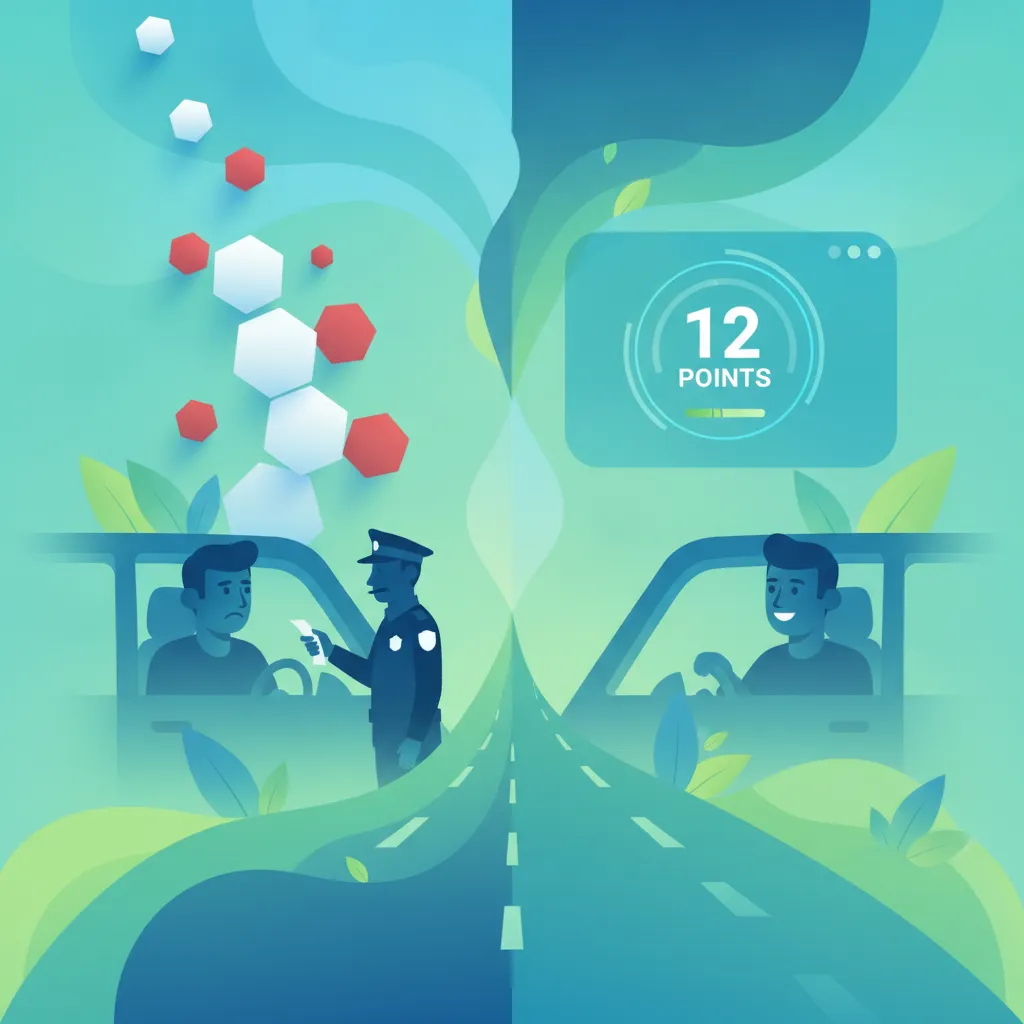
This lesson provides a comprehensive review of the legal consequences for violating traffic laws in Italy. It reinforces the workings of the points system, explaining how different offenses lead to deductions and how a total loss of points results in license revocation. The content also covers the scale of monetary fines for various infractions and the conditions under which a driver's license may be temporarily suspended.

This lesson provides a clear overview of the legal penalties for traffic violations in Italy. It explains the structure of fines and the penalty point system that can lead to license suspension or revocation. The content also touches on more severe consequences, including criminal liability for incidents causing injury, to emphasize the importance of lawful riding.
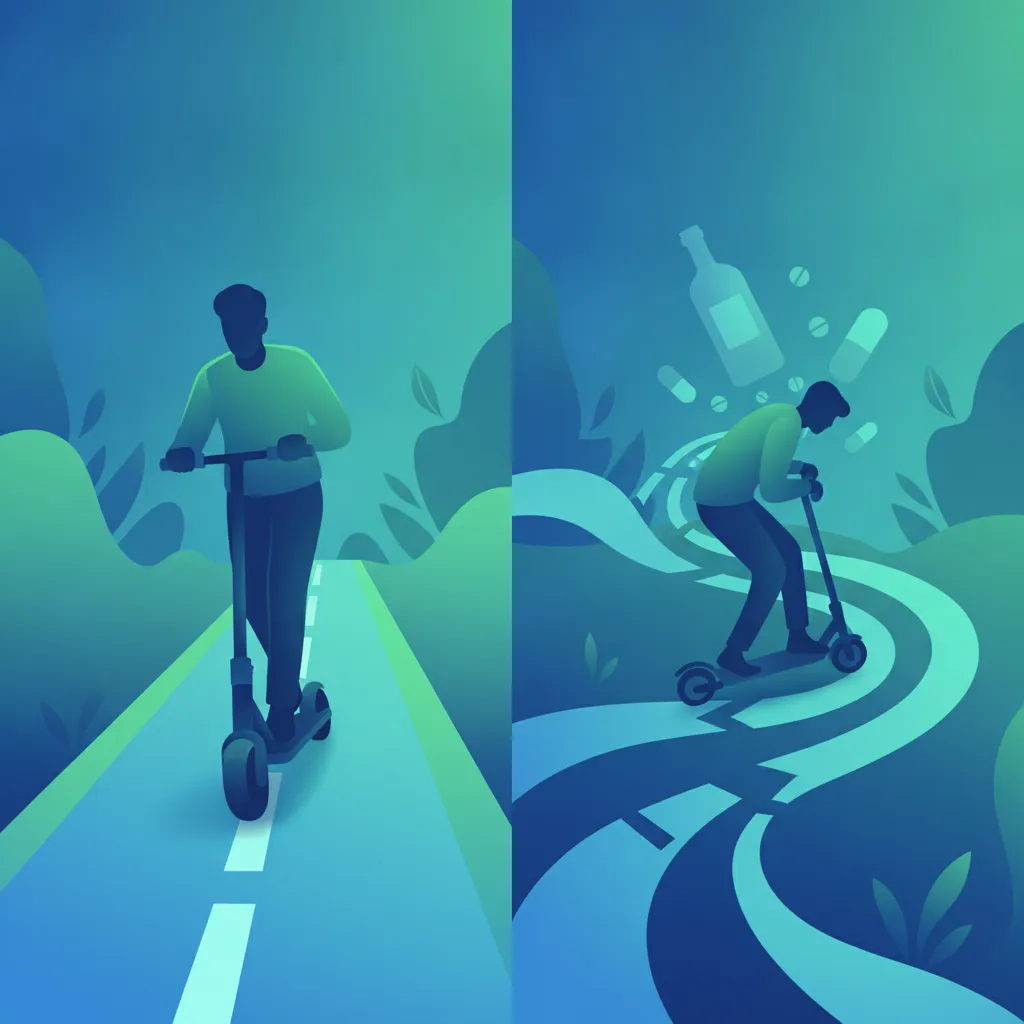
This lesson details the dangerous effects of alcohol, illegal drugs, and some prescription or over-the-counter medications on a rider's ability to operate a motorcycle safely. It explains how these substances impair coordination, judgment, vision, and reaction time. The content covers the strict legal blood alcohol concentration (BAC) limits in Italy and the severe legal penalties for riding under the influence.
This lesson provides a clear overview of the legal consequences for failing to comply with road transport regulations in Italy. It covers the system of fines for common offenses like speeding, overloading, and violations of driving hours. The lesson also explains the penalty point system that can lead to license suspension and touches upon the responsibilities and potential liability of the transport company.
This lesson provides a detailed explanation of the Italian driver's license points system (decurtazione punti). It covers how various traffic infractions lead to specific point deductions and the cumulative effect on a driver's license status. Learners will understand the thresholds that trigger license suspension or revocation, the associated monetary fines, and the official procedures for recovering lost points.
This lesson focuses on the specific regulations applicable to beginner drivers (neopatentati) during their first three years of holding a Patente B. It outlines the stricter speed limits on motorways and main roads, as well as the restrictions on vehicle power-to-weight ratios. Furthermore, it details the absolute zero-tolerance policy for alcohol consumption and the increased penalties for traffic violations during this probationary period.
Learn about the physiological and cognitive effects of alcohol and drugs on driving, including impaired coordination, reaction times, and judgment. Understand the risks for all drivers under Italian law.
This lesson details the dangerous effects of alcohol, illegal drugs, and some prescription or over-the-counter medications on a rider's ability to operate a motorcycle safely. It explains how these substances impair coordination, judgment, vision, and reaction time. The content covers the strict legal blood alcohol concentration (BAC) limits in Italy and the severe legal penalties for riding under the influence.
Find clear answers to common questions learners have about Alcohol, Drugs, and Driving Under Influence. Learn how the lesson is structured, which driving theory objectives it supports, and how it fits into the overall learning path of units and curriculum progression in Italy. These explanations help you understand key concepts, lesson flow, and exam focused study goals.
The general limit is 0.5 grams per liter of blood. Exceeding this limit leads to administrative and criminal penalties depending on the concentration level.
Yes, for the first three years after obtaining the license, new drivers (neopatentati) are subject to a zero-tolerance policy, meaning the blood alcohol concentration must be 0.0 g/l.
Refusing a test requested by traffic authorities is considered a serious offence and carries penalties equivalent to driving with the highest level of alcohol intoxication, including heavy fines and immediate license suspension.
Yes, driving under the influence of drugs is a serious crime in Italy. It results in immediate license revocation, severe criminal fines, and potential imprisonment, regardless of the specific substance.
Start searching now to pinpoint exactly which Italian driving theory topics, road signs, or traffic rules you need to master. Use our advanced filters to build a custom practice session and ensure you're fully prepared for every aspect of your official driving licence exam.