
This lesson explores the legal framework governing traffic violations for Patente AM holders in Italy. It is a vital component of the final curriculum unit, ensuring you understand the serious responsibilities that come with riding a moped or light quadricycle on public roads.

Lesson content overview
Riding a moped or scooter in Italy with a Patente AM license comes with significant responsibilities, not just for your safety but also for adherence to the law. The Italian legal system imposes clear and strict penalties for traffic violations, ranging from monetary fines to the permanent revocation of your driving privileges. This comprehensive lesson explains the structure of these legal consequences, helping you understand the implications of non-compliance and encouraging responsible riding habits.
Traffic laws in Italy are designed to ensure the safety and order of its roads for all users. These regulations are primarily consolidated within the Codice della Strada (Italian Highway Code), which outlines the rules of the road, vehicle requirements, and the specific sanctions for infractions. For Patente AM riders, understanding these penalties is not just about avoiding punishment; it's about making informed decisions that contribute to a safer riding environment for everyone.
As a holder of a Patente AM license, often a first step into independent mobility, you are subject to the same traffic laws as more experienced drivers. Ignorance of the law is not a valid defense, and the consequences of violations can be severe, impacting your ability to ride and potentially leading to significant financial and legal burdens. Awareness of the penalty point system, fine categories, and the triggers for license suspension or revocation is essential to protect your privilege to ride and to ensure your safety and the safety of others.
Traffic offenses in Italy are typically addressed through a two-tier system of sanctions: administrative penalties and, for more serious conduct, criminal penalties. This tiered approach allows the legal system to respond appropriately to the severity of the violation, from minor infractions to actions that pose a grave danger to public safety.
The most common form of punishment for traffic violations in Italy falls under administrative penalties. These include monetary fines, which serve as a financial deterrent, and the penalty point system (Patente a Punti), which tracks a rider's compliance over time. These penalties are imposed for most breaches of the Codice della Strada that do not result in severe injury or death. Their primary purpose is to correct unsafe driving behaviors and encourage consistent adherence to traffic rules.
In cases where traffic violations lead to severe outcomes, such as serious injury or death, the legal consequences can escalate to criminal penalties. This level of sanction reflects the state's condemnation of highly dangerous or negligent behavior. Criminal penalties can include imprisonment, heavy fines, and the permanent revocation of the driving license, underscoring the profound responsibility that comes with operating a vehicle.
Italian traffic fines are categorized based on the severity of the infraction, with higher categories corresponding to more dangerous or reckless behaviors. These categories determine both the monetary amount payable and the number of penalty points associated with the violation.
Category I fines are imposed for less severe violations that still constitute a breach of the Codice della Strada. These infractions generally carry the lowest monetary penalties and typically result in the deduction of 1 to 2 penalty points. Examples include minor speeding offenses (e.g., exceeding the limit by up to 20 km/h) or minor priority rule violations.
Current ranges for Category I fines are generally between €42 and €173. While seemingly small, repeated Category I violations can quickly accumulate penalty points, leading to more serious consequences.
Category II fines are levied for more serious violations that pose a greater risk to road safety. These infractions carry higher monetary penalties and typically result in the deduction of 2 to 4 penalty points. Common examples for Patente AM riders include failing to wear a certified helmet, using a handheld mobile phone while riding, or not having the required vehicle documents.
The monetary range for Category II fines is generally between €173 and €695. These fines are significant and are designed to strongly deter behaviors that directly compromise safety.
Category III fines are reserved for the most serious traffic violations, which carry substantial risks to public safety or demonstrate a high degree of negligence. These infractions are associated with the highest monetary penalties and result in the deduction of 6 or more penalty points, often leading to immediate license suspension or even revocation. Driving under the influence (DUI) of alcohol or drugs, excessive speeding (e.g., exceeding the limit by more than 40 km/h), and reckless endangerment fall into this category.
Category III fines typically range from €695 to €6,928 and can be accompanied by additional sanctions, including criminal charges. The aim of these severe penalties is to protect the public from highly dangerous conduct.
The Patente a Punti (Driving License Points) system is a fundamental aspect of Italian traffic law, designed to provide a graduated response to traffic offenses. Every driver, including Patente AM holders, starts with a balance of 20 points. Points are deducted for violations and can be recovered over time or through specific courses.
Specific numbers of penalty points are assigned to each traffic violation according to the Codice della Strada. The number of points deducted correlates directly with the severity of the offense:
It's important to note that a driver can lose a maximum of 6 points for a single infraction, even if the violation would theoretically carry more points (e.g., a very high speeding offense might result in 10 points, but only 6 would be deducted from the license for that single event). However, if multiple violations occur simultaneously, the points for each can accumulate, up to a maximum of 15 points in total, unless one of the offenses by itself triggers an immediate suspension.
Points are recorded on your driver's record and accumulate with each violation. If a driver reaches a total of 20 points, their license is automatically suspended. For new drivers (including Patente AM holders), specific rules may apply, such as earning additional points for good conduct over a certain period or having points doubled for certain infractions during the first three years of holding a license.
Conversely, points can be recovered:
Do not assume that points reset annually. The system is cumulative, and only two years of infraction-free driving will restore points automatically.
The best way to maintain your penalty points and ensure the longevity of your Patente AM license is through consistent safe riding. This includes:
License suspension is a temporary prohibition from operating any motor vehicle, including mopeds and scooters, in Italy. It is a serious consequence that riders must understand and avoid.
The most common trigger for license suspension is the accumulation of 20 penalty points. Once this threshold is reached, the license is suspended. For a first suspension due to accumulated points, the duration is typically 60 days. Subsequent suspensions for reaching 20 points will increase in length.
However, license suspension can also be an immediate consequence of certain severe infractions, regardless of the point balance. Examples include:
A license suspension applies to ALL vehicle categories you are authorized to drive, not just the one involved in the offense.
After a period of license suspension, the driver is typically required to undergo a specific process to have their driving privileges reinstated. This may include:
Serving the Suspension Period: The driver must wait for the specified suspension duration to conclude.
Attending a Correction Course: In many cases, drivers are required to attend a compulsory road safety or correction course.
Re-examination: Depending on the severity of the offense or repeated suspensions, drivers may be required to pass a theory and/or practical driving exam again.
Medical Examination: In some instances, particularly for DUI offenses, a medical examination to verify fitness to drive may be mandatory.
Failing to comply with these requirements or driving during a suspension period will result in even harsher penalties, including extended suspension periods, higher fines, and potential vehicle confiscation.
License revocation is the most severe administrative penalty in Italy, representing the permanent loss of the right to drive any motor vehicle. It is distinct from suspension in its permanence and the difficulty of reacquiring a license.
License revocation is typically triggered by:
Reacquiring a driving license after revocation is a lengthy and challenging process. It requires:
For new drivers, particularly Patente AM holders, understanding that irresponsible actions can lead to permanent loss of driving privileges is a critical lesson.
Beyond administrative penalties, the Italian legal system holds individuals criminally liable when traffic violations result in severe harm, such as injury or death. This represents the most serious legal consequence for road users.
Criminal liability for traffic accidents is primarily governed by articles 589 and 590 of the Italian Penal Code, which address vehicular homicide (omicidio stradale) and vehicular injury (lesioni personali stradali gravi o gravissime), respectively. These charges apply when death or serious injury is caused by a driver's negligent, reckless, or intentional conduct while operating a vehicle.
Key factors that can elevate a traffic offense to a criminal act include:
A conviction for vehicular homicide or vehicular injury carries extremely severe penalties:
These severe outcomes highlight the immense responsibility of every road user to operate their vehicle safely and lawfully.
Understanding specific violations can help Patente AM riders avoid common pitfalls. Here are some of the most frequent offenses and their consequences:
Speed limits are a cornerstone of road safety. Violating them can lead to various penalties depending on how much you exceed the limit:
For all AM category vehicles, the use of a certified helmet is mandatory.
Italy has strict DUI laws, especially for novice drivers, which includes Patente AM holders. The legal blood alcohol concentration (BAC) limit is 0.5 g/l for experienced drivers, but for those holding a license for less than three years, the limit is 0.0 g/l.
Using a handheld mobile phone while riding a moped or scooter is strictly prohibited due to the significant distraction it causes.
Disregarding priority rules at intersections or failing to yield to pedestrians are common causes of accidents.
The specific circumstances surrounding a traffic violation can influence the severity of the penalty, even for the same base infraction.
The legal consequences of traffic violations in Italy are designed to deter dangerous behavior and maintain order on the roads. For Patente AM riders, proactive compliance is the most effective strategy for avoiding fines, points, and more severe penalties.
By embracing these practices, you not only protect yourself and others but also ensure that your journey on Italy's roads remains free from legal complications.
This lesson explains the legal consequences Patente AM riders face for traffic violations in Italy, organized around the two-tier sanction system of administrative fines and criminal penalties. It details how the Patente a Punti penalty point system works, with specific thresholds for point deduction, license suspension at 20 accumulated points, and permanent revocation for severe or repeated offenses. The content covers fine categories, DUI laws with the stricter 0.0 g/l BAC limit for novice drivers, and criminal liability for accidents causing injury or death. Understanding these consequences is essential for both safe riding and passing the theory exam, as Italy treats traffic violations seriously with financial, point-based, and potential imprisonment consequences.
A short set of high-value points that capture the most important learning from this lesson.
Traffic violations in Italy are addressed through a two-tier system: administrative penalties (fines and points) for most offenses, and criminal penalties for severe injury or death.
The Patente a Punti system starts every driver with 20 points; a single violation can deduct up to 6 points maximum, but simultaneous violations can accumulate up to 15 points total.
Category I fines (€42–€173) apply to minor infractions, Category II fines (€173–€695) for moderate violations like no helmet, and Category III fines (€695–€6,928) for serious offenses like DUI.
Reaching 20 penalty points triggers a 60-day license suspension for first offense, while criminal convictions for vehicular homicide or injury result in permanent license revocation.
Novice Patente AM drivers face a zero-tolerance BAC limit of 0.0 g/l for the first three years, making any alcohol consumption before riding a criminal offense.
Explore all units and lessons included in this driving theory course.
License suspension applies to ALL vehicle categories you hold, not just the one involved in the violation.
Points are restored automatically only after two consecutive years without violations; the system does not reset annually.
If multiple violations occur in a single incident, points for each can stack up to 15 total, potentially triggering immediate suspension if one offense alone carries suspension.
Criminal charges under articles 589 and 590 of the Italian Penal Code (omicidio stradale and lesioni personali stradali) apply when violations cause death or serious injury.
Contextual factors like adverse weather, urban areas with vulnerable users, or an improperly maintained vehicle can aggravate penalties even for the same base infraction.
Assuming points reset yearly or that low-level fines have no long-term impact; repeated Category I violations accumulate points quickly.
Believing that a first DUI offense with low BAC will only result in a fine; for novice drivers, any alcohol (BAC > 0.0) triggers criminal-level consequences and license suspension.
Thinking license suspension only affects the specific vehicle used; it prohibits driving any motor vehicle in Italy.
Riding with a hands-free phone mounted on the handlebars is generally permitted, but holding a phone to talk or text results in a Category II fine and 2 points.
Failing to distinguish between suspension (temporary, reversible) and revocation (permanent, requiring full re-examination) as they have vastly different recovery processes.
Lesson content overview
A short set of high-value points that capture the most important learning from this lesson.
Traffic violations in Italy are addressed through a two-tier system: administrative penalties (fines and points) for most offenses, and criminal penalties for severe injury or death.
The Patente a Punti system starts every driver with 20 points; a single violation can deduct up to 6 points maximum, but simultaneous violations can accumulate up to 15 points total.
Category I fines (€42–€173) apply to minor infractions, Category II fines (€173–€695) for moderate violations like no helmet, and Category III fines (€695–€6,928) for serious offenses like DUI.
Reaching 20 penalty points triggers a 60-day license suspension for first offense, while criminal convictions for vehicular homicide or injury result in permanent license revocation.
Novice Patente AM drivers face a zero-tolerance BAC limit of 0.0 g/l for the first three years, making any alcohol consumption before riding a criminal offense.
Explore all units and lessons included in this driving theory course.
License suspension applies to ALL vehicle categories you hold, not just the one involved in the violation.
Points are restored automatically only after two consecutive years without violations; the system does not reset annually.
If multiple violations occur in a single incident, points for each can stack up to 15 total, potentially triggering immediate suspension if one offense alone carries suspension.
Criminal charges under articles 589 and 590 of the Italian Penal Code (omicidio stradale and lesioni personali stradali) apply when violations cause death or serious injury.
Contextual factors like adverse weather, urban areas with vulnerable users, or an improperly maintained vehicle can aggravate penalties even for the same base infraction.
Assuming points reset yearly or that low-level fines have no long-term impact; repeated Category I violations accumulate points quickly.
Believing that a first DUI offense with low BAC will only result in a fine; for novice drivers, any alcohol (BAC > 0.0) triggers criminal-level consequences and license suspension.
Thinking license suspension only affects the specific vehicle used; it prohibits driving any motor vehicle in Italy.
Riding with a hands-free phone mounted on the handlebars is generally permitted, but holding a phone to talk or text results in a Category II fine and 2 points.
Failing to distinguish between suspension (temporary, reversible) and revocation (permanent, requiring full re-examination) as they have vastly different recovery processes.
Explore search topics learners often look for when studying Legal Consequences of Traffic Violations. These topics reflect common questions about road rules, driving situations, safety guidance, and lesson level theory preparation for learners in Italy.
Browse additional driving theory lessons that cover connected traffic rules, road signs, and common driving situations related to this topic. Improve your understanding of how different rules interact across everyday traffic scenarios.
Understand the Italian Codice della Strada penalties for traffic violations. Learn about administrative sanctions like fines and the demerit point system, and the implications for your Patente AM license.

This lesson provides a comprehensive review of the legal consequences for violating traffic laws in Italy. It reinforces the workings of the points system, explaining how different offenses lead to deductions and how a total loss of points results in license revocation. The content also covers the scale of monetary fines for various infractions and the conditions under which a driver's license may be temporarily suspended.
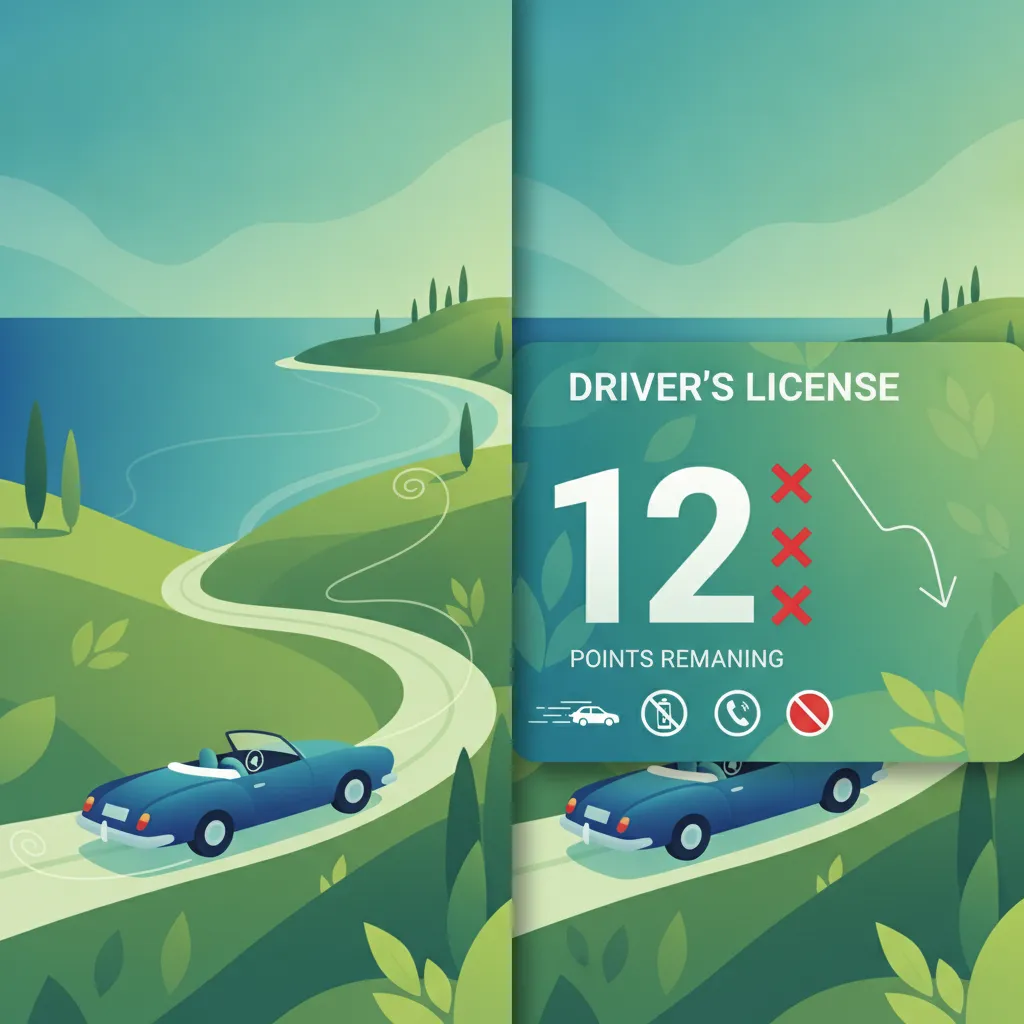
This lesson provides a detailed explanation of the Italian driver's license points system (decurtazione punti). It covers how various traffic infractions lead to specific point deductions and the cumulative effect on a driver's license status. Learners will understand the thresholds that trigger license suspension or revocation, the associated monetary fines, and the official procedures for recovering lost points.
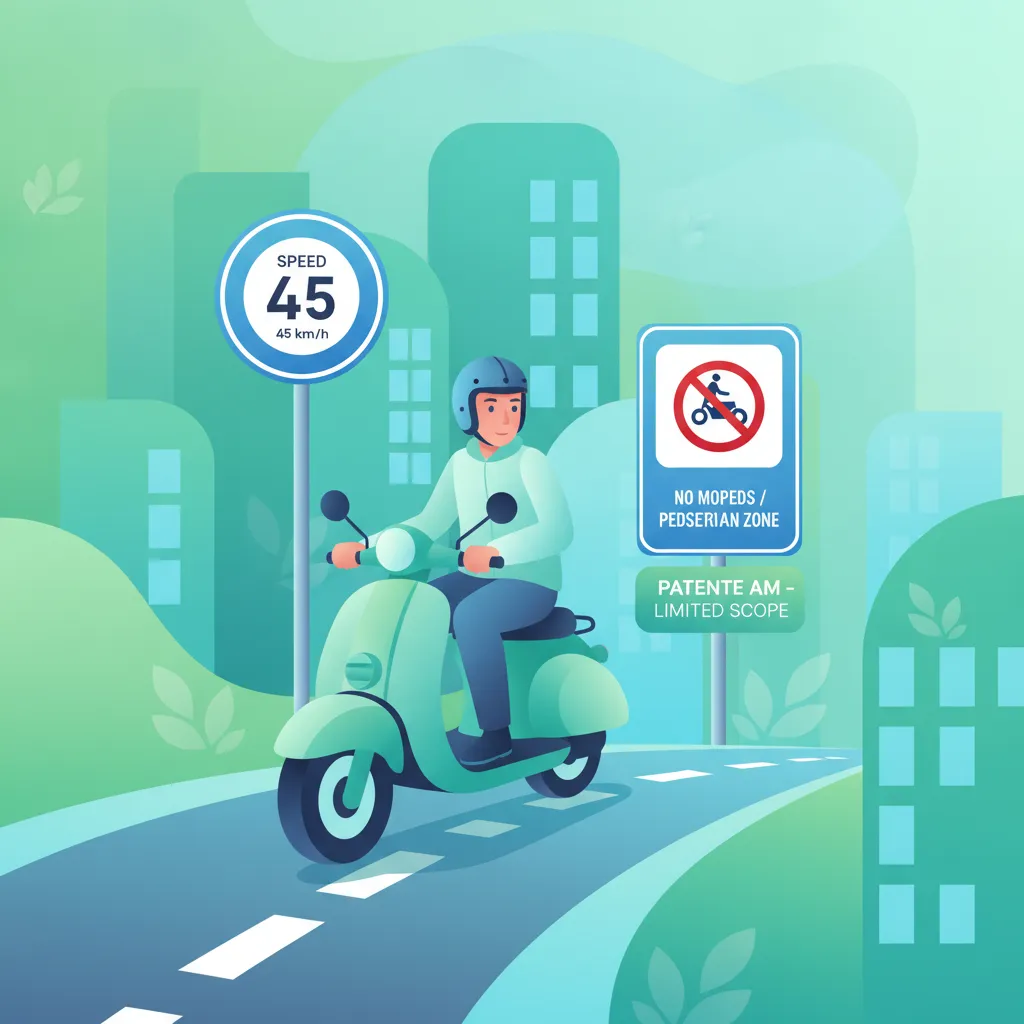
This lesson clarifies the precise scope of the Patente AM license, defining the vehicle categories it permits based on technical specifications. It details the legal limits on power, engine displacement, and maximum speed for mopeds and similar vehicles. You will also learn about the minimum age, registration process, and mandatory insurance needed to operate on public roads.
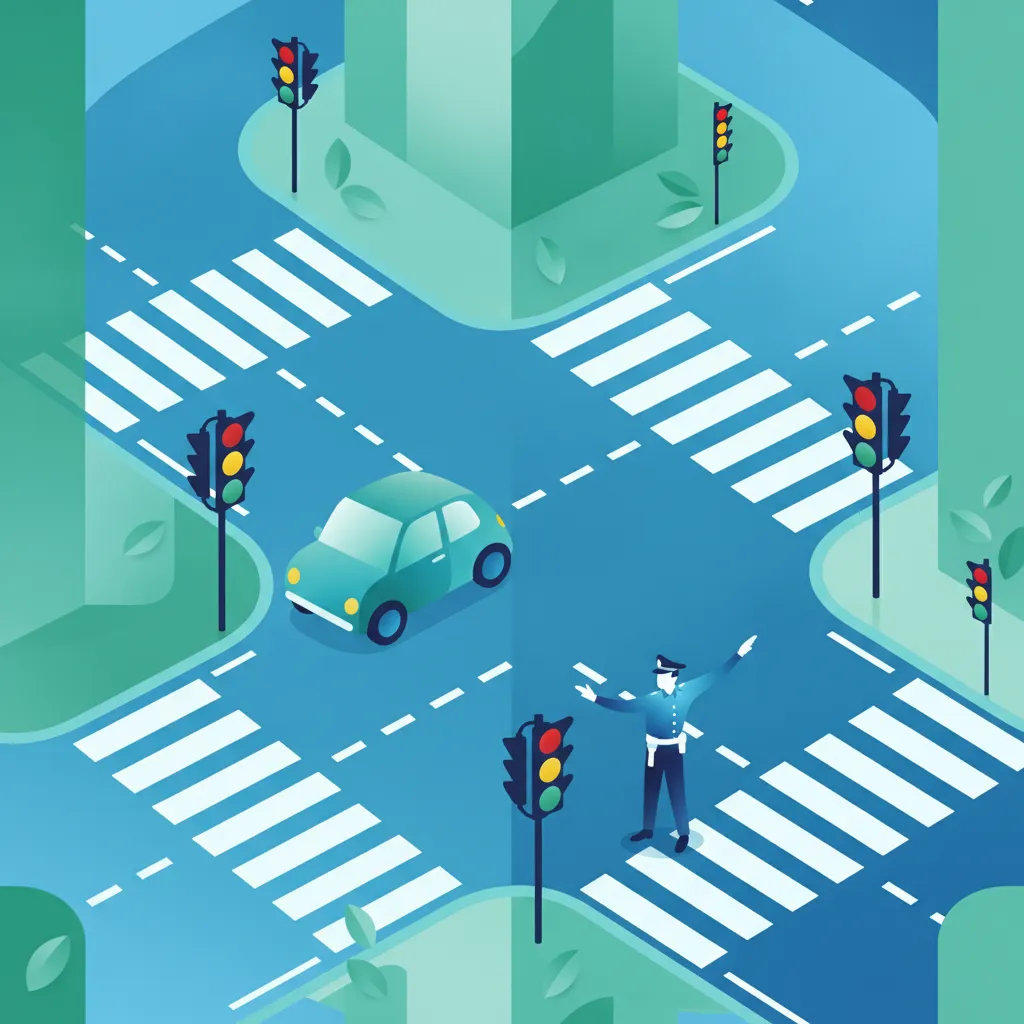
This lesson explains the function of Italian traffic light systems and the meaning of various road markings. You will learn the rules for red, amber, and green signals, including flashing lights and directional arrows. It also covers how to interpret lane lines, stop lines, and other surface markings that dictate correct vehicle positioning and movement.
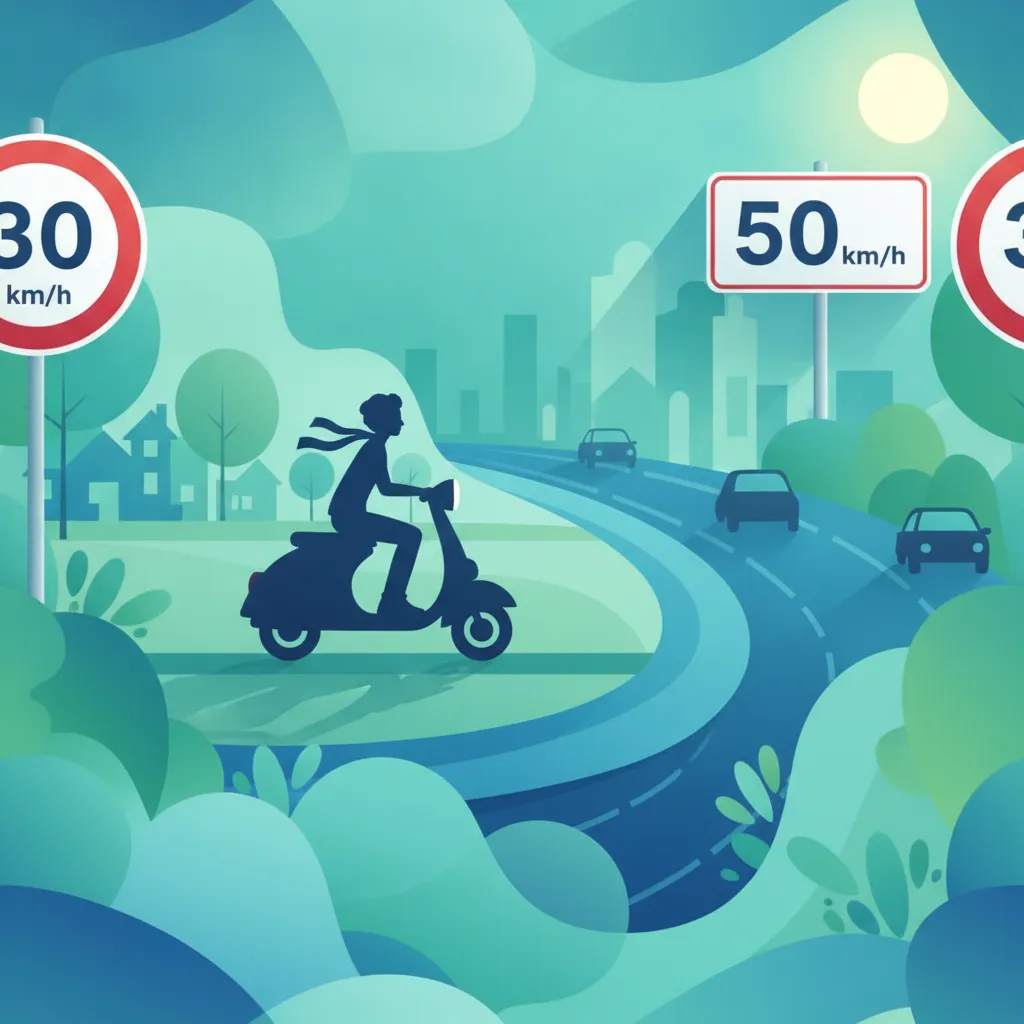
This lesson explores the specific speed limits applicable to AM vehicles across various zones, including urban, residential, and rural roads. Emphasis is placed on understanding the signage that indicates both permanent and temporary speed restrictions. Learners will also examine the rationale behind these limits and the importance of adapting speed to road conditions and traffic density.
This lesson defines the scope of the Italian Patente B license according to the Codice della Strada. It clarifies the specific types of vehicles, including maximum weight and passenger capacity, that can be operated. The content also details the official requirements for applicants, such as minimum age, necessary health certifications, and vision standards needed to qualify for the license.
This lesson provides a clear overview of the legal consequences for failing to comply with road transport regulations in Italy. It covers the system of fines for common offenses like speeding, overloading, and violations of driving hours. The lesson also explains the penalty point system that can lead to license suspension and touches upon the responsibilities and potential liability of the transport company.

This lesson details the continuous duties of a Patente AM license holder beyond passing the exam. It covers the importance of regular vehicle maintenance, including checks on tires, brakes, and lights. The lesson also reinforces the legal obligation to maintain valid insurance and registration while adhering to all traffic laws for personal and public safety.
Explore the serious legal ramifications beyond administrative penalties, including criminal charges for vehicular homicide and injury, and the consequences of severe driving offenses for Patente AM holders.
This lesson details the profound and dangerous effects of alcohol and drugs on driving ability, including impaired coordination, slowed reaction time, and poor judgment. It specifies the legal blood alcohol concentration (BAC) limits in Italy, including the strict zero-tolerance policy for beginner drivers. The content also outlines the severe legal consequences of a DUI conviction, which can include heavy fines, license revocation, and imprisonment.
This lesson provides a comprehensive review of the legal consequences for violating traffic laws in Italy. It reinforces the workings of the points system, explaining how different offenses lead to deductions and how a total loss of points results in license revocation. The content also covers the scale of monetary fines for various infractions and the conditions under which a driver's license may be temporarily suspended.
This lesson focuses on the specific regulations applicable to beginner drivers (neopatentati) during their first three years of holding a Patente B. It outlines the stricter speed limits on motorways and main roads, as well as the restrictions on vehicle power-to-weight ratios. Furthermore, it details the absolute zero-tolerance policy for alcohol consumption and the increased penalties for traffic violations during this probationary period.
This lesson provides a clear overview of the legal consequences for failing to comply with road transport regulations in Italy. It covers the system of fines for common offenses like speeding, overloading, and violations of driving hours. The lesson also explains the penalty point system that can lead to license suspension and touches upon the responsibilities and potential liability of the transport company.
This lesson addresses high-risk behaviors often associated with young and inexperienced riders. It highlights the dangers of distractions like mobile phone use, the influence of peer pressure, and the severe consequences of speeding or riding under the influence of substances. Understanding these risks is the first step toward developing a mature and responsible approach to riding.

This lesson outlines the mandatory legal procedures a rider must follow after being involved in a traffic accident. It covers the obligation to stop, render aid if necessary, and report the incident to the appropriate authorities. The content explains the process of exchanging information with other parties, documenting the scene for insurance purposes, and the potential legal and financial liabilities that may arise.
This lesson provides a detailed explanation of the Italian driver's license points system (decurtazione punti). It covers how various traffic infractions lead to specific point deductions and the cumulative effect on a driver's license status. Learners will understand the thresholds that trigger license suspension or revocation, the associated monetary fines, and the official procedures for recovering lost points.
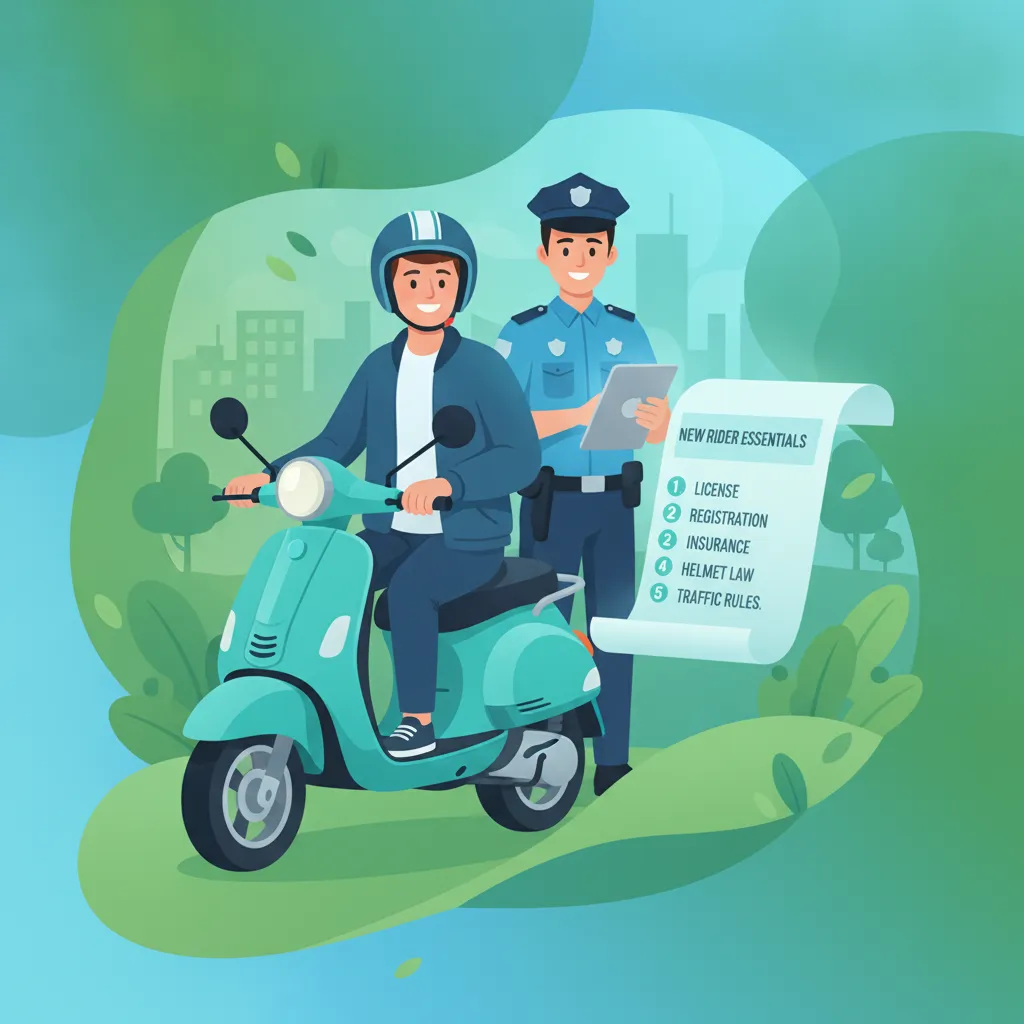
This lesson focuses on the legal obligations that first-time riders must meet to operate an AM vehicle safely and legally. It details the mandatory use of certified helmets and appropriate protective clothing. Furthermore, it outlines fundamental traffic laws new riders must know and the legal repercussions of non-compliance, such as fines and penalty points.
Find clear answers to common questions learners have about Legal Consequences of Traffic Violations. Learn how the lesson is structured, which driving theory objectives it supports, and how it fits into the overall learning path of units and curriculum progression in Italy. These explanations help you understand key concepts, lesson flow, and exam focused study goals.
New riders start with a balance of points. If you commit specific traffic violations, points are deducted. Losing all points leads to the requirement to retake the theory and practical driving tests.
Yes, for serious infractions such as driving under the influence or fleeing the scene of an accident, authorities can impose immediate license suspension or revocation regardless of your existing point balance.
No, fines are categorized based on the severity of the offense. Minor administrative errors incur lower fines, while dangerous maneuvers that put others at risk lead to significantly higher penalties and potential legal prosecution.
Even as a young or first-time rider, you are legally responsible for your actions. Understanding criminal liability helps you realize that causing injury to others on the road results in serious legal consequences beyond just administrative fines.
Start searching now to pinpoint exactly which Italian driving theory topics, road signs, or traffic rules you need to master. Use our advanced filters to build a custom practice session and ensure you're fully prepared for every aspect of your official driving licence exam.