
This lesson guides you through the legal framework surrounding traffic violations for Patente B holders in Italy. You will explore how the license points system functions, the severity of various penalties, and the consequences of serious infractions on your driving privileges.
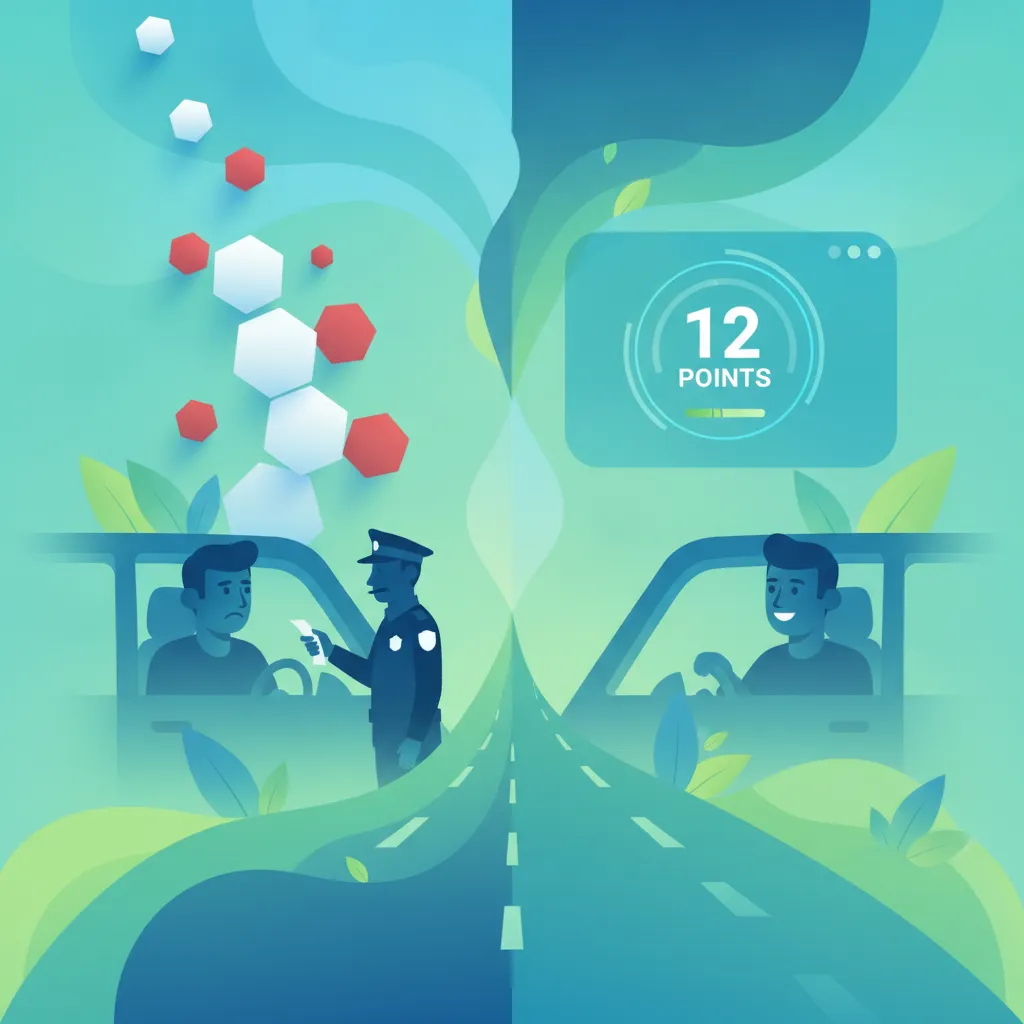
Lesson content overview
Driving in Italy, especially with a Patente B, comes with significant responsibilities. Beyond mastering road signs and rules of priority, understanding the legal consequences of traffic violations is paramount. This lesson provides a comprehensive overview of the Italian points system, monetary fines, and the conditions leading to license suspension or revocation. Mastering this knowledge is not just crucial for passing your Italian Patente B theory exam, but for ensuring you remain a safe and responsible driver throughout your driving career.
The Italian legal framework aims to deter unsafe driving practices through a system of graduated penalties. This integrated approach ensures that every driver is held accountable for their actions on the road, promoting compliance and ultimately enhancing public safety.
The points system is a cornerstone of traffic law enforcement in Italy, designed to encourage safe driving habits and penalize repeated unsafe behavior. It directly impacts a driver's license status and serves as a measurable consequence for infractions.
Every driver issued with an Italian Patente B, including new drivers, starts with an initial balance of 20 points on their driving license. This balance is a reflection of good driving standing. When a driver commits a traffic offense, a specific number of points are deducted from this initial balance, depending on the severity of the violation.
The purpose of this system is two-fold: it provides a clear, progressive penalty for unsafe driving, and it also offers mechanisms for drivers to regain lost points, incentivizing sustained good behavior. The implications are direct: accumulating infractions can lead to a gradual loss of points, eventually triggering more severe consequences like license suspension.
For instance, using a mobile phone while driving might lead to a deduction of 6 points. If a driver initially had 20 points, their balance would drop to 14.
Point Recovery Mechanisms: Drivers are not permanently penalized for minor infractions. The system allows for points to be regained under specific conditions:
It's essential to keep track of your point balance. You can typically check your current points online through official Italian government portals. Staying informed helps you manage your driving behavior proactively.
Monetary fines are financial penalties directly linked to specific traffic infractions. These fines serve as an immediate and tangible deterrent, reinforcing the punitive aspect of traffic law enforcement. The amount of the fine varies significantly based on the severity and category of the violation.
The Italian Codice della Strada (Highway Code) categorizes violations into different levels, which directly influence the fine amount and often the number of points deducted. These categories are often referred to by their "comma" (paragraph) numbers within the legal articles. While the exact fine amounts can be updated, they generally follow a structure based on severity:
When a driver receives a ticket (verbale), it will specify the infraction, the applicable Codice della Strada article, the fine amount, and any points deducted. There are usually payment deadlines, and paying promptly (e.g., within 5 days) often qualifies for a reduced fine. Conversely, delaying or ignoring a fine can lead to increased amounts and additional legal action.
A financial penalty imposed for violating traffic laws, scaled according to the severity of the infraction.
Beyond points and fines, Italian traffic law includes mechanisms for temporarily or permanently withdrawing driving privileges. These measures, license suspension and revocation, are implemented for severe or repeated violations to protect public safety.
License suspension refers to the temporary withdrawal of a driver's license. It prevents the driver from operating any vehicle for a specified period. The most common trigger for suspension is the loss of all 20 initial points.
A driver accumulates enough point deductions to reach a balance of 0 points.
The Ministry of Infrastructure and Transport issues a formal notice to the driver, instructing them to surrender their license.
The license is suspended for a minimum period, which is typically 6 months for the first instance of losing all points. This period can be longer for subsequent instances.
During the suspension period, the driver is legally prohibited from driving any vehicle.
To regain their driving privileges after the suspension period, the driver must successfully pass a theoretical re-examination. In some cases, a practical re-examination might also be required.
Suspension can also occur for specific severe violations, even if the driver still has points remaining. Examples include driving under the influence, refusing a breathalyzer test, or serious hit-and-run incidents. The duration of suspension for such offenses is determined by law and the specific circumstances.
The temporary withdrawal of driving privileges, typically imposed after a driver loses all points or commits specific severe violations.
License revocation represents the permanent loss of a driver's license. This is the most severe penalty and means the driver's license is cancelled outright. Unlike suspension, revocation is not merely a temporary ban; it necessitates restarting the entire licensing process from scratch after a specified ban period.
Revocation is triggered by:
If a license is revoked, the individual is prohibited from applying for a new license for a considerable period, often several years. After this ban period, they must successfully pass both the theoretical and practical driving examinations again, just like a new driver applying for their first license.
The permanent cancellation of a driver's license, requiring the individual to reapply and pass all examinations after a statutory ban period.
The Italian Codice della Strada systematically classifies traffic violations based on their seriousness, typically referred to by the "comma" or paragraph number within relevant articles. Understanding this hierarchical classification is key to grasping the proportionality of penalties. Each category is generally associated with a range of points deductions and monetary fines.
Not all traffic violations result in point deductions. Some infractions, particularly very minor administrative ones, might only incur a monetary fine without affecting your point balance.
The Italian legal framework, primarily the Codice della Strada, clearly outlines the rules for traffic penalties. Adherence to these regulations is mandatory for all licensed drivers.
These rules collectively aim to promote compliance through measurable and escalating consequences, ensuring a safer road environment for everyone.
Understanding specific common violations and their associated penalties can help drivers avoid infractions. Here are some frequent offenses in Italy:
Traffic penalties in Italy are not always static; certain contextual factors can influence the severity of an infraction and its consequences.
Understanding the cause-and-effect relationships within the Italian penalty system highlights the importance of compliant driving.
This lesson on legal consequences builds upon foundational knowledge acquired in earlier sections of the Italian Patente B theory course.
Applying theoretical knowledge to real-world scenarios solidifies understanding of how legal consequences are enforced.
Scenario: Mobile Phone Use
Scenario: Speeding on Motorway
Scenario: Failure to Yield to Emergency Vehicle
The Italian system of legal consequences is rooted in fundamental principles of road safety and behavioral psychology.
Understanding the legal consequences of traffic violations is a cornerstone of responsible driving in Italy. The system is designed to be comprehensive and includes multiple layers of penalties:
By integrating knowledge of road rules with an understanding of these consequences, Patente B drivers can develop a driving style that is not only legally compliant but also inherently safe, contributing to fewer accidents and a better road experience for everyone.
The Italian Patente B points system allocates 20 points to every driver, with deductions ranging from 3 to 10+ points depending on violation severity classified by Codice della Strada comma categories. Monetary fines accompany point deductions, with amounts scaled by infraction seriousness—light violations incur minimal penalties while very serious violations like drunk driving carry substantial fines, immediate suspension risks, and potential revocation. Drivers can recover points through two years of good behavior (regaining 2 points) or voluntary re-education courses (restoring up to 6 points). Reaching zero points triggers automatic suspension requiring theoretical retesting, while repeated or extreme offenses can lead to permanent license revocation mandating complete re-qualification. Understanding these graduated consequences incentivizes sustained safe driving behavior throughout a driver's career in Italy.
A short set of high-value points that capture the most important learning from this lesson.
Every Italian Patente B holder starts with 20 points on their license, which are deducted for traffic infractions based on severity.
Point deductions range from 3 to 10+ points depending on the violation category (Comma 1-10), with mobile phone use costing 6 points and severe speeding or drunk driving potentially costing 10 or more.
Drivers can recover lost points automatically by maintaining two consecutive years without violations (regaining 2 points) or by completing voluntary re-education courses (recovering up to 6 points).
Losing all 20 points triggers automatic license suspension for a minimum of 6 months, requiring a theoretical re-examination to regain driving privileges.
License revocation (permanent cancellation) applies to repeated suspensions or extremely serious offenses like severe drunk driving, mandating complete re-qualification.
Explore all units and lessons included in this driving theory course.
Light violations (Comma 1) carry minimal fines and points, while very serious violations (Comma 3) like drunk driving or extreme speeding carry the harshest penalties and immediate suspension risks.
Failing to yield to emergency vehicles with sirens and flashing lights results in a 3-point deduction and fine up to €169.
Parking in a disabled zone without a permit is penalized severely with 8 points and fines up to €678.
Prompt fine payment within 5 days often qualifies for reduced amounts, while delays can lead to increased penalties and vehicle seizure.
The Codice della Strada classifies violations hierarchically by comma number within articles, directly determining the associated penalty severity.
Assuming it is safe to check a mobile phone at a red light—handheld phone use while driving is prohibited and carries 6-point deductions regardless of whether the vehicle is moving.
Believing that minor speed excesses (20-40 km/h over the limit) are not serious—these are classified as serious violations (Comma 2) with 3-point penalties and fines up to €169.
Thinking license suspension only occurs for drunk driving—accumulating enough point deductions from multiple minor violations can equally trigger suspension upon reaching zero points.
Overlooking the difference between suspension (temporary, requiring retest) and revocation (permanent, requiring full re-qualification as a new driver).
Assuming no points are deducted for administrative violations like expired insurance—driving without valid insurance results in 6 points, fines up to €203, and vehicle seizure.
Lesson content overview
A short set of high-value points that capture the most important learning from this lesson.
Every Italian Patente B holder starts with 20 points on their license, which are deducted for traffic infractions based on severity.
Point deductions range from 3 to 10+ points depending on the violation category (Comma 1-10), with mobile phone use costing 6 points and severe speeding or drunk driving potentially costing 10 or more.
Drivers can recover lost points automatically by maintaining two consecutive years without violations (regaining 2 points) or by completing voluntary re-education courses (recovering up to 6 points).
Losing all 20 points triggers automatic license suspension for a minimum of 6 months, requiring a theoretical re-examination to regain driving privileges.
License revocation (permanent cancellation) applies to repeated suspensions or extremely serious offenses like severe drunk driving, mandating complete re-qualification.
Explore all units and lessons included in this driving theory course.
Light violations (Comma 1) carry minimal fines and points, while very serious violations (Comma 3) like drunk driving or extreme speeding carry the harshest penalties and immediate suspension risks.
Failing to yield to emergency vehicles with sirens and flashing lights results in a 3-point deduction and fine up to €169.
Parking in a disabled zone without a permit is penalized severely with 8 points and fines up to €678.
Prompt fine payment within 5 days often qualifies for reduced amounts, while delays can lead to increased penalties and vehicle seizure.
The Codice della Strada classifies violations hierarchically by comma number within articles, directly determining the associated penalty severity.
Assuming it is safe to check a mobile phone at a red light—handheld phone use while driving is prohibited and carries 6-point deductions regardless of whether the vehicle is moving.
Believing that minor speed excesses (20-40 km/h over the limit) are not serious—these are classified as serious violations (Comma 2) with 3-point penalties and fines up to €169.
Thinking license suspension only occurs for drunk driving—accumulating enough point deductions from multiple minor violations can equally trigger suspension upon reaching zero points.
Overlooking the difference between suspension (temporary, requiring retest) and revocation (permanent, requiring full re-qualification as a new driver).
Assuming no points are deducted for administrative violations like expired insurance—driving without valid insurance results in 6 points, fines up to €203, and vehicle seizure.
Explore search topics learners often look for when studying Legal Consequences, Penalties, and Points System. These topics reflect common questions about road rules, driving situations, safety guidance, and lesson level theory preparation for learners in Italy.
Browse additional driving theory lessons that cover connected traffic rules, road signs, and common driving situations related to this topic. Improve your understanding of how different rules interact across everyday traffic scenarios.
Learn about the legal consequences for traffic violations in Italy. This lesson covers the Patente B points system, how points are deducted and recovered, and the scale of monetary fines for different infractions.
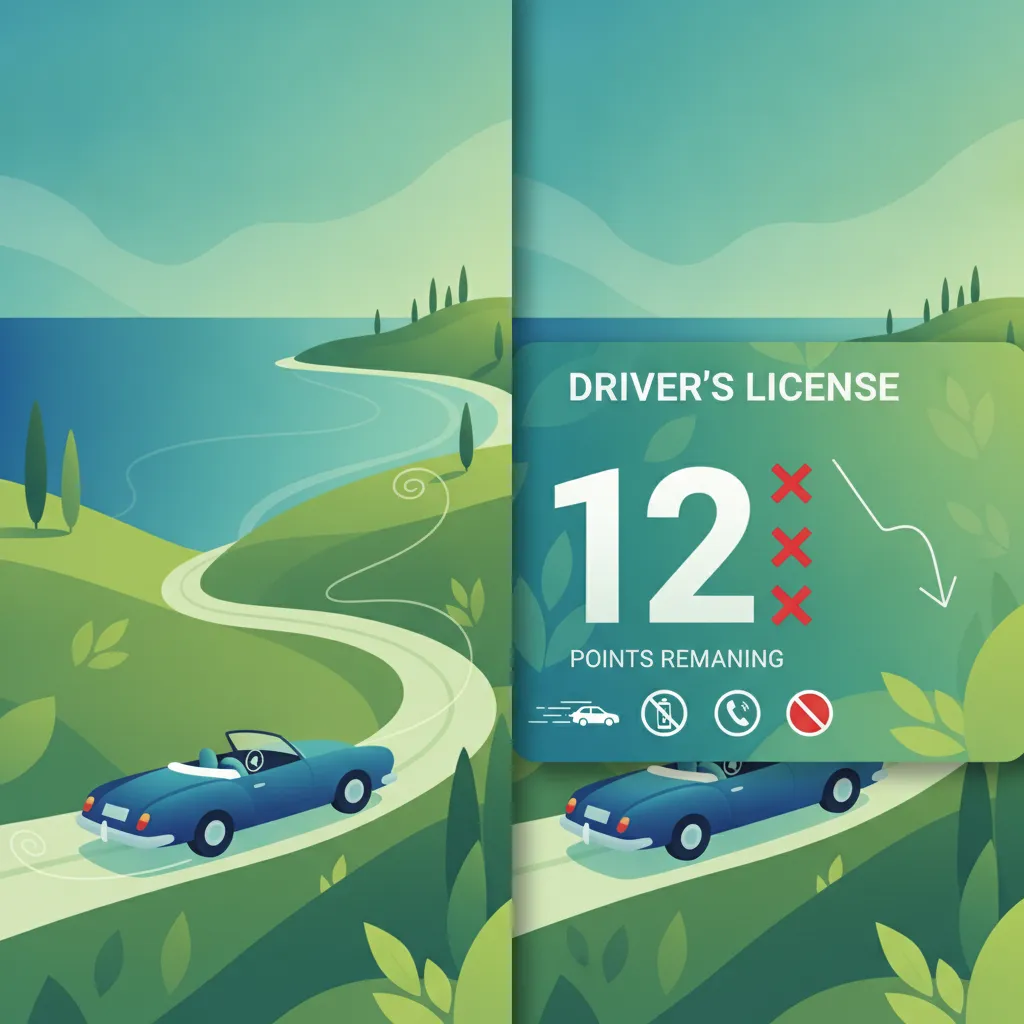
This lesson provides a detailed explanation of the Italian driver's license points system (decurtazione punti). It covers how various traffic infractions lead to specific point deductions and the cumulative effect on a driver's license status. Learners will understand the thresholds that trigger license suspension or revocation, the associated monetary fines, and the official procedures for recovering lost points.
This lesson defines the scope of the Italian Patente B license according to the Codice della Strada. It clarifies the specific types of vehicles, including maximum weight and passenger capacity, that can be operated. The content also details the official requirements for applicants, such as minimum age, necessary health certifications, and vision standards needed to qualify for the license.

This lesson provides a clear overview of the legal penalties for traffic violations in Italy. It explains the structure of fines and the penalty point system that can lead to license suspension or revocation. The content also touches on more severe consequences, including criminal liability for incidents causing injury, to emphasize the importance of lawful riding.
This lesson focuses on the specific regulations applicable to beginner drivers (neopatentati) during their first three years of holding a Patente B. It outlines the stricter speed limits on motorways and main roads, as well as the restrictions on vehicle power-to-weight ratios. Furthermore, it details the absolute zero-tolerance policy for alcohol consumption and the increased penalties for traffic violations during this probationary period.

This lesson examines the set of legal obligations for all drivers holding a Patente B license under the Codice della Strada. It covers mandatory responsibilities such as maintaining valid vehicle insurance, ensuring proper registration, and adhering to periodic technical inspection (revisione) schedules. The content also emphasizes the legal requirement to carry necessary documents while driving and the penalties for non-compliance.
This lesson details the profound and dangerous effects of alcohol and drugs on driving ability, including impaired coordination, slowed reaction time, and poor judgment. It specifies the legal blood alcohol concentration (BAC) limits in Italy, including the strict zero-tolerance policy for beginner drivers. The content also outlines the severe legal consequences of a DUI conviction, which can include heavy fines, license revocation, and imprisonment.
This lesson provides a clear overview of the legal consequences for failing to comply with road transport regulations in Italy. It covers the system of fines for common offenses like speeding, overloading, and violations of driving hours. The lesson also explains the penalty point system that can lead to license suspension and touches upon the responsibilities and potential liability of the transport company.

This lesson outlines the complete examination process for acquiring a Patente B license in Italy, detailing both the theoretical and practical tests. Learners will understand the structure of the theory exam, including the question format and the minimum score required to pass. It also covers the requirements for the practical driving test, the role of the driving school, and the official evaluation standards.
Understand the conditions and procedures for license suspension and revocation in Italy. This lesson explains how losing all points or committing severe violations leads to temporary or permanent loss of driving privileges.
This lesson provides a detailed explanation of the Italian driver's license points system (decurtazione punti). It covers how various traffic infractions lead to specific point deductions and the cumulative effect on a driver's license status. Learners will understand the thresholds that trigger license suspension or revocation, the associated monetary fines, and the official procedures for recovering lost points.
This lesson provides a clear overview of the legal penalties for traffic violations in Italy. It explains the structure of fines and the penalty point system that can lead to license suspension or revocation. The content also touches on more severe consequences, including criminal liability for incidents causing injury, to emphasize the importance of lawful riding.
This lesson provides a clear overview of the legal consequences for failing to comply with road transport regulations in Italy. It covers the system of fines for common offenses like speeding, overloading, and violations of driving hours. The lesson also explains the penalty point system that can lead to license suspension and touches upon the responsibilities and potential liability of the transport company.
This lesson focuses on the specific regulations applicable to beginner drivers (neopatentati) during their first three years of holding a Patente B. It outlines the stricter speed limits on motorways and main roads, as well as the restrictions on vehicle power-to-weight ratios. Furthermore, it details the absolute zero-tolerance policy for alcohol consumption and the increased penalties for traffic violations during this probationary period.
This lesson details the profound and dangerous effects of alcohol and drugs on driving ability, including impaired coordination, slowed reaction time, and poor judgment. It specifies the legal blood alcohol concentration (BAC) limits in Italy, including the strict zero-tolerance policy for beginner drivers. The content also outlines the severe legal consequences of a DUI conviction, which can include heavy fines, license revocation, and imprisonment.

This lesson provides a practical guide to parking regulations in Italian urban areas. It explains the meaning of different colored parking lines (blue for paid, white for free, yellow for reserved), the use of the parking disc (disco orario) for time-limited zones, and how to operate pay-and-display machines. The content also covers how to identify no-parking zones to avoid fines and towing.
Find clear answers to common questions learners have about Legal Consequences, Penalties, and Points System. Learn how the lesson is structured, which driving theory objectives it supports, and how it fits into the overall learning path of units and curriculum progression in Italy. These explanations help you understand key concepts, lesson flow, and exam focused study goals.
If you reach zero points on your driving license, the Italian authority requires you to undergo a mandatory revision of the driving license. This involves taking both the theory and practical driving tests again to prove your competence.
Yes, neopatentati are subject to stricter rules. For the first three years after obtaining the license, any points deducted for a violation are doubled compared to the standard amount for that infraction.
You can recover points by maintaining a clean record for a specific period, or by attending authorized training courses that allow for the replenishment of lost points, provided your balance has not reached zero.
Not every fine results in a point deduction. Point deductions are specific to offenses that jeopardize road safety, such as speeding, running red lights, or incorrect overtaking. Minor parking infractions typically result in fines only.
Start searching now to pinpoint exactly which Italian driving theory topics, road signs, or traffic rules you need to master. Use our advanced filters to build a custom practice session and ensure you're fully prepared for every aspect of your official driving licence exam.