
This lesson details the formal prerequisites for obtaining a Polish Category T driving licence. You'll learn about the minimum age, mandatory health assessments, and required documentation. Understanding these legal foundations is crucial for successful application and compliant operation of agricultural vehicles in Poland.
Lesson content overview
Obtaining a Polish Category T driving licence, which permits the operation of agricultural tractors, self-propelled agricultural machines, and associated trailers, involves a precise set of formal prerequisites. These requirements are not merely administrative hurdles but are foundational to ensuring road safety and legal compliance. This comprehensive lesson details the minimum age, mandatory health assessments, and essential documentation needed to secure your Category T licence in Poland, guiding you through each step of the application process.
Understanding and adhering to these requirements from the outset will prevent delays in your application, ensure your legal eligibility to drive, and ultimately contribute to safer agricultural operations on both public roads and private farm lands. The legal framework underpinning these requirements is primarily the Ustawa o kierujących pojazdami (Act on Drivers of Vehicles), which sets clear standards for all aspiring drivers.
The legal eligibility for a Category T licence in Poland is determined by a combination of factors: the applicant's age, their health fitness, and the verification of necessary documentation. These criteria are established by law to protect not only the operator of agricultural machinery but also other road users. Agricultural vehicles often have unique dynamics, sizes, and operational contexts compared to passenger cars, necessitating specific attention to driver qualifications.
The core idea is that an individual must possess sufficient maturity and physical capabilities to safely control heavy and sometimes complex agricultural equipment. Proper documentation allows governmental authorities, specifically the local road transport offices, to verify that every applicant meets these statutory obligations. This ensures that only qualified individuals receive licences, thereby upholding road safety standards across the country.
| Principle | Definition | Purpose / Rationale | Implications |
|---|---|---|---|
| Minimum Age Requirement | The legally defined youngest age at which an applicant may apply for a Category T licence. | Ensures sufficient maturity and legal adulthood for operating potentially hazardous agricultural equipment. | Applicants below this age cannot legally apply; age must be documented with a birth certificate or national ID. |
| Medical Fitness | The requirement that a candidate’s health status must meet specific criteria outlined in Polish road traffic legislation. | Guarantees that the driver has adequate vision, hearing, cardiovascular health, and musculoskeletal function to operate a tractor safely. | Requires a certified medical examination and issuance of a specific medical certificate (zaświadczenie lekarskie). |
| Documentation Verification | The process of presenting validated identity, residency, and health documents to the local road transport office for licence issuance. | Provides legal proof of identity, residence, and medical fitness, enabling official record-keeping and preventing fraud. | Failure to provide any required document will stall the licence issuance; incomplete documentation may be returned for correction. |
| Continuity of Medical Validity | Requirement that the medical certificate remains valid for a defined period (usually 5 years for Category T) and must be renewed upon expiry. | Maintains ongoing fitness of drivers, accounting for age-related health changes or new medical conditions. | A driving licence may be suspended or revoked if the associated medical certificate expires and is not renewed. |
The most fundamental requirement for obtaining a Category T driving licence in Poland is meeting the minimum age criterion. This is a strict legal mandate, ensuring that individuals entrusted with operating powerful agricultural machinery possess a certain level of maturity and responsibility.
The legislated lowest age to apply for a Category T licence is 18 years. This means that on the day you submit your application to the local road transport office (Urzęd Komunikacji), you must have already celebrated your 18th birthday. There are no provisions for a provisional licence or a reduced age for Category T, unlike some other licence categories.
This age requirement is established by Article 38 § 1 of the Ustawa o kierujących pojazdami (Road Traffic Act). Its purpose is to ensure that drivers have reached legal adulthood and are presumed to have the cognitive development and maturity necessary for safely operating potentially hazardous agricultural equipment.
When you apply, the road transport office will require official documentation to verify your date of birth. The most commonly accepted documents are:
These documents serve as definitive proof of your identity and age. The office will meticulously check that the date of birth indicated on your document confirms you are at least 18 years old on the application date. Submitting unofficial documents, such as a student ID or a school record, will not be accepted for age verification.
Attempting to apply for a Category T licence before reaching the age of 18 will result in immediate rejection of your application. Presenting false documents for age verification is a serious legal offense and can lead to severe penalties.
Example: Anna, born on 5th June 2007, decides to apply for her Category T licence on 1st July 2025. By this date, she will be 18 years and 26 days old. Her application will be accepted regarding the age criterion, assuming all other conditions are met.
Beyond age, your physical and mental health is paramount for safe driving. All applicants for a Category T licence must undergo a mandatory health assessment conducted by a licensed medical practitioner. The outcome of this assessment is documented in a Medical Fitness Certificate, known in Polish as Zaświadczenie Lekarskie.
The medical examination serves to confirm that you meet specific health criteria designed to ensure you can safely control a tractor, trailers, and related agricultural machinery. The assessment typically covers several key areas:
The medical practitioner conducting the examination must be accredited by the Minister of Health to issue certificates for driving eligibility, meaning a general health check from your family doctor (GP) will not suffice. The certificate must explicitly state your fitness to drive Category T vehicles.
Once the examination is complete, if you meet all health criteria, the medical practitioner will issue a Zaświadczenie Lekarskie. This certificate must be:
If you have any pre-existing medical conditions (e.g., diabetes, certain heart conditions), you may be required to obtain an "Extended Certificate" or undergo more frequent monitoring. Always be transparent with the examining physician about your medical history.
Associated Rules: Article 88 § 1-3 of the Ustawa o kierujących pojazdami specifies the requirements for the medical certificate, emphasizing that the medical practitioner must be appropriately accredited. Article 81 further outlines the validity period of medical certificates for different licence categories.
Example: Dr. Nowak, an accredited physician, performs Zofia’s medical exam. He confirms she has appropriate vision (0.8 acuity in both eyes with correction), sufficient hearing, and no other medical impediments. He issues her a Zaświadczenie Lekarskie valid until 15th October 2030, which Zofia then includes with her application.
Beyond your age and medical fitness, you must provide official documents to confirm your personal identity and your permanent address in Poland. These documents are crucial for legal record-keeping and to ensure that the licence is issued to the correct individual at their registered domicile.
To establish your identity, you must present an official, government-issued document. The most common and accepted forms are:
It is critical that you present the original document for verification. While copies may be accepted for the application file, the original must be shown for official checks. Ensure your identity document is current and not expired.
Documents like student IDs, work IDs, or library cards are not considered valid proof of identity for driving licence applications.
To confirm your permanent address, you will need to provide official documentation that clearly links you to your current place of residence. This is important because driving licences are typically issued by the road transport office relevant to your place of residence. Accepted documents usually include:
Your residency proof must be up-to-date. If you have recently moved, ensure your documents reflect your new address. A change of residence often requires updating your official registration before applying for a licence or renewing one.
Associated Rules: Article 31 § 2 of the Ustawa o kierujących pojazdami dictates the types of documents required for identity and residency verification. All documents not in Polish must be accompanied by an official translation.
Example: Maria presents her valid Polish dowód osobisty and a recent electricity bill for her apartment in Wrocław, dated two months prior to her application. Both documents are accepted as valid proof of identity and residency.
Once you have gathered all necessary documents, the next step is to formally submit your application for the Category T driving licence. This involves completing specific forms and paying an administrative fee.
Complete the Application Form (Wzór P1): Obtain the standardized application form from your local Road Transport Office (Urzęd Komunikacji) or download it from their website. Fill it out accurately with all your personal data, contact information, and details related to your medical certificate.
Gather Supporting Documents: Ensure you have the following ready:
Pay the Administrative Fee: A mandatory fee is required to cover the administrative costs of processing your application and issuing the physical licence.
The fee is typically around 65 PLN, but it is subject to annual adjustments and can vary slightly. Payment methods usually include bank transfer or payment at the office's cashier.
Submit Your Application: You must submit your completed application package in person to the relevant local Road Transport Office (Urzęd Komunikacji) based on your registered place of residence. First-time applications generally cannot be submitted online or via postal mail.
Receive Confirmation: Upon successful submission and payment, you will receive a confirmation or receipt with an application number. This number can be used to track the progress of your application.
Always verify the exact fee amount and accepted payment methods directly with your specific local Urzęd Komunikacji, as these details can sometimes differ or be updated.
Associated Rules: Articles 20-24 of the Ustawa o kierujących pojazdami govern the application process, fee structures, and submission protocols.
Example: Andrzej visits his local Urzęd Komunikacji in Opole. He presents his filled-out Wzór P1 form, his ID card, his medical certificate, a recent gas bill, and a passport photo. He pays the 65 PLN fee at the counter and receives a receipt.
The Urzęd Komunikacji (Road Transport Office) is the designated governmental body with the exclusive authority to process driving licence applications, verify documents, and issue Category T licences in Poland. These offices are typically located at the county (powiat) level.
The office plays several critical roles in the licensing process:
It is important to remember that the Urzęd Komunikacji cannot waive any statutory requirements, such as the minimum age or medical fitness criteria. Their role is to ensure compliance with existing law. They may also request additional information or clarification if any part of your application is unclear or raises concerns.
Associated Rules: Articles 45-47 of the Ustawa o kierujących pojazdami define the powers and responsibilities of the road transport offices regarding licence issuance and maintenance of driver registers.
Example: The Urzęd Komunikacji in Płock receives Marek’s application. Their Document Verification Unit meticulously checks his Zaświadczenie Lekarskie and confirms his meldunek. After successful verification, the Issuance Unit processes his data and prints his Category T licence, which he collects a few days later.
Obtaining your Category T licence is just the first step. To ensure continued legal operation of agricultural vehicles, it is crucial to understand the ongoing requirements, particularly regarding the validity of your medical certificate.
As mentioned, your medical certificate (Zaświadczenie Lekarskie) for a Category T licence is typically valid for 5 years. This limited validity period is a vital safety measure. It acknowledges that a driver's health can change over time due to age, lifestyle, or unforeseen medical conditions.
Before your medical certificate expires, you are legally obligated to undergo a new medical examination and obtain an updated Zaświadczenie Lekarskie. Failure to do so means that while your physical licence card might still be "valid," your legal entitlement to drive Category T vehicles becomes suspended until a new, valid medical certificate is obtained and registered.
Mark your calendar! Set a reminder for at least 3-6 months before your medical certificate's expiry date to allow ample time to schedule a new examination and process the renewal.
If your personal details change (e.g., name due to marriage) or, more commonly, your permanent address, you are required to report these changes to the Urzęd Komunikacji.
Maintaining accurate and up-to-date documentation is a continuous responsibility of every licence holder.
Navigating the application process for a Category T licence can sometimes present challenges. Being aware of common pitfalls can help you avoid delays or even legal penalties.
Driving a Category T vehicle without a valid licence, or with a licence obtained through fraudulent means, carries significant legal consequences, including fines, vehicle impoundment, and potential criminal charges.
The rigorous requirements for obtaining and maintaining a Category T driving licence are not arbitrary. They are deeply rooted in principles of public safety and accident prevention, especially considering the specific context of agricultural operations.
Data-driven insights from road safety studies consistently show that drivers who regularly undergo medical fitness assessments and maintain up-to-date documentation have a lower incidence of medically-related accidents. These requirements are therefore a cornerstone of safe driving practices for Category T vehicle operators in Poland.
This lesson covers the formal prerequisites for obtaining a Polish Category T driving licence, which authorizes operation of agricultural tractors and associated trailers. The key requirements are being at least 18 years old at the time of application, passing a mandatory medical examination that produces a Zaświadczenie Lekarskie valid for 5 years, and providing official proof of identity (dowód osobisty or passport) and residency. Applications are submitted in person using Form Wzór P1 to the local Urzęd Komunikacji along with the administrative fee of approximately 65 PLN. Failure to maintain a valid medical certificate or using fraudulent documentation carries serious legal consequences including fines, suspension, and potential criminal charges.
A short set of high-value points that capture the most important learning from this lesson.
The minimum age to apply for a Category T licence in Poland is 18 years, as specified by Article 38 of the Ustawa o kierujących pojazdami.
A valid Zaświadczenie Lekarskie (Medical Fitness Certificate) from an accredited physician is mandatory, typically valid for 5 years for Category T.
Accepted proof of identity is limited to a valid Polish dowód osobisty or passport; student IDs and other unofficial documents are not accepted.
Initial Category T licence applications must be submitted in person to the local Urzęd Komunikacji; online submissions are not available for first-time applications.
Driving with an expired medical certificate results in legal suspension of your Category T entitlement even if the physical licence card remains valid.
Explore all units and lessons included in this driving theory course.
Always verify age requirement: you must be 18 on the actual application submission date, not just when starting the process.
The examining physician must be accredited by the Minister of Health to issue valid driving fitness certificates.
Medical certificate validity for Category T is generally 5 years; set reminders 3–6 months before expiry for timely renewal.
All submitted documents must be original for verification; copies alone are insufficient for the application.
Report any change of address or personal details to the Urzęd Komunikacji to keep your licence records current and legally valid.
Applying before reaching the minimum age of 18, which results in immediate application rejection.
Submitting an expired or missing Zaświadczenie Lekarskie, which will cause licence denial or suspension.
Using unofficial identity documents (student ID, library card) instead of the required dowód osobisty or passport.
Failing to renew the medical certificate before expiry, making continued operation of Category T vehicles illegal.
Attempting first-time applications online instead of in person at the local road transport office.
Lesson content overview
A short set of high-value points that capture the most important learning from this lesson.
The minimum age to apply for a Category T licence in Poland is 18 years, as specified by Article 38 of the Ustawa o kierujących pojazdami.
A valid Zaświadczenie Lekarskie (Medical Fitness Certificate) from an accredited physician is mandatory, typically valid for 5 years for Category T.
Accepted proof of identity is limited to a valid Polish dowód osobisty or passport; student IDs and other unofficial documents are not accepted.
Initial Category T licence applications must be submitted in person to the local Urzęd Komunikacji; online submissions are not available for first-time applications.
Driving with an expired medical certificate results in legal suspension of your Category T entitlement even if the physical licence card remains valid.
Explore all units and lessons included in this driving theory course.
Always verify age requirement: you must be 18 on the actual application submission date, not just when starting the process.
The examining physician must be accredited by the Minister of Health to issue valid driving fitness certificates.
Medical certificate validity for Category T is generally 5 years; set reminders 3–6 months before expiry for timely renewal.
All submitted documents must be original for verification; copies alone are insufficient for the application.
Report any change of address or personal details to the Urzęd Komunikacji to keep your licence records current and legally valid.
Applying before reaching the minimum age of 18, which results in immediate application rejection.
Submitting an expired or missing Zaświadczenie Lekarskie, which will cause licence denial or suspension.
Using unofficial identity documents (student ID, library card) instead of the required dowód osobisty or passport.
Failing to renew the medical certificate before expiry, making continued operation of Category T vehicles illegal.
Attempting first-time applications online instead of in person at the local road transport office.
Explore search topics learners often look for when studying Age, Medical, and Documentation Requirements. These topics reflect common questions about road rules, driving situations, safety guidance, and lesson level theory preparation for learners in Poland.
Browse additional driving theory lessons that cover connected traffic rules, road signs, and common driving situations related to this topic. Improve your understanding of how different rules interact across everyday traffic scenarios.
Understand the essential prerequisites for obtaining a Polish Category T driving licence. This lesson covers minimum age, mandatory medical fitness assessments, and all required documentation for your application, ensuring you meet legal standards.
This lesson provides a detailed overview of Polish driving licence classifications, focusing on the privileges and limitations of Category B. It clarifies the minimum age requirement, the necessity of a medical certificate, and the process of enrolling in a driving school. The content outlines the steps to pass both the theory and practical exams to obtain a full licence, ensuring candidates understand all prerequisites.

This lesson details the exact requirements to qualify for a Category D driving licence. It covers the minimum age, the mandatory medical examinations for health fitness, and the hierarchy of prerequisite licences like Category B and C. You will also learn about the accredited training process and the necessary documentation for certification.
This lesson explains the scope of the Category T licence, distinguishing it from other categories and outlining the vehicles covered, such as agricultural and forestry vehicles. It details the legal basis for operating these vehicles on public roads, including specific provisions in the Prawo o ruchu drogowym. Learners will understand the regulatory environment defining where and how Category T vehicles may be driven within Poland.

This lesson details the documentation required for a Category B licence application and vehicle operation. It explains the function of the vehicle registration certificate (dowód rejestracyjny), the mandatory civil liability insurance (OC), and the certificate of technical inspection. Learners will understand the verification process and the importance of keeping these documents current and accessible.

This lesson focuses on the stringent health standards mandated for operating heavy goods vehicles. It details the required medical assessments, including vision, cardiovascular, and neurological checks, that prospective drivers must pass. Learners will understand the process of obtaining a medical certificate, the requirements for periodic renewals to ensure ongoing fitness for duty, and the legal implications of failing to meet these essential health criteria for professional driving.
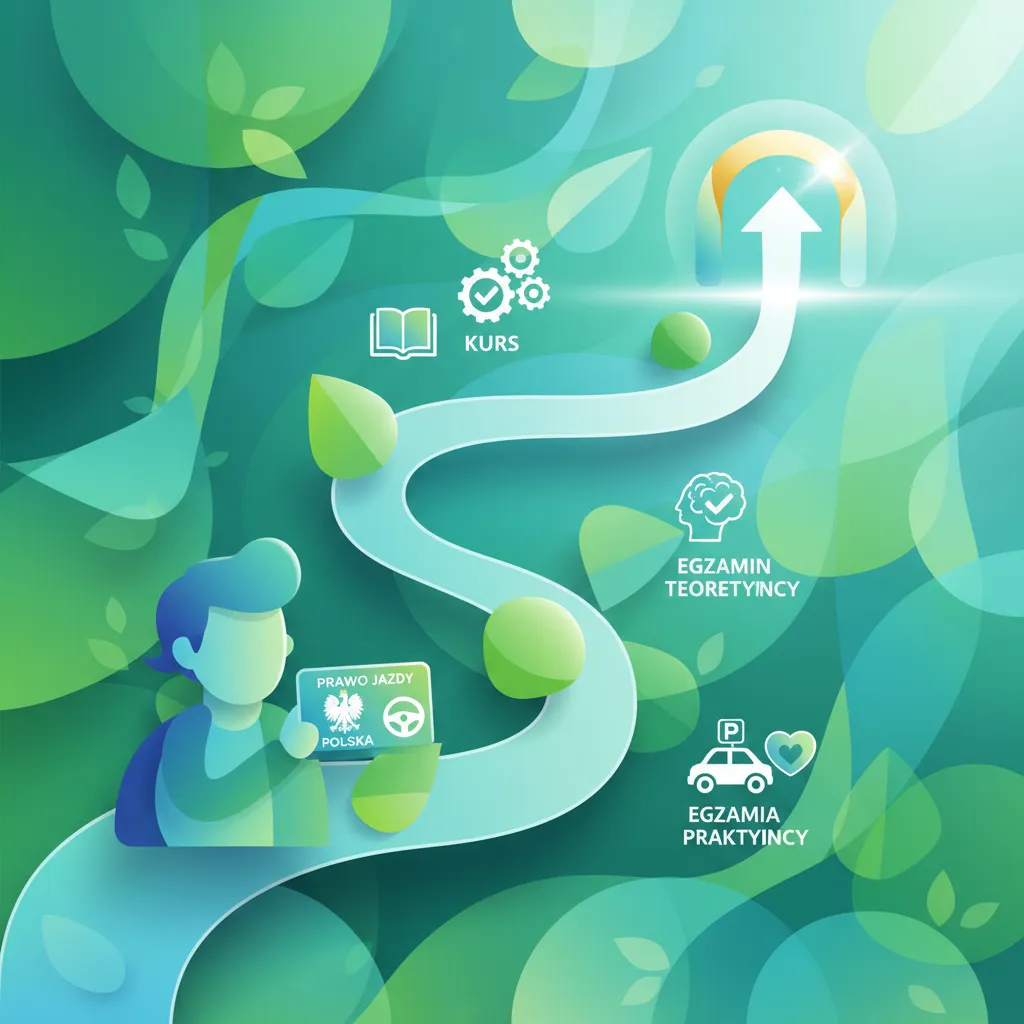
This lesson details the structured pathway to acquiring a Polish Category C driving licence. It explains the necessary eligibility criteria, such as holding a valid Category B licence and meeting the minimum age requirement. Learners will understand the sequence of the licensing process, from submitting the initial application to passing both the theoretical and practical examinations, ensuring full awareness of the regulatory journey to becoming a professional HGV driver.

This lesson delineates each motorcycle licence category defined in Polish law, explaining the technical specifications of vehicles allowed under AM, A1, A2, and A. It clarifies the age limits and competency criteria required for each category, highlighting how riders can progress from a light two-wheel vehicle to high-performance motorcycles. The content also outlines the mandatory training modules that must be completed to obtain each licence tier, ensuring learners understand the legal framework governing their riding privileges.

This lesson provides a detailed overview of the examination process required to obtain a motorcycle licence in Poland, describing the format of the theoretical test, pass criteria, and the structure of the practical riding assessment. It highlights the importance of familiarity with official question banks, registration steps, and the procedural rules governing test day conduct. Learners will also be guided on effective preparation strategies, including the use of mock exams and targeted review of knowledge gaps to ensure comprehensive readiness.

This lesson defines the scope of vehicles permitted under a Category B licence, primarily passenger cars up to 3,500 kg maximum permissible mass. It clarifies the rules on seating capacity and the regulations for towing trailers, distinguishing between a standard B licence and a B+E entitlement. Understanding these classifications ensures drivers operate vehicles legally and safely.
Navigate the official application process for a Polish Category T licence. Learn about the necessary forms, administrative fees, the role of the Urząd Komunikacji, and how to successfully submit your application.
This lesson details the documentation required for a Category B licence application and vehicle operation. It explains the function of the vehicle registration certificate (dowód rejestracyjny), the mandatory civil liability insurance (OC), and the certificate of technical inspection. Learners will understand the verification process and the importance of keeping these documents current and accessible.
This lesson explains the scope of the Category T licence, distinguishing it from other categories and outlining the vehicles covered, such as agricultural and forestry vehicles. It details the legal basis for operating these vehicles on public roads, including specific provisions in the Prawo o ruchu drogowym. Learners will understand the regulatory environment defining where and how Category T vehicles may be driven within Poland.

In this lesson, learners explore the administrative aspects of obtaining and maintaining a motorcycle licence, including the necessary documentation such as identity proof, medical certificates, and training completion records. It explains the steps for submitting an application, understanding fee structures, and the typical processing timeline administered by Polish licensing authorities. The lesson also covers renewal procedures and best practices for ensuring procedural compliance throughout the licence lifecycle.
This lesson provides a detailed overview of Polish driving licence classifications, focusing on the privileges and limitations of Category B. It clarifies the minimum age requirement, the necessity of a medical certificate, and the process of enrolling in a driving school. The content outlines the steps to pass both the theory and practical exams to obtain a full licence, ensuring candidates understand all prerequisites.
This lesson details the exact requirements to qualify for a Category D driving licence. It covers the minimum age, the mandatory medical examinations for health fitness, and the hierarchy of prerequisite licences like Category B and C. You will also learn about the accredited training process and the necessary documentation for certification.
This lesson details the structured pathway to acquiring a Polish Category C driving licence. It explains the necessary eligibility criteria, such as holding a valid Category B licence and meeting the minimum age requirement. Learners will understand the sequence of the licensing process, from submitting the initial application to passing both the theoretical and practical examinations, ensuring full awareness of the regulatory journey to becoming a professional HGV driver.
This lesson provides a detailed overview of the examination process required to obtain a motorcycle licence in Poland, describing the format of the theoretical test, pass criteria, and the structure of the practical riding assessment. It highlights the importance of familiarity with official question banks, registration steps, and the procedural rules governing test day conduct. Learners will also be guided on effective preparation strategies, including the use of mock exams and targeted review of knowledge gaps to ensure comprehensive readiness.
Find clear answers to common questions learners have about Age, Medical, and Documentation Requirements. Learn how the lesson is structured, which driving theory objectives it supports, and how it fits into the overall learning path of units and curriculum progression in Poland. These explanations help you understand key concepts, lesson flow, and exam focused study goals.
In Poland, the minimum age to obtain a Category T driving licence is 16 years old. However, until the age of 18, you can only drive agricultural tractors with a trailer if accompanied by a person holding a valid Category B or T licence for at least 3 years.
Yes, mandatory medical examinations are required for all applicants for a Polish Category T driving licence. These assessments ensure that you are physically and mentally fit to safely operate agricultural vehicles on public roads.
You typically need an identity document, a medical certificate, a psychological certificate (if required by the doctor), a photo, proof of address, and a filled-out application form. Always check with your local road transport office for the most current and specific list.
The validity period of a medical certificate for a Polish Category T licence is determined by the examining physician, based on your health status. It can range from one year up to 15 years, but often less for professional drivers or those with specific health conditions.
Operating an agricultural vehicle without the proper licence, valid medical certificate, or required documentation in Poland can lead to significant legal consequences, including fines, points on your licence, or even a driving ban. It's crucial to be fully compliant.
Build custom practice sessions tailored precisely to your needs. Focus on areas requiring improvement, review specific Polish road signs, or master complex traffic rules to ensure full preparation for your official driving license exam.