
This foundational lesson details the precise statutory requirements for obtaining a Category D driving licence in Poland. As the very first step in your professional bus driver journey, understanding these prerequisites is crucial for successful application and theory exam preparation. We'll cover everything from minimum age and mandatory medical examinations to required prior licences like Category B and C, ensuring you know exactly what's needed.

Lesson content overview
Becoming a professional bus driver in Poland requires meeting a stringent set of eligibility criteria designed to ensure the safety of passengers and other road users. The Category D driving licence permits the holder to operate vehicles designed to transport more than eight passengers, in addition to the driver. This comprehensive lesson details the exact requirements, from age and medical fitness to prior driving experience and mandatory training, necessary to obtain this crucial qualification in Poland.
A Category D licence is more than just an authorization to drive a larger vehicle; it signifies a commitment to professional standards in passenger transport. These standards are harmonised across the European Union through directives like 2006/126/EC and implemented in Polish law, primarily through the Polish Road Traffic Act of 1997. Understanding these requirements is the first step for any aspiring professional bus driver in Poland.
Operating a bus carries significant responsibility due to the high number of passengers and the vehicle's size and weight. The strict eligibility criteria serve several vital purposes. They mitigate accident risks by ensuring drivers possess adequate maturity, health, and advanced driving skills. Furthermore, these regulations promote operational consistency and safety across the EU, ensuring that professional bus drivers meet common benchmarks regardless of their country of origin. This foundational understanding will prepare you for subsequent lessons covering detailed traffic laws and operational aspects specific to public transport.
To qualify for a Polish Category D driving licence, candidates must satisfy several interconnected requirements. These include specific age thresholds, mandatory medical and psychological evaluations, holding prerequisite driving licences for defined periods, completing professional training, and obtaining a Certificate of Professional Competence (CPC). Each criterion plays a critical role in verifying a candidate's readiness for the demanding role of a bus driver.
The statutory minimum age is a fundamental aspect of Category D licence eligibility. This requirement aligns driver maturity with the significant responsibility of transporting numerous passengers.
It is a common misunderstanding that holding a Category C (lorry) licence automatically lowers the age requirement for Category D. This is not the case; the reduced age specifically ties to Category D1 experience and professional qualification, not Category C.
Before being granted a Category D licence, all candidates must undergo a comprehensive health assessment. This rigorous evaluation ensures that drivers are physically and mentally capable of safely operating heavy, passenger-laden vehicles, often over long distances and in varying conditions.
An official document issued by a certified physician in Poland, attesting to a driver's current health status and fitness to operate specific vehicle categories. It must adhere to standards set by the Polish Minister of Infrastructure.
The Polish licensing system operates on a hierarchical basis, meaning you must demonstrate proficiency in driving smaller or less complex vehicles before moving on to larger, more specialized ones. For Category D, specific prior licence holdings are mandatory.
Do not assume a shorter holding period for Category C or C1 is acceptable. The legal requirement is a continuous 12 months. Proof of these durations, often via licence extracts or official records, will be required during your application.
Obtaining a Category D licence is not merely about passing an exam; it mandates completing a structured professional training program at an authorized driving school (Ośrodek Szkolenia Kierowców). This training ensures drivers acquire standardized knowledge and practical skills specific to bus operation.
Complete minimum 30 hours of theory training at an authorized school.
Pass the official Category D theory examination.
Complete minimum 60 hours of practical driving instruction on a bus.
Pass the official Category D practical driving examination.
Collect all required certificates for your licence application.
For any individual intending to drive a bus professionally (i.e., for commercial passenger transport), obtaining a Certificate of Professional Competence (CPC), or Kwalifikacja Wstępna/Okresowa in Polish, is an additional, mandatory requirement. The CPC ensures drivers maintain high standards of safety and regulatory compliance throughout their careers.
An additional certification for professional drivers, mandatory for commercial passenger transport within the EU, confirming ongoing competence in areas such as road safety, vehicle maintenance, and driver health, regulated by EU Regulation CE 561/2006.
The final step in the eligibility process is to compile and submit a complete dossier of documents to the relevant Polish licensing authority (Starostwo Powiatowe or Urząd Miasta). Any missing or incorrect documentation will inevitably lead to delays in processing your application.
Essential documents typically include:
Always submit original signed documents unless explicitly stated that electronic copies are acceptable. Keep photocopies or scanned versions for your own records, but expect authorities to require physical originals.
The framework for Category D licences in Poland is a blend of national legislation and harmonised European Union directives. Understanding these legal underpinnings is vital for current and aspiring professional drivers.
The primary national legislation governing driving licences in Poland is the Ustawa Prawo o ruchu drogowym (Polish Road Traffic Act) of 1997, particularly Article 44 (age requirements) and Article 57 (prerequisite licences). This Act is regularly updated to reflect changes in EU law.
At the European level, EU Directive 2006/126/EC on driving licences sets harmonised minimum standards across member states. This directive mandates the age thresholds, medical standards, and general structure of licence categories, ensuring consistency and mutual recognition of licences throughout the EU. For the Certificate of Professional Competence, EU Regulation CE 561/2006 and the subsequent Directive 2003/59/EC are key, outlining the training and periodic renewal requirements for professional drivers. These EU regulations are directly transposed into Polish law via acts such as the Ustawa o transporcie drogowym (Act on Road Transport).
Beyond the initial application, professional drivers must be aware of validity periods for their licence and certifications. The Category D driving licence itself is typically valid for 15 years, but this is contingent on the continuous validity of your medical and psychological certificates. The CPC also has its own renewal cycle, typically every five years. Failing to renew these accompanying certificates can render your Category D licence invalid for professional use, even if the physical document itself hasn't expired.
Navigating the application process for a Category D licence can be complex. Being aware of common mistakes can help you avoid unnecessary delays and frustrations.
One frequent error is attempting to apply for a Category D licence before meeting the strict age and prerequisite licence holding periods. For example, a 22-year-old with a Category B and C licence but no D1 experience cannot apply for Category D, as they do not meet the standard 24-year age minimum or the D1-conditional 21-year minimum. Always double-check the exact duration you've held your prior licences.
Submitting an outdated medical certificate is another common reason for application rejection. Remember that these certificates have a limited validity period (5 years for under 45, 2-3 years for 45+). Additionally, any significant health changes since your last exam, such as developing a condition that might impair driving, must be reported and re-evaluated. Attempting to conceal health issues can lead to severe legal consequences and endanger public safety.
The licensing authority requires a precise set of original documents. Submitting scanned copies instead of originals, missing a specific certificate, or failing to provide adequate proof of residence (e.g., using a temporary tourist visa instead of a stable residency document) will result in your application being returned. Ensure every item on the checklist is present, valid, and in its required format.
Many drivers correctly obtain their initial CPC but then neglect its periodic renewal. Forgetting to complete the mandatory 35 hours of periodic training every five years means your CPC expires, making it illegal for you to continue commercial passenger transport. Plan your refresher courses well in advance to maintain continuous professional competence.
While the core eligibility criteria are fixed, certain contextual factors can influence the training process and specific requirements for a Category D licence holder.
The requirement for a Certificate of Professional Competence (CPC) primarily applies to drivers engaged in commercial passenger transport. If you intend to drive a bus solely for private, non-commercial purposes (e.g., for a private club or family), the CPC might not be strictly mandatory, though professional driving standards are always recommended. However, such cases are rare for a Category D licence, and specific documentation affirming non-commercial intent may be required.
Every eligibility requirement for a Category D licence is underpinned by a strong rationale focused on road safety, operational efficiency, and legal compliance.
The harmonisation of driving licence categories and professional qualifications across the EU (via directives like 2006/126/EC and regulations like CE 561/2006) serves to create a consistent and high level of road safety across all member states. This also facilitates the free movement of qualified professional drivers within the Union, while ensuring that all drivers meet comparable safety and competence standards. The prerequisite licence hierarchy (e.g., 3 years of Category B, 12 months of Category C) builds a foundational experience base, allowing drivers to gradually develop the skills needed for increasingly complex vehicles.
Obtaining a Polish Category D driving licence is a rigorous but essential process for anyone aspiring to drive buses professionally. The requirements are designed to create highly competent and safe drivers, protecting both passengers and the public.
By diligently meeting these conditions, candidates can successfully obtain their Category D licence, authorizing them to operate buses with more than eight passenger seats in compliance with both Polish and European Union law.
This lesson covers the exact eligibility requirements for a Polish Category D driving licence, which authorises the operation of buses carrying more than eight passengers. Key requirements include a minimum age of 24 years (or 21 with Category D1 and CPC), holding Category B for at least 3 years and Category C/C1 for at least 12 months, passing a medical examination and psychological evaluation, completing 30 hours of theory and 60 hours of practical training, and obtaining a Certificate of Professional Competence for commercial driving. The framework is governed by the Polish Road Traffic Act and EU Directive 2006/126/EC, ensuring harmonised standards across the European Union.
A short set of high-value points that capture the most important learning from this lesson.
The standard minimum age for a Category D licence is 24 years, reduced to 21 only with a valid Category D1 licence and professional qualification (CPC).
A Category B licence must be held for at least 3 continuous years before you can apply for Category D.
A Category C or C1 licence must be held for a minimum of 12 continuous months as an additional prerequisite.
Medical certificates are valid for 5 years if you are under 45, and for 2–3 years once you reach 45, requiring periodic re-examination.
The Certificate of Professional Competence (CPC) must be renewed every 5 years through 35 hours of periodic training to legally work as a commercial bus driver.
Explore all units and lessons included in this driving theory course.
Age 24 is the default minimum; the 21-year exception only applies with Category D1 + CPC, not with Category C.
Category C licence does NOT automatically lower the Category D age requirement — this is a common misunderstanding.
You need BOTH Category B (3 years) AND Category C/C1 (12 months) as prerequisites, not just one.
Practical training requires a minimum of 60 hours behind the wheel, separate from the 30 hours of theory.
If you pass your driving test in an automatic bus, your licence will be restricted to automatic vehicles only.
Assuming a shorter holding period for Category C is acceptable — the legal requirement is continuous 12 months.
Submitting scanned copies instead of original signed documents when applying for the licence.
Neglecting to renew the CPC before it expires, which renders the licence invalid for commercial passenger transport.
Attempting to apply for Category D before meeting the minimum age (24 or 21 with D1/CPC), resulting in rejection.
Forgetting that medical certificates expire; driving with an expired certificate is illegal even if the licence itself is still valid.
Lesson content overview
A short set of high-value points that capture the most important learning from this lesson.
The standard minimum age for a Category D licence is 24 years, reduced to 21 only with a valid Category D1 licence and professional qualification (CPC).
A Category B licence must be held for at least 3 continuous years before you can apply for Category D.
A Category C or C1 licence must be held for a minimum of 12 continuous months as an additional prerequisite.
Medical certificates are valid for 5 years if you are under 45, and for 2–3 years once you reach 45, requiring periodic re-examination.
The Certificate of Professional Competence (CPC) must be renewed every 5 years through 35 hours of periodic training to legally work as a commercial bus driver.
Explore all units and lessons included in this driving theory course.
Age 24 is the default minimum; the 21-year exception only applies with Category D1 + CPC, not with Category C.
Category C licence does NOT automatically lower the Category D age requirement — this is a common misunderstanding.
You need BOTH Category B (3 years) AND Category C/C1 (12 months) as prerequisites, not just one.
Practical training requires a minimum of 60 hours behind the wheel, separate from the 30 hours of theory.
If you pass your driving test in an automatic bus, your licence will be restricted to automatic vehicles only.
Assuming a shorter holding period for Category C is acceptable — the legal requirement is continuous 12 months.
Submitting scanned copies instead of original signed documents when applying for the licence.
Neglecting to renew the CPC before it expires, which renders the licence invalid for commercial passenger transport.
Attempting to apply for Category D before meeting the minimum age (24 or 21 with D1/CPC), resulting in rejection.
Forgetting that medical certificates expire; driving with an expired certificate is illegal even if the licence itself is still valid.
Explore search topics learners often look for when studying Category D Eligibility and Prerequisites. These topics reflect common questions about road rules, driving situations, safety guidance, and lesson level theory preparation for learners in Poland.
Browse additional driving theory lessons that cover connected traffic rules, road signs, and common driving situations related to this topic. Improve your understanding of how different rules interact across everyday traffic scenarios.
Understand the comprehensive requirements for a Polish Category D bus driver licence. Covers age, medical, and prerequisite licence criteria essential for professional passenger transport qualifications in Poland.
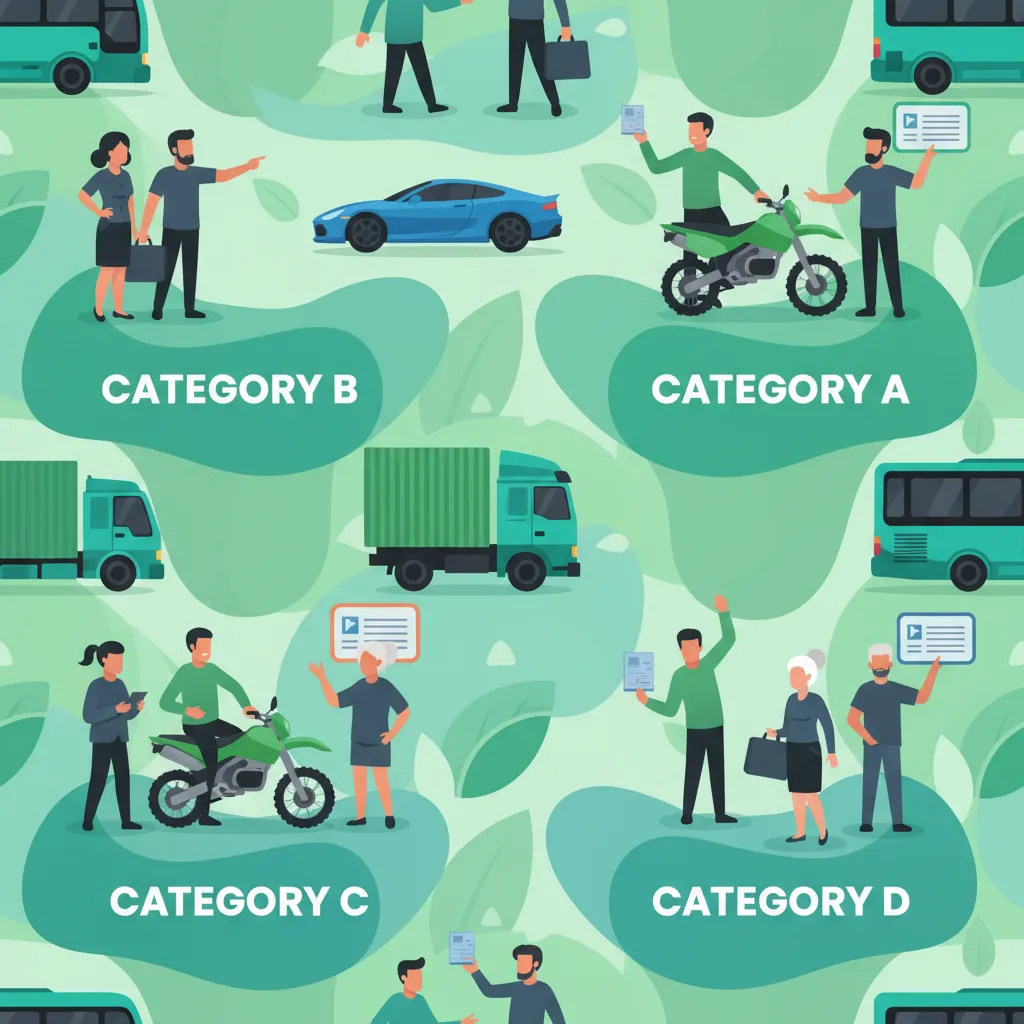
This lesson provides a detailed overview of Polish driving licence classifications, focusing on the privileges and limitations of Category B. It clarifies the minimum age requirement, the necessity of a medical certificate, and the process of enrolling in a driving school. The content outlines the steps to pass both the theory and practical exams to obtain a full licence, ensuring candidates understand all prerequisites.
This lesson details the documentation required for a Category B licence application and vehicle operation. It explains the function of the vehicle registration certificate (dowód rejestracyjny), the mandatory civil liability insurance (OC), and the certificate of technical inspection. Learners will understand the verification process and the importance of keeping these documents current and accessible.
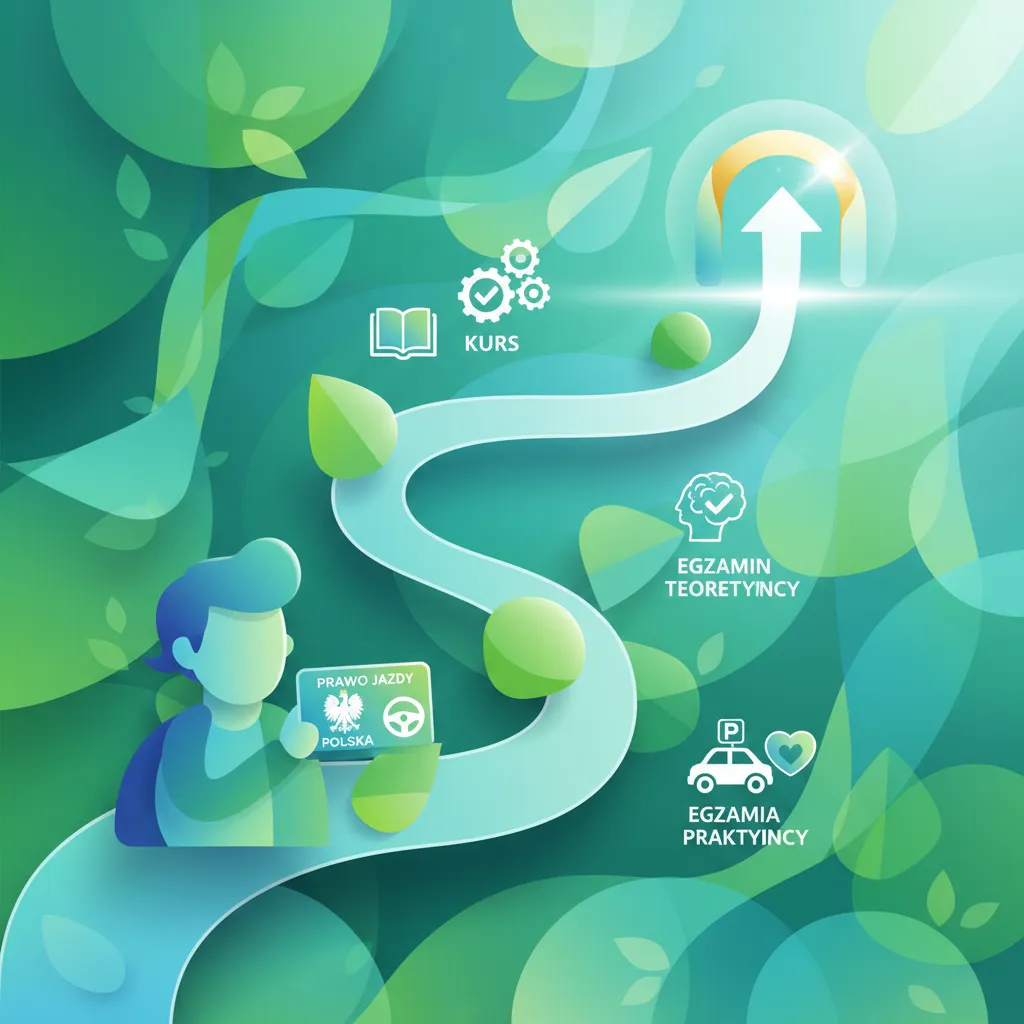
This lesson details the structured pathway to acquiring a Polish Category C driving licence. It explains the necessary eligibility criteria, such as holding a valid Category B licence and meeting the minimum age requirement. Learners will understand the sequence of the licensing process, from submitting the initial application to passing both the theoretical and practical examinations, ensuring full awareness of the regulatory journey to becoming a professional HGV driver.

This lesson delineates each motorcycle licence category defined in Polish law, explaining the technical specifications of vehicles allowed under AM, A1, A2, and A. It clarifies the age limits and competency criteria required for each category, highlighting how riders can progress from a light two-wheel vehicle to high-performance motorcycles. The content also outlines the mandatory training modules that must be completed to obtain each licence tier, ensuring learners understand the legal framework governing their riding privileges.
This lesson explains the scope of the Category T licence, distinguishing it from other categories and outlining the vehicles covered, such as agricultural and forestry vehicles. It details the legal basis for operating these vehicles on public roads, including specific provisions in the Prawo o ruchu drogowym. Learners will understand the regulatory environment defining where and how Category T vehicles may be driven within Poland.
This lesson provides practical methods for maintaining a safe buffer zone behind the vehicle in front. It explains the 'two-second rule' as a minimum following distance in good conditions and how to increase it to three or more seconds in adverse weather. This skill is critical for allowing enough time to react and brake safely to avoid rear-end collisions.

This lesson defines the scope of vehicles permitted under a Category B licence, primarily passenger cars up to 3,500 kg maximum permissible mass. It clarifies the rules on seating capacity and the regulations for towing trailers, distinguishing between a standard B licence and a B+E entitlement. Understanding these classifications ensures drivers operate vehicles legally and safely.

This lesson details the formal prerequisites for obtaining a Category T licence, focusing on the minimum age and mandatory health assessment. It outlines the specific medical certificates required, the process for submitting proof of identity and residency, and the role of the local road transport office. The content also clarifies the importance of maintaining up-to-date health documentation and the legal consequences of non-compliance.

In this lesson, learners explore the administrative aspects of obtaining and maintaining a motorcycle licence, including the necessary documentation such as identity proof, medical certificates, and training completion records. It explains the steps for submitting an application, understanding fee structures, and the typical processing timeline administered by Polish licensing authorities. The lesson also covers renewal procedures and best practices for ensuring procedural compliance throughout the licence lifecycle.
Explore the mandatory Certificate of Professional Competence (CPC) and required training hours for Category D bus drivers in Poland. Learn about initial and periodic training to maintain professional standards.

This lesson introduces defensive driving strategies tailored for bus operation, emphasizing hazard perception and risk management. Learners will study techniques for continuous situational awareness and maintaining safe following distances for adequate reaction time. The content covers emergency maneuvers and interaction with vulnerable road users to reduce accident likelihood.
This lesson focuses on the key provisions of the Polish road traffic act relevant to public transport. It explains the legal classification of buses, mandatory safety equipment, and the hierarchy of road users. Learners will understand the specific obligations of bus drivers, potential penalties for non-compliance, and the required operational documentation.
This lesson details the speed limits applicable to buses in Poland across urban, rural, and motorway settings. It emphasizes how vehicle size and passenger load influence safe operating speeds and required stopping distances. The content also covers speed-control device usage and practical techniques for maintaining consistent speed while ensuring passenger comfort.
This lesson examines the compulsory training structure for professional Category C drivers. It outlines the required components of certified training programs, including both theoretical instruction and practical driving experience. Learners will understand the standards for competence assessment, the structure of the official licensing examinations, and the legal obligation to maintain accurate training records to demonstrate compliance with professional driver qualifications.
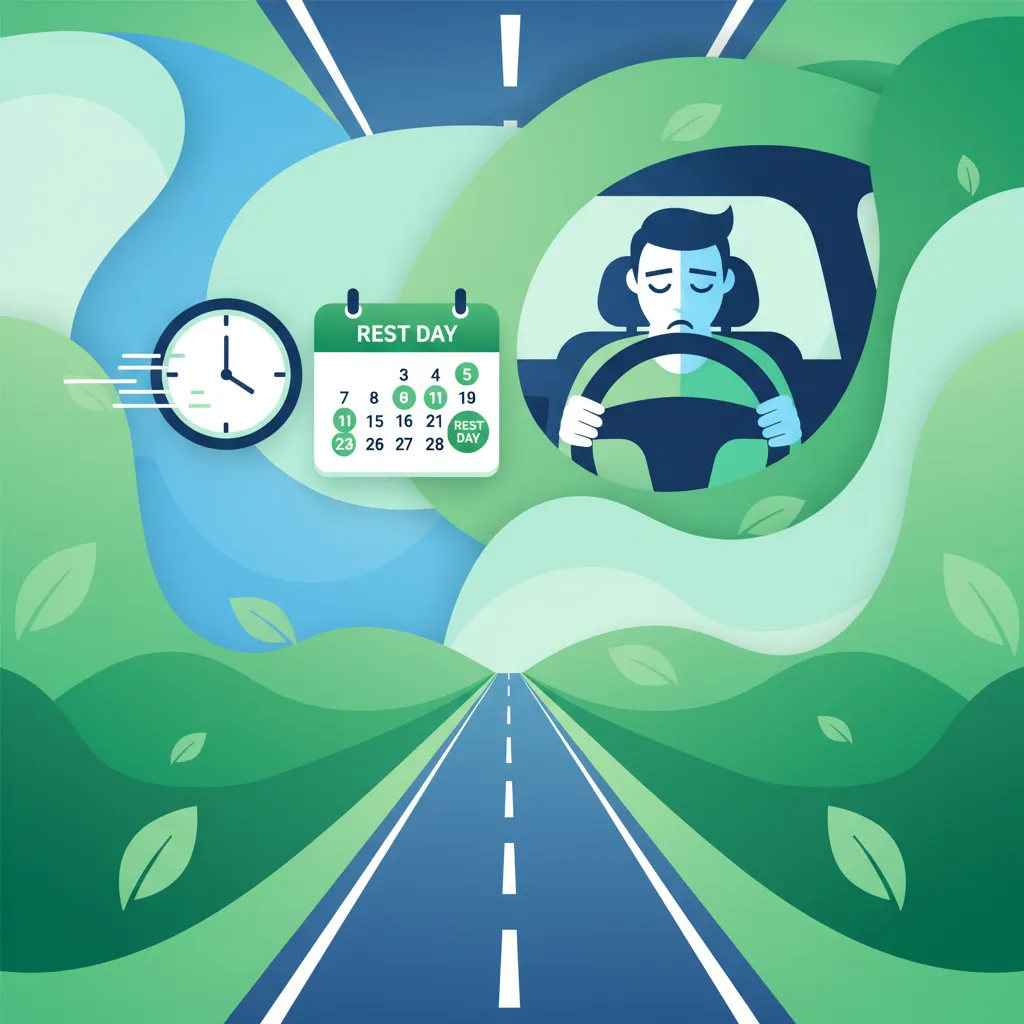
This lesson explores the physiological and psychological aspects of driver fatigue, covering its warning signs and strategies for maintaining concentration. It outlines the legal framework for work-time limits and mandatory rest periods, monitored via tachograph. Practical advice on schedule planning and nutrition is provided to help sustain alertness and reduce accident risk.

This lesson equips drivers with knowledge of emergency procedures, including how to conduct a rapid evacuation. Learners will identify the location and use of fire extinguishers and first-aid kits and learn to guide passengers to emergency exits. The content also covers legal reporting obligations and coordination with emergency services following an incident.

This lesson teaches the fundamentals of safely reversing a bus using mirrors, cameras, and alarms. It covers low-speed control essential for depot navigation, where precise steering is required to avoid collisions. Specific techniques for handling articulated buses and coordinating with ground staff are also discussed to ensure safe maneuvers.
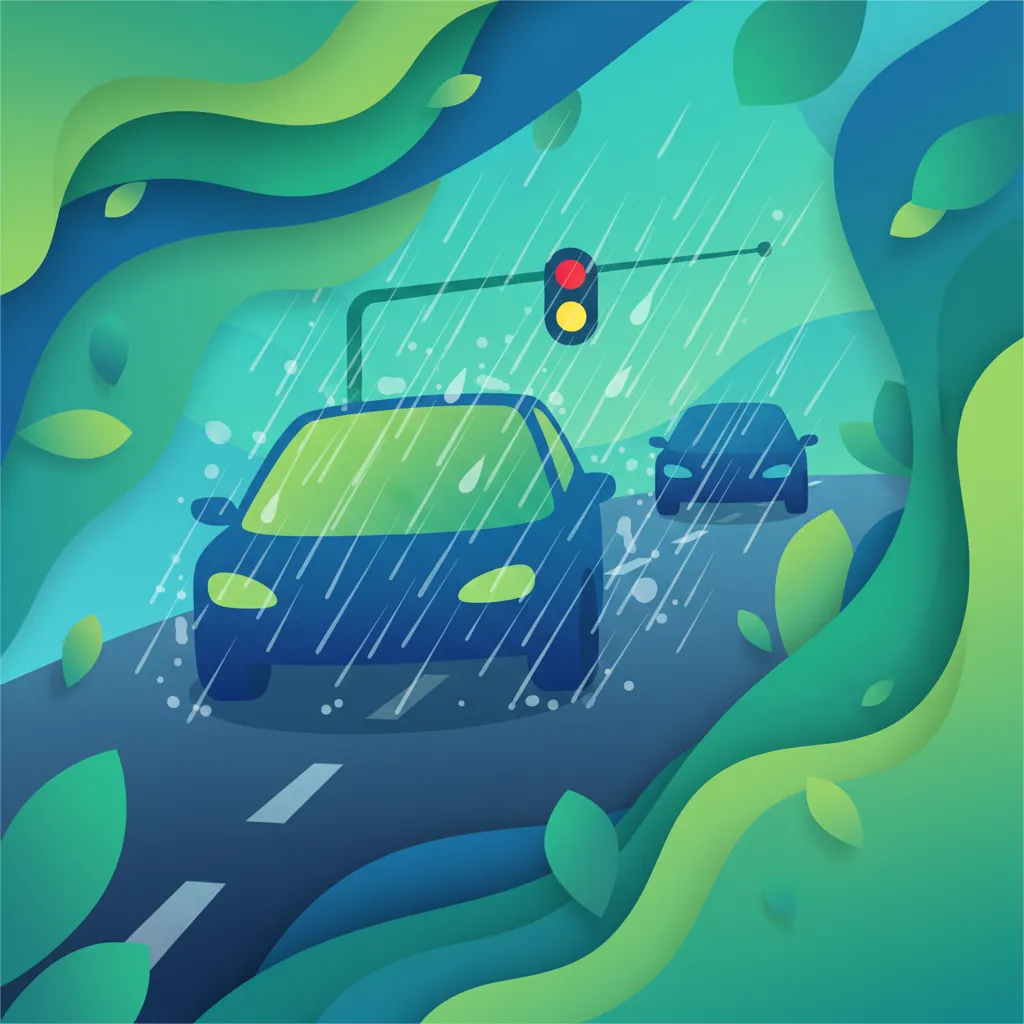
This lesson details the specific driving adjustments needed for adverse weather. It focuses on how rain, snow, and ice affect vehicle dynamics and driver perception. Learners will study techniques to prevent hydroplaning, use winter tires effectively, and increase following distances on slippery surfaces while using safety systems like fog lights.

This lesson outlines the precise steps for approaching a bus stop, ensuring correct positioning and safe deceleration. Learners will study the procedural aspects of door operation and managing passenger movement to prevent accidents. It also addresses coordination with traffic signals and pedestrians to maintain safety and schedule reliability.
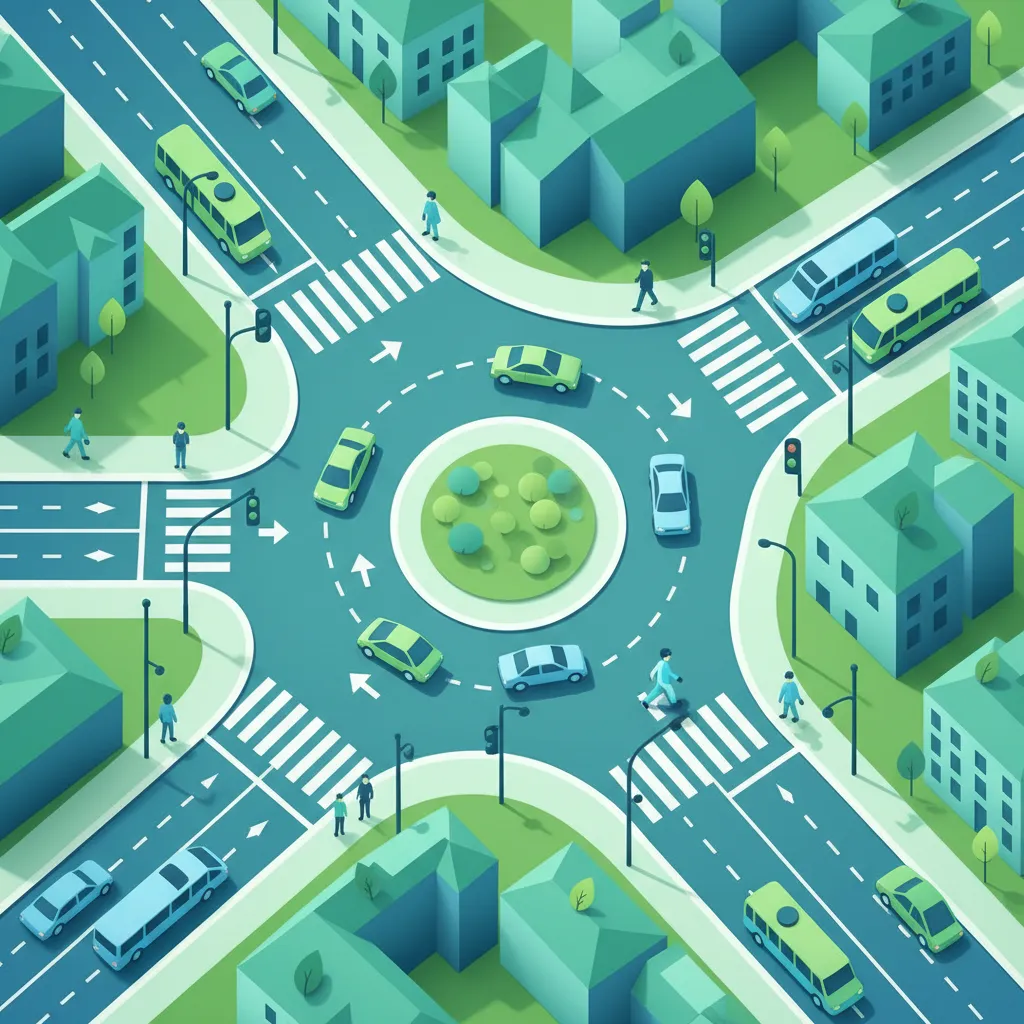
This lesson explores the priority hierarchy for buses at different intersections, roundabouts, and pedestrian crossings. Learners will understand how traffic signals and signs affect their approach and how to safely navigate roundabouts with correct lane discipline. Special attention is given to yielding to pedestrians, especially near bus stops.
Find clear answers to common questions learners have about Category D Eligibility and Prerequisites. Learn how the lesson is structured, which driving theory objectives it supports, and how it fits into the overall learning path of units and curriculum progression in Poland. These explanations help you understand key concepts, lesson flow, and exam focused study goals.
The standard minimum age for a Category D driving licence in Poland is 24 years. However, there are exceptions; for specific types of professional training or qualifications, it may be possible to obtain it earlier, typically from 21 years of age, but usually with additional restrictions like driving only certain routes or vehicles. It's crucial to check the current regulations with official Polish transport authorities.
Yes, you must hold a Category B driving licence to begin the Category D training process. Additionally, a Category C driving licence is often a prerequisite, particularly for more comprehensive Category D licences that cover larger buses or articulated vehicles. This ensures you have foundational experience with larger vehicles before moving to passenger transport.
Candidates for a Polish Category D licence must undergo comprehensive medical and psychological examinations. These assessments verify your physical and mental fitness to safely operate a bus and transport passengers. They typically include vision, hearing, neurological, and psychological tests, among others, to ensure you meet the stringent health standards for professional drivers.
When applying for a Polish Category D driving licence, you will generally need your current driving licence (Category B and/or C), a medical certificate, a psychological assessment certificate, proof of completion from an accredited driving course, a recent photograph, and an identity document. Specific requirements may vary, so always consult the local Starostwo Powiatowe (District Office) or driving school for the most up-to-date list.
While EU working-time regulations don't directly impact your initial eligibility or the application process for a Category D licence, understanding them is a fundamental part of the professional bus driver's theory curriculum. Compliance with these regulations is crucial for maintaining your licence once obtained and for your day-to-day operations as a professional driver in Poland and across the EU.
Yes, obtaining a Category D licence in Poland requires completing a specific accredited training course at a licensed driving school. This course covers both theoretical knowledge and practical driving skills unique to bus operation, including passenger safety, vehicle dynamics, and route planning. Successful completion of this training is mandatory before you can take the state theory and practical exams.
Build custom practice sessions tailored precisely to your needs. Focus on areas requiring improvement, review specific Polish road signs, or master complex traffic rules to ensure full preparation for your official driving license exam.