
Preparing for your Category A motorcycle theory exam in Poland involves understanding the test structure and mastering effective study techniques. This lesson breaks down the official examination process, from the theoretical test to the practical assessment, and provides actionable strategies to ensure you are fully prepared to succeed on test day.

Lesson content overview
Obtaining a motorcycle licence in Poland, specifically the Category A licence, involves a structured examination process designed to ensure all riders possess both the theoretical knowledge and practical skills necessary for safe road operation. This comprehensive guide outlines the entire journey, from understanding the test format to implementing effective preparation strategies, ensuring you are fully equipped for success.
The examination process serves as the legal gateway to demonstrate competence, aligning with the Polish Road Traffic Act (Prawo o ruchu drogowym) and EU Directive 2006/126/EC. It emphasizes safety and legal compliance, building upon foundational knowledge covered in modules like "Motorcycle Licensing and Legal Framework" and preparing you for advanced practical skills in "Safe Riding in Different Traffic Environments" and "Hazard Perception and Defensive Riding Strategies."
The path to a Category A motorcycle licence in Poland is divided into two main parts: a theoretical computer-based test and a practical riding assessment. Both components are mandatory and must be passed to be granted your licence. Success hinges on a thorough understanding of each stage, its requirements, and how your performance will be evaluated.
The theoretical examination is your first major hurdle, verifying your understanding of traffic laws, road signs, and safe riding practices specific to motorcycles. It's a critical step that ensures you possess the foundational knowledge before you ever get on the road unsupervised.
The theoretical test is a computer-based multiple-choice exam. It consists of 32 questions drawn from a comprehensive official question bank. You will have a strict time limit of 30 minutes to complete the test. The questions are categorized into two main sections: a core knowledge section covering general traffic rules, signs, and basic vehicle control, and a motorcycle-specific section focusing on helmet use, protective gear, lane positioning, and specific motorcycle handling scenarios.
Each question requires you to select one of four possible answers. The system records your responses automatically, and the result is displayed immediately upon completion. It is crucial to manage your time effectively, ensuring you have enough time to read each question and its possible answers carefully.
Familiarize yourself with the computer interface beforehand. Many driving schools offer practice sessions on similar systems, which can help reduce test-day anxiety related to technology.
The Ministry of Infrastructure maintains a curated set of over 160 multiple-choice questions known as the official question bank. All questions appearing on your theoretical test are randomly selected from this bank. This ensures fairness and that each test attempt presents a new assortment of questions. The question bank includes both a standard set, common to all licence categories, and a specific subset tailored for motorcyclists, covering unique aspects of riding.
It is vital to study the latest version of this official question bank, as it is periodically updated to reflect legislative changes or new road safety guidelines. Relying on outdated materials can lead to unexpected questions and potentially impact your score. The bank is the single most authoritative source for your theoretical preparation.
A standardized collection of multiple-choice questions released by the governing transport authority, from which all theoretical driving test questions are drawn.
To pass the theoretical test, you must achieve a score of at least 22 out of 32 questions correct, which means you can have a maximum of 10 incorrect answers. Each incorrect answer reduces your pass score by one point. This threshold ensures a foundational level of knowledge is met before proceeding to practical training.
Common misunderstandings include believing that every question must be answered correctly or assuming the test can be paused. The test is continuous, and any unanswered questions will be marked as incorrect. Additionally, candidates sometimes neglect to study the motorcycle-specific questions thoroughly, focusing too much on general traffic rules.
Do not assume that questions are always straightforward. Some may test nuanced understanding of regulations or require careful consideration of all options.
Once you feel confident in your theoretical knowledge, the next step is the administrative process of registering for both your theory and practical exams. This is done through the Central Register of Drivers (Centralna Ewidencja Kierowców – CEK).
Before you can schedule any examination, you must gather several essential documents. These typically include:
Ensure all your documents are valid and up-to-date. Expired documents will lead to rejection of your registration.
The scheduling process involves paying the necessary exam fees and selecting your preferred testing centre, date, and time.
Gather Documents: Collect all required identity papers, medical certificates, and course completion proofs.
Pay Fees: Pay the separate fees for the theoretical test and the practical test. These fees can typically be paid online or directly at the licensing office.
Access CEK: Use the online portal of the Central Register of Drivers (CEK) or visit your local licensing office (Wojewódzki Ośrodek Ruchu Drogowego – WORD) to schedule your exams.
Select Date and Time: Choose a testing center and preferred date/time that fits your schedule. Registration must usually be completed at least 7 days before your chosen test date.
The centralized electronic system in Poland responsible for managing driver's licences, vehicle registrations, and coordinating examination schedules.
Examination fees are set by regional authorities and must be paid prior to scheduling. It's important to be aware of the retake policies. If you fail the theoretical test, you must wait a minimum of 1 day before you can schedule a retake. For a failed practical test, the waiting period is typically 7 days. These waiting periods are mandatory to allow candidates time for review and further preparation, rather than rushing into another attempt unprepared. Each retake will incur additional fees.
After successfully passing the theoretical test, you become eligible for the practical riding assessment. This stage is designed to demonstrate your real-world riding competence and adherence to safety standards under the supervision of a certified examiner.
The practical test consists of a series of pre-defined maneuvers conducted on a closed course, followed by an on-road assessment in real traffic conditions. Core maneuvers typically include:
During the on-road segment, the examiner evaluates your ability to handle various traffic situations, observe speed limits, make proper lane changes, and react safely to other road users.
On the day of your practical test, both you and the motorcycle you intend to use must meet specific requirements.
Safety Gear: You must wear an approved, certified helmet (full-face is often recommended), a protective motorcycle jacket, gloves, long trousers (preferably motorcycle-specific), and boots that cover your ankles. Failure to present the correct and approved safety gear will result in immediate termination of the test for safety reasons.
Vehicle Inspection: The motorcycle used for the test must pass a technical inspection on the day of the test. This includes checking the functionality of lights, brakes, tires (for wear and pressure), and ensuring the exhaust noise level is within legal limits. Any technical fault will lead to the postponement of your test. Typically, you will use a motorcycle provided by your driving school, which they ensure is compliant.
Essential protective clothing and equipment (helmet, jacket, gloves, trousers, boots) required to be worn by a motorcyclist for protection against injury, mandatory during the practical test.
The practical assessment uses a scoring system where each maneuver is marked as "Pass," "Conditional Pass," or "Fail." Accumulating any "Fail" marks, or repeatedly making minor errors, will result in an overall non-passing outcome. Examiners look for consistent, safe, and confident riding.
Common reasons for practical test failure include:
A single serious mistake or safety-critical error can lead to an immediate failure, regardless of how well you performed other maneuvers. Maintain focus and adherence to rules throughout the entire test.
Thorough preparation is the cornerstone of success for your Polish Category A motorcycle licence. It involves a combination of theoretical study and practical skill refinement, reducing anxiety and increasing your chances of passing on the first attempt.
Mock exams are simulated theory tests designed to mirror the official exam conditions. They are invaluable tools for preparation:
Aim to complete at least three full mock exams derived from the official question bank. Statistics show that candidates who do so have a significantly higher first-attempt pass rate.
For the practical test, passive observation is not enough; active practice is key.
A structured study plan will help you cover all necessary material systematically.
Assess Current Knowledge: Take an initial mock exam to identify your starting point and primary knowledge gaps.
Schedule Study Time: Allocate specific blocks of time each day or week for theoretical study and practical training. Consistency is key.
Prioritize Weak Areas: Focus your theoretical study on the topics where you perform poorly in mock exams. Use official study guides and flashcards.
Integrate Practical Skills: Ensure your practical training progresses from basic control to complex traffic scenarios.
Regular Review: Periodically review previously studied material to reinforce learning and prevent forgetting.
Your behavior and adherence to procedures on test day are just as important as your knowledge and skills. Proper conduct ensures a smooth process and avoids unnecessary complications.
Inside the theory test room, specific rules are enforced to maintain integrity:
The practical test requires calm composure and strict adherence to the examiner's instructions.
Several regulations underpin the Category A licensing process in Poland, and understanding how conditional factors like weather or vehicle state can influence the test is crucial.
Examiners are trained to adapt test conditions to various external factors.
The roadworthiness of the motorcycle is paramount for the practical test.
Being aware of common mistakes can help you proactively avoid them.
The examination process for the Polish Category A motorcycle licence is rigorous but fair, designed to produce competent and safe riders. Your journey will culminate in obtaining this licence, granting you the freedom to ride unrestricted on Polish roads.
Successfully navigating the process depends on:
By following these strategies, you will be well-prepared to pass your exams and embark on your motorcycling journey with confidence and skill.
The Polish Category A motorcycle licence exam comprises a computer-based theory test (32 questions, 30 minutes, pass at 22/32) and a practical riding assessment combining closed-course maneuvers with on-road evaluation. Candidates must register through the CEK system with a valid medical certificate and theory course completion proof. Successful preparation involves mastering the official question bank, practicing core riding maneuvers to muscle-memory level, and ensuring both personal safety gear compliance and motorcycle roadworthiness. Test day conduct is strictly regulated—late arrival, unauthorized devices, or improper safety gear can lead to immediate disqualification.
A short set of high-value points that capture the most important learning from this lesson.
The theory test consists of 32 multiple-choice questions with a 30-minute time limit, requiring a minimum of 22 correct answers to pass.
The practical test includes both a closed-course assessment of maneuvers (slalom, figure-eight, emergency braking, slow ride) and an on-road evaluation in real traffic.
Registration for both exams is managed through the Central Register of Drivers (CEK) system, with scheduling required at least 7 days in advance.
Safety gear compliance (approved helmet, jacket, gloves, long trousers, boots) and vehicle technical inspection are mandatory requirements on test day.
Candidates must hold a medical certificate no older than 6 months and have completed mandatory theoretical training before registering.
Explore all units and lessons included in this driving theory course.
A maximum of 10 incorrect answers is allowed on the theory test; unanswered questions count as incorrect.
After failing the theory test, you must wait at least 1 day before retaking; for the practical test, the waiting period is 7 days.
The official question bank contains over 160 questions; all test questions are randomly selected from this bank.
Any single serious safety-critical error during the practical test can result in immediate failure regardless of other performance.
Electronic devices are strictly prohibited in the theory test room and can lead to immediate disqualification.
Neglecting to study the motorcycle-specific section of the question bank and focusing only on general traffic rules.
Failing to perform a pre-test technical inspection of the motorcycle, leading to postponement due to mechanical issues.
Running out of time on the theory test by spending too long on difficult questions and leaving others unanswered.
Losing balance or putting a foot down during low-speed maneuvers like the slow ride or slalom.
Arriving late to the testing centre or bringing expired/invalid documents, resulting in registration rejection or test dismissal.
Lesson content overview
A short set of high-value points that capture the most important learning from this lesson.
The theory test consists of 32 multiple-choice questions with a 30-minute time limit, requiring a minimum of 22 correct answers to pass.
The practical test includes both a closed-course assessment of maneuvers (slalom, figure-eight, emergency braking, slow ride) and an on-road evaluation in real traffic.
Registration for both exams is managed through the Central Register of Drivers (CEK) system, with scheduling required at least 7 days in advance.
Safety gear compliance (approved helmet, jacket, gloves, long trousers, boots) and vehicle technical inspection are mandatory requirements on test day.
Candidates must hold a medical certificate no older than 6 months and have completed mandatory theoretical training before registering.
Explore all units and lessons included in this driving theory course.
A maximum of 10 incorrect answers is allowed on the theory test; unanswered questions count as incorrect.
After failing the theory test, you must wait at least 1 day before retaking; for the practical test, the waiting period is 7 days.
The official question bank contains over 160 questions; all test questions are randomly selected from this bank.
Any single serious safety-critical error during the practical test can result in immediate failure regardless of other performance.
Electronic devices are strictly prohibited in the theory test room and can lead to immediate disqualification.
Neglecting to study the motorcycle-specific section of the question bank and focusing only on general traffic rules.
Failing to perform a pre-test technical inspection of the motorcycle, leading to postponement due to mechanical issues.
Running out of time on the theory test by spending too long on difficult questions and leaving others unanswered.
Losing balance or putting a foot down during low-speed maneuvers like the slow ride or slalom.
Arriving late to the testing centre or bringing expired/invalid documents, resulting in registration rejection or test dismissal.
Explore search topics learners often look for when studying Examination Process and Preparation Strategies. These topics reflect common questions about road rules, driving situations, safety guidance, and lesson level theory preparation for learners in Poland.
Browse additional driving theory lessons that cover connected traffic rules, road signs, and common driving situations related to this topic. Improve your understanding of how different rules interact across everyday traffic scenarios.
Understand the complete Category A motorcycle licence examination process in Poland. This lesson details theory test formats, practical assessment stages, registration steps, pass criteria, and essential preparation strategies to ensure you are ready for test day.

This lesson delineates each motorcycle licence category defined in Polish law, explaining the technical specifications of vehicles allowed under AM, A1, A2, and A. It clarifies the age limits and competency criteria required for each category, highlighting how riders can progress from a light two-wheel vehicle to high-performance motorcycles. The content also outlines the mandatory training modules that must be completed to obtain each licence tier, ensuring learners understand the legal framework governing their riding privileges.

In this lesson, learners explore the administrative aspects of obtaining and maintaining a motorcycle licence, including the necessary documentation such as identity proof, medical certificates, and training completion records. It explains the steps for submitting an application, understanding fee structures, and the typical processing timeline administered by Polish licensing authorities. The lesson also covers renewal procedures and best practices for ensuring procedural compliance throughout the licence lifecycle.
In this lesson, learners examine the core legal obligations that apply to motorcyclists operating on Polish roads, including the mandatory use of helmets, periodic vehicle inspections, and the necessity of valid insurance and registration. The content details the classification of traffic offences and explains the associated penalty system, including fines, demerit points, and potential licence suspension. Additionally, the lesson outlines procedural requirements for accident reporting and interaction with law enforcement, providing a comprehensive view of a rider’s legal responsibilities.

This lesson details the documentation required for a Category B licence application and vehicle operation. It explains the function of the vehicle registration certificate (dowód rejestracyjny), the mandatory civil liability insurance (OC), and the certificate of technical inspection. Learners will understand the verification process and the importance of keeping these documents current and accessible.
This lesson examines the variety of pavement markings that define lane structures, traffic flow, and special zones on Polish roads. Learners will study solid and broken lines, lane division markings, and the distinct symbols for bicycle lanes, bus lanes, and tram tracks, all of which affect motorcyclist positioning. The lesson also addresses surface texture indicators that signal changing road conditions, enabling riders to maintain correct lane discipline.
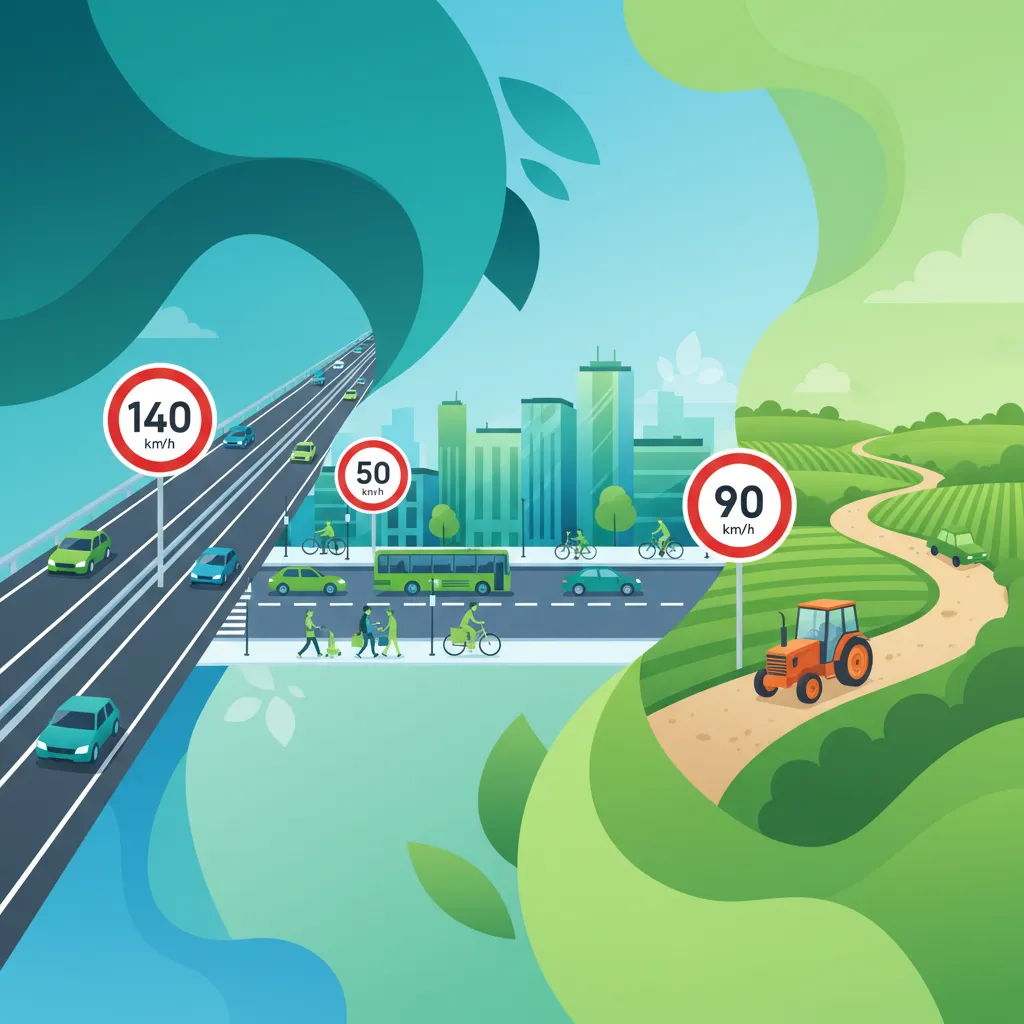
This lesson provides a comprehensive overview of the statutory speed limits applicable to different categories of Polish roads, including urban areas, residential zones, rural roads, highways, and motorways. Learners will examine the visual cues of speed limit signs and learn how speed limit transitions affect rider behavior. The content also covers how enforcement mechanisms impact compliance and the importance of real-time speed adaptation to remain within legal thresholds.

This lesson focuses on the specific challenges of riding in rain, detailing how wet road surfaces reduce tyre grip and increase braking distances. Learners will learn about hydroplaning risk, the importance of deep tyre tread, and the need for smooth throttle and brake modulation to maintain stability. The content also covers visibility concerns, such as proper headlamp use and the selection of waterproof clothing, so riders can safely navigate wet conditions.
This lesson provides a detailed overview of Polish driving licence classifications, focusing on the privileges and limitations of Category B. It clarifies the minimum age requirement, the necessity of a medical certificate, and the process of enrolling in a driving school. The content outlines the steps to pass both the theory and practical exams to obtain a full licence, ensuring candidates understand all prerequisites.
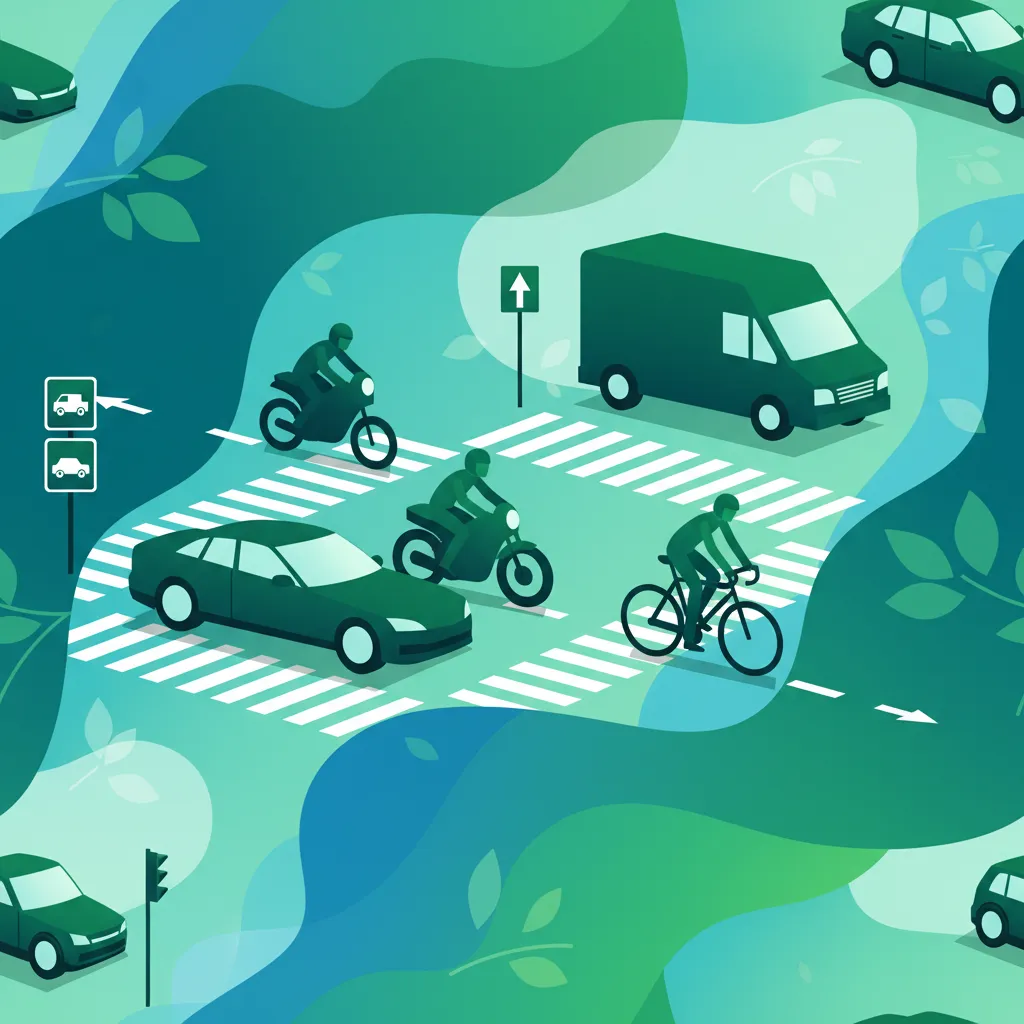
This lesson defines the scope of vehicles permitted under a Category B licence, primarily passenger cars up to 3,500 kg maximum permissible mass. It clarifies the rules on seating capacity and the regulations for towing trailers, distinguishing between a standard B licence and a B+E entitlement. Understanding these classifications ensures drivers operate vehicles legally and safely.
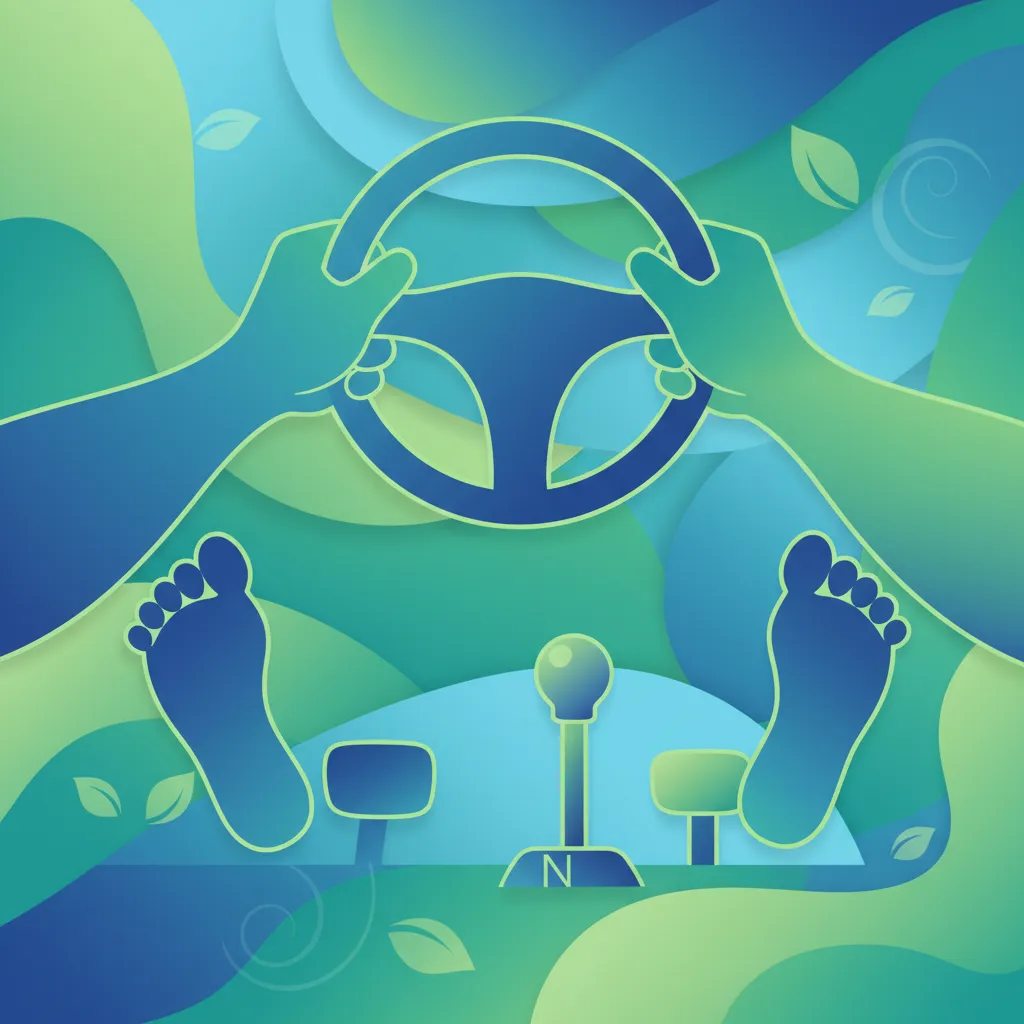
This lesson introduces the core operations of the throttle, clutch, and gearbox, explaining how throttle input modulates engine power and how clutch engagement allows seamless gear changes. Learners will study the gear ratio system, the sequential shifting pattern, and the importance of locating the neutral position correctly. The content also covers techniques for smooth acceleration, proper timing for upshifts and downshifts, and the concept of rev matching to maintain vehicle stability during transitions.
Learn about the most frequent mistakes candidates make during both the theory and practical motorcycle licence exams in Poland. Discover how to avoid these critical errors and understand what examiners are looking for to improve your chances of success.
This lesson examines the variety of pavement markings that define lane structures, traffic flow, and special zones on Polish roads. Learners will study solid and broken lines, lane division markings, and the distinct symbols for bicycle lanes, bus lanes, and tram tracks, all of which affect motorcyclist positioning. The lesson also addresses surface texture indicators that signal changing road conditions, enabling riders to maintain correct lane discipline.

In this lesson, learners explore riding on rural and countryside roads, where road markings may be sparse and surface conditions varied. The content covers safe overtaking in single-lane sections, interaction with agricultural vehicles and animals, and the handling of gravel or uneven surfaces. Learners will also study the importance of anticipating curves and adjusting speed to light conditions, equipping them with the skills needed for safe countryside travel.
In this lesson, learners examine the core legal obligations that apply to motorcyclists operating on Polish roads, including the mandatory use of helmets, periodic vehicle inspections, and the necessity of valid insurance and registration. The content details the classification of traffic offences and explains the associated penalty system, including fines, demerit points, and potential licence suspension. Additionally, the lesson outlines procedural requirements for accident reporting and interaction with law enforcement, providing a comprehensive view of a rider’s legal responsibilities.
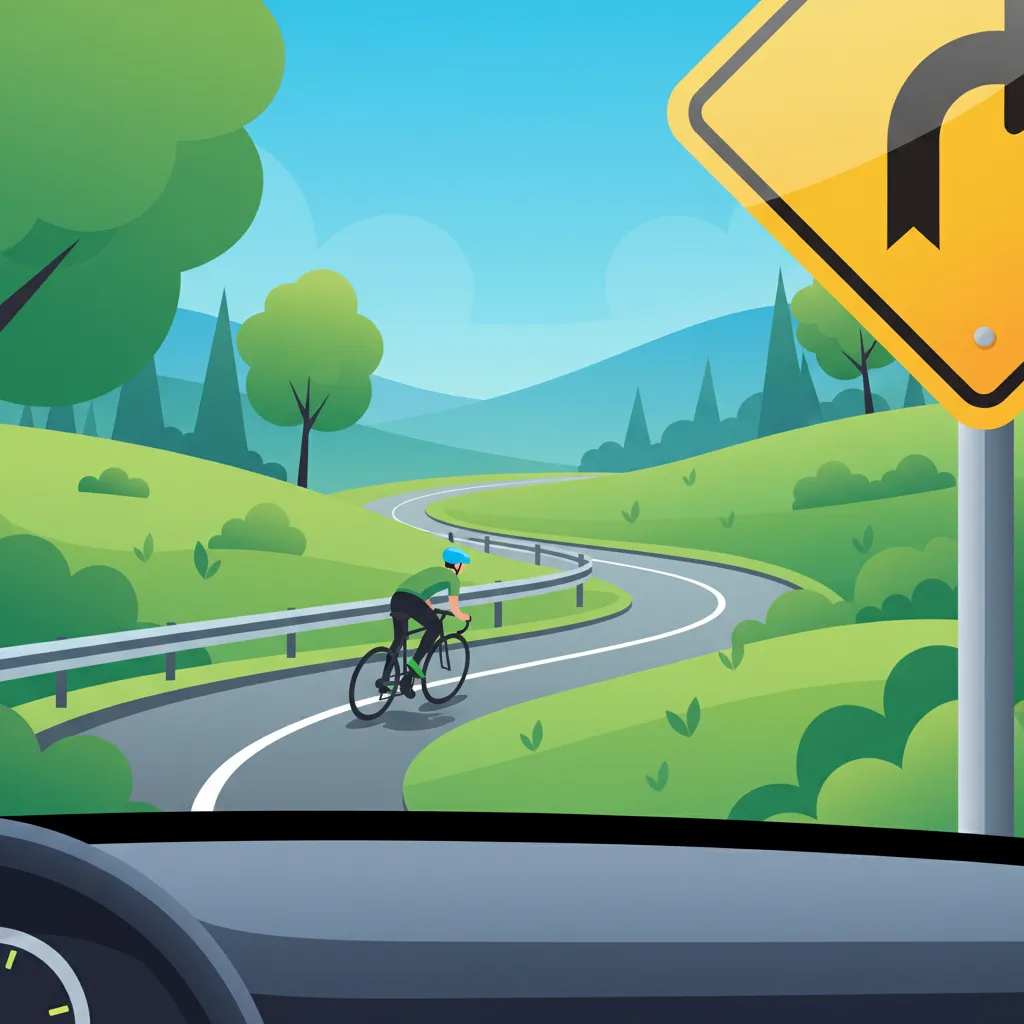
In this lesson, learners study warning signs that alert drivers to potential hazards, focusing on those that are particularly relevant to motorcyclists. The content includes signs indicating curves, slippery surfaces, animal crossings, tram tracks, and construction zones, each requiring specific riding adjustments. The lesson teaches riders how to interpret these signs to anticipate hazards, adjust speed appropriately, and maintain a safe distance from potential dangers.
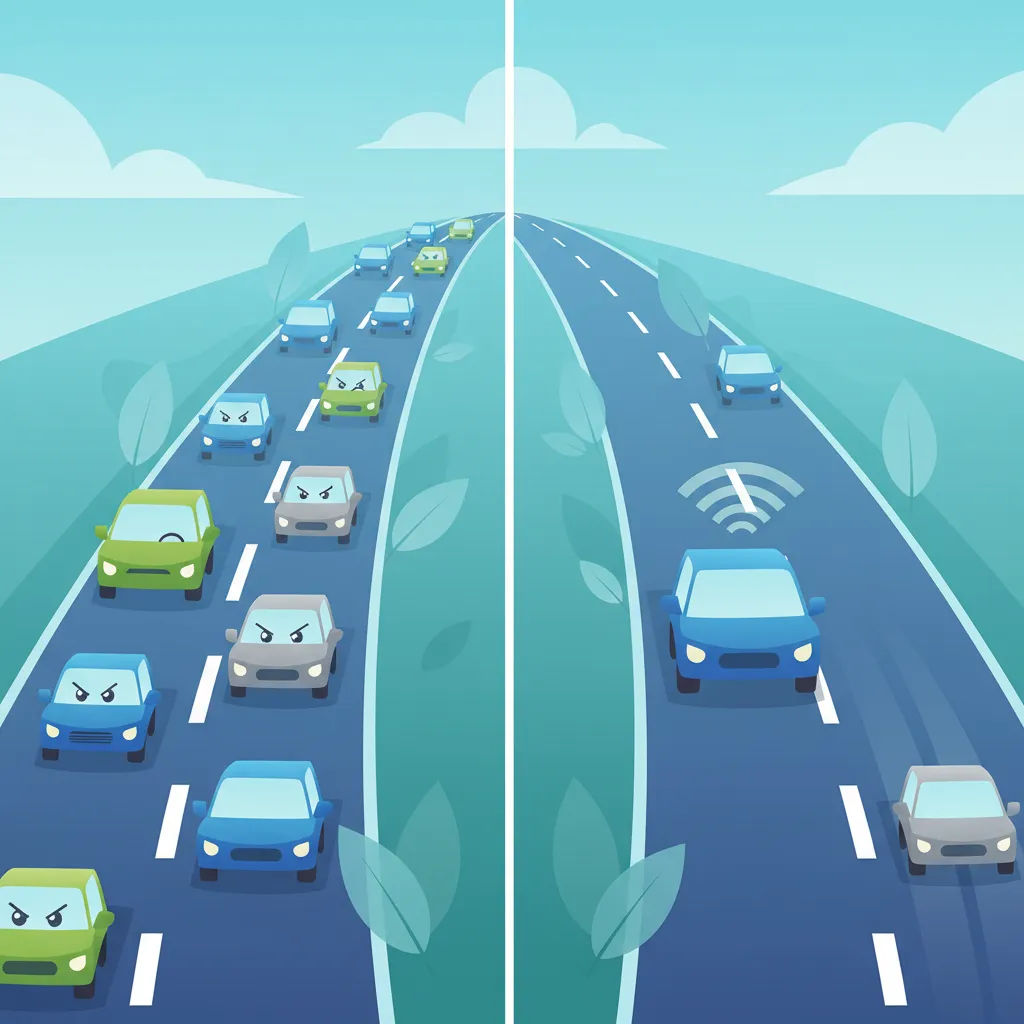
This lesson examines the specific rules and etiquette for riding on Polish motorways and high-speed highways, focusing on proper lane positioning, entry via acceleration lanes, and maintaining appropriate following distances. Learners will study overtaking protocols at high speeds, proper use of deceleration lanes for exits, and techniques for aerodynamic positioning. The content also covers safe lane changes and emergency lane usage to ensure efficient travel.

This lesson prepares drivers for the event of a vehicle breakdown on a motorway or expressway. It details the correct procedure: pulling over to the emergency lane, activating hazard lights, and placing the warning triangle at the legally required distance. The importance of wearing a reflective vest when outside the vehicle is also a key safety point.

In this lesson, learners focus on the identification and management of blind spots that affect motorcyclists, particularly when sharing the road with larger vehicles such as trucks and buses. The content covers the use of side mirrors, head-turn techniques, and optimal rider positioning to minimize blind-spot exposure. Learners will also study the characteristics of blind spots at intersections and during overtaking maneuvers to reduce collision risk.

This lesson outlines strategies for planning escape routes and adopting protective positioning to avoid potential collisions. Learners will study the concept of a defensive riding line that maximizes visibility and provides an optimal safety corridor. The content emphasizes maintaining adequate distance buffers, choosing lanes that reduce exposure to hazards, and preparing for emergency maneuvers such as swift swerves, allowing riders to react quickly in critical situations.

This lesson focuses on the unique demands of urban riding within Polish cities, addressing traffic lights, pedestrian zones, one-way streets, and the presence of tram tracks. Learners will study safe lane positioning on narrow roads, blind-spot management, and how to share the road with buses and cyclists. The content also covers strategies for navigating stop-and-go traffic, anticipating signal changes, and maintaining visibility in dense urban environments.

In this lesson, learners examine defensive overtaking practices, focusing on when and how to safely pass other road users. The content covers speed differential calculations, appropriate passing distances, and the importance of maintaining clear visibility during overtaking. Learners will also study the impact of road curvature, traffic flow, and lane selection on overtaking safety, allowing them to minimize risks associated with passing maneuvers.
Find clear answers to common questions learners have about Examination Process and Preparation Strategies. Learn how the lesson is structured, which driving theory objectives it supports, and how it fits into the overall learning path of units and curriculum progression in Poland. These explanations help you understand key concepts, lesson flow, and exam focused study goals.
The Polish Category A motorcycle theory test requires a minimum score to pass. You must answer a specific number of questions correctly out of the total questions presented. For Category A, this typically means achieving a high percentage to demonstrate your knowledge of road rules, signage, and safe riding practices.
The practical part of the Category A exam includes both off-road (maneuvering) and on-road (traffic riding) components. The off-road section tests your control over the motorcycle in various exercises, while the on-road section assesses your ability to navigate real traffic situations safely and in compliance with Polish traffic law.
Official question banks, or similar resources that closely replicate the official test style, are crucial for preparation. You can often find these through authorized driving schools or reputable online platforms like teoriajazdy.pl, which base their materials on the official exam content to help you practice effectively.
On test day, you will need a valid form of identification, such as an ID card or passport, to confirm your identity. You may also need the confirmation of your appointment and any required payment receipts. It is advisable to check the specific requirements with the examination centre beforehand.
The time required varies per individual, but consistent, focused study is key. Dedicating at least a few hours per week for several weeks, utilizing mock exams to identify weak areas, and reviewing official materials regularly will significantly improve your readiness for the Polish Category A theory exam.
Build custom practice sessions tailored precisely to your needs. Focus on areas requiring improvement, review specific Polish road signs, or master complex traffic rules to ensure full preparation for your official driving license exam.