
This lesson details the specific vehicle classifications permitted under a Polish Category B driving licence. You'll learn about maximum permissible mass, seating capacity, and essential rules for towing trailers, including the B+E entitlement. Understanding these regulations is crucial for operating vehicles legally and safely in Poland. This knowledge forms a foundational part of your theory exam preparation within the Legal Foundations unit.
Lesson content overview
The Polish Category B driving licence is the most common entitlement, allowing individuals to operate a wide range of everyday vehicles. However, it comes with specific legal limitations regarding vehicle weight, passenger capacity, and the ability to tow trailers. Understanding these classifications is crucial for every driver, not only to comply with Polish road traffic law (Prawo o ruchu drogowym) but also to ensure safety for themselves, their passengers, and other road users. Operating a vehicle outside your licence's scope can lead to severe penalties, including fines, penalty points, and even vehicle impoundment. This lesson will define these critical boundaries, providing a clear guide to what you can and cannot drive with a standard Category B licence in Poland.
The Category B licence is primarily designed for passenger cars and light utility vehicles. Its scope is carefully set to match the typical driving skills and knowledge expected of private drivers, balancing convenience with safety. The limitations on vehicle mass and passenger capacity are not arbitrary; they are based on extensive research into vehicle dynamics, braking performance, and driver control. Heavier or larger vehicles require specialized training and different licence categories (e.g., C for heavy goods vehicles, D for buses) because they behave differently on the road, demand greater skill, and pose increased risks if mishandled.
This lesson connects directly to fundamental aspects of safe driving, such as understanding how vehicle mass influences stopping distances and control in various conditions. It also lays the groundwork for more advanced topics like operating a vehicle with a trailer, where the combined mass and braking capabilities become even more critical.
One of the most fundamental limits for a Polish Category B driving licence is the Maximum Permissible Mass (MVM), known in Polish as Masa Własna Pojazdu combined with Masa Użytkowa, or often referred to as Gross Vehicle Weight (GVW) in English-speaking contexts.
The greatest total weight a vehicle may have when fully loaded, as specified by the manufacturer. This includes the vehicle's own empty weight (curb weight), fuel, all passengers, and any cargo.
For a standard Category B licence, the MVM of the vehicle you are driving must not exceed 3,500 kilograms (3.5 tonnes). This limit applies to the vehicle itself, regardless of whether it is carrying passengers or cargo.
Category B typically allows for:
It is vital to distinguish between a vehicle's curb weight (its empty weight without occupants or cargo) and its MVM. A common mistake is to assume that a large, seemingly heavy vehicle can be driven if it's currently empty and therefore under 3,500 kg. However, the legal limit refers to the vehicle's maximum design weight when fully loaded, as stated in its registration documents (dowód rejestracyjny). Even if a vehicle is empty, if its official MVM is, for instance, 4,000 kg, it cannot be driven with a Category B licence.
Always check the vehicle's registration documents to confirm its MVM before driving, especially if it appears to be a larger vehicle like a heavy van or a light truck.
For example, a typical family sedan might have a curb weight of 1,500 kg and an MVM of 2,000 kg. This means it can carry up to 500 kg of passengers and cargo. Both figures are well within the Category B limits. Conversely, a large commercial van might have a curb weight of 2,500 kg but an MVM of 4,000 kg, making it unsuitable for a Category B licence, even if it's empty.
In addition to weight limits, the Polish Category B licence also restricts the number of passengers a vehicle can legally carry. This rule ensures that drivers operate vehicles with manageable dimensions and dynamics, supporting safe driving.
The maximum number of occupants, including the driver, that a vehicle is legally designed and equipped to carry, as specified by the manufacturer.
With a Category B licence, you are permitted to drive vehicles with a seating capacity of up to 9 seats in total. This means the vehicle can have the driver's seat plus a maximum of 8 additional passenger seats.
This seating limit is crucial because vehicles designed to carry more than 9 people, such as larger minibuses, generally have different handling characteristics, require greater braking distances, and offer different fields of vision compared to standard cars. They are classified as passenger transport vehicles (buses) and require a Category D licence.
A standard 5-seat family car (driver + 4 passengers) or a 7-seat minivan (driver + 6 passengers) falls perfectly within this limit. However, a 12-seat minibus, even if its MVM is below 3,500 kg, is expressly excluded due to its seating capacity. It's also a common misconception that removing seats from a larger vehicle makes it permissible under Category B. The classification is based on the vehicle's original design and homologation (technical approval), not on temporary modifications.
Towing a trailer significantly alters a vehicle's handling, braking, and stability. Therefore, strict regulations govern what kind of trailers can be towed with a Category B licence. There are three distinct levels of entitlement in Poland: the basic Category B, the B96 endorsement, and the B+E licence.
The most basic entitlement allows a Category B driver to tow a light trailer without any additional training or licence endorsement.
A trailer with a Maximum Permissible Mass (MVM) that does not exceed 750 kilograms.
With a standard Category B licence, you are allowed to tow any trailer with an MVM of up to 750 kg. Crucially, the combined MVM of the towing vehicle and the light trailer must not exceed 3,500 kg. For these light trailers, a braking system is generally not mandatory, although trailers with brakes offer enhanced safety.
Even with a light trailer, it is essential to ensure the trailer's lights are fully operational and that the towing vehicle is equipped with a properly functioning tow bar and electrical connection.
This entitlement covers many common scenarios, such as towing small utility trailers for garden waste, bike carriers, or compact luggage trailers for holidays. For instance, towing a 600 kg trailer with a 1,800 kg MVM car (combined 2,400 kg) is perfectly legal under a standard Category B licence.
For those needing to tow heavier trailers, such as larger caravans or horseboxes, the B96 endorsement offers an intermediate solution. This is not a separate licence category but an addition to your Category B licence.
An extension to the Category B licence that permits the towing of a trailer with an MVM greater than 750 kg, provided the combined Maximum Permissible Mass (MVM) of the towing vehicle and the trailer does not exceed 4,250 kg.
To obtain the B96 endorsement, you must pass a practical driving test specifically focused on towing heavier combinations. This test assesses your ability to safely control a vehicle and a trailer that together exceed the standard Category B limits. The trailer itself must be equipped with an operational braking system if its MVM is over 750 kg, which is almost always the case for combinations falling under B96.
Ensure your towing vehicle is legally equipped for towing (tow bar, electrics).
Enroll in a driving school for practical training on towing a heavier trailer.
Pass a practical driving test demonstrating your competence in handling a vehicle with a trailer exceeding 750 kg MVM, while the combined MVM remains below 4,250 kg.
Practical Example: If you have a car with an MVM of 2,200 kg and want to tow a caravan with an MVM of 2,000 kg, the combined MVM is 4,200 kg. This falls within the B96 limit of 4,250 kg. With a B96 endorsement, this combination would be legal, provided the caravan has its own braking system. Without B96, this would be illegal because the trailer MVM (2,000 kg) exceeds 750 kg.
For towing the heaviest trailers or vehicle-trailer combinations that exceed the B96 limits, a separate B+E licence is required.
A distinct driving licence category that permits the towing of any tractor-trailer combination where the combined Maximum Permissible Mass (MVM) exceeds 4,250 kg.
The B+E licence is necessary when:
Obtaining a B+E licence involves a separate, more extensive practical test focusing on complex towing scenarios, maneuvering, and vehicle checks. Furthermore, for any combination under B+E, the towing vehicle and trailer combination must have homologacja, which is official technical approval confirming that the specific combination meets all safety and regulatory standards. This ensures the towing capacity of the vehicle matches the trailer's requirements and that braking systems are adequate for the combined mass.
Hold a valid Category B driving licence.
Enroll in a specialized driving school offering B+E training.
Pass a comprehensive practical driving test for the B+E category.
Ensure the specific vehicle-trailer combination has technical approval (homologacja).
The B+E licence is essential for drivers using large caravans, commercial trailers for heavy equipment, or for certain types of professional transport where a Category B vehicle is used as a tractor unit. A driver with only a Category B licence attempting to tow such a heavy combination would face severe legal consequences.
While the Category B licence covers a broad range of common vehicles, several types fall explicitly outside its scope due to their design, mass, or intended use. Driving these vehicles requires different licence categories.
Understanding specific terminology is critical for interpreting vehicle classifications and legal requirements. Here are some key terms:
Adherence to vehicle classification rules is not merely advisory; it is legally binding under the Polish Road Traffic Act (Ustawa Prawo o ruchu drogowym). Violations can result in significant penalties.
Operating a vehicle outside the scope of your Category B licence is a serious offense that can lead to fines, penalty points, and potential invalidation of your insurance policy in the event of an accident.
Here's a summary of the core rules and potential consequences:
homologacja).The regulations surrounding vehicle classification and towing are fundamentally rooted in safety. Exceeding permissible limits directly compromises vehicle control and significantly increases accident risk.
Driving conditions can significantly impact the safe operation of any vehicle, especially when approaching weight or capacity limits, or when towing.
These contextual variations underscore the importance of understanding vehicle classification beyond just the legal text. They require drivers to apply sound judgment and defensive driving principles, especially when operating closer to the limits of their licence.
Mastering vehicle classification is an indispensable part of preparing for your Polish Category B driving theory test and ensuring safe, legal driving practices on the road.
Key Takeaways for Category B Licence Holders:
homologacja (technical approval) for the combination. The trailer must have brakes if its MVM is over 750 kg.Always consult your vehicle's registration documents and, if towing, the trailer's documents to confirm MVMs. Before towing any trailer, especially a heavier one, ensure you have the correct licence entitlement and that your vehicle is technically capable and legally approved for the task. Your thorough understanding of these classifications is a cornerstone of responsible and safe driving within the Polish road network.
Polish Category B licence covers passenger cars and light vehicles up to 3,500 kg MVM with maximum 9 seats. Towing entitlements are tiered: standard B allows trailers up to 750 kg with combined mass up to 3,500 kg; B96 endorsement permits heavier trailers with combined mass up to 4,250 kg; and B+E licence is required for combinations exceeding 4,250 kg combined mass. Understanding the distinction between curb weight and MVM is critical, as legal limits always refer to maximum permissible mass. Safety implications include longer stopping distances, reduced stability, and increased accident severity when operating vehicles outside licence scope or exceeding weight limits.
A short set of high-value points that capture the most important learning from this lesson.
Category B licence permits vehicles up to 3,500 kg Maximum Permissible Mass (MVM) and a maximum of 9 seats including the driver.
Standard Category B allows towing trailers with MVM up to 750 kg, provided the combined MVM does not exceed 3,500 kg.
The B96 endorsement extends towing rights to combined MVM up to 4,250 kg, requiring a separate practical driving test.
The B+E licence is a separate category for combinations exceeding 4,250 kg combined MVM and also requires technical approval (homologacja).
Vehicles excluded from Category B include motorcycles, vehicles over 3,500 kg MVM, and vehicles with more than 9 seats regardless of their mass.
Explore all units and lessons included in this driving theory course.
MVM (Masa Własna Pojazdu + Masa Użytkowa) refers to the vehicle's maximum designed weight when fully loaded, not its empty curb weight.
A trailer exceeding 750 kg MVM must be equipped with a functioning braking system, regardless of licence category.
The classification is based on the vehicle's original design and homologation, not on temporary modifications like removed seats.
Combined MVM means the sum of the towing vehicle's MVM and the trailer's MVM—this figure determines which entitlement is required.
B96 is an endorsement added to Category B, while B+E is a completely separate licence category.
Assuming a vehicle can be driven because it appears light when empty, without checking its official maximum permissible mass in the registration documents.
Believing that removing seats from a larger vehicle (e.g., a 12-seat minibus) makes it legal under Category B, when classification is based on original design and homologation.
Confusing curb weight (empty vehicle weight) with Maximum Permissible Mass, leading to incorrect assessments of legal eligibility.
Towing a trailer over 750 kg MVM with a standard Category B licence without realizing a B96 endorsement is required, even if the combined mass is under 3,500 kg.
Assuming any vehicle with MVM under 3,500 kg can be driven on Category B, without considering seating capacity limits or the specific requirements for heavy trailer combinations.
Lesson content overview
A short set of high-value points that capture the most important learning from this lesson.
Category B licence permits vehicles up to 3,500 kg Maximum Permissible Mass (MVM) and a maximum of 9 seats including the driver.
Standard Category B allows towing trailers with MVM up to 750 kg, provided the combined MVM does not exceed 3,500 kg.
The B96 endorsement extends towing rights to combined MVM up to 4,250 kg, requiring a separate practical driving test.
The B+E licence is a separate category for combinations exceeding 4,250 kg combined MVM and also requires technical approval (homologacja).
Vehicles excluded from Category B include motorcycles, vehicles over 3,500 kg MVM, and vehicles with more than 9 seats regardless of their mass.
Explore all units and lessons included in this driving theory course.
MVM (Masa Własna Pojazdu + Masa Użytkowa) refers to the vehicle's maximum designed weight when fully loaded, not its empty curb weight.
A trailer exceeding 750 kg MVM must be equipped with a functioning braking system, regardless of licence category.
The classification is based on the vehicle's original design and homologation, not on temporary modifications like removed seats.
Combined MVM means the sum of the towing vehicle's MVM and the trailer's MVM—this figure determines which entitlement is required.
B96 is an endorsement added to Category B, while B+E is a completely separate licence category.
Assuming a vehicle can be driven because it appears light when empty, without checking its official maximum permissible mass in the registration documents.
Believing that removing seats from a larger vehicle (e.g., a 12-seat minibus) makes it legal under Category B, when classification is based on original design and homologation.
Confusing curb weight (empty vehicle weight) with Maximum Permissible Mass, leading to incorrect assessments of legal eligibility.
Towing a trailer over 750 kg MVM with a standard Category B licence without realizing a B96 endorsement is required, even if the combined mass is under 3,500 kg.
Assuming any vehicle with MVM under 3,500 kg can be driven on Category B, without considering seating capacity limits or the specific requirements for heavy trailer combinations.
Explore search topics learners often look for when studying Vehicle Classification for Category B. These topics reflect common questions about road rules, driving situations, safety guidance, and lesson level theory preparation for learners in Poland.
Browse additional driving theory lessons that cover connected traffic rules, road signs, and common driving situations related to this topic. Improve your understanding of how different rules interact across everyday traffic scenarios.
Understand the specific rules for towing trailers with a Polish Category B licence. Covers light trailers, the B96 endorsement, and the B+E licence, detailing weight limits, combined mass (MVM), and vehicle requirements.

This lesson provides a detailed breakdown of vehicle classifications relevant to the Category C licence. It explains the concept of 'dopuszczalna masa całkowita' (permissible total weight) and how it defines a vehicle's category. Learners will identify different truck types, such as rigid vehicles, based on their axle configurations and understand the specific roadworthiness and registration requirements for each class, ensuring correct vehicle operation under the law.
This lesson outlines the statutory speed limits that professional drivers of Category C vehicles must adhere to on Polish roads. It clearly distinguishes the maximum permitted speeds in built-up areas, on single carriageways, and on motorways. The content also explains how to interpret road signs that may indicate temporary or vehicle-specific speed restrictions, ensuring drivers remain compliant with the law and avoid penalties from speed enforcement measures.

This lesson examines the signs that convey dimensional and weight restrictions, which are vital for safe tractor and trailer operation. It outlines how to read width, height, and weight limit signs and the legal implications of exceeding these limits. The lesson provides guidance on planning loads to comply with bridge and road classification restrictions found across Polish rural networks.
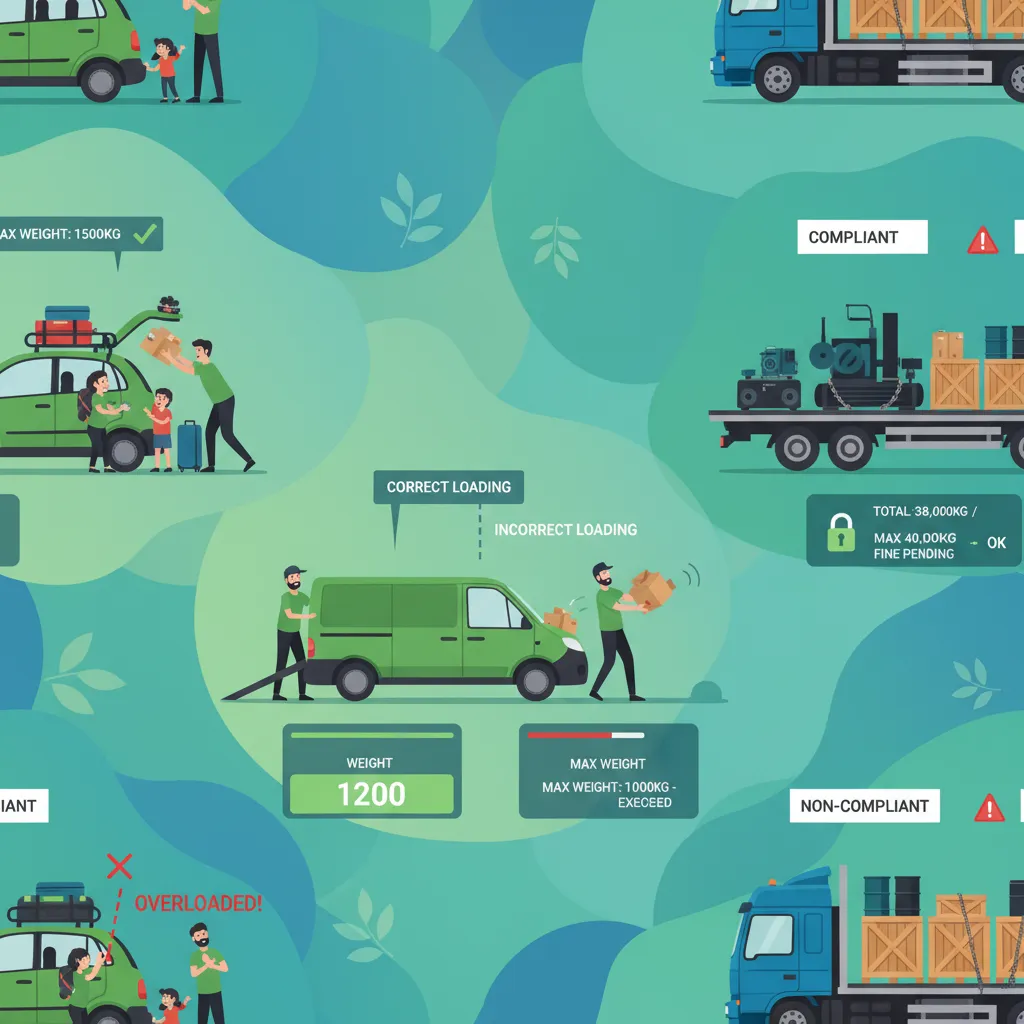
This lesson introduces the legal framework governing vehicle and axle weight limits in Poland and the EU. Learners will understand how to determine a vehicle's maximum permissible payload and interpret official load charts and documentation. The content covers the importance of correct weight distribution to avoid exceeding individual axle limits and explains the serious legal and safety consequences of operating an overloaded vehicle.
This lesson provides a detailed overview of Polish driving licence classifications, focusing on the privileges and limitations of Category B. It clarifies the minimum age requirement, the necessity of a medical certificate, and the process of enrolling in a driving school. The content outlines the steps to pass both the theory and practical exams to obtain a full licence, ensuring candidates understand all prerequisites.
This lesson explains the scope of the Category T licence, distinguishing it from other categories and outlining the vehicles covered, such as agricultural and forestry vehicles. It details the legal basis for operating these vehicles on public roads, including specific provisions in the Prawo o ruchu drogowym. Learners will understand the regulatory environment defining where and how Category T vehicles may be driven within Poland.
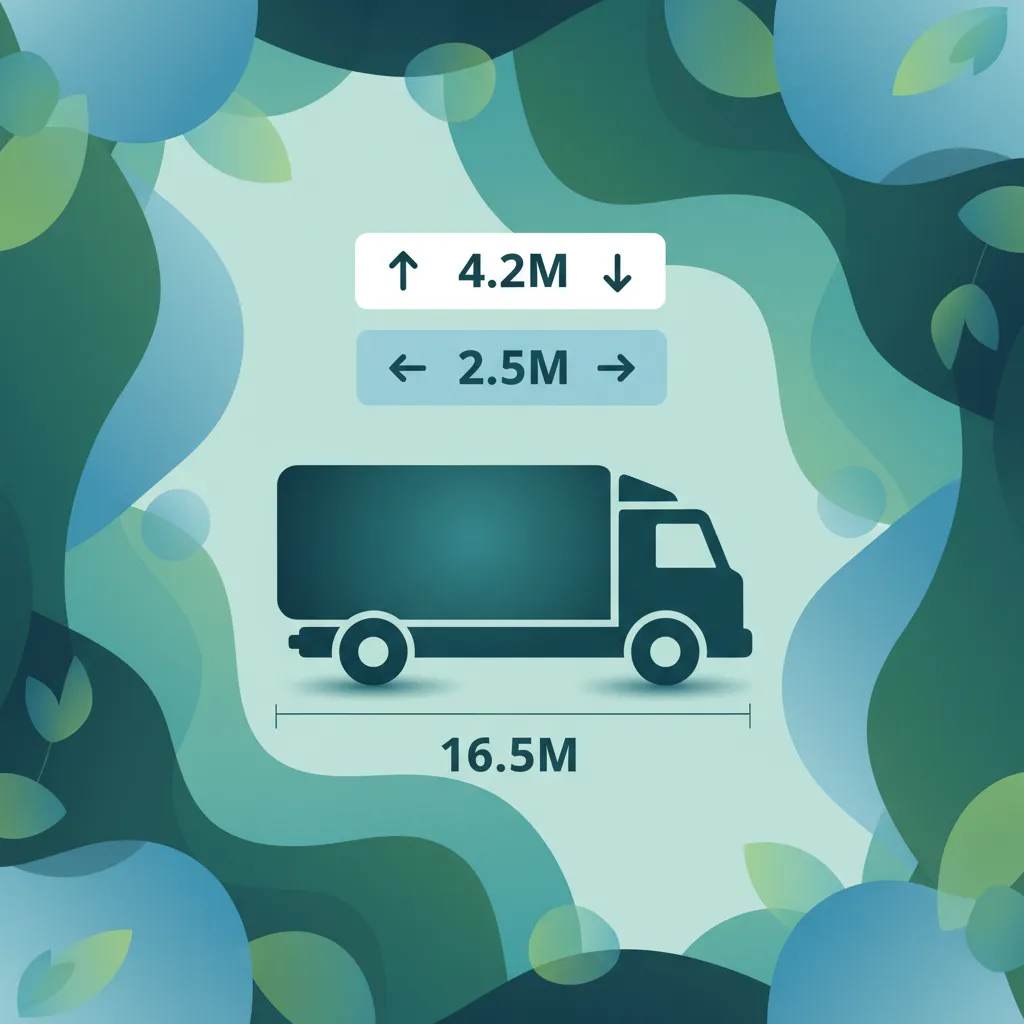
This lesson concentrates on the specific road signs that are of utmost importance to HGV drivers. It details how to interpret signs indicating maximum permissible weight, axle load, vehicle height, and overall length. Understanding these restrictions is crucial for effective route planning to avoid bridges with low clearance, roads with weight limits, or tunnels that cannot accommodate the vehicle's dimensions, thus preventing accidents and infrastructure damage.
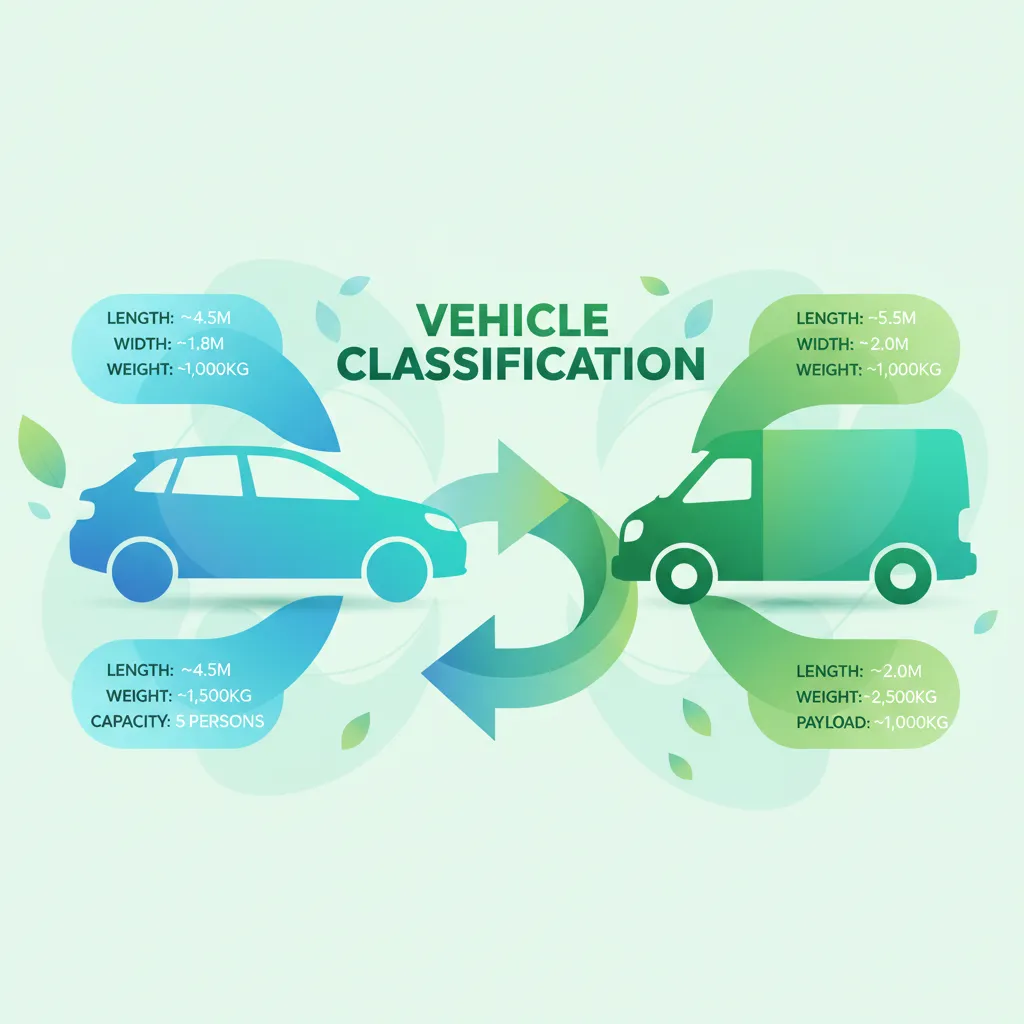
This lesson focuses on the precise classification of agricultural vehicles as defined by Polish law, differentiating between tractors, forestry machines, and trailers. It examines the legal parameters such as maximum permissible weight, width, height, and length that affect roadworthiness certifications. The lesson clarifies terminology used in official documents, ensuring learners can correctly identify the vehicles they are permitted to operate.

This lesson outlines the essential legal paperwork associated with freight transport. It details the purpose and content of key documents like the load manifest, cargo declaration, and official weight certificates. Learners will understand their legal responsibility to verify that all documentation is accurate and complete before departure, and the importance of maintaining proper records for potential inspections by transport authorities or for cross-border customs procedures.
Learn the precise limits of a Polish Category B driving licence regarding vehicle classification. Details maximum permissible mass (MVM), seating capacity, and general vehicle types you are legally permitted to operate.
This lesson provides a detailed breakdown of vehicle classifications relevant to the Category C licence. It explains the concept of 'dopuszczalna masa całkowita' (permissible total weight) and how it defines a vehicle's category. Learners will identify different truck types, such as rigid vehicles, based on their axle configurations and understand the specific roadworthiness and registration requirements for each class, ensuring correct vehicle operation under the law.
This lesson outlines the statutory speed limits that professional drivers of Category C vehicles must adhere to on Polish roads. It clearly distinguishes the maximum permitted speeds in built-up areas, on single carriageways, and on motorways. The content also explains how to interpret road signs that may indicate temporary or vehicle-specific speed restrictions, ensuring drivers remain compliant with the law and avoid penalties from speed enforcement measures.
This lesson introduces the legal framework governing vehicle and axle weight limits in Poland and the EU. Learners will understand how to determine a vehicle's maximum permissible payload and interpret official load charts and documentation. The content covers the importance of correct weight distribution to avoid exceeding individual axle limits and explains the serious legal and safety consequences of operating an overloaded vehicle.
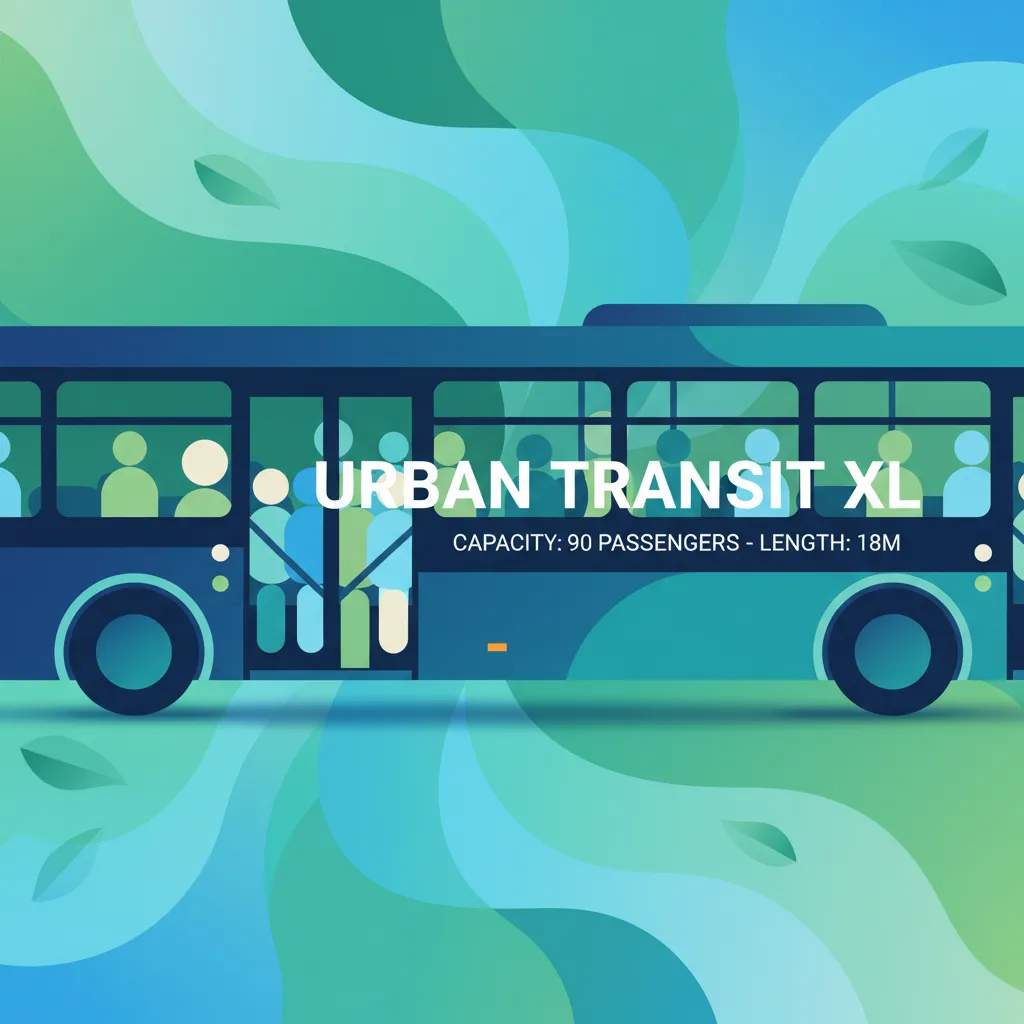
This lesson introduces the various classes of passenger vehicles under Category D, detailing differences between standard, articulated, and minibuses. It covers key dimensional parameters like length, wheelbase, and turning circle that affect urban navigation. Learners will also understand passenger capacity calculations and weight distribution for safe, compliant operation.
This lesson focuses on the precise classification of agricultural vehicles as defined by Polish law, differentiating between tractors, forestry machines, and trailers. It examines the legal parameters such as maximum permissible weight, width, height, and length that affect roadworthiness certifications. The lesson clarifies terminology used in official documents, ensuring learners can correctly identify the vehicles they are permitted to operate.
This lesson details the speed limits applicable to buses in Poland across urban, rural, and motorway settings. It emphasizes how vehicle size and passenger load influence safe operating speeds and required stopping distances. The content also covers speed-control device usage and practical techniques for maintaining consistent speed while ensuring passenger comfort.
This lesson explains the scope of the Category T licence, distinguishing it from other categories and outlining the vehicles covered, such as agricultural and forestry vehicles. It details the legal basis for operating these vehicles on public roads, including specific provisions in the Prawo o ruchu drogowym. Learners will understand the regulatory environment defining where and how Category T vehicles may be driven within Poland.
This lesson provides a detailed overview of Polish driving licence classifications, focusing on the privileges and limitations of Category B. It clarifies the minimum age requirement, the necessity of a medical certificate, and the process of enrolling in a driving school. The content outlines the steps to pass both the theory and practical exams to obtain a full licence, ensuring candidates understand all prerequisites.
This lesson examines the signs that convey dimensional and weight restrictions, which are vital for safe tractor and trailer operation. It outlines how to read width, height, and weight limit signs and the legal implications of exceeding these limits. The lesson provides guidance on planning loads to comply with bridge and road classification restrictions found across Polish rural networks.
Find clear answers to common questions learners have about Vehicle Classification for Category B. Learn how the lesson is structured, which driving theory objectives it supports, and how it fits into the overall learning path of units and curriculum progression in Poland. These explanations help you understand key concepts, lesson flow, and exam focused study goals.
For a standard Category B licence in Poland, you can drive vehicles with a maximum permissible mass (DMC) up to 3,500 kg. This limit applies to the vehicle itself, excluding any trailer's weight. It's crucial to check your vehicle's registration document (dowód rejestracyjny) for its official DMC.
A standard Polish Category B licence allows you to tow a light trailer (przyczepa lekka) with a maximum permissible mass up to 750 kg. If the trailer's DMC exceeds 750 kg, the combined DMC of the vehicle and trailer cannot exceed 3,500 kg, and the trailer's DMC cannot exceed the unladen mass of the towing vehicle. For heavier combinations, a B+E entitlement or Code 96 is required.
A Category B licence allows you to tow light trailers (up to 750 kg DMC) or heavier trailers where the combined DMC of the car and trailer does not exceed 3,500 kg. The B+E entitlement, however, allows you to drive a towing vehicle from Category B and a trailer with a DMC up to 3,500 kg, meaning the combined DMC can be up to 7,000 kg. This provides significantly more flexibility for towing heavier loads.
With a Polish Category B licence, you are permitted to drive vehicles designed and constructed for the transport of no more than 8 passengers in addition to the driver. This means a maximum of 9 people, including yourself. Always ensure that all passengers have access to an approved seatbelt.
Build custom practice sessions tailored precisely to your needs. Focus on areas requiring improvement, review specific Polish road signs, or master complex traffic rules to ensure full preparation for your official driving license exam.