
This lesson delves into the precise classification of agricultural vehicles as defined by Polish law for Category T. You'll learn to differentiate between various types like tractors, forestry machines, and trailers, and understand the legal parameters such as maximum weight, width, height, and length. This foundational knowledge is crucial for compliant driving and for successfully navigating your Polish driving theory exam.
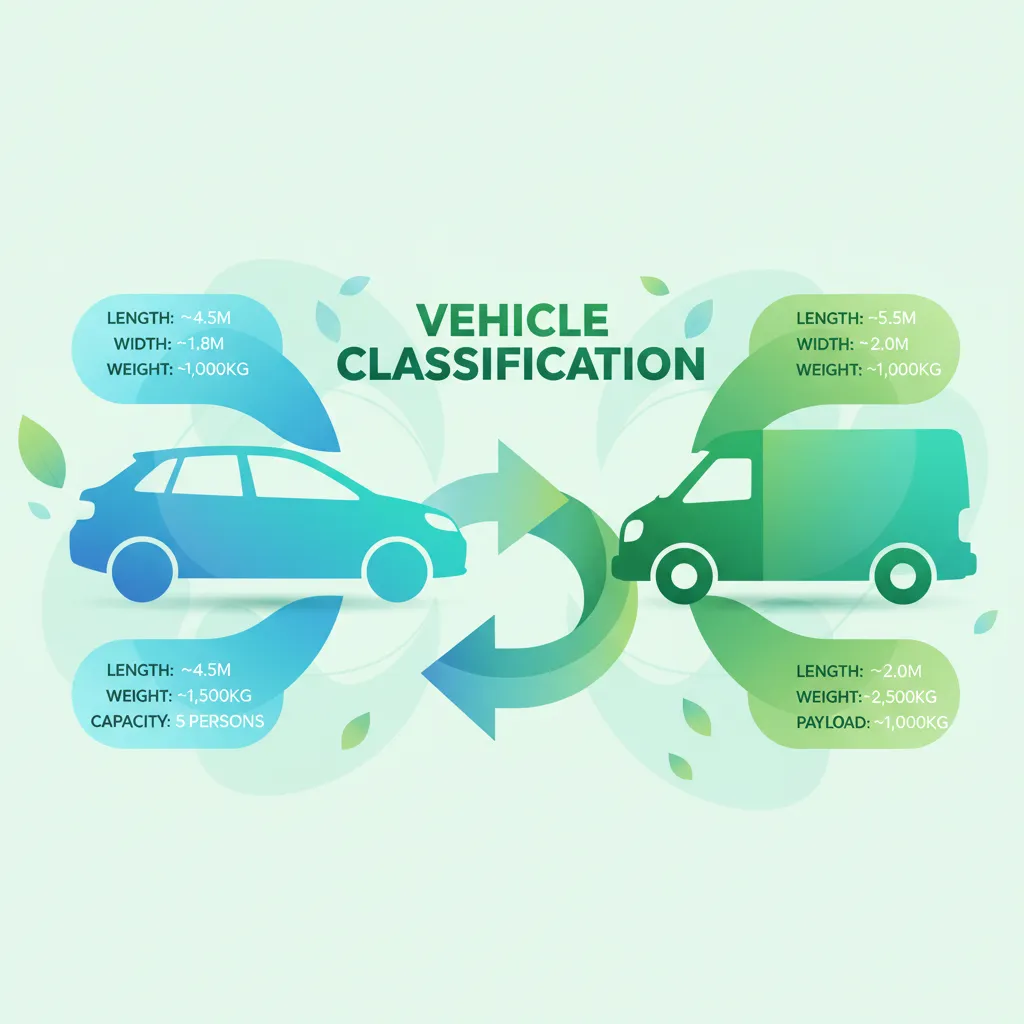
Lesson content overview
Obtaining a Polish Category T driving license requires a thorough understanding of the specific legal classifications for agricultural vehicles. This lesson provides a precise overview of how tractors, forestry machines, and trailers are defined under Polish law (Prawo o ruchu drogowym). Mastering these definitions is crucial not only for passing your driving theory exam but also for ensuring safe, legal operation on public roads and agricultural terrains.
Proper vehicle classification directly impacts which vehicles you are permitted to operate, the required documentation, and the safety regulations you must adhere to. It determines speed limits, signaling requirements, load securing protocols, and the necessary technical inspections. This foundational knowledge is essential for all future lessons on vehicle construction, road signs, operational maneuvers, and load management within the Polish Driving License Theory – Category T curriculum.
Polish law categorizes vehicles based on their function, construction, and technical specifications to ensure road safety, compatibility with infrastructure, and appropriate licensing. For Category T license holders, the key distinctions lie between agricultural tractors, forestry machines, and various types of trailers. These classifications are not arbitrary; they are deeply rooted in safety, road infrastructure preservation, and environmental considerations.
The primary goal of these legal distinctions is to ensure that drivers possess the appropriate skills for the vehicle type they operate and that all vehicles meet specific technical standards, particularly concerning braking, lighting, and overall dimensions. By adhering to mass and dimensional limits, we prevent damage to road surfaces and guarantee safe maneuverability, even on narrower public roads or farm tracks. Regulatory intent ensures that road usage rights align with vehicle capabilities, preventing high-risk combinations that could endanger other road users.
An agricultural tractor, known in Polish as traktor rolniczy, is legally defined as a motor vehicle primarily designed for agricultural work. These vehicles are typically equipped with a Power Take-Off (PTO) system, which transfers engine power to various implements, enabling them to perform tasks like plowing, cultivating, or harvesting.
For the purpose of the Category T driving license, a standard agricultural tractor is characterized by a Maximum Permissible Mass (M) not exceeding 3,500 kg. This mass limit is critical as it directly affects the license category required to operate the vehicle on public roads. While the tractor itself may be capable of a higher speed, its operation on public roads is typically limited to 40 km/h unless otherwise indicated by road signage.
It is vital to distinguish this from heavier agricultural tractors (sometimes referred to as tractor-semi-trucks or large specialized agricultural machines) that have a Maximum Permissible Mass greater than 3,500 kg but typically not exceeding 5,000 kg. These heavier vehicles often require a Category C driving license, not Category T. A common misunderstanding among new drivers is assuming that any farm vehicle qualifies for Category T, when in fact, the mass limit is a key differentiator. For instance, a John Deere 5075E with a Maximum Permissible Mass of 3,200 kg is a classic example of a Category T compliant tractor.
When operating on public roads, a Category T tractor must display a "T" plate, be equipped with appropriate rearview mirrors, and include fog lights for use in low-visibility conditions. These rules ensure that agricultural tractors are clearly identifiable and visible to other road users, contributing to overall road safety.
Forest machines, or maszyna leśna in Polish, are specialized motor vehicles specifically equipped for forestry work. These include vehicles such as feller-bunchers, which cut down trees, or forwarders, which transport felled timber from the forest to a roadside landing. Similar to agricultural tractors, their classification for Category T purposes is also tied to their Maximum Permissible Mass (M), which must not exceed 5,000 kg.
Examples of forest machines suitable for Category T operation include forwarders with a Maximum Permissible Mass of 4,800 kg or skidders (vehicles that drag logs) within the 5,000 kg limit. These machines, despite their specialized nature, are treated similarly to agricultural tractors for licensing purposes under Category T, provided they remain within the specified mass limits.
When operating on public roads, forest machines have specific requirements to enhance visibility and safety. They must use amber flashing lights (beacons) to warn other road users of their presence, especially due to their often large size and slower speeds. If used for timber transport, they may also need to display "C" (construction) markings. A common misunderstanding is assuming any large forestry vehicle qualifies for Category T; only those that meet the mass criteria are eligible.
A trailer, or przyczepa, is a non-motorized vehicle designed to be towed by a tractor or forest machine. The legal definitions for trailers are crucial because they dictate braking system requirements and, most importantly, influence the total permissible mass of a vehicle combination.
For Category T combinations, a trailer must have its own brake system if its Maximum Permissible Mass (M) exceeds 750 kg. The individual trailer's Maximum Permissible Mass for Category T combinations is capped at 2,800 kg. This ensures that the trailer can be safely stopped, even when fully loaded.
Trailers are categorized further based on mass:
lekka przyczepa): Maximum Permissible Mass up to 750 kg. These trailers generally do not require their own independent braking system.ciężka przyczepa): Maximum Permissible Mass between 750 kg and 2,800 kg. These trailers are legally required to have their own functional braking system.When a trailer is coupled to a tractor or forest machine, the combined unit's total Maximum Permissible Mass (tractor/forest machine + trailer) must not exceed 5,000 kg. This overarching limit is paramount for ensuring the stability, maneuverability, and effective braking capability of the entire combination. For example, a 1,800 kg trailer used with a 2,200 kg tractor results in a total combined mass of 4,000 kg, which is permissible under Category T.
Trailers must also be equipped with a rearview mirror to provide the driver with visibility of rear traffic. They also require reflective markings and a yellow background plate that clearly indicates their maximum load capacity. A significant misunderstanding is believing that any trailer can be used with any tractor; the total combined mass must always stay within the legal limit to avoid being considered illegal and unsafe.
Beyond mass, the physical dimensions of agricultural vehicles are strictly regulated to prevent road obstruction, ensure safe clearance under bridges and through tunnels, and minimize collision risks with other road users.
Vehicles exceeding these dimensional limits without proper authorization or special permits may be prohibited from certain roads, face fines, or even be impounded. Always check the vehicle's registration certificate and any specific local ordinances.
Operating agricultural vehicles often involves towing trailers, making the rules for vehicle combinations extremely important. The overarching principle is ensuring the stability and braking capability of the combined unit.
The most critical rule is that the total Maximum Permissible Mass (M) of a tractor-trailer combination must not exceed 5,000 kg. This limit applies to the sum of the tractor's Maximum Permissible Mass and the trailer's Maximum Permissible Mass. This is a strict requirement to guarantee that the braking system of the towing vehicle, combined with the trailer's braking system (if required), can safely stop the entire unit. For example, a 3,000 kg tractor coupled with a 2,500 kg trailer results in a total mass of 5,500 kg, which is an illegal combination for a Category T license holder. Such a setup would drastically increase braking distance and pose a significant risk to road safety.
Beyond mass, secure coupling of the trailer is mandatory. The coupling mechanism must be in good working order and appropriately rated for the weight of the trailer. Load distribution on the trailer is equally important; cargo must be positioned to maintain the centre of gravity within safe limits, preventing dangerous trailer sway, especially at speed or during turns.
All agricultural vehicles operating on public roads in Poland, including tractors, forest machines, and their trailers, are subject to mandatory periodic technical inspections. These inspections are crucial for guaranteeing ongoing compliance with safety standards and maintaining roadworthiness.
A technical inspection is a mandatory examination of a vehicle's safety-critical systems, including brakes, lighting, steering, tires, and overall dimensions. For Category T vehicles in service, this inspection is required every 12 months. During the inspection, authorized stations verify that the vehicle meets all technical requirements set forth by Polish law.
Failure to pass a technical inspection means the vehicle is deemed unroadworthy and is prohibited from public roads until all identified defects are remedied. Driving without a valid inspection sticker or certificate can result in significant fines and, in severe cases, the impoundment of the vehicle. Regular maintenance and pre-trip checks are essential to ensure your vehicle is always in a condition to pass inspection and operate safely.
Speed limits for Category T vehicles are specifically set to account for their often heavy mass, larger dimensions, and slower acceleration and braking capabilities compared to other road vehicles.
The standard speed limit for Category T vehicles on public roads is 40 km/h unless a higher limit is explicitly posted through appropriate road signage. While exceptions exist for some rural roads where a 50 km/h limit may be signposted, drivers must always be vigilant and adjust their speed according to the prevailing conditions.
The rationale behind these lower speed limits is primarily safety: reduced speeds significantly shorten stopping distances for heavy, slower-reacting vehicles, thereby reducing the risk of collisions. This is particularly important on roads shared with faster-moving traffic.
Operational Rules:
Drivers of Category T vehicles must always be aware of local signage and environmental conditions, adjusting their speed and operational practices accordingly to maintain safety.
Understanding common violations is key to preventing them and promoting safer driving. Here are some frequent issues associated with agricultural vehicle operation under Category T:
The detailed regulations for vehicle classification, mass, and dimensions are not arbitrary; they are based on fundamental safety principles and engineering considerations.
These principles collectively form the foundation of Polish road traffic regulations for agricultural vehicles, ensuring that their operation on public roads is as safe as possible for both the driver and other road users.
Let's consider a few practical scenarios to illustrate how these rules apply in real-world driving situations for Category T license holders.
To successfully operate agricultural vehicles under a Polish Category T driving license, a clear understanding of legal definitions and associated regulations is indispensable.
Adherence to these rules, derived from the Polish Road Traffic Act and associated technical regulations, is not merely a legal obligation but a fundamental aspect of safe driving for all Category T license holders.
This lesson covers the precise Polish legal classifications for agricultural vehicles under Category T, distinguishing between agricultural tractors (Maximum Permissible Mass ≤ 3,500 kg), forest machines (≤ 5,000 kg), and trailers (≤ 2,800 kg individual, ≤ 5,000 kg combined). Key dimensional limits include width up to 2,800 mm with authorization, height 3,500 mm, and tractor length 6,500 mm. Technical requirements mandate annual inspections, proper braking systems on heavy trailers, rearview mirrors for trailers over 750 kg, and amber beacons for forestry machines. The standard speed limit is 40 km/h, and understanding these classifications is essential for exam success and legal, safe operation on Polish roads.
A short set of high-value points that capture the most important learning from this lesson.
Agricultural tractors (traktor rolniczy) for Category T must have a Maximum Permissible Mass not exceeding 3,500 kg, while forest machines (maszyna leśna) are limited to 5,000 kg.
The combined mass of a tractor and trailer must not exceed 5,000 kg, which is the strict limit for Category T vehicle combinations.
Trailers with Maximum Permissible Mass over 750 kg require their own braking system, and those exceeding this threshold also require rearview mirrors.
Standard dimensional limits for Category T vehicles are 2,550 mm width (with agricultural exceptions to 2,800 mm), 3,500 mm height, and 6,500 mm length for tractors.
Amber flashing beacons are mandatory for forest machines on public roads, while fog lights must be used by all Category T vehicles in low-visibility conditions.
Explore all units and lessons included in this driving theory course.
Tractor (Category T): M ≤ 3,500 kg | Forest machine: M ≤ 5,000 kg | Trailer: M ≤ 2,800 kg | Combined: M ≤ 5,000 kg
Heavy trailers (M > 750 kg) need independent brakes and mirrors; light trailers (M ≤ 750 kg) do not require their own braking system.
Width limit is 2,550 mm standard, with authorized exceptions up to 2,800 mm for agricultural vehicles; height limit is 3,500 mm.
Standard speed limit for Category T vehicles is 40 km/h unless otherwise indicated by road signage.
Technical inspection is mandatory every 12 months for all Category T vehicles operating on public roads.
Assuming any farm vehicle qualifies for Category T; only vehicles within specific mass limits (3,500 kg for tractors, 5,000 kg for forest machines) are eligible.
Coupling a 3,000 kg tractor with a 2,500 kg trailer (total 5,500 kg) exceeds the combined mass limit and is illegal for Category T.
Operating a heavy trailer without proper rearview mirrors, which is mandated by Polish law for trailers with Maximum Permissible Mass exceeding 750 kg.
Driving at 55 km/h in an area where the Category T limit of 40 km/h applies, ignoring that agricultural vehicles have reduced speed allowances.
Loading a trailer with weight positioned too far behind the axle, causing dangerous trailer sway due to an unsafe centre of gravity.
Lesson content overview
A short set of high-value points that capture the most important learning from this lesson.
Agricultural tractors (traktor rolniczy) for Category T must have a Maximum Permissible Mass not exceeding 3,500 kg, while forest machines (maszyna leśna) are limited to 5,000 kg.
The combined mass of a tractor and trailer must not exceed 5,000 kg, which is the strict limit for Category T vehicle combinations.
Trailers with Maximum Permissible Mass over 750 kg require their own braking system, and those exceeding this threshold also require rearview mirrors.
Standard dimensional limits for Category T vehicles are 2,550 mm width (with agricultural exceptions to 2,800 mm), 3,500 mm height, and 6,500 mm length for tractors.
Amber flashing beacons are mandatory for forest machines on public roads, while fog lights must be used by all Category T vehicles in low-visibility conditions.
Explore all units and lessons included in this driving theory course.
Tractor (Category T): M ≤ 3,500 kg | Forest machine: M ≤ 5,000 kg | Trailer: M ≤ 2,800 kg | Combined: M ≤ 5,000 kg
Heavy trailers (M > 750 kg) need independent brakes and mirrors; light trailers (M ≤ 750 kg) do not require their own braking system.
Width limit is 2,550 mm standard, with authorized exceptions up to 2,800 mm for agricultural vehicles; height limit is 3,500 mm.
Standard speed limit for Category T vehicles is 40 km/h unless otherwise indicated by road signage.
Technical inspection is mandatory every 12 months for all Category T vehicles operating on public roads.
Assuming any farm vehicle qualifies for Category T; only vehicles within specific mass limits (3,500 kg for tractors, 5,000 kg for forest machines) are eligible.
Coupling a 3,000 kg tractor with a 2,500 kg trailer (total 5,500 kg) exceeds the combined mass limit and is illegal for Category T.
Operating a heavy trailer without proper rearview mirrors, which is mandated by Polish law for trailers with Maximum Permissible Mass exceeding 750 kg.
Driving at 55 km/h in an area where the Category T limit of 40 km/h applies, ignoring that agricultural vehicles have reduced speed allowances.
Loading a trailer with weight positioned too far behind the axle, causing dangerous trailer sway due to an unsafe centre of gravity.
Explore search topics learners often look for when studying Vehicle Classification and Legal Definitions. These topics reflect common questions about road rules, driving situations, safety guidance, and lesson level theory preparation for learners in Poland.
Browse additional driving theory lessons that cover connected traffic rules, road signs, and common driving situations related to this topic. Improve your understanding of how different rules interact across everyday traffic scenarios.
Understand precise legal classifications for Polish agricultural vehicles including tractors and trailers. This lesson covers definitions, weight, and dimension limits crucial for Category T license holders and safe road operation.
This lesson outlines the legal responsibilities of tractor drivers as stipulated by Polish traffic law, emphasizing the duty to comply with all rules of the road. It discusses the liability framework for accidents involving agricultural vehicles, including the need for appropriate insurance and potential penalties. The lesson also explains the importance of maintaining accurate documentation, such as registration papers and a driver’s licence.
This lesson explains the scope of the Category T licence, distinguishing it from other categories and outlining the vehicles covered, such as agricultural and forestry vehicles. It details the legal basis for operating these vehicles on public roads, including specific provisions in the Prawo o ruchu drogowym. Learners will understand the regulatory environment defining where and how Category T vehicles may be driven within Poland.

This lesson examines the signs that convey dimensional and weight restrictions, which are vital for safe tractor and trailer operation. It outlines how to read width, height, and weight limit signs and the legal implications of exceeding these limits. The lesson provides guidance on planning loads to comply with bridge and road classification restrictions found across Polish rural networks.

This lesson focuses on the maintenance of agricultural implements and attachments powered via the tractor’s PTO and hydraulic systems. It covers routine inspection of hydraulic lines, lubrication of moving parts, and verification of safety features before each use. Additionally, the lesson stresses the importance of keeping detailed maintenance logs and certification documents to satisfy legal standards.
This lesson explores the correct lane and road positioning for tractors, emphasizing the use of the right-hand lane or shoulder where appropriate. It clarifies how speed limits differ between road types and provides guidelines for adjusting speed based on vehicle load, road condition, and traffic density. Proper positioning improves safety for both the tractor driver and other road users sharing the same space.
This lesson reviews the core set of regulatory and warning signs that all road users must obey, emphasizing those that affect agricultural tractors such as speed limits, stop, and give-way signs. It clarifies the colour and shape conventions used in Polish signage, enabling drivers to quickly recognize and react to sign information. The lesson also addresses the placement of signs in rural environments where visibility may be compromised.

This lesson details the formal prerequisites for obtaining a Category T licence, focusing on the minimum age and mandatory health assessment. It outlines the specific medical certificates required, the process for submitting proof of identity and residency, and the role of the local road transport office. The content also clarifies the importance of maintaining up-to-date health documentation and the legal consequences of non-compliance.

This lesson provides comprehensive guidelines for safely transporting agricultural equipment, focusing on proper load securing techniques and weight distribution calculations. It discusses route planning that accounts for road conditions, bridge weight capacities, and seasonal obstacles like mud or snow. The lesson also emphasizes the use of protective equipment and regular compliance verification for safe operations.
Master the critical dimension and mass limits for tractors and trailers under Polish Category T law. Learn about width, height, length, and combined mass regulations essential for road safety and legal compliance.
This lesson examines the signs that convey dimensional and weight restrictions, which are vital for safe tractor and trailer operation. It outlines how to read width, height, and weight limit signs and the legal implications of exceeding these limits. The lesson provides guidance on planning loads to comply with bridge and road classification restrictions found across Polish rural networks.
This lesson explores the correct lane and road positioning for tractors, emphasizing the use of the right-hand lane or shoulder where appropriate. It clarifies how speed limits differ between road types and provides guidelines for adjusting speed based on vehicle load, road condition, and traffic density. Proper positioning improves safety for both the tractor driver and other road users sharing the same space.

This lesson delves into the physics of load management, teaching learners how to calculate payloads, locate the center of gravity, and distribute weight to preserve stability. The lesson addresses methods for securing cargo using straps and tie-downs, while also covering the effect of load shift on braking. Proper load planning ensures compliance with legal regulations and mitigates risks associated with trailer sway.
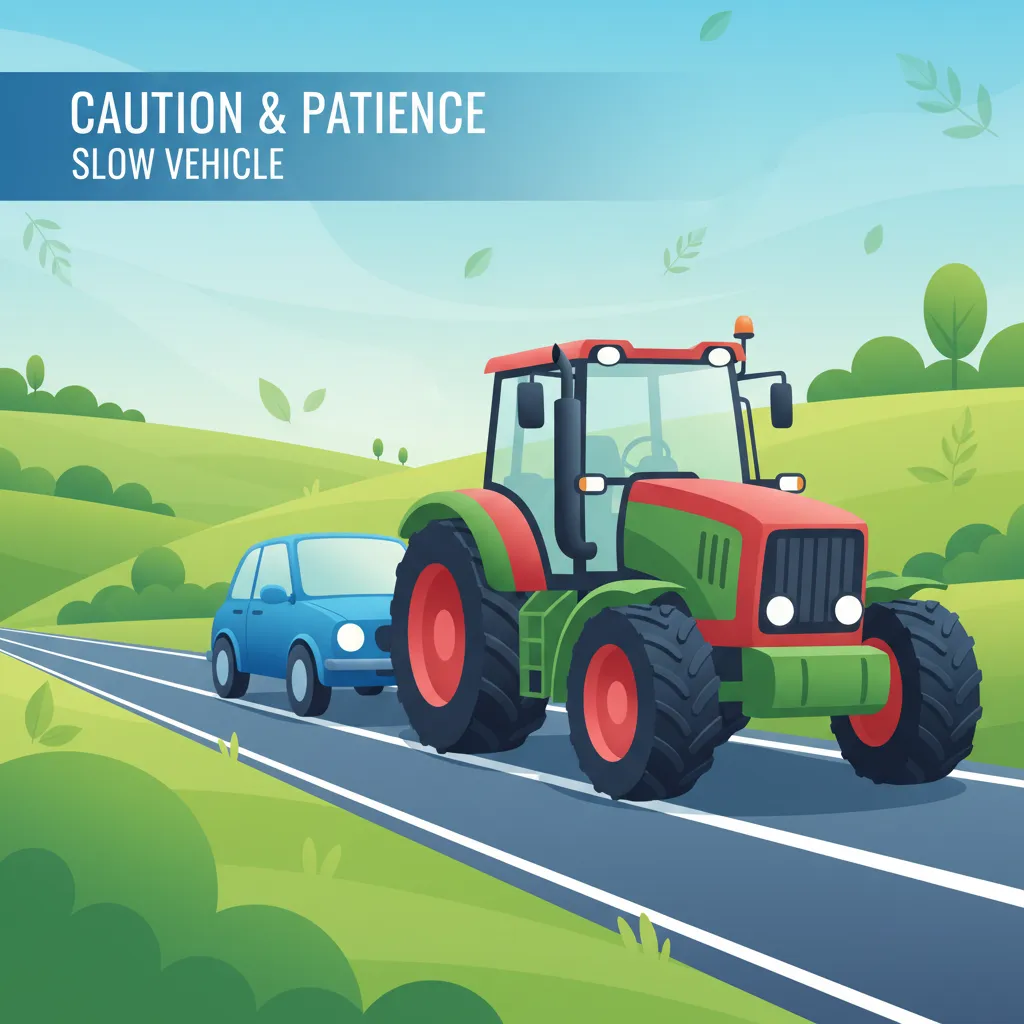
This lesson addresses encounters with slow-moving vehicles, such as tractors, which are common on rural roads. It teaches drivers to be patient, maintain a safe following distance, and only overtake when it is absolutely safe and legal to do so. Recognizing the large size and limited maneuverability of such vehicles is crucial for avoiding accidents.
This lesson provides comprehensive guidelines for safely transporting agricultural equipment, focusing on proper load securing techniques and weight distribution calculations. It discusses route planning that accounts for road conditions, bridge weight capacities, and seasonal obstacles like mud or snow. The lesson also emphasizes the use of protective equipment and regular compliance verification for safe operations.
This lesson reviews the core set of regulatory and warning signs that all road users must obey, emphasizing those that affect agricultural tractors such as speed limits, stop, and give-way signs. It clarifies the colour and shape conventions used in Polish signage, enabling drivers to quickly recognize and react to sign information. The lesson also addresses the placement of signs in rural environments where visibility may be compromised.
This lesson outlines the legal responsibilities of tractor drivers as stipulated by Polish traffic law, emphasizing the duty to comply with all rules of the road. It discusses the liability framework for accidents involving agricultural vehicles, including the need for appropriate insurance and potential penalties. The lesson also explains the importance of maintaining accurate documentation, such as registration papers and a driver’s licence.
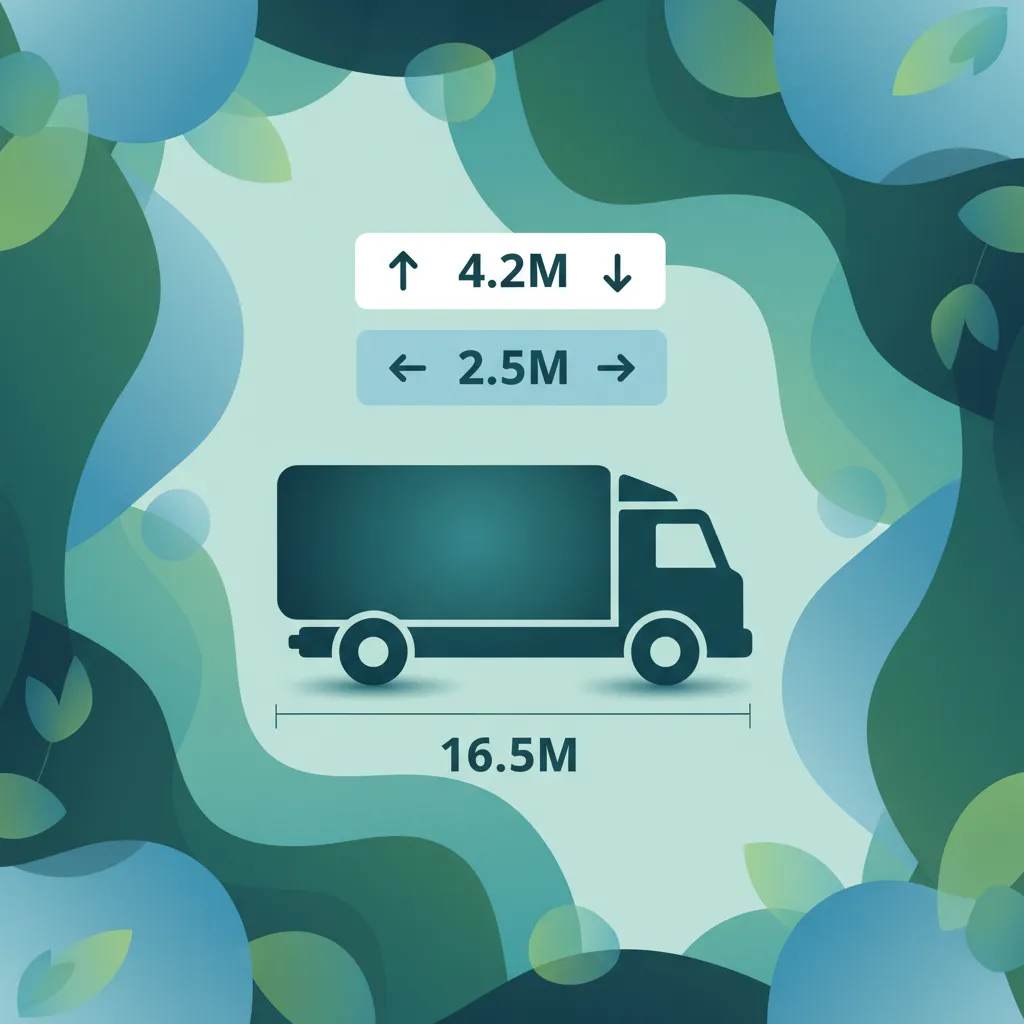
This lesson concentrates on the specific road signs that are of utmost importance to HGV drivers. It details how to interpret signs indicating maximum permissible weight, axle load, vehicle height, and overall length. Understanding these restrictions is crucial for effective route planning to avoid bridges with low clearance, roads with weight limits, or tunnels that cannot accommodate the vehicle's dimensions, thus preventing accidents and infrastructure damage.
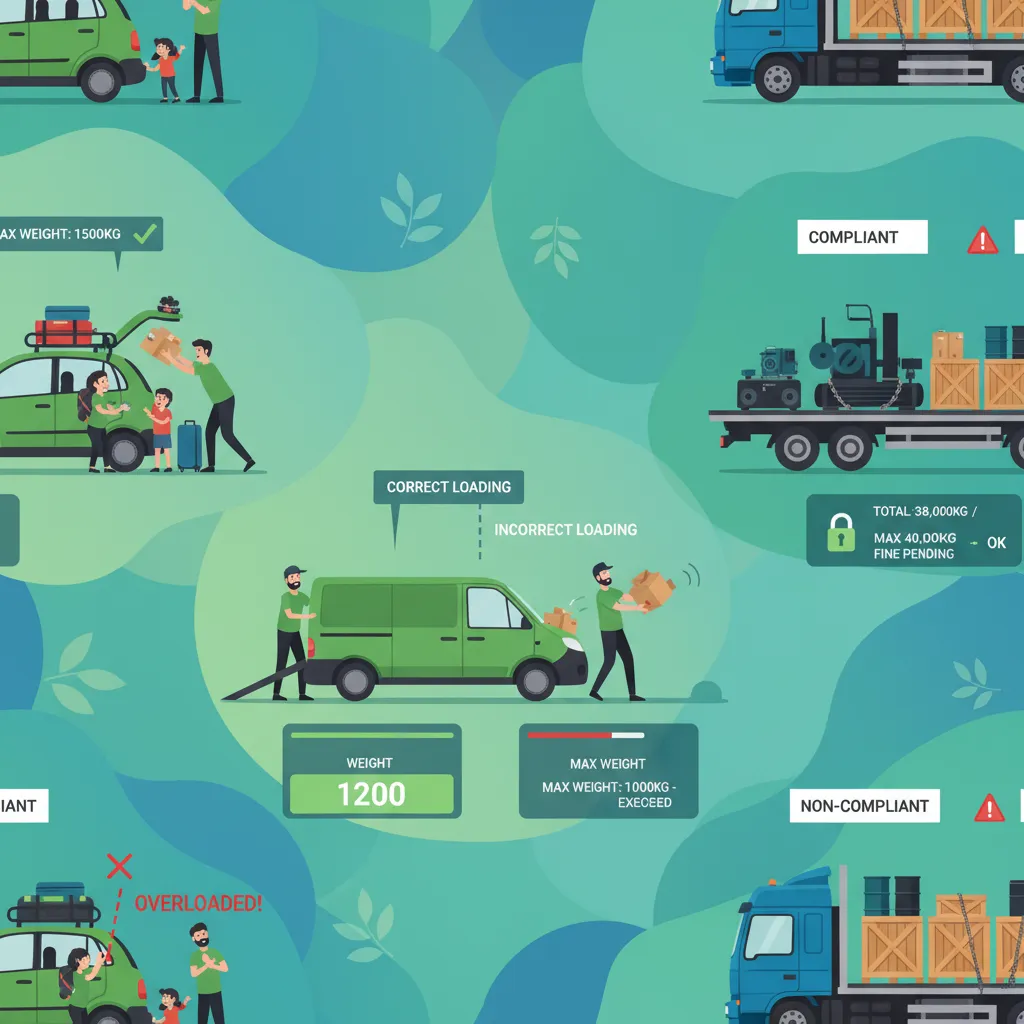
This lesson introduces the legal framework governing vehicle and axle weight limits in Poland and the EU. Learners will understand how to determine a vehicle's maximum permissible payload and interpret official load charts and documentation. The content covers the importance of correct weight distribution to avoid exceeding individual axle limits and explains the serious legal and safety consequences of operating an overloaded vehicle.
This lesson examines real-world case studies of harvest traffic, where multiple tractors and trailers share limited road space during peak agricultural periods. Learners explore strategies for coordinating speed, maintaining safe distances, and using signaling to communicate intentions. The content also addresses the challenges of field access points and the need for cooperation with other drivers.
Find clear answers to common questions learners have about Vehicle Classification and Legal Definitions. Learn how the lesson is structured, which driving theory objectives it supports, and how it fits into the overall learning path of units and curriculum progression in Poland. These explanations help you understand key concepts, lesson flow, and exam focused study goals.
In Polish law, an agricultural tractor is a motor vehicle primarily designed for agricultural or forestry work, which may also tow trailers. Its classification for Category T involves specific construction features and a maximum design speed, differentiating it from other vehicle types like slow-moving vehicles.
Permissible dimensions (width, height, length) are crucial for Category T. Exceeding these limits without special permits can lead to fines and safety hazards. You must know the standard maximums for tractors and trailers to ensure compliant operation on public roads and avoid restricted routes.
Yes, while often similar in appearance and function, Polish law may have distinct classifications for forestry machines. This lesson clarifies these differences, ensuring you understand which specific vehicles fall under the Category T licence and which might require additional endorsements or different categories.
Roadworthiness certification ensures your agricultural vehicle meets all safety and environmental standards. Understanding the legal definitions helps you know what specific checks apply to your Category T vehicle type, ensuring you maintain the necessary documentation and pass required technical inspections.
Build custom practice sessions tailored precisely to your needs. Focus on areas requiring improvement, review specific Polish road signs, or master complex traffic rules to ensure full preparation for your official driving license exam.