
This lesson guides you through the essential administrative steps and documentation needed to obtain and maintain your Polish Category A motorcycle licence. As the final part of our unit on licensing and legal frameworks, it builds on your understanding of categories and responsibilities. Mastering these procedures ensures you are fully prepared for the practicalities beyond the theory exam.

Lesson content overview
Obtaining and maintaining a motorcycle licence in Poland, specifically for Category A, involves a series of administrative procedures and strict documentation requirements. This lesson provides a comprehensive guide to understanding these processes, ensuring you are well-prepared for every step, from your initial application to future renewals. Proper administrative compliance is not merely a formality; it is a legal prerequisite that directly impacts your right to operate a motorcycle on Polish roads. Errors or omissions in documentation can lead to significant delays, fines, or even invalidate your licence.
The administrative journey for a Polish Category A motorcycle licence is meticulously structured to ensure all riders meet the necessary legal, medical, and training standards. This comprehensive approach is vital for public safety and maintains a standardized record-keeping system across Poland. Our Polish Motorcycle Theory – Comprehensive Licence Preparation for Category A course will guide you through these intricacies.
The entire licensing process is governed by the Prawo o ruchu drogowym (Road Traffic Act) and specific regulations issued by the Ministerstwo Infrastruktury (Ministry of Infrastructure) concerning driver’s licence issuance. These legal frameworks delegate operational responsibilities to regional authorities, primarily the Wojewódzki Ośrodek Ruchu Drogowego (WORD) – Voivodeship Road Traffic Centres. These centres are responsible for processing applications, conducting examinations, issuing licences, and maintaining records within the national driver database, Centralna Ewidencja Pojazdów i Kierowców (CEPiK).
Adhering to key administrative principles is fundamental to successfully acquiring and maintaining your Polish motorcycle licence. Each principle serves a specific purpose, contributing to road safety and administrative integrity.
Confirmation of the applicant’s personal data using a valid identification document such as a passport or national ID card. This prevents identity fraud and ensures the licence is accurately linked to the correct individual. Any discrepancies will lead to application rejection.
A mandatory health assessment performed by a licensed physician to confirm the applicant meets the required physical and mental standards for safe motorcycle operation. This principle is crucial for reducing accidents caused by health-related impairments, as a lack of a valid certificate invalidates the licence.
Proof of successful completion of an approved motorcycle training program, encompassing both theoretical and practical modules. This guarantees that the rider has acquired the necessary skills and knowledge to operate a motorcycle safely, and it is a prerequisite for proceeding to the official examination and licence issuance.
The settlement of statutory fees for application processing, licence issuance, and renewal. These fees provide the necessary resources for administrative processing and ensure legal compliance. Unpaid or incorrectly paid fees will cause a hold on your application.
The formal procedure of submitting, validating, and entering applicant data into the national CEPiK database. Centralized record-keeping allows law enforcement and relevant authorities quick and efficient access to driver information. Errors in this stage can significantly delay licence issuance.
The periodic re-verification of personal data, such as address and health status, and the payment of renewal fees. This ensures that licence data remains current and reflects any changes, including age-related restrictions or medical requirements. Failure to renew within the stipulated period can lead to licence expiration and the need to re-apply.
The foundation of a successful licence application lies in providing accurate and complete documentation. Understanding each required document and its specific nuances is crucial.
Identity documentation refers to official papers that prove who you are and, in some cases, your citizenship or residency status. For new licence applications, primary identification such as a valid passport or a national ID card (dowód osobisty) is mandatory. These documents are used to verify your personal details, ensuring the licence is issued to the correct individual.
In addition to primary ID, you may need supplementary identification to confirm your current address, such as a recent utility bill or a rental agreement. This helps prevent address fraud and ensures official correspondence reaches you. It is critical that the licence number and personal details on your application precisely match those on your identification. The Road Traffic Act, specifically Art. 33 §1, mandates the presentation of original documents; photocopies are generally not accepted unless certified. Common errors include using expired IDs, submitting only photocopies, or forgetting to bring proof of residence.
A Zaświadczenie lekarskie (medical certificate) is an official document issued by a licensed physician that attests to your physical and mental fitness to operate a motorcycle safely. This is a crucial component of your application, ensuring you meet the health standards necessary to prevent accidents related to medical conditions.
For Category A2 and A licences, a standard health certificate is required. However, for older drivers (typically over 65) or those with chronic conditions, an extended health examination might be necessary, potentially leading to a shorter validity period for your licence. The medical certificate must be dated within six months of your application submission, or within three months if you have a known visual disorder. The Rozporządzenie Ministra Infrastruktury (Ministerial Regulation) outlines the specific examinations required, which usually include vision, hearing, and cardiovascular assessments. Ensure the certificate is on the official form, stamped by a licensed doctor, and bears your name and ID number. Common mistakes include submitting an outdated certificate, providing a non-official doctor's letter, or omitting required tests.
The Świadectwo ukończenia kursu (training completion record) is an official certificate confirming that you have successfully completed a state-approved motorcycle training program. This program typically includes both theoretical and practical modules, preparing you for the demands of riding. The certificate specifies the motorcycle category for which you trained:
This certificate, which includes your name, the date of completion, and your passing grade, is a mandatory prerequisite for taking the official theoretical exam and subsequently for the issuance of your licence. According to Art. 31-33 of the Road Traffic Act, proof of training is indispensable. Always bring the original certificate; while a copy might be accepted in rare, emergency circumstances, it's best to have the original. A certificate from a non-approved driving school will be rejected.
The Wniosek o wydanie prawa jazdy (application form) is a standardized document, available at any WORD office or online, where you provide your personal data, specify the desired licence category, and make necessary declarations. There are typically different versions for new licence applications and renewal applications.
It is crucial to complete this form accurately and thoroughly. Errors or omissions, such as an incorrect category selection, a missing declaration of criminal record, or a forgotten signature, can cause significant processing delays. For applicants under 18, parental consent is also required and must be indicated on the form. Art. 40 of the Road Traffic Act details the other essential documents that must accompany this form.
Obtaining a motorcycle licence involves a set of statutory payments, collectively known as the fee structure. These payments cover the administrative costs associated with processing your application, issuing your licence, and maintaining public services.
The fees typically include:
Payments can generally be made via bank transfer, cash at the WORD office, or through an electronic payment portal. It is absolutely essential to retain your payment receipt and attach it to your application dossier. The Ustawa o opłatach administracyjnych (Act on Administrative Fees) stipulates deadlines for fee payment, often within 30 days of application submission. Common mistakes include forgetting to attach the receipt, paying an incorrect amount, or using an outdated fee schedule.
After submitting your complete application, there is a defined processing timeline before you receive your licence. This timeline typically involves several stages:
The total turnaround time for a standard application usually ranges from 7 to 12 working days. If available, expedited services can reduce this to 3–5 days, but they typically incur an additional fee. It is important not to assume immediate issuance. Delays often occur due to missing or incorrect documents, so ensure everything is in order before submission. Rozporządzenie Ministru Infrastruktury (Ministerial Regulation) mandates maximum processing times for public services.
Licences are not valid indefinitely and require periodic renewal to remain legal. For Category A2 and A licences, renewal is typically required every 15 years, while for Category A1, it might be 10 years. For older drivers (e.g., over 70), medical certificates may need renewal every two years, which effectively shortens the licence validity period.
The renewal process involves key requirements:
If your licence expires, there is usually a grace period of 30 days during which you can submit your renewal documentation. Your licence remains legally valid during this period provided the renewal process is initiated. However, if you attempt to renew after this grace period, your licence will be considered expired, and you may be required to apply for a new licence, which can incur additional fees and potentially require re-examination. Art. 65 §1 of the Road Traffic Act outlines these renewal obligations.
Understanding the specific laws and regulations is paramount for compliance. Here are some of the key legal provisions:
Always refer to the most recent amendments of the Prawo o ruchu drogowym and related ministerial regulations for the most up-to-date information.
Navigating administrative procedures can be complex, and certain common mistakes frequently lead to delays or rejections. Being aware of these pitfalls can save you time and frustration:
Administrative procedures are not always rigid; certain conditions can introduce variations or additional requirements.
The direct relationship between diligent administrative compliance and your legal right to ride cannot be overstated.
Mastering the administrative procedures for your Polish motorcycle licence is an integral part of becoming a responsible and legally compliant rider. It ensures that every individual on the road is properly identified, medically fit, and adequately trained.
The key takeaways from this lesson include:
By diligently following these guidelines, you will smoothly navigate the administrative landscape of obtaining and maintaining your Polish Category A motorcycle licence, allowing you to focus on safe and confident riding.
This lesson covers the complete administrative procedure for obtaining and maintaining a Polish Category A motorcycle licence, from initial application through renewal. Key requirements include valid identity documents, a current medical certificate (Zaświadczenie lekarskie) from a licensed physician, and a training completion record (Świadectwo ukończenia kursu) from a state-approved driving school. The application is submitted to WORD offices and processed through the national CEPiK database, with standard processing taking 7-12 working days. Renewal must occur before expiry, with a 30-day grace period after expiration. Common pitfalls include expired documents, missing fee receipts, late renewals, and using non-approved training certificates.
A short set of high-value points that capture the most important learning from this lesson.
Polish motorcycle licence applications require valid identity documents, a current medical certificate, and a training completion record from a state-approved school
All submitted documents must be originals or officially certified copies; photocopies without certification are generally rejected
The national CEPiK database maintains centralized records of all driver licences and applications in Poland
Licence renewal must occur before expiration, with a 30-day grace period after expiry before a completely new application is required
Each administrative step serves a road safety purpose by ensuring only qualified, medically fit, and properly trained riders are licensed
Explore all units and lessons included in this driving theory course.
Medical certificates must be dated within 6 months of application submission, or 3 months if you have a visual disorder
Training certificates must come from state-approved driving schools; certificates from non-approved institutions will be rejected
Fee payment receipts must always be attached to your application dossier as proof of payment
Category A licences require renewal every 15 years, while Category A1 may be 10 years, with medical recertification potentially required more frequently for older drivers
Applications must be submitted to WORD (Wojewódzki Ośrodek Ruchu Drogowego), the regional licensing authority responsible for processing in Poland
Submitting expired identification documents, which leads to immediate application rejection
Providing a medical certificate older than the allowed validity period (6 or 3 months depending on circumstances)
Using a training completion certificate from a non-approved driving school instead of a state-certified institution
Failing to attach the fee payment receipt, which halts processing until proof of payment is provided
Missing the 30-day grace period for renewal, after which a completely new licence application is required with additional requirements
Lesson content overview
A short set of high-value points that capture the most important learning from this lesson.
Polish motorcycle licence applications require valid identity documents, a current medical certificate, and a training completion record from a state-approved school
All submitted documents must be originals or officially certified copies; photocopies without certification are generally rejected
The national CEPiK database maintains centralized records of all driver licences and applications in Poland
Licence renewal must occur before expiration, with a 30-day grace period after expiry before a completely new application is required
Each administrative step serves a road safety purpose by ensuring only qualified, medically fit, and properly trained riders are licensed
Explore all units and lessons included in this driving theory course.
Medical certificates must be dated within 6 months of application submission, or 3 months if you have a visual disorder
Training certificates must come from state-approved driving schools; certificates from non-approved institutions will be rejected
Fee payment receipts must always be attached to your application dossier as proof of payment
Category A licences require renewal every 15 years, while Category A1 may be 10 years, with medical recertification potentially required more frequently for older drivers
Applications must be submitted to WORD (Wojewódzki Ośrodek Ruchu Drogowego), the regional licensing authority responsible for processing in Poland
Submitting expired identification documents, which leads to immediate application rejection
Providing a medical certificate older than the allowed validity period (6 or 3 months depending on circumstances)
Using a training completion certificate from a non-approved driving school instead of a state-certified institution
Failing to attach the fee payment receipt, which halts processing until proof of payment is provided
Missing the 30-day grace period for renewal, after which a completely new licence application is required with additional requirements
Explore search topics learners often look for when studying Administrative Procedures and Documentation. These topics reflect common questions about road rules, driving situations, safety guidance, and lesson level theory preparation for learners in Poland.
Browse additional driving theory lessons that cover connected traffic rules, road signs, and common driving situations related to this topic. Improve your understanding of how different rules interact across everyday traffic scenarios.
Understand the essential administrative processes and required documentation for obtaining and maintaining a Polish Category A motorcycle licence. Covers applications, medical certificates, training proof, fees, and renewal procedures.

This lesson delineates each motorcycle licence category defined in Polish law, explaining the technical specifications of vehicles allowed under AM, A1, A2, and A. It clarifies the age limits and competency criteria required for each category, highlighting how riders can progress from a light two-wheel vehicle to high-performance motorcycles. The content also outlines the mandatory training modules that must be completed to obtain each licence tier, ensuring learners understand the legal framework governing their riding privileges.
This lesson details the documentation required for a Category B licence application and vehicle operation. It explains the function of the vehicle registration certificate (dowód rejestracyjny), the mandatory civil liability insurance (OC), and the certificate of technical inspection. Learners will understand the verification process and the importance of keeping these documents current and accessible.

This lesson provides a detailed overview of the examination process required to obtain a motorcycle licence in Poland, describing the format of the theoretical test, pass criteria, and the structure of the practical riding assessment. It highlights the importance of familiarity with official question banks, registration steps, and the procedural rules governing test day conduct. Learners will also be guided on effective preparation strategies, including the use of mock exams and targeted review of knowledge gaps to ensure comprehensive readiness.
In this lesson, learners examine the core legal obligations that apply to motorcyclists operating on Polish roads, including the mandatory use of helmets, periodic vehicle inspections, and the necessity of valid insurance and registration. The content details the classification of traffic offences and explains the associated penalty system, including fines, demerit points, and potential licence suspension. Additionally, the lesson outlines procedural requirements for accident reporting and interaction with law enforcement, providing a comprehensive view of a rider’s legal responsibilities.
This lesson provides a detailed overview of Polish driving licence classifications, focusing on the privileges and limitations of Category B. It clarifies the minimum age requirement, the necessity of a medical certificate, and the process of enrolling in a driving school. The content outlines the steps to pass both the theory and practical exams to obtain a full licence, ensuring candidates understand all prerequisites.
This lesson details the formal prerequisites for obtaining a Category T licence, focusing on the minimum age and mandatory health assessment. It outlines the specific medical certificates required, the process for submitting proof of identity and residency, and the role of the local road transport office. The content also clarifies the importance of maintaining up-to-date health documentation and the legal consequences of non-compliance.
Explore key Polish laws and regulations governing motorcycle licence applications and renewals. Learn about essential principles of compliance, common mistakes to avoid, and the impact of administrative procedures on riding privileges.
In this lesson, learners examine the core legal obligations that apply to motorcyclists operating on Polish roads, including the mandatory use of helmets, periodic vehicle inspections, and the necessity of valid insurance and registration. The content details the classification of traffic offences and explains the associated penalty system, including fines, demerit points, and potential licence suspension. Additionally, the lesson outlines procedural requirements for accident reporting and interaction with law enforcement, providing a comprehensive view of a rider’s legal responsibilities.
This lesson examines the family of regulatory signs that dictate mandatory actions and prohibitions on Polish roads, emphasizing how each sign influences motorcyclist behaviour. Learners will explore the stop, give way, speed limit, and no overtaking signs, understanding the legal obligations they impose. The lesson also highlights signs that specifically affect motorcycles, such as lane restrictions, ensuring riders recognize and obey regulations unique to two-wheel traffic.
This lesson delineates each motorcycle licence category defined in Polish law, explaining the technical specifications of vehicles allowed under AM, A1, A2, and A. It clarifies the age limits and competency criteria required for each category, highlighting how riders can progress from a light two-wheel vehicle to high-performance motorcycles. The content also outlines the mandatory training modules that must be completed to obtain each licence tier, ensuring learners understand the legal framework governing their riding privileges.
This lesson details the documentation required for a Category B licence application and vehicle operation. It explains the function of the vehicle registration certificate (dowód rejestracyjny), the mandatory civil liability insurance (OC), and the certificate of technical inspection. Learners will understand the verification process and the importance of keeping these documents current and accessible.
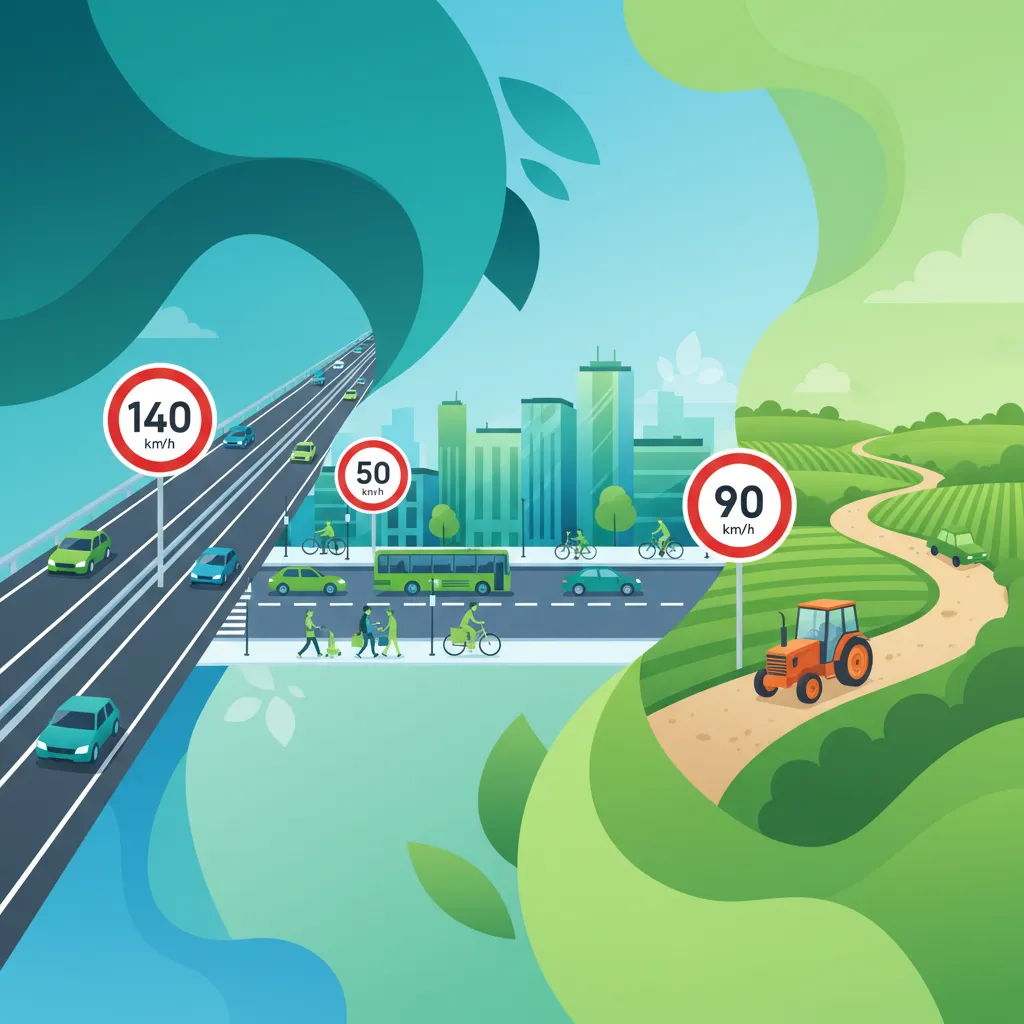
This lesson provides a comprehensive overview of the statutory speed limits applicable to different categories of Polish roads, including urban areas, residential zones, rural roads, highways, and motorways. Learners will examine the visual cues of speed limit signs and learn how speed limit transitions affect rider behavior. The content also covers how enforcement mechanisms impact compliance and the importance of real-time speed adaptation to remain within legal thresholds.
This lesson provides a detailed overview of the examination process required to obtain a motorcycle licence in Poland, describing the format of the theoretical test, pass criteria, and the structure of the practical riding assessment. It highlights the importance of familiarity with official question banks, registration steps, and the procedural rules governing test day conduct. Learners will also be guided on effective preparation strategies, including the use of mock exams and targeted review of knowledge gaps to ensure comprehensive readiness.

This lesson examines the variety of pavement markings that define lane structures, traffic flow, and special zones on Polish roads. Learners will study solid and broken lines, lane division markings, and the distinct symbols for bicycle lanes, bus lanes, and tram tracks, all of which affect motorcyclist positioning. The lesson also addresses surface texture indicators that signal changing road conditions, enabling riders to maintain correct lane discipline.

In this lesson, learners explore riding on rural and countryside roads, where road markings may be sparse and surface conditions varied. The content covers safe overtaking in single-lane sections, interaction with agricultural vehicles and animals, and the handling of gravel or uneven surfaces. Learners will also study the importance of anticipating curves and adjusting speed to light conditions, equipping them with the skills needed for safe countryside travel.
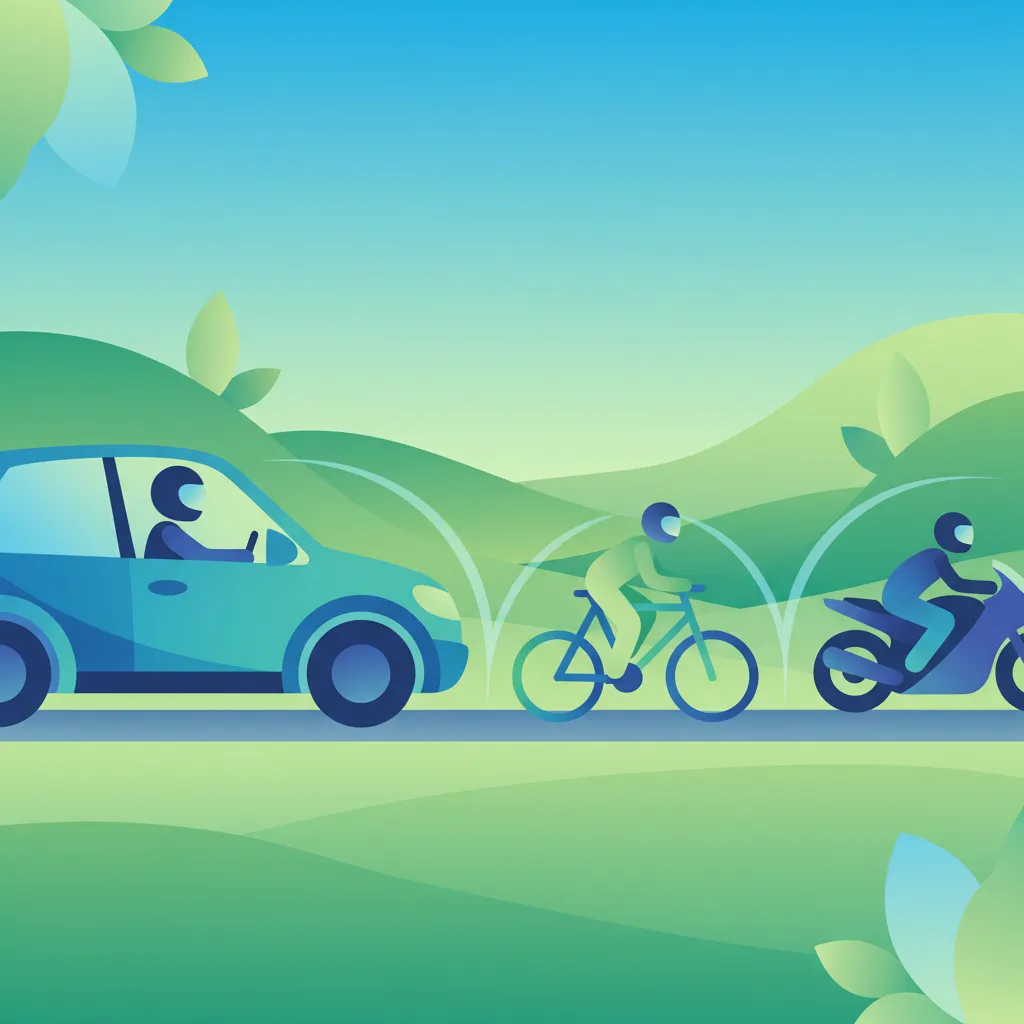
This lesson is dedicated to the safe overtaking of two-wheeled vehicles. It explains the legal requirement to leave a sufficient lateral distance (at least 1 meter) when passing cyclists. The content highlights the vulnerability of these road users and the need for patience, reduced speed, and careful judgment.
Find clear answers to common questions learners have about Administrative Procedures and Documentation. Learn how the lesson is structured, which driving theory objectives it supports, and how it fits into the overall learning path of units and curriculum progression in Poland. These explanations help you understand key concepts, lesson flow, and exam focused study goals.
After successfully passing both theory and practical exams, the processing time for your physical Polish Category A motorcycle licence typically ranges from 7 to 14 working days. This can vary slightly depending on the specific Starostwo Powiatowe (District Office) or Urząd Miasta (City Hall) where you submitted your application.
For a standard renewal of your Polish Category A motorcycle licence, you generally do not need a new medical certificate if your previous one is still valid according to its issued term. However, if your existing medical certificate has expired or if there have been significant health changes, a new medical examination and certificate will be required for renewal.
If you lose your Polish Category A motorcycle licence, you must report it to the police and then apply for a duplicate at your local Starostwo Powiatowe or Urząd Miasta. You will need to provide proof of identity, the police report, and pay a fee. A temporary permit may be issued while your new licence is being processed.
While the core administrative fees set by the national government for issuing a Polish Category A motorcycle licence (e.g., for the plastic card itself) are uniform, there might be slight variations in additional local fees or charges for medical examinations and driving school courses, which are separate from the core administrative cost.
You can begin the administrative process by obtaining your PKK (Profil Kandydata na Kierowcę - Candidate Driver Profile) before completing all practical training. However, the full application for the licence, including the issuance of the physical document, can only be completed after you have successfully passed both the theoretical and practical state examinations.
Build custom practice sessions tailored precisely to your needs. Focus on areas requiring improvement, review specific Polish road signs, or master complex traffic rules to ensure full preparation for your official driving license exam.